

Throughout the centuries, Catholic miracles have served as powerful testimonies to God's active presence in the world. These extraordinary events-ranging from Eucharistic transformations to miraculous healings attributed to saintly intercession-continue to inspire, challenge, and strengthen the faith of millions. In 2026, as scientific inquiry grows more sophisticated, the Church's rigorous investigation of miraculous claims demonstrates that faith and reason need not conflict. Instead, these divine signs point believers toward deeper encounters with the supernatural reality underlying all creation.
Understanding the Nature of Catholic Miracles
Catholic miracles represent events that surpass natural explanation and reveal God's intervention in human affairs. The Church defines miracles as perceptible interruptions of natural laws that serve a higher spiritual purpose, typically confirming doctrine or validating sanctity. These signs don't occur randomly-they carry profound theological significance and almost always direct attention toward Christ, the Eucharist, or the communion of saints.
The Catholic tradition distinguishes between several categories of miraculous events. Physical miracles involve tangible changes to matter or bodies, such as instantaneous healings or Eucharistic transformations where consecrated hosts manifest as human flesh. Moral miracles occur when individuals undergo dramatic spiritual conversions that transcend natural explanation. Finally, charisms-special gifts given to individuals for the building up of the Church-can include prophecy, healing, or other extraordinary abilities.
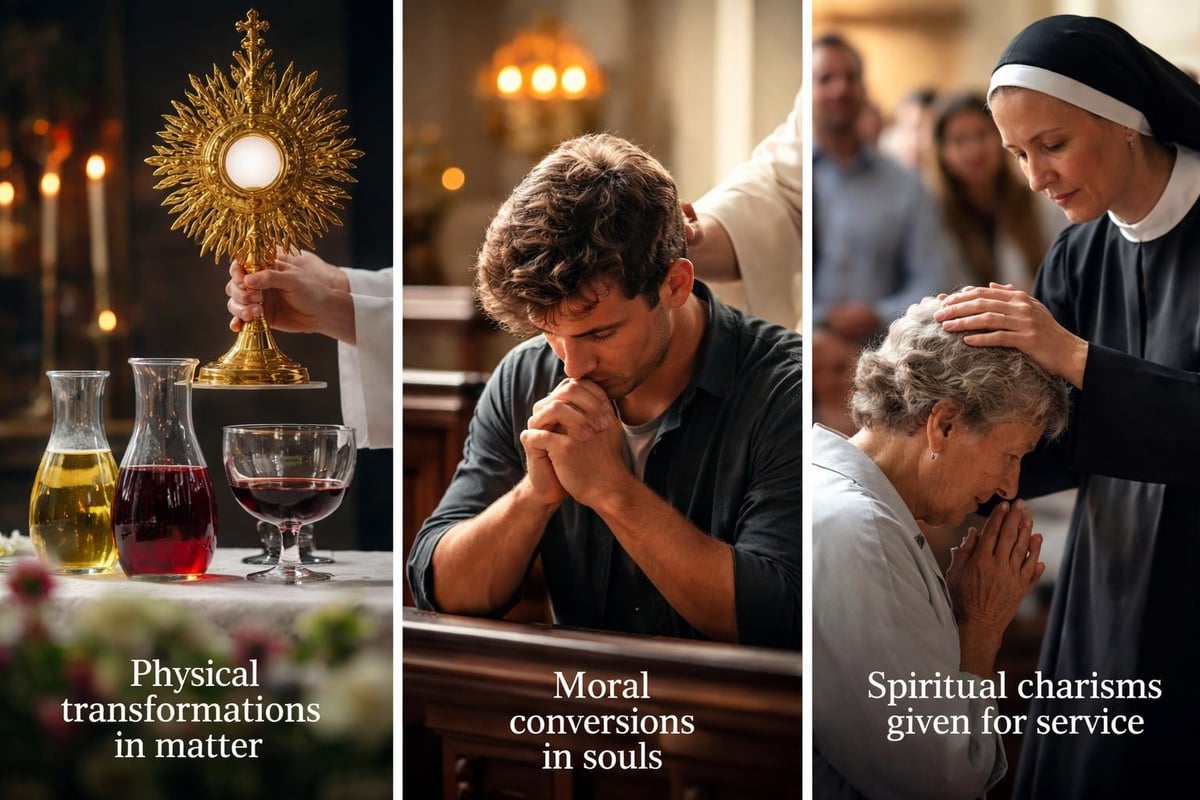
What separates authentic catholic miracles from mere coincidence or natural phenomena? The Church applies strict criteria during investigation. A genuine miracle must be instantaneous, complete, and permanent-eliminating gradual improvement or temporary relief. Medical experts must rule out all natural explanations, and the event should serve a clear spiritual purpose rather than mere spectacle. This rigorous approach ensures that proclaimed miracles truly point toward divine providence rather than wishful thinking.
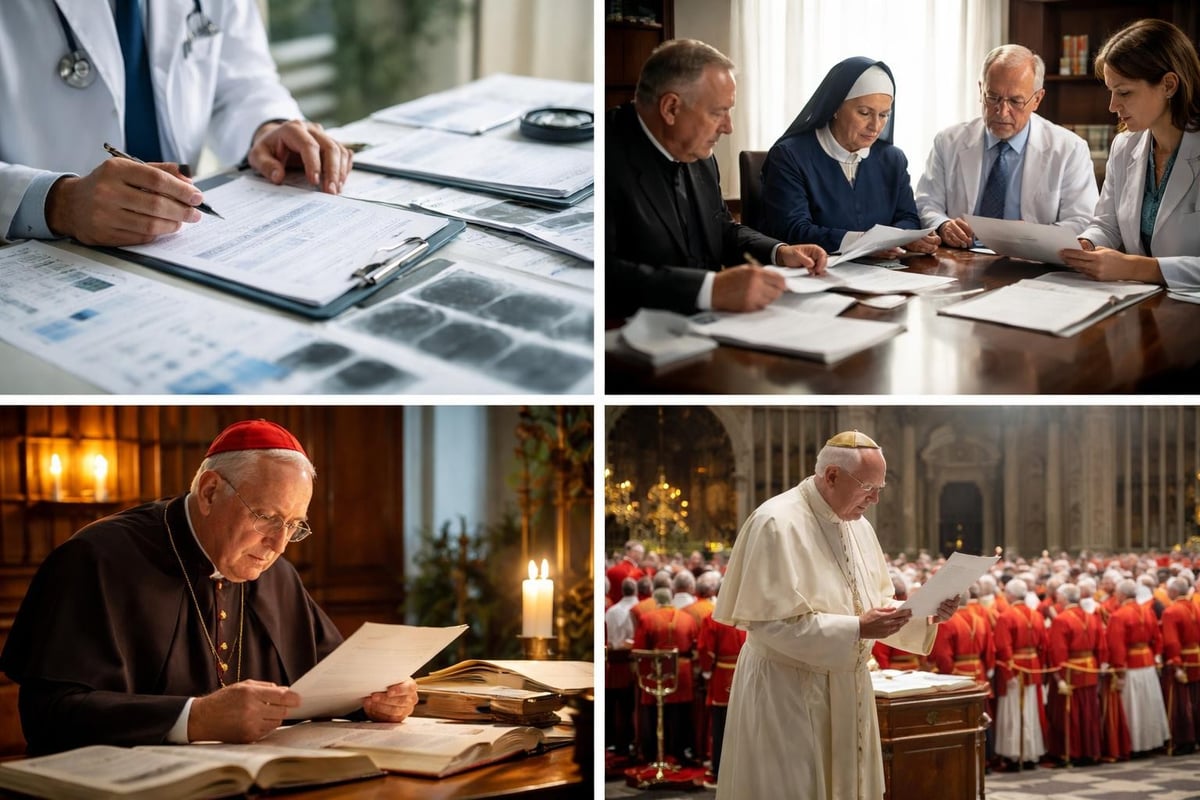
The Church's Congregation for the Causes of Saints employs teams of medical professionals, theologians, and investigators to examine miracle claims. For canonization purposes, at least two verified miracles (one for beatification, another for sainthood) must occur through the candidate's intercession. This systematic verification process demonstrates that catholic miracles aren't accepted uncritically-they undergo scientific scrutiny that often exceeds secular standards.
Brought to you by Journeys of Faith, founded by Bob and Penny Lord. We are an Augustinian Secular Institute-Cyber Apostles-our mission is evangelization through media.
Eucharistic Miracles Throughout History
Among the most profound catholic miracles are those involving the Blessed Sacrament. Eucharistic miracles have occurred across continents and centuries, providing tangible evidence of Christ's Real Presence in the consecrated host and wine. These events typically involve the transformation of consecrated elements into visible human flesh and blood, often occurring during Mass or in response to doubt about the doctrine of transubstantiation.
The miracle of Lanciano, Italy, dating to approximately 750 AD, remains one of the most scientifically studied Eucharistic wonders. When a priest doubted the Real Presence during consecration, the host transformed into flesh and the wine into blood. Scientific analysis in the 1970s revealed the flesh to be cardiac tissue and the blood type AB positive-the same blood type identified in other Eucharistic miracles worldwide. The samples show no signs of decay despite being over 1,200 years old, defying natural preservation.
Modern Eucharistic Phenomena
Catholic miracles involving the Eucharist haven't ceased in ancient times. The 1996 miracle in Buenos Aires, Argentina, occurred when a discarded host developed what appeared to be bloody tissue. Scientific analysis confirmed it was human cardiac muscle in the process of dying, showing characteristics of a heart under severe stress. Remarkably, the sample was alive when first examined-impossible for tissue removed from a body.
Recent investigations, including a 2024 inquiry in Indiana, demonstrate the Church's careful approach. When a red mark appeared on a Communion wafer, immediate testing revealed natural causes-specifically, contamination by Serratia marcescens bacteria. This example shows that not every unusual occurrence receives automatic validation. The Church's commitment to truth means rejecting false claims as vigorously as it investigates genuine ones.
The documentation of Eucharistic miracles received significant attention through the work of Carlo Acutis, a British-born Italian teenager who catalogued these events online before his death in 2006. His comprehensive database made these witnesses accessible to global audiences, strengthening faith in the Real Presence. Carlo will become the first millennial saint when canonized, demonstrating how modern technology can serve evangelization.
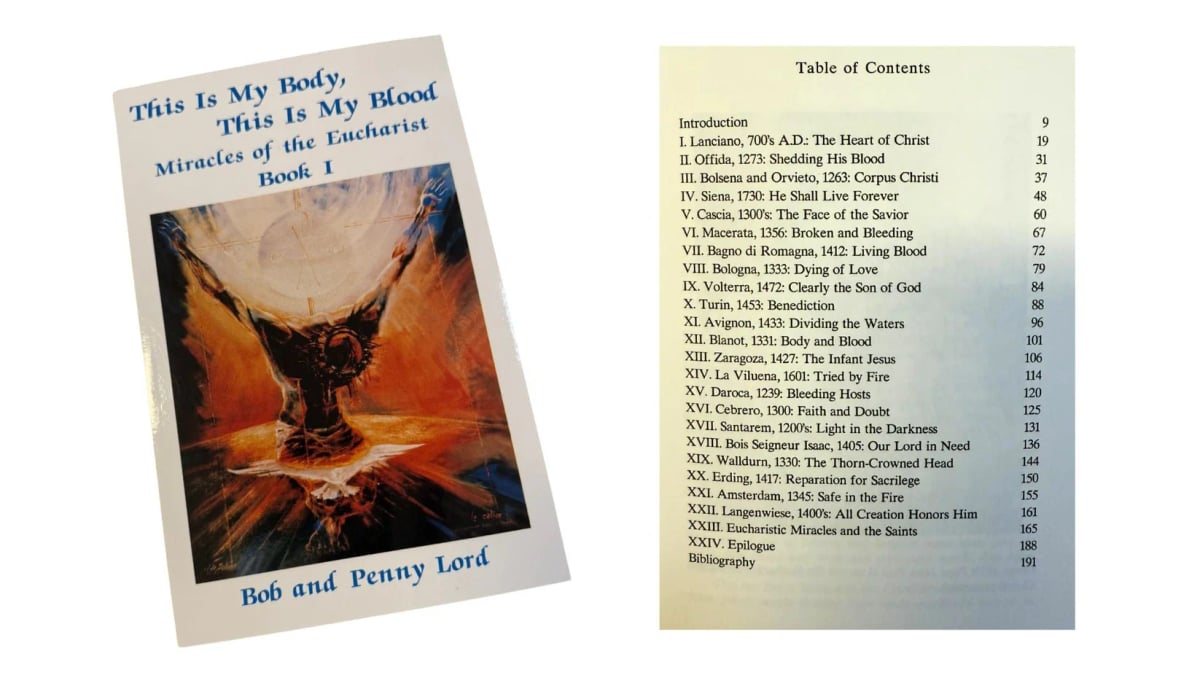
For those seeking to deepen their understanding of these profound signs, the Miracles of the Eucharist books by Bob and Penny Lord provide comprehensive documentation of Eucharistic wonders across the centuries. These extensively researched volumes have sold over 300,000 copies and continue to inspire reverence for the Blessed Sacrament.
Healing Miracles and Saintly Intercession
Physical healings represent another category of catholic miracles that demonstrate God's compassion and validate the sanctity of His chosen instruments. The healing shrines at Lourdes, France, have documented thousands of inexplicable cures since Mary appeared to Bernadette Soubirous in 1858. The Lourdes Medical Bureau-established in 1883-maintains strict protocols for investigating claimed healings, requiring multiple medical experts to confirm that cures have no natural explanation.
Criteria for Lourdes miracle recognition include:
- The illness must be serious, incurable by current medical standards
- No treatment should have caused the improvement
- The cure must be instantaneous or abnormally rapid
- The healing must be complete and permanent
- Medical documentation must be thorough before and after
Of the thousands of reported healings at Lourdes, the Church has officially recognized 70 as miraculous-demonstrating remarkable restraint and scientific rigor. Each validated miracle undergoes years of investigation, with medical records scrutinized by skeptical experts. This careful process ensures that proclaimed healings truly surpass natural explanation.
Saints throughout history have served as channels for healing graces. Padre Pio of Pietrelcina, canonized in 2002, was associated with numerous miraculous healings during his lifetime and after his death. His intercession reportedly cured terminal illnesses, restored sight, and healed conditions that baffled medical professionals. The documentation of these cures played crucial roles in his beatification and canonization processes.
Examining the Purpose of Healing Miracles
Why does God heal some while others remain sick despite fervent prayer? This question challenges believers and skeptics alike. Catholic theology teaches that miracles serve as signs pointing to deeper spiritual realities, not as guaranteed solutions to every human problem. Physical healing miracles reveal God's power over disease and death, prefiguring the ultimate healing that comes through resurrection.
The purpose of catholic miracles extends beyond the immediate recipient. When Christ healed the paralytic in Mark 2, He explained that the miracle demonstrated His authority to forgive sins-the greater, invisible miracle. Similarly, modern healing miracles strengthen faith communities, validate doctrine, and remind believers that God actively participates in human history. They serve evangelization by providing tangible evidence of supernatural reality.
| Miracle Type | Primary Purpose | Example | Verification Method |
|---|---|---|---|
| Eucharistic | Affirm Real Presence | Lanciano, 750 AD | Scientific tissue analysis |
| Healing | Demonstrate divine compassion | Lourdes cures | Medical expert review |
| Incorruption | Validate sanctity | St. Bernadette's body | Physical examination |
| Bilocation | Show spiritual authority | Padre Pio appearances | Multiple witness testimony |
Miracles in the Lives of Saints
The intersection of sanctity and miraculous phenomena provides compelling evidence for the supernatural dimension of reality. Catholic saints often exhibited extraordinary signs during their lifetimes-stigmata, levitation, prophetic knowledge, or the ability to subsist without food. These charisms served not to glorify the individual but to authenticate their message and mission.
St. Joseph of Cupertino (1603-1663) experienced frequent levitations during prayer, often rising several feet off the ground during Mass or meditation. Witnesses included popes, princes, and common faithful. These events occurred spontaneously and couldn't be controlled by Joseph himself, eliminating the possibility of fraud. His humility regarding these phenomena-often expressing embarrassment rather than pride-further validated their supernatural origin.
The stigmata of St. Francis of Assisi marked the first documented case of a person bearing Christ's wounds. Since then, more than 300 individuals have reportedly received the stigmata, including St. Padre Pio, whose bleeding wounds were examined by numerous physicians over decades. Medical experts confirmed that the wounds showed no signs of infection despite remaining perpetually open, and they appeared symmetrical despite Padre Pio being right-handed-details that defy natural explanation.
Incorruptibility and Miraculous Preservation
Another category of catholic miracles involves the incorruption of saints' bodies after death. While natural mummification can occur under specific conditions, certain saints' bodies have remained flexible, lifelike, and free from decay despite burial in conditions that should promote decomposition. St. Bernadette Soubirous, exhumed in 1909 (30 years after death), showed no corruption. Her body remains on display in Nevers, France, appearing as if she recently fell asleep.
Scientific examination of incorrupt bodies typically rules out embalming or environmental factors. These phenomena often accompany the odor of sanctity-a sweet fragrance that emanates from the body or tomb. While the Church doesn't require incorruptibility for canonization, it considers such preservation as supporting evidence of sanctity when combined with verified miracles and heroic virtue.
The investigation of saintly miracles follows structured protocols. For canonization, the Church requires proof of two miracles (post-beatification) attributed to the candidate's intercession. Medical and scientific experts examine evidence, theologians assess the spiritual significance, and the Congregation for the Causes of Saints makes final determinations. This multi-layered approach ensures that proclaimed catholic miracles meet the highest standards of verification.
The Role of Miracles in Faith Formation
Catholic miracles serve crucial roles in strengthening and transmitting faith across generations. For skeptical inquirers, these events provide tangible evidence that challenges materialist assumptions. The relationship between miracles and faith operates bidirectionally-miracles can spark initial belief, while existing faith helps individuals recognize divine action in everyday life.
The educational value of studying catholic miracles cannot be overstated. When families explore accounts of Eucharistic wonders or saintly interventions together, they encounter concrete examples of God's activity in history. These stories provide tangible anchors for abstract theological concepts, making doctrines like the Real Presence or the communion of saints more accessible and believable.
For children especially, miracle accounts offer engaging entry points into deeper faith. The stories of saints who experienced extraordinary phenomena-like St. Polycarp's miraculous protection or St. Anthony's preaching to fish-capture imagination while conveying serious spiritual truths. These narratives demonstrate that God's power isn't limited to biblical times but continues operating in every era.
Balancing Credulity and Skepticism
The Catholic approach to miracles models healthy balance between openness to supernatural intervention and rational scrutiny. Believers should neither accept every claimed wonder uncritically nor dismiss all miraculous accounts as superstition. The Church's investigative processes demonstrate this balanced approach, applying both scientific rigor and theological discernment.
Guidelines for evaluating miracle claims:
- Examine the credibility of witnesses and documentation
- Consider whether natural explanations have been thoroughly eliminated
- Assess the spiritual fruit produced by the event
- Determine if the miracle aligns with Catholic doctrine
- Review whether proper ecclesiastical authority has investigated the claim
This framework helps believers distinguish authentic catholic miracles from coincidence, misinterpretation, or deception. It also protects the faithful from sensationalism while keeping them receptive to genuine divine intervention. The balance reflects Catholic teaching that faith and reason complement rather than contradict each other.
Miracles and Marian Apparitions
The history of Marian apparitions closely intertwines with miraculous phenomena. When Mary appears at sites like Guadalupe, Lourdes, or Fatima, her visits typically include predictions, healings, or physical signs that validate the authenticity of the encounters. The tilma of Juan Diego, bearing the image of Our Lady of Guadalupe, has survived nearly 500 years without deterioration despite being made of cactus fiber that should have disintegrated within decades.
Scientific studies of the Guadalupe image have revealed remarkable details. The image wasn't painted-no brush strokes appear under magnification. The stars on Mary's mantle correspond precisely to the constellations visible over Mexico City on December 12, 1531. Most astonishingly, ophthalmologists examining Mary's eyes detected reflected images of Juan Diego and witnesses present when the tilma was first unfurled-an optical effect impossible to create artificially in 1531.
At Fatima in 1917, an estimated 70,000 people witnessed the "Miracle of the Sun" after Mary promised a sign to validate the children's visions. Newspapers of various political perspectives reported that the sun appeared to dance, change colors, and plunge toward earth before returning to normal position. Skeptics have proposed natural explanations-mass hysteria, atmospheric phenomena-but none adequately account for the specific predictions the children made beforehand or the permanent cures reported that day.
The Theological Significance of Marian Miracles
Why does God work miracles through Mary's intercession? Catholic theology teaches that Mary holds a unique role in salvation history as Mother of God and spiritual mother of all believers. Miracles associated with Marian apparitions consistently point toward her Son, calling people to conversion, prayer, and Eucharistic devotion. Mary never draws attention to herself but always directs souls toward Christ and the Church He founded.
The healing waters at Lourdes exemplify this pattern. Mary didn't claim the water possessed magical properties-instead, she instructed Bernadette to drink from and wash in a spring that didn't yet exist. When Bernadette dug in the muddy ground, a spring emerged that continues flowing today. The healings attributed to Lourdes water occur through faith and divine intervention, not chemical properties of the water itself.
| Marian Apparition Site | Primary Miracle | Year | Church Status |
|---|---|---|---|
| Guadalupe, Mexico | Tilma image | 1531 | Approved |
| Lourdes, France | Healing spring | 1858 | Approved |
| Fatima, Portugal | Solar miracle | 1917 | Approved |
| Zeitoun, Egypt | Light phenomena | 1968 | Recognized |
Catholic miracles associated with Mary remind believers of the power of intercessory prayer and the communion of saints. When physical healings occur through Mary's intercession, they demonstrate that death doesn't sever the bonds of Christian love. The saints in heaven remain actively concerned with their brothers and sisters still on earth.
Contemporary Witnesses and Modern Verification
In 2026, technological advances enable more sophisticated analysis of miracle claims than ever before. DNA testing, advanced imaging, and comprehensive medical databases allow investigators to examine phenomena with unprecedented precision. This scientific progress hasn't diminished reported miracles-rather, it has provided new tools for distinguishing authentic wonders from natural phenomena.
The internet age has transformed how catholic miracles reach global audiences. Carlo Acutis's online exhibition of Eucharistic miracles continues inspiring visitors worldwide, with virtual tours allowing people to examine photographic evidence and scientific reports. Social media platforms enable rapid sharing of miracle accounts, though this accessibility also increases the spread of unverified or false claims.
Contemporary verification processes increasingly involve multidisciplinary teams. When investigating potential miracles, the Church now routinely consults:
- Medical specialists in relevant fields
- Forensic experts to detect fraud or manipulation
- Psychologists to assess witnesses' mental states
- Physicists and chemists for material analysis
- Theologians to evaluate spiritual significance
- Canon lawyers to ensure procedural integrity
This comprehensive approach reflects the Church's commitment to truth. Rejecting false miracle claims protects the faithful from deception and preserves the credibility of authentic wonders. When the Church does proclaim an event miraculous after such rigorous investigation, that declaration carries significant evidential weight.
Digital Age Challenges and Opportunities
The proliferation of image editing software and AI-generated content creates new challenges for miracle verification. Photographs or videos can be manipulated convincingly, requiring experts to authenticate visual evidence. However, these same technologies enable better preservation and analysis of historical miracle accounts. High-resolution imaging can detect details invisible to previous generations of investigators.
Blockchain technology offers potential solutions for authenticating miracle documentation. By creating tamper-proof records of medical files, witness testimonies, and investigative reports, blockchain systems could prevent retrospective manipulation of evidence. While still emerging, such applications demonstrate how modern technology can serve the ancient work of discerning divine intervention.
The Church's caution regarding social media miracle claims reflects wisdom rather than skepticism. Viral videos of weeping statues or spinning suns often have natural explanations-condensation, optical illusions, or deliberate hoaxes. Authentic catholic miracles typically withstand extended investigation rather than depending on a single viral moment. The Church's measured response protects believers from cycles of excitement followed by disillusionment when claims prove false.
The Ongoing Relevance of Miraculous Signs
Why do catholic miracles continue occurring in an age of advanced science and secularization? Far from becoming obsolete, these signs address the deepest hungers of contemporary culture. In a world often characterized by materialism and meaninglessness, miracles point toward transcendent reality and ultimate purpose. They challenge the assumption that physical matter represents the only authentic reality.
Miracles demonstrate that faith and reason are complementary rather than contradictory. The Church's rigorous investigation protocols show that belief in supernatural intervention doesn't require abandoning intellectual honesty. Instead, authentic miracles invite deeper inquiry into the nature of reality, causation, and the relationship between Creator and creation.
For evangelization in 2026, miracle accounts provide powerful testimonies. When skeptics encounter well-documented cases like the Lanciano Eucharistic miracle or medically verified healings at Lourdes, materialist worldviews face serious challenges. These events can't be dismissed as pre-scientific superstition-they've been examined by modern medical experts and scientists who found no natural explanation.
The spiritual fruits of catholic miracles extend beyond initial wonder. Miracle sites become pilgrimage destinations where millions encounter grace. The water from Lourdes, while chemically ordinary, has accompanied countless conversions and healings. These locations serve as thin places where heaven and earth seem particularly close, inviting deeper prayer and transformation.
Resources for Deeper Study
Those seeking comprehensive understanding of catholic miracles have numerous resources available. The extensive collections at Journeys of Faith include books, DVDs, and minibooks documenting miraculous events throughout Church history. These materials provide both scholarly analysis and accessible narratives suitable for all ages.
For those interested in exploring the lives of miracle-working saints, the Catholic Saints books collection offers detailed biographies that place miraculous phenomena within the broader context of sanctity and virtue. Understanding that miracles serve holiness rather than spectacle helps believers maintain proper perspective on these extraordinary events.
Prayer resources like the Divine Mercy Novena and other devotional materials connect believers with the saints and spiritual realities that miracles reveal. Regular prayer and sacramental life provide the foundation from which authentic discernment of miraculous claims grows. Miracles point toward God, but relationship with Him develops through ordinary faithfulness.
Practical Applications for Modern Catholics
How should contemporary believers respond to catholic miracles? First, by cultivating informed faith that welcomes supernatural intervention while maintaining healthy discernment. Studying Church-approved miracle accounts, understanding investigation protocols, and learning to distinguish authentic signs from superstition or fraud equips Catholics to navigate claims wisely.
Second, believers can participate in the Church's mission by sharing well-documented miracle accounts with seekers and skeptics. Rather than relying on sensational but unverified stories, Catholics should point toward rigorously investigated cases that withstand scrutiny. The Eucharistic miracles, Lourdes healings, and canonization miracles provide compelling evidence for open-minded inquirers.
Third, miracles should inspire deeper sacramental life rather than mere curiosity. If Eucharistic miracles validate the Real Presence, believers should approach Communion with greater reverence. If healing miracles demonstrate the power of saintly intercession, Catholics should develop robust prayer relationships with the communion of saints. Miracles point beyond themselves toward transformed living.
Practical steps for engaging with miracles:
- Study documented cases from reliable Catholic sources
- Visit pilgrimage sites where miracles occurred when possible
- Incorporate miracle accounts into family catechesis
- Maintain balance between openness and critical thinking
- Let miracle stories deepen sacramental devotion
- Share authenticated accounts as evangelization tools
Fourth, believers should support the Church's investigative processes through prayer and trust. The careful verification of miracle claims protects the faithful and preserves the credibility of authentic wonders. When the Church takes years to pronounce on potential miracles, this reflects commitment to truth rather than institutional slowness.
Catholic miracles continue revealing God's active presence in 2026, challenging materialist assumptions while inviting deeper faith. These extraordinary signs-from Eucharistic transformations to miraculous healings-point beyond themselves toward the ultimate reality of God's love and power. Whether you're exploring faith for the first time or seeking to strengthen existing belief, Journeys of Faith offers extensive resources to deepen your understanding of these profound witnesses to divine intervention.
Explore the following resources:
- Explore Journeys of Faith online store with thousands of Catholic items at https://journeysoffaith.com/collections
- Our unique mega search engine at https://journeysoffaith.com/search is linked to hundreds of Catholic shops and stores
- Get the Journeys of Faith NEW app for iPhone or Android-search for Journeys of Faith or go to https://journeysoffaith.com/pages/download-our-app
- Chat with us anytime at https://chatting.page/mjxs9aerrtgm3lmpndlcepmbyosntrjn
- We need your help to reach more souls-please make a donation at https://journeysoffaith.com/pages/donate