

Catholic prayer cards have served as tangible expressions of faith for centuries, offering believers a portable means of connecting with saints, recalling sacred prayers, and maintaining spiritual focus throughout daily life. These small devotional items, typically featuring religious imagery on one side and prayers or scripture on the reverse, bridge the physical and spiritual realms in ways that few other religious articles can match. Whether tucked into a wallet, placed between the pages of a missal, or displayed on a home altar, these cards represent more than paper and ink-they embody personal devotion, communal tradition, and the timeless desire to keep faith close at hand.
The practice of carrying prayer cards extends beyond simple remembrance. These cards function as teaching tools, evangelization instruments, and commemorative keepsakes that mark significant spiritual milestones in a Catholic's journey. From baptisms to funerals, from novenas to daily devotions, catholic prayer cards adapt to countless moments of faith expression while maintaining their core purpose: directing hearts and minds toward God, Mary, and the saints who have walked the path of holiness before us.
In 2026, despite living in an increasingly digital age, the appeal of physical prayer cards has not diminished. Many Catholics appreciate the tactile nature of these devotional aids, recognizing that the act of holding, touching, and viewing these cards can enhance prayer life in ways that digital alternatives cannot fully replicate. The deliberate choice to carry a prayer card signals intentionality in one's spiritual practice, creating regular opportunities for brief moments of prayer throughout otherwise hectic days.
The resurgence of interest in traditional Catholic practices has brought renewed attention to prayer cards as essential components of personal devotional life. Modern Catholics are rediscovering what previous generations understood intuitively: that small, consistent practices sustained by simple tools often yield profound spiritual fruit over time.
Brought to you by Journeys of Faith, founded by Bob and Penny Lord. We are an Augustinian Secular Institute-Cyber Apostles. Our Mission is Evangelization through Media.
The Historical Development of Catholic Prayer Cards
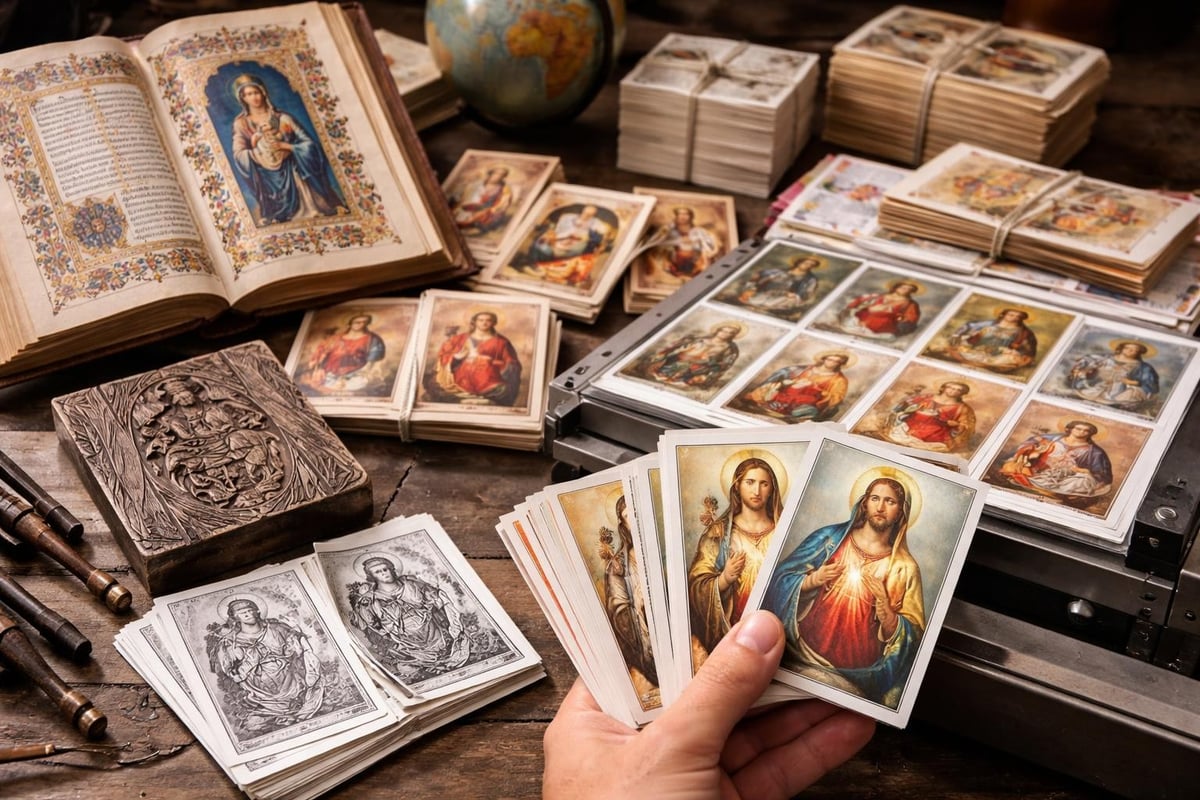
The origins of catholic prayer cards trace back to the 15th century, when the invention of the printing press made religious images accessible to ordinary believers. Before this technological advancement, only the wealthy could afford illuminated manuscripts or commissioned artwork depicting sacred subjects. The evolution of holy cards reveals how democratization of religious imagery transformed Catholic devotional life across all social classes.
Early prayer cards often featured woodcut prints of saints or biblical scenes, sometimes hand-colored by artisans. These precious items were treasured possessions, passed down through generations as family heirlooms. The production methods were labor-intensive and costly, which meant each card carried significant material and spiritual value.
From Hand-Colored Prints to Mass Production
The 19th century witnessed explosive growth in prayer card production. Advances in lithography and chromolithography enabled manufacturers to produce colorful, detailed images at unprecedented scales. Catholic publishing houses in Europe, particularly in France, Germany, and Italy, became centers of prayer card production, developing distinctive artistic styles that remain recognizable today.
Key developments during this period included:
- Introduction of lace-edge and die-cut designs
- Standardization of common card sizes
- Development of specialized themes for sacramental occasions
- Creation of coordinated series featuring related saints or mysteries
- Addition of indulgences to specific prayers printed on cards
Religious orders played crucial roles in distributing these cards. Missionaries carried them to distant lands, using them as evangelization tools. The portability and visual appeal of prayer cards made them ideal for teaching the faith to those who could not read or who spoke different languages.
The National Shrine of the Immaculate Conception continues this tradition today, offering prayer cards that connect modern Catholics with centuries of devotional practice. These cards serve both commemorative and instructional purposes, helping believers maintain connection with specific shrines, devotions, or spiritual intentions.
Categories and Types of Prayer Cards
Catholic prayer cards encompass diverse categories, each serving specific devotional purposes. Understanding these distinctions helps believers select appropriate cards for particular occasions, prayers, or spiritual needs. The variety reflects the richness of Catholic tradition and the multifaceted nature of prayer itself.
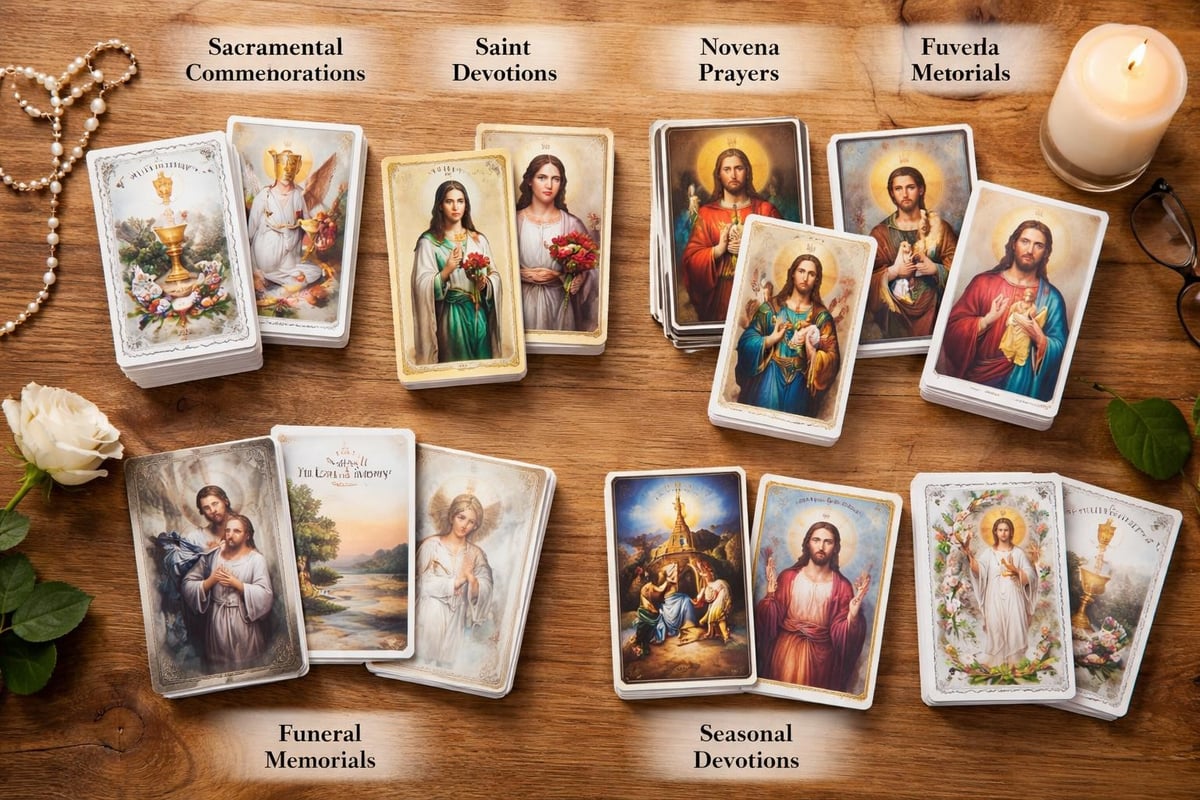
Sacramental Commemoration Cards
Baptism, First Communion, Confirmation, and Ordination cards mark pivotal moments in Catholic sacramental life. These cards typically include:
| Sacrament | Common Features | Typical Recipients |
|---|---|---|
| Baptism | Infant image, baptismal promises, godparents' names | Parents, godparents, family members |
| First Communion | Child with host, eucharistic prayers | Communicant, sponsors, teachers |
| Confirmation | Holy Spirit imagery, gifts and fruits | Confirmand, sponsor, family |
| Ordination | Priestly blessing, ordination date | New priest/deacon, congregation |
These commemorative cards serve as lasting reminders of grace received through the sacraments. Many Catholics preserve these cards in family albums or display them in their homes, creating visual timelines of spiritual growth and development.
Saint Devotional Cards
Individual saints inspire specific devotions, and prayer cards dedicated to these holy men and women remain among the most popular categories. These cards typically feature:
- Biographical information about the saint
- The saint's feast day
- Specific prayers associated with their intercession
- Symbols or imagery connected to their life
- Patronages the saint represents
For families seeking to introduce children to Catholic saints, prayer cards offer approachable entry points. The visual element captures attention while brief prayers and facts make learning manageable for young minds.
Prayer and Novena Cards
These cards focus on specific prayers rather than individuals, providing texts for:
- Traditional Catholic prayers (Our Father, Hail Mary, Apostles' Creed)
- Novenas to various saints or divine persons
- Litanies and chaplets
- Devotional prayers for specific intentions
- Marian consecrations and acts of entrustment
The Prayer Cards and Novenas collection at Journeys of Faith exemplifies this category's breadth, offering everything from simple daily prayers to elaborate nine-day novena sequences. Many Catholics appreciate having prayer texts readily available, eliminating the need to memorize lengthy prayers while maintaining proper form and traditional language.
Memorial and Funeral Cards
Perhaps the most widely distributed category, funeral memorial cards, also called Mass cards, serve multiple purposes:
- Announce that Masses will be offered for the deceased
- Provide funeral details for attendees
- Offer prayers for the repose of souls
- Create keepsakes for mourners
- Encourage ongoing prayer for the dead
These cards typically include the deceased's photograph, vital dates, a brief prayer or scripture passage, and sometimes a favorite saint or devotion. They become cherished mementos that prompt continued prayer for loved ones who have passed.
Practical Uses in Contemporary Catholic Life
Modern Catholics integrate prayer cards into spiritual practices in numerous creative and meaningful ways. Far from being mere collectibles or decorative items, these cards function as active tools for deepening prayer life, teaching the faith, and maintaining spiritual focus amid daily distractions.
Personal Prayer Enhancement
Carrying a prayer card creates opportunities for brief prayer throughout the day. Catholics report using them:
- During commutes or travel
- While waiting in lines or appointments
- As bookmarks in spiritual reading
- Beside beds for morning and evening prayer
- In workspaces as spiritual reminders
The physical act of holding a card, reading its prayer, and gazing at sacred imagery creates a multisensory prayer experience. This embodied approach to prayer recognizes that humans are not purely spiritual beings but incarnate souls who benefit from engaging multiple senses in worship and devotion.
Benefits of pocket-sized prayer cards include:
- Immediate accessibility without technology
- No battery or internet requirements
- Tactile engagement that enhances focus
- Visual beauty that elevates the mind
- Portability that fits any lifestyle
Educational Applications
Religious education programs consistently utilize prayer cards as teaching aids. Their compact format and visual appeal make them especially effective for:
- Introducing new saints: Students can collect cards featuring different holy men and women, learning their stories and patronages
- Teaching traditional prayers: Having prayer texts readily available helps students memorize properly
- Sacramental preparation: Cards reinforce what children learn in preparation classes
- Seasonal devotions: Advent, Lent, and Marian months feature specific prayer cards
- Family catechesis: Parents use cards to teach children at home
The understanding of holy cards as educational tools dates back centuries, with religious orders using them to spread Catholic teaching among illiterate populations. This pedagogical function remains relevant in 2026, even among literate populations, because visual learning complements textual instruction.
Evangelization and Outreach
Prayer cards serve as gentle evangelization tools in ways that more direct approaches might not. Catholics practicing personal evangelization appreciate prayer cards because they:
- Open conversations about faith naturally
- Provide something tangible to give seekers
- Require no explanation but invite questions
- Demonstrate Catholic devotional life concretely
- Create follow-up opportunities for deeper discussion
Leaving prayer cards in public spaces, including them with correspondence, or offering them during casual conversations plants seeds of faith without pressure or confrontation. The Catholic Company identifies multiple uses for personalized prayer cards in evangelization efforts, highlighting their effectiveness in both formal ministry and informal witness.
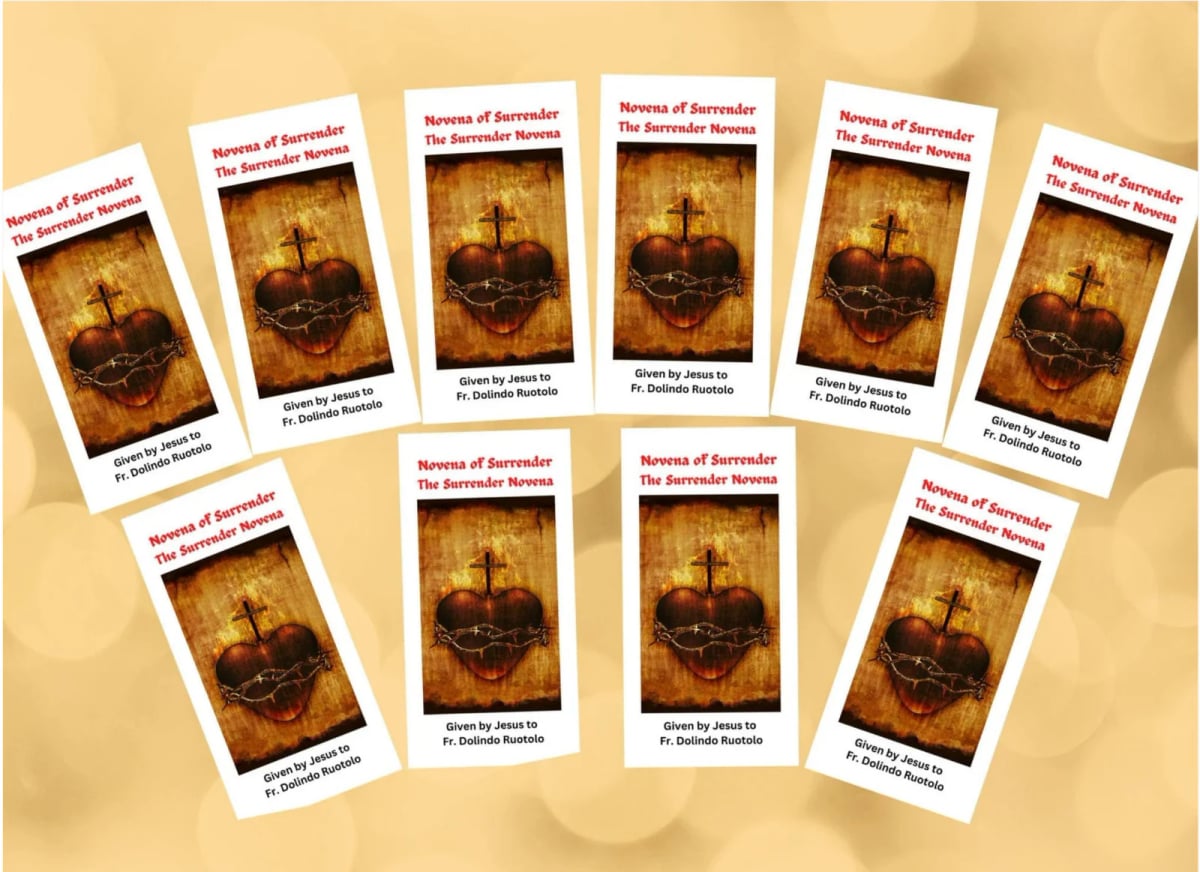
For those practicing the Surrender Novena to the Will of God, distributing Surrender Novena Packages offers a powerful way to share Father Dolindo Ruotolo's transformative prayer with others who might benefit from surrendering their anxieties to Jesus.
Design Elements and Artistic Traditions
The artistry of catholic prayer cards reflects broader movements in religious art while maintaining distinctive characteristics that make them immediately recognizable as devotional objects. Understanding these design elements enriches appreciation for the cards and enhances their effectiveness in prayer.
Traditional Iconographic Styles
Classical prayer card imagery draws from established iconographic traditions:
Byzantine-influenced designs feature:
- Frontal poses with direct eye contact
- Gold backgrounds symbolizing divine light
- Stylized rather than naturalistic rendering
- Symbolic colors (blue for Mary, red for martyrs)
- Minimal background detail focusing attention on the figure
Western European styles emphasize:
- Naturalistic human features and proportions
- Detailed backgrounds and settings
- Dramatic lighting and shadow
- Emotional expressiveness in faces
- Historical or narrative scenes
Neo-Gothic and devotional art characteristics include:
- Idealized, beautiful representations
- Soft color palettes
- Gentle facial expressions
- Abundant floral or decorative elements
- Romanticized rather than realistic depictions
| Artistic Style | Period | Key Characteristics | Common Subjects |
|---|---|---|---|
| Medieval | 1200-1500 | Flat, symbolic, gold leaf | Christ, Mary, major saints |
| Baroque | 1600-1750 | Dramatic, emotional, movement | Passion scenes, ecstasies |
| Devotional | 1850-1950 | Sweet, accessible, colorful | Sacred Heart, Infant Jesus |
| Contemporary | 1950-present | Varied, including modern and traditional | All subjects, diverse styles |
Modern Design Innovations
Contemporary prayer card designers balance tradition with accessibility, creating cards that honor historical styles while appealing to modern aesthetic sensibilities. Recent trends include:
- Minimalist designs with clean typography
- Photographic imagery from pilgrimage sites
- Abstract or symbolic rather than representational art
- Integration of modern printing techniques like foil stamping
- QR codes linking to additional prayers or information
Some producers now offer customizable cards that maintain devotional integrity while allowing personalization for specific events or communities. This flexibility serves contemporary needs without abandoning the essential purpose of directing hearts toward God.
The Spiritual Psychology of Prayer Cards
Beyond their practical functions, catholic prayer cards engage psychological and spiritual dynamics that enhance their effectiveness as devotional tools. Understanding these deeper dimensions reveals why such simple objects maintain enduring appeal across centuries and cultures.
Sacramental Presence and Material Faith
Catholic theology emphasizes the importance of matter in mediating grace. While prayer cards are not sacramentals in the technical sense unless blessed, they participate in the broader Catholic understanding that physical objects can direct attention toward spiritual realities. Catholic teaching on prayer cards emphasizes their role as reminders rather than as possessing inherent power, yet their physical presence creates psychological anchors for prayer.
The concept of "thin places"-locations or objects where the boundary between physical and spiritual seems particularly permeable-applies to how many Catholics experience prayer cards. Gazing at an image of a beloved saint while reciting associated prayers creates a sense of closeness, of communion across the veil separating earth from heaven.
Psychological benefits of physical prayer aids:
- Create consistent environmental cues for prayer
- Engage visual memory alongside verbal memory
- Provide comfort through familiar imagery
- Reduce mental effort required to initiate prayer
- Offer focal points during distraction or anxiety
Memory and Association
Prayer cards function as mnemonic devices, triggering memories of significant spiritual moments. A First Communion card recalls that joyful day decades later. A funeral memorial card prompts ongoing prayer for departed loved ones. A pilgrimage card reconnects the bearer with graces received at a sacred site.
These associative functions tap into how human memory works. Psychologists recognize that multisensory experiences create stronger, more accessible memories than single-sense inputs. Prayer cards combine visual, tactile, and often aromatic elements (when tucked in Bibles or near incense) with the verbal and mental aspects of prayer itself.
Collecting and Preserving Prayer Cards
Many Catholics find themselves accumulating prayer cards over time, creating collections that document spiritual journeys, family histories, and devotional emphases. Approaching this collecting intentionally transforms random accumulation into meaningful spiritual practice.
Organizational Approaches
Different organizational systems serve various purposes:
- Chronological arrangement: Cards sorted by when received, creating spiritual timelines
- Thematic organization: Grouped by saint, prayer type, or devotion
- Liturgical ordering: Arranged according to the church calendar
- Personal significance: Organized by importance or frequency of use
- Artistic style: Collected as examples of religious art traditions
Dedicated prayer card albums, similar to photo albums but sized appropriately, protect cards while keeping them accessible. Some collectors use archival-quality sleeves to preserve older or more delicate cards, recognizing their historical and familial value.
Cards as Family Heritage
Prayer cards often become unexpected genealogical resources. Funeral cards document family members' deaths. Sacramental cards mark spiritual milestones. Cards from deceased relatives reveal their devotional preferences and prayer lives. The history of holy cards intertwines with family histories, making them valuable artifacts beyond their original devotional purposes.
Passing collections to younger generations creates tangible connections with ancestors' faith lives. A grandmother's worn St. Therese card or a grandfather's military chaplain card becomes a point of connection across generations, inspiring prayer for those who have gone before and encouraging imitation of their faith.
Preservation considerations include:
- Storing cards in acid-free environments
- Avoiding direct sunlight that fades colors
- Maintaining moderate temperature and humidity
- Handling older cards with clean, dry hands
- Scanning irreplaceable cards for digital backup
- Including documentation about cards' origins and significance
Incorporating Prayer Cards into Family Devotions
Families seeking to establish or enrich domestic church practices find prayer cards particularly helpful. Their accessibility to all ages, visual appeal, and compact format make them ideal for family prayer contexts.
Seasonal and Liturgical Uses
Coordinating prayer cards with the liturgical calendar deepens participation in the Church's rhythm:
Advent practices:
- Daily reflection on Jesse Tree prayer cards
- O Antiphon cards for December 17-23
- Nativity scene characters with associated prayers
Lenten observances:
- Stations of the Cross cards for weekly devotions
- Cards featuring penitential saints
- Passion narrative sequence cards
Easter Season:
- Divine Mercy Sunday cards with the chaplet
- Resurrection appearance cards for meditation
- Pentecost and Holy Spirit cards
Marian months (May and October):
- Different Marian title cards each day
- Rosary mystery cards for family rosary
- Cards commemorating Marian apparitions
Creating Prayer Card Traditions
Families develop unique traditions incorporating these devotional tools:
- Birthday saints: Children receive cards of saints whose feast days fall near their birthdays
- Morning offerings: Each family member selects a card to inspire their day
- Meal blessings: Rotating through different grace prayers from cards
- Bedtime prayers: Children choose saint cards for nighttime intercession
- Crisis responses: Pulling specific cards during difficulties (St. Jude for desperate situations, St. Anthony for lost items)
These practices create positive associations with prayer while teaching children about saints and traditional Catholic devotions. The visual and tactile elements particularly engage younger children who may not yet read fluently.
Resources and Recommendations
Navigating the abundance of available prayer cards requires some guidance. Quality varies significantly, from cheaply produced cards with inaccurate information to beautifully crafted pieces that could serve as small works of art.
Evaluating Quality and Authenticity
When selecting prayer cards, consider:
Theological accuracy:
- Prayers should reflect orthodox Catholic teaching
- Saint information should be historically reliable
- Devotions should align with Church approval
- Imprimaturs or nihil obstats indicate ecclesiastical review
Production quality:
- Durable cardstock that withstands handling
- Clear, readable printing
- Color accuracy in sacred images
- Professional finishing (scoring, cutting, lamination)
Practical usability:
- Appropriate size for intended use
- Prayer text large enough to read comfortably
- Effective layout balancing image and text
- Information about the saint or devotion's significance
Where to Find Prayer Cards
Quality sources for catholic prayer cards include:
- Parish bookstores and gift shops
- Catholic publishing houses
- Marian shrines and pilgrimage sites
- Religious goods suppliers
- Monasteries and convents
The extensive Journeys of Faith online store offers thousands of Catholic items, including diverse prayer card selections that meet high standards for theological accuracy and production quality. Their commitment to evangelization through media ensures that products support authentic Catholic devotion.
For those seeking comprehensive resources, the Journeys of Faith mega search engine connects shoppers with hundreds of Catholic retailers, making it easier to find specific prayer cards or compare options across multiple suppliers.
Digital Access and Mobile Applications
While this article emphasizes physical prayer cards, digital alternatives serve specific needs. The Journeys of Faith mobile app for iPhone and Android provides access to prayers, saint information, and devotional content on-the-go. This complements rather than replaces physical cards, offering additional flexibility for modern Catholics.
However, many users report that digital prayers lack the tactile satisfaction and visual beauty of physical cards. The best approach often combines both: maintaining a collection of physical cards for regular use while having digital backups available when carrying cards isn't practical.
Supporting the Mission
The production and distribution of quality prayer cards requires ongoing resources. Catholic media organizations depend on support from believers who value authentic, beautiful expressions of faith. Making donations to ministries like Journeys of Faith helps ensure continued availability of prayer cards and other resources that support spiritual growth.
Beyond financial support, Catholics can assist these missions by:
- Sharing prayer cards with others who might benefit
- Recommending quality sources to fellow Catholics
- Using cards in evangelization efforts
- Teaching younger generations about their value
- Preserving historical cards for future study
- Engaging with Catholic media organizations through conversation and feedback
The work of evangelization through media extends far beyond prayer card production, encompassing books, videos, events, and digital content. Yet prayer cards remain foundational tools, accessible to all and adaptable to countless circumstances.
Additional Resources from Journeys of Faith:
- Explore the Journeys of Faith online store with thousands of Catholic items
- Use the unique mega search engine linked to hundreds of Catholic shops and stores
- Download the Journeys of Faith app for iPhone or Android
- Chat with the team anytime with questions or needs
- Support the mission by making a donation to help reach more souls
The Enduring Value of Small Devotions
In an era of grand spiritual programs and elaborate formation initiatives, the humble prayer card reminds Catholics that small, consistent practices often bear the greatest fruit. These pocket-sized devotional tools require no special training, expensive technology, or extensive time commitments. They simply invite believers to pause, pray, and remember that they are not alone in their spiritual journeys.
The saints whose images grace these cards walked earthly paths before entering heavenly glory. Their intercession remains available to all who call upon them in faith. The prayers printed on these cards have been prayed by countless Catholics across centuries, creating a cloud of witnesses whose voices join ours when we recite familiar words.
Catholic prayer cards will likely continue adapting to changing circumstances while maintaining their essential character. New printing technologies may emerge, artistic styles may evolve, and distribution methods may shift. Yet the fundamental purpose remains constant: directing human hearts toward divine realities, one small card at a time.
The practice of carrying prayer cards cultivates awareness of spiritual presence amid secular routines. That worn card in a wallet or purse becomes a portable sanctuary, a reminder that every moment offers opportunity for prayer, every location can become holy ground, and every circumstance provides occasion for turning to God with confidence and love.
Catholic prayer cards serve as powerful yet accessible tools for deepening faith, teaching tradition, and maintaining prayer focus throughout daily life. Whether used for personal devotion, family catechesis, or gentle evangelization, these small cards carry substantial spiritual weight. Journeys of Faith supports Catholics in discovering and utilizing these traditional devotional aids through an extensive collection of prayer cards, books, and resources designed to strengthen faith and spread the Gospel through every available medium.
