

The tradition of catholic saints and their patronage represents one of the most enduring aspects of Catholic spirituality, connecting believers with heavenly intercessors who understand their specific needs, challenges, and circumstances. This practice has developed over two millennia, creating a rich tapestry of spiritual relationships between the faithful on earth and the saints in heaven. Understanding how patron saints function within the Church provides believers with powerful allies in prayer and models of holiness tailored to their unique life situations.
The Theological Foundation of Saintly Patronage
The concept of catholic saints and their patronage rests on the doctrine of the Communion of Saints, which teaches that all members of the Church-whether on earth, in purgatory, or in heaven-remain connected through Christ. Saints in heaven, having achieved the beatific vision, can intercede for those still journeying toward salvation. The Catholic Encyclopedia's entry on patron saints explains that this intercessory role doesn't diminish Christ's unique mediatorship but rather participates in it.
The theological basis includes:
- The Biblical concept of intercessory prayer (James 5:16)
- The belief that death does not sever the bonds of Christian charity
- The understanding that saints, being closer to God, can pray more effectively for us
- The tradition of invoking martyrs at their tombs, dating to the early Church
Brought to you by Journeys of Faith, founded by Bob and Penny Lord. We are an Augustinian Secular Institute-Cyber Apostles. Our Mission is Evangelization through Media.
How Saints Become Patrons
The assignment of patronage typically develops through several historical mechanisms. Some saints become patrons because of their life experiences, such as Saint Joseph becoming the patron of workers and families due to his role as foster father to Jesus and his profession as a carpenter. Others receive patronage through legendary miracles, while some are designated by papal decree or popular devotion over centuries.
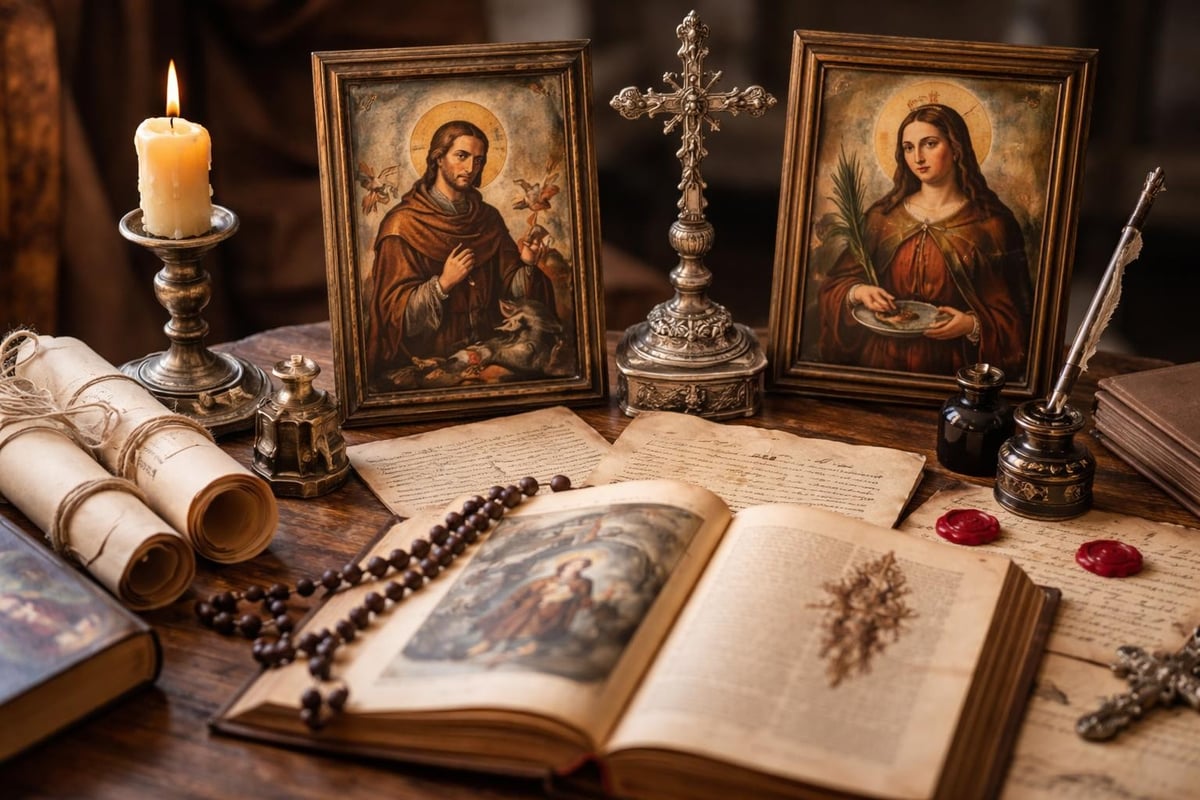
The Vatican maintains certain protocols for officially recognizing patronages, though many developed organically through local devotion. When a community experiences miraculous intervention attributed to a particular saint, that saint often becomes associated with the specific need or profession involved. This organic development reflects the Church's recognition of authentic popular piety.
Categories of Saintly Patronage
Catholic saints and their patronage span virtually every aspect of human existence. The comprehensive patronage categorization demonstrates the remarkable breadth of this tradition. These categories help believers identify which saints can best understand and intercede for their particular situations.
Professional and Occupational Patronage
Many saints serve as patrons for specific professions and occupations. This practice acknowledges that work constitutes a significant portion of human life and that even our professional endeavors benefit from spiritual support.
| Profession | Patron Saint | Reason for Patronage |
|---|---|---|
| Teachers | Saint John Baptist de La Salle | Founded teaching order |
| Nurses | Saint Camillus de Lellis | Dedicated life to caring for sick |
| Lawyers | Saint Thomas More | Chancellor who died for faith |
| Artists | Saint Catherine of Bologna | Accomplished painter and mystic |
| Musicians | Saint Cecilia | Traditional association with music |
| Writers | Saint Francis de Sales | Prolific spiritual author |
Those seeking deeper understanding of how saints lived their vocations can explore the extensive collection of Catholic Saints Books, which reveal the secrets of holiness discovered by studying the lives of other saints.
Geographic and National Patronage
The tradition of patron saints of places reflects how different regions and nations have adopted particular saints as their heavenly protectors. Saint Patrick guards Ireland, Saint James watches over Spain, and Saint Joan of Arc protects France. These patronages often stem from the saint's connection to the region through birth, ministry, or miraculous intervention.
National patronages create a sense of spiritual identity for countries and communities. They provide a heavenly advocate who understands the particular cultural and historical challenges faced by that nation. Many national feast days celebrate these patron saints with special liturgies and cultural traditions.
Patronage for Life Situations and Special Needs
The breadth of catholic saints and their patronage extends to cover virtually every human condition, illness, and life circumstance. This comprehensive coverage reflects the Church's pastoral care and recognition that no suffering falls outside God's concern.
Health-Related Patronage
Saints who suffered particular illnesses or who healed others during their earthly lives often become patrons for those afflictions:
- Saint Peregrine Laziosi - Cancer patients
- Saint Lucy - Eye disorders and blindness
- Saint Dymphna - Mental illness and anxiety
- Saint Agatha - Breast cancer
- Saint Blaise - Throat ailments
- Saint Lidwina - Chronic pain and suffering
These patronages offer comfort to the suffering, providing not just intercessory prayer but also models of faithful endurance. Patients can look to their patron saints as examples of how to unite suffering with Christ's passion.
Family and Relational Patronage
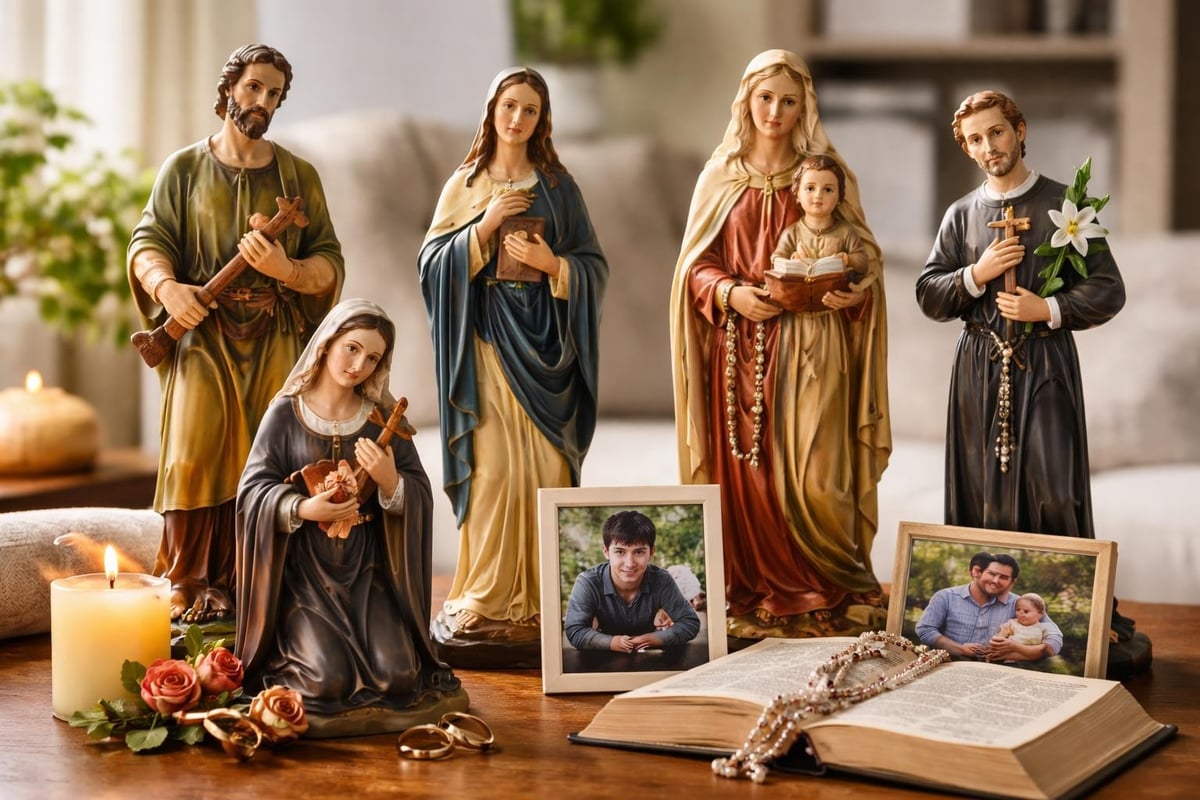
Family life receives particular attention in catholic saints and their patronage. Saint Anne, mother of Mary, serves as patron of mothers and grandmothers. Saint Rita of Cascia intercedes for impossible causes and difficult marriages. Saint Monica, who prayed for years for her wayward son Augustine, serves as patron for mothers of troubled children.
Family patronages include:
- Marriage preparation and wedding couples
- Parents struggling with children's faith formation
- Families experiencing discord or separation
- Adoptive parents and adopted children
- Extended family relationships
- Domestic concerns and household management
The Virgin Mary's Unique Patronages
The veneration of Mary in the Catholic Church occupies a special place in understanding patronage. As Mother of God and Queen of All Saints, Mary holds numerous patronages that reflect her unique role in salvation history. She serves as patroness of the Universal Church, various countries, religious orders, and countless specific causes.
Mary's titles often reflect her patronages. Our Lady of Guadalupe serves as patroness of the Americas and the unborn. Our Lady of Loreto is patroness of aviators. Our Lady of Good Counsel assists those seeking guidance in difficult decisions. These Marian patronages demonstrate how a single person can intercede for diverse needs based on different aspects of their identity and mission.
The resources at Journeys of Faith include extensive materials on Marian devotion, reflecting the company's mission to promote Mother Mary alongside the Eucharist and the Saints. Understanding Mary's maternal care for all aspects of human life enriches appreciation for how catholic saints and their patronage function.
Practical Application of Patron Saints in Daily Life
Understanding catholic saints and their patronage provides practical spiritual benefits when properly integrated into daily Catholic practice. Rather than superstitious invocation, authentic devotion to patron saints involves studying their lives, imitating their virtues, and seeking their intercession with faith in God's providence.
Choosing a Personal Patron Saint
Many Catholics select personal patron saints based on several criteria:
Selection methods include:
- Baptismal or Confirmation names
- Shared profession or life circumstances
- Personal devotion developed through reading the saint's biography
- Feast day coinciding with birthdate
- Specific need or intention requiring intercession
The practice of choosing a patron saint helps personalize the faith journey. When facing specific challenges, knowing that a particular saint understands those struggles from personal experience provides consolation and encouragement. Teaching children about Catholic saints establishes this relationship early in spiritual formation.
Incorporating Patronage into Prayer Life
Effective devotion to patron saints involves more than occasional requests for help. A robust relationship with patron saints includes:
- Learning their life stories to understand their virtues and trials
- Celebrating their feast days with special prayer or acts of charity
- Regular invocation in morning and evening prayers
- Imitating their particular virtues in daily life
- Making pilgrimages to shrines associated with them when possible
| Practice | Frequency | Spiritual Benefit |
|---|---|---|
| Novena to patron saint | Nine consecutive days | Focused intercession for specific needs |
| Daily invocation | Each morning | Constant awareness of heavenly friendship |
| Feast day celebration | Annually | Deepened appreciation for saint's life |
| Virtue imitation | Ongoing | Character formation in saint's example |
| Study of saint's writings | Weekly | Spiritual wisdom and guidance |
Contemporary Relevance of Patron Saints
The modern world might seem far removed from medieval patronage traditions, yet catholic saints and their patronage remain remarkably relevant to contemporary challenges. New patronages continue to emerge as the Church recognizes saints for modern needs and as technology creates new fields requiring spiritual protection.
Modern Patronages and Causes
Saint Isidore of Seville, a seventh-century scholar, has been proposed as patron of the internet and computer users due to his encyclopedic work collecting human knowledge. Saint Maximilian Kolbe, who used media for evangelization before his martyrdom at Auschwitz, serves as patron of journalists and families. These connections between ancient saints and modern contexts demonstrate the timeless applicability of saintly intercession.
Environmental concerns have led to renewed focus on Saint Francis of Assisi's patronage of ecology. Medical ethics challenges highlight the relevance of physician saints like Saint Gianna Beretta Molla. The directory of patron saints continues expanding as the Church addresses contemporary needs through ancient intercessory traditions.

Patron Saints and Social Justice
Catholic saints and their patronage extend to social justice concerns, providing heavenly advocates for the marginalized and oppressed. Saint Martin de Porres intercedes for racial justice and harmony. Saint Frances Cabrini, patron of immigrants, remains especially relevant amid global migration challenges. Saint Thomas Aquinas guides those seeking truth in education and intellectual pursuits.
These social patronages remind believers that faith addresses systemic injustice and structural sin, not merely personal piety. Invoking patron saints for social causes connects contemporary activism with historical witnesses who confronted similar evils in their times.
Devotional Practices Honoring Patron Saints
Authentic Catholic tradition offers various devotional practices for honoring patron saints beyond simple prayer requests. These practices deepen relationship with heavenly intercessors while avoiding superstition or magical thinking that reduces saints to spiritual vending machines.
Novenas and Special Prayers
Novenas represent one of the most traditional forms of petition to patron saints. These nine-day prayer cycles prepare the soul for receiving grace while demonstrating perseverance in prayer. Many saints have specific novenas composed in their honor, incorporating Scripture, traditional prayers, and petitions related to their patronage.
Special prayers and litanies also honor patron saints. Litanies invoke various titles and attributes of saints, building devotion through repetition and meditation. These structured prayers help maintain focus during intercession while teaching about the saint's virtues and accomplishments.
Sacred Objects and Sacramentals
Catholic tradition encourages use of sacramentals-sacred objects that prepare believers to receive grace. Medals, holy cards, and statues of patron saints serve as tangible reminders of heavenly friendship and spiritual protection. These items aren't magical talismans but rather focal points for devotion and faith.
Common sacramentals include:
- Medal of patron saint worn as jewelry
- Holy card with saint's image and prayer
- Statue for home prayer space
- Relic (when available) for veneration
- Scapular associated with saint's order
The collection of prayer cards and devotional items available through Catholic media companies helps believers maintain these traditional practices. Physical reminders of spiritual realities support consistent prayer and reflection on the saint's example.
The Process of Canonization and Official Patronage
Understanding how the Church officially recognizes catholic saints and their patronage illuminates the careful discernment involved in these designations. The canonization process ensures that those presented as models of holiness truly lived heroic virtue and that miracles attributed to their intercession are authentic.
Steps in Canonization
The formal process typically includes:
- Servant of God - Initial stage after death when cause opens
- Venerable - Recognition of heroic virtue
- Blessed - Beatification after one verified miracle
- Saint - Canonization after second verified miracle (martyrs may be exceptions)
Each stage involves rigorous historical research, theological examination, and medical verification of miraculous healings. This thoroughness ensures the Church confidently proposes these individuals as worthy of imitation and capable of heavenly intercession.
Assigning Patronages
Patronages may be assigned through various mechanisms:
| Method | Authority | Example |
|---|---|---|
| Papal declaration | Holy Father | Saint Francis de Sales, patron of writers |
| Congregation decree | Vatican dicastery | Modern professional patronages |
| Popular devotion | Organic development | Many medieval patronages |
| Historical connection | Obvious relationship | Saint Luke, patron of physicians |
The searchable patron saints index demonstrates how diverse these assignments have become, covering virtually every human concern and activity.
Living the Example of Patron Saints
The ultimate purpose of catholic saints and their patronage extends beyond obtaining favors to transformation of life through imitation of virtue. Each patron saint provides not just intercessory power but a roadmap for holiness within specific circumstances. A nurse honoring Saint Camillus learns not just to pray for patients but to see Christ in suffering humanity as the saint did.
Virtue Formation Through Saintly Example
Bob and Penny Lord discovered that one of the secrets of the Roman Catholic Saints was their practice of studying the lives of other saints before them. This pattern of learning from predecessors creates a chain of holiness stretching back to the apostles. Modern believers continue this tradition by studying their patron saints' virtues.
Practical virtue formation includes:
- Identifying the saint's characteristic virtues
- Examining how they practiced these virtues in their historical context
- Translating these practices to contemporary situations
- Regular examination of conscience regarding these specific virtues
- Seeking the saint's intercession for growth in their particular strengths
Patron Saints as Crisis Companions
During times of particular trial, patron saints serve as spiritual companions who understand specific suffering. Cancer patients invoking Saint Peregrine find comfort knowing he experienced the disease himself and trusted God through it. Parents of wayward children gain hope from Saint Monica's decades-long intercession for Augustine's conversion.
This companionship aspect of catholic saints and their patronage addresses the isolation that often accompanies suffering. Believers never face challenges alone when they recognize heavenly friends who walked similar paths and now advocate before God's throne.
Resources for Deepening Patron Saint Devotion
Numerous resources support believers seeking to develop authentic devotion to their patron saints. Quality materials that combine historical accuracy, theological soundness, and practical application help avoid superficial or superstitious approaches to patronage.
Books and Media
Comprehensive biographies provide the foundation for understanding patron saints' lives and virtues. These narratives reveal not just miraculous elements but the daily choices, struggles, and growth that characterized their paths to holiness. The extensive collection of books and media at Journeys of Faith offers resources for studying saints in depth.
Audio programs, documentaries, and digital resources make patron saint content accessible in various formats. These different media types accommodate diverse learning styles and allow integration of patron saint study into busy schedules through commute listening or visual learning.
Liturgical Resources
The Church's liturgical calendar celebrates patron saint feast days, providing annual opportunities for focused devotion. Liturgical resources including proper prayers, Scripture readings, and hymns for these celebrations enrich communal worship and personal prayer.
Resources available include:
- Missals with proper prayers for patron saints
- Liturgical calendars highlighting feast days
- Saint-specific devotional guides
- Retreat materials focused on particular saints' spirituality
- Pilgrimage guides to shrines and holy sites
The directory of patron saints and occupations helps identify appropriate feast days and celebrations for different groups and professions.
Regional Variations in Patron Saint Devotion
Catholic saints and their patronage manifest differently across cultures and regions, reflecting the universal Church's ability to embrace diverse expressions of faith. While core theology remains consistent, cultural contexts shape how communities relate to and celebrate their patron saints.
Cultural Expressions of Patronage
Latin American countries often celebrate patron saint feast days with elaborate processions, traditional music, and community-wide festivities. European traditions might emphasize pilgrimage to historic shrines and churches. Asian Catholic communities integrate patron saint devotion with cultural respect for ancestors and elders. African expressions often emphasize community celebration and vibrant liturgical expression.
These variations enrich global Catholic culture while maintaining doctrinal unity. The patron saints of countries directory illustrates how different nations have adopted heavenly protectors who reflect their history and identity.
Local Patron Saints and Lesser-Known Intercessors
While universal patron saints like Saint Joseph and Saint Anthony enjoy worldwide devotion, countless local patrons serve particular regions, towns, or communities. These lesser-known saints often hold special significance for their areas, with traditions passed through generations. Discovering local patron saints connects believers to their community's spiritual heritage.
Parish patron saints also create identity and focus for local faith communities. Churches named after particular saints naturally develop special devotion to those patrons, incorporating their feast days into annual rhythms and drawing on their intercession for parish needs.
Integration with Sacramental Life
Catholic saints and their patronage function most authentically when integrated with the sacramental life of the Church rather than treated as separate devotional practices. The sacraments remain the primary channels of grace, while patron saint intercession supports and enriches sacramental participation.
Patron Saints and the Eucharist
The highest form of prayer remains the Holy Sacrifice of the Mass, where believers unite with Christ's perfect offering to the Father. Patron saint devotion should lead to deeper Eucharistic participation, not substitute for it. Saints themselves pointed constantly to the Eucharist as the source and summit of Christian life.
Many patron saints demonstrated profound Eucharistic devotion during their earthly lives. Saint Clare of Assisi defended her convent by raising the Blessed Sacrament against invaders. Saint Thomas Aquinas composed the Divine Office for Corpus Christi. These examples remind believers that authentic patron saint devotion flows from and returns to Eucharistic centrality.
Confirmation Saints and Lifelong Patronage
The Sacrament of Confirmation invites candidates to choose patron saints whose names they adopt as their Confirmation names. This practice establishes lifelong relationships with particular intercessors who guide the confirmed through their faith journey. The chosen saint becomes a spiritual mentor and advocate, particularly relevant to the individual's vocation and circumstances.
Understanding catholic saints and their patronage enriches Catholic life by providing specific heavenly intercessors for every human need while offering concrete models of holiness within particular vocations and circumstances. These relationships with the saints transform abstract theology into lived experience of the Communion of Saints. Whether you're exploring patron saints for the first time or deepening long-held devotions, Journeys of Faith offers comprehensive resources including books, prayer cards, and devotional materials to support your spiritual journey through the wisdom and intercession of the saints.
Explore these resources to grow in your devotion:
- Explore Journeys of Faith Online store with thousands of Catholic Items at https://journeysoffaith.com/collections
- Our Unique Mega Search Engine https://journeysoffaith.com/search is linked to hundreds of Catholic Shops and Stores
- Get the Journeys of Faith NEW App for iPhone or Android-Search for Journeys of Faith or go to https://journeysoffaith.com/pages/download-our-app
- We need your help to reach more souls. Please Make a Donation https://journeysoffaith.com/pages/donate