

The chair of saint peter stands as one of the most powerful symbols in Catholic tradition, representing far more than a physical throne. This sacred relic embodies the teaching authority granted by Christ to Saint Peter and passed down through centuries of papal succession. Understanding the chair of saint peter requires exploring both its tangible history as an artifact preserved in St. Peter's Basilica and its profound theological significance as the seat of apostolic authority that continues to guide the Catholic Church.
Understanding the Physical Relic
The chair of saint peter exists as an actual wooden throne housed within the magnificent baroque monument created by Gian Lorenzo Bernini in St. Peter's Basilica. This ancient seat, believed to have been used by Saint Peter himself during his ministry in Rome, has undergone extensive scientific analysis revealing its complex construction history. The chair consists of oak wood fragments that date to different periods, with some portions potentially originating from the 6th century.
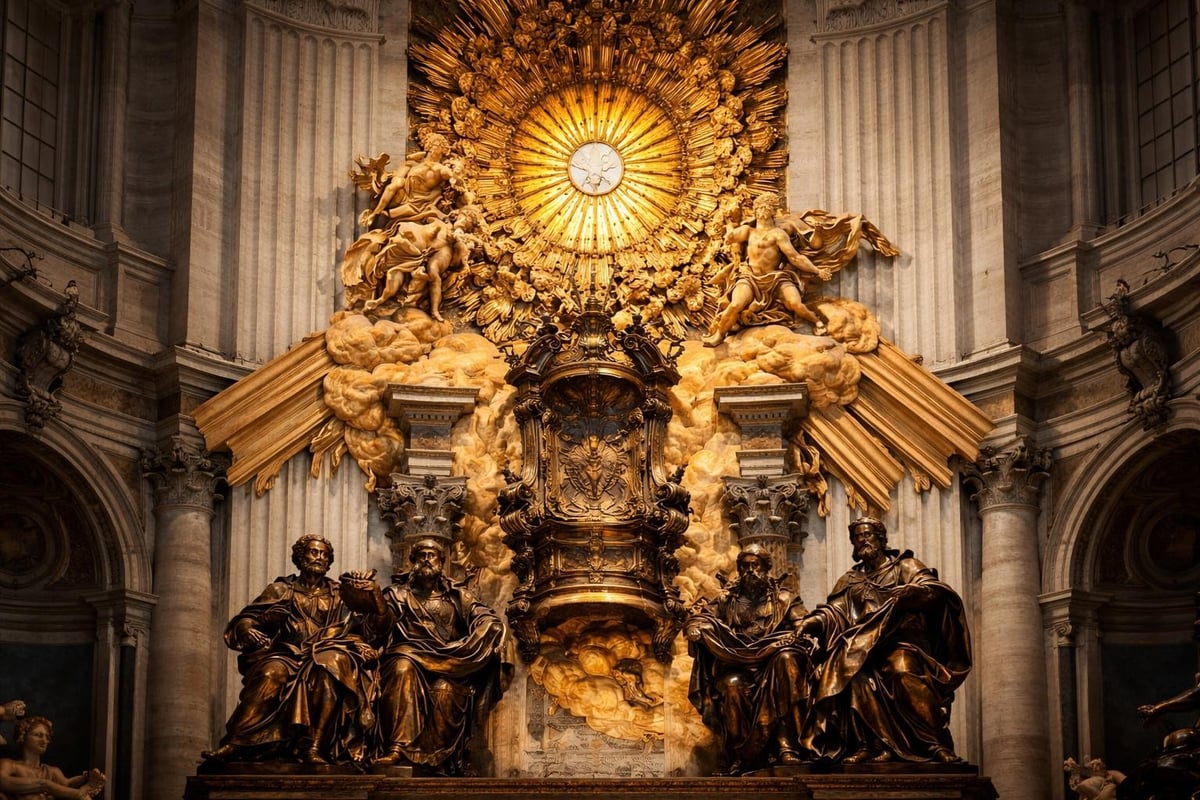
Bernini's bronze monument, completed in 1666, encases this precious relic in a spectacular display of artistic genius and theological symbolism. The elaborate structure features four massive bronze statues of Church Doctors supporting the elevated throne, while angels and cherubs surround the composition. A central feature includes the alabaster window with the dove of the Holy Spirit, bathing the entire monument in golden light.
The physical preservation of the chair of saint peter demonstrates the Catholic Church's commitment to honoring tangible connections with the apostolic era. Scientific examinations conducted in recent decades have confirmed the throne's antiquity, though debates continue regarding which portions date directly to Peter's lifetime versus later renovations and additions.
Brought to you by Journeys of Faith, founded by Bob and Penny Lord. We are Cyber Apostles and members of the Augustinian Secular Institute, serving as the evangelization arm of the Cloistered Augustinian Nuns in Montefalco, Italy. Our mission centers on evangelization through media, using the tools that God has allowed to be created to reach souls worldwide.
The Artistic Legacy of Bernini
Gian Lorenzo Bernini transformed the simple ancient chair into a powerful visual proclamation of papal authority and divine guidance. His baroque masterpiece weighs approximately 150 tons and rises dramatically in the apse of St. Peter's Basilica. The monument's design reflects careful theological planning, with every element contributing to the overall message of apostolic succession and heavenly approval.
The four bronze doctors of the Church who support the throne represent both Eastern and Western traditions. Saints Ambrose and Augustine symbolize the Latin Church, while Saints Athanasius and John Chrysostom represent Greek Christianity. This inclusive design emphasizes the universal nature of Peter's authority and the chair's role in unifying all Christians under one shepherd.
Bernini incorporated precious materials throughout the composition, including gilt bronze, marble, and stucco. The detailed craftsmanship visible in every figure and ornamental detail demonstrates the Renaissance and Baroque period's dedication to glorifying sacred objects and spaces. The monument stands as both artwork and theological statement, inviting contemplation of the mysteries of faith and authority.
The Feast of the Chair of Saint Peter
The Catholic Church celebrates the Feast of the Chair of Saint Peter annually on February 22nd, honoring not merely a piece of furniture but the teaching authority entrusted to Peter by Christ. This liturgical celebration dates back centuries, with historical records indicating observance as early as the 4th century in Rome. The feast emphasizes unity, authority, and the continuous guidance of the Holy Spirit through the successors of Peter.
During this celebration, Catholic faithful worldwide reflect on Christ's words to Peter in Matthew 16:18-19, where He declares Peter the rock upon which the Church will be built. The chair of saint peter serves as the physical manifestation of this divine commission, representing the unbroken chain of papal authority extending from the first apostle to the current Holy Father.
Historical Development of the Feast
Ancient Christian communities recognized multiple dates associated with Peter's ministry, leading to variations in how the chair of saint peter was commemorated. The Roman tradition settled on February 22nd, consolidating earlier celebrations that had distinguished between Peter's ministry in Rome and Antioch. This unification reflected theological developments emphasizing the primacy of Rome and the singular authority vested in Peter's successors.
The feast gained particular prominence during periods when papal authority faced challenges or required affirmation. Medieval popes emphasized the solemnity to strengthen claims of universal jurisdiction and teaching authority. The liturgical texts composed for this feast day articulate key doctrines regarding papal infallibility, magisterial authority, and ecclesial unity.
Contemporary celebrations of the feast continue this tradition while incorporating modern ecumenical sensibilities. Homilies and reflections often address the pope's role as servant leader and unifier, balancing authority with pastoral care. The chair of saint peter remains central to these observances as both historical artifact and living symbol.
Theological Significance and Church Authority
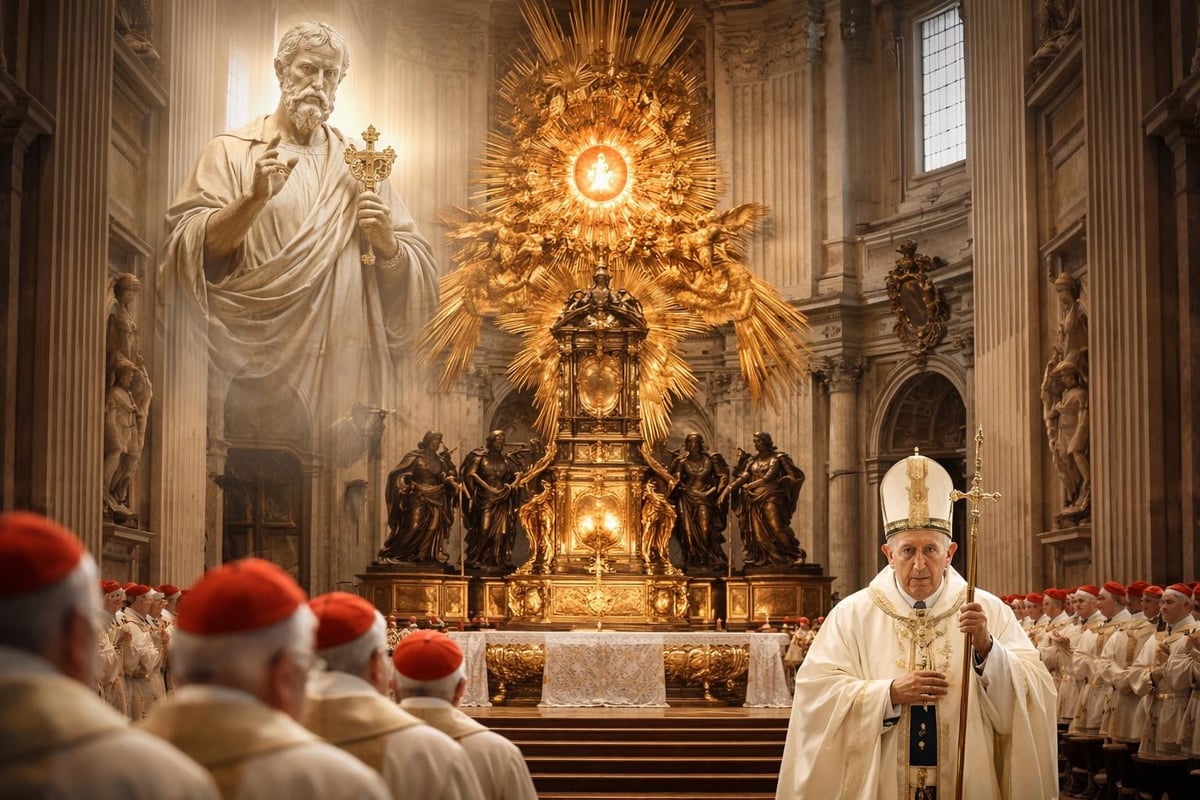
The chair of saint peter represents far more than historical interest; it embodies essential Catholic doctrines regarding church governance and divine guidance. The concept of the "chair" (cathedra in Latin) signifies teaching authority, with bishops throughout the Church occupying their own cathedral chairs. Peter's chair holds preeminence as the ultimate teaching seat from which definitive doctrine proceeds.
This understanding connects directly to the doctrine of papal infallibility, which states that the pope, when speaking ex cathedra (from the chair) on matters of faith and morals, teaches without error through the guidance of the Holy Spirit. The chair of saint peter thus symbolizes this extraordinary charism granted to Peter's successors for the protection and guidance of the faithful.
Key Theological Elements of the Chair of Saint Peter:
- Apostolic Succession: The unbroken line of authority from Peter to current popes
- Teaching Authority: The Magisterium's role in preserving and interpreting divine revelation
- Unity: The chair as focal point for Catholic communion worldwide
- Pastoral Care: The pope's responsibility as shepherd of Christ's flock
- Divine Guidance: The Holy Spirit's continuous presence in papal ministry
The symbolism of papal infallibility associated with the chair of saint peter requires careful understanding. This doctrine does not suggest the pope possesses personal perfection or immunity from error in all matters. Rather, it affirms that when the specific conditions for infallible teaching are met, the Holy Spirit preserves the Church from doctrinal error through Peter's successor.
The Chair in Ecumenical Dialogue
Modern ecumenical conversations frequently address the chair of saint peter and questions of papal primacy. Protestant and Orthodox Christian communities maintain different perspectives on Peter's role and whether his authority transfers to subsequent bishops of Rome. These theological discussions examine scriptural evidence, patristic testimony, and historical developments in church governance.
Catholics engaged in ecumenical dialogue emphasize that the chair of saint peter serves unity rather than dominance. Pope Francis and recent predecessors have articulated visions of papal ministry that highlight service, collegiality with other bishops, and respect for legitimate diversity within unity. The chair symbolizes a ministry of maintaining communion rather than exercising absolute control.
Historical research has illuminated how understandings of papal authority evolved over centuries, with the chair of saint peter playing varying symbolic roles. Early centuries show less centralized authority, with gradual development toward the medieval and modern understanding of universal papal jurisdiction. Recognizing this historical complexity enriches contemporary theological reflection while maintaining continuity with apostolic origins.
Artistic Representations and Devotion
Beyond Bernini's monument, the chair of saint peter has inspired countless artistic representations throughout Catholic history. Paintings, sculptures, mosaics, and illuminated manuscripts depict Peter seated in authority, often receiving the keys to the kingdom from Christ. These images reinforce the connection between Christ's commission and the ongoing papal ministry.
Devotional practices associated with the chair of saint peter include pilgrimages to St. Peter's Basilica, where faithful can view Bernini's monument and pray before this sacred space. The basilica's location above Peter's tomb creates layers of significance, connecting the chair of saint peter with the apostle's martyrdom and burial in Rome. For many Catholics interested in spiritual devotion and sacred art, these material connections deepen their relationship with Church tradition.
| Element | Symbolism | Theological Meaning |
|---|---|---|
| Oak Wood | Strength and endurance | Lasting nature of Peter's authority |
| Bronze Encasement | Precious protection | Church's reverence for apostolic heritage |
| Elevated Position | Exaltation | Christ's elevation of Peter to leadership |
| Holy Spirit Window | Divine light | Ongoing guidance of the papacy |
| Supporting Doctors | Universal teaching | East-West unity in doctrine |
The chair of saint peter continues to feature prominently in papal ceremonial life, though not as an actual seat for regular use. Major liturgies in St. Peter's Basilica and significant papal pronouncements invoke the symbolism of speaking "from the chair" even when the pope stands at a contemporary altar or podium. This metaphorical use demonstrates how the chair's significance transcends its physical form.
Modern Preservation and Access
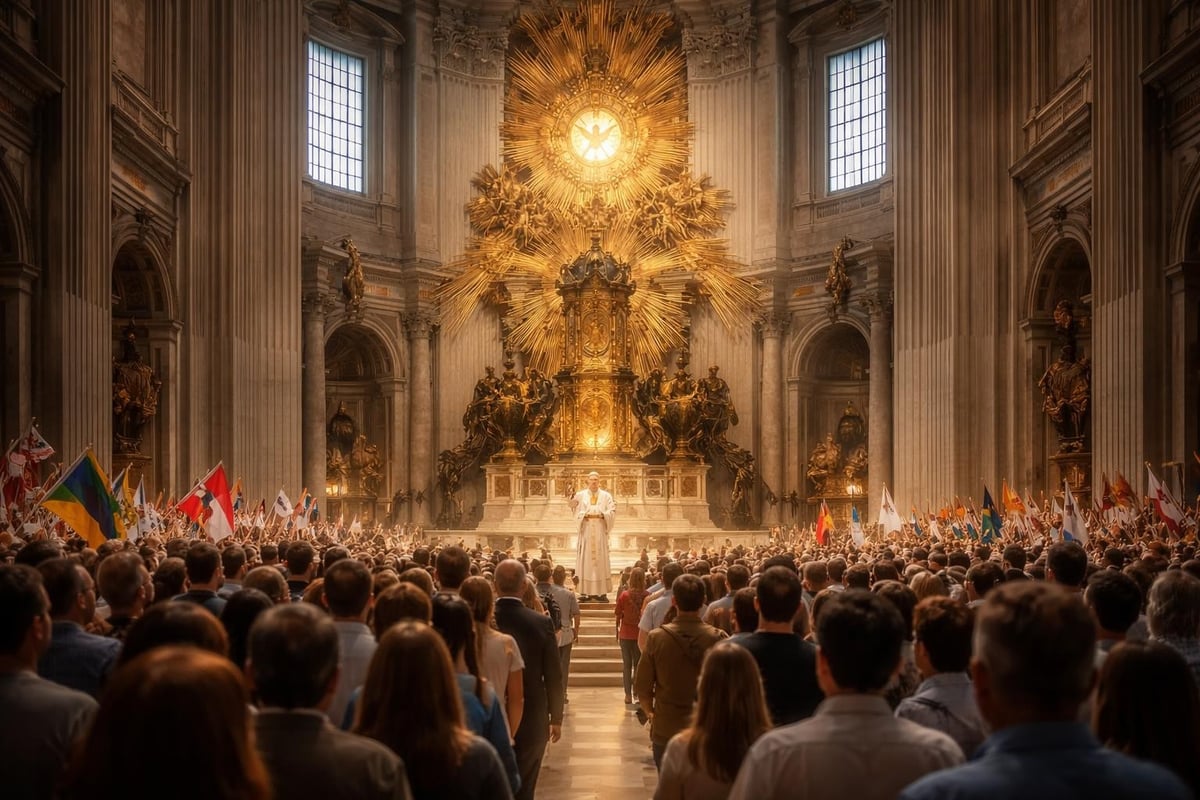
Vatican authorities maintain careful stewardship of the chair of saint peter, balancing preservation needs with opportunities for faithful to encounter this sacred relic. The monument receives regular conservation attention to address environmental factors and natural aging of materials. Controlled lighting protects the precious surfaces while allowing the dramatic visual impact Bernini intended.
Public access to St. Peter's Basilica provides millions of pilgrims and visitors annually the opportunity to view the chair of saint peter. Guided tours offer historical and theological context, helping contemporary audiences appreciate both the artifact's antiquity and its ongoing significance. Digital technologies increasingly allow virtual encounters with this masterpiece for those unable to travel to Rome.
Connecting Past and Present
The chair of saint peter bridges nearly two millennia of Christian history, connecting contemporary Catholics with the apostolic era. When faithful reflect on this sacred object, they participate in a tradition of reverence extending back to the earliest Christian communities who honored Peter's memory and authority. This continuity provides stability and identity in a rapidly changing world.
Understanding the chair of saint peter enriches appreciation for how Catholicism maintains unity across diverse cultures, languages, and historical periods. The chair symbolizes a fixed point of reference while the Church navigates new challenges and opportunities. Each generation discovers fresh relevance in this ancient symbol, applying its lessons to contemporary circumstances.
The writings of Bob and Penny Lord have helped countless Catholics deepen their understanding of the saints and sacred traditions that shape Church life. Their work on evangelization through media aligns perfectly with efforts to share the significance of symbols like the chair of saint peter with modern audiences seeking authentic spiritual roots.
Educational Resources and Continuing Formation
Catholic educational institutions incorporate study of the chair of saint peter within broader curricula addressing Church history, theology, and art. Seminary formation for future priests includes reflection on papal ministry and the theological foundations symbolized by Peter's chair. Lay formation programs help ordinary Catholics understand how this ancient symbol relates to their daily faith lives.
Resources for Deeper Understanding:
- Historical Studies: Academic research on the relic's dating and construction
- Theological Reflection: Examinations of papal authority and ecclesiology
- Artistic Analysis: Art history perspectives on Bernini's masterpiece
- Devotional Literature: Spiritual writings connecting the chair to personal faith
- Pilgrimage Guides: Resources for those visiting St. Peter's Basilica
Many Catholics find that studying the lives of the saints provides context for understanding Church governance and authority. The rich tradition of Catholic sanctity reveals how holy men and women throughout history have related to papal authority, sometimes in tension but ultimately in communion with Peter's successors.
The Chair in Contemporary Church Life
Today's Catholic Church faces unprecedented challenges including secularization, internal divisions, and questions about institutional authority. The chair of saint peter remains relevant to these contemporary concerns, offering a symbol of unity and continuity that transcends current controversies. Popes continue to exercise the teaching ministry associated with this ancient seat, addressing modern ethical questions and social challenges.
Pope Francis has emphasized the pastoral dimensions of papal ministry, presenting the chair of saint peter less as a throne of power and more as a seat of service and accompaniment. This approach resonates with Catholics seeking authentic spiritual leadership that combines doctrinal clarity with pastoral sensitivity. The chair's symbolism adapts to these evolving emphases while maintaining its core significance.
Vatican II's ecclesiology, emphasizing collegiality and the People of God, provides fresh frameworks for understanding the chair of saint peter. Rather than isolated papal authority, contemporary theology presents the chair within the context of shared episcopal ministry and the sensus fidelium. This nuanced approach honors tradition while incorporating modern insights.
| Historical Period | Understanding of the Chair | Key Developments |
|---|---|---|
| Early Church (1st-4th centuries) | Peter's succession in Rome | Establishment of Roman primacy |
| Medieval Era (5th-15th centuries) | Universal papal jurisdiction | Centralization of church authority |
| Counter-Reformation (16th-17th centuries) | Defense against Protestant challenges | Artistic elaboration (Bernini's monument) |
| Modern Era (18th-20th centuries) | Papal infallibility doctrine | Vatican I definitions |
| Contemporary (21st century) | Collegial and pastoral ministry | Emphasis on service and synodality |
The chair of saint peter continues to inspire theological reflection on questions of authority, tradition, and development of doctrine. How does the Church maintain fidelity to apostolic teaching while responding to new questions and contexts? The chair symbolizes this dynamic tension between continuity and appropriate development, anchoring change in authoritative tradition.
Digital Age Evangelization
Modern media technologies offer unprecedented opportunities to share the significance of the chair of saint peter with global audiences. Virtual tours of St. Peter's Basilica, online courses in Church history, and social media content about Catholic heritage all contribute to broader awareness and understanding. These digital initiatives align with the mission of organizations like Journeys of Faith that leverage contemporary tools for timeless evangelization.
The evangelization through media approach pioneered by Bob and Penny Lord recognizes that each generation requires culturally appropriate methods for encountering sacred truth. Just as Bernini used baroque artistry to proclaim the chair's significance in the 17th century, 21st-century evangelizers employ digital platforms to reach contemporary seekers.
Young Catholics particularly benefit from multimedia presentations that combine visual artistry, historical information, and theological reflection. Engaging with the chair of saint peter through these varied formats helps new generations claim their heritage and understand their connection to an ancient yet living tradition. The physical monument in Rome gains meaning through these digital encounters, often inspiring eventual pilgrimage to experience the reality firsthand.
Practical Implications for Faith Life
Understanding the chair of saint peter offers practical benefits for ordinary Catholic faith. Recognizing papal authority grounded in Christ's commission helps believers navigate complex moral questions with confidence in authoritative teaching. The chair symbolizes a reliable guide through ethical confusion and doctrinal uncertainty.
Prayer practices can incorporate reflection on the chair of saint peter, asking the Holy Spirit to guide the current pope in his teaching ministry. Intercessory prayer for papal intentions connects individual Catholics with the universal Church's mission. These practices foster unity and shared purpose across the global Catholic community.
Parish life benefits from awareness of the chair's significance through educational programs, homilies, and adult formation opportunities. When local communities understand their connection to universal Church authority through Peter's successors, they experience their Catholic identity more fully. The chair of saint peter reminds even small, remote parishes that they participate in a worldwide communion spanning centuries.
Incorporating the Chair of Saint Peter into Personal Spirituality:
- Pray for the Holy Father's intentions and ministry
- Study papal teachings and encyclicals with openness
- Reflect on Christ's words to Peter in Scripture
- Visit St. Peter's Basilica if possible, or explore it virtually
- Discuss papal authority with family and faith communities
- Embrace unity with Catholics worldwide through the pope's ministry
For those seeking to deepen their prayer life and connection to Church tradition, resources like the Surrender Novena Packages can complement reflection on papal authority and divine guidance. Prayer traditions handed down through generations connect personal devotion with the broader Church's life of faith.
Living Tradition and Future Hope
The chair of saint peter demonstrates Catholicism's character as a living tradition rather than a museum of antiquities. Each generation receives the apostolic faith, lives it authentically in their context, and passes it forward intact yet enriched. The chair symbolizes this transmission, an ancient object continuously relevant to contemporary believers.
Future developments in Church life will undoubtedly bring new challenges and opportunities for papal ministry. The chair of saint peter will remain a touchstone for discerning authentic development from distortion, continuity from rupture. Its physical presence in Rome and symbolic presence in Catholic consciousness provides stability amid change.
The enduring significance of the chair of saint peter ultimately points beyond itself to Christ, the true Head of the Church. Peter's authority derived entirely from Christ's commission and the Holy Spirit's guidance. The chair reminds Catholics that human leadership serves divine purposes, channeling heavenly wisdom to earthly communities. This understanding prevents both excessive criticism of papal ministry and uncritical acceptance that ignores the distinction between divine and human elements in Church life.
The chair of saint peter stands as a profound symbol connecting contemporary Catholics with apostolic origins and divine authority flowing through papal ministry. Understanding this sacred relic enriches faith life, strengthens unity with the universal Church, and provides confidence in authoritative teaching. Journeys of Faith continues the mission of Bob and Penny Lord to bring these treasures of Catholic tradition to life through books, media, and resources that evangelize and inspire. Explore their extensive collections to deepen your journey of faith and share these gifts with others seeking truth.
Explore these essential resources:
- Explore Journeys of Faith Online store with thousands of Catholic Items at https://journeysoffaith.com/collections
- Our Unique Mega Search Engine https://journeysoffaith.com/search is linked to hundreds of Catholic Shops and Stores
- Get the Journeys of Faith NEW App for iPhone or Android. Search for Journeys of Faith or go to https://journeysoffaith.com/pages/download-our-app
- We need your help to reach more souls. Please Make a Donation https://journeysoffaith.com/pages/donate