

Every December, millions gather in awe to honor the miraculous image of our lady guadalupe, a symbol of faith, hope, and unity throughout the Americas. Her story captivates hearts and inspires devotion unlike any other Marian apparition.
This guide offers a deep look into the origins, meaning, and traditions of our lady guadalupe, preparing you to appreciate her enduring legacy in 2026 and beyond. Discover the history behind her appearance, the powerful symbolism of her image, and the vibrant celebrations that continue to unite communities worldwide.
Are you ready to explore the lasting impact and spiritual richness of this beloved devotion?
The Historical Origins of Our Lady of Guadalupe
The story of our lady guadalupe begins in December 1531, near what is now Mexico City. This moment in history shaped religious identity across the Americas. The origins are rooted in a series of extraordinary events that brought together indigenous traditions and Spanish Catholic faith, forever changing the spiritual landscape of the region.
The Apparitions at Tepeyac Hill
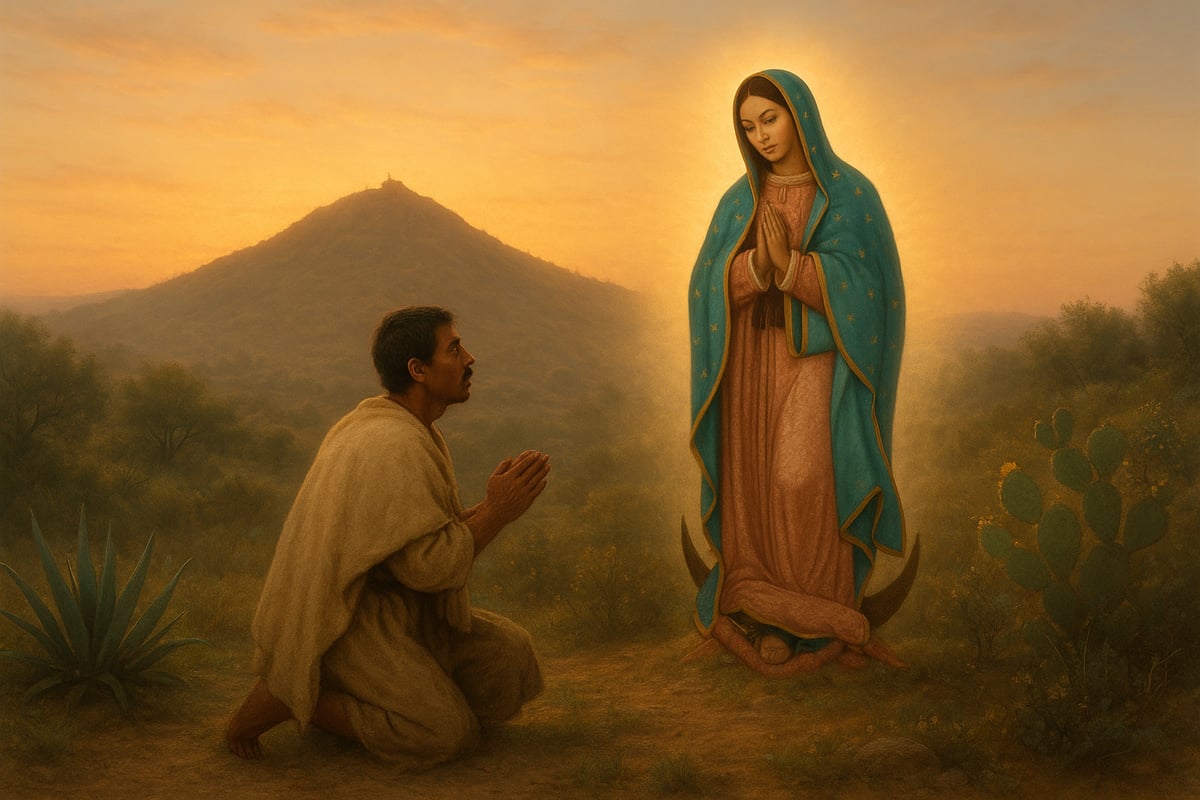
In early December 1531, an indigenous Christian convert named Juan Diego was walking near Tepeyac Hill. He encountered a vision of a radiant woman, who revealed herself as the Virgin Mary. Over four days, our lady guadalupe appeared five times to Juan Diego and once to his uncle, Juan Bernardino.
Mary requested that a chapel be built on the site. When Juan Diego relayed her request to Bishop Juan de Zumárraga, the bishop asked for a sign. On December 12, Juan Diego presented his tilma, or cloak, to the bishop. Miraculously, the tilma bore the image of our lady guadalupe, surrounded by Castilian roses that grew out of season.
Bishop Zumárraga was moved by the miracle and ordered the construction of a chapel. The apparition dates, December 9–12, became deeply significant for generations of believers. The story of our lady guadalupe quickly spread, blending indigenous symbolism with Catholic beliefs. This integration made the message accessible to both Spanish colonizers and native peoples.
The impact was immediate and profound. Between 1531 and 1538, over eight million indigenous Mexicans converted to Catholicism. Centuries later, Juan Diego was beatified in 1990 and canonized in 2002, further affirming the importance of our lady guadalupe in Catholic tradition.
Early Accounts and Spread of Devotion
The first printed accounts of the apparitions emerged in Mexico in the mid-16th century. These narratives helped establish the authenticity and authority of our lady guadalupe. Oral traditions, shaped by indigenous perspectives, also played a crucial role in spreading the devotion. For many, the miraculous image on the tilma was a pictograph that communicated spiritual truths in a way the Aztec people could understand.
Missionaries recognized the power of the story and used it to bridge cultural gaps. The first chapel was built soon after the apparitions, followed by the construction of the Old Basilica in 1709. The devotion to our lady guadalupe was further influenced by the Marian tradition in Spain, particularly the shrine in Extremadura, which shares the name "Guadalupe."
As the image and story reached more people, the devotion grew beyond Mexico. The tilma’s symbolism resonated with both indigenous and European audiences alike. The spread of our lady guadalupe devotion became a catalyst for unity and faith throughout the Americas.
For a comprehensive overview of this history and its lasting impact, explore the Our Lady of Guadalupe history and significance.
The historical origins of our lady guadalupe reveal how a series of miraculous events, cultural exchanges, and enduring faith traditions came together to shape one of the most important religious devotions in the world.
The Meaning and Symbolism of the Guadalupe Image
The sacred image of our lady guadalupe is one of the most widely recognized religious icons in the world. Its visual language conveys deep spiritual meaning, blending indigenous symbolism with Catholic tradition. To understand the devotion to our lady guadalupe, it is essential to explore the image’s unique elements, their theological interpretations, and the scientific mysteries that continue to inspire curiosity.
Visual Elements and Their Significance
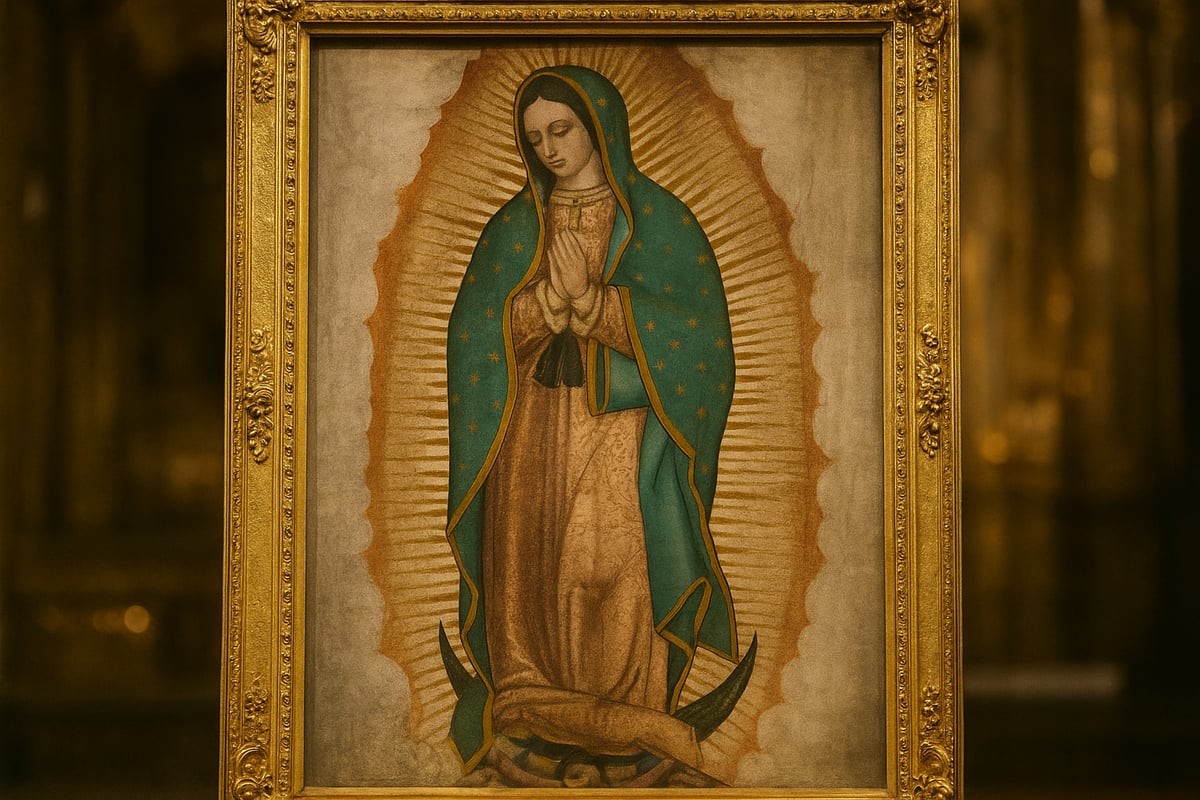
The image of our lady guadalupe is rich in symbolism that speaks to both indigenous and Catholic audiences. Mary appears as a young indigenous woman, her features reflecting the people to whom she appeared. Her blue-green mantle, a color reserved for Aztec royalty, is adorned with stars that, according to experts, mirror the constellations visible over Mexico City on December 12, 1531.
Her rose-colored robe is decorated with floral motifs, including a prominent four-petal flower (quincunx) over her womb. This flower was a powerful Aztec symbol of divinity and the center of the universe. The black maternity band around her waist signifies that Mary is with child, making the image one of the earliest depictions of a pregnant Virgin in Christian art.
At her feet, an angel supports the tilma, lifting Mary above a crescent moon. This detail signals triumph over ancient deities, blending the Catholic message with indigenous cosmology. The cross-shaped brooch at her neck further highlights the Christian faith, anchoring the image in both worlds.
Key features of the image include:
- Stars on the mantle: Representing the heavens and the exact night sky of the apparition.
- Four-petal flower: Central symbol of divinity in Aztec belief.
- Angel and crescent moon: Signifying victory over darkness and old gods.
Every element of our lady guadalupe’s image was carefully chosen, creating a powerful bridge between faiths.
Theological and Cultural Interpretations
Beyond its visual beauty, the image of our lady guadalupe carries profound theological and cultural messages. By appearing as an indigenous woman, Mary offered a message of compassion and solidarity with the native people, who faced hardship during the early colonial period. Her downcast eyes express humility, not demanding worship but inviting trust.
The colors and motifs on her attire symbolize both royalty and native nobility. The image served as a pictographic catechism, communicating Christian truths through symbols familiar to the Aztec people. This approach made the message of our lady guadalupe accessible and welcoming, leading to millions of conversions in just a few years.
Remarkably, the tilma has survived for nearly five centuries, far exceeding the typical lifespan of agave fibers. Scientific studies have found no clear explanation for its preservation. This enduring mystery deepens the sense of wonder and reverence surrounding our lady guadalupe.
For those interested in the broader context of Marian apparitions, the Many Faces of Mary Marian Apparitions collection offers valuable historical and devotional insights, including the story of Guadalupe.
Through these layers of meaning, our lady guadalupe continues to unite diverse communities in faith and hope.
The Image and Science
The image of our lady guadalupe has fascinated scientists and believers alike for generations. Researchers have conducted technical analyses on the tilma, examining its materials and the pigments used. The original agave fiber should have decayed long ago, yet it remains vibrant and intact.
One of the most intriguing discoveries involves the eyes of the image. Some claim that microscopic examination reveals reflections of human figures, as if capturing the moment of the apparition. While these findings are debated, they add to the aura of mystery that surrounds our lady guadalupe.
The tilma has also withstood exposure to smoke, humidity, and even a bomb attack in the early 20th century, which left the image untouched. These phenomena challenge scientific understanding and contribute to the belief in its supernatural origin.
Ongoing debates between scientists, theologians, and historians ensure that the story of our lady guadalupe remains a subject of fascination. Whether viewed through the lens of faith or science, the image continues to inspire devotion and inquiry.
Devotional Practices and Major Traditions (2026)
Every year, the devotion to our lady guadalupe unites millions across cultures and continents. Her feast on December 12 is not only a religious event but also a celebration of identity, family, and hope. As 2026 approaches, these traditions continue to evolve, blending centuries-old customs with new expressions of faith.
Annual Celebrations and Pilgrimages
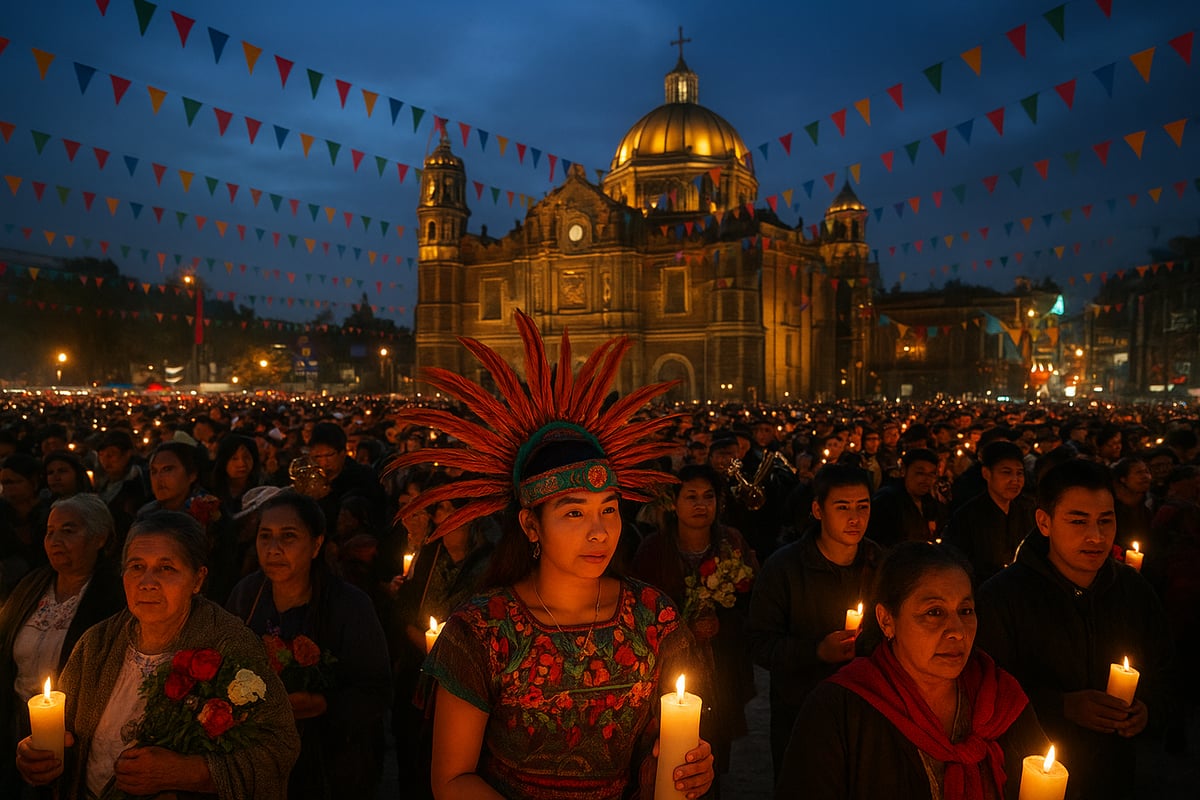
The annual feast day of our lady guadalupe is the heart of Marian devotion in Mexico and beyond. On December 12, millions gather at the Basilica of Our Lady of Guadalupe, transforming Mexico City into a spiritual epicenter. Pilgrims travel by foot, bicycle, or bus, many coming from distant regions.
The pilgrimage is marked by processions, Masses, and vibrant reenactments of the 1531 apparitions. Groups of dancers and musicians in indigenous dress perform outside the basilica, offering gratitude and petitions. The "Mañanitas," a serenade sung at dawn, fills the air with devotion and joy.
During these days, the basilica welcomes over 5 million visitors, making it the most visited Catholic shrine in the world. Candlelight vigils, communal prayers, and the aroma of traditional foods create a sense of unity among all present. For many, participating in these rituals is an act of faith and cultural pride, strengthening the bond with our lady guadalupe.
Family and Community Customs
In homes and neighborhoods, devotion to our lady guadalupe is woven into daily life. Families often create home altars, adorned with her image, candles, and fresh flowers. These sacred spaces become the center for prayer and reflection, especially during her feast.
Special foods such as tamales and atole are prepared and shared with loved ones. Gathering with family and friends, people recount the story of the apparitions and pass down prayers and songs. This oral tradition preserves the legacy of our lady guadalupe across generations, bridging past and present.
Her image is found everywhere, from homes and vehicles to businesses and schools. In Mexican-American and Latino communities in the United States, these customs take on added meaning, serving as a link to heritage and a source of comfort in times of challenge. Celebrations often include neighborhood processions and public displays of faith, affirming the enduring presence of our lady guadalupe.
Modern Expressions of Devotion
As society changes, so too do the ways people honor our lady guadalupe. Digital pilgrimages and online Masses have made participation possible for those unable to travel, especially in recent years. Virtual gatherings, livestreamed liturgies, and social media groups foster a sense of community without borders.
Artistic devotion flourishes in new forms. Murals, tattoos, jewelry, and fashion celebrate her image, making her a symbol of faith and resilience in contemporary culture. Many faithful express their devotion through charitable works and advocacy for social justice, inspired by her message of compassion and solidarity.
For those seeking tangible reminders of faith, Inspirational Catholic Religious Items inspired by our lady guadalupe are increasingly popular. These objects support prayer and reflection, blending tradition with modern life. Memorials, such as the Shrine of Our Lady of Guadalupe in La Crosse, Wisconsin, offer spaces for healing and remembrance, showing the global reach of her message.
The devotion to our lady guadalupe continues to adapt, uniting the faithful in creative and meaningful ways, and ensuring her legacy thrives for generations to come.
Cultural and Social Impact of Our Lady of Guadalupe
Every year, the story of our lady guadalupe continues to inspire countless people, shaping not only religious devotion but also cultural and social landscapes. Her influence extends from Mexico’s heart to communities and movements across the globe. Understanding this impact reveals why her legacy remains so powerful today.
Symbol of Mexican Identity and Unity
Our lady guadalupe stands as a potent national symbol, uniting Mexicans of all backgrounds under a shared identity. Since the 16th century, she has been called the “Patroness of the Americas” and the “Empress of Latin America.” Her image is inseparable from Mexico’s struggle for independence and social justice.
Leaders throughout history have invoked her name and image to inspire hope and solidarity. For example:
- Miguel Hidalgo carried a banner of our lady guadalupe during the Mexican War of Independence.
- Revolutionary movements and civil rights campaigns, such as those led by Cesar Chavez, drew strength from her symbolism.
- Her mantle has become a rallying point for those seeking justice and dignity, including pro-life and immigrant rights advocates.
In times of crisis or division, our lady guadalupe serves as a reminder of unity, compassion, and national pride.
| Historical Figure | Movement/Context | Role of Our Lady Guadalupe |
|---|---|---|
| Miguel Hidalgo | Mexican Independence | Banner of revolution |
| Cesar Chavez | Farmworker Rights in the U.S. | Symbol of justice and hope |
| Emiliano Zapata | Mexican Revolution | Emblem of peasant solidarity |
Influence on Art, Literature, and Popular Culture
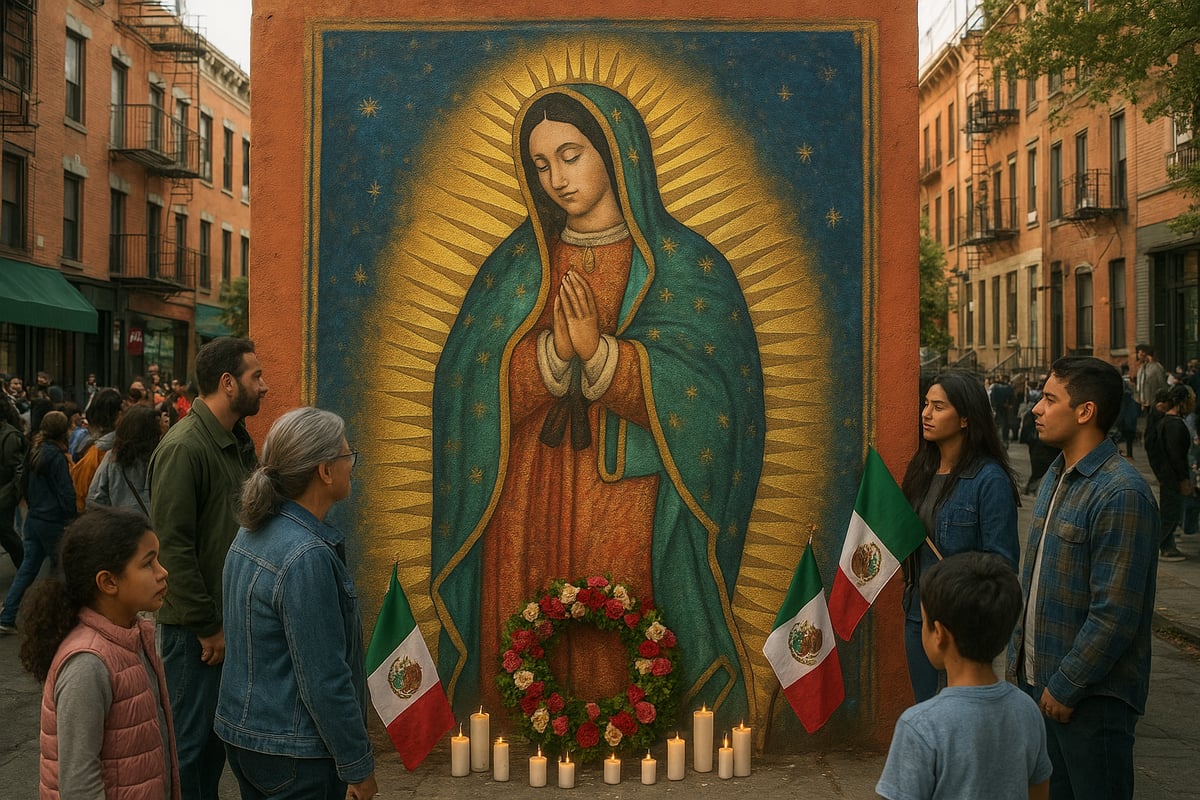
The cultural resonance of our lady guadalupe extends far beyond religious settings. Her image appears in murals, graffiti, jewelry, tattoos, and countless artistic expressions across the Americas. Artists reinterpret her likeness to reflect contemporary struggles, feminism, and social change.
Writers and musicians often reference her to evoke themes of resilience and hope. In literature, her story weaves through poetry and novels exploring identity and migration. Films and documentaries highlight her role in shaping community values and spiritual life.
In marginalized neighborhoods, murals of our lady guadalupe often become focal points for community gatherings and peaceful protest. These visual tributes are not only acts of faith but also declarations of cultural pride and resistance. The enduring appeal of her image testifies to her deep connection with people’s everyday lives.
Global Reach and Interfaith Recognition
Today, devotion to our lady guadalupe reaches far beyond Mexico’s borders. Communities throughout the Americas, Europe, and the Philippines celebrate her feast and draw inspiration from her message. Many see her as a universal mother who bridges cultural and denominational divides.
Her story sparks dialogue between faiths and fosters mutual respect. The message of unity and compassion associated with our lady guadalupe resonates in interfaith movements and humanitarian efforts worldwide. Scholars and religious leaders recognize her as a symbol of hope for the marginalized, regardless of background or belief.
For a deeper understanding of how Marian apparitions influence societies and inspire cross-cultural connections, see this overview on Marian apparitions and cultural impact. As her devotion continues to grow, our lady guadalupe remains a powerful force for peace, empathy, and solidarity in an ever-changing world.
The Basilica of Our Lady of Guadalupe: Pilgrimage and Architecture
The Basilica stands as the spiritual heart of our lady guadalupe devotion. Each year, millions journey to this sacred site, seeking connection, healing, and inspiration. The Basilica’s evolution reflects the enduring power and unity of the our lady guadalupe tradition.
History and Development of the Basilica
The story of the Basilica begins at Tepeyac Hill, where the first humble chapel was built in 1531 to house the miraculous tilma of our lady guadalupe. As devotion grew, the Old Basilica, completed in 1709, became a grand center for worship. By the late 20th century, the structure could no longer safely accommodate the swelling number of pilgrims.
In 1976, the New Basilica was inaugurated. Its circular design ensures that the image of our lady guadalupe is visible from every angle, welcoming up to 10,000 faithful at once. The revered tilma is displayed above the main altar, protected by bulletproof glass and climate control.
| Year | Structure | Key Feature |
|---|---|---|
| 1531 | Original Chapel | First shrine for the tilma |
| 1709 | Old Basilica | Baroque architecture |
| 1976 | New Basilica | Circular, modern, 10,000 seats |
This architectural journey mirrors the growing influence of our lady guadalupe across centuries.
Pilgrimage Experience in 2026
A pilgrimage to the Basilica of our lady guadalupe in 2026 promises a profound spiritual encounter. Pilgrims from every continent arrive by foot, bus, and even bicycle, forming a vibrant tapestry of faith. The December 12 Feast Day draws up to 5 million visitors in a single day, making it the world’s most visited Catholic shrine.
Key aspects of a pilgrimage include:
- Confession and Mass available throughout the day
- Veneration of the tilma, viewed from a moving walkway
- Special liturgies, indigenous dances, and cultural performances
- Opportunities for prayer, reflection, and community
Visitors are encouraged to plan ahead for accommodations and transportation. For a deeper look at the pilgrimage experience, many turn to Catholic Pilgrimage DVDs to prepare spiritually before their journey. The Basilica’s staff ensures safety, accessibility, and a welcoming atmosphere for all who come to honor our lady guadalupe.
The Basilica’s Role in Modern Catholicism
Today, the Basilica of our lady guadalupe is more than a pilgrimage site. It serves as a global center for Marian devotion and evangelization. The Basilica hosts educational programs, art exhibitions, and cultural festivals, promoting understanding and unity among diverse communities.
Outreach programs provide support for the marginalized, echoing the message of compassion at the heart of our lady guadalupe. The site also offers resources for spiritual growth, including religious education and charitable initiatives. Many visitors bring home devotional items, often found in collections such as the Virgin Mary Shop Collection, to continue their connection with our lady guadalupe in daily life.
The Basilica remains a living testament to faith, hope, and the enduring legacy of our lady guadalupe for generations to come.
The Enduring Message of Our Lady of Guadalupe
The enduring message of our lady guadalupe continues to inspire faith, unity, and hope for millions worldwide. Her apparition at Tepeyac Hill is more than a historical event, it is a living call for compassion, justice, and solidarity. Across centuries and cultures, the story of our lady guadalupe remains a beacon, inviting people to reflect on their values and act with kindness toward others.
Spiritual Lessons and Contemporary Relevance
The spiritual lessons of our lady guadalupe are deeply rooted in her message of love for all people, especially the marginalized. Her gentle presence and miraculous image symbolize divine protection, offering comfort to those facing hardship or injustice. In today’s world, where many struggle with inequality, violence, or displacement, the message of our lady guadalupe is a call to action for peace and reconciliation.
Her story encourages individuals and communities to seek justice, embrace diversity, and foster dignity for every person. The devotion to our lady guadalupe is not only a tradition but a living reminder to care for one another, especially during times of crisis. Many invoke her for guidance and strength, believing her intercession brings hope and healing to families and societies alike.
Through her enduring message, our lady guadalupe bridges generations and cultures, reminding us that faith can inspire real change in the world.
Continuing Devotion and Future Traditions
Devotion to our lady guadalupe thrives in modern times, adapting to new contexts and media. Families, parishes, and entire communities continue to honor her with processions, art, and charitable acts. In recent years, digital pilgrimages, livestreamed masses, and online novenas have made it possible for devotees around the world to participate, even from afar.
Artists reinterpret her image, expressing contemporary themes of justice, feminism, and cultural pride. For example, Ester Hernandez's reimagined Guadalupe art places our lady guadalupe within a Chicana feminist context, inspiring dialogue on identity and social change. These creative expressions ensure her relevance for younger generations and diverse communities.
Traditions evolve, yet the heart of the devotion remains unchanged. As 2026 approaches, expect new celebrations and outreach programs designed to engage youth and promote intercultural understanding. Our lady guadalupe continues to unite people in faith, hope, and service.
Resources for Further Exploration
For those seeking a deeper understanding of our lady guadalupe, a wealth of resources is available:
- Books by Msgr. Eduardo Chávez Sánchez, a leading expert on the Guadalupe apparition.
- Documentaries exploring the scientific studies of the tilma and its miraculous preservation.
- Online courses from the Institute for Guadalupan Studies.
- Local and international festivals, pilgrimages, and virtual events.
- Community workshops and cultural events celebrating her legacy.
These resources offer opportunities to learn, participate, and connect with others devoted to our lady guadalupe. Whether exploring her history or joining in annual festivities, the journey enriches both faith and cultural awareness.
As we journey through the inspiring history and deep meaning of Our Lady of Guadalupe, you might feel called to bring her presence more fully into your own life and home. Whether you are looking to deepen your devotion, find a special gift, or learn more about Marian traditions, you will discover a wealth of beautifully crafted items and resources that honor the Virgin Mary. I invite you to continue exploring this rich spiritual legacy—take a moment to Discover Virgin Mary Shop and find meaningful ways to celebrate Our Lady’s enduring impact today.
