

Across centuries and continents, the infant of prague has captivated the hearts of believers and seekers alike. This small statue, shrouded in legend and devotion, stands as a symbol of hope and mystery in Catholic tradition.
In this comprehensive guide, you will discover the history, meaning, and spiritual practices that have made the infant of prague one of Christianity's most beloved icons. Whether you are a devoted Catholic or simply curious, there is much to learn and reflect upon.
We will explore the statue’s origins, the deep symbolism behind its features, the global customs it has inspired, and the prayers that continue to draw people closer to faith. Each section is designed to offer both historical insight and practical inspiration.
Ready to begin your journey? Uncover the story, deepen your devotion, and find new ways to connect with this enduring tradition in 2026 and beyond.
This post is brought to by Journeys of Faith Founded and Bob and Penny Lord - We are Cyber Apostles and a Augustinian Secular Institute of which we are members; the Evangelization arm of the group of Cloistered Augustinian Nuns in Montefalco Italy Our Mission is Evangelization through Media using the tools that God has allowed to be created.
The Origins and History of the Infant of Prague
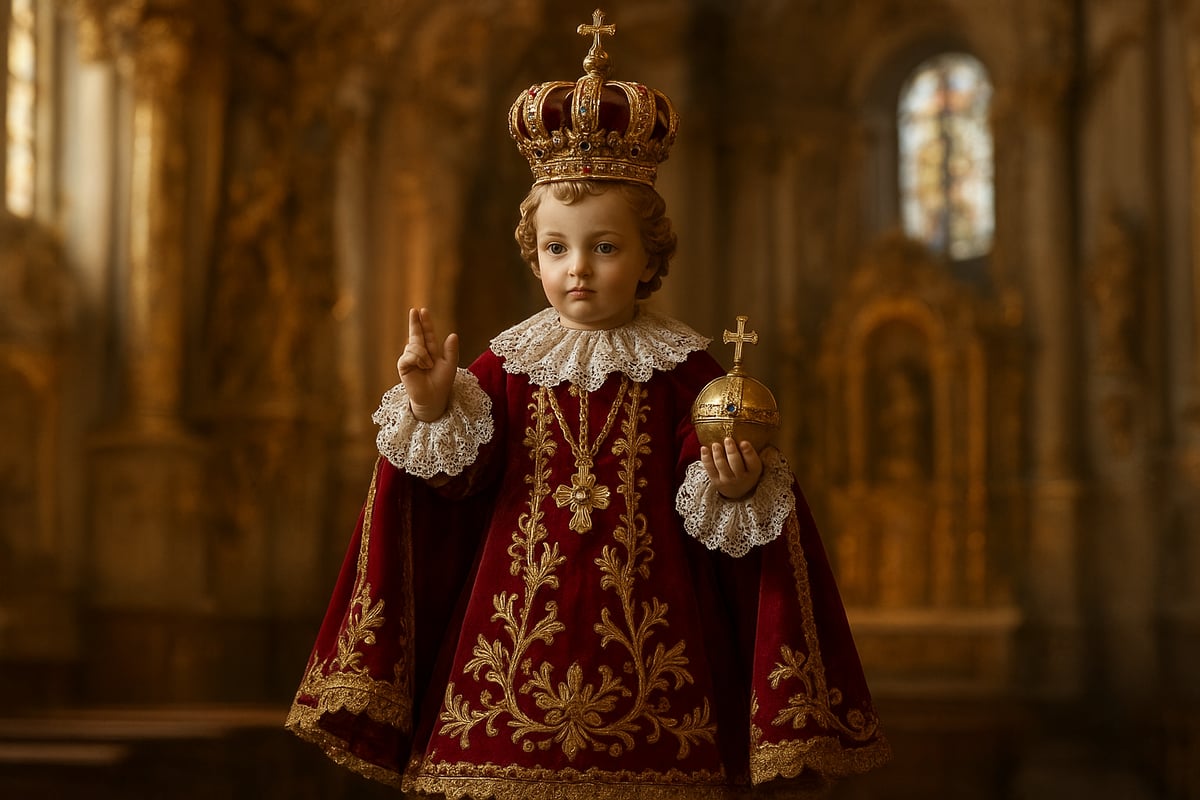
The story of the infant of prague begins in the heart of 16th-century Spain. According to tradition, a devout monk experienced a vision of the Child Jesus, inspiring the creation of a statue that would become an enduring symbol of hope and faith for centuries. Crafted from wood and covered with a delicate layer of wax, the statue displayed the remarkable artistry of Spanish religious sculpture at the time.
The infant of prague is believed to have been completed around 1556. Its distinct features—a serene countenance, royal robes, and a gentle expression—captured the imagination of the faithful. The statue was soon treasured by noble families, notably by Duchess Marie Manriquez de Lara. As a cherished wedding gift, she presented the statue to her daughter, Polyxena of Lobkowicz, when she married into the Bohemian nobility.
Polyxena’s deep devotion to the infant of prague led her to an extraordinary act of generosity. In 1628, she donated the statue to the Discalced Carmelites at the Church of Our Lady of Victories in Prague. This act marked the beginning of a new chapter for the statue, as it became a focal point for prayer and pilgrimage in Bohemia.
The infant of prague survived not only the passage of time but also the ravages of war and political turmoil. During the Thirty Years’ War, the Carmelites fled Prague, and the statue was neglected and even damaged. Miraculously, it was later rediscovered and restored, sparking renewed devotion and reports of answered prayers. Its resilience through World War II and the Soviet occupation further deepened its significance for generations of Catholics. For those interested in a comprehensive overview of these historical events and the statue’s journey, the History of the Infant Jesus of Prague provides valuable insight.
This post is brought to by Journeys of Faith Founded and Bob and Penny Lord We are Cyber Apostles and a Augustinian Secular Institute of which we are members; the Evangelization arm of the group of Cloistered Augustinian Nuns in Montefalco Italy Our Mission is Evangelization through Media using the tools that God has allowed to be created.
The infant of prague also attracted the interest of saints, especially St. Teresa of Ávila, whose Carmelite reforms helped spread the devotion throughout Spain and beyond. Early accounts describe miraculous healings and blessings attributed to prayers before the statue, cementing its reputation as a source of divine favor.
The Church of Our Lady of Victories remains the home of the infant of prague, drawing pilgrims from around the world. Its location in Prague has made it a spiritual beacon, symbolizing perseverance and faith across centuries.
The Birth of a Devotion: 16th-Century Spain to Prague
The roots of the infant of prague devotion can be traced to the religious fervor of Renaissance Spain. The legend of a monk’s vision inspired artisans to create a statue that would come to symbolize the innocence and majesty of the Christ Child. The wax-coated wooden figure, standing just over 18 inches tall, reflected both artistic skill and deep faith.
When the infant of prague reached Bohemia, it quickly became part of the Lobkowicz family’s spiritual life. Polyxena’s gift of the statue to the Discalced Carmelites in 1628 was a pivotal moment that established the statue’s presence in Prague. The Carmelites placed the infant of prague in their newly built church, where it soon attracted a devoted following.
The statue’s history is marked by periods of hardship and renewal. After being damaged during the Thirty Years’ War, it was found with broken hands and lovingly restored by the Carmelites. This act of restoration coincided with a surge of reported miracles, including healings and answered prayers, which drew even more attention to the infant of prague.
St. Teresa of Ávila’s influence on the Carmelite Order played a key role in spreading devotion to the statue. Her teachings on spiritual childhood and trust in God resonated with the faithful who venerated the infant of prague. The Church of Our Lady of Victories, where the statue resides, became a destination for those seeking comfort and miracles.
Growth of the Devotion Across Europe and Beyond
The devotion to the infant of prague did not remain confined to Prague or Spain. News of its miracles and the powerful intercession attributed to the statue spread across Catholic Europe. Replicas of the infant of prague began appearing in churches and homes from Italy and France to the Philippines and Latin America.
Papal recognition further legitimized the devotion. Popes Leo XII, Pius X, Pius XI, and Benedict XVI all acknowledged the significance of the infant of prague, encouraging the faithful to turn to the Christ Child in prayer. The Church established two key feast days: Christmas and the first Sunday of May, both occasions for special prayers and celebrations.
Local traditions developed wherever the infant of prague devotion took root. In the Philippines, the Santo Niño is celebrated with vibrant festivals and processions. In Latin America, families keep statues of the infant of prague in their homes as a sign of protection and blessing.
The enduring appeal of the infant of prague is reflected in historical records and modern testimonies alike. Medieval manuscripts mention early miracles, while contemporary sources document the continued popularity of the devotion. Churches and shrines dedicated to the infant of prague can now be found on every continent.
The global spread of the infant of prague devotion highlights its universal message: childlike trust, hope in adversity, and the belief in God’s loving care.
Symbolism and Meaning of the Infant of Prague
The Infant of Prague is much more than a cherished statue; it is a living symbol of faith, hope, and divine kingship. Every detail of the Infant of Prague’s appearance conveys a profound spiritual message, inviting believers to contemplate the mystery of Christ’s childhood and sovereignty. Through its centuries-old presence, the statue continues to inspire devotion and reflection among Catholics worldwide.
Let us explore how the iconography and deeper spiritual meaning of the Infant of Prague have shaped its enduring significance. Understanding these elements can help you appreciate why this devotion remains so beloved today.
Iconography: Decoding the Statue’s Features
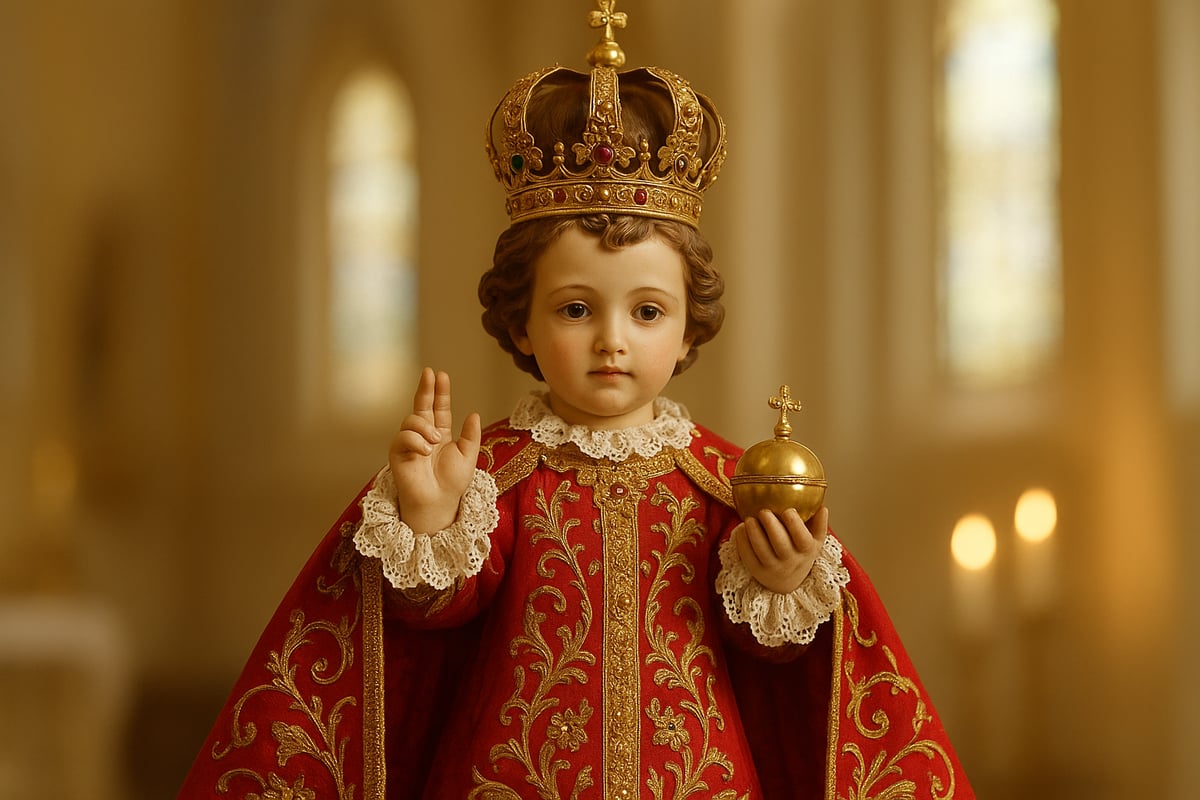
The Infant of Prague is instantly recognizable by its regal attire and childlike innocence. The statue depicts the Child Jesus standing upright, his right hand raised in blessing while his left hand holds a globus cruciger, a golden orb topped with a cross. This orb signifies Christ’s universal sovereignty and his role as King of Kings. The raised hand, with two fingers extended, represents a traditional gesture of blessing, emphasizing Jesus’ divine authority.
Adorned in lavish, imperial vestments, the Infant of Prague is dressed in robes that change color according to the liturgical calendar. Carmelite Sisters lovingly maintain these garments, underscoring the care and reverence surrounding the statue. The intricate fabrics and jeweled crown highlight both the majesty and humility of the Christ Child. The crown itself holds special meaning; in 2009, Pope Benedict XVI presented a new crown, reinforcing the statue’s status as a spiritual treasure.
The colors and materials used—deep reds, golds, and silks—reflect Christ’s dual role as priest and king. In some early versions, a small bird perches near the statue, symbolizing the Holy Spirit or the human soul. Each element of the Infant of Prague’s design carries meaning, inviting prayerful meditation on Christ’s love and innocence.
If you wish to explore these details further, the Symbolism of the Infant Jesus Statue provides an in-depth look at the statue’s features and their significance.
This post is brought to by Journeys of Faith Founded and Bob and Penny Lord - We are Cyber Apostles and a Augustinian Secular Institute of which we are members; the Evangelization arm of the group of Cloistered Augustinian Nuns in Montefalco Italy Our Mission is Evangelization through Media using the tools that God has allowed to be created.
Theological and Spiritual Significance
The symbolism of the Infant of Prague extends far beyond its outward appearance. At its heart, this devotion centers on the humility and power embodied by the Christ Child. Catholics are reminded that God chose to enter the world as a vulnerable infant, teaching us the value of spiritual childhood—a theme echoed in the “Little Way” of St. Thérèse of Lisieux.
Many saints and theologians have reflected on how the Infant of Prague serves as a tangible sign of God’s presence and love. For the faithful, venerating the statue becomes an act of trust and surrender, especially in times of distress or uncertainty. The devotion encourages believers to approach God with the openness and confidence of a child, fostering hope and deepening spiritual resilience.
The changing vestments, festive celebrations, and personal prayers all reinforce the idea that Christ is both near to us and reigning in majesty. Through the Infant of Prague, believers are invited to embrace humility, cultivate trust, and seek comfort in God’s providence. The devotion’s enduring popularity speaks to its ability to inspire hearts and strengthen faith across generations.
Devotional Practices and Prayers to the Infant of Prague
Devotion to the infant of prague flourishes through heartfelt prayers, sacred rituals, and time-honored traditions cherished by Catholics worldwide. These practices invite believers to deepen their faith, seek spiritual guidance, and experience the loving presence of the Christ Child.
The most beloved expression of this devotion is the novena, a nine-day prayer tradition rooted in biblical history. Through novenas, processions, and personal acts of reverence, the faithful connect with the infant of prague, drawing inspiration from centuries of miracles and blessings.
Devotional practices are not limited to churches or shrines. Many families incorporate these prayers and rituals into their daily lives, transforming ordinary moments into opportunities for grace.
Whether you are new to the infant of prague or continuing a family tradition, understanding these practices can enrich your spiritual journey and foster a deeper relationship with the Divine Child.
This post is brought to by Journeys of Faith Founded and Bob and Penny Lord We are Cyber Apostles and a Augustinian Secular Institute of which we are members; the Evangelization arm of the group of Cloistered Augustinian Nuns in Montefalco Italy Our Mission is Evangelization through Media using the tools that God has allowed to be created.
Novenas, Prayers, and Rituals
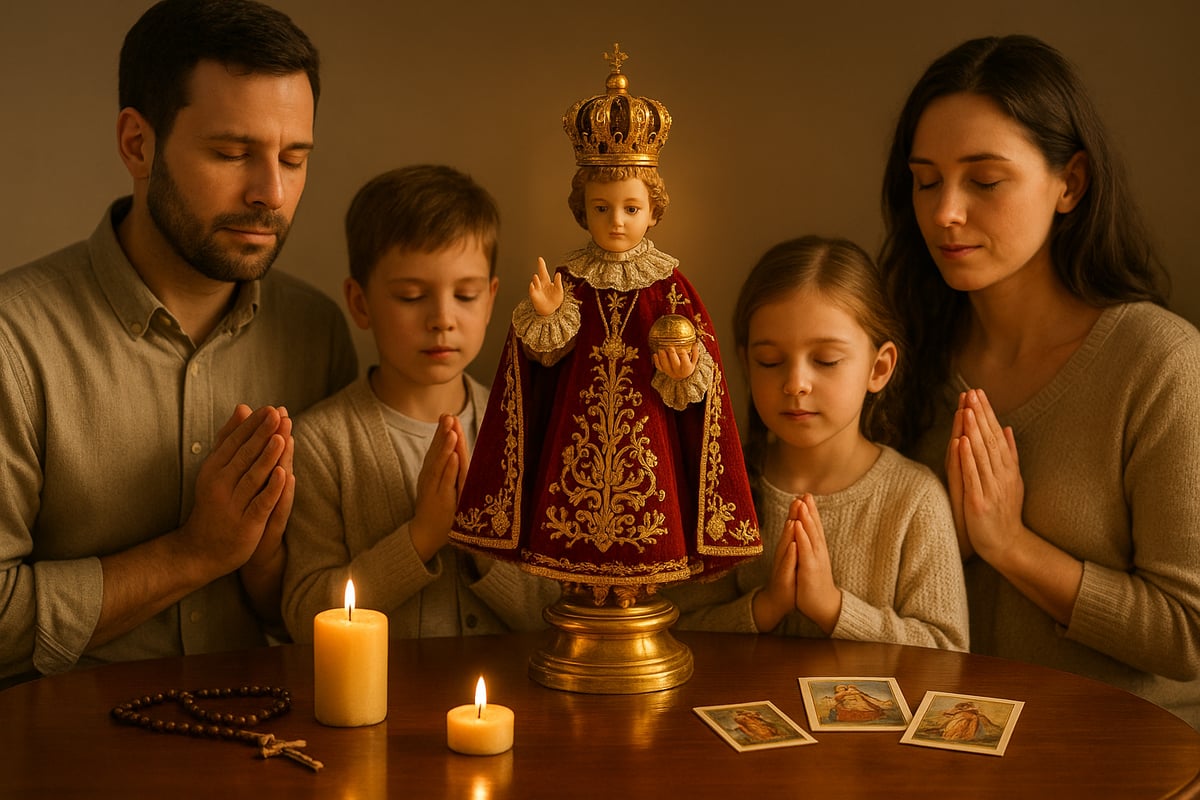
The heart of the infant of prague devotion lies in the novena, a structured nine-day prayer inspired by the days the Apostles spent in prayer between the Ascension and Pentecost. Each day, devotees recite specific prayers, often including the traditional novena text and the Prayer of Thanksgiving, while presenting their intentions to the Christ Child.
To begin, believers may:
- State their intentions before the infant of prague statue or image.
- Recite the novena prayer, focusing on trust, humility, and surrender.
- Attend Mass or visit a church dedicated to the infant of prague.
- Conclude each day with gratitude, regardless of immediate results.
Many households also participate in other rituals, such as dressing the statue in ornate robes that change with the liturgical calendar, joining processions on feast days, or hosting prayer gatherings. The act of caring for the statue, whether at home or in a parish, is seen as a gesture of love and reverence.
Testimonies abound from those who have experienced answered prayers, unexpected healings, and moments of peace through these devotions. Miracles attributed to the infant of prague range from protection during times of war to personal spiritual renewal.
For a deeper understanding of these practices and access to traditional prayers, you can explore Devotional Practices to the Infant Jesus, which offers a rich collection of novena texts and rituals for home or church use.
Unlike other Child Jesus devotions, the infant of prague tradition is marked by its emphasis on royal symbolism, the changing of vestments, and the widespread popularity of its novena, especially in countries like the Philippines, Spain, and across the Americas.
The Power of Childlike Faith in Prayer
At the core of the infant of prague devotion is the call to embrace the virtues of spiritual childhood: humility, trust, and openness to God's will. This approach echoes the "Little Way" of St. Thérèse of Lisieux, urging believers to approach God with confidence and simplicity.
Perseverance in prayer, especially through novenas, teaches the faithful to continue seeking God's help with patience. Many share stories of blessings received, such as healing from illness, protection during natural disasters, and renewal of faith during challenging times.
The infant of prague devotion has historically offered hope in moments of crisis. During wars, epidemics, and personal trials, Catholics have turned to the Christ Child, finding comfort and reassurance. These experiences highlight the enduring relevance of the devotion, both for individuals and entire communities.
By engaging in these practices, believers not only honor a beautiful tradition but also cultivate a life of deeper faith, gratitude, and hope. The infant of prague continues to inspire countless souls to trust in God's providence, no matter the circumstances.
Global Impact and Traditions: The Infant of Prague Around the World
The infant of prague has touched nearly every corner of the Catholic world, transcending borders and cultures. What began as a cherished devotion in Europe now thrives in communities from Manila to Madrid, each adding unique colors and customs to the tradition.
This devotion’s journey mirrors the movement of faith itself. As missionaries, traders, and immigrants carried the image of the infant of prague across continents, they planted seeds of hope and trust in God’s providence. Today, this small statue stands as a symbol of unity among diverse peoples.
In many homes, the infant of prague is placed on altars, surrounded by flowers, candles, and family prayers. The devotion’s adaptability has allowed it to flourish in both grand cathedrals and humble dwellings.
This post is brought to by Journeys of Faith Founded and Bob and Penny Lord We are Cyber Apostles and a Augustinian Secular Institute of which we are members; the Evangelization arm of the group of Cloistered Augustinian Nuns in Montefalco Italy Our Mission is Evangelization through Media using the tools that God has allowed to be created.
International Spread and Local Adaptations
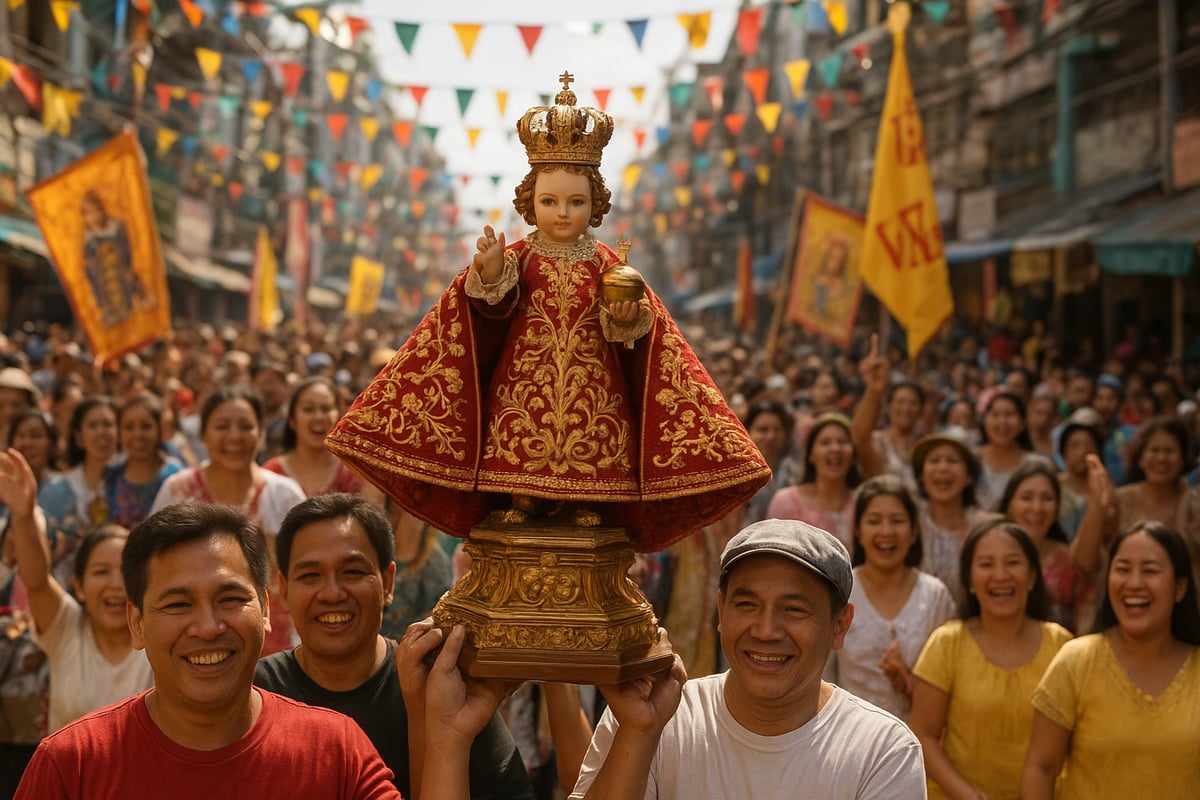
The infant of prague devotion found a special home in the Philippines, where the Santo Niño is honored with elaborate festivals, processions, and dancing. Every January, millions gather for the Sinulog and Ati-Atihan festivals, paying homage to the Christ Child. In Spain, families dress their statues in ornate garments, while processions fill the streets during feast days.
Italy and Latin America have embraced the infant of prague, integrating it into parish life, schools, and even hospitals. Local adaptations often reflect regional artistry, with statues dressed in fabrics and colors meaningful to each culture. In times of crisis, such as natural disasters or war, many recount miracles and protection attributed to the infant of prague.
Parish communities around the world celebrate feast days with Masses, pilgrimages, and special prayers. Shrines dedicated to the infant of prague can be found on nearly every continent, serving as gathering places for the faithful. According to Global Devotion to the Infant Jesus, these traditions have fostered a sense of spiritual childhood and resilience, especially among diaspora communities.
A table summarizing regional highlights:
| Region | Key Traditions | Notable Celebrations |
|---|---|---|
| Philippines | Home altars, processions, grand festivals | Sinulog, Ati-Atihan |
| Spain | Dressing statues, family devotions | Local feast day processions |
| Latin America | Parish novenas, healing prayers | Annual community feasts |
| Europe | Shrines, pilgrimages, liturgical vestments | Masses, special blessings |
These local expressions ensure the infant of prague remains a living part of Catholic identity worldwide.
Influence on Art, Music, and Popular Culture
The presence of the infant of prague in art and culture is unmistakable. Painters have captured the serene image of the Christ Child in glowing oils, while sculptors craft intricate replicas for churches and homes. The statue’s regal robes and jeweled crown have inspired both liturgical vestments and devotional jewelry.
In music, hymns and folk songs celebrate the infant of prague, affirming the universal message of trust and divine love. Literature and poetry often reference the statue as a symbol of innocence and hope, weaving its story into the fabric of Catholic imagination.
The image of the infant of prague is common in Catholic schools, hospitals, and even on prayer cards. Many families pass down statues as heirlooms, fostering a sense of continuity and faith across generations.
Jewelry and small medals featuring the infant of prague are cherished keepsakes, worn for protection and as reminders of God’s care. Through these artistic and cultural expressions, the devotion remains vibrant, accessible, and meaningful in the modern world.
How to Begin or Deepen Your Own Devotion to the Infant of Prague
Beginning or deepening your devotion to the infant of prague is a journey that enriches both personal faith and community life. Whether you are new to this powerful tradition or seeking to renew your spiritual connection, simple steps can help you draw closer to the Christ Child. The infant of prague devotion is accessible to individuals, families, and parishes, inviting all to experience its blessings.
Creating a sacred space in your home is a meaningful first step. Place a statue or image of the infant of prague in a prominent location, perhaps adorned with flowers or candles. This visual reminder encourages daily prayer and reflection. Many faithful begin by learning the story and significance of the infant of prague, diving into its history through books, videos, or parish presentations.
Starting a daily prayer or novena is central to this devotion. The traditional nine-day novena, rooted in the earliest Christian communities, offers a structured way to state intentions and seek the intercession of the infant of prague. Praying at home or participating in church services on feast days, such as Christmas or the first Sunday of May, strengthens your connection to the wider Catholic community.
This post is brought to you by Journeys of Faith, Founded and Bob and Penny Lord. We are Cyber Apostles and an Augustinian Secular Institute of which we are members; the Evangelization arm of the group of Cloistered Augustinian Nuns in Montefalco Italy. Our Mission is Evangelization through Media using the tools that God has allowed to be created.
Reflecting on answered prayers and sharing your experiences with others can inspire faith and hope. Testimonies of healing, protection, and spiritual renewal are part of the living tradition of the infant of prague, encouraging perseverance and gratitude.
Steps to Start Your Devotion in 2026
To engage fully with the infant of prague devotion, follow these practical steps:
- Learn the history and meaning: Read about the origins, miracles, and spiritual significance of the infant of prague. Seek out trusted resources, including parish talks and Catholic books.
- Create a devotional space: Place a statue or image of the infant of prague in your home. Decorate it according to the liturgical season, as is traditional in many cultures.
- Begin a novena or daily prayer: Use the classic novena prayers or compose your own. Invite family members to join, fostering unity and shared faith.
- Participate in celebrations: Attend Mass or processions on feast days. Many parishes offer special blessings or community events centered on the infant of prague.
- Involve your family or parish: Encourage children and youth to learn about the devotion through crafts, storytelling, or group prayer. Organize parish groups or retreats focused on the infant of prague.
- Reflect and share: Keep a journal of prayers and blessings received. Share testimonies with your parish or online communities to encourage others.
- Explore further study: Deepen your understanding with guides, books, and digital resources. For a curated selection, consider the Most Popular Catholic eBooks, which include materials on the infant of prague and related devotions.
By following these steps, you can foster a deeper relationship with the infant of prague, drawing inspiration from its message of humility, trust, and divine love.
Tips for Families, Parishes, and Individuals
The infant of prague devotion is adaptable to every stage of life and community. Families can involve children by assigning simple roles, such as lighting candles or helping dress the statue according to the liturgical color. Storybooks and visual aids make the teachings accessible, while regular prayer times help build spiritual habits.
Parishes can organize group novenas, procession events, or educational workshops. These activities not only honor the infant of prague but also unite the community in faith. Prayer groups and retreats focused on the Christ Child offer opportunities for reflection and renewed spiritual energy.
Individuals can integrate the infant of prague devotion with other Catholic practices, such as Eucharistic adoration or Marian prayers. In times of difficulty, turning to the infant of prague for intercession brings comfort and hope. Digital resources, including online novenas and virtual pilgrimages, provide ways to stay connected in 2026 and beyond.
For those seeking to enrich their journey, guidance from saints and spiritual writers adds depth. Consider exploring collections such as the Catholic Saints Books Collection, which highlight the influence of holy men and women on the infant of prague devotion.
No matter your experience level, the infant of prague invites you to embrace spiritual childhood, trust, and surrender. Through personal commitment and community support, this centuries-old devotion remains a source of strength and inspiration.
Explore Journeys of Faith Online store with thousands of Catholic Items at https://journeysoffaith.com/collections Get the Journeys of Faith NEW App. https://apps.apple.com/us/app/journeys-of-faith/id6757635073
As you’ve discovered, the devotion to the Infant of Prague is a rich tradition that invites us into deeper faith, trust, and hope—no matter where we are on our spiritual journey. If you feel inspired to bring these devotional practices into your own life or want to explore resources that nurture your relationship with Christ, I encourage you to continue your journey with us. You’ll find books, prayer guides, statues, and meaningful Catholic items that support your devotion and spiritual growth when you Browse Our Store for Unique Items. Let’s walk together in faith and keep this beautiful tradition alive for generations to come.

1 comentario
Thank you for your information I learned a lot .