

Holy Thursday stands as one of the most profound days in the Catholic liturgical calendar, marking the beginning of the sacred Triduum and commemorating events that transformed human history. This momentous day celebrates the institution of the Eucharist, the establishment of the ministerial priesthood, and Christ's commandment of love demonstrated through the washing of the disciples' feet. For Catholic faithful worldwide, holy thursday represents not merely a historical remembrance but a living encounter with Christ's sacrificial love that continues to nourish the Church today.
The observance of holy thursday invites believers into the Upper Room where Jesus gathered with His twelve apostles for what would become known as the Last Supper. Understanding the depth of this sacred day enriches our participation in the liturgical celebrations and deepens our appreciation for the sacramental life of the Church. The mysteries celebrated on this evening continue to sustain Catholic faith and practice across centuries and cultures.
The Historical Foundation of Holy Thursday
Holy Thursday, also known as Maundy Thursday, derives its name from the Latin word "mandatum," meaning commandment. This references Christ's new commandment given during the Last Supper: "Love one another as I have loved you." The historical development of Holy Thursday observances reflects the early Church's desire to commemorate the pivotal events of Christ's Passion.
The Gospel accounts in Matthew, Mark, and Luke provide detailed narratives of the Last Supper, while John's Gospel uniquely emphasizes the foot-washing ceremony. These scriptural foundations established the liturgical practices that would develop over subsequent centuries. Early Christian communities recognized the profound significance of this evening and began dedicating special observances to commemorate Christ's final meal with His disciples.
Brought to you by Journeys of Faith, Founded by Bob and Penny Lord - We are an Augustinian Secular Institute - Cyber Apostles - Our Mission is Evangelization through Media.
By the fourth century, formalized liturgies for holy thursday had emerged throughout Christian communities. The pilgrim Egeria documented elaborate celebrations in Jerusalem that included processions, Scripture readings, and the celebration of the Eucharist. These practices gradually spread throughout the Christian world, evolving into the rich traditions observed today.
Three Sacred Mysteries Celebrated
The evening of holy thursday encompasses three interconnected mysteries that form the foundation of Catholic sacramental life. Each mystery reveals an aspect of Christ's love and His desire to remain present with His Church until the end of time.
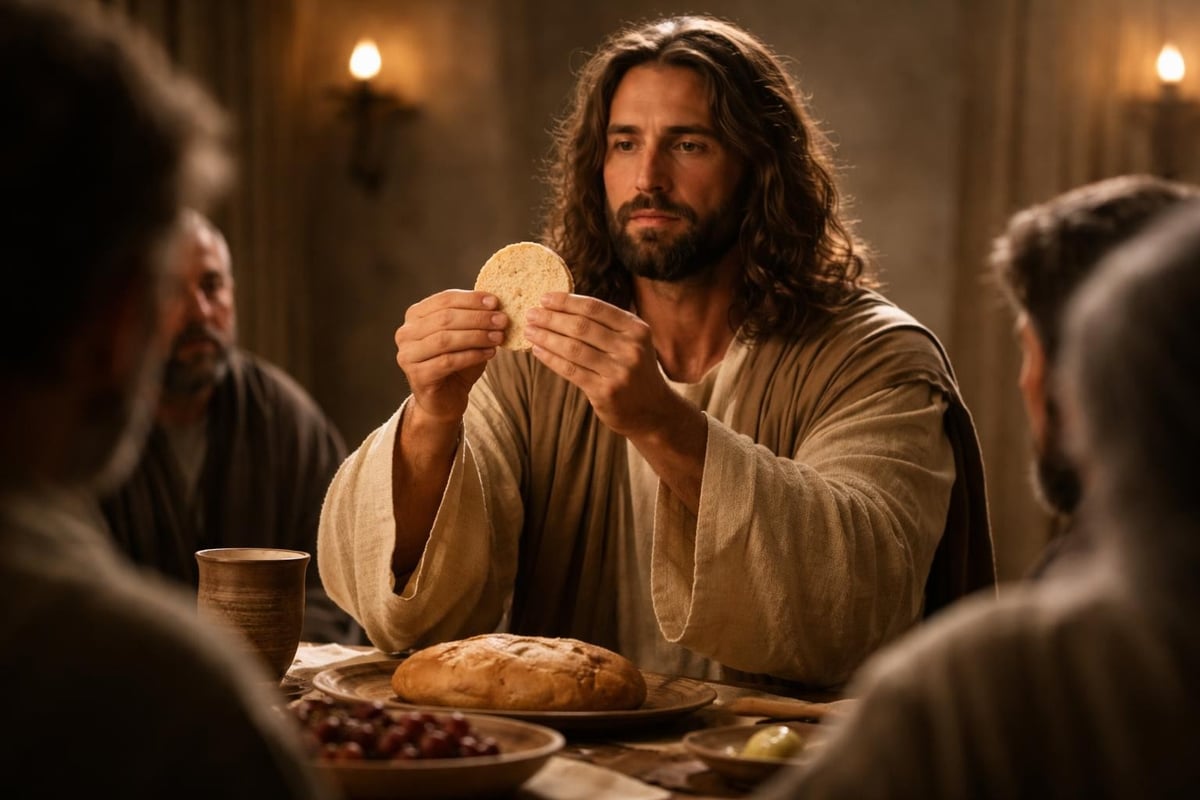
The Institution of the Eucharist represents the first and central mystery. During the Last Supper, Jesus took bread, blessed it, broke it, and gave it to His disciples saying, "This is my body, which will be given for you." Similarly, He took the cup of wine, blessed it, and declared, "This is my blood of the covenant, which will be shed on behalf of many for the forgiveness of sins." This transformation of bread and wine into Christ's Body and Blood established the sacrament that would become the source and summit of Christian life.
The Church has always treasured the Real Presence of Christ in the Eucharist. The Miracles of the Eucharist books document extraordinary Eucharistic miracles throughout history that confirm this sacred truth. These accounts, meticulously researched and beautifully presented, strengthen faith in Christ's abiding presence in the Blessed Sacrament.

The Institution of the Priesthood constitutes the second mystery. When Jesus commanded His apostles, "Do this in memory of me," He established the ministerial priesthood. This sacred office empowers ordained ministers to act in the person of Christ, consecrating bread and wine into His Body and Blood. The priesthood ensures that the Eucharistic sacrifice continues throughout all generations.
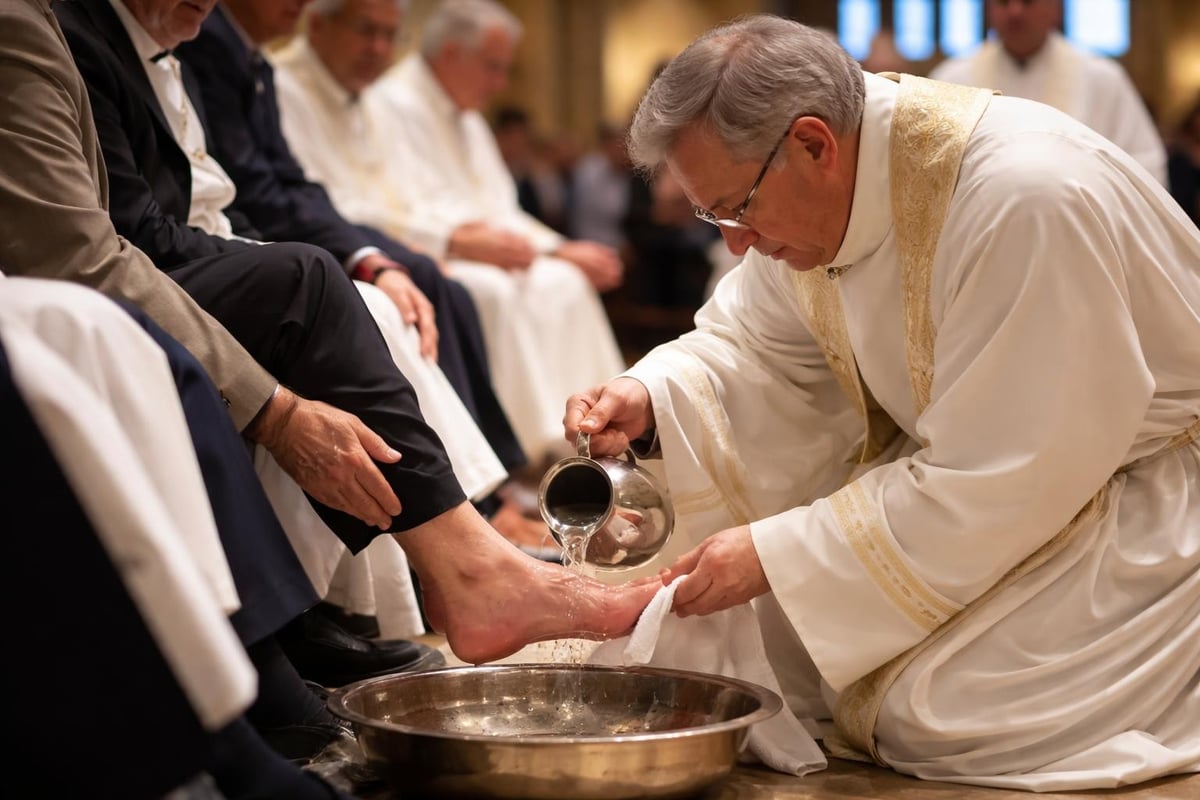
The Commandment of Love, demonstrated through the washing of feet, forms the third mystery. This humble act reversed conventional expectations of master and servant. Jesus taught that true greatness consists in serving others with humility and love. The foot-washing ceremony known as the Mandatum remains a central element of holy thursday liturgies worldwide.
The Liturgical Celebrations of Holy Thursday
The liturgical observance of holy thursday features distinctive ceremonies that distinguish this day from all others in the Church calendar. These celebrations immerse the faithful in the mysteries being commemorated and prepare them for the solemn observances of Good Friday and the Easter Vigil.
The Chrism Mass
Many dioceses celebrate the Chrism Mass on holy thursday morning, though some schedule this liturgy earlier in Holy Week. During this Mass, the bishop consecrates the sacred oils used throughout the year: the Oil of Catechumens, the Oil of the Sick, and Sacred Chrism. Priests of the diocese gather around their bishop to renew their priestly commitments, expressing unity in their sacred ministry.
The blessing of oils holds profound significance for sacramental life. Sacred Chrism is used in Baptism, Confirmation, and Holy Orders. The Oil of the Sick brings healing and comfort to those suffering illness. The Oil of Catechumens strengthens those preparing for Christian initiation. These blessed oils connect the entire faith community to the mysteries celebrated on holy thursday.
| Sacred Oil | Primary Use | Symbolic Meaning |
|---|---|---|
| Sacred Chrism | Baptism, Confirmation, Holy Orders | Consecration and strengthening |
| Oil of Catechumens | Baptismal preparation | Protection and fortification |
| Oil of the Sick | Anointing of the Sick | Healing and divine mercy |
The Mass of the Lord's Supper
The evening Mass of the Lord's Supper represents the principal liturgy of holy thursday. This celebration begins the sacred Triduum and commemorates the Last Supper in a particularly solemn manner. The significance of Holy Thursday centers on this liturgical celebration that makes present the mysteries of that sacred night.
The liturgy begins with the Gloria, accompanied by bells that then fall silent until the Easter Vigil. This silence creates a solemn atmosphere befitting the events being commemorated. Following the Gospel reading, many parishes include the washing of feet, reenacting Christ's humble service to His disciples.
The faithful participate in the Eucharistic celebration with heightened awareness of its institution on this very night. After Communion, the Blessed Sacrament is carried in solemn procession to a place of repose, often called the Altar of Repose. This represents the Garden of Gethsemane, where Jesus prayed after the Last Supper.
Key Elements of the Evening Liturgy:
- Gloria with bells (last time until Easter)
- Scripture readings emphasizing the Last Supper
- Washing of feet ceremony
- Eucharistic celebration
- Solemn transfer of the Blessed Sacrament
- Stripping of the altar
- Adoration at the Altar of Repose
The stripping of the altar concludes the liturgy, symbolizing Christ's humiliation and the stripping of His garments. This stark ritual prepares the church for Good Friday's solemn observances. The faithful are invited to spend time in prayer before the Blessed Sacrament, keeping watch with Jesus as He enters His Passion.
Deepening Your Holy Thursday Experience
Participating meaningfully in holy thursday observances requires preparation and intentional engagement. The richness of this sacred day reveals itself more fully when approached with prayer, reflection, and understanding.
Preparing Your Heart
Begin preparing for holy thursday several days in advance through prayer and Scripture meditation. Read the Gospel accounts of the Last Supper in Matthew 26, Mark 14, Luke 22, and John 13-17. These passages provide the biblical foundation for understanding the mysteries being celebrated.
Consider using prayer resources that focus on Christ's Passion. Many find prayer cards and novenas particularly helpful for structured meditation during Holy Week. These portable resources allow for prayer throughout the day, maintaining focus on the sacred mysteries.
Examination of conscience prepares the heart to receive Christ worthily. Holy thursday invites reflection on how well we have embraced Christ's commandment of love. Have we served others with humility? Do we recognize Christ's presence in the Eucharist? Are we grateful for the priesthood and sacramental life?
Participating in the Liturgy
Arrive early for the evening Mass to prepare spiritually and secure participation in the liturgy. Dress appropriately for this solemn celebration, showing reverence for the sacred mysteries. Bring a missal or worship aid to follow the readings and prayers attentively.
Full participation means engaging with each element of the liturgy. Sing the hymns with devotion, respond to the prayers, and listen attentively to the Scripture readings and homily. When the foot-washing occurs, reflect on Christ's example of humble service and your own call to serve others.
Ways to Enhance Liturgical Participation:
- Review the Scripture readings beforehand
- Arrive with adequate time for prayer
- Participate fully in responses and singing
- Receive Holy Communion with deep reverence
- Remain for Adoration at the Altar of Repose
- Maintain silence and prayerful demeanor
Adoration and Night Watch
Following the Mass, many parishes organize Adoration before the Altar of Repose, continuing until midnight or later. This practice recalls Jesus's request to His disciples in Gethsemane: "Could you not watch one hour with me?" Spending time in prayer before the Blessed Sacrament on this sacred night creates a profound spiritual experience.
Consider signing up for a specific hour of Adoration if your parish organizes a watch schedule. This commitment ensures continuous prayer and creates a communal vigil. During your time of prayer, meditate on the mysteries of the Eucharist, express gratitude for the priesthood, and ask for grace to love and serve others more faithfully.
The Theological Richness of Holy Thursday
The theological depths of holy thursday extend far beyond historical commemoration. This sacred day reveals fundamental truths about God's nature, human redemption, and the Church's sacramental life. Understanding these theological dimensions enriches participation and deepens faith.
The Eucharist as Sacrifice and Sacrament
The Eucharist instituted on holy thursday represents both sacrifice and sacrament. As sacrifice, it makes present the one offering of Christ on Calvary. The Mass does not repeat or add to Christ's sacrifice but renders it present in an unbloody manner. This sacrificial dimension connects every Eucharistic celebration to the Cross.
As sacrament, the Eucharist provides spiritual nourishment and unites believers to Christ and one another. Christ's Real Presence in the consecrated elements transcends human understanding yet invites profound faith. The Church has consistently taught that the Eucharist contains the whole Christ: Body, Blood, Soul, and Divinity.
The rituals of Holy Thursday emphasize both dimensions, presenting the Eucharist as the central mystery of Christian faith. This dual nature of sacrifice and sacrament reveals God's desire to redeem humanity and remain intimately present with His people.
Priesthood and Service
The institution of the priesthood on holy thursday establishes the ministerial office necessary for the Church's sacramental life. Christ configured the apostles to Himself, empowering them to consecrate the Eucharist and forgive sins. This sacred ministry continues through apostolic succession, with bishops ordaining priests in an unbroken line from the apostles.
Yet priesthood extends beyond the ordained ministry. All baptized Christians share in Christ's priesthood through the common priesthood of the faithful. This baptismal priesthood calls every believer to offer spiritual sacrifices and participate in the Church's worship. The washing of feet demonstrates that all ministry, whether ordained or lay, must embody humble service.
| Type of Priesthood | Recipients | Primary Function |
|---|---|---|
| Ministerial Priesthood | Ordained bishops and priests | Consecrate Eucharist, administer sacraments |
| Common Priesthood | All baptized faithful | Offer spiritual sacrifices, participate in worship |
| Both | United in Christ | Serve others with humility and love |
The New Covenant in Christ's Blood
Jesus's words at the Last Supper, "This is my blood of the covenant," established a new relationship between God and humanity. This New Covenant, prophesied by Jeremiah, surpasses the Old Covenant of Sinai. Instead of external law written on stone, God writes His law on human hearts through the indwelling Holy Spirit.
The blood of the covenant obtains forgiveness of sins and opens eternal life to believers. Unlike animal sacrifices that required constant repetition, Christ's sacrifice accomplishes redemption once for all. Yet this singular sacrifice becomes present in every Mass, allowing each generation to participate in its saving power.
This covenant relationship demands response. Those who receive Christ's Body and Blood commit to living in covenant faithfulness, loving God above all and serving their neighbors. Holy thursday reminds believers of this covenant commitment and invites renewal of baptismal promises.
Holy Thursday Traditions Across Cultures
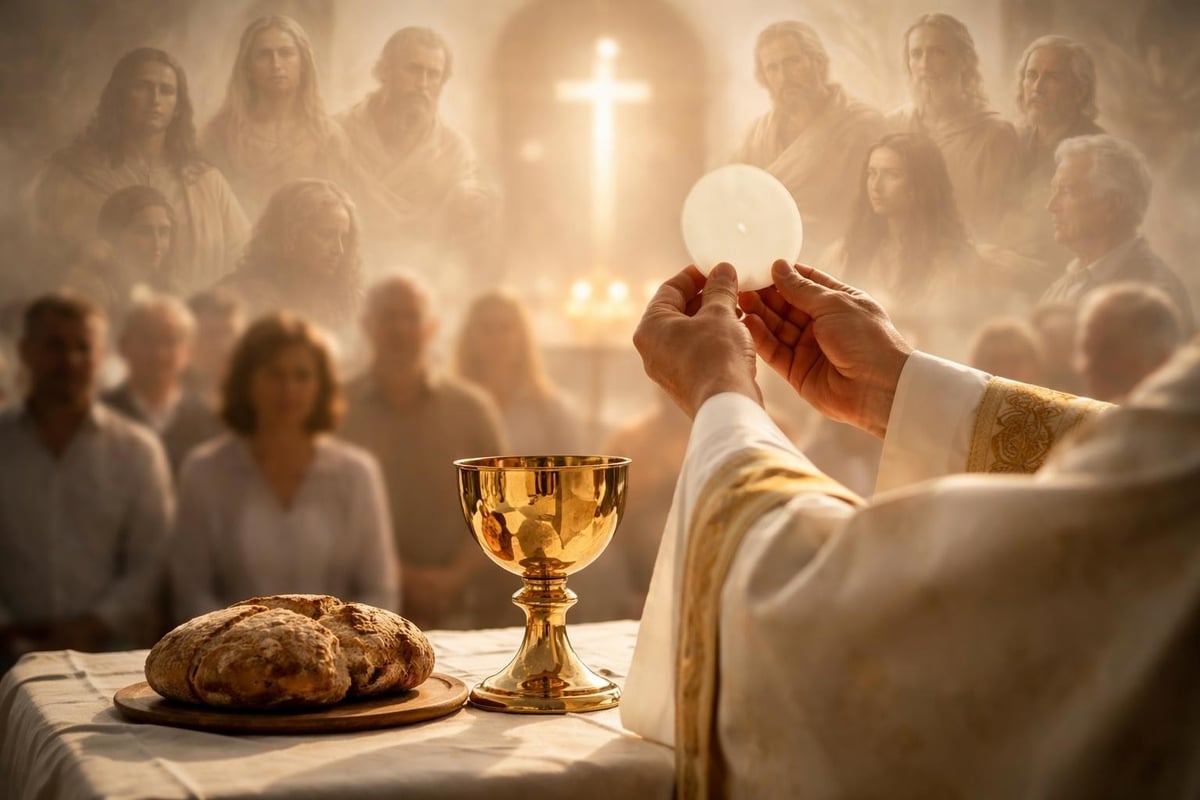
Catholic communities worldwide observe holy thursday with distinctive customs that reflect local cultures while maintaining essential liturgical elements. These varied expressions demonstrate the universality of Catholic faith and the rich diversity within the Church.
European Observances
In Rome, the Pope traditionally celebrates the evening Mass at a different location each year, often in prisons or facilities serving the marginalized. This practice emphasizes Christ's identification with the poor and suffering. The foot-washing ceremony includes people of different backgrounds, nationalities, and faiths, demonstrating the universal scope of Christ's love.
Spanish communities conduct elaborate processions through city streets, with religious brotherhoods carrying statues depicting scenes from the Passion. These solemn processions create visible witness to faith and invite public participation in Holy Week observances. Many Spanish families also visit seven churches on holy thursday evening, praying before the Altar of Repose at each location.
German Catholics observe the tradition of "Grab des Herrn" (Lord's Tomb), creating elaborate decorations around the Altar of Repose. These displays often include flowers, candles, and symbolic elements representing the Garden of Gethsemane. Parishes compete to create the most beautiful setting for Eucharistic Adoration.
Latin American Customs
Throughout Latin America, holy thursday features distinctive practices rooted in indigenous and Spanish traditions. Many communities prepare special foods for sharing with family and neighbors. In some regions, the tradition of visiting seven churches continues, with families walking between parishes throughout the evening.
Mexican Catholics often include a ceremony called "The Seven Last Words," meditating on Christ's final statements from the Cross. Though more commonly associated with Good Friday, some communities incorporate this devotion into holy thursday observances. Traditional foods like capirotada, a bread pudding symbolizing Christ's Passion, are prepared and shared.
Asian and African Expressions
In the Philippines, holy thursday initiates the "Visita Iglesia" tradition, where faithful visit seven churches to pray and meditate on the Passion. This practice creates a pilgrimage atmosphere, with many people walking considerable distances between parishes. Churches remain open throughout the night to accommodate the crowds.
African Catholic communities often incorporate traditional music and dance into liturgical celebrations. The washing of feet may include local customs of hospitality and service. Understanding Holy Week traditions across cultures enriches appreciation for the Church's catholicity and the diverse ways people encounter Christ's love.
Living the Holy Thursday Spirit
The mysteries celebrated on holy thursday extend beyond liturgical observance to shape daily Christian living. The Eucharist, priesthood, and commandment of love provide patterns for authentic discipleship throughout the year.
Eucharistic Living
Catholics believe the Eucharist transforms not only bread and wine but also those who receive it worthily. Regular participation in Mass and frequent reception of Holy Communion gradually conforms believers to Christ. This transformation should manifest in charitable actions, moral integrity, and self-sacrificial love.
Deepening Eucharistic devotion through Adoration strengthens this transformation. Spending time in prayer before the Blessed Sacrament cultivates intimacy with Christ and opens hearts to His grace. Many parishes offer perpetual Adoration or regular holy hours, providing opportunities for this powerful prayer practice.
Practical Ways to Deepen Eucharistic Life:
- Attend daily Mass when possible
- Participate in Eucharistic Adoration regularly
- Prepare for Mass through prayer and Scripture reading
- Make a thanksgiving after receiving Communion
- Study Church teaching on the Real Presence
- Share Eucharistic faith with family and friends
Embracing Humble Service
Christ's washing of the disciples' feet challenges conventional notions of power and prestige. His example calls Christians to seek opportunities for humble service rather than positions of honor. This counter-cultural approach reflects the kingdom values Jesus proclaimed throughout His ministry.
Humble service appears in countless forms: caring for sick family members, volunteering at charitable organizations, mentoring young people, supporting parish ministries, advocating for the vulnerable. The specific form matters less than the spirit of genuine care and self-giving that motivates the action.
Families can cultivate this spirit by creating traditions of service. Involve children in age-appropriate charitable activities, discuss the needs of others during family meals, and model generous response to requests for help. These practices form hearts disposed toward loving service.
Supporting Priestly Ministry
While all Christians share in Christ's priesthood through Baptism, the ministerial priesthood deserves special support and prayer. Priests carry enormous responsibilities as spiritual fathers and sacramental ministers. Lay faithful can support their priests through prayer, encouragement, and practical assistance.
Regular prayer for priests and vocations strengthens the entire Church. Many Catholics adopt specific priests as special intentions, praying daily for their ministry and well-being. Supporting seminarians through prayer and material assistance helps ensure future generations of faithful priests.
Expressing gratitude to priests for their ministry provides important encouragement. A simple thank you, a note of appreciation, or a small gift can lift a priest's spirits and remind him of the value of his service. Respecting priests' need for rest and personal time also demonstrates genuine care.
Resources for Holy Thursday Observance
Journeys of Faith offers numerous resources to enhance your holy thursday experience and deepen understanding of the Passion mysteries. These materials support personal prayer, family devotions, and parish catechesis.
Recommended Resources:
- Explore Journeys of Faith Online store with thousands of Catholic Items
- Our Unique Mega Search Engine is linked to hundreds of Catholic Shops and Stores
- Get the Journeys of Faith NEW App for iPhone or Android - Search for Journeys of Faith or go to https://journeysoffaith.com/pages/download-our-app
- Chat with us anytime
- We need your help to reach more souls. Please Make a Donation
Books exploring Eucharistic miracles, lives of the saints, and Church teaching provide excellent preparation for holy thursday. Prayer cards featuring the Passion, the Eucharist, and the Sacred Heart help maintain prayerful focus throughout Holy Week. These portable resources fit easily into purses or pockets, enabling prayer during daily activities.
Families might consider establishing holy thursday traditions: attending Mass together, visiting the Altar of Repose, preparing a special meal, or reading Scripture accounts of the Last Supper. These practices create meaningful memories and pass faith to younger generations.
The resources available through Journeys of Faith support evangelization and spiritual growth throughout the liturgical year. From books and DVDs to prayer cards and sacramentals, these materials help Catholics encounter Christ and grow in faith.
Holy thursday invites profound encounter with the central mysteries of Catholic faith: the Eucharist, the priesthood, and Christ's commandment of love. These mysteries continue to transform lives and sustain the Church in every generation. Through thoughtful preparation, active participation in the liturgy, and commitment to living Eucharistic faith daily, Catholics can experience the fullness of grace offered on this sacred day. Journeys of Faith provides the resources, teaching, and community support to help you journey deeper into these mysteries and share them with others through evangelization and authentic witness.
