

The litany all saints represents one of the most profound and enduring prayer traditions within the Catholic Church. This ancient form of intercessory prayer invokes the communion of saints, calling upon holy men and women throughout history to intercede for us before the throne of God. When we recite the litany all saints, we acknowledge our connection to the Church Triumphant in heaven, recognizing that we are not alone in our spiritual journey but surrounded by a great cloud of witnesses who have walked the path of faith before us.
Understanding the Litany All Saints
The litany all saints is a liturgical prayer consisting of a series of petitions and invocations. Its structure follows a call-and-response pattern, where a leader invokes the name of a saint or group of saints, and the congregation responds with "pray for us." This rhythmic format creates a meditative atmosphere that draws participants deeper into contemplation and communal prayer.
The word "litany" comes from the Greek word "litaneia," meaning supplication or entreaty. The litany all saints historical development can be traced back to the early centuries of Christianity, when communities would process through streets while calling upon the saints for protection and intercession. This practice evolved into the formal liturgical prayer we recognize today.
Historical Origins and Development
The earliest forms of the litany all saints emerged during the fourth and fifth centuries, particularly in the Eastern churches. Pope Gregory the Great is credited with introducing this prayer form to Rome, where it became integrated into major liturgical celebrations. The litany all saints gained particular prominence during times of crisis, plague, or warfare, when communities would gather to seek heavenly protection.
Throughout the medieval period, the litany all saints expanded to include local and regional saints, reflecting the growing catalog of recognized holy men and women. Monastic communities were especially devoted to this prayer, incorporating it into their daily offices and special observances.
Brought to you by Journeys of Faith, founded by Bob and Penny Lord. We are an Augustinian Secular Institute - Cyber Apostles. Our Mission is Evangelization through Media.

Structure and Components of the Litany All Saints
The litany all saints follows a carefully organized structure that builds from fundamental Christian beliefs to specific intercessory requests. Understanding this structure helps participants appreciate the theological depth embedded within this ancient prayer.
Opening Invocations
The prayer begins with invocations to the Holy Trinity:
- Lord, have mercy
- Christ, have mercy
- Lord, have mercy
This Trinitarian opening establishes the foundation for all subsequent petitions. We acknowledge God as the source of all grace before turning to the saints as intercessors. The EWTN litany all saints resources provide comprehensive guidance on proper recitation and liturgical usage.
Categories of Saints
The litany all saints proceeds through distinct categories of holy men and women:
| Category | Examples | Significance |
|---|---|---|
| Patriarchs and Prophets | Abraham, Moses, Elijah | Old Testament foundation |
| Apostles and Evangelists | Peter, Paul, John | New Testament witnesses |
| Martyrs | Stephen, Lawrence, Perpetua | Witness through blood |
| Bishops and Doctors | Augustine, Thomas Aquinas, Catherine | Teachers of faith |
| Priests and Religious | Francis, Benedict, Teresa | Consecrated life models |
| Lay Saints | Joseph, Mary Magdalene, Monica | Sanctity in ordinary life |
This systematic progression through salvation history demonstrates how God has raised up holy witnesses in every age and from every walk of life. The litany all saints reminds us that holiness is accessible to all Christians, regardless of their state in life.
Liturgical Uses of the Litany All Saints
The litany all saints holds a special place in several key liturgical celebrations throughout the Church year. Its use during these occasions underscores the importance of invoking the communion of saints at pivotal moments in the life of the Church and individual believers.
Easter Vigil
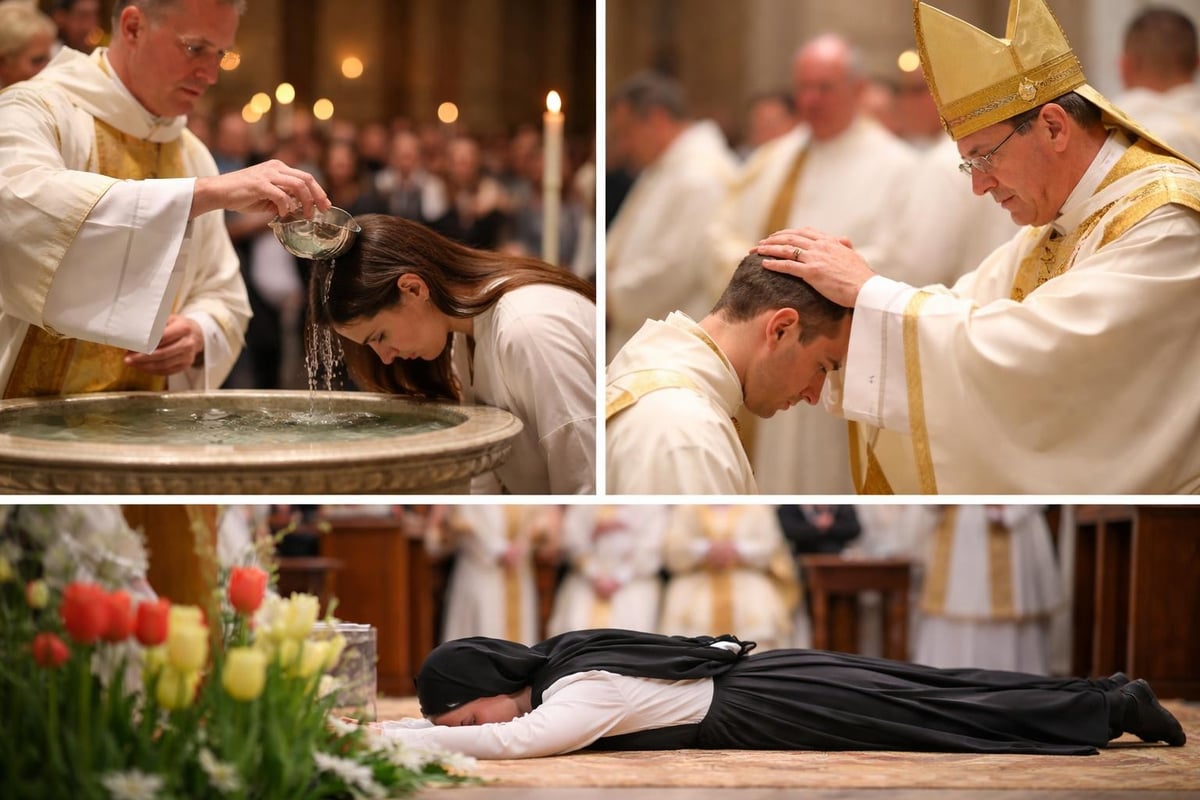
The most prominent use of the litany all saints occurs during the Easter Vigil, the greatest celebration of the liturgical year. As the Church prepares to receive new members through baptism, confirmation, and Eucharist, the community invokes the entire communion of saints to witness and support these sacramental moments. The litany all saints at the Easter Vigil creates a spiritual bridge between heaven and earth, uniting the Church Militant with the Church Triumphant in celebration of Christ's resurrection.
Ordinations
During ordination ceremonies for deacons, priests, and bishops, the litany all saints is chanted while candidates lie prostrate on the floor. This powerful gesture of humility, combined with the invocation of the saints, emphasizes that ordained ministry flows from God's grace and the support of the entire Church, both earthly and heavenly. The litany all saints during ordinations reminds us that the priesthood is not a solitary vocation but one embedded within the communion of saints.
Religious Profession
When men and women make their religious vows, the litany all saints accompanies their profession. This connects their commitment to the centuries-long tradition of consecrated life and places their sacrifice within the broader narrative of holiness. Those making vows join the ranks of countless religious who have preceded them, all of whom are invoked in the litany all saints.
For families looking to introduce children to the saints, the Catholic saints resources for children provide age-appropriate materials that make these holy role models accessible and inspiring.
Praying the Litany All Saints in Personal Devotion
While the litany all saints has formal liturgical applications, it also serves as a powerful tool for personal prayer and family devotion. Many Catholics incorporate this prayer into their spiritual practices, especially during times of particular need or discernment.
Creating a Prayer Routine
Incorporating the litany all saints into daily or weekly prayer routines strengthens our awareness of the communion of saints. Some suggestions include:
- Monthly recitation on the first day of each month
- Feast day practice on All Saints Day (November 1st)
- Crisis invocation during times of family difficulty or decision-making
- Seasonal observance during Lent or Advent as preparation for major feasts
The rhythmic nature of the litany all saints makes it particularly suitable for contemplative prayer. The repetition allows the mind to settle into a meditative state while the heart opens to the intercession of the saints.
Family Prayer with the Litany All Saints
Families can adapt the litany all saints for household prayer by selecting saints particularly meaningful to their circumstances. Parents might choose patron saints of their children, saints connected to family heritage, or saints whose feast days coincide with important family anniversaries. This personalization makes the litany all saints more accessible to younger participants while maintaining its traditional structure.
Many families find that resources like Catholic Saints Books help them learn about the holy men and women they invoke in the litany. Understanding the lives and sacrifices of these saints enriches the prayer experience and provides role models for Christian living.
Theological Significance of the Litany All Saints
The litany all saints embodies several core theological principles that define Catholic understanding of the communion of saints, intercessory prayer, and the nature of the Church itself.
The Communion of Saints
When we pray the litany all saints, we profess belief in the communion of saints-the mystical union between those on earth, those in purgatory, and those in heaven. This doctrine teaches that death does not sever the bonds of Christian charity but transforms them. The saints in heaven remain concerned for our welfare and actively intercede for us before God.
The structure and components of the litany all saints reflect this theological reality by creating a spiritual conversation that transcends time and space. We call upon Augustine, who died in 430 AD, with the same confidence that we might ask a living friend to pray for us.
Intercessory Prayer
The litany all saints demonstrates the Catholic understanding of intercessory prayer. We ask the saints to "pray for us," not to grant our petitions directly. This distinction is crucial: the saints are not divine, but they are close to God by virtue of their holiness and heavenly presence. Their prayers carry weight because of their intimacy with the Divine.
Scripture supports this practice in passages like Revelation 5:8, which describes the elders in heaven presenting the prayers of the saints before God. The litany all saints extends this biblical image, inviting us to seek the assistance of those who have completed their earthly journey and now dwell in God's presence.
The Universal Church
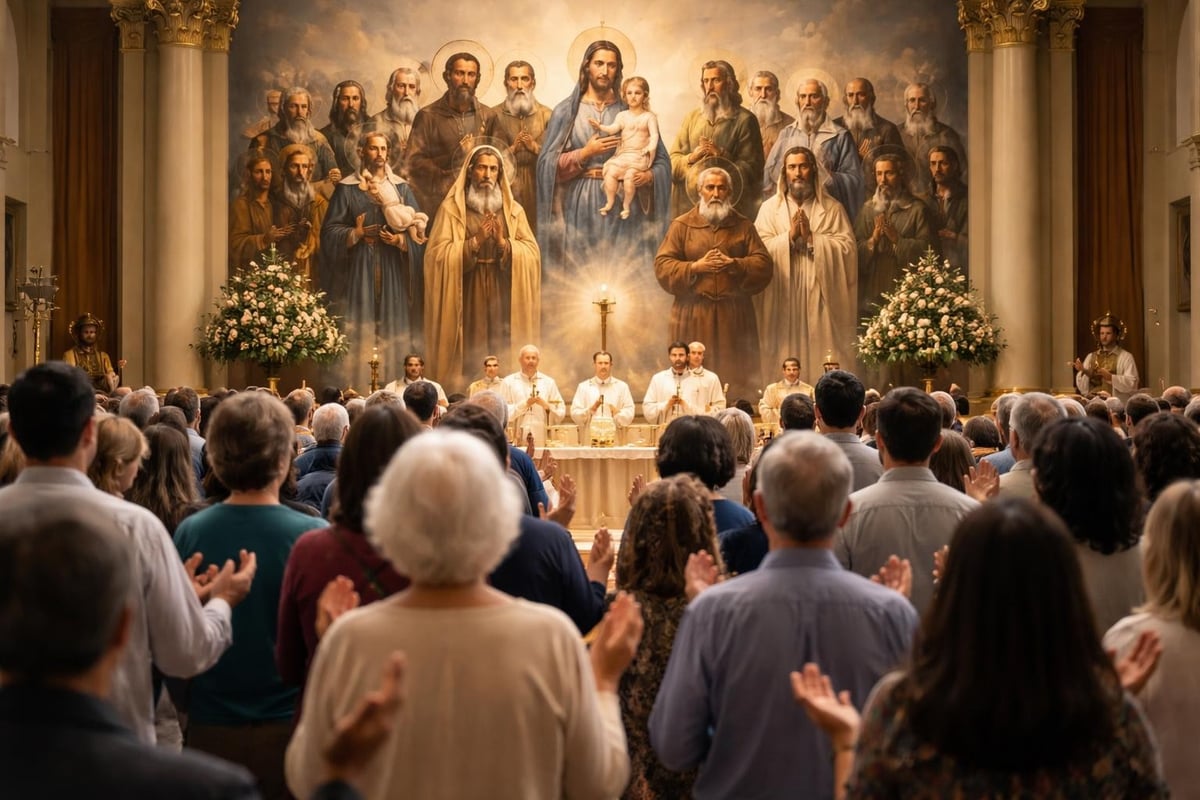
The comprehensive nature of the litany all saints illustrates the universal character of the Catholic Church. By invoking saints from every century, continent, and culture, we acknowledge that the Church transcends geographical and temporal boundaries. The litany all saints includes early martyrs from Rome, medieval mystics from Germany, missionaries from Asia, and modern witnesses from every nation.
This universality reminds us that holiness is not limited to any particular time, place, or people. God calls all people to sanctity, and the litany all saints celebrates the diverse ways individuals have responded to that call throughout history.
Variations and Adaptations of the Litany All Saints
While the litany all saints maintains a traditional core structure, various adaptations exist to accommodate different liturgical contexts, cultural expressions, and devotional needs.
Regional and Cultural Variations
Different regions often include local saints who hold particular significance for their communities. The liturgical variations of the litany all saints demonstrate how the Church honors both universal and local witnesses to the faith. For example, Irish Catholics might include St. Patrick and St. Brigid more prominently, while Filipino Catholics emphasize St. Lorenzo Ruiz.
These adaptations respect the principle of inculturation while maintaining the prayer's essential structure. The litany all saints becomes a living prayer that reflects the particular history and spiritual heritage of each community.
Musical Settings
The litany all saints has inspired numerous musical compositions throughout Church history. Gregorian chant settings provide a solemn, contemplative atmosphere, while contemporary compositions offer more accessible melodies for modern congregations. The musical notation and lyrics resources help parishes incorporate the litany all saints into worship with appropriate musical accompaniment.
Music enhances the prayer's meditative quality and helps participants enter more deeply into the spirit of supplication. The repetitive melodic patterns mirror the repetitive verbal patterns, creating a unified prayer experience that engages both mind and heart.
Abbreviated Forms
For private devotion or when time constraints exist, abbreviated versions of the litany all saints may be used. These shortened forms typically retain the Trinitarian opening, representative saints from major categories, and the closing petitions. While less comprehensive than the full litany all saints, abbreviated versions maintain the prayer's essential character and theological content.
Teaching the Litany All Saints to New Generations
Passing on the tradition of the litany all saints requires intentional catechesis and creative approaches that help younger generations appreciate this ancient prayer form.
Educational Approaches
Storytelling methodology proves particularly effective when introducing children to the litany all saints. Before praying the litany, share brief stories about specific saints included in the prayer. This contextualization transforms abstract names into real people with compelling life stories.
Visual aids enhance understanding, especially for visual learners. Icons, holy cards, or images of saints help children connect names with faces and stories. Creating a "saints gallery" in the home or classroom provides ongoing exposure to the holy men and women invoked in the litany all saints.
Interactive participation engages children more fully. Assign different children to lead specific invocations, or create simple hand motions to accompany various sections. These active learning techniques help the litany all saints become memorable and meaningful rather than merely rote recitation.
Integration with Sacramental Preparation
Programs preparing children for first communion, confirmation, or reconciliation benefit from incorporating the litany all saints. As children learn about these sacraments, praying the litany all saints reinforces their understanding of the Church as a communion extending beyond their immediate parish community.
Confirmation preparation particularly lends itself to the litany all saints, as candidates traditionally choose a confirmation saint. Studying this saint's life and including their invocation in the litany all saints personalizes the prayer and strengthens the candidate's connection to their chosen patron.
The availability of resources like devotional prayer cards helps families maintain these practices at home. Simple, accessible materials support consistent engagement with the litany all saints and the broader tradition of invoking the saints.
The Litany All Saints in Ecumenical Context
Understanding how the litany all saints relates to ecumenical dialogue and shared Christian heritage enriches our appreciation of this prayer's broader significance.
Shared Christian Roots
The litany all saints draws from early Christian traditions that predate the divisions between Eastern and Western Christianity. The historical background of the litany all saints reveals connections to practices common across various Christian traditions, including Eastern Orthodox, Oriental Orthodox, and some Anglican communities.
While Protestant traditions generally do not practice invocation of saints, awareness of this shared early Christian heritage creates opportunities for respectful dialogue about the development of different prayer traditions. The litany all saints reflects how the undivided Church prayed before the splits that produced various denominations.
Points of Connection
Some elements of the litany all saints find resonance across denominational lines:
- Recognition of holy witnesses: Most Christian traditions honor the memory of faithful believers throughout history
- Corporate prayer: The responsive, communal format reflects widespread Christian practice
- Biblical foundations: References to Old and New Testament figures connect to shared scriptural heritage
- Liturgical rhythm: The structured, repetitive nature mirrors prayer forms found in many traditions
These commonalities don't erase significant theological differences regarding the invocation of saints, but they provide context for understanding how various Christian communities approach prayer and remembrance of faithful witnesses.
Practical Resources for Praying the Litany All Saints
Access to quality resources enhances the practice of praying the litany all saints, whether in liturgical settings or private devotion.
Printed Resources
Prayer cards, booklets, and missalettes containing the litany all saints provide convenient references for personal and group prayer. The St. John of the Cross litany all saints resources offer examples of how parishes make this prayer accessible to their communities.
Journeys of Faith provides numerous prayer resources that support devotional practices centered on the saints. Their extensive catalog includes materials that complement the litany all saints by helping people learn about the holy men and women they invoke.
Digital and Audio Resources
Modern technology offers new ways to engage with the litany all saints. Audio recordings allow people to pray along while commuting, exercising, or performing household tasks. Video resources provide visual elements that enhance learning, particularly for those preparing to participate in liturgical celebrations featuring the litany all saints.
The Journeys of Faith app provides mobile access to Catholic prayers and devotional resources, making it easier to incorporate the litany all saints into daily routines regardless of location.
Formation and Study Materials
Books, articles, and study guides exploring the history, theology, and practice of the litany all saints deepen understanding beyond simple recitation. Formation materials help prayer leaders explain the significance of this prayer to their communities and prepare participants for meaningful engagement.
Materials from Bob and Penny Lord, available through Journeys of Faith, offer insights into the lives of saints and the importance of cultivating relationships with these holy intercessors. Their evangelization work through Catholic media helps people appreciate prayers like the litany all saints within the broader context of Catholic devotional life.
Connecting the Litany All Saints to Daily Life
The litany all saints should not remain confined to special liturgical occasions but can inform and enrich our everyday Christian living.
Professional and Vocational Connections
Many saints invoked in the litany all saints serve as patron saints of particular professions, causes, or life circumstances. Connecting our work and daily activities to relevant saints makes the litany all saints personally meaningful:
- Teachers: Invoke St. Thomas Aquinas, St. John Baptist de la Salle
- Healthcare workers: Call upon St. Luke, St. Camillus de Lellis
- Parents: Seek intercession of St. Monica, St. Joseph
- Students: Ask St. Jerome, St. Catherine of Alexandria for assistance
This vocational approach to the litany all saints transforms our understanding of work from mere employment to a context for living out our baptismal call to holiness.
Saints for Life Situations
The comprehensive nature of the litany all saints means we can identify intercessors for virtually any life situation:
- Financial difficulties: St. Matthew, St. Homobonus
- Health challenges: St. Peregrine, St. Raphael
- Family conflicts: St. Rita, St. Elizabeth Ann Seton
- Spiritual dryness: St. John of the Cross, St. Thérèse of Lisieux
- Evangelization efforts: St. Paul, St. Francis Xavier
Understanding these connections makes the litany all saints a practical resource for navigating life's challenges with the support of the communion of saints.
Seasonal Observances
Aligning recitation of the litany all saints with the liturgical year deepens our participation in the Church's rhythm:
Advent: Focus on Old Testament figures and prophets who anticipated Christ's coming
Lent: Emphasize martyrs and penitent saints who exemplified sacrifice and conversion
Easter: Celebrate the apostles and evangelists who witnessed the resurrection
Ordinary Time: Explore the breadth of saints from all categories, reflecting on diverse paths to holiness
This seasonal approach prevents the litany all saints from becoming mechanical repetition and instead makes it a dynamic prayer that evolves with the Church year.
The litany all saints stands as a timeless expression of Catholic faith, connecting us to centuries of holy witnesses who intercede for us before God's throne. This powerful prayer reminds us that we never walk alone on our journey of faith but are surrounded by a great cloud of witnesses supporting us with their prayers. Whether you're seeking to deepen your understanding of the saints, enhance your family's prayer life, or explore the rich traditions of Catholic worship, Journeys of Faith offers extensive resources to support your spiritual journey. Through their books, prayer cards, and educational materials, Bob and Penny Lord's mission of evangelization through media continues to help Catholics worldwide grow in their relationship with the communion of saints. Explore their comprehensive collection at https://journeysoffaith.com/collections, use their unique mega search engine at https://journeysoffaith.com/search to find Catholic items from hundreds of shops, download the Journeys of Faith app for iPhone or Android at https://journeysoffaith.com/pages/download-our-app, chat with them anytime at https://chatting.page/mjxs9aerrtgm3lmpndlcepmbyosntrjn, or support their evangelization mission through a donation at https://journeysoffaith.com/pages/donate.