

Step into the mystery and wonder that surround our lady of lourdes, one of the most revered Marian apparitions in the world. For nearly two centuries, this sacred site has inspired pilgrims, challenged skeptics, and offered hope to the sick and faithful alike.
This guide will illuminate the origins, miraculous events, and profound spiritual influence of Lourdes. Whether you are a pilgrim, a believer, or simply curious, you will uncover stories that continue to shape Catholic faith and global devotion.
We will journey through Lourdes’ historical setting, Bernadette Soubirous’s visionary experiences, the Church’s recognition, and the countless reported miracles. You will also discover how pilgrimage traditions and the legacy of Lourdes remain vibrant and meaningful in 2026.
Prepare to be captivated by remarkable accounts and enduring lessons. This post is brought to you by Journeys of Faith Founded and Bob and Penny Lord. We are Cyber Apostles and a Augustinian Secular Institute of which we are members; the Evangelization arm of the group of Cloistered Augustinian Nuns in Montefalco Italy. Our Mission is Evangelization through Media using the tools that God has allowed to be created.
The Historical Background of Lourdes
Pre-Apparition Lourdes: Setting the Scene
Nestled in the foothills of the Pyrenees, Lourdes in the mid-19th century was a modest rural town. The population lived in humble conditions, relying on agriculture and trade, with Catholic faith woven into daily life. The Church played a central role, guiding moral and spiritual practices even as poverty shaped local routines.
Before the world ever heard of our lady of lourdes, France already held a rich tradition of Marian pilgrimage, with many seeking spiritual renewal at sacred sites. The years leading up to 1858 were marked by economic hardship, yet the people's devotion remained strong. To understand the significance of our lady of lourdes, it's helpful to explore the broader context of Marian apparitions, as detailed in this Marian Apparitions Overview. These events set the stage for what would soon transform Lourdes forever.
Bernadette Soubirous: The Chosen Visionary
Bernadette Soubirous, the humble visionary of our lady of lourdes, was born into a poor family in Lourdes in 1844. Her childhood was marked by frequent illness, limited education, and a deep sense of faith instilled by her parents. Despite these hardships, Bernadette developed a reputation for honesty, humility, and resilience.
The community saw her as simple and trustworthy, but not particularly remarkable. Her lack of formal education made her an unlikely candidate for any extraordinary event. However, it was precisely her simplicity and sincerity that would later convince many of the authenticity of her experiences with our lady of lourdes.
The First Apparitions: February 1858
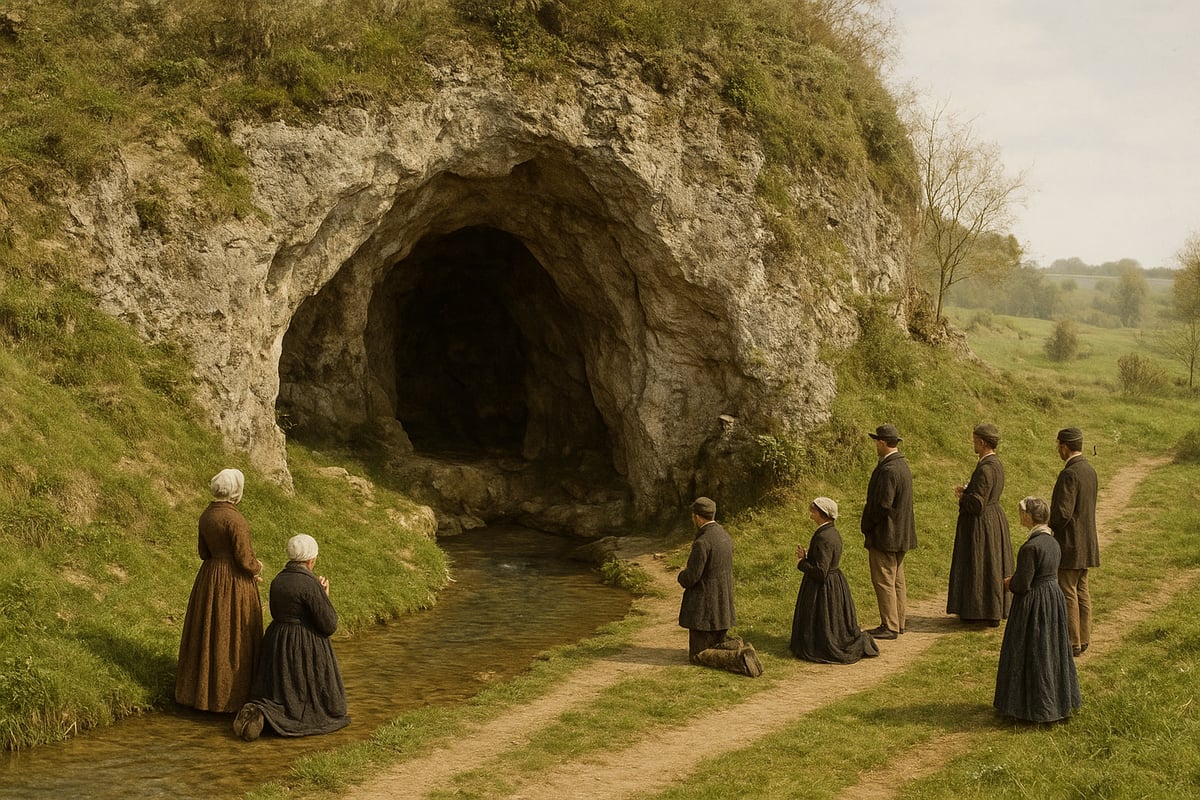
On February 11, 1858, Bernadette experienced her first vision at the Grotto of Massabielle. Accompanied by her sister and a friend, she saw a luminous lady dressed in white, with a blue sash and golden roses at her feet. The figure did not identify herself at first but radiated a sense of peace and invitation.
Bernadette's initial reaction was awe and uncertainty. Her family and friends responded with caution, unsure how to interpret her story. The secrecy surrounding the first visions of our lady of lourdes fueled curiosity and skepticism within the community. Despite doubts, Bernadette felt compelled to return, drawn by the gentle presence and the mysterious message she sensed.
Local and Church Responses
As word spread about Bernadette's encounters with our lady of lourdes, the local community was divided. Some dismissed the visions as childish imagination, while others grew increasingly curious. Authorities questioned Bernadette, seeking to determine the truth of her claims.
The Catholic Church adopted a cautious stance, launching investigations into Bernadette's character and the reported events. Medical professionals were also called to examine her, searching for natural explanations. Despite initial skepticism, crowds began to gather at the grotto, hoping to witness something extraordinary.
This post is brought to you by Journeys of Faith Founded and Bob and Penny Lord. We are Cyber Apostles and a Augustinian Secular Institute of which we are members; the Evangelization arm of the group of Cloistered Augustinian Nuns in Montefalco Italy. Our Mission is Evangelization through Media using the tools that God has allowed to be created.
The Apparitions and Their Messages
The story of our lady of lourdes centers on a series of remarkable apparitions that unfolded in 1858, forever changing the spiritual landscape of Lourdes. These mystical events, witnessed by a humble village girl, have drawn millions to seek hope, healing, and deeper faith. Exploring the chronology, identity, and enduring messages of these apparitions reveals why our lady of lourdes remains so significant today.
Chronology of the 18 Apparitions
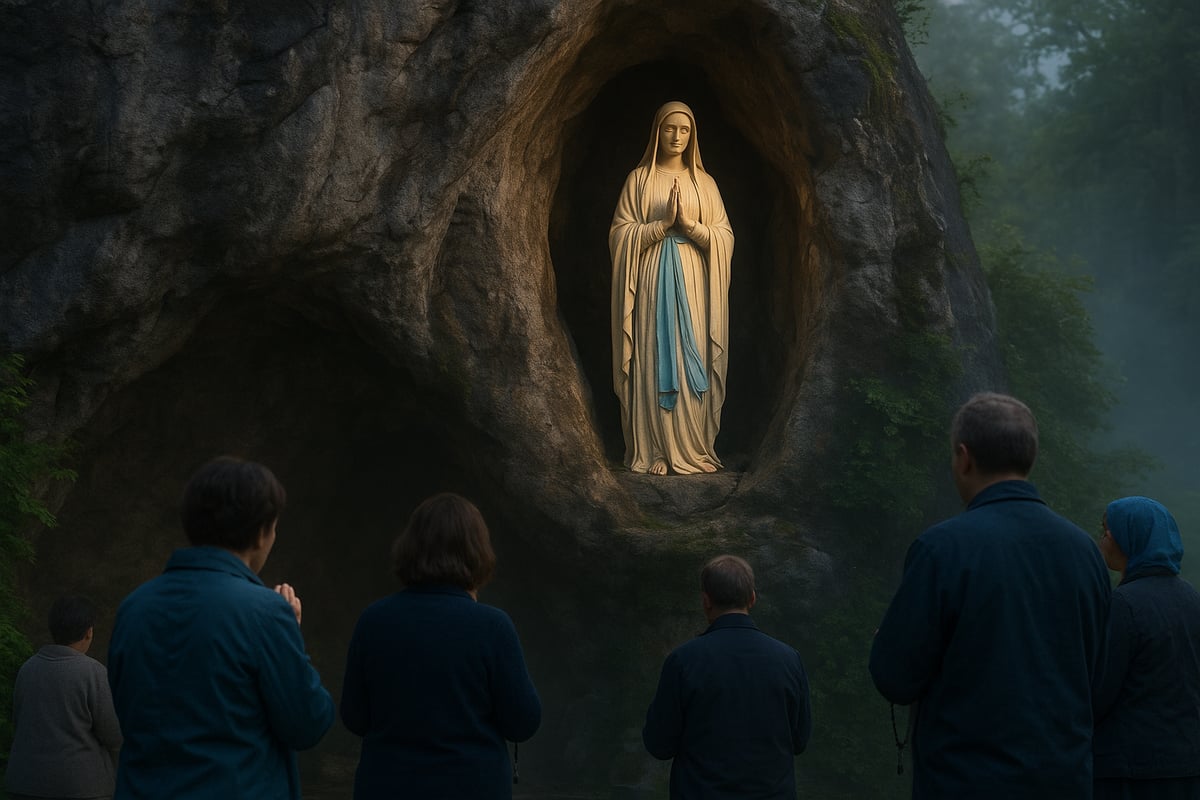
Between February 11 and July 16, 1858, Bernadette Soubirous experienced 18 apparitions at the Grotto of Massabielle. Each encounter with our lady of lourdes brought new depth to the unfolding mystery. The first vision occurred while Bernadette gathered firewood, sparking curiosity and disbelief among locals.
Crowds began to swell as word spread, with thousands eventually gathering at the grotto. Notable moments included the Lady’s silent prayer, her request for penance, and the miraculous emergence of a spring. These events are chronicled in detail in the Comprehensive Overview of Our Lady of Lourdes, which provides a thorough timeline and analysis.
Phenomena like the sudden blooming of wild roses, unexplained fragrances, and healings fueled both devotion and skepticism. The growing number of witnesses made Lourdes a focal point for faith and inquiry.
The Lady’s Identity: “I am the Immaculate Conception”
During the sixteenth apparition, the Lady revealed her identity to Bernadette with the words, “I am the Immaculate Conception.” This title, affirmed by Pope Pius IX just a few years before, confirmed the Catholic dogma that Mary was conceived without original sin. Bernadette, uneducated in theology, could not have invented such a term, which astonished both clergy and townsfolk.
Our lady of lourdes became synonymous with this profound mystery, deepening Marian devotion worldwide. The declaration gave spiritual weight to the apparitions, linking them directly to official Church teaching. The phrase inspired awe and reflection, as believers recognized the significance of Mary’s purity and special role in salvation history.
The Messages of Lourdes: Prayer, Penance, and Healing
The heart of the apparitions’ message centered on prayer, penance, and conversion. Our lady of lourdes called on Bernadette and the faithful to pray the Rosary, seek forgiveness, and turn away from sin. She requested the construction of a chapel at the grotto, along with processions to honor God.
A key symbol was the act of washing in the spring, representing spiritual cleansing and rebirth. These messages resonated not just with Catholics, but with anyone seeking hope and transformation. The simplicity and universality of the Lady’s requests continue to inspire millions to embrace prayer and acts of charity.
Miraculous Spring and Rituals
One of the most enduring legacies of our lady of lourdes is the spring that Bernadette uncovered at the Lady’s direction. Initially met with doubt, the water soon gained a reputation for miraculous healings. Pilgrims began to drink and bathe in the spring, establishing rituals that persist to this day.
Early accounts of cures and conversions brought new waves of visitors. The spring became a physical sign of grace, reinforcing the message that faith and humility can open the door to healing. Rituals involving the water are now central to Lourdes pilgrimage traditions, providing comfort and hope to the sick and suffering.
This post is brought to you by Journeys of Faith Founded and Bob and Penny Lord. We are Cyber Apostles and a Augustinian Secular Institute of which we are members; the Evangelization arm of the group of Cloistered Augustinian Nuns in Montefalco Italy. Our Mission is Evangelization through Media using the tools that God has allowed to be created.
Church Recognition and Canonical Approval
The Church responded to the events at Lourdes with caution and thorough investigation. Bishop Laurence led the inquiry, applying strict criteria to test the authenticity of the apparitions. Only after careful interviews, medical reviews, and theological assessment did the Church officially recognize the visions of our lady of lourdes in 1862.
Papal endorsement followed, further solidifying Lourdes’ status as a major Marian shrine. The canonical coronation of the Lourdes image and Bernadette’s eventual canonization underscored the global impact of these events. Today, the Church’s careful approach continues to inspire confidence in the truth of Lourdes’ message and its enduring spiritual significance.
Miracles and the Lourdes Medical Bureau
The story of our lady of lourdes is inseparable from the miraculous healings reported at the Grotto of Massabielle. Since the first apparition, Lourdes has become synonymous with hope, healing, and faith, drawing countless visitors seeking physical and spiritual cures. The process of identifying and verifying miracles at Lourdes is both rigorous and unique in the Catholic world.
Documented Miracles: Criteria and Process
A miracle at Lourdes is not simply any recovery, but a healing that meets exceptionally strict standards. The Catholic Church, recognizing the global reputation of our lady of lourdes, employs a careful process to authenticate these events.
The criteria include:
- The illness must be serious, diagnosed, and considered incurable by current medical science.
- The healing must be sudden, complete, and lasting.
- There must be no natural explanation for the cure.
The Lourdes Medical Bureau was established in 1883 to investigate such claims. Each reported healing undergoes several stages of scrutiny, including medical documentation, independent expert review, and, finally, Church assessment. Out of more than 7,000 claims, only 70 have received official recognition as miracles.
Famous Lourdes Miracles
Some of the most compelling accounts associated with our lady of lourdes come from the earliest years after the apparitions. In 1858, Catherine Latapie, suffering from paralysis, reportedly regained full use of her hand after bathing in the spring. Another remarkable case involves Marie Bailly, who was near death from tuberculosis in 1902 and experienced an immediate, lasting recovery after being immersed in the Lourdes water.
In recent decades, modern medicine has been involved in reviewing cases like that of Jean-Pierre Bély, cured of multiple sclerosis in 1987. These stories are often supported by testimonies from physicians and recipients themselves. Publicity around these miracles has inspired millions to undertake pilgrimages in search of hope and healing.
The Lourdes Medical Bureau: Science Meets Faith
The Lourdes Medical Bureau stands at the intersection of faith and science, a unique institution recognized worldwide. Its panels include doctors from various countries, faiths, and specialties who volunteer their expertise. Every claim of healing related to our lady of lourdes is meticulously examined through medical records, interviews, and follow-ups.
If a cure appears truly inexplicable, the Bureau may forward the case to the International Medical Committee of Lourdes and, eventually, to the local bishop for further investigation. The Bureau’s transparency and commitment to scientific standards have earned respect, even among skeptics. For a deeper understanding of their process, visit the Lourdes Medical Bureau's Role in Verifying Miracles.
Pilgrimage for Healing: Rituals and Experiences
The journey to our lady of lourdes is often one of hope and expectation. Pilgrims participate in processions, attend Mass, and, most famously, bathe in the spring’s waters. Many recount profound emotional and spiritual experiences, whether or not a physical cure occurs.
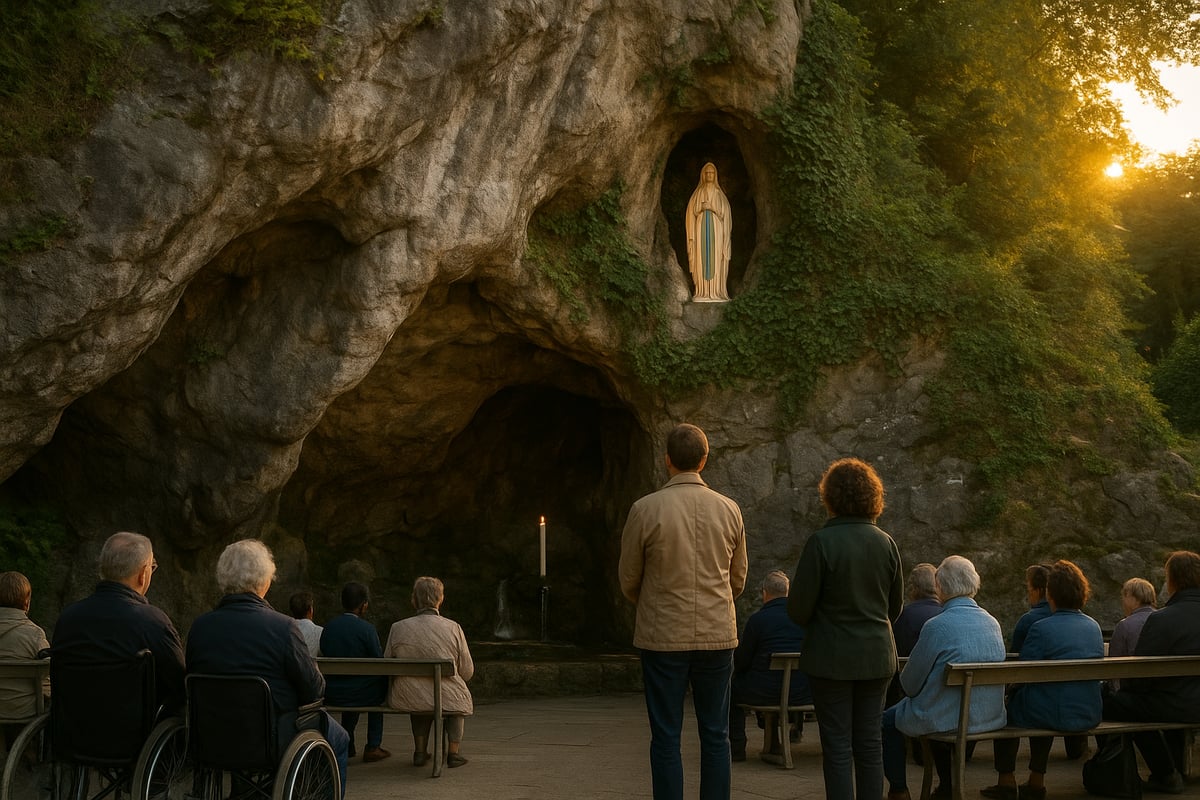
Thousands of sick and disabled pilgrims arrive each year, supported by volunteers. The rituals—drinking or bathing in the water, receiving blessings, and sharing testimonies—form a powerful communal expression of faith. The psychological and spiritual impact is significant, with many reporting renewed strength, peace, and joy.
This post is brought to you by Journeys of Faith Founded and Bob and Penny Lord. We are Cyber Apostles and a Augustinian Secular Institute of which we are members; the Evangelization arm of the group of Cloistered Augustinian Nuns in Montefalco Italy. Our Mission is Evangelization through Media using the tools that God has allowed to be created.
Skepticism and Scientific Perspectives
Despite the enduring faith in our lady of lourdes, scientific communities approach the miracles with caution. Statistically, only a tiny fraction of the reported healings meet the Church’s strict standards for recognition. Some experts suggest psychological or psychosomatic factors, while others point to the placebo effect or misdiagnosis.
Yet, the Church’s openness to medical scrutiny and willingness to investigate claims thoroughly set Lourdes apart. The mystery of the healings remains, inviting ongoing dialogue between science, faith, and personal experience. For many, the true miracle lies not just in physical cures, but in the hope and solidarity found at Lourdes.
Pilgrimage and Devotion: Lourdes as a Spiritual Destination
For over a century and a half, our lady of lourdes has drawn millions of pilgrims from every corner of the world. After the 1858 apparitions, word spread quickly, and the small French town transformed into a vibrant hub of faith. Pilgrims flocked to seek solace, healing, and spiritual renewal, often traveling great distances despite hardships.
The rapid growth of pilgrimage led to significant development. Chapels, basilicas, and accommodations were built to serve the faithful. By the late 19th and early 20th centuries, our lady of lourdes was recognized as a premier Marian shrine. Today, with millions visiting annually, Lourdes stands among the most important Catholic pilgrimage destinations globally.
Growth of Lourdes as a Pilgrimage Site
The origins of pilgrimage to our lady of lourdes began almost immediately after Bernadette Soubirous’ visions. Locals and visitors came to the Grotto of Massabielle, seeking answers and miracles. As early healings and conversions were reported, the numbers swelled. Temporary shelters gave way to permanent structures, and the Church oversaw the development of facilities for worship and hospitality.
By the 20th century, the site welcomed millions each year. Pilgrims came for various reasons: seeking physical healing, spiritual renewal, or simply to witness the legacy of our lady of lourdes. Today, Lourdes remains a beacon for global Catholic devotion, with organized pilgrimages from every continent.
The Sanctuary of Our Lady of Lourdes
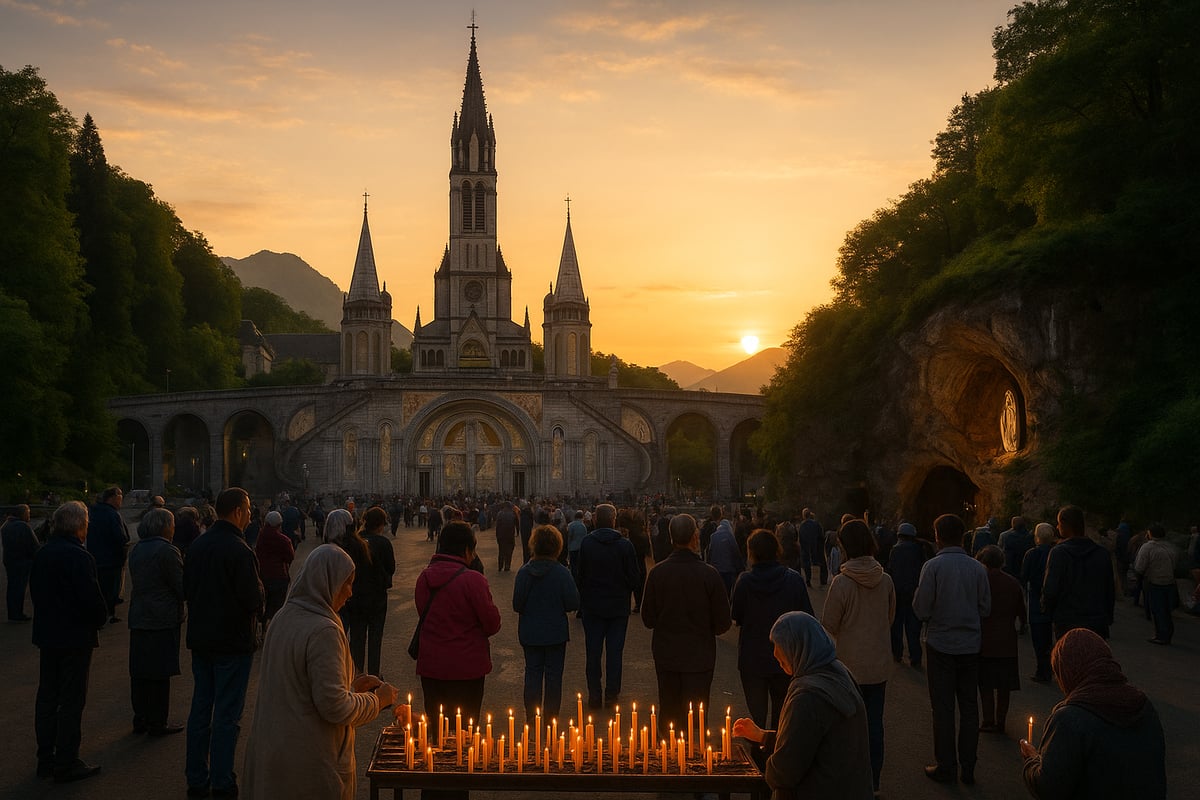
At the heart of Lourdes lies the Sanctuary complex, a sacred space dedicated to our lady of lourdes. The Grotto of Massabielle, where Bernadette experienced her visions, serves as the focal point. Surrounding it are the Rosary Basilica, the Crypt, and several chapels, each adorned with sacred art and symbolism.
A perpetual flame burns near the Grotto, symbolizing unceasing prayer. Pilgrims can leave intentions, light candles, and participate in guided tours. In 2026, the Sanctuary continues to enhance accessibility, welcoming people of all ages and abilities to experience the peace and grace of our lady of lourdes.
Rituals, Processions, and Spiritual Practices
Pilgrims visiting our lady of lourdes engage in a rich tapestry of rituals and devotions. Daily Masses, confessions, and Eucharistic adoration anchor the spiritual rhythm. Candlelight processions and Marian hymns unite people in prayer, especially during the evening gatherings.
The blessing of the sick and the international Mass are deeply moving experiences. The Rosary and the Stations of the Cross invite reflection and connection with Mary’s story. Special events, like the Feast of Our Lady of Lourdes on February 11, draw even larger crowds, reinforcing the shrine’s spiritual significance.
Lourdes in the Lives of Pilgrims
For many, a journey to our lady of lourdes is a turning point. Pilgrims come seeking healing, thanksgiving, or a deeper faith. Testimonies abound of transformation and comfort received at the Grotto. The atmosphere of community and solidarity is palpable, as strangers become companions in faith.
Volunteerism thrives through organizations like Hospitalité de Notre-Dame de Lourdes. Many return year after year, serving fellow pilgrims and fostering lifelong connections. The emotional and spiritual impact of our lady of lourdes endures long after the pilgrimage ends.
This post is brought to you by Journeys of Faith Founded and Bob and Penny Lord. We are Cyber Apostles and a Augustinian Secular Institute of which we are members; the Evangelization arm of the group of Cloistered Augustinian Nuns in Montefalco Italy. Our Mission is Evangelization through Media using the tools that God has allowed to be created.
Accessibility and Inclusivity in 2026
In recent years, our lady of lourdes has made remarkable strides in welcoming all who seek her intercession. Facilities have been modernized for disabled and sick pilgrims, with accessible paths and specialized services in multiple languages. Global outreach has expanded through digital resources and virtual pilgrimages, allowing those unable to travel to participate in the spiritual journey. For those interested, Virtual Pilgrimages to Lourdes provide an immersive experience from anywhere in the world.
Health and safety protocols ensure that everyone can visit with confidence. In a post-pandemic world, the message and ministry of our lady of lourdes remain more accessible and inclusive than ever before.
Global Influence and Cultural Impact of Our Lady of Lourdes
The story of our lady of lourdes extends far beyond the borders of France, inspiring millions around the globe. From humble beginnings in a rural grotto, the devotion has flourished, touching cultures, traditions, and spiritual lives on every continent. Its influence is seen not only in religious practice but also in art, literature, healthcare, and community.
This post is brought to you by Journeys of Faith Founded and Bob and Penny Lord. We are Cyber Apostles and a Augustinian Secular Institute of which we are members; the Evangelization arm of the group of Cloistered Augustinian Nuns in Montefalco Italy. Our Mission is Evangelization through Media using the tools that God has allowed to be created.
Lourdes Devotion Worldwide
Our lady of lourdes devotion is a truly global phenomenon. Pilgrims from Europe, the Americas, Africa, and Asia visit the original shrine in France, while countless churches worldwide have constructed replicas of the Lourdes grotto for local veneration.
Major shrines inspired by our lady of lourdes can be found in places like the Philippines, the United States, and Africa. Annual international celebrations unite communities in prayer and reflection, demonstrating the universal appeal and spiritual depth of Lourdes. These events foster a sense of shared faith, making Lourdes a cornerstone of global Marian spirituality.
Venerated Images and Artistic Representations
The image of our lady of lourdes is instantly recognizable: a gentle figure in white with a blue sash and golden roses at her feet. This iconography has inspired countless statues, paintings, and medals, gracing churches and homes across the world.
Pontifical decrees have recognized certain venerated images, further cementing their place in Catholic tradition. The symbolism of the white garment and blue sash reflects purity and hope, while the roses signify grace. Devotees often incorporate practices such as the Way of the Cross and Rosary Mysteries into their daily lives, drawing inspiration from the art and message of Lourdes.
Lourdes in Popular Culture and Media
Our lady of lourdes has left a lasting mark on popular culture. Films, novels, and documentaries recount the story of Bernadette and the miraculous events at the grotto. Media coverage of pilgrimages and reported miracles keeps the Lourdes phenomenon in the public eye, inviting new generations to explore its meaning.
Lourdes also appears in music, visual arts, and literature, often symbolizing hope, healing, and intercession. In 2026, digital media and online communities continue to expand the reach of Lourdes, enabling virtual pilgrimages and fostering global connection among the faithful.
Notable Patronages and Feast Days
Our lady of lourdes is honored as the patroness of the sick, hospitals, and several regions around the world. Her official feast day, February 11, is celebrated as the World Day of the Sick, drawing attention to the needs of the ill and those who care for them.
Traditions associated with the feast include special Masses, processions, and acts of charity. Catholic organizations and healthcare ministries often invoke her intercession, reflecting the enduring compassion and hope that Lourdes represents for millions.
The Enduring Meaning of Lourdes in 2026
Spiritual Lessons from Lourdes
The story of our lady of lourdes continues to inspire millions with its timeless spiritual lessons. At its core, Lourdes invites believers to embrace faith, humility, and compassion, mirroring the example of Bernadette Soubirous. The message of prayer and penance remains as relevant in 2026 as it was in 1858, guiding pilgrims and seekers alike.
Lourdes is often regarded as a school of Marian devotion, where the faithful learn to trust, hope, and serve. The gentle call to conversion and openness to grace has shaped generations. In a world often divided, the message of our lady of lourdes offers unity and peace.
Lourdes and Modern Catholicism
In modern Catholicism, our lady of lourdes holds a central place in parish life, theology, and personal devotion. The integration of Lourdes spirituality is evident in rosary groups, healing ministries, and digital prayer communities. Marian theology continues to draw on the events of 1858, deepening the Church’s understanding of Mary’s role in salvation history.
Lourdes also serves as a bridge for ecumenical and interfaith dialogue. Its universal message of hope attracts not only Catholics but also people of other faiths and backgrounds. Recent scholarly studies, such as the Recent Study on Lourdes Miracles, highlight the continuing relevance of Lourdes miracles in a scientific age.
Challenges and Opportunities for Lourdes
As Lourdes moves into 2026, it faces both challenges and opportunities. Secularism and skepticism test the endurance of faith, yet the sanctuary’s commitment to transparency and dialogue strengthens its credibility. Preserving tradition while innovating with technology and sustainability is essential for the future of our lady of lourdes.
The sanctuary addresses growing health and accessibility needs, especially after the pandemic. Environmental stewardship and responsible pilgrimage are now priorities. By adapting to the times, Lourdes remains a beacon of faith and a symbol of hope for new generations.
Resources for Further Exploration
For those wishing to deepen their understanding of our lady of lourdes, a wealth of resources awaits. Start with the official Lourdes Sanctuary website, which offers digital archives and virtual tours. Books, documentaries, and scholarly articles provide historical and theological insights. Explore the healing properties of Lourdes water through the Analysis of Lourdes Water's Healing Properties.
Pilgrimage planning is easier than ever, with guides, Marian societies, and support groups available. Volunteering opportunities at Lourdes enrich both the giver and the recipient, fostering a global community of compassion and service.
This post is brought to by Journeys of Faith Founded and Bob and Penny Lord We are Cyber Apostles and a Augustinian Secular Institute of which we are members the Evangelization arm of the group of Cloistered Augustinian Nuns in Montefalco Italy Our Mission is Evangelization through Media using the tools that God has allowed to be created.
- Explore Journeys of Faith Online store with thousands of Catholic Items at https://journeysoffaith.com/collections
- Our Unique Mega Search Engine https://journeysoffaith.com/search is linked to hundreds of Catholic Shops and Stores
- Get the Journeys of Faith NEW App for IPhone or Android Search for Journeys of Faith or go to https://journeysoffaith.com/pages/download-our-app
As you reflect on the rich history, profound miracles, and ongoing meaning of Our Lady of Lourdes, you might feel inspired to deepen your own devotion to Mary or bring a piece of this sacred story into your daily life. Exploring Marian spirituality is a powerful way to connect with the faith and hope that Lourdes represents. If you would like to discover meaningful items that celebrate the Virgin Mary, or perhaps find a special gift to inspire your journey, I invite you to Discover Virgin Mary Shop. Each piece is designed to nurture your faith and keep Mary's message close to heart.