

The life of saint frances of rome offers a remarkable example of how holiness can flourish within the ordinary circumstances of family life and civic responsibility. Born into a world of privilege in 1384, this extraordinary woman would become one of the most beloved saints in Catholic tradition, demonstrating that sanctity is not reserved for cloistered religious alone. Her story resonates deeply with modern Catholics who seek to balance worldly obligations with spiritual devotion, making her a particularly relevant model for families navigating the complexities of contemporary life.
Early Life and Reluctant Marriage
Saint frances of rome was born Francesca Bussa de' Leoni on July 17, 1384, to a wealthy noble family in the Eternal City. From her earliest years, she displayed an intense desire for religious life, hoping to enter a convent where she could dedicate herself entirely to prayer and contemplation. However, her father had different plans for his daughter, arranging her marriage to Lorenzo de' Ponziani when she was just thirteen years old.
This arranged marriage initially caused young Francesca considerable distress. She had envisioned a life of poverty and religious dedication, not the responsibilities of running a noble household. Yet, under the guidance of her confessor, she came to understand that God's will for her lay in embracing married life with the same devotion she would have brought to religious vows.
The transformation from reluctant bride to devoted wife and mother represents one of the most compelling aspects of saint frances of rome's spiritual journey. She threw herself into her duties with extraordinary grace, managing her husband's estate efficiently while maintaining a rigorous prayer schedule. This balance between contemplation and action would become the hallmark of her entire life.
Marriage and Motherhood
Lorenzo de' Ponziani proved to be a kind and understanding husband, eventually supporting his wife's charitable endeavors and spiritual practices. The couple had three children together, though only one would survive to adulthood. The deaths of her children brought profound suffering to saint frances of rome, yet she accepted these losses with remarkable faith and resignation to God's will.
Brought to you by Journeys of Faith, founded by Bob and Penny Lord. We are an Augustinian Secular Institute, Cyber Apostles, whose mission is evangelization through media.
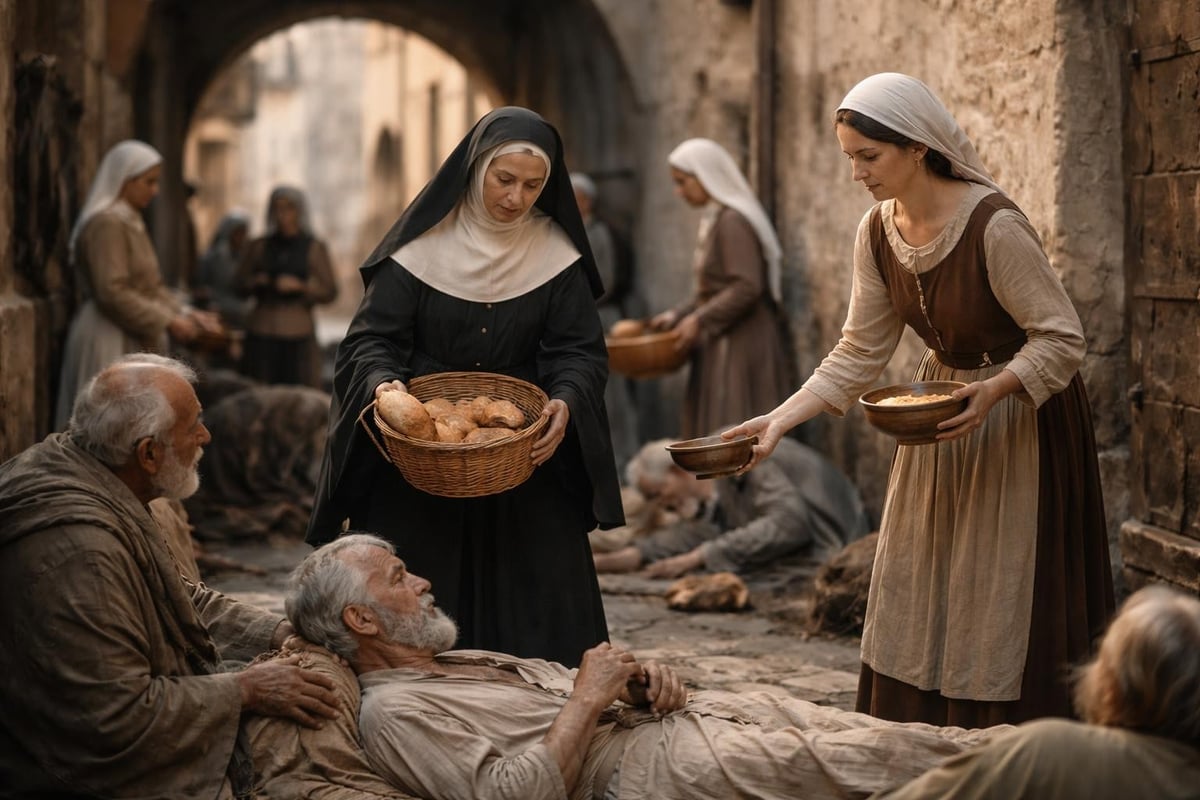
Her sister-in-law, Vannozza, became her closest companion in both family life and charitable work. Together, the two women would visit the sick in hospitals, distribute food to the poor, and tend to the needs of Rome's most vulnerable citizens. Their partnership demonstrated how women could exercise significant influence for good even within the constraints of medieval society.
Service During Times of Crisis
The early fifteenth century brought tremendous upheaval to Rome. Political conflicts, military invasions, and devastating plagues transformed the city into a landscape of suffering and chaos. During these dark years, saint frances of rome emerged as a beacon of hope and practical charity, working tirelessly to alleviate the misery around her.
When papal conflicts erupted and armies besieged Rome, the Ponziani family suffered greatly. Their properties were confiscated, their palace was destroyed, and Lorenzo was severely wounded in battle. Despite losing their wealth and security, saint frances of rome never wavered in her commitment to serving others. She sold her jewelry and possessions to feed the hungry, transforming what remained of her home into a hospital for the wounded and sick.
Mystical Experiences and Spiritual Gifts
Throughout her life of service, saint frances of rome experienced numerous mystical visions and spiritual phenomena. According to historical accounts, she was granted the continual presence of an archangel who served as her guardian and guide. She could see souls in purgatory and frequently experienced visions of heaven and hell, which deepened her understanding of eternal realities.
These supernatural gifts never distracted her from earthly responsibilities. Instead, they strengthened her resolve to serve Christ in the poor and suffering. She understood that authentic mysticism must bear fruit in practical charity, a principle that guides Catholic spirituality to this day.
| Spiritual Gift | Purpose | Impact on Her Ministry |
|---|---|---|
| Angelic Guardian | Divine guidance and protection | Enhanced discernment in decision-making |
| Visions of Purgatory | Understanding of purification | Motivated prayers for the deceased |
| Prophetic insights | Knowledge of future events | Prepared community for challenges |
| Healing abilities | Relief of physical suffering | Drew people to faith through miracles |
Founding the Oblates of Tor de' Specchi
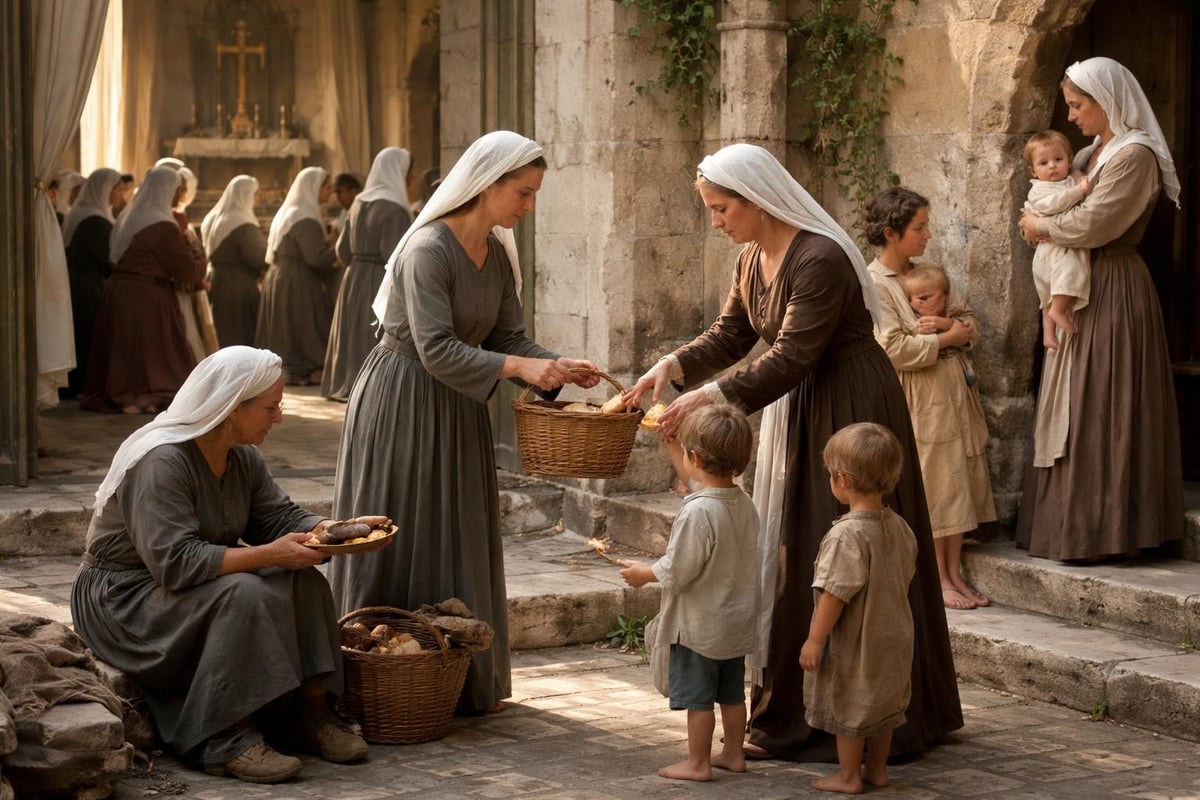
In 1425, after years of charitable work alongside other laywomen, saint frances of rome established a formal organization called the Oblates of Tor de' Specchi. This community represented a revolutionary concept for its time, creating a space where women could live in religious community without taking solemn vows or withdrawing completely from the world.
The Oblates dedicated themselves to prayer, service to the poor, and works of mercy throughout Rome. They lived in community when possible but could return to their families when duty called. This flexible model attracted women who felt called to deeper spiritual life but could not abandon their family responsibilities entirely.
The rule she established emphasized:
- Regular prayer and meditation
- Service to the poor and sick
- Obedience to spiritual direction
- Simplicity in dress and lifestyle
- Mutual support among members
After her husband's death in 1436, saint frances of rome herself joined the community she had founded, living her final four years as a full member of the Oblates. She served as superior, guiding the community with the same wisdom and charity that had characterized her entire life.
Leadership and Final Years
As superior of the Oblates, saint frances of rome demonstrated remarkable administrative ability combined with deep spiritual insight. She expanded the community's charitable works while maintaining strict standards of prayer and personal holiness. Her leadership style emphasized service over authority, love over law, and practical wisdom over rigid rules.
For those seeking to deepen their understanding of saintly lives and their lessons for today, Catholic Saints books offer invaluable resources for spiritual growth and inspiration.
Her final years were marked by increasing physical suffering, which she bore with characteristic patience and even joy. According to biographical accounts, she experienced the spiritual gift of feeling the wounds of Christ in her own body, uniting her suffering with His passion. When she died on March 9, 1440, witnesses reported seeing her guardian angel ascending with her soul to heaven.
Canonization and Patronage
The Catholic Church officially recognized the sanctity of saint frances of rome when Pope Paul V canonized her on May 29, 1608. Her feast day is celebrated on March 9, the anniversary of her death. The canonization process revealed numerous miracles attributed to her intercession, confirming the popular devotion that had surrounded her memory for nearly two centuries.
Her patronage reflects the breadth of her life and ministry:
- Motorists and drivers: Because of a legend that her guardian angel would light her path through Rome's dark streets with a lantern
- Widows: Honoring her faithful devotion after Lorenzo's death
- Oblates: As foundress of this form of religious life
- Benedictine Oblates: Though not technically Benedictine, her spirituality shared many principles with this tradition
The association with motorists, while seemingly anachronistic, speaks to her role as a protector of those who travel through dangerous conditions. Modern drivers invoke her intercession just as she once safely navigated Rome's treacherous streets during times of war and plague.
Lessons for Contemporary Catholics
The example of saint frances of rome offers powerful lessons for Catholics living in 2026. Her life demonstrates that holiness is accessible to everyone, regardless of their state in life. She proved that marriage and motherhood, far from being obstacles to sanctity, can become paths to profound union with God when lived with intentionality and love.
Balancing Family and Faith
Modern families struggle with the same tension that saint frances of rome navigated so successfully. Her ability to maintain deep prayer life while managing household responsibilities, raising children, and serving the community shows that integration rather than compartmentalization is the key to authentic Christian living.
Practical strategies from her example include:
- Establishing regular prayer routines that fit within family schedules
- Involving family members in charitable works and service
- Finding spiritual companions who share similar values and commitments
- Accepting suffering as part of the Christian journey rather than an interruption to it
- Remaining flexible in response to God's will as circumstances change

Her witness reminds us that teaching children about saints provides them with concrete models of how to live Christian values in everyday circumstances.
Responding to Crisis with Faith
The turbulent times in which saint frances of rome lived bear striking similarities to our contemporary challenges. Political division, economic uncertainty, public health crises, and social upheaval characterized her world just as they do ours. Her response offers a template for faithful action during difficult times.
Rather than withdrawing from the world's problems or becoming paralyzed by fear, she engaged directly with suffering humanity. She saw Christ in the poor, the sick, and the wounded, and she served Him through serving them. This active charity, rooted in deep prayer and sustained by mystical grace, enabled her to persevere when others despaired.
The Oblate Model Today
The community founded by saint frances of rome continues to exist in Rome today, maintaining the same balance of prayer and service that characterized its founding. The Oblates of Tor de' Specchi remain faithful to her vision of women living in religious community while maintaining connections to family and active engagement with the world's needs.
This model has inspired similar communities throughout the centuries. Secular institutes, third orders, and various forms of consecrated life for laypeople all owe a debt to saint frances of rome's pioneering vision. She recognized that not everyone is called to traditional religious life, yet all are called to holiness.
| Traditional Religious Life | Oblate Model | Secular Vocation |
|---|---|---|
| Solemn vows | Simple promises | No formal vows |
| Cloister or enclosure | Community living with flexibility | Living in the world |
| Full withdrawal from family | Maintaining family connections | Primary focus on family |
| Structured religious rule | Modified rule suited to circumstances | Personal rule of life |
Her flexibility and creativity in responding to spiritual needs demonstrates the Church's capacity to develop new forms of consecrated life appropriate to different times and circumstances.
Devotion and Prayer
Catholics who seek the intercession of saint frances of rome often turn to her in matters related to family harmony, widowhood, and safe travel. Her life of prayer and her mystical experiences make her a particularly powerful intercessor for those seeking deeper spiritual life while maintaining worldly responsibilities.
Traditional prayers to saint frances of rome emphasize her virtues of patience, charity, and humble service. Many devotees pray a novena to her, asking for her intercession in specific needs while also seeking to imitate her virtues in their own lives. The practice of honoring saints through prayer cards and novenas helps Catholics maintain connection with these powerful heavenly friends.
Popular Prayers and Practices
Devotees of saint frances of rome engage in various spiritual practices to honor her memory and seek her intercession:
- Praying for widows and those grieving the loss of spouses
- Seeking protection before journeys or travels
- Asking for patience in family difficulties
- Requesting guidance in balancing multiple responsibilities
- Invoking her help for those serving the poor and sick
The tradition of carrying prayer cards with saint frances of rome's image serves as a reminder of her example and her continuing presence as an intercessor before God's throne.
Legacy in Art and Culture
Throughout the centuries since her death, saint frances of rome has been depicted in countless works of religious art. Artists typically portray her with an angel holding a lantern, referencing the legend of her guardian angel lighting her path. Some images show her distributing bread to the poor, while others depict her in prayer or experiencing mystical visions.
These artistic representations serve not merely as decoration but as visual catechesis, teaching the faithful about her virtues and inspiring them to imitate her example. According to historical records, her tomb in Rome became a popular pilgrimage site, with numerous miracles reported by those who prayed there.
The enduring popularity of saint frances of rome in Catholic culture testifies to the universal appeal of her story. She represents the possibility of achieving sanctity within ordinary life circumstances, a message that resonates powerfully with modern Catholics who may feel that holiness is reserved for priests and religious.
Relevance for Modern Families
In 2026, families face unprecedented pressures and challenges. The example of saint frances of rome speaks directly to these contemporary struggles, offering not just inspiration but practical wisdom for navigating the complexities of modern life while maintaining spiritual priorities.
Her insistence on regular prayer despite overwhelming responsibilities challenges Catholics to examine their own priorities. If a medieval noblewoman managing a household, caring for children, nursing plague victims, and running a religious community could maintain hours of daily prayer, what excuse do modern Catholics have for neglecting their spiritual lives?
The support system she created with Vannozza and other women highlights the importance of community in sustaining faith and enabling service. Modern Catholics can learn from this model by:
- Forming small faith communities within parishes
- Establishing accountability partnerships for prayer and service
- Creating networks of support for families facing difficulties
- Organizing coordinated charitable efforts rather than isolated acts of charity
- Sharing resources and responsibilities to multiply effectiveness
Her ability to find God in the midst of chaos, suffering, and daily responsibilities demonstrates that contemplation and action are not opposites but complementary aspects of a fully integrated Christian life. This lesson proves especially relevant for Catholics who feel torn between competing demands on their time and energy.
Resources for Further Study
Those interested in learning more about saint frances of rome have access to numerous resources that explore her life, spirituality, and continuing relevance. Scholarly biographies provide historical context and detailed accounts of her life, while spiritual reflections help readers apply her lessons to contemporary circumstances.
Several excellent resources include:
- Comprehensive biographies examining her historical context and spiritual development
- Theological analyses of her mystical experiences and their significance
- Practical guides for incorporating her spirituality into modern life
- Children's books introducing young Catholics to her inspiring example
- Academic studies of the Oblate movement and its influence on religious life
For those seeking authentic Catholic resources to deepen their faith journey, Journeys of Faith offers extensive materials on the saints, their lives, and their messages for today's Church. The platform provides books, media, and educational resources that help Catholics of all ages grow in knowledge and love of the communion of saints.
The study of saints like saint frances of rome forms an essential part of Catholic formation, providing concrete examples of how to live the Gospel in specific historical and cultural circumstances. Each saint's unique path to holiness offers particular insights and inspiration for those facing similar challenges or called to similar vocations.
Applications for Parish and Family Life
Parish communities can draw inspiration from saint frances of rome in multiple ways. Her model of organized charitable service through the Oblates suggests the value of structured ministries that engage laypeople in consistent, sustainable service to those in need. Rather than sporadic acts of charity, her approach created systems that could respond to ongoing needs effectively.
Families can honor saint frances of rome by:
- Establishing regular family prayer times that everyone protects
- Involving children in age-appropriate service to others
- Discussing how to balance competing responsibilities with gospel priorities
- Praying together for her intercession in family needs
- Learning about her life as a family and discussing the lessons it offers
Parish leaders might consider:
- Creating oblate or third-order communities for laypeople seeking deeper spiritual life
- Organizing service ministries that allow families to serve together
- Offering spiritual direction to help individuals balance multiple vocations
- Teaching about lay sanctity using saint frances of rome as a primary example
- Developing support networks for widows and those who have lost spouses
Her feast day on March 9 provides an annual opportunity to reflect on her example and renew commitment to the values she embodied. Parishes might celebrate with special Masses, talks on her life, or organized service projects in her honor.
The integration of study, prayer, and action that characterized her life offers a holistic model for parish formation programs. Rather than separating catechesis from service or prayer from community life, her example shows how these elements reinforce and strengthen each other.
The inspiring life of saint frances of rome demonstrates that holiness flourishes not only in monasteries but in the midst of family life, civic responsibility, and active service to those in need. Her example of balancing contemplation with action, family duties with charitable works, and worldly responsibilities with spiritual devotion offers timeless wisdom for Catholics seeking to live their faith authentically. Journeys of Faith provides comprehensive resources to help you explore the lives of saints like Frances of Rome, deepening your spiritual journey through books, prayer cards, and educational materials that bring the communion of saints to life.
Explore valuable Catholic resources:
- Explore Journeys of Faith online store with thousands of Catholic items at https://journeysoffaith.com/collections
- Our unique mega search engine at https://journeysoffaith.com/search is linked to hundreds of Catholic shops and stores
- Get the Journeys of Faith NEW App for iPhone or Android-search for Journeys of Faith or go to https://journeysoffaith.com/pages/download-our-app
- We need your help to reach more souls. Please make a donation at https://journeysoffaith.com/pages/donate