

The san damiano cross stands as one of the most recognizable and spiritually powerful icons in Catholic tradition. This remarkable Byzantine-style crucifix, which spoke to St. Francis of Assisi in 1205, initiated a spiritual revolution that continues to transform lives nearly eight centuries later. For Catholics seeking deeper communion with Christ, understanding the history and symbolism of the san damiano cross offers profound insights into suffering, redemption, and the transformative power of divine love.
The Historical Origins of the San Damiano Cross
The san damiano cross was created in the 12th century by an anonymous artist working in the Umbrian region of Italy. Unlike the stark, suffering crucifixes common in Western Christianity, this icon presents Christ as simultaneously suffering and triumphant, alive even in death. The original cross, painted on walnut wood in the Romanesque style, measures approximately six feet tall and four feet wide, creating an imposing yet inviting presence.
According to historical records, the cross originally hung in the small, crumbling Church of San Damiano outside Assisi. By the early 13th century, the church had fallen into severe disrepair, rarely visited except by the occasional pilgrim. The san damiano cross remained in this forgotten sanctuary until a young nobleman named Francis entered seeking solace and direction for his troubled soul.
Brought to you by Journeys of Faith, founded by Bob and Penny Lord. We are an Augustinian Secular Institute-Cyber Apostles. Our Mission is Evangelization through Media.
The artistic style of the san damiano cross reflects the Byzantine iconographic tradition prevalent in Italy during this period. Rather than attempting realistic portraiture, the artist employed symbolic representation to convey theological truths. This approach resulted in a cross that functions less as a historical depiction and more as a visual theology lesson, each element carefully chosen to communicate aspects of Christ's sacrifice and victory.
The Pivotal Moment: Christ Speaks to St. Francis
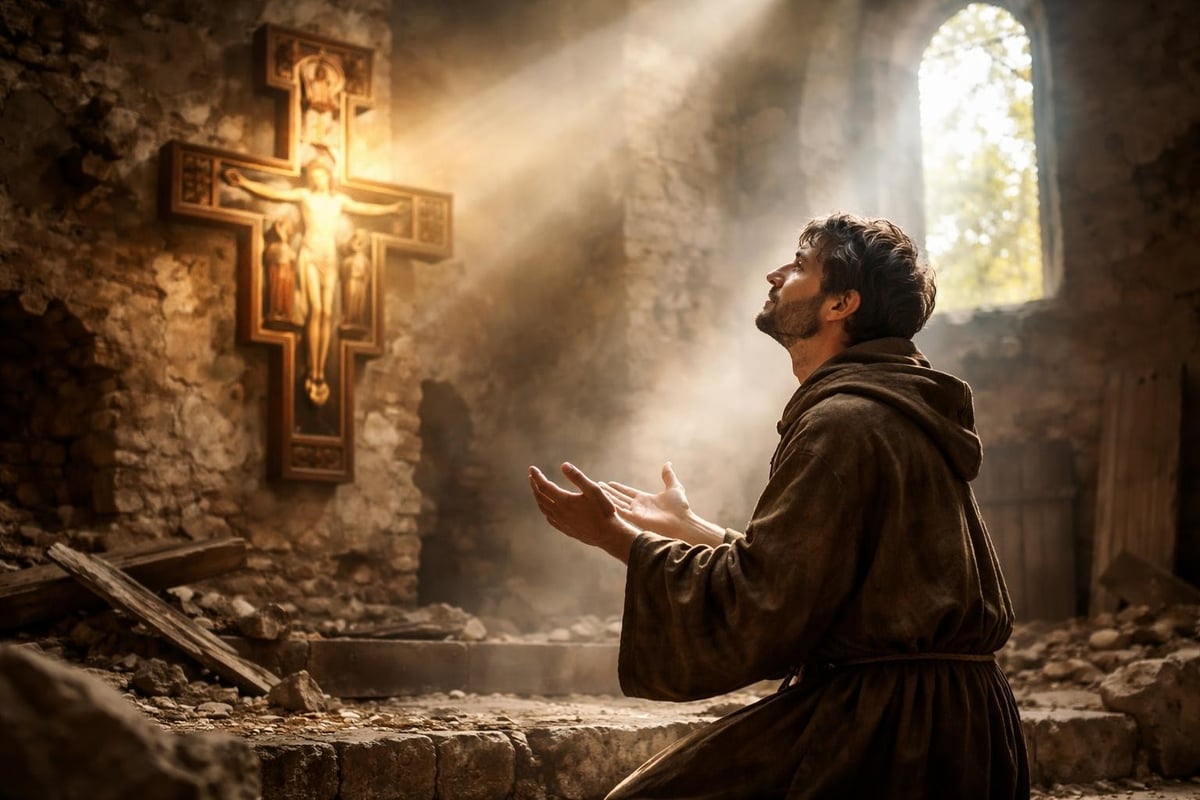
In 1205, Francis Bernardone entered the dilapidated San Damiano chapel to pray before the san damiano cross. As he knelt in the dimly lit sanctuary, the crucifix spoke to him with words that would change history: "Francis, go and repair my house, which as you see is falling into ruin." Initially interpreting this message literally, Francis sold his father's cloth and brought the money to the priest at San Damiano to fund repairs.
This encounter with the san damiano cross marked the beginning of Francis's conversion from wealthy merchant's son to poor servant of Christ. The voice emanating from the cross was not merely instructional but transformative, initiating a relationship between Francis and the crucified Christ that would define the Franciscan charism for generations. The cross became for Francis a living icon, a window into the divine heart of God's love for humanity.
The immediate aftermath of this mystical experience demonstrates the power of the san damiano cross to inspire radical action. Francis literally rebuilt the San Damiano chapel stone by stone, but gradually understood that Christ's command extended beyond physical structures. He was called to rebuild the spiritual house of the Church through renewal, poverty, and evangelical simplicity.
Theological Symbolism Within the San Damiano Cross
The san damiano cross contains layers of theological meaning that reward sustained contemplation. At the center stands Christ, depicted not in the agony of death but in the glory of resurrection. His eyes remain open, gazing directly at the viewer with an expression of peaceful authority. This representation emphasizes Christ's divine nature and His victory over death, even while displaying the wounds of His passion.
The Figures Surrounding Christ
The san damiano cross includes numerous figures arranged in deliberate positions around the central image of Christ. These witnesses to the crucifixion each contribute to the icon's overall theological message:
- Mary, the Mother of Jesus - Standing at Christ's right hand, representing maternal love and steadfast faith
- John, the Beloved Disciple - Positioned at Christ's left, symbolizing discipleship and witness
- Mary Magdalene - Present as the first witness to the resurrection
- Mary, the Mother of James - Representing the faithful women who followed Jesus
- The Roman Centurion - The Gentile who proclaimed Christ's divinity
- The Soldier with the Sponge - Offering the sour wine, representing human attempts to ease suffering
These figures create a community of witnesses, reminding viewers that we never encounter Christ alone but always within the communion of saints. The Franciscan Sisters of Perpetual Adoration provide detailed analysis of how each figure contributes to the cross's theological narrative.
For those seeking to deepen their understanding of the passion and its witnesses, exploring Catholic resources on the saints provides valuable context. Many faithful find that combining visual meditation on the san damiano cross with reading about the lives of the saints enriches their prayer experience immeasurably.
| Figure | Position | Theological Significance |
|---|---|---|
| Christ | Center | Divine victory over death |
| Mary | Right hand | Maternal intercession and faithfulness |
| John | Left hand | Perfect discipleship and witness |
| Centurion | Lower right | Gentile recognition of divinity |
| Angels | Upper corners | Heavenly worship and cosmic significance |
| Saints | Lower sections | Communion of saints across time |
The San Damiano Cross in Franciscan Spirituality
The san damiano cross became the spiritual foundation of the Franciscan movement. After St. Francis's death, St. Clare and her Poor Clare sisters cared for the original cross at San Damiano, where it remained for centuries. The cross shaped Franciscan theology in several critical ways, emphasizing God's poverty in becoming human, the centrality of the crucified Christ, and the call to radical conversion.
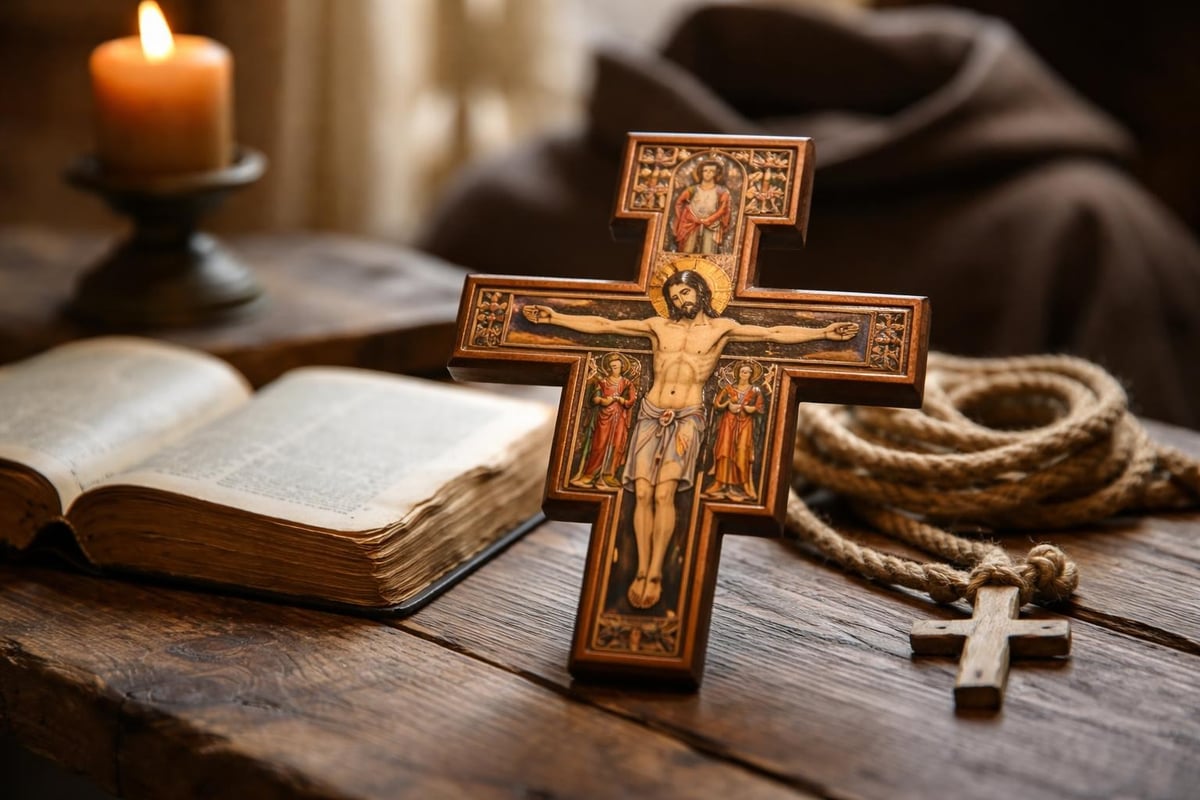
Franciscan prayer before the san damiano cross traditionally focuses on contemplation rather than petition. Followers are encouraged to gaze upon Christ, allowing His peace to penetrate their hearts. This contemplative approach aligns with Francis's own experience, where transformation came not through asking for specific outcomes but through openness to divine encounter.
How the Cross Influences Modern Franciscan Practice
Contemporary Franciscans continue to use the san damiano cross as a focal point for spiritual formation. Many Franciscan churches, retreat centers, and homes display reproductions of this sacred icon. The Conventual Franciscan Friars describe how the cross serves as a daily reminder of their founding charism and mission to rebuild the Church through authentic gospel living.
The san damiano cross also features prominently in Franciscan liturgical celebrations, particularly on the feast days of St. Francis and St. Clare. During these celebrations, the cross is often processed, venerated, and used as the basis for homilies exploring Franciscan themes of poverty, peace, and evangelical simplicity.
Artistic Elements and Iconographic Details
The artistic composition of the san damiano cross follows strict iconographic conventions that communicate theological truths through visual language. The cross itself is shaped like the letter Tau, a symbol St. Francis later adopted as his personal signature. This connection between the cross's shape and Franciscan identity reinforces the integral relationship between the icon and the movement it inspired.
Christ's body on the san damiano cross appears elongated and stylized rather than anatomically realistic. This artistic choice directs attention away from physical suffering toward spiritual reality. The gold background surrounding Christ represents divine light, while the red cross symbolizes both suffering and royal authority. These color choices work together to present Christ as the King who reigns from the throne of the cross.
The inscription above Christ's head reads "Jesus of Nazareth, King of the Jews" in Latin abbreviation (INRI), but the overall composition subverts the mockery intended by Pilate's original inscription. Here, Christ truly reigns as King, His sovereignty demonstrated not through worldly power but through self-giving love.
The Significance of Christ's Open Eyes
One of the most striking features of the san damiano cross is Christ's wide-open eyes. Unlike many crucifixes that depict Christ with eyes closed in death, this icon shows Him gazing directly at the viewer with peaceful awareness and loving invitation. This detail transforms the cross from a historical artifact into a living encounter, suggesting that Christ continues to see, know, and love each person who approaches.
Iconographer Martin Damian explains that painting these eyes requires particular attention to achieve the proper expression of both suffering and peace, humanity and divinity. The eyes must convey Christ's complete presence in the moment of crucifixion while simultaneously communicating His eternal nature and resurrection victory.
Praying With the San Damiano Cross
The san damiano cross invites a particular method of prayer that combines visual meditation with contemplative silence. Rather than rushing through set prayers, the tradition encourages believers to spend extended time simply gazing at the cross, allowing its details to reveal layers of meaning gradually. This practice, sometimes called lectio divina with icons, parallels the meditative reading of Scripture.
Begin by observing Christ at the center of the cross. Notice His open eyes, His peaceful expression, His wounded hands extended in welcome. Allow yourself to receive His gaze, recognizing that He sees you completely and loves you unconditionally. This initial encounter establishes the foundation for deeper prayer.
Next, observe the figures surrounding Christ. Consider their relationships to Him and to one another. Reflect on your own place within this communion of witnesses. Are you like Mary, standing faithfully even in sorrow? Like John, beloved and present? Like the centurion, proclaiming what you have witnessed? The san damiano cross invites you to find yourself within its sacred narrative.
A Simple Prayer Before the San Damiano Cross
Many people find structured prayers helpful when beginning meditation before the san damiano cross:
- Greeting - "Most High, glorious God, enlighten the darkness of my heart."
- Acknowledgment - "Lord Jesus, You hang upon the cross for love of me."
- Petition - "Give me right faith, certain hope, and perfect charity."
- Commitment - "Grant me to know Your will and faithfully fulfill it."
- Gratitude - "Thank You for Your presence and Your peace."
This prayer, adapted from St. Francis's own prayer before the san damiano cross, provides structure while maintaining openness to the Spirit's movement. Those seeking additional prayers and devotional materials can explore the extensive collection of Catholic prayer cards available for personal and communal prayer.
The Journey of the Original Cross
The original san damiano cross remained at the San Damiano chapel under the care of St. Clare and her Poor Clare community until 1257, when it was transferred to the newly constructed Basilica of St. Clare in Assisi. This move protected the sacred relic while making it more accessible to pilgrims. The cross now hangs in a place of honor within the basilica, where thousands of visitors venerate it annually.
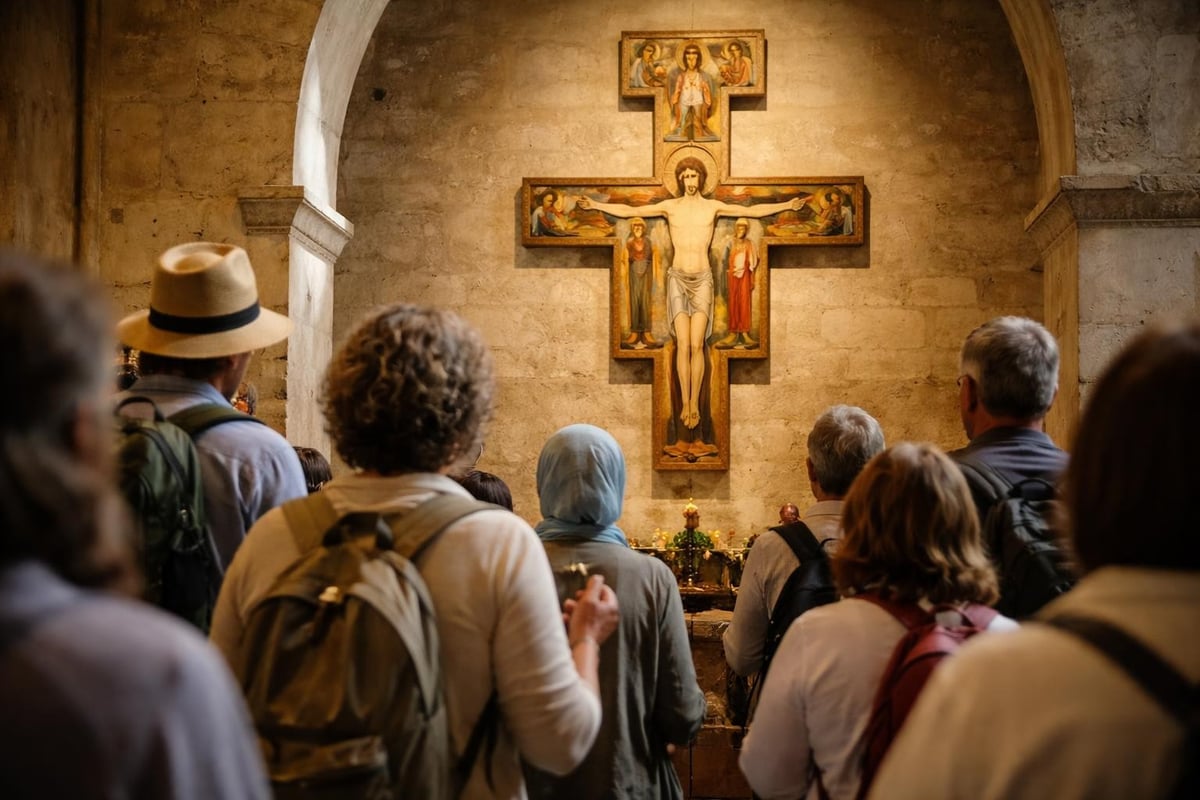
Throughout the centuries, the san damiano cross has survived wars, earthquakes, and the passage of time. Careful restoration work has preserved both the physical icon and its artistic integrity. Modern conservation techniques ensure that future generations will continue to encounter this powerful symbol of faith that transformed a young man named Francis and, through him, renewed the entire Church.
Reproductions and Their Spiritual Impact
While the original cross remains in Assisi, countless reproductions bring the san damiano cross into homes, churches, and chapels worldwide. These reproductions range from small pocket crosses to life-sized replicas, each serving as a window into the same spiritual reality Francis encountered. The widespread availability of the san damiano cross demonstrates its enduring power to inspire conversion and deepen faith.
Many Catholics choose to display the san damiano cross in their homes as a focal point for family prayer. Unlike decorative crucifixes, this icon invites sustained contemplation and serves as a daily reminder of Christ's sacrificial love. Parents often teach children to pray before the san damiano cross, passing on the Franciscan tradition of encountering Christ through this sacred image.
The Cross and Contemporary Catholic Life
In 2026, the san damiano cross continues to speak powerfully to contemporary believers navigating the complexities of modern life. Its message of peace in suffering, hope in darkness, and divine presence in abandonment resonates with people facing personal trials, societal upheaval, and spiritual seeking. The cross offers an alternative to both triumphalist religion and despairing secularism, presenting instead a vision of humble, suffering love that conquers death.
Catholic communities increasingly incorporate the san damiano cross into evangelization efforts, recognizing its unique ability to communicate the gospel visually. Youth groups, young adult ministries, and new evangelization initiatives use the cross as a teaching tool, unpacking its symbolism to reveal the richness of Catholic theology. The icon's combination of ancient tradition and contemporary relevance makes it particularly effective for reaching generations raised in visual culture.
Retreat centers and spiritual direction programs frequently employ the san damiano cross in guided meditations and contemplative exercises. Participants report that spending time before the cross often leads to unexpected insights, emotional healing, and renewed commitment to discipleship. The cross functions as a sacramental, a visible sign of invisible grace that mediates Christ's presence to believers.
Integration With Other Devotions
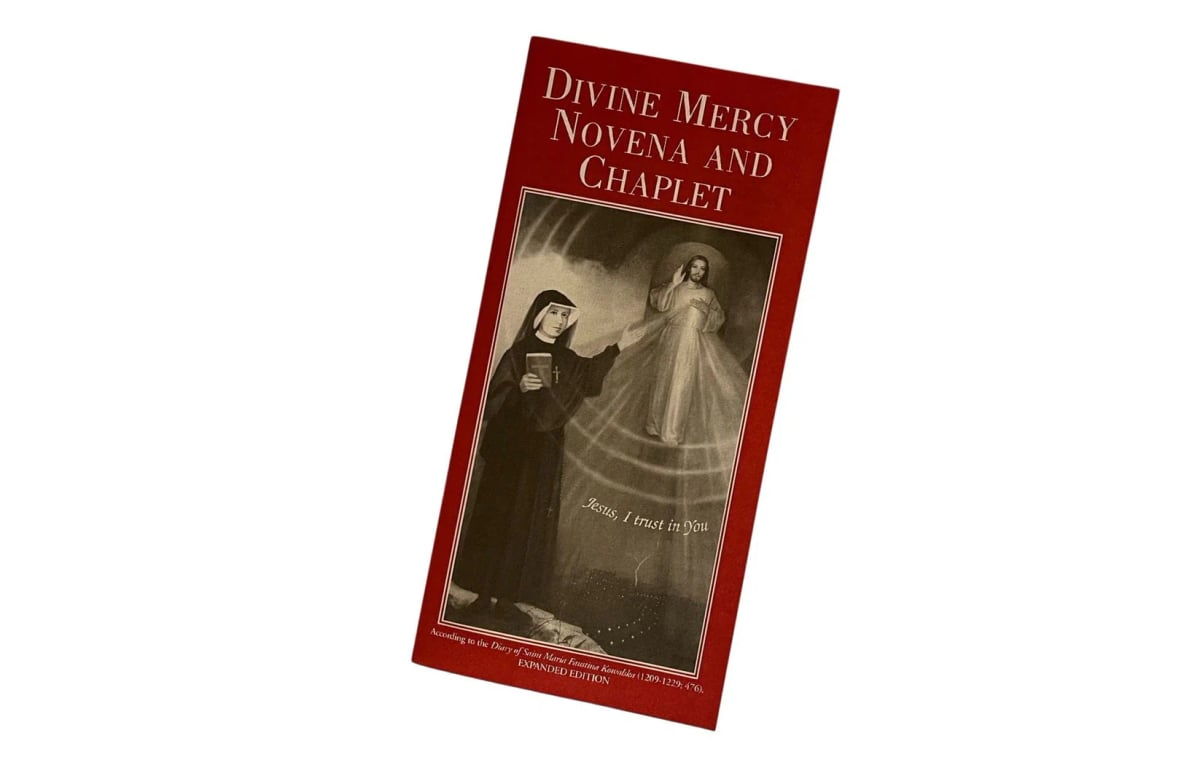
The san damiano cross complements many traditional Catholic devotions. Some believers incorporate meditation on the cross into their Stations of the Cross practice, using it as a focal point for the twelfth station. Others combine reflection on the san damiano cross with praying the Divine Mercy Chaplet, recognizing both as expressions of Christ's merciful love. For those interested in deepening their prayer life through structured devotions, resources like the Divine Mercy Novena and Chaplet provide excellent companions to meditation before the san damiano cross.
The san damiano cross also enriches Eucharistic adoration, serving as a reminder that the same Christ who hung upon the cross now offers Himself in the Blessed Sacrament. Many adoration chapels display the cross near the monstrance, creating a visual connection between Christ's sacrifice on Calvary and His real presence in the Eucharist. This integration of devotions deepens appreciation for the unity of Christ's saving work across time and sacrament.
Symbolism of the Smaller Figures
Beyond the primary figures immediately surrounding Christ, the san damiano cross includes additional details that reward careful observation. At the top of the cross, above the crossbeam, appears the figure of Christ ascending into heaven, representing His resurrection and glorification. This detail reinforces the cross's emphasis on victory rather than defeat, triumph rather than tragedy.
Below the crossbeam, small figures represent various witnesses and participants in the crucifixion drama. While some remain difficult to identify with certainty, their presence emphasizes the communal nature of salvation. Christ's death was not a private transaction but a public event with cosmic consequences, and the cross invites all viewers to join this company of witnesses.
The rooster appearing on the cross reminds viewers of Peter's denial and subsequent restoration, offering hope to those who have failed in their discipleship. This small but significant detail communicates that the san damiano cross speaks not only to the faithful but also to the fallen, not only to the strong but also to the weak. Christ's open eyes see all, and His extended arms welcome all who approach in faith.
The Cross in Lenten Devotion
Many Catholics intensify their meditation on the san damiano cross during Lent, using it as a focus for prayer throughout the forty days leading to Easter. The cross's unique combination of suffering and triumph makes it particularly appropriate for Lenten reflection, which calls believers to enter into Christ's passion while keeping their eyes fixed on resurrection hope.
Lenten prayer before the san damiano cross often incorporates fasting and almsgiving, the traditional Lenten disciplines. As believers gaze upon Christ's poverty and self-emptying, they are inspired to simplify their own lives, giving to those in need and detaching from material comforts. The cross becomes not merely an object of contemplation but a call to action, a summons to concrete expressions of love.
Parish Lenten programs frequently include presentations on the san damiano cross, exploring its history and symbolism while inviting participants to develop a personal prayer practice before the icon. These programs often provide reproductions of the cross for participants to take home, extending the Lenten experience beyond communal gatherings into daily life. Resources for Lenten reading and reflection can deepen engagement with the cross's spiritual message.
| Lenten Week | Focus on San Damiano Cross | Prayer Practice |
|---|---|---|
| Week 1 | Christ's open eyes seeing all | Silent gazing, 15 minutes daily |
| Week 2 | Mary's steadfast presence | Praying the Rosary before the cross |
| Week 3 | Community of witnesses | Praying for specific people by name |
| Week 4 | Christ's wounds as sources of grace | Meditation on the five wounds |
| Week 5 | The cross as throne of glory | Reflecting on Christ as King |
| Holy Week | Complete contemplation | Extended time in silence |
Educational Resources About the San Damiano Cross
Understanding the full significance of the san damiano cross requires study as well as prayer. Numerous books, articles, and multimedia resources explore the cross's history, artistry, and spiritual meaning. Catholic publishers have produced comprehensive guides that examine each element of the icon, explaining the theological concepts embedded in its visual language.
For those interested in the broader context of Franciscan spirituality, studying the lives of Franciscan saints provides valuable insight into how the san damiano cross shaped an entire spiritual tradition. St. Francis, St. Clare, St. Bonaventure, and countless other Franciscan saints drew inspiration from this icon, and their writings illuminate its enduring power.
The Journeys of Faith online store offers various resources for deepening your relationship with the san damiano cross and Catholic tradition more broadly. From books exploring the cross's symbolism to reproductions for home prayer, these materials support both personal devotion and catechetical instruction. Their unique mega search engine connects seekers with hundreds of Catholic resources across multiple platforms.
Living the Message of the San Damiano Cross
Ultimately, the san damiano cross calls believers not merely to appreciate its beauty or understand its symbolism but to live its message. Like St. Francis, we are summoned to rebuild the Church through authentic gospel witness. Like the figures on the cross, we are invited to stand faithfully with Christ in His suffering and share in His resurrection glory.
This call to transformation extends to every aspect of life. In families, the san damiano cross inspires parents to model self-sacrificing love and children to witness faithful discipleship. In workplaces, it challenges believers to maintain integrity and compassion even when costly. In communities, it summons the Church to be a sign of hope, peace, and reconciliation in a divided world.
The Holy Family provides a model for living out the san damiano cross's message in daily life. Just as Mary, Joseph, and Jesus formed a community of love and obedience, Catholic families can create domestic churches centered on the crucified and risen Christ. The cross becomes not an isolated devotional object but the heart of family life and mission.
Practical Ways to Incorporate the Cross Into Daily Life
- Morning offering - Begin each day by gazing at the san damiano cross and offering yourself to Christ
- Meal prayers - Display the cross in dining areas as a reminder of Christ's self-giving love
- Family rosary - Pray before the cross, meditating on the mysteries of Christ's life
- Examination of conscience - Use the cross as a focus for nightly reflection on faithfulness
- Home altar - Create a prayer corner featuring the san damiano cross and other sacred images
- Personal wearing - Carry a small san damiano cross medal or prayer card as a constant reminder
The Cross as Evangelization Tool
The visual power of the san damiano cross makes it an effective tool for sharing the Catholic faith with those unfamiliar with Christian tradition. Its beauty attracts attention, while its symbolism opens opportunities for explaining the gospel message. Many Catholics report that displaying the cross in their homes or wearing it as jewelry has sparked conversations about faith with curious friends and neighbors.
Youth ministers particularly appreciate the san damiano cross's appeal to visual learners and its capacity to communicate complex theological concepts through imagery. Young people often respond positively to the cross's unique artistic style, finding it more engaging than conventional crucifixes. This response creates teachable moments for exploring Catholic theology, Franciscan spirituality, and the universal call to conversion.
The cross also serves interfaith dialogue, offering common ground with Orthodox Christians familiar with iconographic traditions and Protestants interested in historical Christianity. While maintaining distinctively Catholic elements, the san damiano cross emphasizes themes of divine love, sacrificial service, and resurrection hope that resonate across Christian traditions. Its ecumenical potential makes it valuable for building bridges in our divided religious landscape.
Accessing San Damiano Cross Resources Today
Catholics in 2026 have unprecedented access to resources related to the san damiano cross. Digital archives preserve high-resolution images of the original cross, allowing detailed study from anywhere in the world. Online retailers offer reproductions in various sizes and materials, from simple prayer cards to handcrafted wooden crosses suitable for church or home display.
Mobile apps now include guided meditations before the san damiano cross, combining traditional prayer practices with contemporary technology. The Journeys of Faith app for iPhone and Android provides access to thousands of Catholic resources, including materials related to the cross and Franciscan spirituality. These digital tools make it easier than ever to develop a consistent prayer practice centered on this sacred icon.
Pilgrimage to Assisi remains the ultimate way to encounter the original san damiano cross, but virtual pilgrimage options now exist for those unable to travel. High-quality video tours allow viewers to experience the Basilica of St. Clare and contemplate the cross in its current home. While not equivalent to physical presence, these virtual experiences can deepen appreciation for the cross and inspire future in-person visits.
Supporting Catholic evangelization efforts helps ensure that resources like the san damiano cross remain accessible to future generations. Organizations dedicated to spreading the gospel through media rely on the generosity of faithful Catholics who recognize the importance of this mission. Those interested in supporting such work can make a donation to help reach more souls with the transformative message of Christ's love.
The san damiano cross bridges eight centuries of Catholic faith, connecting St. Francis's transformative encounter with our contemporary need for authentic spiritual renewal. Through its unique combination of Byzantine artistry and Franciscan simplicity, the cross continues to speak Christ's message of suffering love, patient presence, and resurrection victory. Whether you're beginning to explore the san damiano cross or deepening a long-established devotion, Journeys of Faith offers resources, guidance, and community support for your spiritual journey through books, prayer materials, and media dedicated to promoting the Eucharist, Mother Mary, and the saints.