

The eucharistic prayer stands as the pinnacle of Catholic worship, the moment when bread and wine become the Body and Blood of Christ. This ancient prayer, rooted in Scripture and Tradition, transforms every Mass into a living encounter with the paschal mystery. For Catholics seeking to deepen their faith and understanding of the liturgy, grasping the significance of this prayer opens profound spiritual doors. The eucharistic prayer isn't merely words spoken by a priest; it's the Church's most sacred dialogue with God, uniting heaven and earth in an eternal sacrifice of praise and thanksgiving.
The Historical Foundations of the Eucharistic Prayer
The origins of the eucharistic prayer trace back to the Jewish berakah, or blessing prayers, that Jesus would have prayed at the Last Supper. When Christ instituted the Eucharist, He took the traditional Jewish thanksgiving meal and transformed it into something radically new. The early Church preserved this structure while developing it through centuries of liturgical tradition.
The anaphora, as the eucharistic prayer is known in Eastern traditions, has maintained remarkable consistency across Christian denominations. From the earliest written accounts in the Didache to the sophisticated prayers of Saint John Chrysostom and Saint Basil, the core elements remain recognizable. The Roman Catholic tradition has particularly emphasized the consecratory nature of this prayer, making it the defining moment of the Mass.
Structure and Components
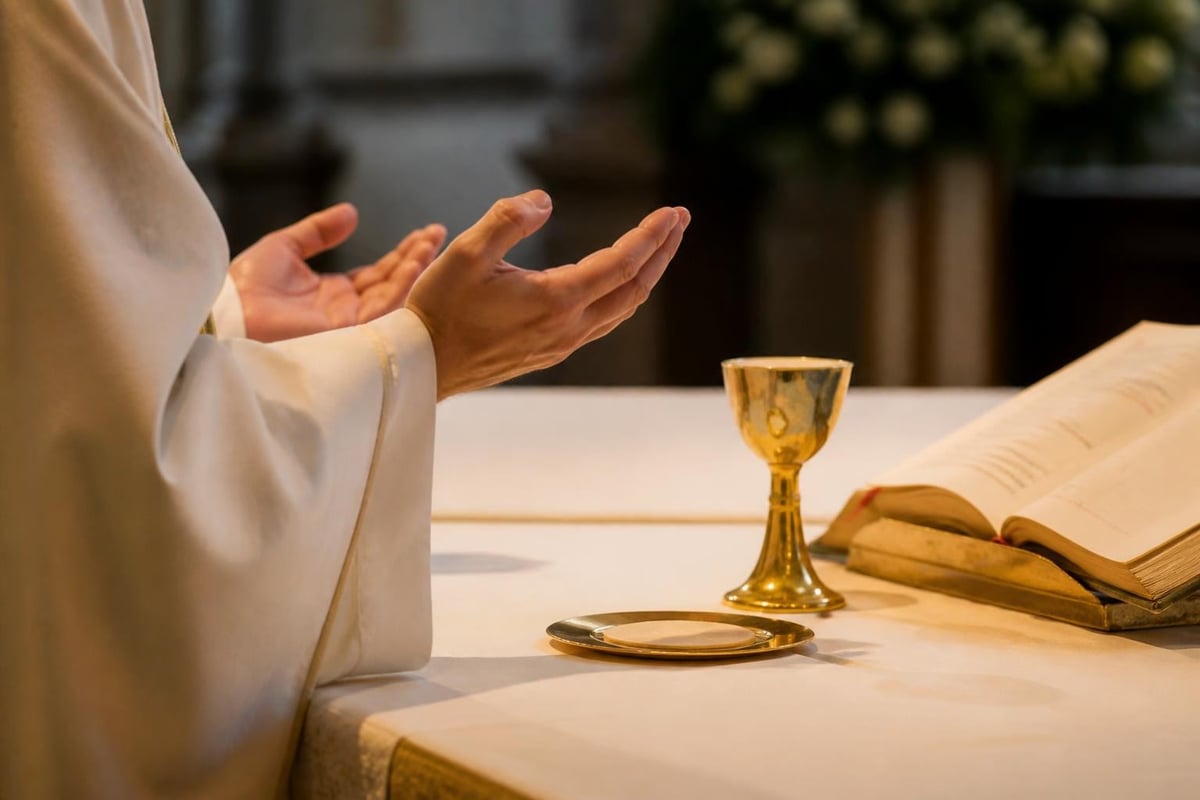
Every eucharistic prayer, regardless of which of the approved forms is used, contains essential elements that build toward the consecration and communion. The Liturgy of the Eucharist provides the framework for understanding these components.
The major sections include:
- Preface and Sanctus: The opening thanksgiving that leads to the "Holy, Holy, Holy"
- Epiclesis: The invocation of the Holy Spirit upon the gifts
- Institution Narrative: The words of consecration Christ spoke at the Last Supper
- Anamnesis: The memorial of Christ's passion, resurrection, and ascension
- Offering: The presentation of the sacrifice to the Father
- Intercessions: Prayers for the living and the dead
- Doxology: The final glorification of the Trinity
Each component serves a specific theological purpose while contributing to the prayer's unified movement. The preface contextualizes the thanksgiving, adapting to different feast days and seasons. The epiclesis demonstrates the Church's dependence on the Holy Spirit for the transformation of the elements.
Brought to you by Journeys of Faith, founded by Bob and Penny Lord. We are an Augustinian Secular Institute and Cyber Apostles. Our Mission is Evangelization through Media.
The Theology Behind the Words
The eucharistic prayer embodies Catholic doctrine about the Real Presence, sacrifice, and communion. When the priest speaks the words of institution, he acts in persona Christi, in the person of Christ Himself. This isn't symbolic representation but sacramental reality.
| Theological Aspect | Significance | Biblical Foundation |
|---|---|---|
| Transubstantiation | Bread and wine become Christ's Body and Blood | Matthew 26:26-28, 1 Corinthians 11:23-26 |
| Sacrifice | Makes present Christ's one sacrifice on Calvary | Hebrews 9:11-14, Malachi 1:11 |
| Memorial (Anamnesis) | More than remembering; making present | Luke 22:19, 1 Corinthians 11:24-25 |
| Communion | Unites the faithful with Christ and each other | John 6:51-58, 1 Corinthians 10:16-17 |
The sacrificial nature of the eucharistic prayer connects every Mass to Calvary. This isn't a new sacrifice but the same sacrifice made present in an unbloody manner. The Church teaches that when we participate in Mass, we stand at the foot of the cross with Mary and the beloved disciple.
The Four Main Eucharistic Prayers
The Roman Rite currently approves several eucharistic prayers for regular use, each with distinct characteristics and theological emphases. Understanding these variations helps appreciate the richness of Catholic liturgical tradition.
Eucharistic Prayer I (Roman Canon) is the oldest, dating back to at least the fourth century. Its ancient language and structure connect modern Catholics to countless generations of believers. This prayer includes extensive intercessions and mentions many saints by name, emphasizing the communion of saints.
Eucharistic Prayer II, the shortest option, derives from the Apostolic Tradition attributed to Hippolytus. Priests frequently choose this prayer for weekday Masses due to its brevity and clarity. Despite its length, it contains all essential elements and presents a straightforward theology accessible to contemporary Catholics.
Eucharistic Prayer III offers moderate length and beautiful poetic language. Many liturgists consider it ideal for Sunday celebrations, particularly during Ordinary Time. Its intercessions are comprehensive yet concise, and its flow creates a smooth progression from thanksgiving through consecration to communion.
Eucharistic Prayer IV presents a complete salvation history narrative before the consecration. This prayer cannot use variable prefaces because its opening thanksgiving traces God's saving work from creation through the incarnation. For those seeking deeper catechesis through liturgy, this prayer serves as an excellent teaching tool.
Living the Eucharistic Prayer
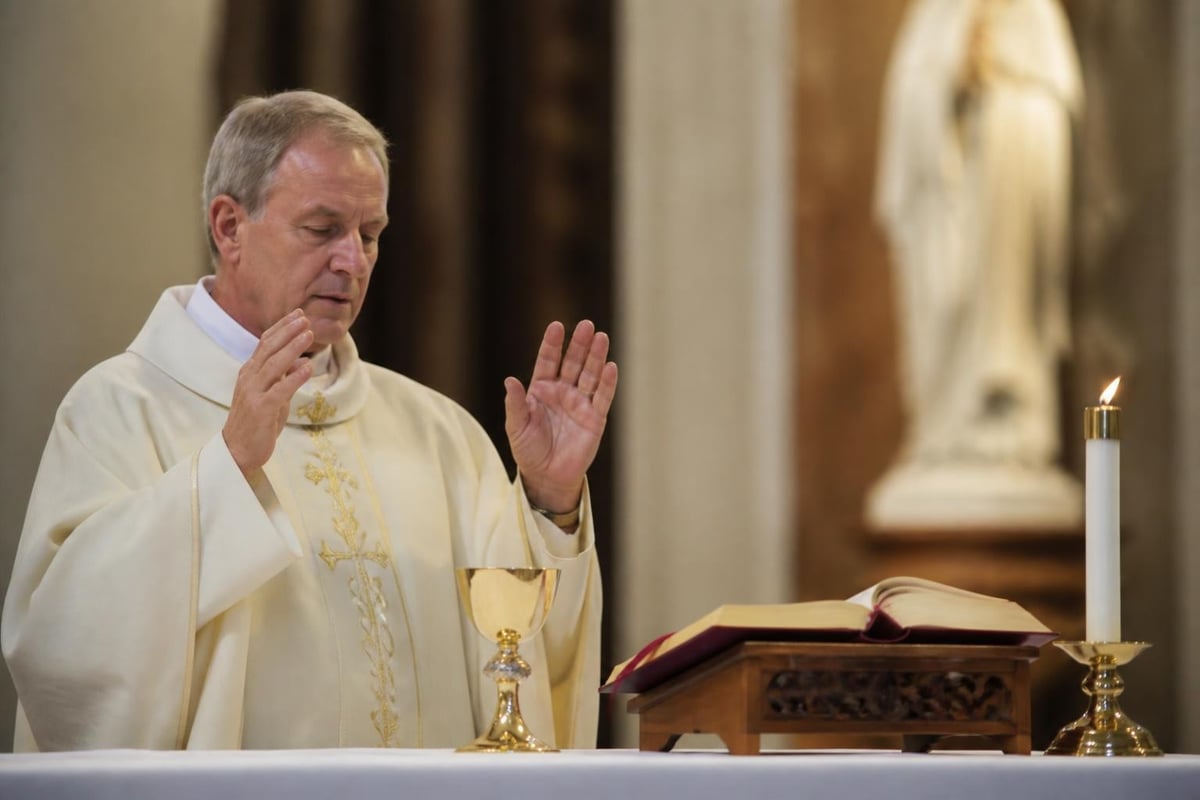
Understanding the postures during the eucharistic prayer helps the faithful participate more fully. The Church prescribes standing or kneeling during this central prayer, with kneeling from the epiclesis through the elevation being the norm in the United States.
Physical posture reflects interior disposition. Kneeling expresses humility, adoration, and reverence before the Real Presence. Standing indicates resurrection joy and active participation in Christ's priestly action. Both postures have deep biblical and traditional foundations.
Active Participation for the Laity
While the priest prays the eucharistic prayer aloud, the congregation participates actively through attentive listening, interior prayer, and vocal responses. The faithful aren't passive observers but co-offerers of the sacrifice.
Ways to deepen participation:
- Study the texts beforehand to recognize their structure and meaning
- Follow along silently, making the priest's words your own prayer
- Respond attentively to the memorial acclamation
- Join wholeheartedly in the "Amen" at the doxology
- Maintain reverent posture and silence during the consecration
The memorial acclamation after the consecration invites direct congregational participation. Whether proclaiming "We proclaim your Death, O Lord," "When we eat this Bread," or "Save us, Savior of the world," this response acknowledges the mystery being celebrated.
The Consecration: Heart of the Prayer
The institution narrative and consecration form the absolute center of the eucharistic prayer and the entire Mass. These words, spoken by Christ at the Last Supper, effect what they signify when pronounced by the priest.
Catholic Stand's exploration of the eucharistic prayer emphasizes how the consecration transforms not only the elements but the entire assembly. When bread becomes Christ's Body and wine becomes His Blood, the gathered community also transforms into the Mystical Body of Christ more perfectly.
The priest elevates the consecrated Host and Chalice, inviting the faithful to look upon Christ truly present. This elevation isn't merely ceremonial but profoundly theological. Like the Israelites who looked upon the bronze serpent and were healed, Catholics gaze upon the elevated Christ and receive spiritual healing.
Many Catholics have experienced deeper faith through understanding eucharistic miracles. The Miracles of the Eucharist books document numerous instances where the consecrated Host has visibly manifested as flesh and blood, confirming Catholic teaching about the Real Presence. These miracles, investigated by science and validated by the Church, strengthen belief in what occurs during every eucharistic prayer.

Variations and Special Circumstances
Beyond the four main eucharistic prayers, the Church approves additional prayers for specific circumstances. These variations demonstrate how the eucharistic prayer adapts while maintaining its essential nature.
Eucharistic Prayers for Reconciliation (I and II) emphasize God's mercy and the ministry of reconciliation. These prayers work particularly well during Lent or for Masses focused on healing and forgiveness. Their language highlights Christ's role as peacemaker and the Church's mission to continue that work.
Eucharistic Prayers for Masses with Children use simpler vocabulary and shorter sentences while preserving theological integrity. These prayers help young Catholics understand the Mass's central mystery without diluting its meaning. The responses invite more frequent participation, maintaining children's attention throughout.
Eucharistic Prayers for Various Needs (I-IV) address different pastoral situations: the Church's mission, God guiding the Church, Jesus our way, and Jesus who went about doing good. Each connects the eucharistic celebration to specific aspects of Christian life and mission.
The Priest's Preparation and Prayer
The eucharistic prayer demands careful preparation from the celebrant. Many priests spend significant time in prayer before Mass, recognizing the awesome responsibility of standing in persona Christi at the altar.
| Aspect | Preparation Required | Spiritual Dimension |
|---|---|---|
| Pronunciation | Clear, reverent articulation | Words effect what they signify |
| Gesture | Prescribed movements over gifts | Sacramental signs visible to all |
| Intention | Unite with Church's intention | Personal holiness supports ministry |
| Attention | Full mental presence | Guard against routine or distraction |
The General Instruction of the Roman Missal provides detailed rubrics for how the priest should pray the eucharistic prayer. These aren't arbitrary rules but carefully developed practices that enhance the prayer's effectiveness and solemnity.
Connecting Ancient Prayer to Modern Faith
In 2026, the eucharistic prayer remains as relevant as when first prayed in upper rooms and catacombs. Modern Catholics face different challenges than their ancestors, but the same need for divine nourishment through the Eucharist persists.
Resources for deeper catechesis on eucharistic prayers help contemporary believers appreciate these ancient texts. The Church encourages all Catholics to study the Mass's central prayers, not as academic exercise but as spiritual formation.
Technology offers new ways to engage with eucharistic prayer texts. Many Catholics read and reflect on these prayers during the week, preparing their hearts for Sunday worship. Journeys of Faith provides resources that help believers understand and appreciate the Mass's liturgical elements more fully.
The eucharistic prayer unites Catholics across continents and centuries. When participating in Mass anywhere in the world, the same essential prayer is being offered. This universality reflects the Church's catholicity and the Eucharist's power to create communion.
Personal Devotion and the Eucharistic Prayer
While the eucharistic prayer belongs properly to the liturgy, its themes can inform personal prayer life. Thanksgiving, memorial, offering, and intercession provide a structure for individual communion with God.
Elements to incorporate into daily prayer:
- Begin with thanksgiving for specific blessings
- Remember and apply Christ's saving work to current situations
- Offer daily activities and challenges to God
- Intercede for Church, family, and world needs
- Close with praise and glory to the Trinity
This pattern mirrors the eucharistic prayer's movement and helps Catholics maintain a eucharistic spirituality beyond Sunday Mass. The more familiar believers become with these prayers, the more naturally this structure flows into personal devotion.
The Eucharistic Prayer and Church Unity
Ecumenical dialogues often focus on eucharistic theology because the Lord's Supper represents both Christian unity's source and its clearest manifestation of division. Comparative studies of eucharistic prayers across denominations reveal significant common ground alongside real differences.
Anglican eucharistic prayers, including Prayer D and Prayer E, share structural similarities with Catholic forms while maintaining distinct theological emphases. These similarities suggest possibilities for future unity while respecting legitimate diversity.
The Second Vatican Council renewed appreciation for the eucharistic prayer's centrality, leading to the approval of multiple forms and their translation into vernacular languages. This renewal hasn't diminished the prayer's sacredness but has made it more accessible to the faithful.
Global Perspectives on the Eucharistic Prayer
Different cultures celebrate the eucharistic prayer with varying musical settings, gestures, and artistic expressions. African Catholic communities might incorporate indigenous instruments during the Sanctus. Asian churches might emphasize particular aspects of the prayer that resonate with local spirituality.
Despite these cultural variations, the theological core remains constant. Whether celebrated in a Gothic cathedral in Europe, a simple chapel in Africa, or a modern church in America, the same miracle occurs when the priest prays the words of consecration.
Cultural adaptations include:
- Musical settings for dialogues and acclamations
- Artistic representations of eucharistic themes
- Architectural emphasis on the altar as central focal point
- Integration of local symbols that respect liturgical norms
- Language translations that maintain theological precision
Formation and Catechesis
Effective catechesis on the eucharistic prayer begins in childhood and continues throughout life. Parents, catechists, and priests all share responsibility for helping Catholics understand and appreciate this central prayer.
Children's first preparation for First Communion should include age-appropriate explanation of the eucharistic prayer's main parts. As they mature, deeper theological instruction builds on this foundation. Adult formation programs help longtime Catholics rediscover familiar prayers with fresh insight.
Many parishes offer liturgy study groups that read and discuss the eucharistic prayers line by line. These groups often report that such study dramatically deepens their Mass experience. Understanding what the priest prays and why transforms passive attendance into active participation.
Effective formation methods:
- Line-by-line commentary on prayer texts
- Historical background on prayer development
- Theological explanation of key terms and concepts
- Practical guidance on postures and responses
- Connection between liturgy and daily Christian living
Seminaries dedicate significant time to training future priests in praying the eucharistic prayer. This formation includes not only rubrical precision but spiritual preparation for the awesome privilege of consecrating the Eucharist.
The Future of Eucharistic Prayer
As the Church moves further into the twenty-first century, the eucharistic prayer continues to nourish and unite believers. Discussions about potential new eucharistic prayers or adaptations of existing ones occur within appropriate Church channels, always maintaining fidelity to Tradition.
The current revival of eucharistic devotion in many parts of the world includes renewed focus on the Mass's central prayer. Young Catholics increasingly seek to understand the liturgy's depth rather than merely attend out of obligation. This hunger for authentic liturgical spirituality bodes well for the Church's future.
Technological advances present both opportunities and challenges. Live-streamed Masses during the pandemic helped many maintain connection with the eucharistic prayer when unable to attend in person. However, the Church continues emphasizing that physical presence at Mass, when possible, remains the norm and ideal.
The eucharistic prayer will continue evolving in minor ways while preserving its essential character. New translations may emerge as language evolves. Cultural adaptations might receive approval for specific regions. But the core reality-Christ's sacrifice made present and offered to the Father-remains unchanging.
The eucharistic prayer transforms ordinary elements into extraordinary grace, making present Christ's sacrifice and inviting believers into intimate communion with the Trinity. Understanding this prayer's structure, history, and theology enriches every Mass experience and deepens Catholic faith. Journeys of Faith supports this understanding through resources that promote eucharistic devotion and help Catholics appreciate the Mass's profound mysteries. Whether you're beginning to explore the liturgy or seeking to deepen decades of faithful practice, these resources can guide your journey toward fuller, more conscious, and more active participation in the Church's central act of worship.
Resources:
- Explore Journeys of Faith Online store with thousands of Catholic items
- Journeys of Faith is blessed to provide Catholic media, including podcasts and inspirational content, free of charge across multiple media platforms for viewers and listeners around the world. While access to this content remains free, there are significant and continually increasing costs associated with producing, hosting, and distributing these programs. Your support helps us continue sharing the beauty of the Catholic faith with souls. Please Make a Donation.
