

The celebration of the Eucharist stands at the heart of Catholic worship, and within the Mass, the Eucharistic Prayer holds a place of singular importance. Among the several approved Eucharistic Prayers in the Roman Missal, Eucharistic Prayer II occupies a unique position due to its brevity, ancient origins, and widespread pastoral use. This prayer, which traces its roots to the early Church, offers a profound theological expression of thanksgiving and consecration while remaining accessible for everyday liturgical celebration. Understanding the structure, history, and proper use of Eucharistic Prayer II enriches both clergy and laity in their participation in the Church's central mystery.
Historical Origins of Eucharistic Prayer II
The development of eucharistic prayer ii reflects the Church's ongoing dialogue with its earliest traditions. Unlike the Roman Canon (Eucharistic Prayer I), which evolved gradually over many centuries in Rome, Eucharistic Prayer II was deliberately composed for the post-Vatican II liturgy based on an ancient model. The prayer draws heavily from the Apostolic Tradition, a liturgical document traditionally attributed to Hippolytus of Rome from the early third century.
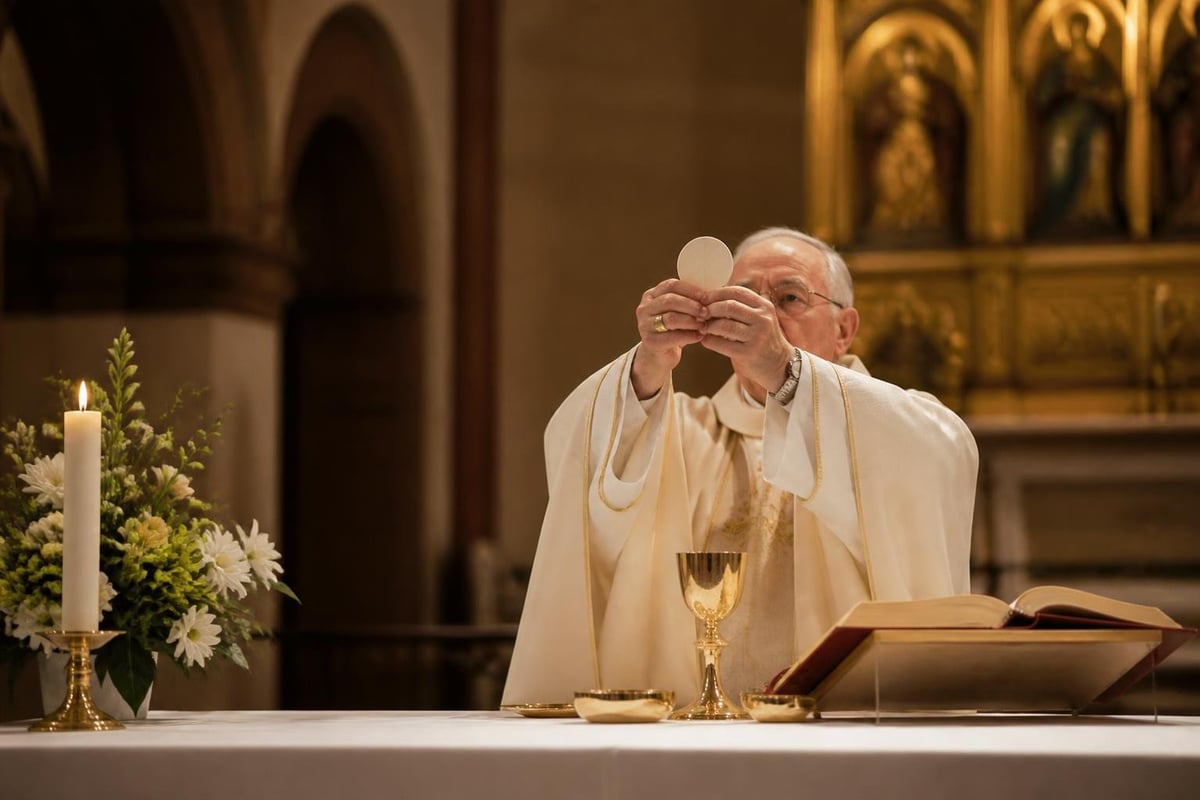
Scholarly research into early anaphoras and their patterns reveals the theological richness embedded in these ancient texts. The drafters of the revised Roman Missal sought to recover this patristic heritage while creating a prayer suitable for regular parish use. This historical connection grounds eucharistic prayer ii in the worship practices of the early Christian community, providing continuity with the Church of the martyrs and apostolic witnesses.
The formal introduction of Eucharistic Prayer II came with the promulgation of the revised Roman Missal in 1969, following the liturgical reforms mandated by the Second Vatican Council. The prayer was designed to be shorter than the Roman Canon, making it particularly suitable for weekday Masses and occasions when a more concise liturgy was pastorally appropriate. Theological Studies research demonstrates how this prayer maintains theological depth despite its brevity, preserving all essential elements of the Eucharistic Prayer while streamlining the language and structure.
Brought to you by Journeys of Faith, founded by Bob and Penny Lord. We are an Augustinian Secular Institute and Cyber Apostles. Our mission is evangelization through media.
The Structure and Components
Every Eucharistic Prayer, including eucharistic prayer ii, follows a consistent theological and liturgical structure that guides the faithful through the great prayer of thanksgiving. Understanding this architecture helps participants recognize the movement from praise through consecration to communion.
The prayer begins with the Dialogue and Preface, an exchange between priest and assembly that establishes the prayer's tone of thanksgiving. The priest invites the people to "Lift up your hearts," receiving the response "We lift them up to the Lord." This dialogue, unchanged since ancient times, signals the community's entry into the sacred action of the Eucharist.
Following the preface comes the Sanctus, the ancient hymn of praise combining Isaiah's vision of the heavenly throne room with the crowd's acclamation of Jesus entering Jerusalem. The entire assembly joins in this song, uniting earthly worship with the angels and saints in heaven. This element appears in virtually all Christian liturgies, East and West, demonstrating its apostolic pedigree.
The Epiclesis (invocation of the Holy Spirit) follows, marking a distinctive feature of eucharistic prayer ii. The priest extends his hands over the offerings, asking the Father to send the Holy Spirit to sanctify the gifts of bread and wine. This epiclesis explicitly acknowledges the role of the Third Person of the Trinity in the Eucharistic transformation, a theological emphasis recovered from Eastern liturgical traditions and early Western sources.
| Prayer Component | Function | Theological Emphasis |
|---|---|---|
| Dialogue & Preface | Opening thanksgiving | Divine-human encounter |
| Sanctus | Cosmic praise | Unity of heaven and earth |
| Epiclesis | Spirit invocation | Trinitarian action |
| Institution Narrative | Consecration | Christ's real presence |
| Anamnesis | Memorial | Paschal mystery |
| Intercessions | Prayer for Church | Communion of saints |
| Doxology | Concluding praise | Glory to the Trinity |
The Institution Narrative and Consecration forms the heart of eucharistic prayer ii, recounting Christ's actions at the Last Supper. The priest speaks in the person of Christ, pronouncing the words of consecration over the bread and wine. Catholic theology teaches that at this moment, through the priest's ministry and the Holy Spirit's power, the substance of bread and wine becomes the Body and Blood of Christ while the appearances remain unchanged.
The Anamnesis (memorial) immediately follows, as the Church obeys Christ's command to "do this in memory of me." This memorial is not mere recollection but an active making-present of Christ's saving death and resurrection. The assembly proclaims one of the memorial acclamations, such as "We proclaim your Death, O Lord, and profess your Resurrection until you come again."
Intercessions in eucharistic prayer ii are notably concise compared to other Eucharistic Prayers, asking God to remember the Church, the pope, the local bishop, and all the faithful. The prayer also remembers the dead, asking that they may enter into the light of God's presence. These petitions express the universal scope of the Eucharistic celebration, embracing all members of Christ's Body across time and space.
The prayer concludes with the Doxology, a solemn ascription of glory to the Trinity through Christ, with Christ, and in Christ. The priest elevates the consecrated bread and wine while singing or saying these words, and the people respond with the great "Amen," their assent to all that has been prayed.
Pastoral Use and Liturgical Context
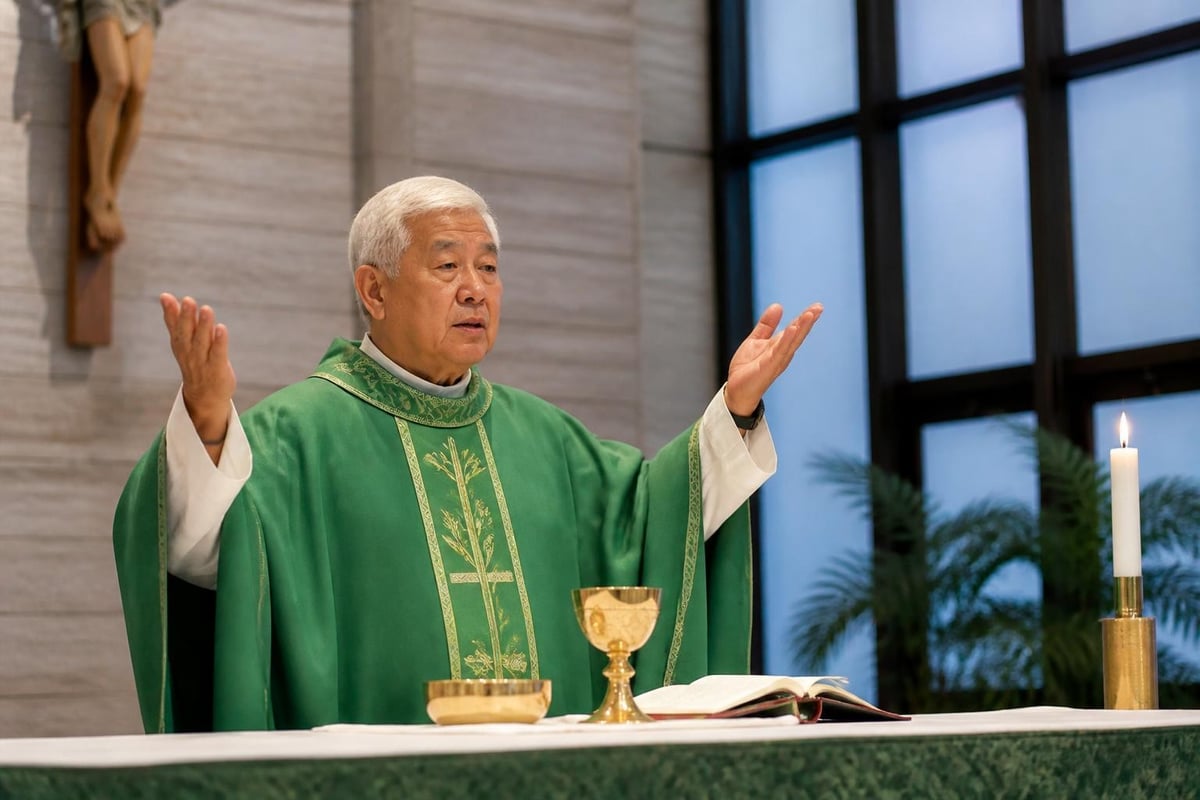
The General Instruction of the Roman Missal provides guidance on when eucharistic prayer ii is most appropriately used within the liturgy of the Eucharist. While any approved Eucharistic Prayer may be used at any Mass, pastoral wisdom suggests particular contexts where Eucharistic Prayer II serves the community especially well.
Weekday Masses represent the most common setting for eucharistic prayer ii. Its relative brevity makes it suitable for daily celebration when the assembly may include people with limited time before work or school. This practical consideration does not diminish the prayer's theological richness; rather, it acknowledges the pastoral reality of different liturgical contexts. The prayer contains all essential elements while maintaining a focused, streamlined progression.
Memorials of Saints also provide appropriate occasions for Eucharistic Prayer II, particularly when the memorial does not have special texts for other parts of the Mass. The prayer's proper preface can be replaced with a preface appropriate to the memorial, allowing flexibility while maintaining the prayer's overall structure. Diocesan liturgical resources often provide detailed guidance on making these substitutions correctly.
Masses with Children and Masses with Special Groups benefit from the accessibility of eucharistic prayer ii. When celebrating with young people, those with intellectual disabilities, or assemblies unfamiliar with Catholic liturgy, the prayer's directness and clarity help participants follow the movement from thanksgiving through consecration to communion. The structure remains comprehensible without sacrificing theological depth.
Preface Flexibility
One distinctive feature of eucharistic prayer ii is its relationship to the preface. The prayer includes its own proper preface, which begins "It is truly right and just, our duty and our salvation, always and everywhere to give you thanks, Father most holy, through your beloved Son, Jesus Christ." This preface emphasizes creation and redemption through Christ in concise, powerful language.
However, unlike some other Eucharistic Prayers, eucharistic prayer ii permits the substitution of other approved prefaces on appropriate occasions. This flexibility allows the prayer to be adapted for different liturgical seasons and feasts while maintaining its core structure. During Advent, for example, the priest might use an Advent preface before continuing with the rest of Eucharistic Prayer II.
The liturgical principle governing preface selection emphasizes coherence and appropriateness. The preface should harmonize with the day's readings, the liturgical season, and the prayer's overall theology. Liturgical Press resources provide detailed tables matching prefaces to liturgical occasions, helping celebrants make informed decisions that serve the assembly's worship.
Theological Themes and Spirituality
The theology embedded in eucharistic prayer ii reflects core Catholic beliefs about the Eucharist, expressed with patristic simplicity and clarity. These themes invite the faithful into deeper contemplation of the mystery being celebrated.
Trinitarian Theology permeates the prayer from beginning to end. The prayer addresses God the Father, acknowledges the saving work of the Son, and invokes the transforming power of the Holy Spirit. This Trinitarian structure reminds the assembly that the Eucharist is the work of the entire Godhead, not merely a ritual action performed by human agents. The broader context of Eucharistic theology locates this prayer within the Church's understanding of how God acts in and through the sacraments.
Memorial and Presence emerge as central themes in the institution narrative and anamnesis. The prayer teaches that the Eucharist is both memorial and real presence: a remembering that makes present. Christ's sacrifice on Calvary, offered once for all, becomes sacramentally present on the altar through the ministry of the priest and the invocation of the Spirit. This mystery, beyond full human comprehension, lies at the heart of Catholic faith and worship.
Ecclesial Communion finds expression in the intercessions of eucharistic prayer ii. By praying for the pope, the local bishop, and all the faithful both living and dead, the prayer situates each particular celebration within the universal Church. The Eucharist is never merely a private devotion or local gathering; it connects every Mass to the entire Body of Christ across the world and throughout history.
Those seeking to deepen their understanding and love of the Eucharistic mystery will find valuable resources in the study of Eucharistic miracles, which provide concrete testimonies to Christ's real presence. These miracles, documented throughout Church history, offer tangible evidence of what the Church professes in every Eucharistic Prayer: that bread and wine become the Body and Blood of the Lord.

Catechetical Value
Eucharistic prayer ii serves as an excellent teaching tool for Catholics seeking to understand the Mass more deeply. Its clear structure and accessible language make it ideal for catechesis at various levels.
- For children preparing for First Communion, the prayer introduces essential elements without overwhelming complexity
- For adult catechumens in RCIA, it provides a model for understanding all Eucharistic Prayers through its archetypal structure
- For lifelong Catholics, it offers familiar language that can be studied more deeply through examination of its sources and theology
- For those exploring the Catholic faith, it presents core beliefs about the Eucharist in a historically rooted yet contemporary form
Catechetical materials designed for parish education programs frequently reference eucharistic prayer ii precisely because of its pedagogical value. Teachers and catechists can walk learners through each section, explaining the meaning and significance of the dialogue, epiclesis, consecration, and other components. This systematic approach builds liturgical literacy and enhances conscious participation in the Mass.
Comparison with Other Eucharistic Prayers
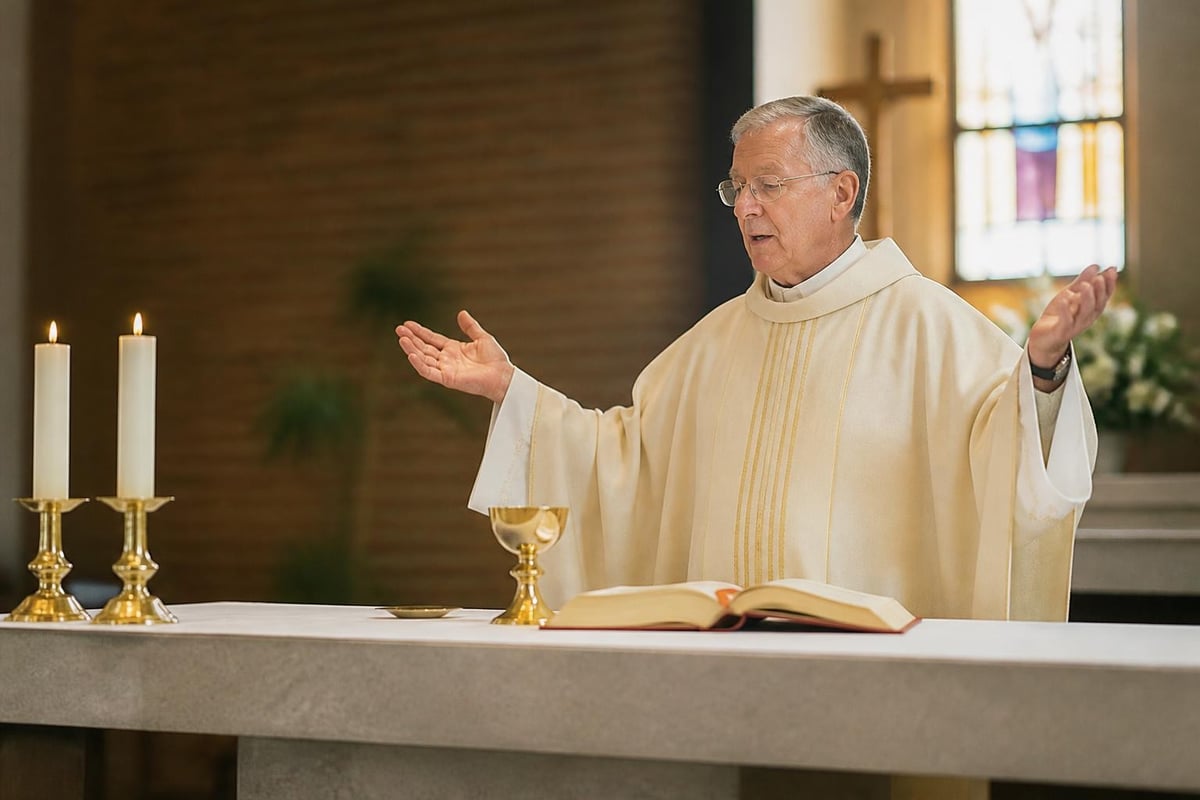
Understanding eucharistic prayer ii benefits from comparison with the other approved Eucharistic Prayers in the Roman Rite. Each prayer has distinctive characteristics that make it suitable for different contexts.
Eucharistic Prayer I (the Roman Canon) represents the most ancient Western Eucharistic Prayer, with roots extending back at least to the fourth century. Its length and complexity, with numerous saints mentioned by name, make it particularly appropriate for solemn occasions. The Canon's venerable antiquity and rich theology contrast with Eucharistic Prayer II's streamlined structure, offering different spiritual textures for different liturgical needs.
Eucharistic Prayer III was composed alongside Eucharistic Prayer II for the revised Roman Missal but follows a different structural pattern. It includes more extensive intercessions and a different sequence of elements. Prayer III works especially well for Sundays and feast days when a fuller expression of the Church's prayer seems appropriate, while eucharistic prayer ii serves weekdays and simpler celebrations.
Eucharistic Prayer IV, with its extended preface recounting salvation history from creation through the Old Testament to Christ, cannot use substitute prefaces. Its comprehensive theological scope makes it suitable for occasions when the full sweep of God's saving plan should be proclaimed, whereas eucharistic prayer ii offers focused intensity on the paschal mystery itself.
| Feature | Prayer I | Prayer II | Prayer III | Prayer IV |
|---|---|---|---|---|
| Historical Origin | Ancient Roman Canon | Based on Hippolytus | Modern composition | Eastern-influenced |
| Length | Longest | Shortest | Medium | Longest with preface |
| Preface Flexibility | Yes | Yes | Yes | No (integral preface) |
| Primary Use | Solemn occasions | Weekdays, memorials | Sundays, feasts | Special catechetical occasions |
The Eucharistic Prayers for Reconciliation and Eucharistic Prayers for Various Needs supplement these four primary options, providing specialized texts for particular pastoral situations. Yet eucharistic prayer ii remains the most frequently used prayer in many parishes due to its versatility and accessibility.
Praying Eucharistic Prayer II with Understanding
Active participation in the Eucharistic Prayer requires both external attention and interior disposition. The Second Vatican Council emphasized that the faithful should not be "strangers or silent spectators" at Mass but should "take part in the sacred action conscious of what they are doing, with devotion and full collaboration."
For eucharistic prayer ii specifically, several practices enhance participation:
Follow the Structure: Recognize the prayer's movement from thanksgiving (preface and Sanctus) through transformation (epiclesis and consecration) to communion (intercessions and doxology). This structure mirrors the spiritual journey from praise through encounter with Christ to union with the Church.
Respond Wholeheartedly: The Sanctus, memorial acclamation, and great Amen are not interruptions but integral parts of the prayer. The assembly's full-voiced participation in these responses expresses their union with the priest's prayer and their assent to the sacred mysteries being celebrated.
Maintain Interior Attention: Even during portions spoken or sung by the priest alone, the faithful should remain engaged through mental prayer, attentive listening, and appropriate posture (standing or kneeling according to local custom). The entire prayer is the Church's prayer, offered by priest and people together.
Study the Text: Reading and reflecting on the words of eucharistic prayer ii outside of Mass deepens appreciation during the celebration. Pastoral commentaries provide insights into the prayer's meaning and structure that enhance liturgical participation.
Formation for Presiders
Priests and deacons who proclaim eucharistic prayer ii bear special responsibility for its worthy celebration. The prayer's relative simplicity can tempt celebrants to rush through it or treat it as routine, yet it deserves the same reverence given to any Eucharistic Prayer.
Liturgical formation for clergy emphasizes several key points:
- Pacing and clarity allow the assembly to follow and enter into the prayer's meaning
- Appropriate gestures at the epiclesis, consecration, and elevation express the prayer's theology through the body
- Musical settings when chanted should enhance rather than obscure the text's meaning
- Proper preface selection requires understanding both the prayer's structure and the liturgical calendar
- Reverent attention to rubrics demonstrates respect for the Church's liturgical tradition
The quality of presidential leadership directly affects the assembly's ability to pray eucharistic prayer ii well. When celebrants approach the prayer with reverence, preparation, and love for the Eucharistic mystery, they draw the faithful into deeper participation in Christ's sacrifice of praise.
Resources for Deeper Study
Catholics seeking to deepen their understanding of eucharistic prayer ii and the Eucharistic Prayers generally have access to numerous resources through both scholarly channels and popular Catholic media.
Academic resources include liturgical commentaries, historical studies of the anaphoras, and theological analyses of Eucharistic theology. Universities and seminaries offer courses in sacramental theology and liturgy that explore the prayers in depth. Parish adult formation programs increasingly include components on the Mass and its prayers, recognizing that liturgical catechesis enhances participation.
Popular Catholic resources make these deeper insights accessible to everyday believers. Books, podcasts, videos, and articles translate scholarly research into language that serves parish communities. Organizations dedicated to Catholic evangelization and education provide materials that connect historical and theological understanding to lived faith.
Prayer resources also support engagement with eucharistic prayer ii. Devotional materials that focus on Eucharistic adoration, preparation for Mass, and thanksgiving after Communion help believers integrate the liturgy's prayers into their broader spiritual lives. The Eucharistic Prayer, while primarily liturgical, shapes personal prayer and devotion when its themes are carried into quiet reflection.
Eucharistic Prayer II stands as a remarkable gift to the Church, combining ancient tradition with pastoral accessibility in a prayer that serves daily worship while maintaining profound theological depth. Its roots in the early Church, its clear structure, and its flexibility make it an invaluable resource for Catholic liturgical life. Whether you are a priest seeking to celebrate the Mass with greater reverence, a catechist teaching others about the Eucharist, or a lay Catholic desiring deeper participation in the liturgy, understanding this prayer enriches your faith journey. Journeys of Faith supports this journey through resources that promote love for the Eucharist, offering books, media, and formation materials that help Catholics encounter Christ in the breaking of the bread. Explore Journeys of Faith's online store with thousands of Catholic items to support your prayer life and Eucharistic devotion. Journeys of Faith is blessed to provide Catholic media, including podcasts and inspirational content, free of charge across multiple media platforms for viewers and listeners around the world. While access to this content remains free, there are significant and continually increasing costs associated with producing, hosting, and distributing these programs. Your support helps us continue sharing the beauty of the Catholic faith with souls. Please make a donation to support our evangelization mission.
