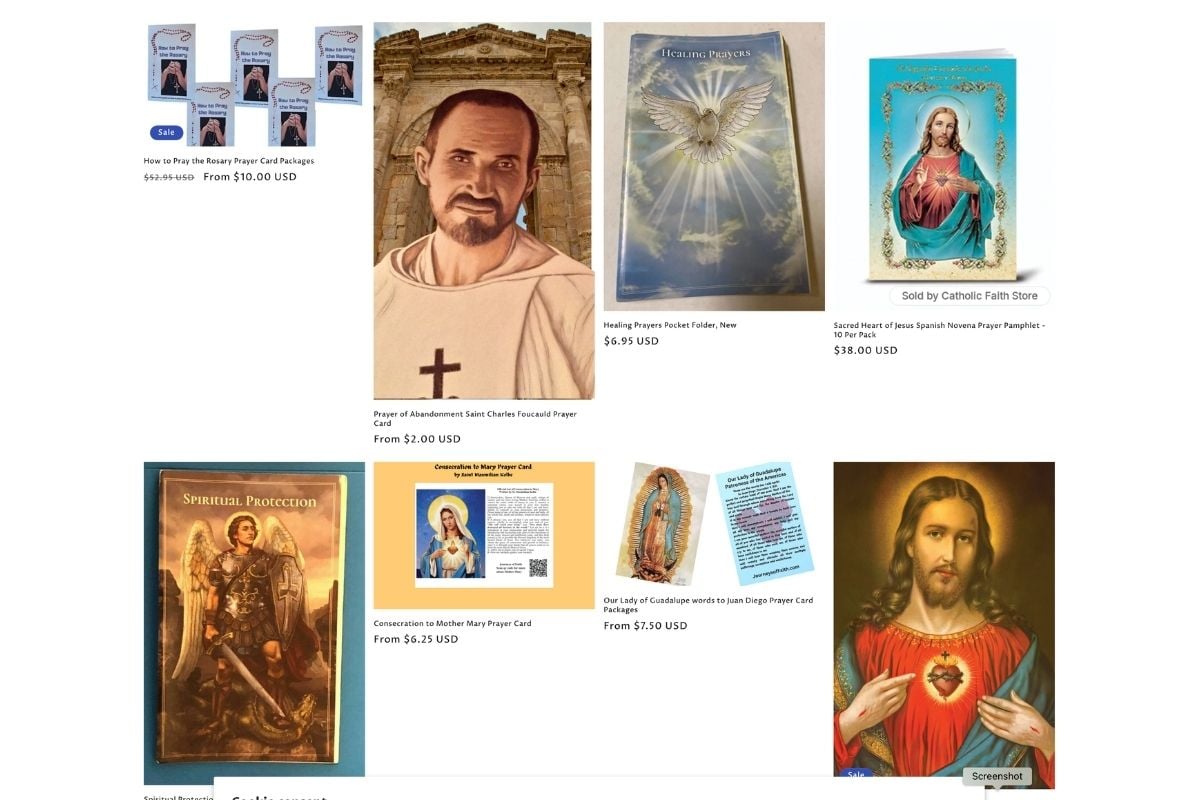

Throughout the history of the Catholic Church, female saints and their patronage have provided spiritual guidance, intercession, and inspiration to millions of faithful believers worldwide. These holy women, recognized for their extraordinary virtue and closeness to God, serve as powerful advocates for specific causes, professions, illnesses, and groups of people. Understanding the patronages assigned to these remarkable women enriches our prayer life and deepens our appreciation for the communion of saints.
Understanding the Concept of Saintly Patronage
The tradition of patron saints dates back to the early Church, when Christians would invoke the intercession of martyrs and holy individuals who had demonstrated particular virtues or experienced specific trials during their earthly lives. Female saints and their patronage emerged as believers recognized that these holy women possessed unique insights into certain struggles and could offer powerful prayers to God on behalf of those facing similar challenges.
The selection of patronages often relates to the saint's life experiences, profession, martyrdom, or miraculous interventions attributed to their intercession. For instance, a saint who suffered from a particular illness might become the patron of those afflicted with the same condition. Similarly, saints who excelled in specific professions during their lives are invoked by those working in similar fields today.
How Patronages Are Assigned
The Catholic Church recognizes patronages through both official declarations and popular devotion. Some patronages receive formal approval from Rome, while others develop organically through centuries of faithful practice. This dual approach ensures that female patron saints remain relevant to contemporary believers while maintaining connection to sacred tradition.
The process typically involves:
- Historical documentation of the saint's life and virtues
- Evidence of answered prayers through the saint's intercession
- Popular devotion that naturally develops among the faithful
- Official recognition by Church authorities when appropriate
Prominent Female Saints and Their Specific Patronages
The roster of female saints and their patronage covers virtually every aspect of human experience. Each saint brings her unique story and spiritual strengths to bear on behalf of those who seek her intercession.
Saints of Healing and Health
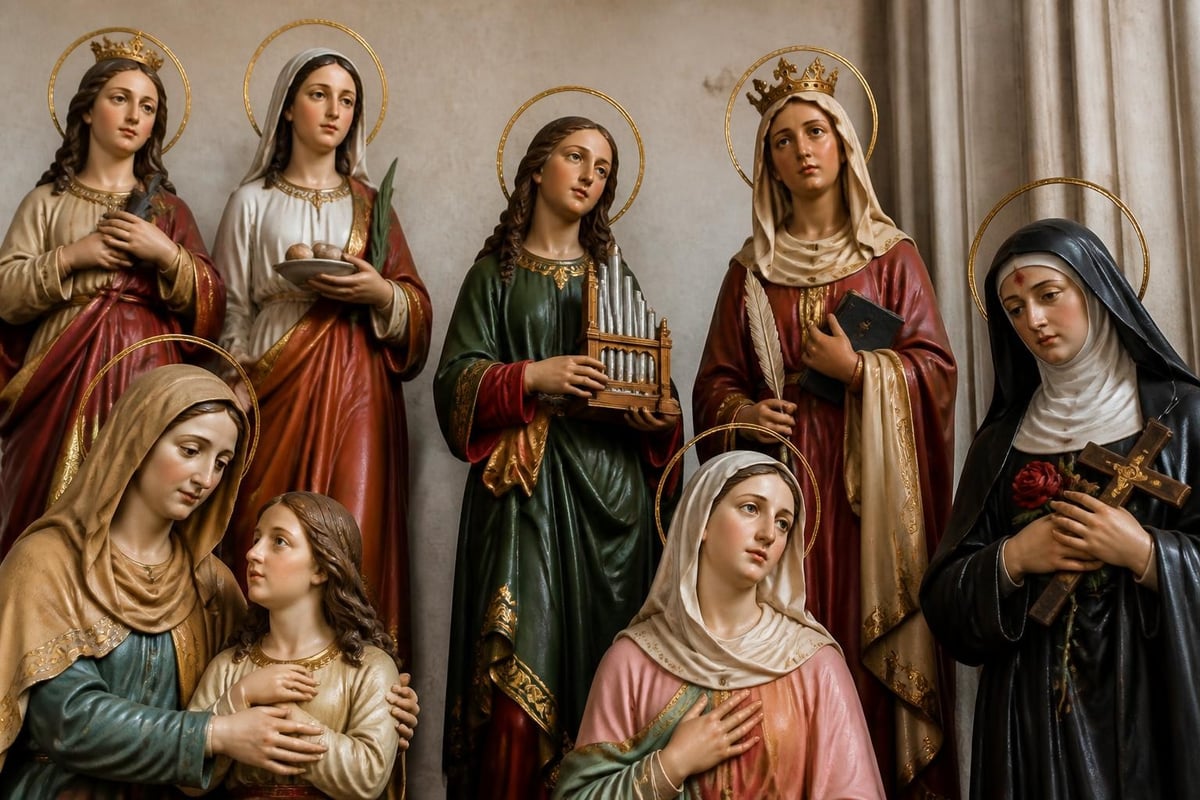
Several female saints have become renowned for their intercession in matters of physical and mental health. St. Agatha serves as the patron saint of breast cancer patients and nurses, stemming from her martyrdom and the miraculous healings attributed to her intercession. St. Lucy, whose name means "light," is invoked by those suffering from eye diseases and blindness, reflecting both her name's meaning and the traditional accounts of her martyrdom.
St. Dymphna holds particular significance as the patron saint of those suffering from mental illness, anxiety, and depression. Her story of faith in the face of tremendous personal trauma has provided comfort to countless individuals struggling with psychological challenges. Many hospitals and mental health facilities bear her name, testifying to the enduring power of her patronage.
| Saint | Primary Patronages | Historical Connection |
|---|---|---|
| St. Agatha | Breast cancer, nurses | Martyrdom and healing miracles |
| St. Lucy | Eye diseases, blindness | Name meaning "light," traditional accounts |
| St. Dymphna | Mental illness, anxiety | Personal history of trauma and faith |
| St. Apollonia | Dental problems, dentists | Suffered dental torture during martyrdom |
Brought to you by Journeys of Faith, founded by Bob and Penny Lord. We are an Augustinian Secular Institute, Cyber Apostles. Our Mission is Evangelization through Media.
Saints of Family and Domestic Life
St. Anne, the mother of the Blessed Virgin Mary, serves as the patron saint of mothers, grandmothers, and women in labor. Her role in raising Mary makes her an ideal intercessor for those facing the challenges of parenting and family life. St. Monica, known for her persistent prayers for her son St. Augustine's conversion, is the patron of mothers with difficult children, wives dealing with troubled marriages, and those struggling with alcoholism in their families.
St. Margaret of Scotland represents queens, large families, and those in second marriages, drawing from her own experience as a devout queen who raised eight children while maintaining deep spiritual practices. Her life demonstrates that holiness is achievable even amid the demands of family and public responsibilities.
Women seeking intercession for family matters often turn to these saints because their experiences mirror modern challenges. The complete guide to canonized saints provides additional context for understanding how these holy women lived their faith within family structures.
Female Saints in Professional and Vocational Patronages
The concept of female saints and their patronage extends into virtually every profession and vocation. These assignments honor the saints' earthly work while providing spiritual support for modern practitioners.
Arts, Education, and Intellectual Pursuits
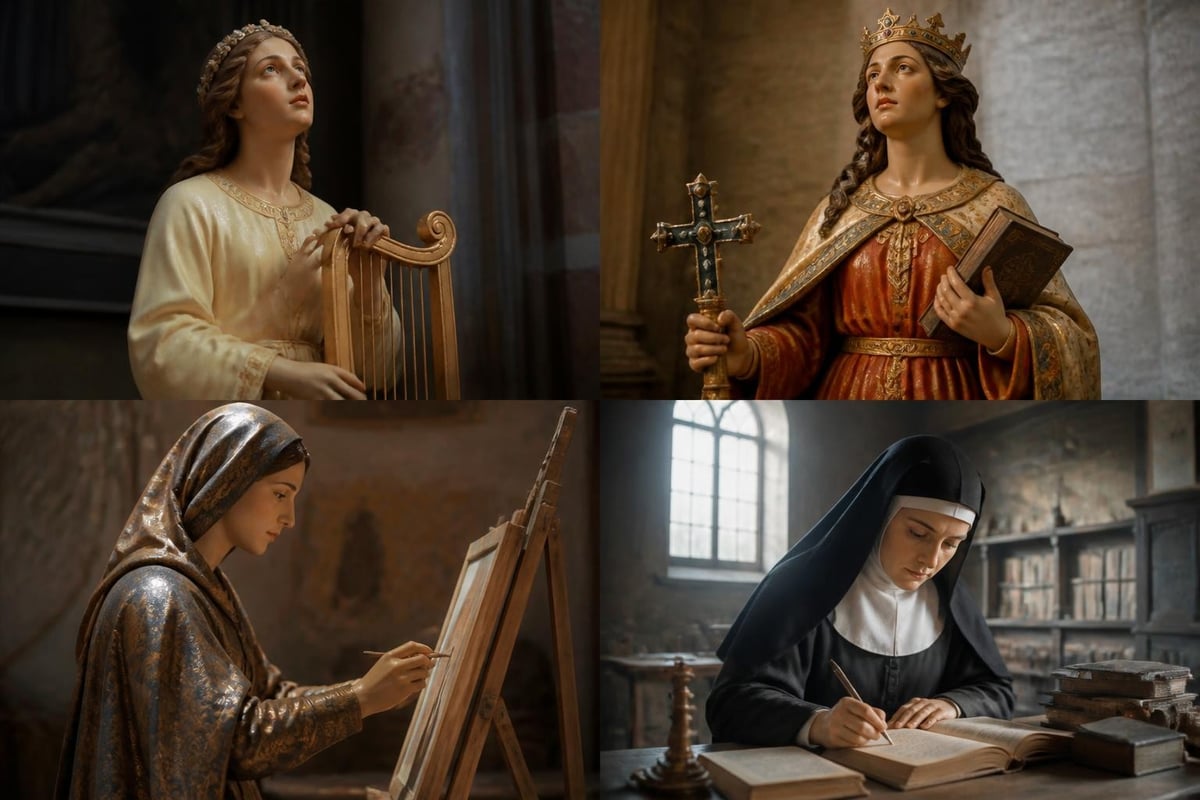
St. Cecilia, one of the most beloved female saints, serves as the patron of musicians, singers, and poets. According to tradition, she sang to God in her heart even during her wedding, and her association with music has made her the natural intercessor for those in musical vocations. St. Catherine of Alexandria, a brilliant philosopher who defended her faith before learned men, is the patron of philosophers, students, and librarians.
- St. Catherine of Bologna: Artists and painters
- St. Brigid of Ireland: Scholars and poets
- St. Scholastica: Convulsive children and education
- St. Hildegard of Bingen: Musicians and natural scientists
The intellectual contributions of these women challenge any notion that female saints merely occupied supportive roles. Their patronages reflect genuine expertise and achievement in fields that continue to shape human culture and knowledge.
Occupational and Service Patronages
St. Martha, the sister of Lazarus, is the patron saint of cooks, servants, and hospitality workers, reflecting her role as hostess to Jesus. St. Zita of Lucca, who spent her entire adult life as a domestic servant, serves as patron to household workers and domestic servants. These patronages dignify service work and remind us that holiness is found in everyday tasks performed with love.
Modern workers in healthcare, hospitality, and service industries find particular comfort in knowing that female saints and their patronage acknowledge the spiritual value of their labor. The saints' lives demonstrate that no work is too humble to be offered to God.
Saints for Difficult Circumstances and Special Intentions
Some of the most powerful patronages address life's most challenging situations. These female saints offer hope when circumstances seem impossible.
St. Rita of Cascia: The Saint of the Impossible
St. Rita earned the title "Saint of the Impossible" through her remarkable life marked by suffering, loss, and miraculous answers to prayer. She is the patron of impossible causes, abused wives, difficult marriages, and parents of wayward children. Her own experience of an arranged marriage to an abusive husband, the violent deaths of her husband and sons, and her eventual religious life make her an understanding advocate for those in desperate situations.
Those seeking St. Rita's intercession often find comfort in prayer cards and devotional materials that recount her story and provide structured prayers. The Prayer Cards and Novenas collection offers these resources for maintaining consistent devotion to female saints and their patronage in daily life.
St. Jude Thaddeus and St. Philomena: Desperate Cases
While St. Jude is male, St. Philomena shares his patronage of desperate and hopeless causes. This young virgin martyr, whose relics were discovered in the catacombs of Rome, became known for extraordinary miracles despite her historical obscurity. Her patronage demonstrates that God works powerfully through those who trust Him completely.
Regional and Cultural Patronages
Female saints and their patronage often reflect the cultural contexts in which devotion to them flourished. National patronesses hold special significance in their respective countries.
National and Regional Patronesses
| Saint | Country/Region | Additional Patronages |
|---|---|---|
| St. Brigid of Ireland | Ireland | Dairy workers, poets, blacksmiths |
| St. Joan of Arc | France | Military personnel, martyrs, prisoners |
| St. Kateri Tekakwitha | United States, Canada | Ecology, environment, Native Americans |
| St. Teresa of Ávila | Spain | Headache sufferers, those in religious orders |
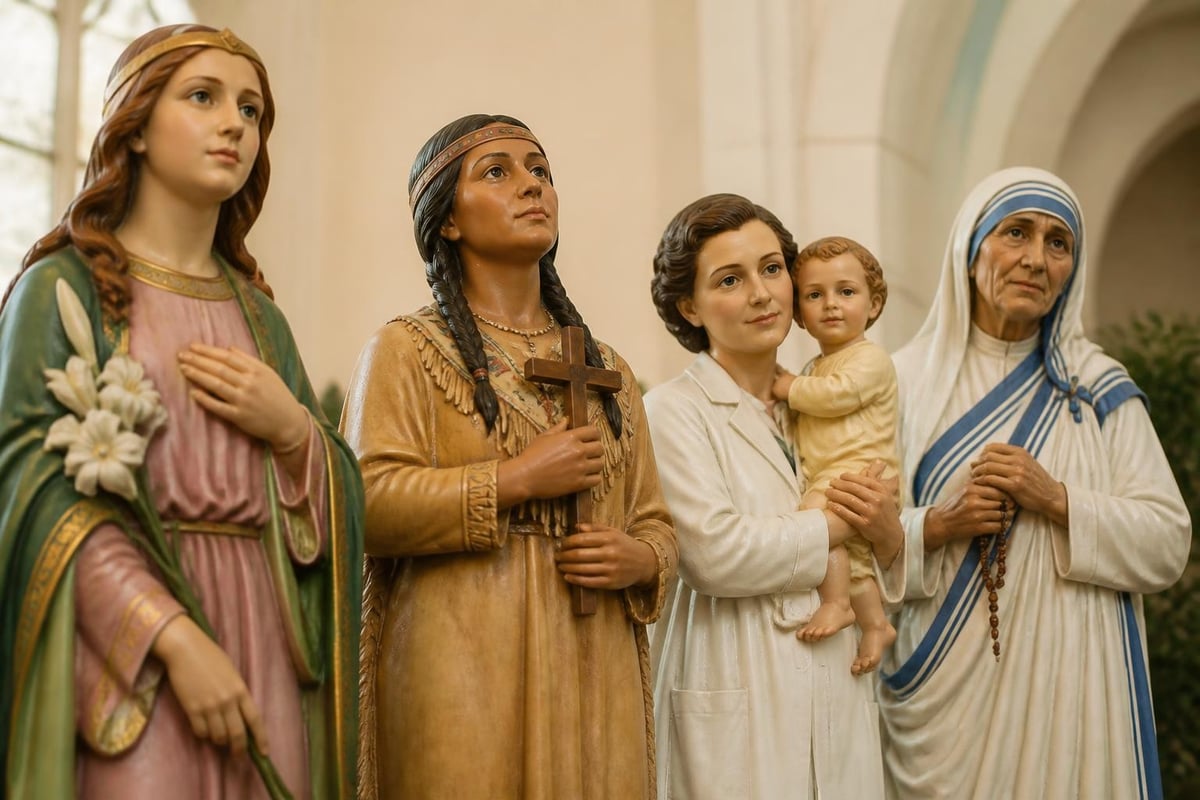
St. Kateri Tekakwitha, the first Native American saint, represents the beautiful synthesis of indigenous culture and Catholic faith. Her patronage of ecology and the environment reflects indigenous reverence for creation, making her particularly relevant to contemporary concerns about environmental stewardship.
The lives of these holy women, including the remarkable Saints and Other Powerful Women in the Church, demonstrate how faith transcends cultural boundaries while honoring particular traditions and contexts.
Understanding the Spiritual Significance of Patronage
The tradition of female saints and their patronage serves multiple spiritual purposes beyond mere categorization. These assignments create personal connections between believers and the communion of saints, fostering deeper prayer relationships.
Building Personal Relationships with Saints
When individuals identify patron saints whose life experiences resonate with their own circumstances, prayer becomes more personal and focused. A musician praying to St. Cecilia, for instance, addresses someone who understands the joys and challenges of musical vocation. This personal dimension transforms abstract theology into lived spiritual reality.
Selecting a patron saint involves:
- Researching saints associated with your profession, challenges, or interests
- Learning their life stories to understand their spiritual journeys
- Reading their writings when available to grasp their wisdom
- Establishing regular prayer through novenas or daily invocations
- Celebrating their feast days as special occasions for devotion
Understanding patron saints helps believers develop these meaningful spiritual friendships that enrich their prayer lives throughout the year.
Theological Foundations of Intercession
The practice of invoking female saints and their patronage rests on solid theological ground. The Catholic Church teaches that saints in heaven remain united with the Church on earth through the mystical body of Christ. Their prayers on our behalf carry the weight of their proven holiness and closeness to God.
This doctrine affirms that death does not sever the bonds of Christian charity. Rather, those who have reached heaven's glory can pray more effectively for those still on earth. The specific patronages simply channel these prayers toward particular needs, creating spiritual specializations within the communion of saints.
Devotional Practices Honoring Female Saints
Engaging with female saints and their patronage extends beyond intellectual knowledge to active devotional practice. Various prayer forms help believers develop deeper relationships with these holy women.
Novenas and Special Prayers
The nine-day novena represents one of the most popular forms of devotion to patron saints. These structured prayer sequences combine scriptural meditation, saint biography, and specific petitions. Novenas to female saints often conclude on their feast days, creating liturgical connections that enhance the prayer experience.
Many believers maintain prayer cards featuring their patron saints, keeping these reminders in wallets, Bibles, or workspaces. These tangible items serve as prompts for prayer throughout the day and create visual connections to the saints' intercession.
Feast Day Celebrations
The liturgical calendar designates specific feast days for each canonized saint. Observing these days through special prayers, attending Mass, or learning more about the saint's life deepens appreciation for their unique contributions to the Church. Some families develop traditions around feast days of their patron saints, creating memorable spiritual practices.
The celebration of female saints' feast days reminds the Church of the essential role women have played in salvation history. From Mary, the Mother of God, to the countless women who have followed Christ heroically, these observances maintain the Church's memory and gratitude.
Contemporary Relevance of Female Patronages
The patronages of female saints remain remarkably relevant to twenty-first-century concerns. Modern challenges find medieval answers through the timeless wisdom and intercession of holy women who faced their own era's difficulties with grace.
Addressing Modern Concerns
Contemporary issues such as mental health awareness, workplace equality, and environmental responsibility all find resonance in the patronages of female saints. St. Dymphna's patronage of mental health has gained increased recognition as society addresses psychological wellness more openly. St. Kateri Tekakwitha's connection to environmental concerns speaks directly to current ecological crises.
The intersection of traditional patronages with modern needs demonstrates the enduring relevance of female saints and their patronage. Their intercession bridges centuries, applying eternal truths to evolving human circumstances.
Inspiring Contemporary Holiness
The examples set by canonized female saints inspire modern women to pursue holiness within their own contexts. Whether balancing career and family like St. Gianna Beretta Molla, serving the poorest like St. Teresa of Calcutta, or pursuing intellectual excellence like St. Edith Stein, these women demonstrate diverse paths to sanctity.
This inspiration extends beyond women to all believers who recognize that holiness takes many forms. The variety of patronages assigned to female saints reflects the Church's acknowledgment that God calls people to serve Him in countless ways, each equally valuable in His eyes.
Lesser-Known Female Saints and Unique Patronages
While many Catholics can name popular female saints like St. Thérèse of Lisieux or St. Teresa of Ávila, numerous lesser-known holy women hold unique and sometimes surprising patronages. Exploring these saints reveals the breadth of human experience encompassed within the communion of saints.
St. Drogo serves as the patron of unattractive people and coffee house owners-an unusual combination that reflects his life as a penitential shepherd who experienced physical disfigurement. St. Fiacre, though male, shares patronage of gardeners with several female saints who worked the land as part of their monastic vocations.
The diversity of female saints throughout history ensures that virtually every human condition, profession, and struggle has a heavenly advocate who understands from personal experience.
Discovering Personal Patron Saints
Many Catholics discover patron saints through their baptismal names, profession, or personal circumstances. This discovery process often leads to deeper research into the saint's life and a growing devotional relationship. Online resources and Catholic literature provide abundant information for those seeking to identify their spiritual patrons.
The process of learning about female saints and their patronage often surprises believers with unexpected connections. A teacher might discover St. Elizabeth Ann Seton, an educator who founded the American Catholic school system. A cancer patient might find hope in St. Peregrine's miraculous healing, then discover female saints like St. Agatha who also intercede for cancer patients.
Practical Applications for Daily Life
Understanding female saints and their patronage becomes truly powerful when believers apply this knowledge to daily prayer and decision-making. These holy women offer more than historical interest; they provide active spiritual support for contemporary challenges.
Incorporating Patron Saints into Prayer Routines
Developing a regular prayer practice that includes patron saints strengthens spiritual life significantly. Simple practices include:
- Morning offerings that invoke your patron saint's intercession for the day ahead
- Workplace prayers to professional patron saints before important tasks
- Evening examinations that thank patron saints for their day's intercession
- Weekly novenas rotating through different patron saints based on current needs
- Monthly celebrations of various patron saints' feast days
These practices transform abstract devotion into concrete spiritual habits that bear fruit in daily life. The consistent invocation of patron saints builds spiritual relationships that provide comfort during trials and joy during celebrations.
Teaching Children About Patron Saints
Families can introduce children to female saints and their patronage through age-appropriate stories and activities. Celebrating baptismal name feast days, reading saint biographies, and visiting churches named for patron saints create memorable learning experiences. Many families choose confirmation names based on patron saints whose lives inspire them.
This early formation establishes lifelong devotional patterns and helps children understand the communion of saints as a living reality rather than abstract doctrine. When children face challenges, they can turn to patron saints who understand their specific struggles.
Resources for Deepening Devotion
Numerous resources support those seeking to develop stronger devotional relationships with female saints and understand their patronages more fully. Books, prayer cards, and multimedia materials make this spiritual journey accessible to all believers.
Catholic publishers offer extensive collections of saint biographies, many focusing specifically on holy women. The Journeys of Faith catalog includes various resources that explore the lives and patronages of female saints, providing both historical information and practical devotional guidance.
Prayer resources such as novena booklets, holy cards, and medal collections help believers maintain consistent devotion. Visual reminders of patron saints, whether through sacred art, statues, or simple prayer cards, create environments conducive to regular prayer and spiritual mindfulness.
Female saints and their patronage offer rich spiritual resources for contemporary Catholics seeking heavenly intercession and inspiration. These holy women's diverse experiences and powerful prayers address virtually every human need and circumstance. Whether you're drawn to a particular saint through shared profession, similar struggles, or simply the beauty of her story, developing devotional relationships with patron saints enriches your prayer life and strengthens your connection to the communion of saints. Journeys of Faith provides extensive resources to support your journey, including books, DVDs, prayer cards, and devotional items that bring you closer to these powerful intercessors. Explore our comprehensive collection at Journeys of Faith and discover how the saints can transform your spiritual life. Explore Journeys of Faith Online store with thousands of Catholic Items at https://journeysoffaith.com/collections. Journeys of Faith is blessed to provide Catholic media, including podcasts and inspirational content, free of charge across multiple media platforms for viewers and listeners around the world. While access to this content remains free, there are significant and continually increasing costs associated with producing, hosting, and distributing these programs. Your support helps us continue sharing the beauty of the Catholic faith with souls. Please Make a Donation at https://journeysoffaith.com/pages/donate.