

The virtue of humility stands at the heart of Catholic spirituality, often misunderstood yet essential for authentic Christian living. Unlike worldly notions that confuse humility with self-deprecation or weakness, humility catholic tradition presents this virtue as the foundation upon which all other virtues rest. It represents an honest assessment of ourselves before God, recognizing our total dependence on divine grace while acknowledging the dignity inherent in being created in God's image. This paradox-knowing both our smallness and our worth-forms the bedrock of genuine spiritual transformation and shapes how Catholics approach prayer, service, relationships, and the sacraments.
Understanding Humility in Catholic Teaching
The Catholic Church has consistently taught that humility serves as the gateway to spiritual growth. Pope Francis describes humility as the virtue that allows us to receive God's grace, positioning ourselves rightly before the Creator. This understanding goes far beyond simple modesty or self-effacement.
True humility catholic doctrine encompasses several key dimensions:
- Recognition of God's sovereignty and our complete dependence on Him
- Honest self-knowledge that neither inflates nor diminishes our gifts
- Openness to correction and willingness to learn from others
- Service to others without seeking recognition or praise
- Acceptance of our limitations while striving for holiness
Saint Thomas Aquinas developed a nuanced theology of humility, viewing it as a moderating virtue that helps us maintain proper perspective about ourselves. Scholarly examination of Aquinas's approach reveals how he positioned humility not as self-hatred but as truthful self-assessment grounded in our relationship with God. This theological foundation remains vital for contemporary Catholics seeking to cultivate authentic humility.
The Biblical Foundation of Humility Catholic Teaching
Scripture overflows with examples and exhortations regarding humility. The Blessed Virgin Mary's Magnificat proclaims that God "has looked with favor on the lowliness of his servant" and "has scattered the proud in the thoughts of their hearts." Her fiat-her complete surrender to God's will-exemplifies perfect humility.
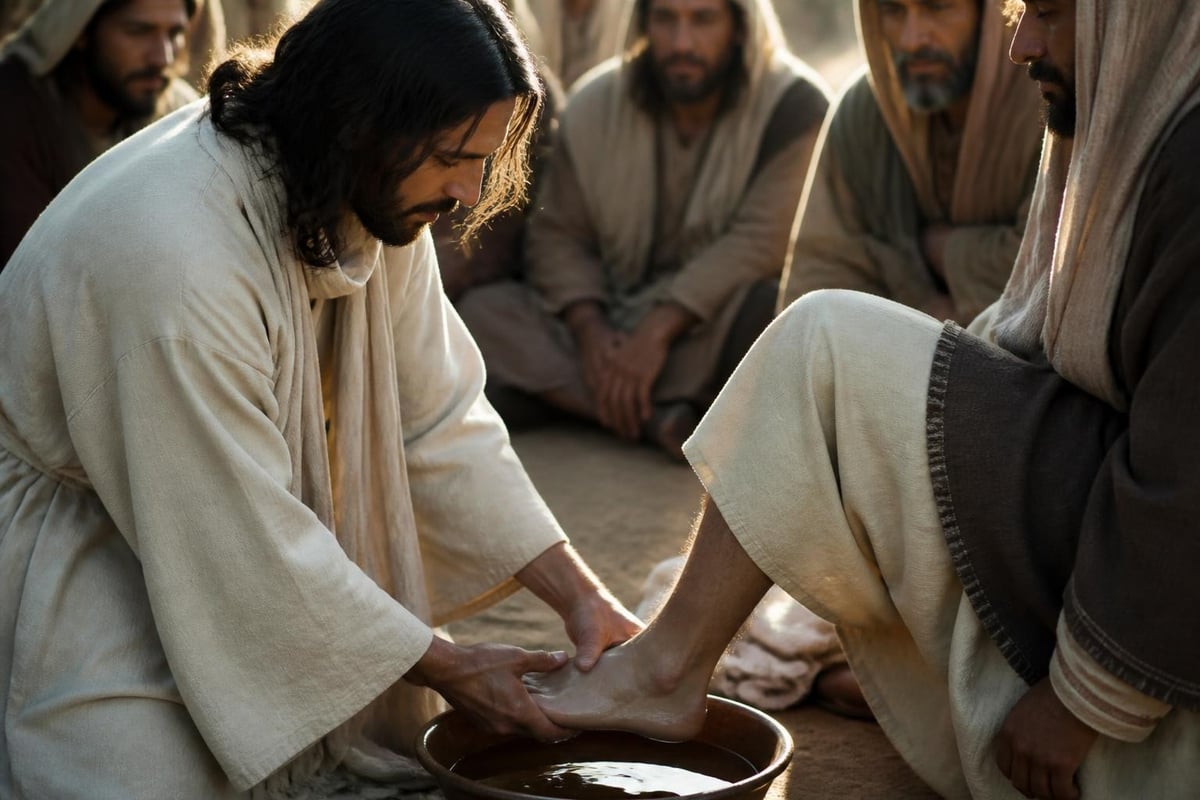
Christ Himself provides the ultimate model. Philippians 2:6-8 describes how Jesus, "though he was in the form of God, did not regard equality with God as something to be exploited, but emptied himself, taking the form of a slave." The Son of God washing the feet of His disciples demonstrates that humility involves concrete acts of service, not merely internal dispositions.
Brought to you by Journeys of Faith Founded by Bob and Penny Lord. We are an Augustinian Secular Institute, Cyber Apostles. Our Mission is Evangelization through Media.
Cultivating Humility Through Sacramental Life
The sacraments provide powerful opportunities for practicing humility catholic spirituality emphasizes. Each sacramental encounter requires us to acknowledge our need for God's grace and our inability to save ourselves through human effort alone.
Confession and the Practice of Humility
The Sacrament of Reconciliation stands as perhaps the most direct school of humility. The Catechism teaches that contrition, confession, and satisfaction-the acts of the penitent-all require profound humility. Admitting our sins to another human being, acknowledging our moral failures, and accepting penance demands setting aside pride and embracing truth.
| Aspect of Confession | How It Cultivates Humility | Spiritual Fruit |
|---|---|---|
| Examination of Conscience | Honest self-assessment before God | Self-knowledge and truth |
| Verbal Confession | Admitting weakness to another | Breaking pride's hold |
| Accepting Penance | Submitting to spiritual authority | Docility and obedience |
| Receiving Absolution | Acknowledging inability to forgive ourselves | Trust in divine mercy |
Regular confession trains us in the habits of humility, creating a rhythm of acknowledging our need for God's mercy. This sacramental practice counteracts the modern tendency toward self-justification and defensiveness.
The Eucharist as School of Humility
The Eucharist teaches humility at multiple levels. First, we acknowledge that we depend on spiritual nourishment beyond ourselves-we need the Bread of Life to sustain us. Second, the Real Presence reminds us that God humbled Himself to become not just human but food for our souls.
Those who study the Miracles of the Eucharist discover how God has chosen humble bread and wine as vessels for His presence, demonstrating His preference for what the world considers lowly. The Eucharistic miracles documented throughout Church history reveal Christ's desire to make Himself accessible to all believers, regardless of status or education. Reading about these supernatural confirmations of Christ's Real Presence in resources like the Miracles of the Eucharist books can deepen our appreciation for how profoundly God humbles Himself for our sake.

Before receiving Communion, we pray "Lord, I am not worthy that you should enter under my roof," echoing the Roman centurion's humble recognition of his unworthiness. This prayer of unworthiness, repeated by Catholics worldwide at every Mass, forms our hearts in humility catholic practice requires.
Humility in Prayer and Contemplation
The Catechism's teaching on contemplative prayer emphasizes that humility and poverty of spirit provide the necessary foundation for deep communion with God. Without humility, prayer becomes either self-centered petition or spiritual performance rather than authentic encounter.
Characteristics of humble prayer include:
- Awareness of our spiritual poverty - Approaching God as beggars rather than bargainers
- Simplicity of expression - Using simple words or wordless presence instead of impressive eloquence
- Patience with dryness - Persisting in prayer even when feeling nothing
- Gratitude for answered prayers - Recognizing all good things come from God
- Acceptance when prayers aren't answered as we hoped - Trusting God's wisdom over our own
The saints demonstrate various approaches to humble prayer. Saint Thérèse of Lisieux's "Little Way" emphasized doing small things with great love, rejecting spiritual pride. Saint Augustine's Confessions models brutally honest prayer that acknowledges both sin and God's transforming grace. These examples from Catholic saints show how humility transforms our conversation with God.
Intellectual Humility and Faith
Modern scholarship has explored how intellectual humility relates specifically to Christian faith. Research on intellectual humility examines how believers can maintain both confidence in revealed truth and openness to growth in understanding. This balance proves especially important in an age that either demands absolute certainty or slides into relativism.
Humility catholic intellectual tradition encourages involves recognizing the limits of human reason while celebrating reason as God's gift. The great theologians combined brilliant minds with profound humility, understanding that divine mystery always exceeds human comprehension. Saint Thomas Aquinas reportedly called all his theological writing "straw" compared to what God revealed to him in prayer.
Humility in Service and Leadership
Christ's teaching that "whoever wishes to be great among you must be your servant" revolutionized concepts of leadership. Humility catholic understanding of authority fundamentally differs from worldly power structures that emphasize domination and control.
Servant Leadership in Practice
True Christian leadership manifests humility through:
- Listening before directing - Seeking input from those being led
- Admitting mistakes - Acknowledging errors rather than covering them up
- Crediting others - Highlighting team members' contributions
- Washing feet literally - Performing actual acts of humble service
- Seeking the good of those served - Prioritizing others' needs over personal advancement
Recent research on leader humility in humanitarian contexts demonstrates measurable benefits of humble leadership, including increased trust, better team cohesion, and more effective service delivery. These findings confirm what Catholic social teaching has long emphasized about the power of humble service.
Catholic parishes and organizations thrive when leaders embody genuine humility. Pastors who acknowledge their own weaknesses while striving for holiness create environments where parishioners feel safe admitting struggles. Ministry leaders who share credit and accept feedback build stronger, more resilient teams.
Humility in Evangelization
The New Evangelization requires particular humility catholic approaches to sharing faith must demonstrate. Modern people quickly detect and reject religious arrogance or superiority. Effective evangelization begins with humble recognition that we are beggars telling other beggars where to find bread, as Archbishop Fulton Sheen often noted.
Sharing testimonies of faith works most powerfully when narrators honestly acknowledge their own struggles and God's mercy rather than presenting themselves as spiritual superheroes. The effectiveness of Catholic media in evangelization often correlates with how authentically it presents both human weakness and divine grace.
Growing in Humility Through Spiritual Formation
Developing humility catholic spiritual directors emphasize is a lifelong process requiring intentional practice and God's grace. No one masters this virtue through willpower alone; humility is ultimately a gift we must cooperate with rather than achieve independently.
Practical Exercises for Cultivating Humility
| Practice | Description | Frequency | Expected Growth |
|---|---|---|---|
| Daily Examen | Review day's prideful moments and graces received | Daily | Increased self-awareness |
| Accepting Correction | Receive criticism without defensiveness | As opportunities arise | Docility and growth |
| Hidden Acts of Service | Perform good deeds without telling anyone | Weekly | Purity of intention |
| Meditation on Passion | Contemplate Christ's humiliating suffering | Weekly, especially Lent | Gratitude and perspective |
| Seeking Last Place | Choose less prestigious roles or positions | Monthly decisions | Freedom from vainglory |
Longitudinal studies of seminary students show that intentional formation in humility correlates with greater well-being, stronger commitment to service, and healthier relationships. This research validates traditional Catholic formation practices that emphasize humility as essential for priestly ministry.
Spiritual reading provides another avenue for growth. Classics like "The Imitation of Christ" by Thomas à Kempis or "Introduction to the Devout Life" by Saint Francis de Sales offer time-tested wisdom on cultivating humility. Resources for spiritual direction help believers navigate the challenges of growing in this foundational virtue.
Overcoming Obstacles to Humility
Modern culture presents particular challenges to developing humility catholic spirituality requires. Social media encourages self-promotion and comparison with others. Meritocracy suggests we deserve credit for our accomplishments. Therapeutic culture sometimes confuses humility with low self-esteem.
Common obstacles and responses:
- Perfectionism - Remember that acknowledging imperfection is humble; pretending perfection is pride
- Comparison with others - Focus on your unique path rather than measuring against peers
- Fear of being overlooked - Trust God to exalt the humble in His timing
- Confusing humility with self-hatred - Recognize that true humility affirms God's good creation
- Cultural messages about self-assertion - Distinguish healthy self-care from vainglory
Humility catholic teaching presents requires distinguishing between true and false humility. False humility engages in self-deprecation to elicit compliments or avoids responsibilities out of fear. True humility accurately assesses gifts and limitations while giving credit to God for all good things.

Humility and the Communion of Saints
The saints provide both inspiration and intercession for those seeking to grow in humility. Each saint's story reveals how God works through human weakness when met with humble cooperation.
Models of Humility Across the Centuries
Saint Francis of Assisi stripped himself naked in the town square, renouncing his inheritance to embrace "Lady Poverty." His radical humility transformed medieval Christianity and continues inspiring Franciscan spirituality today.
Saint Bernadette Soubirous, chosen to receive visions of Our Lady at Lourdes, remained simple and humble despite worldwide fame. When asked why Mary appeared to her, she replied, "Perhaps because I was the most ignorant."
Saint Maximilian Kolbe volunteered to die in place of a stranger in Auschwitz, demonstrating humility's ultimate expression in self-sacrificial love. These examples from across Church history show humility catholic tradition honors in diverse contexts and cultures.
Contemporary saints also model this virtue. Saint Teresa of Calcutta served the poorest of the poor while insisting she was merely "God's pencil." Saint John Paul II publicly asked forgiveness for historical sins of the Church, demonstrating institutional humility rarely seen in leaders.
Learning Humility from Mary
The Blessed Virgin Mary stands as the supreme human exemplar of humility after Christ Himself. Her complete surrender to God's will at the Annunciation, her service to Elizabeth during the Visitation, and her silent presence at Calvary all manifest perfect humility.
Marian devotion naturally cultivates humility because Mary always points beyond herself to her Son. Exploring Marian apparitions reveals consistent messages calling believers to humility, prayer, and conversion. Mary's appearances to simple people in obscure places reinforces God's preference for the humble.
The Rosary, with its repetitive prayers and meditation on Christ's life through Mary's eyes, forms practitioners in humble, contemplative prayer. This devotion teaches us to ask Mary to pray for us, acknowledging our need for heavenly help.
The Paradox of Humility and Confidence
One of humility catholic teaching's most beautiful paradoxes involves how genuine humility produces authentic confidence. When we stop depending on our own strength and achievements for security, we discover unshakeable confidence in God's love and power.
Humility Liberates Rather Than Constrains
Humble people experience profound freedom because they have nothing to prove and nothing to protect. This liberation manifests in several ways:
- Freedom from others' opinions - Humble souls care more about God's assessment than human approval
- Freedom to fail - Without needing to appear perfect, mistakes become learning opportunities
- Freedom to celebrate others - Secure in God's love, the humble rejoice in others' gifts
- Freedom to serve - No task seems beneath those who follow the foot-washing Christ
- Freedom from anxiety - Trusting God's providence replaces self-reliant worry
This paradoxical freedom explains why the greatest saints combined profound humility with extraordinary accomplishments. They achieved much precisely because they weren't trying to achieve anything for themselves but rather cooperated with God's grace.
Humility and Human Dignity
Catholic teaching holds in creative tension the call to humility and the affirmation of human dignity. We are created in God's image, redeemed by Christ's blood, and destined for eternal glory-nothing to be humble about in one sense. Yet we are also creatures, sinners saved by grace, and dust that returns to dust.
Traditional Catholic sources explain this balance by distinguishing between humility before God and proper self-respect as His beloved children. We humble ourselves before the Creator while maintaining the dignity He bestows. This nuanced understanding prevents humility from degenerating into self-abasement or false modesty.
Contemporary Applications of Humility Catholic Wisdom
In 2026, the virtue of humility catholic tradition cherishes speaks powerfully to pressing contemporary issues. Modern problems from environmental crisis to political polarization often stem from human pride and the refusal to acknowledge limitations.
Humility and Ecological Responsibility
Pope Francis's encyclical "Laudato Si'" connects environmental degradation to humanity's arrogant stance toward creation. Humility catholic ecological teaching promotes involves recognizing ourselves as stewards rather than masters, accepting limits on consumption, and respecting the integrity of created order.
Humble environmental action means:
- Acknowledging that we don't fully understand ecological systems
- Learning from indigenous wisdom and traditional practices
- Accepting personal responsibility for lifestyle choices
- Supporting policies that limit exploitation even when costly
- Recognizing our accountability to future generations
This approach differs markedly from both exploitative domination and nature-worshiping pantheism, offering instead a humble stewardship grounded in created order.
Humility in Dialogue and Unity
Research on interventions fostering virtues suggests that cultivating humility improves interpersonal relationships and dialogue. In an era of intense polarization, humility catholic approaches emphasize offers a path toward authentic communication and mutual understanding.
Humble dialogue involves listening to understand rather than listening to refute, acknowledging the limits of one's own perspective, and remaining open to insight from unexpected sources. This doesn't mean abandoning truth claims but rather holding them with appropriate epistemic humility about human understanding.
Within the Church, humility helps bridge divisions between progressive and traditional Catholics, between different cultural expressions of faith, and between clergy and laity. When all parties approach disagreements humbly, seeking truth together rather than victory over opponents, genuine unity becomes possible.
Humility in Technology and Social Media
The digital age presents unique challenges to humility. Social media platforms incentivize self-promotion, carefully curated images, and the accumulation of followers and likes. These dynamics work directly against humble self-forgetfulness.
Practicing digital humility involves:
- Limiting self-focused posting and sharing others' content
- Avoiding constant documentation of good deeds
- Resisting the temptation to compare with others' highlight reels
- Using platforms for evangelization and service rather than self-promotion
- Taking regular breaks from digital environments that feed vanity
Catholic content creators face particular challenges in balancing necessary promotion of faith resources with personal humility. The solution lies in focusing message on Christ and His Church rather than building personal brands, even while accepting the need for visibility in effective evangelization.
Organizations like Journeys of Faith navigate this balance by emphasizing the content-stories of saints, Eucharistic miracles, and faith testimonies-rather than personalities, while still connecting personally with audiences seeking authentic Catholic teaching.
Humility catholic spiritual tradition presents remains as relevant in 2026 as it was in the early Church, offering a counter-cultural path to authentic freedom, joy, and holiness. By recognizing our total dependence on God while celebrating the dignity He bestows, we discover the paradoxical truth that the humble are exalted and the last become first. Whether you're seeking deeper prayer life, more effective service, or simply a more peaceful relationship with yourself and others, growing in humility provides the foundation. Journeys of Faith offers resources to support your spiritual journey through books, prayer cards, media, and devotional materials that connect you with the saints, sacraments, and teachings that cultivate authentic Catholic humility. Explore the Journeys of Faith online store with thousands of Catholic items to deepen your faith. Journeys of Faith is blessed to provide Catholic media, including podcasts and inspirational content, free of charge across multiple media platforms for viewers and listeners around the world-while access to this content remains free, there are significant and continually increasing costs associated with producing, hosting, and distributing these programs, and your support through a donation helps us continue sharing the beauty of the Catholic faith with souls everywhere.
