
The miracles of the Catholic Church stand as powerful testimonies to God's presence in our world, bridging the gap between heaven and earth through extraordinary events that defy natural explanation. These supernatural occurrences, meticulously documented and rigorously investigated, serve not merely as historical curiosities but as living witnesses to the truth of Catholic teaching. From Eucharistic phenomena that transform consecrated hosts into visible flesh and blood to the incorruptible bodies of saints that resist natural decay, these miraculous events continue to strengthen the faith of millions worldwide and draw skeptics toward belief.
Understanding Catholic Miracles Through Church Teaching
The Catholic Church defines miracles as events that surpass the power of nature and can only be attributed to divine intervention. These supernatural occurrences serve multiple purposes within Catholic theology: they confirm God's power, validate the Church's teachings, and inspire deeper faith among believers.
The Church maintains rigorous standards for investigating potential miracles, requiring extensive documentation, medical verification, and theological review. This careful scrutiny ensures that only genuinely inexplicable events receive official recognition, protecting the faithful from deception while preserving the integrity of authentic supernatural phenomena.
Categories of Church-Recognized Miracles
Catholic miracles manifest in various forms, each category serving distinct spiritual purposes:
- Physical healings: Instantaneous cures of medically documented conditions
- Eucharistic miracles: Supernatural transformations of consecrated hosts
- Incorruptibility: Saints' bodies that remain intact beyond natural preservation
- Marian apparitions: Appearances of the Blessed Virgin Mary with prophetic messages
- Stigmata: Manifestation of Christ's crucifixion wounds on living persons
- Miraculous images: Sacred icons that weep, bleed, or demonstrate supernatural properties
Each category undergoes distinct investigative processes, with medical professionals, theologians, and Church officials collaborating to verify authenticity and rule out natural explanations.
Brought to you by Journeys of Faith, founded by Bob and Penny Lord. We are an Augustinian Secular Institute and Cyber Apostles. Our Mission is Evangelization through Media.
Eucharistic Miracles: The Real Presence Made Visible
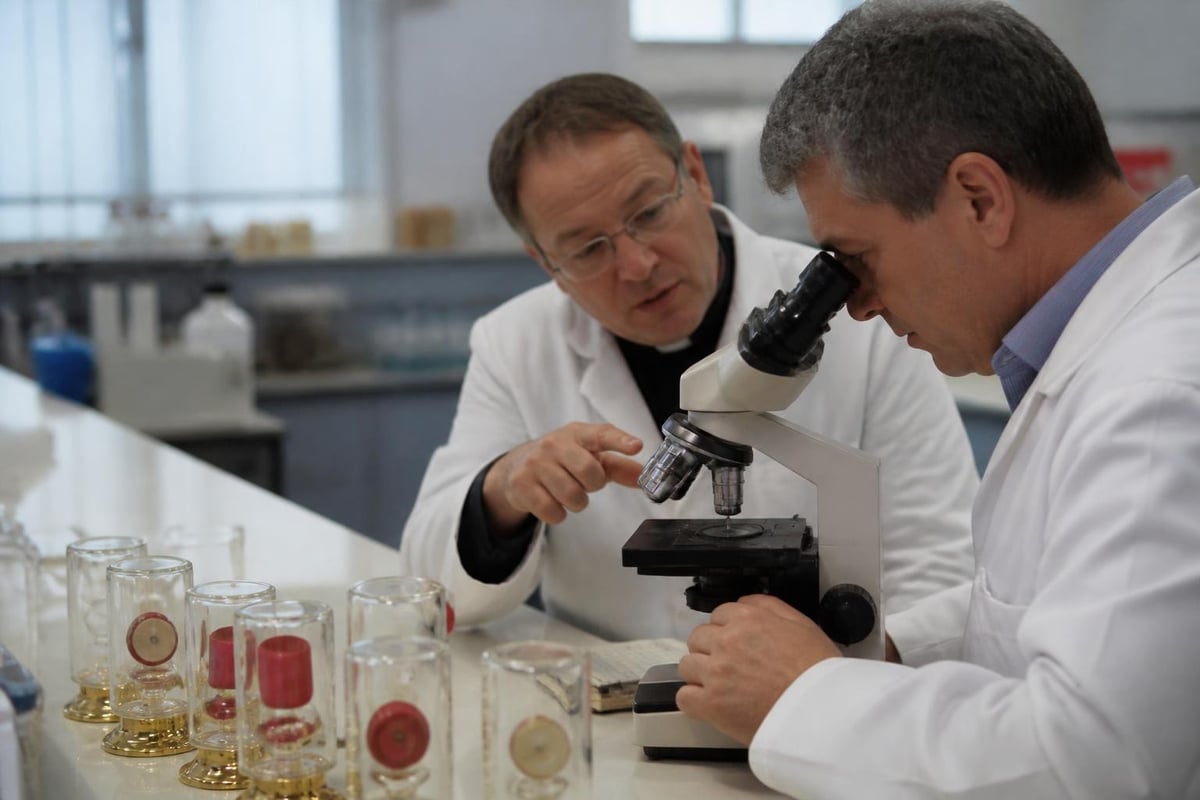
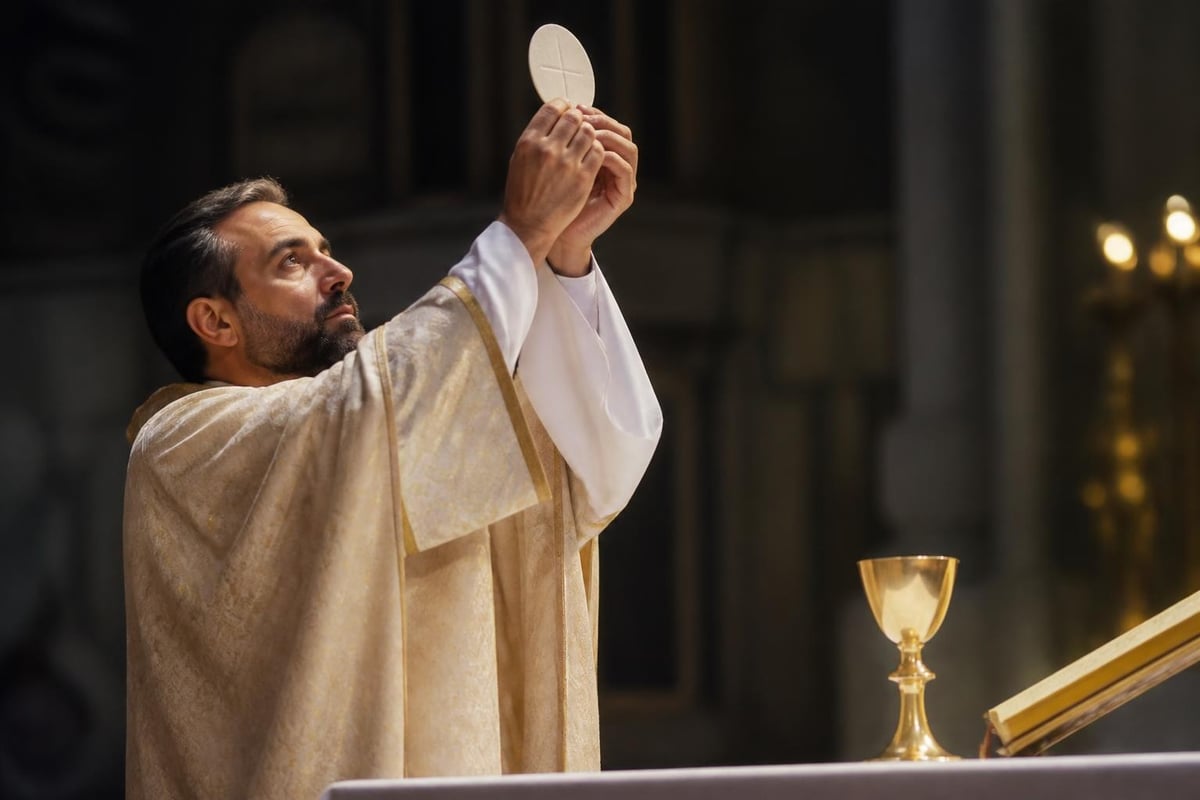
Eucharistic miracles represent some of the most compelling miracles of the Catholic Church, offering tangible evidence of Christ's Real Presence in the consecrated host. These extraordinary events occur when the bread and wine transform into visible human flesh and blood, often during Mass celebrations witnessed by multiple observers.
The phenomenon of Eucharistic miracles throughout history provides profound confirmation of transubstantiation, the Catholic doctrine that the bread and wine become the actual Body and Blood of Christ during consecration. Modern scientific analysis has examined preserved specimens from these miracles, revealing heart tissue with blood type AB, consistent across multiple independent occurrences separated by centuries and continents.
Notable Eucharistic Phenomena
| Location | Year | Key Features |
|---|---|---|
| Lanciano, Italy | 8th century | Flesh and blood preserved for 1,200+ years |
| Buenos Aires, Argentina | 1996 | Host transformed into heart tissue |
| Legnica, Poland | 2013 | Medical analysis confirmed cardiac muscle |
| Sokolka, Poland | 2008 | Fragment showed myocardial tissue structure |
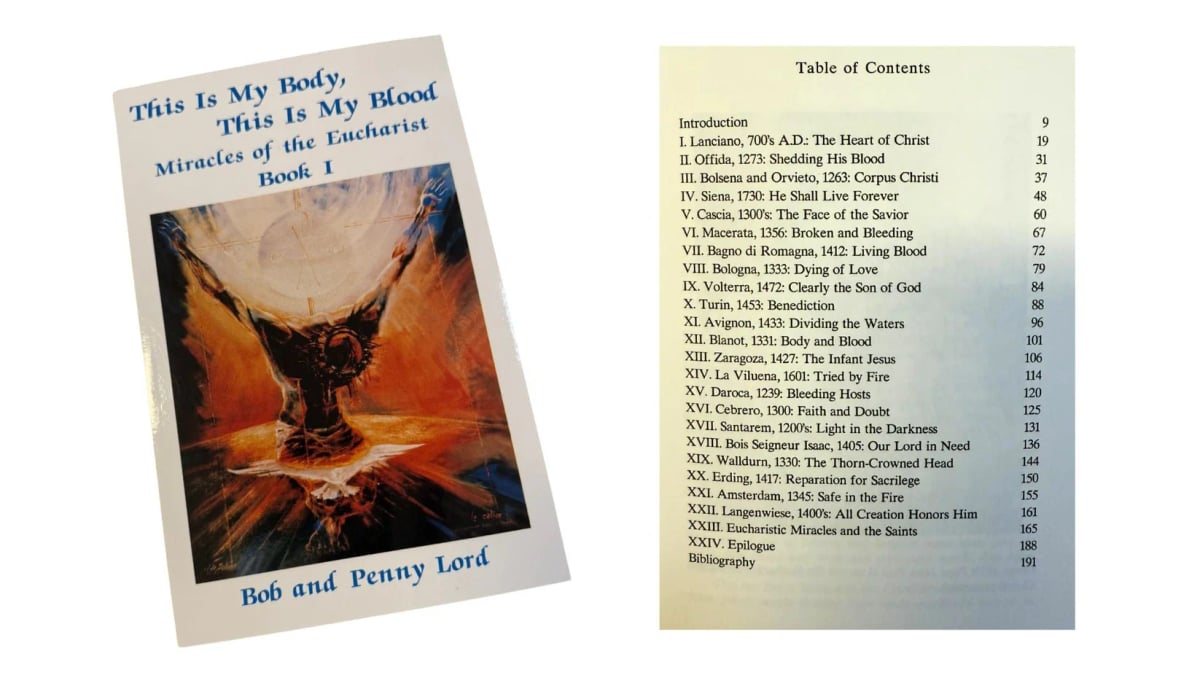
Bob and Penny Lord have dedicated significant research to documenting these miraculous events, providing faithful Catholics with accessible resources that strengthen belief in the Real Presence. Their comprehensive work, This is My Body, This is My Blood, Miracles of the Eucharist, offers detailed accounts of these supernatural occurrences alongside historical context and theological reflection.
The documentation of these miracles serves evangelization efforts by providing concrete evidence for those who struggle with doubt. Scientific investigations into Eucharistic phenomena consistently reveal results that challenge materialist explanations while reinforcing traditional Catholic teaching.
Incorruptible Saints: Bodies That Defy Decay
Among the most visually striking miracles of the Catholic Church are the incorruptible bodies of saints, which remain intact decades or even centuries after death without artificial preservation. These holy remains resist the natural process of decomposition, often maintaining flexibility, color, and even pleasant fragrances that defy scientific explanation.
The incorruptibility phenomenon differs fundamentally from mummification or embalming. While natural mummification requires specific environmental conditions like extreme dryness, and embalming involves chemical preservation, incorruptible saints' bodies remain flexible and lifelike under normal burial conditions. Medical examinations have confirmed that no preservation techniques were applied to many of these bodies.
Documented Cases of Incorruptibility
The bodies of numerous saints demonstrate this extraordinary preservation:
- Saint Bernadette Soubirous: Her body remains intact 143 years after death
- Saint Catherine of Bologna: Preserved since 1463, maintaining a seated position
- Saint John Vianney: Face covered due to deterioration, but body remains incorrupt
- Blessed Carlo Acutis: Recently deceased teenage blessed showing no decomposition
- Saint Cecilia: Body discovered intact in 1599, 1,300 years after martyrdom
These cases undergo extensive medical examination before receiving official Church recognition. Physicians document the absence of preservation methods while noting the unusual state of preservation that contradicts biological expectations.
Miraculous Healings and Canonization
The Catholic Church requires verified miracles, typically healings, for canonization. This process demonstrates God's affirmation of a candidate's holiness while providing contemporary witnesses to divine intervention. The Vatican's medical board examines each case with scientific rigor, consulting specialists in relevant fields.
For a healing to qualify as miraculous, it must meet strict criteria:
- Instantaneous or extraordinarily rapid cure
- Complete restoration with no medical explanation
- Permanent resolution verified through long-term follow-up
- No natural treatment that could account for recovery
- Medical documentation before and after the healing
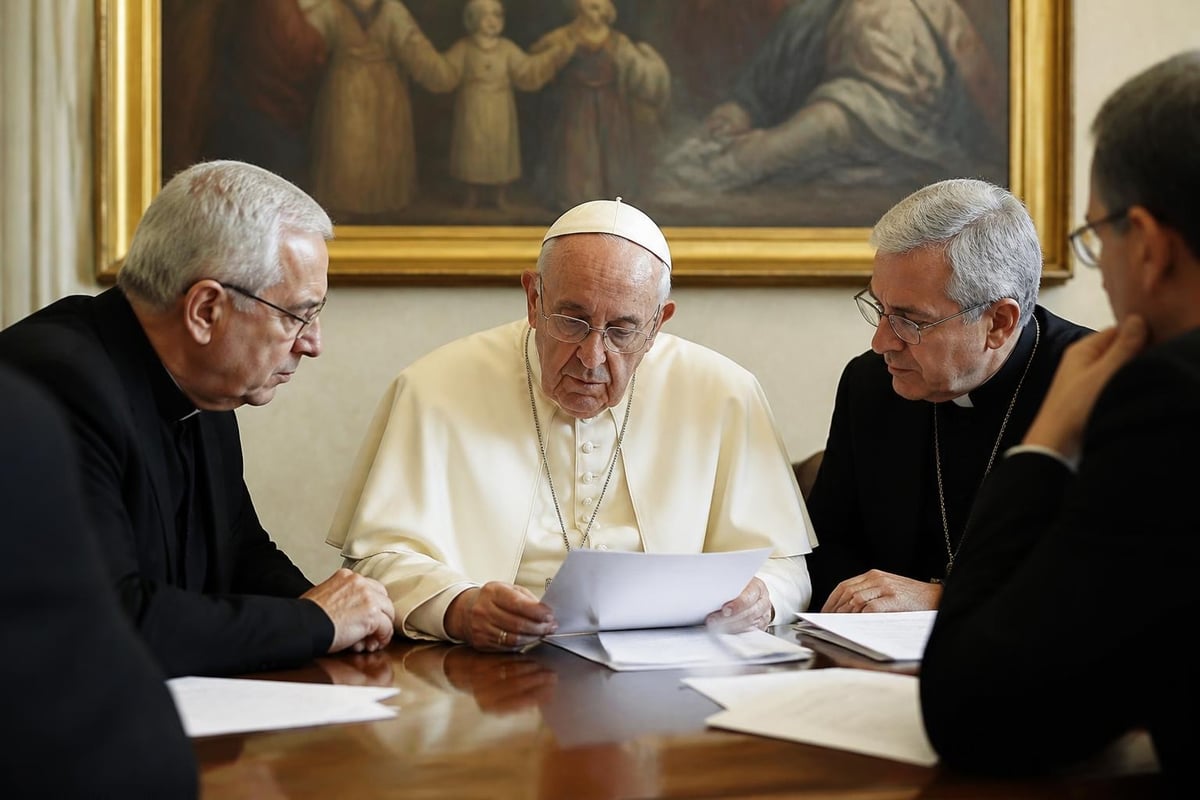
The process involves international medical experts who review cases independently, often including skeptical physicians specifically chosen to challenge supernatural explanations. Only when all natural possibilities are exhausted does the Church proceed with theological review.
Modern Miracles in Canonization
| Saint | Miracle Type | Year Verified | Condition Healed |
|---|---|---|---|
| Mother Teresa | Abdominal tumor | 2015 | Malignant growth disappeared |
| John Paul II | Parkinson's symptoms | 2013 | Brain aneurysm healed |
| Padre Pio | Vision restoration | 1997 | Blindness cured |
| Oscar Romero | Pregnancy complications | 2015 | Life-threatening condition resolved |
These contemporary examples demonstrate that the miracles of the Catholic Church continue in modern times, subject to the same rigorous investigation as historical events. The Church's commitment to scientific verification strengthens rather than weakens the credibility of authenticated miracles.
Marian Apparitions and Their Miraculous Signs
The Blessed Virgin Mary's appearances throughout Church history have brought powerful messages of conversion, prayer, and hope. These remarkable apparitions of Mary often include miraculous signs that confirm their authenticity, from miraculous healings at Lourdes to the solar phenomenon witnessed by thousands at Fatima.
Church-approved Marian apparitions share common characteristics: They call for prayer and conversion, align perfectly with Catholic doctrine, produce spiritual fruits in believers' lives, and often include verifiable miracles that authenticate the messages.
Major Approved Apparitions
The Vatican has officially recognized several Marian apparitions after thorough investigation:
- Our Lady of Guadalupe (1531): Miraculous image on Juan Diego's tilma defies scientific explanation
- Our Lady of Lourdes (1858): Healing spring has produced thousands of documented cures
- Our Lady of Fatima (1917): Solar miracle witnessed by 70,000 people, including skeptics
- Our Lady of Kibeho (1981): Prophetic visions confirmed by subsequent historical events
Each apparition undergoes decades of investigation before receiving Church approval. Bishops examine witnesses' credibility, theological consistency of messages, and lasting spiritual effects on individuals and communities. The miraculous signs accompanying these appearances provide additional evidence supporting their supernatural origin.
The Role of Miracles in Catholic Evangelization
Understanding the gift of miracles in evangelization reveals their essential purpose in spreading the Gospel message. Miracles serve not as entertainment or proof-demanding spectacle but as divine confirmations that draw hearts toward faith and strengthen existing believers.
The miracles of the Catholic Church function as "signs and wonders" that point beyond themselves to spiritual realities. They demonstrate God's active presence in creation while inviting deeper relationship with Him through the sacraments and prayer.
How Miracles Strengthen Faith
Miraculous events impact faith formation in multiple ways:
- Provide tangible evidence for those struggling with doubt
- Confirm Church teaching through supernatural validation
- Inspire deeper devotion among existing believers
- Draw skeptics to investigate Catholic claims
- Demonstrate God's mercy through healing and intervention
- Unite communities around shared supernatural experiences
The Catholic perspective emphasizes that while miracles can initiate faith or overcome doubt, sustained spiritual growth requires ongoing prayer, sacramental life, and personal conversion. The Church's complete understanding of miracles integrates supernatural events within broader theological frameworks rather than treating them as isolated phenomena.
Scientific Investigation and Church Protocol
The Catholic Church maintains comprehensive protocols for investigating potential miracles, ensuring rigorous scientific examination before declaring events supernatural. This process protects the faithful from fraud while preserving authentic miraculous occurrences for future generations.
Vatican investigative procedures include multiple stages:
Investigation Framework
| Stage | Participants | Duration | Focus |
|---|---|---|---|
| Initial Review | Local bishop | 1-3 years | Gather witness testimony |
| Medical Analysis | International specialists | 2-5 years | Rule out natural causes |
| Theological Assessment | Vatican consultants | 1-2 years | Verify doctrinal consistency |
| Final Approval | Pope or designated cardinal | Variable | Official recognition |
This methodical approach ensures that only genuinely inexplicable events receive Church recognition. Medical professionals examining miracle claims often include non-Catholic experts specifically chosen for their skepticism, strengthening the credibility of positive determinations.
The various miracles compiled by Church historians demonstrate patterns of divine intervention across centuries while highlighting the Church's consistent investigative standards. Modern technology enhances rather than diminishes miracle verification, as sophisticated medical imaging and laboratory analysis confirm what previous generations could only observe phenomenologically.
Miracles and the Communion of Saints
The miracles of the Catholic Church often manifest through the intercession of saints, demonstrating the living reality of the Communion of Saints. This theological concept affirms that those in heaven remain active participants in the life of the Church, interceding for those still on earth.
Intercessory miracles follow consistent patterns: A faithful person prays through a particular saint's intercession, an inexplicable healing or event occurs, medical investigation confirms the supernatural nature, and the miracle becomes part of the canonization evidence or strengthens devotion to an already-canonized saint.
Saints Known for Miraculous Intercessions
Certain saints have become associated with particular types of miraculous interventions:
- Saint Anthony of Padua: Lost item recovery and marriage assistance
- Saint Jude Thaddeus: Hopeless causes and desperate situations
- Saint Rita of Cascia: Impossible cases and marital difficulties
- Saint Peregrine: Cancer healing and terminal illness
- Saint Joseph of Cupertino: Academic success and learning challenges
These associations develop organically through centuries of answered prayers and documented miracles. The Church neither mandates nor restricts such devotions but encourages the faithful to seek heavenly intercession while maintaining proper theological understanding that saints themselves possess no power-they simply petition God on our behalf.
Contemporary Miracles in Modern Times
The miracles of the Catholic Church continue in contemporary settings, demonstrating that divine intervention persists regardless of technological advancement or cultural skepticism. Modern Catholic miracles that scientists cannot explain challenge materialist worldviews while providing ongoing testimony to God's active presence.
Recent decades have witnessed numerous documented miracles:
- Weeping statues: Multiple Marian images have produced tears, blood, or oil
- Miraculous sun phenomena: Solar events reminiscent of Fatima occurring worldwide
- Inexplicable healings: Terminal cancer disappearances with no medical explanation
- Eucharistic miracles: Continued occurrences of host transformations
- Stigmata cases: Contemporary individuals bearing Christ's wounds
These modern manifestations undergo the same rigorous investigation as historical miracles. Scientific advancement enhances verification capabilities rather than disproving supernatural claims, as sophisticated analysis often reveals details that strengthen miraculous interpretations.
Technology and Miracle Documentation
Modern technology provides unprecedented documentation capabilities:
- High-resolution imaging captures miraculous phenomena in detail
- DNA analysis confirms human tissue in Eucharistic miracles
- Medical databases verify pre-miracle conditions objectively
- Global communication allows rapid witness testimony collection
- Digital preservation protects evidence for future investigation
The Church embraces technological tools while maintaining that authentic miracles ultimately transcend scientific explanation. The nature and purpose of miracles remain consistent across centuries, even as investigative methods evolve.
Living Faith Through Miraculous Witness
The miracles of the Catholic Church transform abstract theological concepts into concrete realities that touch hearts and change lives. These supernatural events invite believers into deeper relationship with God while challenging skeptics to consider possibilities beyond material existence.
Personal encounter with miracles produces lasting effects: Individuals who experience or witness miraculous events often report permanent faith transformations, increased prayer life, renewed sacramental participation, and passionate desire to share their experiences with others.
The Church encourages healthy engagement with miracles, avoiding both excessive credulity and cynical dismissal. Authentic Catholic spirituality balances openness to divine intervention with grounded theological understanding, recognizing that God works through both ordinary and extraordinary means.
Resources from organizations dedicated to Catholic evangelization help believers explore miraculous events with proper context and perspective. Journeys of Faith provides comprehensive materials that document miracles while explaining their theological significance, enabling Catholics to grow in understanding and share their faith effectively with others.
The miracles of the Catholic Church stand as enduring witnesses to God's loving presence, inviting all people into deeper faith while confirming the truth of Catholic teaching through supernatural signs. Whether through Eucharistic transformations, incorruptible saints, miraculous healings, or Marian apparitions, these divine interventions continue to strengthen believers and draw seekers toward Christ. Journeys of Faith offers extensive resources to help you explore these miraculous events and deepen your understanding of how God works in extraordinary ways throughout Church history.
Additional Resources:
- Explore Journeys of Faith online store with thousands of Catholic items at https://journeysoffaith.com/collections
- Journeys of Faith is blessed to provide Catholic media, including podcasts and inspirational content, free of charge across multiple media platforms for viewers and listeners around the world. While access to this content remains free, there are significant and continually increasing costs associated with producing, hosting, and distributing these programs. Your support helps us continue sharing the beauty of the Catholic faith with souls. Please make a donation at https://journeysoffaith.com/pages/donate
