

In moments when anxiety overwhelms the soul and worry clouds the mind, countless Catholics throughout history have turned to the intercession of saints who understand human suffering. The patron saint of anxiety represents more than a historical figure-this heavenly advocate offers a bridge between earthly struggles and divine peace. For those navigating the turbulent waters of mental anguish, discovering the spiritual support available through Catholic tradition can transform despair into hope and fear into faithful surrender.
Understanding the Patron Saint of Anxiety
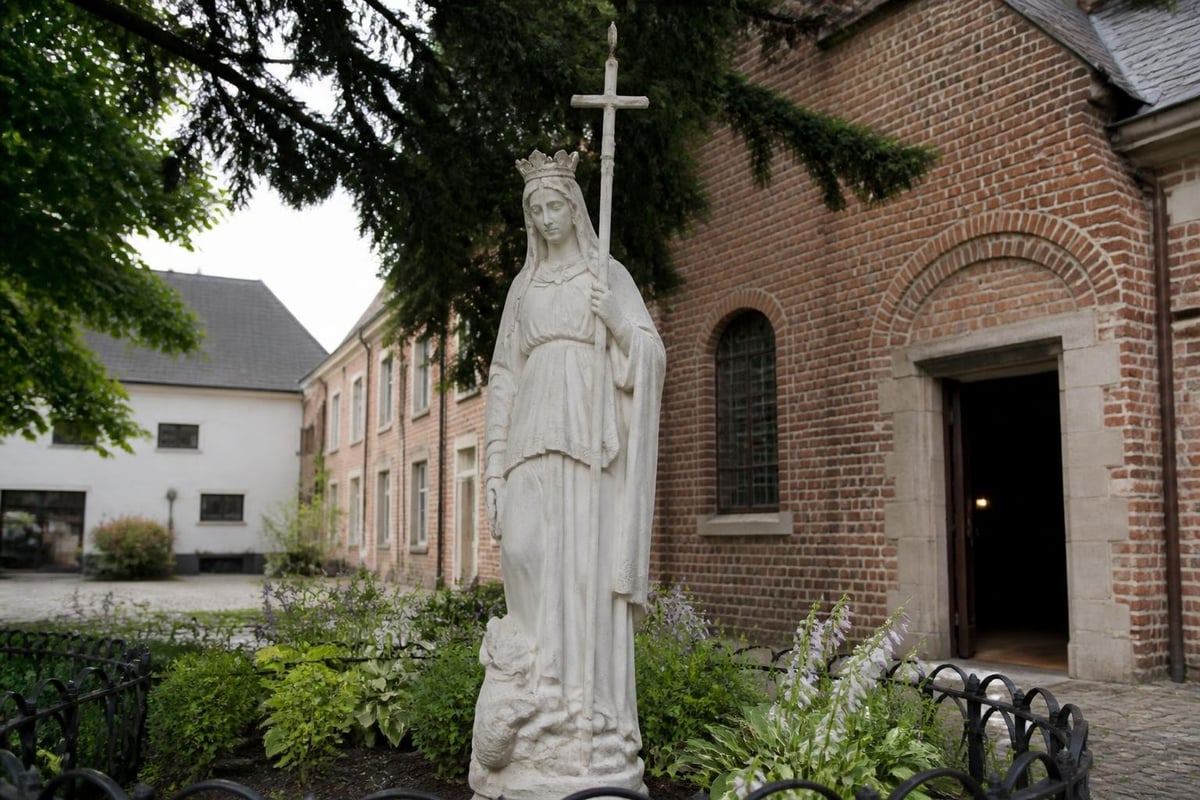
Saint Dymphna stands as the primary patron saint of anxiety, recognized by the Catholic Church for her powerful intercession in matters of mental health, nervous disorders, and emotional distress. Born in seventh-century Ireland to a pagan Irish king and a devout Christian mother, Dymphna's life story resonates deeply with those who face overwhelming circumstances beyond their control.
Her martyrdom at age fifteen established her legacy as a protector of those suffering from psychological afflictions. When her father descended into madness following her mother's death, Dymphna fled to Belgium with her confessor, Saint Gerebernus. Her tragic death at her father's hand became the foundation for centuries of healing devotion, particularly in the Belgian town of Geel, where pilgrims have sought her intercession for mental health concerns since the medieval period.
The Historical Development of Dymphna's Patronage
The association between Saint Dymphna and mental health emerged organically through miraculous healings reported at her shrine. Medieval records document numerous cases of individuals suffering from what we now recognize as anxiety disorders, depression, and other psychological conditions experiencing relief after praying at her tomb.
By the thirteenth century, Geel had developed into a unique sanctuary where mentally ill pilgrims received compassionate care from local families-a revolutionary approach to mental health treatment that predated modern therapeutic communities by centuries. This tradition established the patron saint of anxiety as not merely a symbolic figure but an active presence in healing work.
Prayers and Devotions to the Patron Saint of Anxiety
Turning to the patron saint of anxiety involves more than casual requests-it requires entering into a relationship with someone who intimately understands fear, displacement, and the terror of being pursued by threats both external and internal.
Traditional Prayers to Saint Dymphna
The classic prayer to Saint Dymphna directly addresses the core struggles of anxiety sufferers:
"Good Saint Dymphna, great wonder-worker in every affliction of mind and body, I humbly implore your powerful intercession with Jesus through Mary, the Health of the Sick. I am filled with confidence that through your compassionate aid, I may obtain the relief of my anxious thoughts and the restoration of peace to my troubled mind."
This invocation acknowledges both the spiritual and physical dimensions of anxiety, recognizing that mental distress affects the whole person. Many Catholics incorporate this prayer into daily devotions, particularly during periods of heightened stress or when facing circumstances that trigger anxious responses.
For those seeking structured support in their spiritual practice, prayer cards and novenas provide tangible tools for maintaining consistent devotion. The Prayer Cards and Novenas collection offers resources specifically designed for individuals navigating mental health challenges through faith.
Brought to you by Journeys of Faith, founded by Bob and Penny Lord. We are an Augustinian Secular Institute-Cyber Apostles. Our mission is evangelization through media.
Novena Practices for Anxiety Relief
A nine-day novena to the patron saint of anxiety creates space for sustained spiritual focus, allowing worries to be surrendered incrementally rather than all at once. Each day builds upon the previous, gradually shifting attention from anxious rumination to peaceful trust in divine providence.
- Day One: Acknowledge the presence of anxiety without judgment
- Day Two: Recall Saint Dymphna's own flight from danger
- Day Three: Request courage to face what cannot be changed
- Day Four: Pray for wisdom to recognize what can be influenced
- Day Five: Seek strength to take appropriate action
- Day Six: Ask for patience with the healing process
- Day Seven: Request protection from overwhelming thoughts
- Day Eight: Pray for community support and understanding
- Day Nine: Offer thanksgiving for graces received
This structured approach mirrors cognitive-behavioral techniques used in modern anxiety treatment, demonstrating how ancient spiritual wisdom aligns with contemporary therapeutic understanding.
Other Saints Associated with Anxiety and Mental Health
While Saint Dymphna serves as the primary patron saint of anxiety, the Catholic tradition offers additional heavenly advocates whose lives and intercessions address various aspects of mental and emotional suffering.
Saint Oscar Romero: Courage in Crisis
Archbishop Oscar Romero of El Salvador, martyred in 1980, experienced documented struggles with anxiety and scrupulosity throughout his ministry. His personal battle with these conditions while simultaneously confronting systematic injustice and violence makes him a particularly relevant patron for those whose anxiety intersects with social concerns.
His example demonstrates that holiness does not require the absence of mental health struggles-rather, it involves faithfulness despite them. Romero's diaries reveal a man who battled intrusive thoughts and overwhelming worry yet chose daily to trust in God's providence and continue his prophetic work.
Saint Thérèse of Lisieux: The Little Way Through Anxiety
Saint Thérèse, known for her "Little Way" of spiritual childhood, suffered from scrupulosity-a form of religious anxiety marked by obsessive concerns about sin and unworthiness. Her approach of trusting completely in God's mercy rather than her own perfection offers a powerful antidote to anxiety's endless second-guessing.
Her writings reveal practical wisdom:
- Accept spiritual dryness without panic
- Recognize that feelings do not determine reality
- Practice small acts of love when grand gestures feel impossible
- Trust divine mercy over personal performance
| Saint | Primary Struggle | Key Teaching for Anxiety |
|---|---|---|
| Saint Dymphna | Flight from danger, martyrdom | God protects in impossible circumstances |
| Saint Oscar Romero | Scrupulosity, social anxiety | Faithfulness matters more than feelings |
| Saint Thérèse | Religious anxiety, perfectionism | Trust replaces striving |
| Saint Padre Pio | Spiritual attacks, isolation | Suffering united to Christ transforms |
The Theology Behind Saintly Intercession for Anxiety
Understanding why Catholics turn to the patron saint of anxiety requires grasping the theological framework of the communion of saints-the belief that those in heaven remain actively connected to the Church on earth.
Biblical Foundations of Intercessory Prayer
The practice of requesting prayers from saints extends the New Testament pattern of believers praying for one another (James 5:16, 1 Timothy 2:1-4). Catholic theology teaches that death does not sever the bonds of Christian charity; rather, those perfected in heaven pray more effectively than those still struggling on earth.
When invoking the patron saint of anxiety, believers do not bypass Christ but rather approach Him through the intercession of those who know Him face-to-face. This practice reflects the incarnational principle that God works through material creation and human relationships, not despite them.
Why Specific Patronages Develop
Saints become associated with particular causes through three primary mechanisms:
- Their life circumstances (Saint Dymphna's flight and martyrdom)
- Miraculous healings attributed to their intercession
- Symbolic connections between their experiences and specific needs
The patron saint of anxiety earned this title through all three pathways, creating a particularly strong devotional tradition. Historical records document consistent patterns of mental health improvement among those who sought Dymphna's intercession, reinforcing her role across centuries.
Practical Integration of Devotion and Mental Health Care
Turning to the patron saint of anxiety does not replace professional mental health treatment-rather, it complements therapeutic interventions by addressing the spiritual dimension of human suffering.
Combining Faith and Clinical Treatment
The Catholic understanding of the human person recognizes that we exist as unified beings of body, mind, and spirit. Anxiety affects all three dimensions, requiring integrated care that addresses biological factors (medication when appropriate), psychological patterns (therapy), and spiritual needs (prayer and sacraments).
Many mental health professionals, including Catholic therapists, encourage clients to maintain spiritual practices alongside clinical treatment. Research increasingly validates what spiritual traditions have long known: prayer, meditation, and community support contribute measurably to mental health recovery and resilience.
Those seeking to deepen their spiritual practices while addressing anxiety might explore resources that integrate Catholic teaching with mental health awareness, recognizing that faith and science serve complementary rather than competing roles.

Daily Practices for Anxious Souls
Establishing sustainable spiritual routines supports mental health without creating additional burdens. The following practices integrate devotion to the patron saint of anxiety into everyday life:
- Morning offering: Begin each day placing anxious thoughts into Saint Dymphna's care
- Pocket prayer cards: Carry a tangible reminder of heavenly intercession
- Rosary meditation: Channel repetitive thoughts into structured prayer
- Evening examination: Review the day's anxieties with gentle honesty
- Bedtime surrender: Release tomorrow's worries before sleep
The key lies in consistency rather than intensity-small, regular acts of devotion often prove more sustainable than ambitious spiritual programs that quickly become overwhelming.
The Role of Community in Supporting the Anxious
Saint Dymphna's intercession extends beyond individual prayer to encompass communal support, echoing the medieval tradition of Geel where entire communities participated in healing work.
Parish and Small Group Support
Modern Catholics facing anxiety benefit from communities that understand mental health struggles as legitimate concerns deserving pastoral care rather than moral failings requiring correction. Progressive parishes offer support groups, educational programs, and pastoral counseling that integrate faith with mental health awareness.
Sharing struggles with trusted community members reduces the isolation that amplifies anxiety. When fellow parishioners understand the patron saint of anxiety and the legitimacy of mental health challenges, they can offer informed support rather than well-meaning but harmful advice to "just pray harder" or "have more faith."
Online Communities and Resources
For those unable to access local support, digital communities provide connection and information. Websites dedicated to Saint Dymphna and mental health offer prayer resources, educational materials, and forums where individuals share experiences and encouragement.
| Support Type | Benefits | Considerations |
|---|---|---|
| Parish groups | Face-to-face connection, sacramental access | Requires local availability, transportation |
| Online forums | Accessibility, anonymity options | Less personal accountability |
| Spiritual direction | Personalized guidance, integration of faith and therapy | Finding qualified directors takes time |
| Retreat experiences | Intensive focus, removal from daily stressors | Temporary nature requires follow-up |
The Journeys of Faith community provides resources that support individuals seeking to deepen their understanding of saints and their intercession, offering books, media, and educational materials that bridge historical devotion and contemporary application.
Symbols and Sacramentals Associated with the Patron Saint of Anxiety
Physical objects blessed and used in devotion to the patron saint of anxiety serve as tangible reminders of spiritual realities, anchoring anxious minds in the present moment while directing attention toward heaven.
Saint Dymphna Medals and Images
Wearing a medal of the patron saint of anxiety provides a touchstone during moments of acute stress. The physical sensation of holding or touching the medal interrupts anxious thought patterns, creating space for prayer and refocusing attention.
Traditional Saint Dymphna medals often depict her with a sword (symbol of martyrdom), a lamp (illumination in darkness), and sometimes the devil bound in chains (victory over evil and mental torment). These symbols communicate theological truths about suffering, hope, and divine protection.
Blessed Oil and Holy Water
Many churches offer oil blessed on Saint Dymphna's feast day (May 15) specifically for anointing those suffering from mental anguish. While not a sacrament, this sacramental serves as a vehicle for grace and a concrete expression of the Church's care for the mentally distressed.
The practice of anointing connects bodily sensation with spiritual intention, acknowledging that anxiety manifests physically-in racing hearts, shallow breathing, and tense muscles-and requires holistic healing that engages the body as well as the soul.
Contemporary Relevance of Ancient Devotion
The patron saint of anxiety speaks with particular urgency to contemporary society, where anxiety disorders affect millions and mental health crises reach epidemic proportions.
Statistics and Modern Anxiety
According to mental health research, anxiety disorders represent the most common mental health condition globally, affecting approximately 301 million people worldwide. In the United States alone, over 40 million adults experience anxiety disorders annually. These statistics demonstrate the profound need for comprehensive support systems that address anxiety's multiple dimensions.
The patron saint of anxiety offers not a magical solution but a spiritual companion for the long journey toward healing. Understanding the relationship between faith and mental health helps believers navigate this terrain with realistic expectations and genuine hope.
Cultural Shifts in Mental Health Understanding
The growing openness about mental health in Catholic communities represents significant progress from decades past when psychological struggles were often dismissed as spiritual weakness or hidden in shame. Today's Church increasingly recognizes that seeking help for anxiety demonstrates wisdom and self-care rather than lack of faith.
This cultural shift allows the devotion to the patron saint of anxiety to flourish in new ways, as believers feel freer to acknowledge their struggles and seek both clinical treatment and spiritual support without perceiving these approaches as contradictory.
Living with Anxiety as a Person of Faith
Ultimately, the patron saint of anxiety reminds believers that holiness does not require the absence of mental health struggles-it requires faithfulness in the midst of them.
Reframing Anxiety Through a Spiritual Lens
Catholic spirituality offers frameworks for understanding anxiety as part of the human condition affected by original sin while simultaneously affirming that healing and peace remain possible through grace. This perspective avoids both the extreme of viewing anxiety as purely biological (denying spiritual dimensions) and the extreme of viewing it as purely spiritual (denying biological factors).
Saint Dymphna's intercession helps believers hold this tension, acknowledging real suffering while trusting in real hope. Her example demonstrates that God's protection does not always prevent tragedy but always provides presence and ultimate victory.
The Paradox of Surrender and Effort
One of the most challenging aspects of addressing anxiety as a Catholic involves balancing active treatment (therapy, medication, lifestyle changes) with spiritual surrender. The patron saint of anxiety models this integration-she took concrete action by fleeing danger yet ultimately surrendered the outcome to God's will.
This paradox resolves through the understanding that effort and surrender are not opposites but partners. Working diligently to address anxiety through all available means demonstrates good stewardship of one's mental health while surrendering results recognizes that ultimate healing comes from God.
The patron saint of anxiety, Saint Dymphna, stands ready to intercede for all who struggle with worry, fear, and mental distress, offering a powerful reminder that we never face our battles alone. Whether you are seeking prayer resources, educational materials about the saints, or community support, Journeys of Faith provides a wealth of Catholic media dedicated to deepening your relationship with the communion of saints and strengthening your faith journey.
Explore thousands of Catholic resources:
- Browse the Journeys of Faith online store featuring books, DVDs, prayer cards, and religious items that support your spiritual growth
- Journeys of Faith is blessed to provide Catholic media, including podcasts and inspirational content, free of charge across multiple media platforms for viewers and listeners around the world. While access to this content remains free, there are significant and continually increasing costs associated with producing, hosting, and distributing these programs. Your support helps us continue sharing the beauty of the Catholic faith with souls. Please make a donation to support our evangelization mission through media.
