

For centuries, hunters across Europe and beyond have turned to heaven for guidance, protection, and spiritual support in their pursuit of game. The patron saint of hunters represents more than just a heavenly protector for those who venture into the wilderness. This powerful devotion connects ancient Christian traditions with the practical realities of hunting, conservation, and our relationship with creation. Understanding the patron saint of hunters reveals fascinating stories of conversion, miraculous visions, and the Church's deep wisdom about humanity's role as stewards of the natural world.
The Two Primary Saints of the Hunt
Saint Hubert of Liège: The Most Recognized Patron
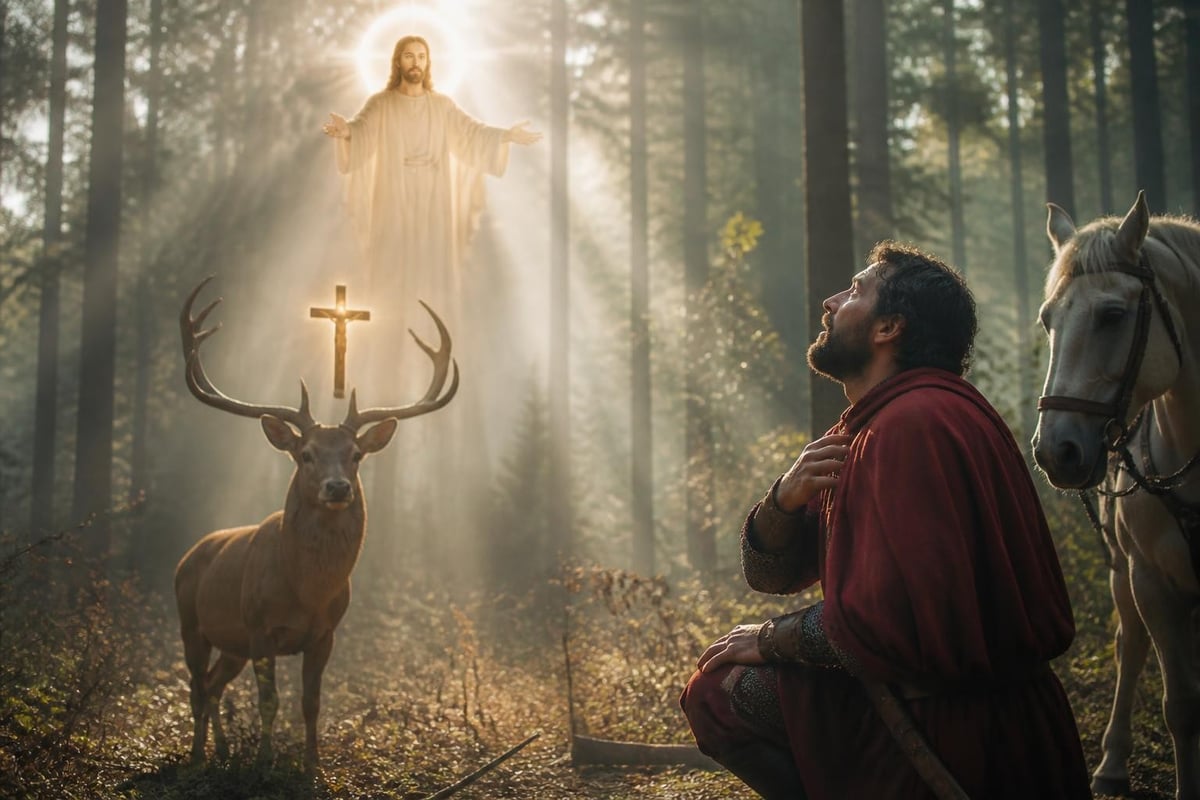
When most Catholics think of the patron saint of hunters, Saint Hubert of Liège immediately comes to mind. Born around 656 in the Aquitaine region of what is now France, Hubert lived as a nobleman who devoted himself entirely to the pleasures of hunting. His passion for the chase was so intense that it dominated his life, even to the exclusion of religious duties. According to tradition, on Good Friday morning while others attended services, Hubert pursued a magnificent stag through the Ardennes forest.
The defining moment of Hubert's life came during this hunt. The stag suddenly turned to face him, and between its antlers appeared a glowing crucifix. A voice spoke to Hubert, asking why he pursued beasts instead of salvation. This profound encounter transformed him completely. He dismounted, fell to his knees, and pledged his life to God. The Fondation Saint-Hubert in Belgium maintains extensive documentation of this legendary conversion and its impact on European hunting culture.
Saint Eustace: The Earlier Hunting Convert
Saint Eustace (also known as Eustachius) predates Hubert by several centuries and shares a remarkably similar conversion story. A Roman general named Placidus before his baptism, Eustace experienced his own vision of Christ appearing between the antlers of a stag he was hunting. The National Gallery in London houses Pisanello's famous painting depicting this miraculous encounter, which has influenced religious art for generations.
Both saints are recognized as patron saints of hunters, though Saint Hubert has achieved broader popularity in Western Europe, particularly in Belgium, France, and Germany. The University of Oxford's research notes that these two figures often become intertwined in popular devotion, with their stories reinforcing similar spiritual themes about conversion, humility, and ethical relationship with nature.
Historical Context and Medieval Hunting Culture
Understanding the patron saint of hunters requires knowledge of medieval hunting practices and their social significance. Hunting in the Middle Ages was far more than recreation. It represented a crucial economic activity, a demonstration of nobility, and a complex ritual bound by strict codes of behavior and ethics.
Brought to you by Journeys of Faith, founded by Bob and Penny Lord. We are an Augustinian Secular Institute, Cyber Apostles. Our Mission is Evangelization through Media.
The Social Role of Medieval Hunting
Archaeological evidence from medieval Europe demonstrates that hunting shaped landscapes, economies, and social hierarchies throughout the continent. The deer hunt, in particular, held profound symbolic meaning. Venison graced noble tables, deer parks displayed wealth and power, and hunting skills demonstrated masculine virtue and leadership capability.
| Aspect of Medieval Hunting | Religious Significance | Social Function |
|---|---|---|
| Ritualized practices | Mirrored liturgical ceremonies | Reinforced class structure |
| Seasonal restrictions | Aligned with Church calendar | Protected breeding seasons |
| Ethical codes | Reflected Christian mercy | Maintained sustainable populations |
| Patron saint devotion | Sanctified the activity | United hunting communities |
The patron saint of hunters emerged from this context as a spiritual guide who understood both the nobility and the dangers of the hunt. Saints Hubert and Eustace had themselves been passionate hunters, making their intercession particularly meaningful to those who followed similar pursuits.
Transformation of Hunting Saints into Spiritual Models
Both Hubert and Eustace didn't merely stop hunting after their conversions. They redirected their hunting skills and determination toward spiritual goals. Hubert eventually became Bishop of Liège and devoted himself to evangelizing the Ardennes region. Eustace endured tremendous suffering, including the loss of his family and eventual martyrdom under Emperor Hadrian, yet maintained his faith throughout these trials.
This transformation pattern resonates deeply with hunters who seek to integrate their outdoor pursuits with Catholic faith. The patron saint of hunters demonstrates that God can sanctify any legitimate activity when approached with proper intention, gratitude, and ethical awareness. Recent scholarship on medieval hunting emphasizes how religious devotion shaped hunting practices, creating a spiritually informed approach to wildlife management.
Feast Days and Traditional Celebrations
Saint Hubert's Day: November 3
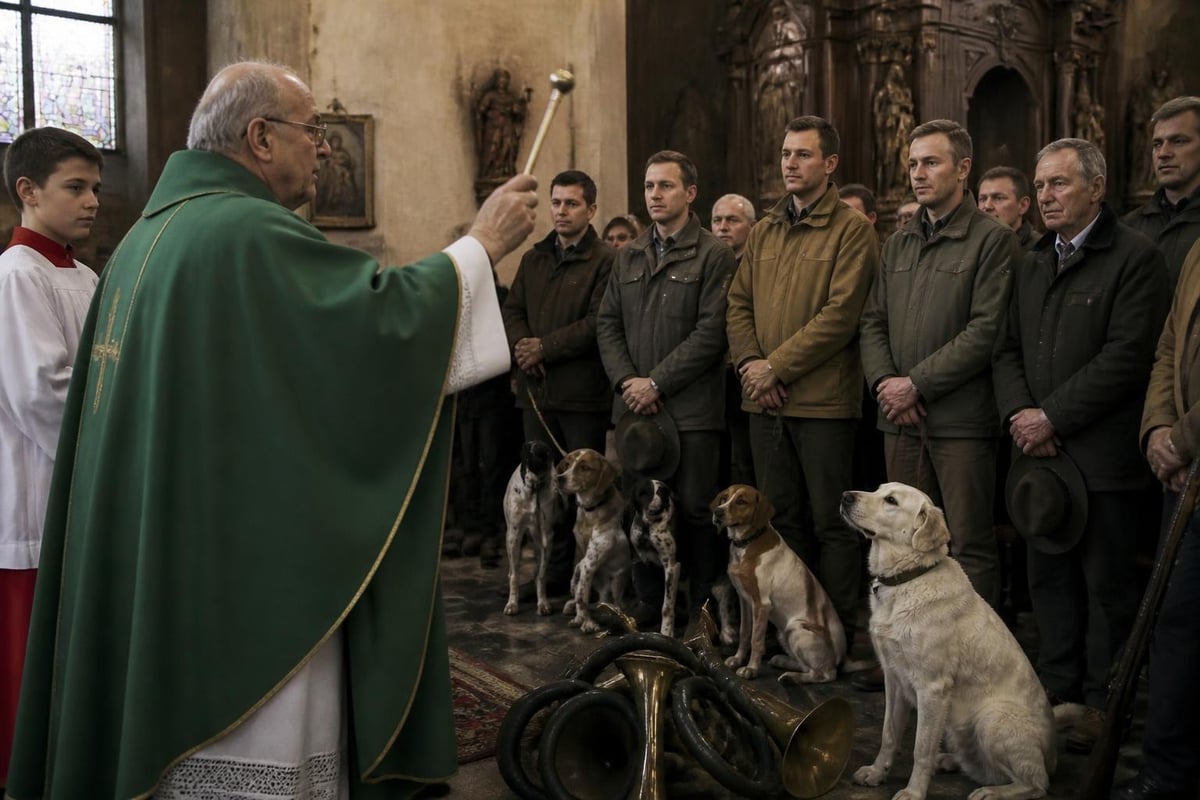
The feast of Saint Hubert falls on November 3, coinciding with the traditional opening of hunting season in many European regions. In Belgium, France, and parts of Germany, elaborate ceremonies mark this day. Hunters gather for special Masses, often accompanied by hunting horns playing sacred music. Priests bless hunters, their dogs, and sometimes the first game taken during the season.
These celebrations maintain ancient traditions while adapting to contemporary contexts. Modern observances of the patron saint of hunters often include:
- Blessing ceremonies for hunters and hunting equipment
- Special liturgies with hunting-themed homilies
- Processions featuring hunting horns and traditional dress
- Distribution of Saint Hubert medals and prayer cards
- Community meals celebrating the harvest and hunting season
- Educational programs on ethical hunting and conservation
Those seeking to deepen their devotion to the saints can explore Catholic prayer cards and holy cards that feature these beloved patrons and provide traditional prayers.
Saint Eustace's Feast: September 20
Saint Eustace's feast on September 20 receives less elaborate celebration than Hubert's, though Eastern Catholic and Orthodox communities maintain strong devotion to him. His story encompasses not just hunting but also military service, family tragedy, and martyrdom, making him a patron of many causes beyond hunting alone.
Prayers and Devotions to the Patron Saint of Hunters
Traditional Prayer to Saint Hubert
Hunters have recited prayers to the patron saint of hunters for centuries before entering the forest. A traditional invocation asks:
"Saint Hubert, patron of hunters, guide my hand and steady my aim. Grant me respect for the creatures I pursue, gratitude for the bounty I receive, and wisdom to take only what is needed. Protect me from danger in the wild, and help me see God's glory in all creation. Through your intercession, may my hunting serve the good of my family and honor the Creator of all living things. Amen."
Such prayers reflect the integration of spiritual awareness with practical activity. They remind hunters that their pursuit connects to larger questions of stewardship, provision, and humanity's proper relationship with the natural world.
Medals and Sacramentals
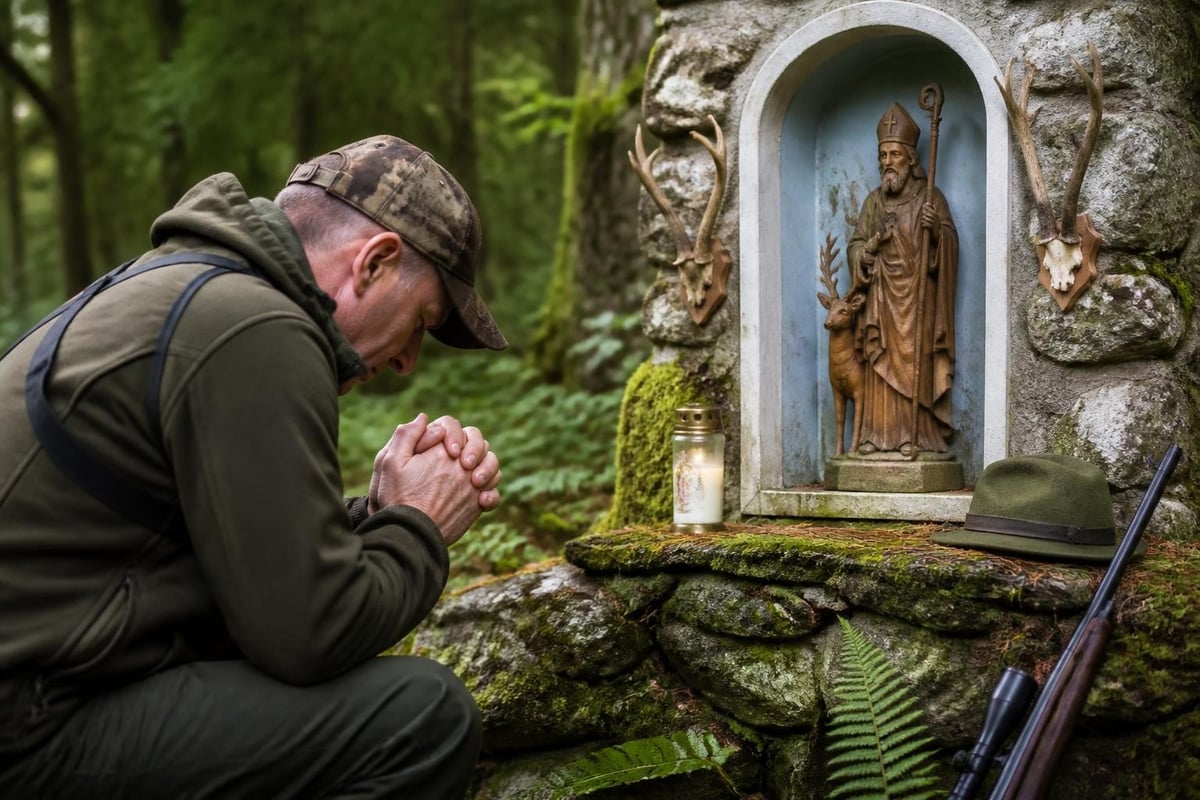
Saint Hubert medals remain popular among hunters worldwide. These blessed objects typically depict the saint with a stag bearing a crucifix, sometimes accompanied by hunting dogs or a bishop's crosier symbolizing his later ministry. Many hunters carry these medals in their pockets or attach them to hunting gear as reminders of their spiritual obligations.
The tradition of wearing or carrying sacramentals connects to the broader Catholic practice of using blessed objects as aids to devotion and protection. Prayer Cards and Novenas offer tangible connections to the saints, serving as portable reminders of their intercession and examples. These cards fit easily in hunting jackets or vehicle glove compartments, making them ideal for moments of prayer before or after the hunt.
The Patron Saint of Hunters in Modern Hunting Ethics
Conservation and Stewardship
Contemporary understanding of the patron saint of hunters emphasizes ethical hunting and wildlife conservation. Modern hunters recognize their role as wildlife managers, participating in sustainable harvest practices that maintain healthy ecosystems. This perspective aligns perfectly with the spiritual lessons of Saints Hubert and Eustace.
Key principles connecting saint devotion to modern hunting ethics:
- Respect for creation: Recognizing animals as God's creatures worthy of humane treatment
- Sustainable harvest: Taking only what can be used and what populations can sustain
- Fair chase: Honoring game animals by hunting them according to sporting ethics
- Gratitude: Thanking God for provision and never taking wildlife for granted
- Habitat conservation: Protecting natural spaces for future generations
- Passing on traditions: Teaching young hunters both skills and spiritual values
Regional Hunting Brotherhoods
Scholarship on Saint Hubert and hunting culture documents how hunting organizations across Europe maintain their connection to the patron saint of hunters. These groups often function as both practical hunting clubs and quasi-religious brotherhoods, preserving traditions of ethical conduct, mutual assistance, and spiritual observance.
Members attend annual Masses together, support conservation projects, mentor new hunters, and maintain rituals passed down through generations. This blend of practical and spiritual community reflects the medieval guilds that originally formed under saintly patronage.
Symbolism and Iconography
The Stag with the Crucifix
The most recognizable symbol associated with the patron saint of hunters is the stag bearing a crucifix or cross between its antlers. This image appears in countless paintings, sculptures, medals, and stained glass windows. It represents the moment of divine intervention that transformed both Hubert and Eustace from worldly hunters into spiritual servants.
The stag itself carries rich biblical symbolism. Psalm 42 opens with "As the deer longs for streams of water, so my soul longs for you, O God." This connection between the hunted animal and spiritual longing adds depth to the hunting saints' stories. The creature they pursued became the vehicle for encountering Christ.
Artistic Representations Through the Centuries
Religious art has depicted the patron saint of hunters in various ways across different periods and regions. Early medieval representations emphasized the miraculous vision. Renaissance artists created elaborate hunting scenes showcasing the moment of conversion. Baroque interpretations added dramatic lighting and emotional intensity. Modern depictions often simplify the imagery while maintaining core symbolic elements.
The Vatican's searchable resources on saints provide authoritative information about approved representations and liturgical celebrations. These official sources help distinguish authentic traditions from later embellishments, though both contribute to the living devotion surrounding these saints.
Expanding the Circle: Other Hunting-Related Saints
While Saint Hubert and Saint Eustace dominate as the patron saint of hunters in Western tradition, other saints also connect to hunting, outdoor pursuits, and related activities:
| Saint | Patronage Connection | Feast Day | Notable Aspect |
|---|---|---|---|
| Saint Hubert | Primary patron of hunters | November 3 | Vision of stag with cross |
| Saint Eustace | Co-patron of hunters | September 20 | Roman general's conversion |
| Saint Meinrad | Patron of hospitality, alpine travelers | January 21 | Lived as hermit in Swiss forests |
| Saint Giles | Protector of animals and forests | September 1 | Saved by a deer |
| Saint Isidore the Farmer | Agricultural patron | May 15 | Stewardship of land and animals |
Regional Variations in Patronage
Different cultures emphasize various aspects of hunting patronage. German hunters particularly venerate Saint Hubert as protector against rabies, since medieval tradition credited his relics with healing power against the disease. French hunting communities stress his role as Bishop of Liège, connecting spiritual leadership with practical woodsmanship. Belgian devotion centers on pilgrimage sites associated with his conversion and ministry.
Teaching Children About the Patron Saint of Hunters
Families who hunt often seek ways to pass on both practical skills and spiritual values to the next generation. The stories of Saints Hubert and Eustace provide excellent teaching opportunities. Resources for homeschooling and youth religious education can help parents integrate these saints into their children's formation.
Lessons from the Hunting Saints for Young People
- Actions have consequences: Both saints initially pursued selfish pleasures before conversion
- God speaks in unexpected ways: Divine intervention came during ordinary activities
- Conversion requires action: Hearing God's call demands a response and life change
- Former passions can serve God: Hunting skills became tools for evangelization
- Suffering refines faith: Both saints endured trials after their conversions
- Service to others matters most: Their ultimate legacy is spiritual leadership, not hunting prowess
Young hunters learning to appreciate the patron saint of hunters gain a framework for understanding their outdoor activities as potentially sacred when approached with proper intention and ethics. This perspective counteracts purely utilitarian or trophy-focused attitudes, instead cultivating gratitude, restraint, and wonder.
Contemporary Devotion and Resources
Living Tradition in the 21st Century
Devotion to the patron saint of hunters continues to thrive in 2026, adapted to contemporary contexts while maintaining historical roots. Online communities of Catholic hunters share prayers, photos from blessed hunts, and discussions of ethical dilemmas. Diocesan outdoor ministries organize Saint Hubert's Day celebrations combining traditional liturgy with modern conservation education.
Many hunters maintain personal practices such as praying before entering the woods, saying grace over harvested game, and displaying saint medals or images in their homes or vehicles. These quiet devotions connect individual hunters to centuries of tradition and to a global community of believers who seek to honor God through their outdoor pursuits.
Resources for Deeper Exploration
Those interested in learning more about the patron saint of hunters and related topics can explore numerous resources. Journeys of Faith's collection on the saints provides accessible introductions to many holy men and women who can inspire contemporary Catholics. Their materials emphasize practical devotion and real-life application of saintly examples.
Catholic media offers books, documentaries, and articles examining the historical development of hunting patronage and its theological foundations. Academic resources provide scholarly perspectives on medieval hunting culture and its intersection with religious practice. Local parishes often maintain information about regional hunting traditions and celebrations.
Integration with Broader Catholic Spirituality
Connection to Eucharistic Devotion
The transformation experienced by the patron saint of hunters mirrors the conversion required of all Catholics who encounter Christ in the Eucharist. Just as Hubert and Eustace encountered Christ unexpectedly during their daily activities, believers meet the Lord truly present in the Blessed Sacrament. Both encounters demand response and transformation.
This parallel helps hunters understand their devotion to Saint Hubert or Saint Eustace as part of larger Catholic spiritual life rather than an isolated interest. The same God who appeared to hunting saints continues to make himself known through the sacraments, Scripture, and the Church's living tradition.
Mary, the Saints, and Complete Catholic Life
Journeys of Faith's emphasis on the Eucharist, Mother Mary, and the saints reflects the integrated spirituality that should characterize all Catholic devotions. The patron saint of hunters represents one thread in the rich tapestry of communion with the saints. Marian devotion, Eucharistic adoration, regular confession, and study of Scripture all work together to form complete Catholic identity.
Hunters who pray to Saint Hubert should also pray the Rosary, attend Mass regularly, practice works of mercy, and grow in all virtues. The hunting saint provides a relatable entry point into deeper faith, not a substitute for comprehensive Catholic practice.
Practical Applications for Today's Faithful Hunters
Pre-Hunt Spiritual Preparation
Modern hunters can adopt various practices to integrate faith with their hunting:
- Morning prayer: Begin hunting days with traditional prayers to the patron saint of hunters
- Scripture meditation: Reflect on biblical passages about creation, stewardship, and God's providence
- Examination of intention: Honestly assess motivations for hunting and align them with Christian values
- Blessing of equipment: Have hunting gear blessed by a priest, following traditional customs
- Accountability partnerships: Join with other Catholic hunters for mutual encouragement and ethical discussion
Post-Hunt Gratitude and Stewardship
After successful hunts, faithful hunters should:
- Thank God immediately for the harvest
- Handle game with reverence, recognizing the gift of life
- Waste nothing that can be used
- Share meat generously with family, friends, and those in need
- Support conservation efforts financially and through volunteer work
- Record experiences in a journal, noting spiritual insights alongside practical details
These practices transform hunting from mere recreation into a form of active prayer and stewardship, exactly what the patron saint of hunters would encourage.
The patron saint of hunters, whether invoked as Saint Hubert or Saint Eustace, offers contemporary Catholics a powerful model for integrating faith with outdoor pursuits and for understanding humanity's proper relationship with creation. Through their intercession, hunters can grow in virtue, practice ethical stewardship, and find God's presence in the wild places of the earth. Journeys of Faith provides resources to deepen your understanding of the saints and strengthen your Catholic faith through books, prayer cards, and educational materials that make the lives of holy men and women accessible and inspiring. Explore the full collection at Journeys of Faith and discover how the witness of the saints can transform your daily life and deepen your walk with Christ.
Resources:
- Explore Journeys of Faith's online store with thousands of Catholic items at https://journeysoffaith.com/collections
- Journeys of Faith is blessed to provide Catholic media, including podcasts and inspirational content, free of charge across multiple media platforms for viewers and listeners around the world. While access to this content remains free, there are significant and continually increasing costs associated with producing, hosting, and distributing these programs. Your support helps us continue sharing the beauty of the Catholic faith with souls. Please make a donation at https://journeysoffaith.com/pages/donate
