

A picture of St Rita tells a story far deeper than canvas and paint. Each depiction of this beloved saint communicates centuries of devotion, miraculous intercession, and unwavering faith. Whether displayed in a home shrine, carried as a prayer card, or venerated in a basilica, these sacred images serve as powerful reminders of Rita's extraordinary life and her continued intercession for the faithful. Understanding what makes a picture of St Rita recognizable and meaningful enriches our devotion and deepens our connection to this "saint of impossible causes."
The Essential Elements of a Picture of St Rita
Every authentic picture of St Rita contains specific iconographic elements that immediately identify her among the communion of saints. These visual markers developed over centuries of artistic tradition and theological reflection.
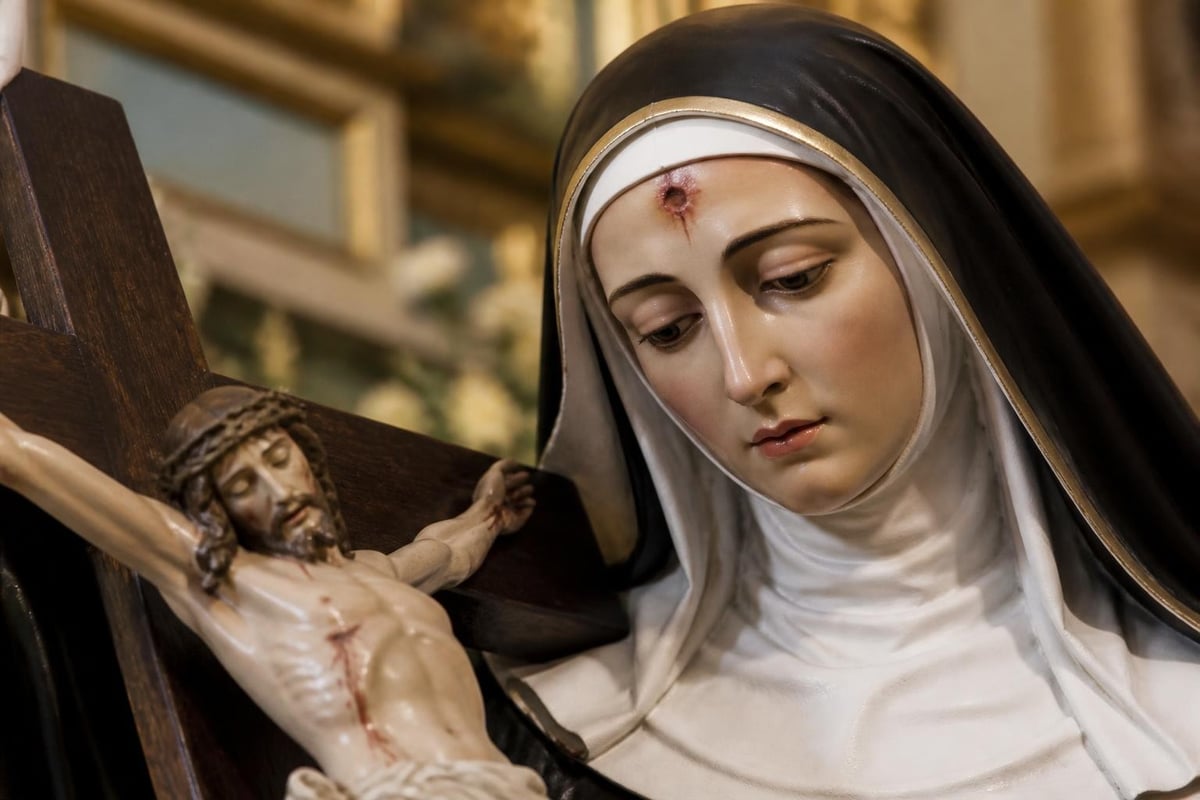
The Thorn Wound: Rita's Most Distinctive Mark
The most recognizable feature in any picture of St Rita is the wound on her forehead. This mark commemorates a miraculous event during her life as an Augustinian nun. After hearing a sermon on Christ's Passion, Rita prayed to share in His suffering. A thorn from the crown of thorns miraculously embedded itself in her forehead, creating a wound that remained until her death.
This distinctive marking appears prominently in virtually every picture of St Rita, positioned centrally on her forehead. Scholarly analysis of this iconographic detail documents how artists throughout the centuries have depicted this sacred wound with varying degrees of realism and stylization. The wound serves not merely as identification but as a testament to Rita's deep mystical union with Christ's suffering.
Key visual characteristics include:
- A dark mark or depression on the center of the forehead
- Sometimes depicted as bleeding or inflamed
- Often emphasized through lighting or color contrast
- Represents stigmata and mystical participation in Christ's Passion
Roses and Bees: Nature's Testimony to Sanctity
Beyond the thorn wound, a picture of St Rita frequently includes two natural symbols that reference miraculous events from her life. Roses appear because of a winter miracle: when Rita lay dying in her convent, she requested figs and roses from her family garden. Despite the harsh winter season, a relative found fresh roses blooming, which were brought to Rita as a sign of divine favor.
Bees represent another miraculous occurrence from Rita's infancy. According to tradition, white bees swarmed around her cradle without harming her, entering and leaving her mouth peacefully. Museum documentation and scholarly research trace depictions of "Saint Rita Surrounded by Bees" through various artistic periods, demonstrating how this iconographic element became standard in her visual representation.
| Symbol | Meaning | Biblical/Spiritual Connection |
|---|---|---|
| Roses | Divine favor, miraculous provision | Beauty emerging from suffering |
| Bees | Eloquence, sweetness of virtue | Honey from the rock (Psalm 81) |
| Thorn wound | Stigmata, union with Christ | Crown of thorns, Passion |
| Augustinian habit | Religious consecration | Religious vocation and obedience |
Brought to you by Journeys of Faith, founded by Bob and Penny Lord. We are an Augustinian Secular Institute and Cyber Apostles. Our mission is evangelization through media.
Historical Development of St Rita's Imagery
The evolution of how artists have created a picture of St Rita reflects both artistic movements and devotional trends across five centuries. Understanding this development helps us appreciate contemporary images while recognizing authentic traditional elements.
Early Depictions at the Cascia Sanctuary
The official Sanctuary of Santa Rita da Cascia houses some of the earliest and most authoritative images of the saint. These foundational works established the visual vocabulary that later artists would follow. The basilica contains frescoes, statues, and painted panels that date from shortly after Rita's death in 1457 through her beatification and eventual canonization.
Early Renaissance pictures of St Rita emphasized her identity as an Augustinian religious, depicting her in the black habit of her order. Artists gradually incorporated the miraculous elements, with the forehead wound becoming standardized by the 17th century. Vatican News coverage of Saint Rita acknowledges how these images have shaped global devotion and provided visual consistency across cultures.
Regional Variations and Artistic Interpretations
While core elements remain consistent, a picture of St Rita can vary significantly based on regional artistic traditions and the period of creation.
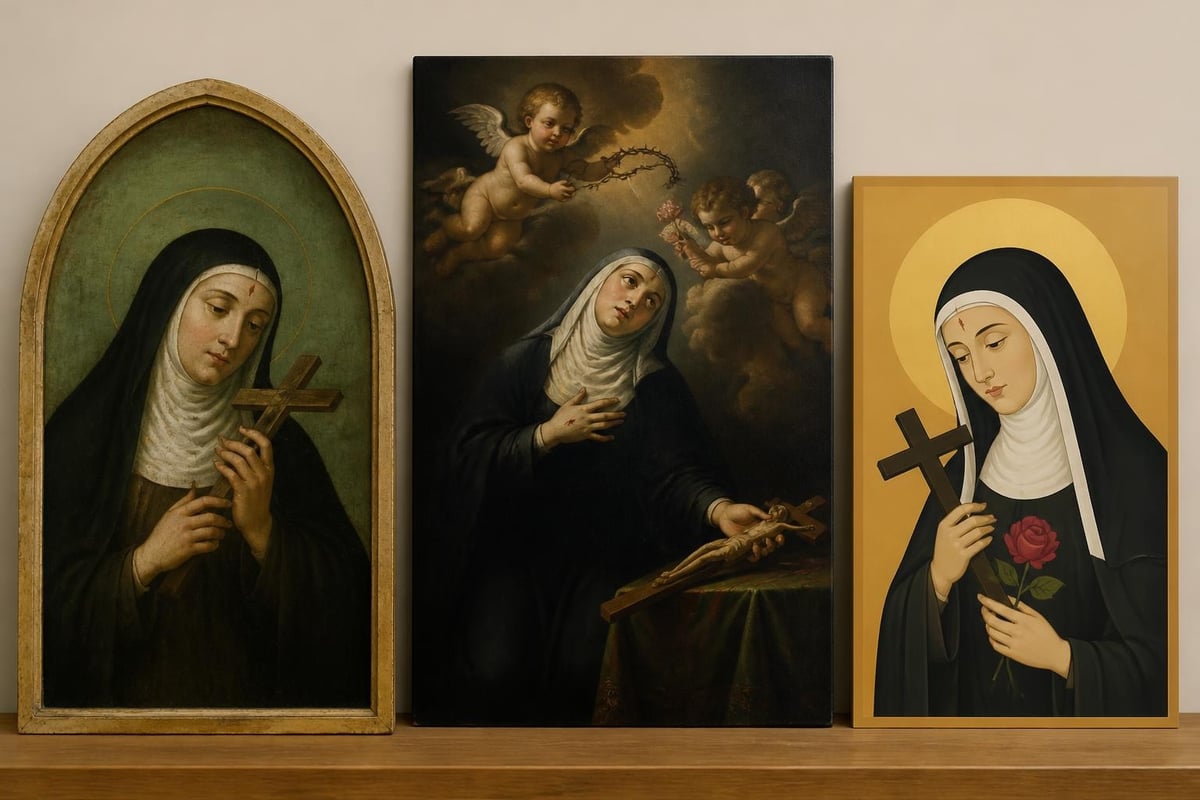
Baroque and Counter-Reformation imagery emphasized:
- Dramatic lighting highlighting the forehead wound
- Rich, elaborate backgrounds suggesting heavenly glory
- Emotional expressiveness conveying Rita's mystical experiences
- Inclusion of additional symbols like the crucifix or skull
Modern and contemporary depictions often feature:
- Simplified compositions focusing on Rita's face
- Softer, more accessible aesthetic
- Emphasis on her role as intercessor and helper
- Integration with contemporary artistic styles while maintaining identifying features
The Spiritual Significance of Devotional Images
A picture of St Rita functions as far more than decorative religious art. In Catholic tradition, sacred images serve as windows to the divine, helping the faithful focus their prayers and meditation on heavenly realities.
Sacramental Nature of Sacred Images
The Church has consistently taught that images of saints are not objects of worship but rather aids to devotion. When we venerate a picture of St Rita, we honor the saint herself and seek her intercession before God. The Second Council of Nicaea (787) definitively addressed this teaching, distinguishing between worship owed to God alone and the veneration appropriate for sacred images.
This theological framework transforms how we interact with a picture of St Rita. The image becomes a point of contact, a reminder of Rita's reality in the communion of saints, and a visual anchor for our prayers. Many Catholics who keep a picture of St Rita in their homes report feeling a stronger connection to her intercession and a more vivid sense of the saints' presence in daily life.
Practical benefits of devotional images:
- Focus attention during prayer and meditation
- Create sacred space within the home
- Remind us of specific virtues to emulate
- Strengthen our connection to particular saints
- Provide visual catechesis, especially for children
- Offer comfort during trials (Rita's specialty as patron of impossible causes)
Icons Versus Western Devotional Art
Understanding the difference between Eastern Christian icons and Western devotional paintings enriches our appreciation of any picture of St Rita. While Western art typically aims for naturalistic representation, Eastern icons follow strict theological and artistic conventions, viewing the image itself as a theological statement.
Some contemporary artists have created icons of St Rita following Byzantine conventions, incorporating her Western identifying symbols into Eastern artistic language. These works bridge two great traditions of Christian sacred art while maintaining the essential elements that make a picture of St Rita recognizable across all artistic traditions. The Journeys of Faith collection features various artistic representations of saints that demonstrate this beautiful diversity.
Finding and Choosing a Picture of St Rita
With countless images available, selecting the right picture of St Rita for personal devotion, a church, or as a gift requires discernment and attention to both spiritual and aesthetic considerations.
Authenticity and Iconographic Accuracy
Not every painting or print labeled as St Rita accurately represents her traditional iconography. When selecting a picture of St Rita, verify that it includes at least the forehead wound, as this is her primary identifying characteristic. Quality images will typically also incorporate roses, bees, or the Augustinian habit.
Scholarly research on Saint Rita's iconography provides detailed analysis of authentic versus inaccurate representations. While artistic style may vary, the core symbolic elements should remain recognizable to maintain the image's catechetical and devotional value.
Prayer Cards and Portable Devotion
One of the most popular formats for a picture of St Rita is the traditional Catholic prayer card. These portable images allow the faithful to carry Rita's intercession wherever they go. Catholic Saints minibooks pair beautifully with prayer cards, providing deeper context about Rita's life and spirituality alongside the visual image. These minibooks serve as excellent companions for meditation, offering 20 to 50 pages of focused content that enriches understanding of the saint depicted in the image.

Quality prayer cards feature:
- Clear, accurate iconography
- Appropriate prayers or novenas on the reverse
- Durable cardstock that withstands frequent handling
- Proper attribution of the artwork
- Church-approved content
Placement and Veneration in the Home
Where and how you display a picture of St Rita matters for both practical and spiritual reasons. The image should occupy a place of respect where it can serve its devotional purpose effectively.
Recommended locations:
- Home prayer corner or shrine
- Bedroom for nighttime prayers
- Kitchen where daily family life unfolds
- Near a crucifix or image of the Sacred Heart
- In a location visible when entering the home
Some families create a full shrine around a picture of St Rita, adding candles (safely placed), fresh flowers (especially roses when available), and perhaps a relic card or blessed medals. This dedicated space becomes a focal point for family prayer, particularly when facing difficult situations where Rita's powerful intercession as patron of impossible causes is especially sought.
The Global Presence of St Rita's Images
From Italy to the Philippines, from Latin America to Africa, a picture of St Rita appears in countless churches, shrines, and homes worldwide. This global distribution reflects both the universality of Catholic devotion and Rita's particular appeal across diverse cultures.
Major Shrines and Pilgrimage Sites
The primary pilgrimage destination for Rita devotees remains Cascia, Italy, where her incorrupt body rests in the basilica. Photographic collections from the sanctuary document the elaborate artistic program surrounding her shrine, including frescoes, mosaics, statues, and painted altarpieces. Pilgrims often bring home blessed pictures of St Rita from Cascia, treasuring these images as tangible connections to her earthly home and final resting place.
Secondary shrines exist throughout the world, many featuring locally commissioned pictures of St Rita that blend traditional iconography with regional artistic sensibilities. These variations demonstrate how a universal saint adapts to local cultures while maintaining essential identifying characteristics.
Cultural Adaptations and Modern Media
While traditional painted or printed pictures of St Rita remain popular, modern technology has expanded how these images circulate. Digital versions appear on websites, apps, and social media, making Rita's image accessible to billions. Catholic media organizations like Journeys of Faith incorporate pictures of St Rita into educational materials, streaming content, and digital publications that help spread devotion to this powerful intercessor.
Contemporary artists continue creating new pictures of St Rita using various media:
- Traditional oil and acrylic paintings
- Digital illustration and graphic design
- Photography-based composite images
- Mosaic and stained glass
- Sculpture captured in documentary photography
- Video and animation for educational purposes
| Medium | Advantages | Best Uses |
|---|---|---|
| Traditional painting | Timeless quality, artistic depth | Churches, formal shrines |
| Prayer cards | Portability, affordability | Personal devotion, distribution |
| Digital images | Accessibility, shareability | Education, social media |
| Sculpture/statues | Three-dimensional presence | Gardens, outdoor shrines |
| Stained glass | Light symbolism, permanence | Church windows, chapels |
Commissioning or Creating Original Images
Some parishes, religious communities, or families choose to commission an original picture of St Rita rather than purchasing existing reproductions. This process requires careful collaboration between patron and artist to ensure theological accuracy and artistic quality.
Working with Religious Artists
When commissioning a picture of St Rita, select an artist experienced in sacred art who understands Catholic iconographic traditions. Provide clear references showing traditional depictions, emphasizing which elements must be included. The artist should understand that they're creating more than decoration; they're crafting a theological statement and a aid to devotion.
Essential elements to specify:
- Size and medium appropriate to the intended location
- Inclusion of mandatory iconographic elements (forehead wound, habit)
- Optional symbols (roses, bees, crucifix, book)
- Color palette and overall aesthetic approach
- Whether the image should reflect particular artistic traditions
- Timeline and budget parameters
The commissioning process often becomes a spiritual journey itself, with both patron and artist praying for Rita's intercession as the work develops. Many artists fast or pray specific devotions while creating sacred images, recognizing the spiritual significance of their work.
DIY Approaches and Folk Art Traditions
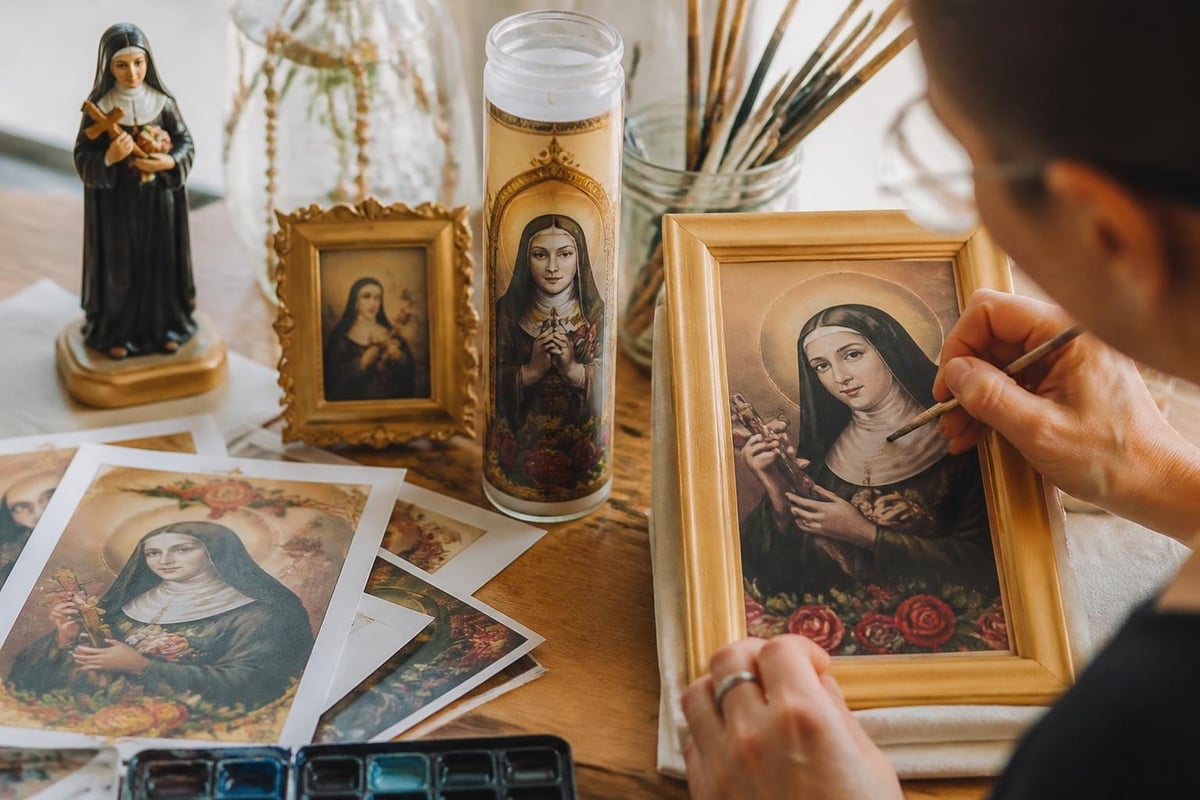
Not every picture of St Rita requires professional artistic training. Folk art traditions worldwide have produced charming, spiritually powerful images created by ordinary faithful using simple materials and techniques. These works possess an authenticity and directness that can be deeply moving despite their technical simplicity.
Simple approaches include:
- Colored pencil or marker drawings
- Collage using blessed prints and natural materials
- Simple wood-burning or painting
- Embroidery or needlework depicting Rita's symbols
- Assemblage incorporating three-dimensional elements
While such works may not hang in museums, they serve their devotional purpose beautifully and often carry special meaning as expressions of personal devotion. Children especially benefit from creating their own simple pictures of St Rita, learning her story and symbols through the creative process.
Pictures of St Rita in Liturgical and Devotional Contexts
The Church calendar provides specific opportunities when a picture of St Rita takes center stage in liturgical and devotional settings. Understanding these occasions enriches our appreciation of her images and their proper use.
The Feast of Saint Rita (May 22)
Rita's feast day, celebrated annually on May 22, is when her images receive special veneration. Churches dedicated to her or those with significant Rita devotion often decorate her statue or picture with fresh roses, candles, and flowers. The liturgical readings and prayers of the day complement the visual imagery, creating a multi-sensory experience of Rita's sanctity.
Many parishes display a prominent picture of St Rita in a place of honor during her feast day octave, sometimes processing with her image during special devotions. This public veneration reminds the faithful of Rita's powerful intercession and encourages recourse to her prayers.
Novenas and Special Devotions
The nine-day novena to St Rita is among the most popular in Catholic practice, often prayed before her feast day or when facing impossible situations. During these novenas, a picture of St Rita typically holds a central place in the prayer setting, with participants directing their petitions toward her image as a visual focus for their intentions.
Other devotional practices incorporating her image include:
- Monthly devotions on the 22nd day
- Perpetual novenas in parishes
- Special blessing of roses on her feast
- Processions carrying her image
- First Friday devotions combined with Rita's intercession
The Future of St Rita's Visual Representation
As artistic styles and media technologies continue evolving, new forms of presenting a picture of St Rita will emerge while traditional forms persist. This ongoing development ensures Rita's image remains accessible and meaningful to each generation.
Digital Age Opportunities
Virtual reality experiences of Rita's sanctuary in Cascia, augmented reality features that bring prayer card images to life, and AI-assisted artistic interpretations all represent potential future developments. However, these technological innovations will succeed only if they maintain the essential iconographic elements and theological integrity that make a picture of St Rita authentically devotional rather than merely decorative.
The Journeys of Faith digital platforms demonstrate how traditional Catholic content adapts to modern delivery methods while preserving doctrinal accuracy and devotional authenticity. Similar approaches will ensure that pictures of St Rita continue inspiring faith across evolving technological landscapes.
Preserving Traditional Forms
Despite technological advances, traditional formats for pictures of St Rita will endure. Hand-painted icons, carefully printed prayer cards, and lovingly crafted statues possess a tangible quality that digital images cannot fully replicate. The physicality of these objects-their weight, texture, and three-dimensional presence-contributes to their devotional power.
Preservation efforts at the Cascia sanctuary and other major Rita shrines ensure that historically significant images remain available for study, reproduction, and inspiration. These masterworks provide the foundation upon which contemporary artists build, maintaining continuity with centuries of devotional practice.
Every picture of St Rita invites us deeper into relationship with this powerful saint and, through her, closer to Christ Himself. Whether you're drawn to traditional Renaissance paintings or contemporary interpretations, the essential symbols remain constant-inviting us to impossible faith and unwavering trust. Journeys of Faith offers extensive resources to deepen your understanding and devotion to the saints through books, prayer cards, and media that bring their stories to life. Discover how the saints can transform your spiritual journey at Journeys of Faith, where evangelization through media helps souls worldwide encounter the beauty of Catholic faith.
Resources:
-
Explore the Journeys of Faith online store with thousands of Catholic items at https://journeysoffaith.com/collections
-
Journeys of Faith is blessed to provide Catholic media, including podcasts and inspirational content, free of charge across multiple media platforms for viewers and listeners around the world. While access to this content remains free, there are significant and continually increasing costs associated with producing, hosting, and distributing these programs. Your support helps us continue sharing the beauty of the Catholic faith with souls. Please make a donation at https://journeysoffaith.com/pages/donate
