

In the midst of life's uncertainties, financial pressures, health concerns, and the countless worries that occupy our hearts, we often find ourselves searching for peace. The prayer of trust offers a powerful remedy to anxiety, inviting us to release our burdens into the hands of our loving Father. This ancient Catholic practice isn't about passive resignation but rather an active choice to believe that God's providence surpasses our limited understanding. When we embrace a prayer of trust, we acknowledge that divine wisdom exceeds our own calculations and that His love for us never wavers, even when circumstances seem dark.
The Foundation of Trusting Prayer
A prayer of trust builds upon the theological virtues of faith, hope, and love that form the cornerstone of Catholic spirituality. Faith enables us to believe in God's existence and His promises, while hope directs our hearts toward eternal life with Him. Love completes this foundation by helping us desire union with God above all else.
When we pray with trust, we're not simply reciting words. We're engaging in a spiritual discipline that reshapes our relationship with uncertainty. The saints throughout history have modeled this profound surrender, showing us that peace doesn't come from controlling outcomes but from abandoning ourselves to divine mercy.
The Biblical Roots of Trust
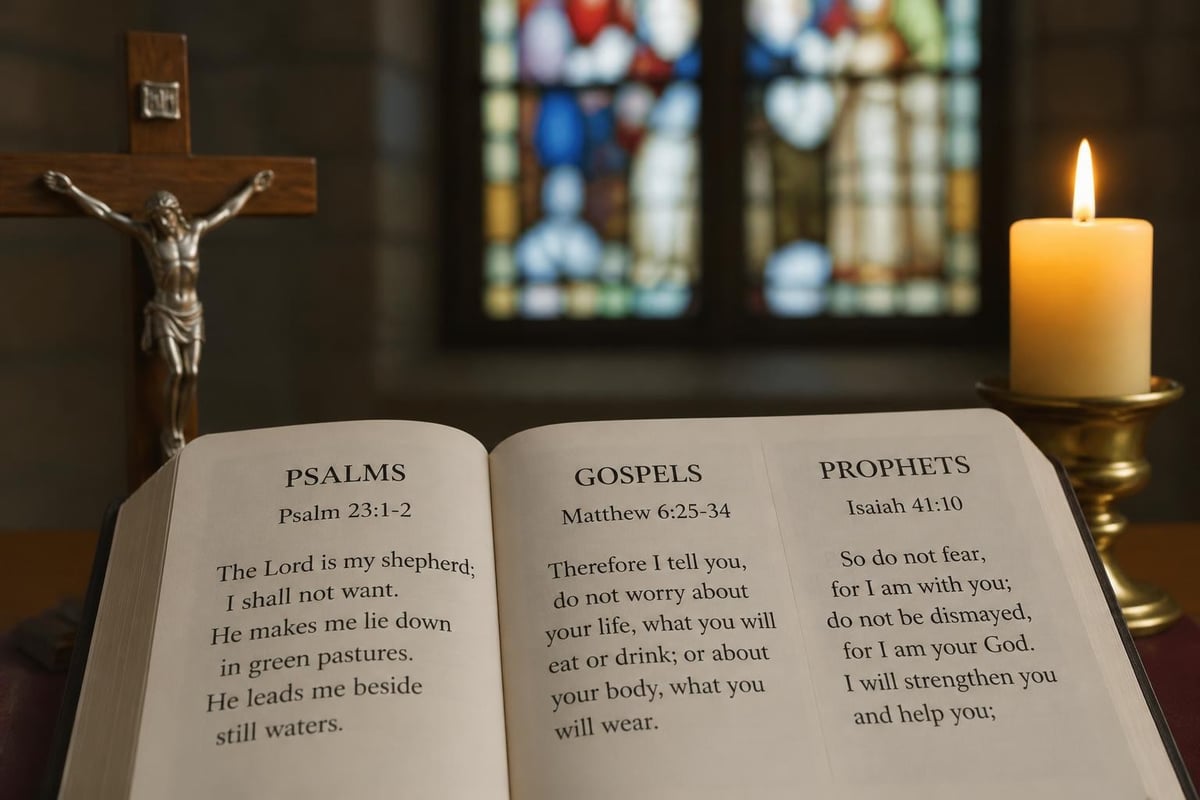
Scripture overflows with invitations to trust. From the Psalms declaring "The Lord is my shepherd" to Christ's words "Do not let your hearts be troubled," we find constant reassurance that God holds all things in His hands.
- Jesus teaches us to observe the birds of the air and the lilies of the field (Matthew 6:26-30)
- The prophet Jeremiah reminds us that those who trust in the Lord are like trees planted by water (Jeremiah 17:7-8)
- Proverbs 3:5-6 instructs us to trust in the Lord with all our heart and lean not on our own understanding
- Psalm 56:3 affirms "When I am afraid, I put my trust in you"
These passages reveal that a prayer of trust isn't merely wishful thinking. It's grounded in God's proven faithfulness throughout salvation history.
Brought to you by Journeys of Faith Founded by Bob and Penny Lord - We are an Augustinian Secular Institute - Cyber Apostles - Our Mission is Evangelization through Media.
Traditional Catholic Prayers of Trust
The Catholic tradition has gifted us with numerous formal prayers that help cultivate trust in God's providence. These prayers, tested through centuries of use, continue to transform hearts today.
The Litany of Trust
One of the most powerful modern prayers of trust is the Litany of Trust, composed by Sr. Faustina Maria Pia, S.V. This litany systematically addresses our fears and anxieties, inviting us to surrender each one to Jesus. Through its repetitive structure, we move from naming our fears to proclaiming our trust in God's specific attributes.
The litany begins with petitions like "From the belief that I have to earn Your love, deliver me, Jesus" and "From the fear that trusting You will leave me more destitute, deliver me, Jesus." Each line dismantles a particular barrier to trust, replacing anxiety with confidence in divine love.
| Prayer Type | Primary Focus | Spiritual Benefit |
|---|---|---|
| Litany of Trust | Surrendering specific fears | Identifies and releases anxiety patterns |
| St. Pio's Prayer | Confidence in divine mercy | Strengthens hope in difficult circumstances |
| Merton's Prayer | Accepting God's will | Develops peace amid uncertainty |
| Prayer for Trust Virtue | Reliance on Jesus | Builds fundamental trust disposition |
St. Padre Pio's Prayer of Trust
The St. Pio Prayer of Trust and Confidence reflects this beloved saint's own journey through suffering. St. Padre Pio, who bore the stigmata and endured tremendous physical and spiritual trials, understood intimately the need to trust God when circumstances seem unbearable.
His prayer begins: "O my Jesus, I surrender myself to you. Take care of everything!" This simple yet profound act of abandonment captures the essence of what it means to pray with trust. The prayer continues by acknowledging God's love and care, affirming that He knows what's best for us better than we know ourselves.
Many Catholics keep prayer cards featuring St. Padre Pio's words in their wallets or prayer books as daily reminders to release control and embrace divine providence.
Thomas Merton's Prayer of Trust
Thomas Merton's Prayer of Trust offers a contemplative approach to surrendering to God's will. This prayer acknowledges our inability to see the road ahead while affirming confidence that God's leading is sufficient.
"My Lord God, I have no idea where I am going," Merton begins, immediately admitting the disorientation we all feel at times. Yet he continues with remarkable faith: "I do not see the road ahead of me. I cannot know for certain where it will end." Despite this uncertainty, Merton declares his belief that God's desire leads him and his trust that this desire will never lead him astray.
This prayer resonates deeply with those facing major life decisions, career uncertainties, or vocational discernment. It validates our confusion while directing us toward trust.
Cultivating Daily Trust Through Prayer
Living a life characterized by trust requires more than occasional prayers during crises. It demands a daily practice that gradually transforms our default response from worry to confidence in God's providence.
Morning Offering as Trust Prayer
Beginning each day with a morning offering establishes trust as the foundation for all our activities. This prayer of trust dedicates our works, joys, and sufferings to God before we know what the day will bring. We're essentially saying, "Whatever happens today, I trust You with it."
A simple morning prayer of trust might include:
- Acknowledgment - Recognizing God's presence and love
- Surrender - Offering the day's events to divine providence
- Petition - Asking for grace to trust in difficulties
- Gratitude - Thanking God for blessings known and unknown
Breath Prayers for Trusting God
Short prayers of trust, repeated throughout the day, help anchor our hearts in divine confidence. These "breath prayers" can be prayed in a single breath, making them accessible during work, commutes, or stressful moments.
Examples include:
- "Jesus, I trust in You" (the Divine Mercy devotion)
- "Into Your hands, I commend my spirit"
- "My God and my all"
- "Sacred Heart of Jesus, I place my trust in You"
The repetition of these phrases isn't mindless recitation but rather a way to retrain our hearts toward trust when anxiety threatens to overwhelm us.
Evening Examination Through the Lens of Trust
The traditional examination of conscience can incorporate trust by reviewing not only our sins but also our responses to the day's challenges. Did we trust God when faced with difficulties, or did we resort to anxiety? This awareness helps us grow in the virtue of trust over time.
The Surrender Novena: Nine Days of Deep Trust
For those seeking to develop deeper trust in God, the Surrender Novena offers an intensive prayer experience. Written by Father Dolindo Ruotolo, this novena emphasizes complete abandonment to God's will through the phrase "Jesus, You take over!"
Father Dolindo developed this prayer during his own trials and persecution. When he felt overwhelmed by circumstances beyond his control, Jesus reportedly told him: "Why do you confuse yourself by worrying? Leave the care of your affairs to me and everything will be peaceful."
The Surrender Novena invites us to release our grip on outcomes and allow Jesus to manage our concerns. Many who've prayed this novena report experiencing profound peace, even when external circumstances remain unchanged. The transformation happens internally as trust replaces worry.

Each day of the novena includes a meditation on God's providence and our need to surrender specific worries. The prayer cards make it easy to pray this novena anywhere, carrying the words of Father Dolindo's inspired prayer in your pocket or purse.
Trust in Times of Trial: When Prayer Feels Difficult
Paradoxically, the prayer of trust often becomes most challenging precisely when we need it most. During illness, financial crisis, relationship breakdown, or loss, trusting God can feel nearly impossible. Our emotions scream that we must take control, fix things, or protect ourselves.
Honest Prayer: Bringing Doubts to God
Authentic trust doesn't require us to pretend we're not afraid or confused. The Psalms model brutally honest prayer, where the psalmist brings complaints, questions, and fears directly to God. A prayer of trust can include phrases like:
"Lord, I'm terrified, but I choose to trust You."
"I don't understand why this is happening, but I believe You haven't abandoned me."
"Help my unbelief. Strengthen my weak trust."
This honesty actually deepens trust because we're relating to God as He truly is-a Father who welcomes our authentic selves-rather than performing a spiritual act we don't genuinely feel.
The Saints' Examples of Trust in Suffering
The lives of the saints demonstrate that trust and suffering aren't opposites but often companions. St. Thérèse of Lisieux maintained childlike trust even during the dark night of faith that preceded her death. St. Faustina Kowalska promoted Divine Mercy while enduring physical illness and spiritual darkness. St. Maximilian Kolbe trusted God's plan while facing starvation in a concentration camp.
These saints didn't trust because their circumstances were easy. They trusted despite unbearable circumstances, discovering that God's grace was sufficient even in extremity.
| Saint | Trial | Expression of Trust |
|---|---|---|
| St. Thérèse of Lisieux | Dark night of faith | "Everything is a grace" |
| St. Faustina | Illness and misunderstanding | "Jesus, I trust in You" |
| St. Padre Pio | Stigmata and persecution | "Pray, hope, and don't worry" |
| St. Maximilian Kolbe | Death in Auschwitz | "I am the Immaculata's" |
Prayers of Trust from Different Spiritual Traditions
While rooted in Catholic spirituality, prayers of trust appear across various Christian traditions, each offering unique insights into surrendering to God's will.
Eastern Catholic Prayers of Trust
The Eastern Catholic Churches emphasize theosis, our participation in divine life, which naturally cultivates trust in God's transforming work within us. The Jesus Prayer-"Lord Jesus Christ, Son of God, have mercy on me, a sinner"-becomes a prayer of trust when prayed with awareness that Christ's mercy is utterly reliable.
Byzantine spirituality also emphasizes the Akathist hymns, which praise God's attributes and express confidence in His power to save. These hymns cultivate trust through poetic meditation on God's faithfulness throughout salvation history.
Ignatian Spirituality and Trust
St. Ignatius of Loyola's Spiritual Exercises include the "Suscipe," a prayer of radical trust that offers everything back to God:
"Take, Lord, and receive all my liberty, my memory, my understanding, and my entire will..."
This prayer of trust acknowledges that everything we have comes from God and belongs to Him. Our only desire is to love and serve Him, trusting that His grace and love are sufficient wealth.
Carmelite Abandonment to Divine Providence
St. Teresa of Ávila and St. John of the Cross taught abandonment to God's will as essential to spiritual progress. Their writings emphasize that trust grows through the dark nights of sense and spirit, where God removes our attachments to consolations and teaches us to trust Him for Himself alone, not for what He gives us.
A Prayer for the Virtue of Trust captures this Carmelite wisdom, asking Jesus to increase our confidence in Him regardless of how we feel or what we experience.
Teaching Children to Pray with Trust
Forming young hearts in trust creates a foundation that sustains faith throughout life's inevitable challenges. Children naturally trust, but they need guidance to direct that trust toward God rather than solely toward human support systems.
Age-Appropriate Trust Prayers
Preschool (Ages 3-5)
Simple rhyming prayers help young children remember to trust God:
- "God, You love me, this I know. Help me trust You as I grow."
- "When I'm scared or feeling sad, God is near and makes me glad."
Elementary (Ages 6-11)
Slightly longer prayers introduce the concept of surrender:
- "Dear Jesus, I give You my worries about school, friends, and family. I trust You to take care of everything."
- Introduce them to "Jesus, I trust in You" from the Divine Mercy devotion
Teens (Ages 12-18)
Adolescents can engage with more complex prayers of trust like the Litany of Trust or St. Padre Pio's prayer, connecting these prayers to their real anxieties about future, relationships, and identity.
Family Trust Practices
Building trust into family prayer creates a shared spiritual vocabulary. Consider these practices:
- Trust jar: Family members write worries on paper and place them in a jar, symbolically giving them to God
- Bedtime trust prayer: End each day by naming one thing each person is trusting God with
- Trust testimonies: Share stories of times when God proved trustworthy
- Sunday trust reflection: After Mass, discuss how the readings invite us to trust God more deeply
Children who learn to pray with trust develop resilience and peace that protects their mental health and spiritual life in an anxious world.
The Theological Virtue of Hope and Trust Prayer
The prayer of trust fundamentally expresses and strengthens the theological virtue of hope. While we often use "hope" casually to mean wishful thinking, theological hope is confident expectation of God's promises being fulfilled.
Hope vs. Presumption vs. Despair
True trust avoids two extremes:
Presumption assumes God will do what we want without genuine surrender to His will. It's a false trust that demands specific outcomes.
Despair believes God cannot or will not help us. It's the opposite of trust, closing our hearts to divine intervention.
Genuine hope-filled trust confidently expects God's goodness while remaining open to how He chooses to manifest that goodness. We trust the Giver, not just the gifts.
A authentic prayer of trust might say: "Lord, I trust You'll provide what I truly need, which may differ from what I want. Your wisdom exceeds mine."
Mary as Model of Trust
Our Lady exemplifies perfect trust in her fiat: "Let it be done to me according to your word." She trusted God with circumstances that defied understanding-a virginal conception, a painful prophecy about a sword piercing her heart, watching her Son die.
Marian prayers of trust, like the Memorare, express confidence in her intercession while also modeling her own trust in God's plan. When we ask Mary to "never be known" that anyone fled to her protection in vain, we're also asking her to teach us her trust.
The rosary itself becomes a prayer of trust when we meditate on the mysteries contemplating how Mary trusted through joy, sorrow, and glory.
Trust and Providence: Understanding God's Care
The prayer of trust rests on belief in divine providence-God's loving governance of all creation toward its ultimate good. Catholic theology distinguishes between general providence (God's care for all creation) and special providence (His particular attention to individuals).
How Providence Works
Providence doesn't mean God micromanages every detail or that everything happening is directly willed by Him. Rather:
- God permits certain evils while promising to bring good from them (Romans 8:28)
- God provides grace to handle whatever we face, even if He doesn't prevent trials
- God directs all things toward the ultimate good of those who love Him
- God respects human freedom while working within and around our choices
Understanding providence this way helps our prayer of trust remain realistic. We're not trusting that God will prevent all suffering but that He'll never abandon us within it.
Practical Trust in Daily Providence
Trusting God's providence becomes concrete when we:
- Release anxiety about material needs, following Christ's teaching to seek first the Kingdom
- Accept difficult circumstances as potentially containing hidden graces
- Make decisions prayerfully then trust God to work through our imperfect choices
- Recognize God's hand in both blessings and challenges
Resources from Journeys of Faith can support this practical trust through stories of saints who lived providential trust in concrete circumstances, showing us that this virtue isn't abstract theology but lived reality.
Overcoming Barriers to Trusting Prayer
Despite understanding trust intellectually, many Catholics struggle to practice it consistently. Identifying and addressing common barriers helps us grow in this essential virtue.
Control and Self-Reliance
Modern culture valorizes self-sufficiency and control, making surrender feel like weakness. Our society tells us to "make things happen" and "be your own advocate." While appropriate initiative matters, these messages can hinder trust in God.
A prayer of trust challenges us to distinguish between responsible action and anxious control. We can work diligently while trusting outcomes to God. St. Ignatius taught: "Pray as if everything depends on God; work as if everything depends on you."
Past Disappointments
When prayers seemingly go unanswered or when tragedy strikes despite our faith, trust becomes difficult. We may unconsciously conclude that trusting God leads to disappointment.
Healing these spiritual wounds requires:
- Honest lament about past pain
- Theological reflection on suffering and divine will
- Renewed understanding that God's "yes" may differ from our requests
- Community support from others who've maintained trust through trials
Perfectionism and Performance
Some struggle to trust because they believe they must earn God's love through perfect obedience. This turns prayer into performance, making trust impossible because we're never confident we've done enough.
The prayer of trust liberates us from this burden. We trust not because we're worthy but because God is faithful. His love precedes our response and doesn't depend on our perfection.
Cultural Anxiety
Living in 2026's information-saturated, crisis-laden culture makes trust especially challenging. News cycles broadcast disasters globally, social media amplifies comparisons and fears, and economic uncertainty pervades many households.
Cultivating trust requires intentional separation from anxiety-producing media and deliberate immersion in sources of hope-Scripture, lives of saints, Catholic community, and regular prayer. We must create mental and spiritual space where trust can grow.
The Fruits of Persistent Trust Prayer
Those who persevere in prayers of trust over months and years report transformative spiritual fruits that extend beyond momentary peace.
Interior Peace Amid Chaos
While circumstances may remain challenging, a deep tranquility settles in the soul. This peace differs from happiness-it's compatible with sorrow, struggle, and uncertainty. It's the peace Christ promised, "not as the world gives."
Increased Charity
When we stop obsessing about controlling outcomes, we have more mental and emotional energy to love others. Trust frees us from self-preoccupation, opening our hearts to genuine charity.
Spiritual Freedom
Detachment from specific outcomes creates paradoxical freedom. We can desire good things without being enslaved to them. We can work toward goals without our identity depending on achieving them.
Deeper Prayer Life
As trust grows, prayer becomes less about presenting wish lists and more about communion with God. We spend less time telling God what to do and more time listening to what He wants to teach us.
Witness to Others
People notice when someone remains peaceful amid trials. Our trust becomes evangelistic witness, demonstrating that God is real and that relationship with Him transforms how we experience life.
This witness is particularly powerful in our anxious age. When others observe genuine peace flowing from trust in God, they become curious about the Source of that peace.
Integrating Trust into Liturgical Prayer
While personal prayers of trust are essential, connecting our trust to the Church's liturgical life deepens and sustains this virtue through communal worship.
The Mass as Trust Prayer
The Eucharistic celebration embodies trust at every point:
- Penitential Rite: We trust God's mercy to forgive our sins
- Liturgy of the Word: We trust Scripture to guide us
- Offertory: We offer our lives, trusting God to transform them
- Consecration: We trust Christ's real presence in simple bread and wine
- Communion: We trust God to nourish us spiritually
- Dismissal: We trust God to work through us in the world
Approaching Mass consciously as a prayer of trust transforms our experience of liturgy from routine to radical act of confidence in God's promises.
Sacrament of Reconciliation
Confession requires immense trust-trusting God's mercy, trusting the priest's discretion, trusting the healing power of sacramental grace. Regular confession cultivates trust by repeatedly experiencing God's faithful forgiveness.
Liturgy of the Hours
Praying the Church's official prayer throughout the day roots our personal trust prayers in the broader rhythm of the Church's intercession. The Psalms in particular teach us to trust through their honest wrestling with God combined with ultimate confidence in His faithfulness.
The prayer of trust transforms our spiritual lives by reorienting us from self-reliance toward divine dependence, from anxiety toward peace, and from control toward surrender. Whether through formal prayers like the Litany of Trust, spontaneous cries of "Jesus, I trust in You," or silent abandonment to God's will, trusting prayer opens our hearts to receive the grace that God continuously offers. At Journeys of Faith, we're committed to supporting your journey of trust through resources that bring the wisdom of the saints, the power of the sacraments, and the beauty of Catholic tradition into your daily life.
Resources:
-
Explore Journeys of Faith Online store with thousands of Catholic Items at https://journeysoffaith.com/collections
-
Journeys of Faith is blessed to provide Catholic media, including podcasts and inspirational content, free of charge across multiple media platforms for viewers and listeners around the world. While access to this content remains free, there are significant and continually increasing costs associated with producing, hosting, and distributing these programs. Your support helps us continue sharing the beauty of the Catholic faith with souls. Please Make a Donation https://journeysoffaith.com/pages/donate
