

Throughout history, religious miracles have captured human imagination and strengthened the faith of believers across generations. These extraordinary events, which transcend natural laws and scientific explanation, serve as powerful testimonies to divine presence in our world. From the transformation of bread and wine into the Body and Blood of Christ to miraculous healings attributed to saintly intercession, these phenomena continue to inspire devotion and wonder among Catholics and people of faith worldwide.
Understanding the Nature of Religious Miracles
Religious miracles represent events that cannot be explained through natural causes or scientific principles. According to philosophical and theological definitions, these occurrences demonstrate divine power intervening in the created order. The Catholic Church maintains rigorous standards for verifying such events, requiring extensive investigation before declaring something miraculous.
The documentation and verification process involves multiple layers of scrutiny. Medical professionals, theologians, and Church officials examine claimed miracles with scientific precision. This careful approach ensures that only genuinely inexplicable events receive official recognition as religious miracles.
Categories of Miraculous Events
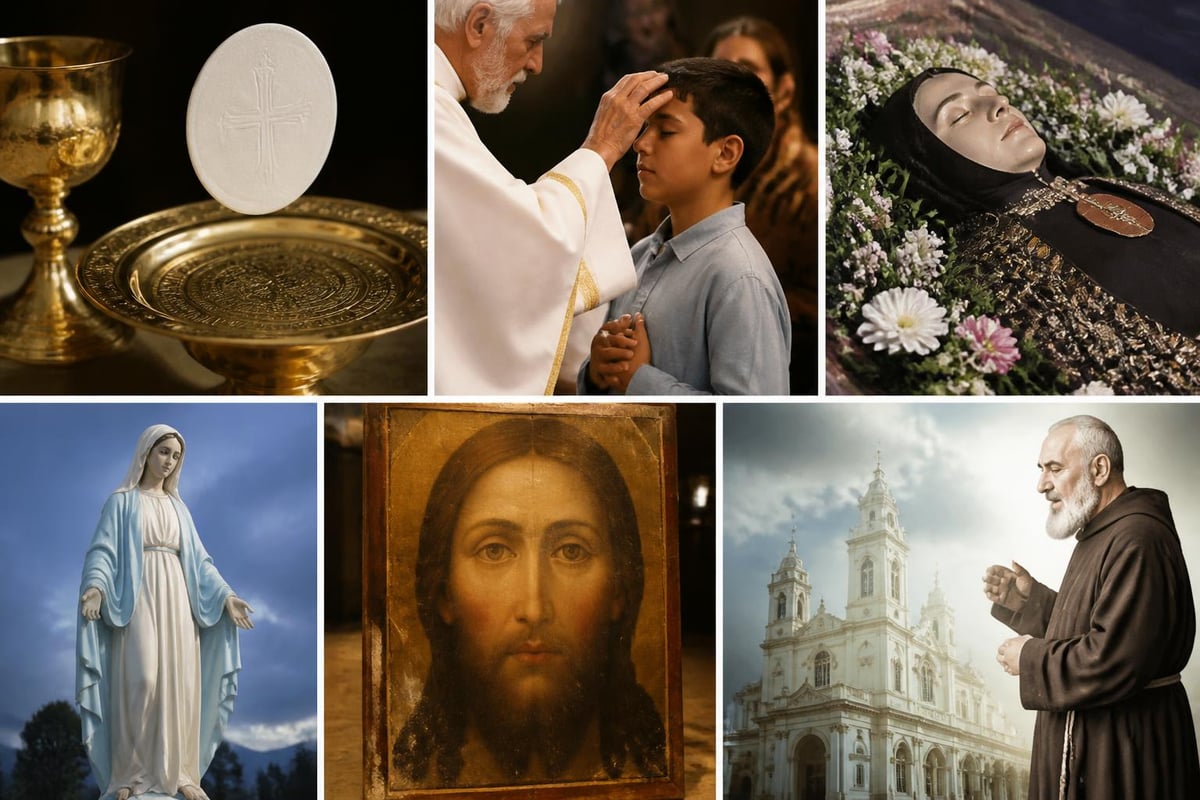
Religious miracles manifest in various forms throughout Catholic tradition:
- Eucharistic miracles where the consecrated Host visibly transforms
- Healing miracles that defy medical explanation
- Incorruptible bodies of saints that resist natural decomposition
- Apparitions of Mary, Jesus, or saints to believers
- Miraculous images that weep, bleed, or demonstrate supernatural properties
- Bilocation where saints appear in multiple locations simultaneously
Each category serves a distinct purpose in Catholic teaching. Eucharistic miracles, for instance, reinforce belief in the Real Presence of Christ in the Eucharist. Healing miracles often accompany beatification and canonization processes, demonstrating a saint's intercessory power.
Historical Documentation of Religious Miracles
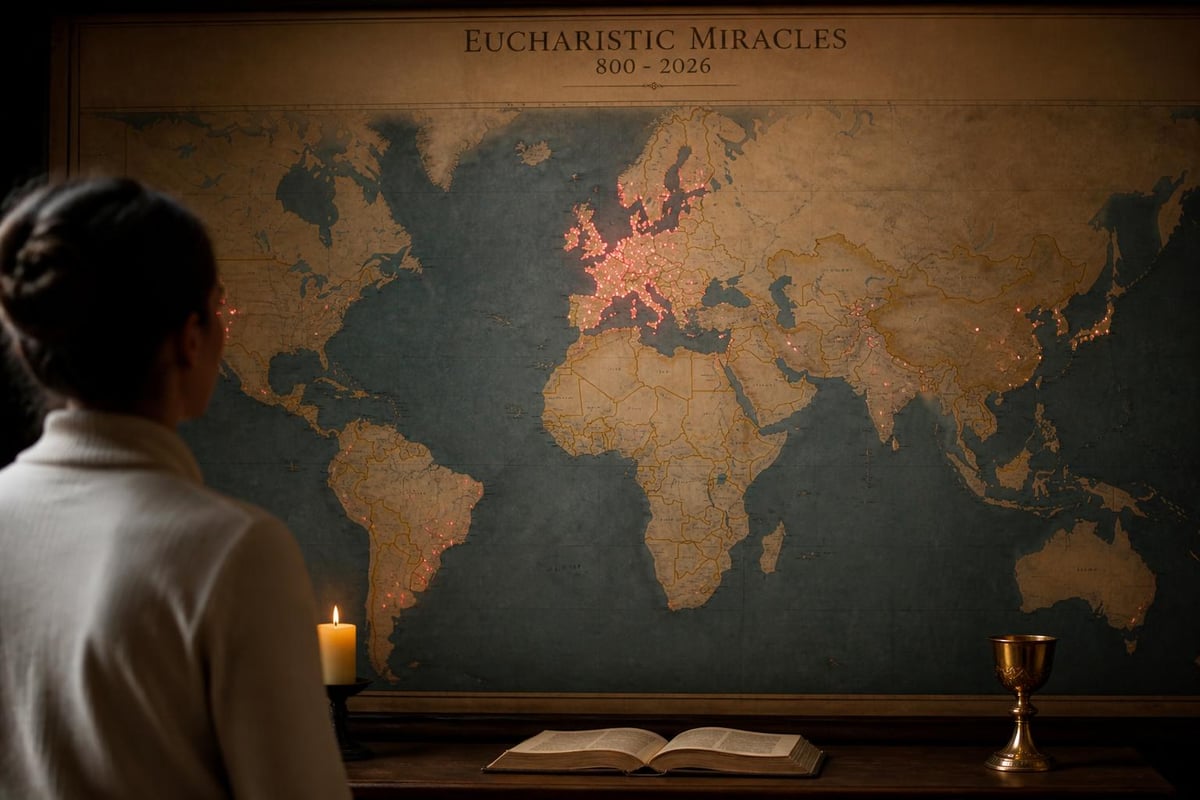
The Catholic Church has meticulously documented religious miracles for centuries. Detailed records of 142 Eucharistic miracles exist, spanning from the eighth century to modern times. These accounts provide historical context, scientific analysis, and theological significance for each event.
Medieval Europe witnessed numerous reported religious miracles, many centered around the Eucharist. The miracle at Lanciano, Italy, dating to the eighth century, remains one of the most scientifically studied cases. Laboratory analysis revealed that the transformed Host contains actual human cardiac tissue, type AB blood, and demonstrates no signs of preservation or mummification.
Brought to you by Journeys of Faith, founded by Bob and Penny Lord. We are an Augustinian Secular Institute, Cyber Apostles. Our mission is evangelization through media.
Modern Scientific Investigation
Contemporary science has added new dimensions to understanding religious miracles. Researchers examine claimed phenomena using advanced medical technology, DNA analysis, and rigorous documentation protocols. The Congregation for the Causes of Saints employs medical consultants who review healing miracles with scientific precision.
| Investigation Phase | Process | Duration |
|---|---|---|
| Initial Report | Local bishop gathers testimony | 6-12 months |
| Medical Review | Doctors analyze medical records | 1-2 years |
| Theological Assessment | Church scholars evaluate spiritual aspects | 1-2 years |
| Vatican Approval | Final review by Congregation | 6-18 months |
The intersection of faith and science creates fascinating dialogue. While science cannot prove divine causation, it can verify that certain healings have no natural explanation. This dual approach strengthens the credibility of authenticated religious miracles.
Eucharistic Miracles Throughout History
Eucharistic miracles hold special significance in Catholic tradition. These events typically involve the consecrated Host transforming into visible flesh and blood during Mass. Such occurrences have been reported across continents and centuries, creating a remarkable pattern of testimony.
The miracle at Santarém, Portugal, occurred in 1247 when a woman stole a consecrated Host. The Host began bleeding, leading to her confession and the Host's preservation in a crystal container. Modern analysis confirms the presence of actual blood cells.
Key characteristics of Eucharistic miracles:
- Occur during or shortly after Mass
- Often associated with doubt or sacrilege
- Result in lasting physical evidence
- Undergo scientific testing
- Strengthen faith in Real Presence
For those seeking deeper understanding of these profound events, the Miracles of the Eucharist books by Bob and Penny Lord document hundreds of cases with historical detail and spiritual insight. These bestselling volumes have helped over 300,000 readers comprehend the significance of Christ's presence in the Eucharist.

Geographic Distribution
Religious miracles of the Eucharist span the globe. Italy reports the highest number of documented cases, followed by Spain, France, and Poland. South America has witnessed several modern occurrences, particularly in Argentina and Mexico.
Healing Miracles and Medical Documentation
Healing miracles represent another prominent category of religious miracles. The Catholic Church requires documented medical evidence before and after alleged healings. Physicians must certify that no natural explanation exists for the recovery.
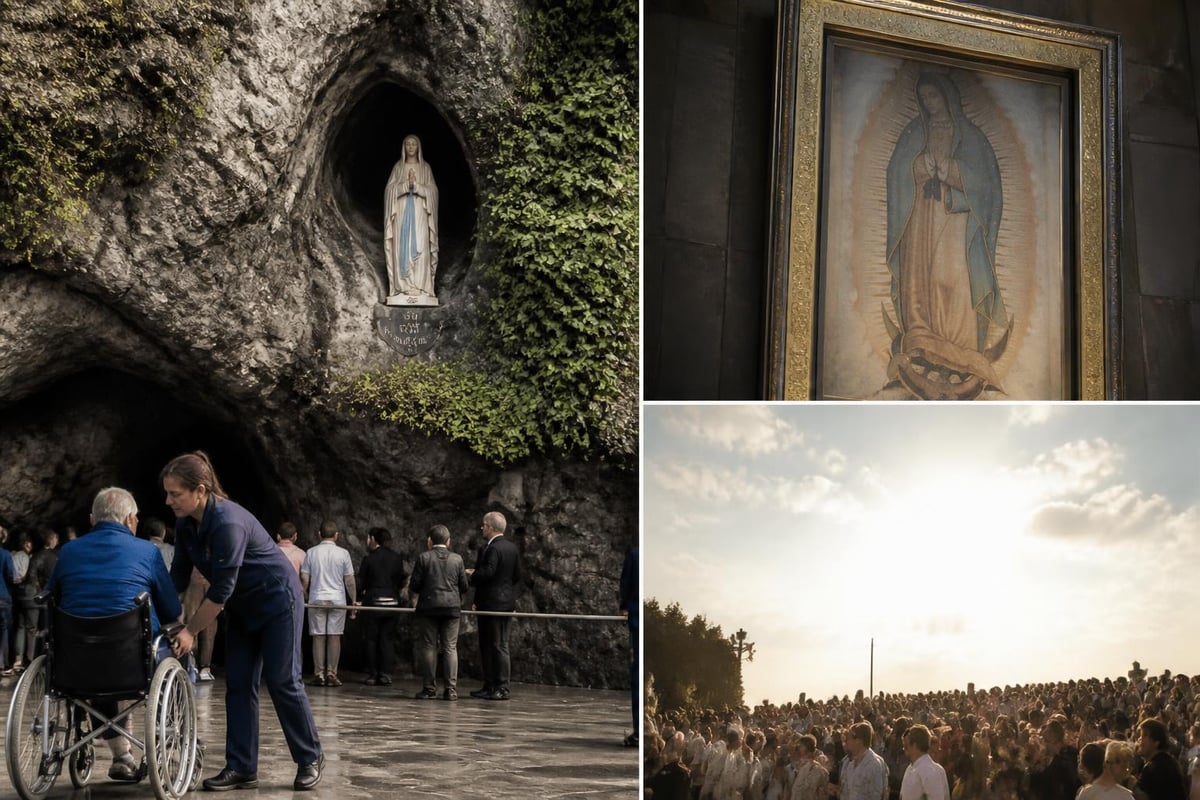
Lourdes, France, exemplifies rigorous miracle verification. The Lourdes Medical Bureau, established in 1883, examines healing claims using strict protocols. Only 70 healings have received official recognition as miracles among millions of pilgrims, demonstrating the Church's cautious approach.
Verification Requirements
- Complete medical documentation before pilgrimage
- Diagnosis of serious, organic disease
- Instantaneous or extremely rapid healing
- No medical treatment explaining recovery
- Permanent cure verified after years
- Multiple independent medical reviews
The process protects against false claims while acknowledging genuine divine intervention. Contemporary beliefs about religious miracles remain strong, with surveys showing majority belief among practicing Catholics.
Saints and Miraculous Intercession
Religious miracles often occur through saintly intercession. The canonization process requires verified miracles attributed to a candidate's prayers. This requirement demonstrates the saint's ability to intercede with God on behalf of the faithful.
Stories from the lives of Catholic saints reveal countless instances of miraculous intervention. Saint Padre Pio demonstrated stigmata, bilocation, and healing gifts throughout his ministry. Medical professionals documented his wounds, finding them inexplicable by natural means.
Notable saintly miracles:
- Saint Anthony of Padua's incorrupt tongue and jaw
- Saint Joseph of Cupertino's witnessed levitations
- Saint Catherine of Siena's survival without food
- Saint Bernadette Soubirous's incorrupt body
- Saint John Vianney's multiplication of food
These phenomena serve evangelical purposes, drawing people toward faith and demonstrating God's active presence in the world.
The Incorruptibles
Certain saints' bodies resist normal decomposition, remaining intact decades or centuries after death. This phenomenon defies biological processes and has been documented in multiple cases. Saint Cecilia, martyred in 230 AD, appeared as though sleeping when her tomb was opened in 1599.
| Saint | Death Year | Discovery Year | Current State |
|---|---|---|---|
| Bernadette Soubirous | 1879 | 1909 | Fully intact, Lourdes |
| Catherine Labouré | 1876 | 1933 | Incorrupt, Paris |
| John Vianney | 1859 | 1904 | Preserved, Ars |
| Rita of Cascia | 1457 | 1457 | Visible, Cascia |
Scientific examinations reveal no embalming or artificial preservation methods. The bodies maintain flexibility and emit pleasant fragrances rather than odors of decay.
Marian Apparitions and Religious Miracles
Apparitions of the Blessed Virgin Mary frequently accompany religious miracles. Fatima, Lourdes, and Guadalupe represent three major approved apparitions, each involving miraculous events that strengthened faith and drew millions of pilgrims.
The Miracle of the Sun at Fatima, witnessed by 70,000 people on October 13, 1917, remains one of the most documented public miracles. Secular newspapers reported the solar phenomenon, lending credibility to witnesses' accounts. The sun appeared to dance, change colors, and plunge toward earth before returning to normal position.
Supernatural Signs
Marian apparitions often include prophetic messages, healings, and physical signs:
- Spring water appearing with healing properties (Lourdes)
- Miraculous image imprinted on fabric (Guadalupe)
- Solar phenomena witnessed by thousands (Fatima)
- Cures documented by medical professionals
- Conversions of skeptics and non-believers
These signs serve to authenticate the apparitions and call people to deeper faith, prayer, and conversion. The Church investigates each claim thoroughly before granting approval.
Contemporary Religious Miracles
Religious miracles continue in the modern era. The Eucharistic miracle in Buenos Aires, Argentina, occurred in 1996 when a consecrated Host that fell on the floor began transforming. Scientific analysis by Dr. Frederick Zugibe revealed human cardiac tissue in the throes of death, type AB blood identical to the Shroud of Turin.
Neuroscience research examines how the brain processes religious experiences, yet cannot explain away verified miraculous events. The distinction between subjective spiritual experiences and objective physical phenomena remains crucial in miracle verification.
Digital Age Documentation
Modern technology enables unprecedented documentation of religious miracles. High-definition photography, DNA analysis, carbon dating, and instantaneous global communication allow rapid verification and sharing of miraculous events. Social media spreads news of claimed miracles within hours, though this also increases the need for careful discernment.
The Church maintains its rigorous standards despite technological advances. Digital documentation supplements rather than replaces traditional investigation methods. Multiple witnesses, medical evidence, and theological assessment remain essential components.
Philosophical Perspectives on Religious Miracles
Philosophical discussions of miracles explore fundamental questions about divine intervention, natural law, and evidence. David Hume's famous argument against miracles claimed that uniform experience against miracles outweighs testimony in their favor. Catholic philosophers respond that God, as creator of natural laws, can certainly suspend them for divine purposes.
Thomas Aquinas defined religious miracles as events beyond nature's power, done by God alone. This understanding distinguishes true miracles from unusual natural phenomena or human trickery. The supernatural character of miracles serves as divine confirmation of revealed truth.
Philosophical criteria for miracles:
- Transcends all natural powers and causes
- Occurs in observable, physical reality
- Demonstrates divine purpose or message
- Cannot be replicated through natural means
- Serves evangelical or spiritual function
These criteria help distinguish genuine religious miracles from coincidence, natural rarities, or deception.
The Role of Religious Miracles in Faith Formation
Religious miracles strengthen faith by providing tangible evidence of God's presence. While faith does not depend on miracles, these events encourage believers and attract seekers. The apostle Thomas's encounter with the risen Christ exemplifies how miraculous experience can transform doubt into profound faith.
Catholic education incorporates miracle accounts to illustrate theological truths. Understanding the lives of canonized saints and their associated miracles helps the faithful appreciate God's action throughout history. These stories provide models of holiness and demonstrate prayer's power.
Educational Impact
Religious education programs use miracle accounts to:
- Demonstrate Real Presence in the Eucharist
- Illustrate power of intercessory prayer
- Show God's continuing involvement in history
- Encourage devotion to Mary and the saints
- Strengthen commitment during trials
Parents and educators find these accounts particularly effective for teaching children. The concrete, dramatic nature of religious miracles captures young imagination while conveying profound spiritual truths.
Critical Examination and Skepticism
The Catholic Church welcomes scientific scrutiny of religious miracles. Critical analysis strengthens rather than weakens authentic miracle claims by eliminating false positives and demonstrating the inexplicable nature of genuine events. Healthy skepticism serves faith by ensuring only true miracles receive recognition.
Multiple competing religious traditions claim miracles, raising questions about their significance. Catholics argue that miracles confirming Christian doctrine, particularly those associated with the Eucharist and saints, demonstrate unique divine validation. The consistency of miracle types across Catholic history provides additional credibility.
Scientific Limitations
Science can document what happened but cannot determine why. A healing may be medically inexplicable without being definitively miraculous. The Church requires more than scientific bafflement, seeking clear signs of divine causation and purpose.
| Aspect | Scientific Analysis | Theological Assessment |
|---|---|---|
| Physical evidence | DNA, tissue analysis | Divine purpose |
| Timeline | Document sequence | Spiritual context |
| Witnesses | Verify testimony | Evaluate faith impact |
| Outcome | Measure results | Discern meaning |
This dual approach honors both reason and faith, acknowledging their complementary roles in understanding religious miracles.
Impact on Catholic Practice and Devotion
Religious miracles profoundly influence Catholic devotional life. Pilgrimage sites associated with miracles attract millions annually. These locations become centers of prayer, healing, and spiritual renewal. The economic and cultural impact extends beyond religious significance.
Devotional practices often arise from miraculous events. The Divine Mercy devotion emerged from Saint Faustina's visions of Jesus. The Flame of Love movement grew from Elizabeth Kindelmann's mystical experiences and messages from Christ and Mary. These devotions spread globally, touching countless lives.
Practical effects of religious miracles:
- Increased Eucharistic adoration
- Growth in sacramental participation
- Stronger devotion to Mary and saints
- Expanded charitable works
- Renewed commitment to evangelization
The transformative power of religious miracles extends beyond individual believers to entire communities and cultures.
Religious miracles remain powerful testimonies to God's active presence in our world, strengthening faith through extraordinary events that transcend natural explanation. Whether you seek to deepen your understanding of Eucharistic miracles, explore the lives of miracle-working saints, or discover authenticated supernatural events throughout Church history, Journeys of Faith offers comprehensive resources to guide your spiritual journey. Explore our extensive collection of books, prayer cards, and educational materials that document and explain these profound manifestations of divine power.
Resources:
- Explore Journeys of Faith online store with thousands of Catholic items at https://journeysoffaith.com/collections
- Our unique mega search engine at https://journeysoffaith.com/search is linked to hundreds of Catholic shops and stores
- Get the Journeys of Faith NEW app for iPhone or Android - search for Journeys of Faith or go to https://journeysoffaith.com/pages/download-our-app
- Chat with us anytime at https://chatting.page/mjxs9aerrtgm3lmpndlcepmbyosntrjn
- We need your help to reach more souls - please make a donation at https://journeysoffaith.com/pages/donate
