

In the rich tapestry of Catholic saints, few figures embody the harmonious blend of artistic excellence and profound spirituality quite like saint catherine of bologna. Born Catherine de' Vigri in 1413, this remarkable woman navigated the corridors of Italian nobility before dedicating her life to religious service, leaving behind a legacy that continues to inspire artists, writers, and spiritual seekers in 2026. Her journey from court attendant to mystic abbess demonstrates how divine calling can transform worldly talents into instruments of evangelization, making her story particularly relevant for those seeking to integrate faith with creative expression.
Early Life and Noble Beginnings
Saint catherine of bologna entered the world during the Italian Renaissance, a period marked by extraordinary artistic and intellectual flourishing. Born in Bologna to an aristocratic family, Catherine received an education befitting her noble status. Her father, Giovanni de' Vigri, served as a diplomat and provided his daughter with opportunities rarely available to women of that era.
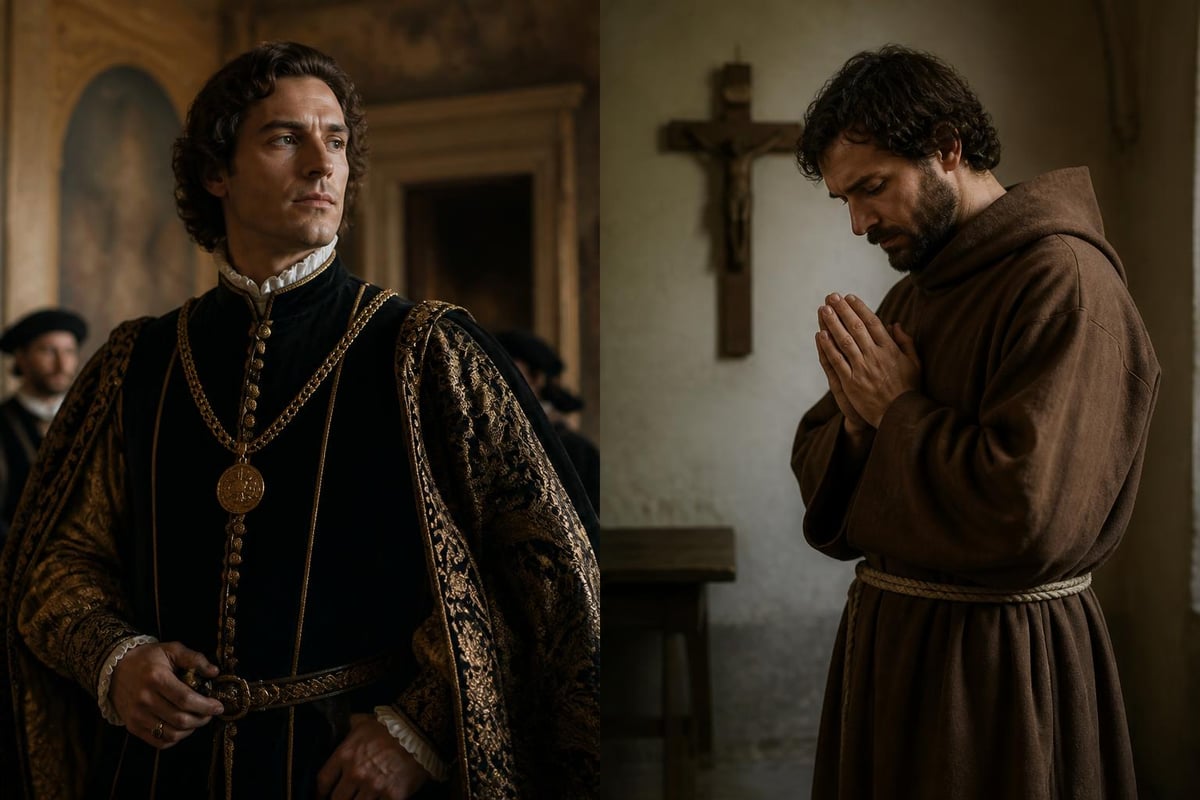
Young Catherine's formative years unfolded at the court of Ferrara, where she served as a lady-in-waiting to Margherita d'Este, daughter of the Marquis of Ferrara. This privileged position exposed her to refined culture, advanced education, and the arts that would later characterize her spiritual contributions.
Her education encompassed remarkable breadth and depth:
- Latin studies that enabled her to read theological texts
- Musical training in voice and various instruments
- Artistic instruction in illumination and painting
- Literary development through poetry and prose composition
- Philosophical formation grounding her intellectual pursuits
The court environment, while luxurious, awakened in Catherine a deeper hunger for spiritual meaning. She observed the transient nature of worldly honors and began contemplating a different path, one that would align her considerable talents with eternal purposes.
Embracing Religious Life
At age fourteen, saint catherine of bologna made a decision that would define her existence. Alongside Margaret d'Este and several other young women, she joined a community of Franciscan tertiaries in Ferrara in 1427. This community, dedicated to prayer and poverty, initially lived according to the Rule of Saint Augustine before transitioning to the Poor Clare rule under Saint Clare of Assisi.
The transition from palace luxury to monastic simplicity tested Catherine's resolve. She later wrote about experiencing severe temptations during her early religious years, documenting spiritual battles that would inform her most famous work. These challenges included doubts about her vocation, struggles with pride regarding her accomplishments, and intense periods of spiritual darkness.
Formation as a Poor Clare
When the community formally adopted the Rule of Saint Clare in 1431, Catherine fully embraced the Poor Clare charism. The Poor Clares' emphasis on poverty, contemplation, and communal life aligned perfectly with her growing spiritual convictions. She served her sisters with humility, taking on menial tasks despite her noble background.
Brought to you by Journeys of Faith, founded by Bob and Penny Lord. We are an Augustinian Secular Institute and Cyber Apostles. Our Mission is Evangelization through Media.
Her responsibilities within the community expanded as her spiritual maturity deepened. She eventually became mistress of novices, tasked with forming new members in the Franciscan way of life. This role revealed her gift for spiritual direction and her ability to communicate complex theological concepts with clarity and compassion.
Mystical Experiences and Visions
Saint catherine of bologna's spiritual life was marked by extraordinary mystical phenomena that she documented with characteristic precision. Her visions of Christ, the Blessed Virgin Mary, and various saints shaped her understanding of divine love and informed her teaching ministry.
On Christmas Eve, Catherine reportedly experienced a vision in which the Blessed Mother placed the infant Jesus in her arms. This profound mystical encounter deepened her devotion to the Incarnation and influenced her artistic representations of the Madonna and Child. Her mystical experiences became touchstones for her spiritual guidance to others, always balanced with discernment and humility.
The Seven Spiritual Weapons
Catherine's most significant literary contribution emerged from her mystical experiences and spiritual battles. "The Seven Spiritual Weapons" (Le Sette Armi Spirituali) represents a masterwork of medieval spiritual literature, offering practical guidance for navigating spiritual warfare.
The seven weapons she identified include:
- Diligent practice of virtuous works performed with love
- Confidence in God's goodness despite personal unworthiness
- Meditation on Christ's Passion as the source of strength
- Mental prayer and contemplation as daily nourishment
- Examination of thoughts and actions with honest self-awareness
- Remembrance of death as motivation for holy living
- Sacred Scripture study as the foundation of wisdom
This framework provided spiritual seekers with concrete tools for growth, making abstract theological concepts accessible to ordinary believers. Her work anticipated by centuries the systematic spiritual direction methods that would characterize later Catholic spiritual masters.

Artistic Legacy and Patronage
The artistic contributions of saint catherine of bologna distinguish her among medieval mystics. Unlike many contemplatives who abandoned worldly pursuits, Catherine understood her artistic gifts as divine endowments meant for God's glory. Her role as patron saint of artists reflects this integration of creativity and spirituality.
Catherine's artistic production included illuminated manuscripts, paintings, and embroidery work of exceptional quality. Several of her artistic creations survive today, offering tangible connections to her creative vision. Her breviary, illuminated by her own hand, demonstrates technical mastery and spiritual sensitivity in equal measure.
| Artistic Medium | Notable Works | Spiritual Significance |
|---|---|---|
| Manuscript Illumination | Personal breviary, liturgical texts | Made prayer visually beautiful |
| Painting | Madonna and Child depictions | Expressed mystical visions |
| Embroidery | Liturgical vestments | Honored divine worship |
| Calligraphy | Spiritual writings | Preserved teachings for posterity |
Her paintings often depicted religious subjects drawn from her visions. The tenderness with which she portrayed the relationship between Mary and Jesus reflected her personal mystical experiences. Modern art historians recognize her technical skill alongside her devotional purpose, noting how she used artistic conventions of her era to communicate theological truths.
For those seeking inspiration from Catholic saints who integrated professional excellence with spiritual depth, Catherine's example offers powerful guidance. She never viewed art as separate from prayer but rather as another form of contemplation and service.
Abbess of Corpus Domini
In 1456, saint catherine of bologna faced a new challenge when church authorities asked her to establish a Poor Clare monastery in her native Bologna. Despite her preference for hidden contemplative life, obedience compelled her to accept the role of abbess for the new Monastery of Corpus Domini (Body of Christ).
The fifteen nuns who accompanied Catherine from Ferrara formed the nucleus of the new community. As abbess, she led by example, continuing to perform humble tasks while providing spiritual direction. Her leadership style emphasized service over authority, embodying the Franciscan ideal of being a servant to all.
Governance and Community Life
Catherine's governance of Corpus Domini reflected her mystical insights and practical wisdom. She established routines that balanced contemplative prayer with necessary work, ensuring the community's spiritual vitality and material sustainability. The monastery became known for its fervent observance and the holiness of its members.
Her approach to community leadership included:
- Regular spiritual conferences sharing mystical insights
- Personal example in observing the rule strictly
- Gentle correction balanced with encouragement
- Practical organization of daily responsibilities
- Artistic workshops where sisters used creative gifts for the community
Her administrative skills combined with spiritual depth created an environment where women could flourish both intellectually and spiritually. The monastery attracted vocations from various social classes, united by commitment to the Poor Clare ideal.
Spiritual Writings and Teachings
Beyond "The Seven Spiritual Weapons," saint catherine of bologna produced various spiritual writings that reveal her theological sophistication and pastoral sensitivity. Her corpus includes treatises on prayer, letters of spiritual direction, and devotional poetry that demonstrates literary skill.
Her writings addressed practical questions facing those pursuing holiness:
How does one maintain fervor during spiritual dryness? Catherine counseled perseverance in prayer and trust in God's hidden work during difficult periods.
What role do spiritual directors play? She emphasized obedience to guidance while maintaining personal responsibility for one's spiritual development.
How should religious communities handle conflicts? Her letters reveal wisdom in promoting charity and understanding among sisters while maintaining discipline.
The accessibility of her teaching style made complex theological concepts understandable to educated and simple alike. She avoided unnecessarily obscure language, preferring clarity that served pastoral purposes. This characteristic made her particularly effective as a novice mistress and spiritual guide.
Death and Incorruption
Saint catherine of bologna died on March 9, 1463, after a brief illness. Her final words reportedly expressed complete surrender to God's will and confidence in divine mercy. The sisters who attended her death witnessed her peaceful departure, marked by profound serenity.
Eighteen days after burial, the nuns decided to exhume her body for reburial in the church. They discovered her body incorrupt, a phenomenon that the Church has historically associated with sanctity. This physical incorruption has continued for over 560 years, with her body remaining visible in a chapel at the Monastery of Corpus Domini in Bologna.
| Aspect | Details |
|---|---|
| Death Date | March 9, 1463 |
| Age at Death | 49 years |
| Location | Monastery of Corpus Domini, Bologna |
| Physical State | Incorrupt body, seated upright |
| Current Viewing | Chapel within monastery, visible to pilgrims |
The preservation of her body became a source of devotion and continues to attract pilgrims seeking intercession and inspiration. Modern scientific examinations have confirmed the unusual nature of the preservation, though Church authorities emphasize that incorruption alone does not constitute proof of sanctity.
Canonization and Veneration
The process of recognizing saint catherine of bologna's sanctity began shortly after her death. Local veneration grew as reports of miracles through her intercession multiplied. The Catholic Church's investigation into her life, writings, and miracles proceeded through the centuries-long canonization process typical of that era.
Pope Clement XI officially canonized Catherine on May 22, 1712, nearly 250 years after her death. This formal recognition confirmed what her spiritual children had long known: Catherine's life exemplified heroic virtue worthy of universal veneration. Her feast day is celebrated on March 9, the anniversary of her death.
Patronage of Artists
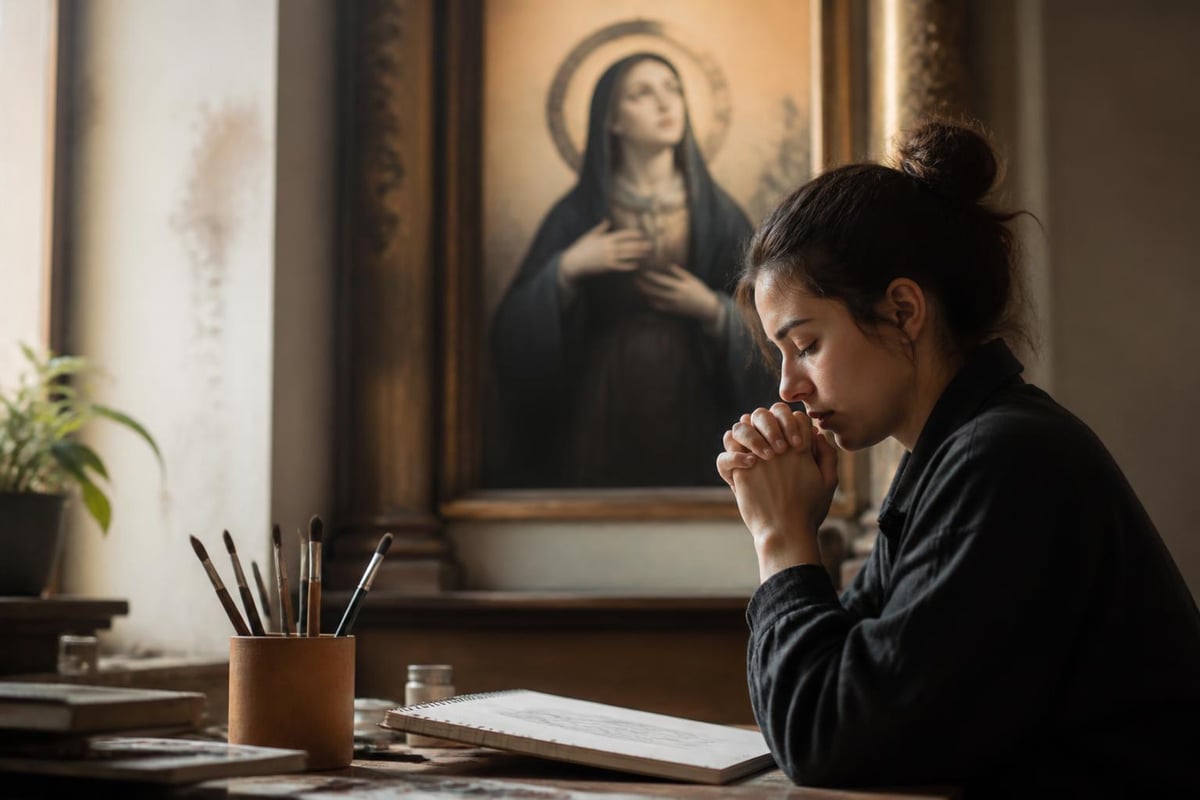
The designation of saint catherine of bologna as patron saint of artists carries profound significance for Catholic creatives. Her patronage encourages those working in various artistic fields to view their talents as divine gifts meant for God's glory and human enrichment.
Artists seeking her intercession pray for:
- Creative inspiration grounded in truth and beauty
- Technical skill development honoring the craft
- Integrity in artistic choices aligned with faith
- Courage to create despite criticism or obstacles
- Balance between artistic pursuits and spiritual growth
Many Catholic artists in 2026 continue discovering Catherine's relevance, finding in her example permission to pursue excellence in their craft while maintaining deep spiritual commitments. Her life demonstrates that artistic vocation and religious calling need not conflict but can mutually enrich one another.
The Journeys of Faith community, committed to exploring the lives of Catholic saints, offers resources that help believers understand how figures like saint catherine of bologna integrated their gifts with their faith. Catholic Saints Books provide deeper insights into how studying the saints can transform our own spiritual journeys, following the pattern Catherine herself practiced by studying those who preceded her.
Relevance for Contemporary Believers
The example of saint catherine of bologna speaks powerfully to challenges facing Catholics in contemporary culture. Her integration of contemplation and action, artistic excellence and spiritual depth, noble background and humble service addresses questions many believers grapple with today.
For professionals balancing career demands with spiritual commitments, Catherine demonstrates that excellence in one's field can serve evangelization. Her artistic production wasn't separate from her spiritual life but an expression of it. This holistic approach challenges false dichotomies between "sacred" and "secular" work.
For those experiencing spiritual dryness or doubt, her honest documentation of struggles offers companionship and hope. Catherine's "Seven Spiritual Weapons" remain practical tools for navigating contemporary spiritual battles, whether those involve digital distractions, cultural pressures, or internal conflicts.
Lessons for Modern Evangelization
Catherine's approach to evangelization through beauty and excellence holds particular relevance for media-focused ministries. She understood that truth presented beautifully attracts hearts more effectively than arguments alone. Her illuminated manuscripts and paintings drew viewers into contemplation, making abstract truths tangible through visual beauty.
Key principles from her example include:
- Quality matters in presenting the faith
- Beauty attracts hearts to truth
- Personal holiness authenticates message
- Humility serves better than self-promotion
- Perseverance through obstacles bears fruit
Organizations dedicated to Catholic evangelization through media, like Journeys of Faith, follow in Catherine's footsteps by using contemporary tools-books, DVDs, digital content-to share the richness of Catholic tradition with modern audiences.
Living the Franciscan Charism
Saint catherine of bologna embodied the Franciscan charism she embraced as a young woman. Her commitment to poverty, despite noble origins, testified to genuine conversion. She understood poverty not merely as material simplicity but as spiritual freedom from attachment to created things.
The joy characteristic of Franciscan spirituality pervaded Catherine's life and writings. Even while documenting spiritual struggles, she maintained confidence in God's goodness and mercy. This joyful trust inspired those she guided, offering an antidote to the anxiety and fear that can afflict spiritual seekers.
Her emphasis on community life reflected Saint Francis's vision of fraternal charity. Catherine's governance of Corpus Domini prioritized relationships among sisters, understanding that authentic Christian community witnesses to the world more powerfully than individual excellence alone. The monastery she established continues operating in 2026, carrying forward her vision of contemplative Franciscan life.
Artistic Works and Preservation
The survival of saint catherine of bologna's artistic works provides rare direct connections to a medieval mystic's creative vision. Her illuminated breviary, preserved at the monastery in Bologna, reveals meticulous attention to detail and sophisticated understanding of symbolic imagery. Each illumination served not merely decorative purposes but theological ones, inviting meditation on the mysteries depicted.
Several paintings attributed to Catherine demonstrate technical competence unusual for her era, particularly for a woman without formal artistic training. Her depictions of the Madonna show influence from contemporary Ferrarese artists while maintaining distinctive spiritual sensitivity. Art historians note how her compositions emphasize intimacy and tenderness, reflecting her mystical experiences of divine love.
The embroidery work Catherine produced for liturgical use combined technical skill with devotional purpose. She viewed the creation of beautiful vestments and altar cloths as acts of worship, offering her artistic gifts for the enhancement of divine liturgy. This sacramental understanding of artistic work models healthy integration of creativity and spirituality.
Modern conservation efforts ensure these works remain accessible to scholars and pilgrims. The monastery maintains careful environmental controls protecting the delicate materials while allowing limited viewing opportunities. Digital photography has made some works more widely available, extending Catherine's artistic evangelization into the digital age.
Influence on Religious Life
The impact of saint catherine of bologna extended beyond her immediate community through the Poor Clare monasteries that looked to Corpus Domini for inspiration. Her interpretation of the Poor Clare rule emphasized both contemplative depth and practical service, creating a balanced approach that attracted numerous vocations.
Her writings on religious formation influenced generations of novice mistresses. The principles she articulated for discerning vocations, forming new members, and maintaining fervor remain relevant for religious communities in 2026. Her emphasis on personal spiritual development rather than mere rule observance anticipated later reforms in religious life.
Communities facing challenges maintaining their charism while adapting to changing circumstances find guidance in Catherine's example. She demonstrated fidelity to essential principles while showing flexibility in implementation, a balance crucial for religious life's sustainability. Her leadership style-combining firm adherence to rule with pastoral sensitivity-models effective governance.
Prayer and Intercession
Devotion to saint catherine of bologna continues growing as Catholics discover her relevance for contemporary challenges. Pilgrims visiting her incorrupt body at Corpus Domini monastery often report profound spiritual experiences and renewed commitment to integrating faith with daily life. The chapel housing her remains has become a place of prayer and encounter for those seeking artistic inspiration, spiritual guidance, or simply deeper relationship with Christ.
Common petitions brought to saint catherine of bologna include requests for:
Creative breakthrough when artists face blocks or discouragement
Vocational clarity for those discerning God's call
Perseverance in prayer during periods of dryness
Community harmony in religious houses or parishes
Integration of faith and work across professions
Many report that approaching Catherine with specific artistic or spiritual struggles brings unexpected clarity and renewed energy. Her intercession seems particularly powerful for those seeking to use their talents for God's glory while maintaining humility and dependence on divine grace.
The life and legacy of saint catherine of bologna offer timeless wisdom for Catholics navigating the intersection of faith, creativity, and service in 2026. Her integration of artistic excellence with mystical depth, noble background with humble service, and contemplative prayer with active leadership provides a compelling model for holistic Christian living. Whether you're an artist seeking inspiration, a contemplative desiring deeper prayer, or simply a believer hungry for authentic sanctity, Catherine's example illuminates the path forward. Journeys of Faith continues the mission of sharing the lives of saints like Catherine through various media formats, helping modern believers discover how these holy men and women can transform our own spiritual journeys and inspire us to greater love of Christ and His Church.
Resources:
- Explore the Journeys of Faith online store with thousands of Catholic items at https://journeysoffaith.com/collections
- Our unique Mega Search Engine at https://journeysoffaith.com/search is linked to hundreds of Catholic shops and stores
- Get the Journeys of Faith NEW App for iPhone or Android-search for Journeys of Faith or go to https://journeysoffaith.com/pages/download-our-app
- Chat with us anytime at https://chatting.page/mjxs9aerrtgm3lmpndlcepmbyosntrjn
- We need your help to reach more souls. Please make a donation at https://journeysoffaith.com/pages/donate
