

Nursing represents one of humanity's most compassionate vocations, a calling that demands not only medical expertise but also profound spiritual strength. Throughout centuries of Catholic tradition, the Church has recognized this sacred work by designating specific saints as heavenly advocates for those who care for the sick and suffering. The saint for nurses serves as both a spiritual guide and intercessor, offering divine support to healthcare professionals who daily confront human fragility, pain, and mortality. Understanding these patron saints provides nurses with powerful models of faith-driven service and access to profound spiritual resources that can sustain them through their demanding work.
Primary Patron Saints for Nurses
The Catholic Church recognizes multiple patron saints for nurses, each bringing unique gifts and perspectives to this sacred profession. While several saints share this patronage, three stand out as the most widely venerated protectors of nursing professionals.
St. Camillus de Lellis: The Revolutionary Healer
St. Camillus de Lellis transformed from a gambling soldier to one of Christianity's greatest advocates for compassionate medical care. Born in 1550 in Italy, Camillus spent his early years pursuing worldly pleasures and military glory. A chronic leg wound eventually led him to seek treatment at San Giacomo Hospital in Rome, where he experienced a profound conversion that changed the trajectory of his life forever.
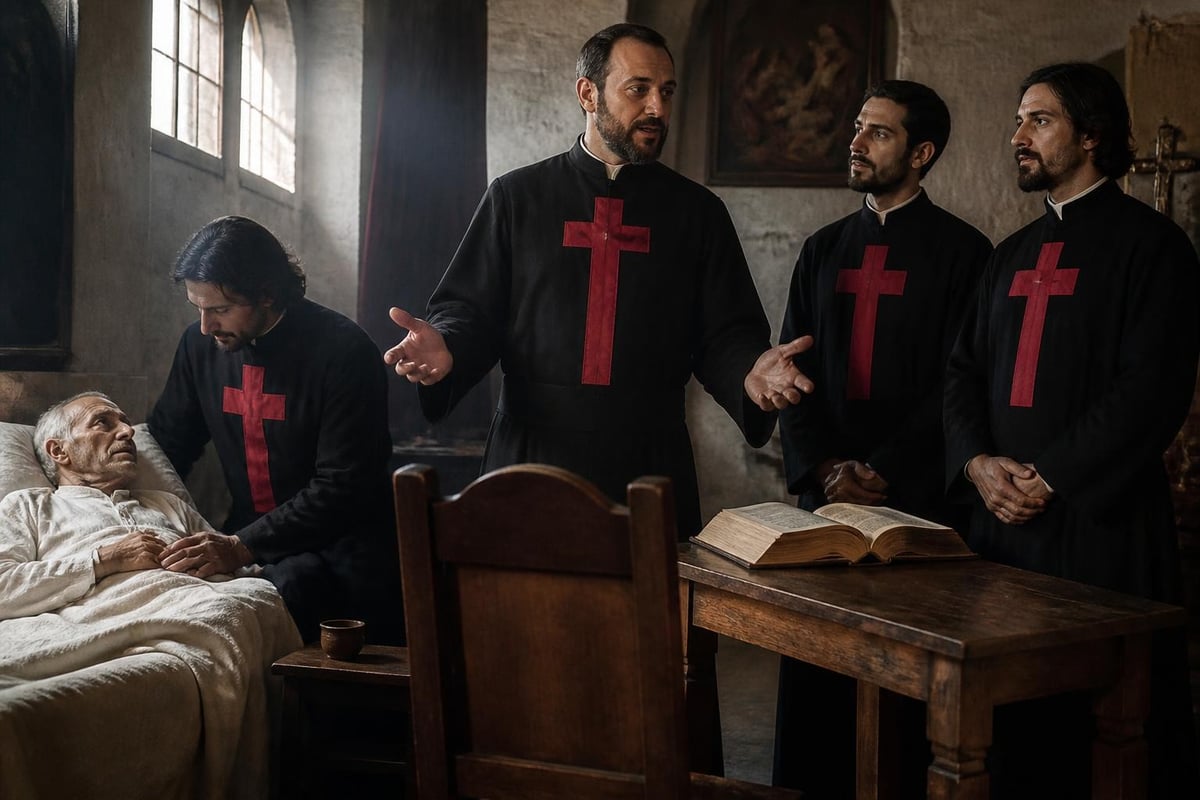
After ordination as a priest, St. Camillus founded the Ministers of the Sick (Camillians) in 1586, a religious order dedicated entirely to caring for the ill and dying. His innovative approach to patient care introduced concepts that seem obvious today but were revolutionary in the sixteenth century:
- Separation of infectious patients to prevent disease spread
- Fresh air and hygiene as essential elements of healing
- Special dietary considerations tailored to patient needs
- Dignified treatment of all patients regardless of social status
- Spiritual care integrated with physical treatment
The patron saint of hospitals, nurses, and the sick established standards of care that foreshadowed modern nursing ethics. He insisted his religious brothers treat patients with the same tenderness they would show to Christ himself, embodying the Gospel principle that "whatever you did for the least of these, you did for me."
St. Camillus personally cared for plague victims, worked on galleys during naval battles to tend wounded sailors, and died on July 14, 1614. Pope Benedict XIV canonized him in 1746, and Pope Leo XIII declared him the patron saint for nurses alongside the sick and hospitals in 1886.
St. Agatha of Sicily: Courage Through Suffering
St. Agatha represents a different dimension of nursing patronage-one rooted in enduring suffering with faith and courage. This third-century virgin martyr from Catania, Sicily, provides inspiration particularly for nurses who encounter trauma, violence, and extreme patient suffering.
Born into a noble Christian family around 231 AD, Agatha consecrated her virginity to God at a young age. When the Roman prefect Quintianus made advances toward her, she refused his proposals. In retaliation, he subjected her to brutal torture, including the severing of her breasts. According to tradition, St. Peter appeared to her in prison and healed her wounds miraculously.
Despite this divine intervention, Agatha was martyred around 251 AD. Her unwavering faith amid physical trauma makes her a powerful saint for nurses who care for:
Patients experiencing violent injuries
Survivors of assault and abuse
Those undergoing painful medical procedures
Cancer patients, particularly breast cancer survivors
The connection between St. Agatha's specific suffering and her patronage of breast cancer patients demonstrates how Catholic tradition honors the redemptive power of suffering united with Christ's passion.
St. Catherine of Siena: Mystic and Caregiver
St. Catherine of Siena combined mystical contemplation with hands-on nursing care, demonstrating that spiritual depth and practical service form a unified whole. Born in 1347 as the twenty-fourth child in her family, Catherine joined the Third Order of St. Dominic and devoted herself to prayer and serving the sick poor.
| Saint | Primary Focus | Era | Special Patronage |
|---|---|---|---|
| St. Camillus de Lellis | Institutional care reform | 16th century | Hospitals, nurses, sick |
| St. Agatha | Courage in suffering | 3rd century | Nurses, breast cancer patients |
| St. Catherine of Siena | Spiritual care | 14th century | Nurses, fire prevention, Italy |
Catherine personally nursed victims of the Black Death in Siena, showing no fear of contagion. She cared for patients others abandoned, including those with repulsive wounds and diseases. Her mystical experiences, including receiving the stigmata and having visions of Christ, never separated her from active service to suffering humanity.
Brought to you by Journeys of Faith, founded by Bob and Penny Lord. We are an Augustinian Secular Institute and Cyber Apostles. Our mission is evangelization through media.
Additional Patron Saints Supporting Nurses
Beyond the three primary patron saints, the Catholic tradition recognizes several other saints who offer specialized intercession for nursing professionals facing particular challenges or working in specific contexts.
St. John of God: Mental Health and Psychiatric Nursing
St. John of God founded the Brothers Hospitallers, an order dedicated to caring for the sick poor, and pioneered humane treatment of mentally ill patients. In an era when psychiatric patients faced chains and dungeons, John created environments of dignity and therapeutic care. Modern psychiatric nurses and mental health professionals find in him a powerful advocate who understood the connection between compassionate environment and healing.
St. Elizabeth of Hungary: Home Health and Community Nursing
Elizabeth, a thirteenth-century princess, used her royal resources to build hospitals and personally cared for the sick in their homes. Her ministry extended beyond institutional walls into the community, making her an appropriate patron for home health nurses, visiting nurses, and community health workers who bring care directly to patients' living spaces.
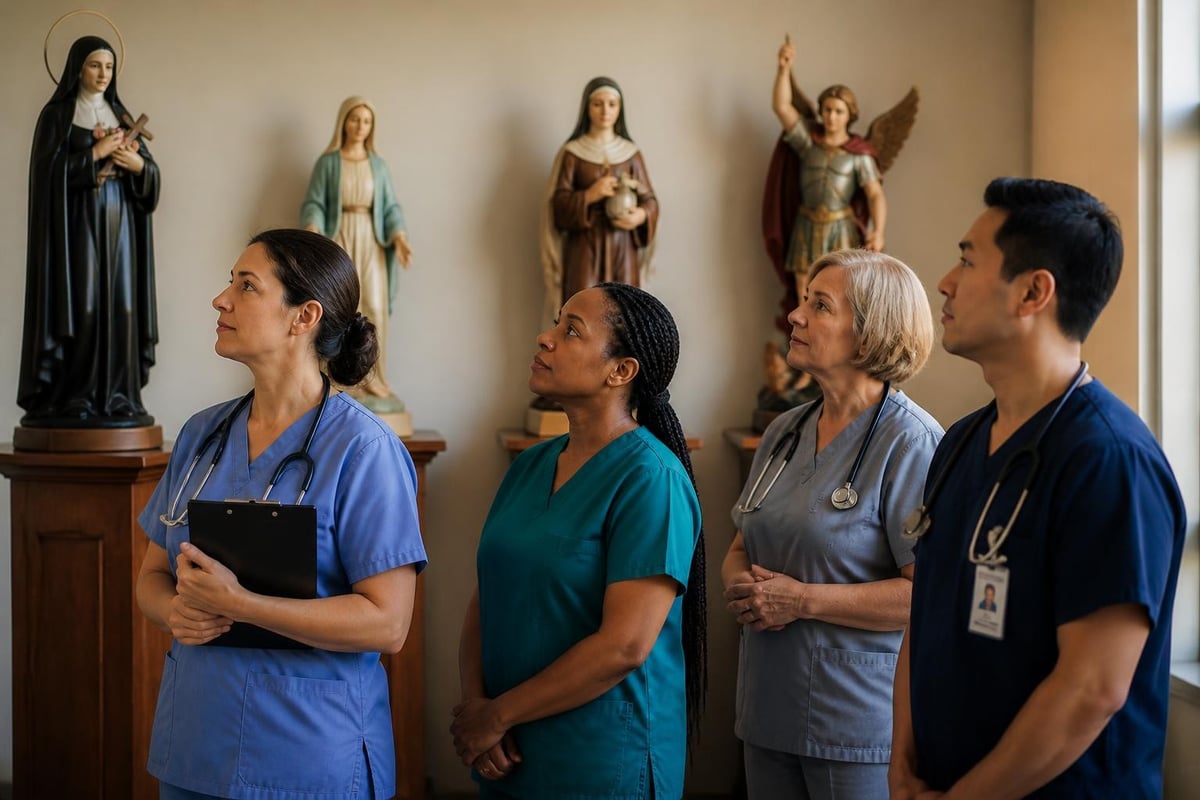
St. Raphael the Archangel: Healing and Divine Assistance
While not human, St. Raphael appears in the Book of Tobit as God's healing agent. His name means "God heals," and Catholic tradition invokes him for all healing ministries. Nurses seeking divine intervention in particularly difficult cases often pray to St. Raphael for guidance and miraculous assistance.
Spiritual Practices for Nurses Honoring Their Patron Saints
Developing a devotional relationship with a saint for nurses provides more than historical interest. It offers practical spiritual support that can sustain healthcare professionals through the unique stresses of their vocation.
Daily Invocations and Prayers
Nurses can begin shifts with brief prayers to their patron saints, asking for:
- Wisdom in assessment and clinical decision-making
- Compassion that doesn't lead to burnout
- Strength to endure long hours and emotional demands
- Protection from disease exposure and workplace violence
- Patience with difficult patients, families, and colleagues
Many Catholic nurses keep prayer cards featuring their patron saints in pockets or badges, offering quick spiritual touchpoints during demanding shifts. The Catholic minibooks available through Journeys of Faith provide accessible resources for learning about saints and deepening devotion even with limited time.
Feast Day Observances
Celebrating patron saint feast days creates annual opportunities for spiritual renewal. St. Camillus de Lellis is celebrated on July 14, St. Agatha on February 5, and St. Catherine of Siena on April 29. Nurses might mark these days by:
- Attending Mass if schedules permit
- Reading about the saint's life and ministry
- Offering their nursing work that day in special dedication
- Gathering with nursing colleagues for prayer or discussion
- Performing an extra act of charity or patient advocacy
Meditation on Saints' Lives During Challenges
When facing particularly difficult nursing situations, meditating on how patron saints handled similar circumstances provides both comfort and practical wisdom. A nurse caring for a trauma victim might reflect on St. Agatha's courage during torture. One struggling with institutional resistance to patient-centered care might find inspiration in St. Camillus's persistence in reforming hospital practices despite opposition.
The Theological Foundation of Nursing Patronage
Understanding why the Church designates patron saints for specific professions deepens appreciation for this tradition's spiritual richness. The theology of patronage rests on several interconnected Catholic doctrines.
The Communion of Saints
Catholic teaching affirms that death doesn't sever the bonds between Christ's followers. The Church comprises three states: the Church Militant (faithful on earth), the Church Suffering (souls in purgatory), and the Church Triumphant (saints in heaven). These three groups remain in spiritual communion, able to assist one another through prayer and intercession.
When nurses invoke a saint for nurses, they're not worshiping that saint but asking a heavenly friend to pray alongside them. Just as we might ask a trusted colleague to pray for us during a difficult situation, we ask saints-who see more clearly and pray more perfectly-to intercede with God on our behalf.
The Imitation of Christ Through the Saints
Saints exemplify particular aspects of Christ's character and mission. Each saint for nurses reflects Christ's healing ministry in unique ways. St. Camillus shows Christ's compassion for the suffering. St. Agatha demonstrates Christ's courage in the face of brutality. St. Catherine reveals Christ's integration of contemplation and action.
| Theological Principle | Application to Nursing | Patron Saint Example |
|---|---|---|
| Dignity of human life | Every patient deserves respect | St. Camillus treating all equally |
| Redemptive suffering | Pain can have spiritual meaning | St. Agatha's witness through torture |
| Corporal works of mercy | Faith expressed through care | St. Catherine serving plague victims |
The Catholic tradition encourages believers to study saints' lives not for historical interest alone but to learn concrete ways of following Christ more faithfully. For nurses, patron saints provide blueprints for Christian excellence in healthcare.
Sacramental Worldview and Healing Ministry
Catholic theology maintains that God works through material means-water in baptism, bread and wine in Eucharist, oil in anointing. This sacramental worldview affirms that nursing care, while natural and scientific, can simultaneously be a channel of divine grace.
When Catholic nurses perform their duties with prayerful intention, seeking their patron saints' intercession, they participate in God's healing work. The IV insertion, the medication administration, the comforting word-all become potential vehicles for divine love and healing power when offered in cooperation with God's will.

Practical Resources for Deepening Devotion
Modern Catholic nurses benefit from numerous resources that make devotion to patron saints accessible despite demanding schedules and secular work environments.
Prayer Cards and Novenas
Compact prayer cards featuring images and prayers to patron saints fit easily into scrubs pockets or badge holders. These provide quick reference for invocations during shifts. Novenas-nine-day prayer sequences-offer structured devotional practices that nurses can complete over nine consecutive workdays or any nine-day period.
For those seeking to deepen their prayer life while managing nursing's demands, resources like the prayer cards and novenas available at Journeys of Faith offer trusted, well-formatted materials designed for busy Catholics.
Books and Media About Nursing Saints
Reading full biographies of patron saints provides richer understanding than brief summaries allow. Many excellent books explore the lives and legacies of St. Camillus, St. Agatha, and St. Catherine in depth. Catholic publishers also produce documentaries and audio programs about these saints, allowing nurses to learn during commutes or meal breaks.
Professional Associations and Prayer Groups
Several Catholic nursing organizations exist to support healthcare professionals in integrating faith and practice. These groups often sponsor conferences, retreats, and online communities where nurses can share experiences, pray together, and discuss how to live their vocation as a ministry.
Local Catholic hospitals frequently have chaplains who organize prayer services, Mass celebrations, or blessing ceremonies for healthcare workers. Participating in these communal expressions of faith connects individual nurses to the broader Catholic healthcare tradition.
Challenges and Opportunities in Secular Healthcare Settings
Most contemporary nurses work in secular environments where explicit religious expression faces limitations. This reality presents both challenges and opportunities for those seeking to honor their patron saints while maintaining professional standards.
Navigating Professional Boundaries
Catholic nurses can honor their patron saints internally through prayer and intention even when external expressions aren't appropriate. Mental invocations before procedures, offering work as prayer, and maintaining awareness of Christ's presence in patients require no outward signs yet transform nursing practice spiritually.
Some appropriate ways to integrate faith in secular settings include:
- Wearing subtle religious jewelry (small medals or crucifixes)
- Keeping prayer cards in personal spaces like lockers
- Volunteering for hospital pastoral care committees
- Offering to pray with patients who express spiritual needs
- Modeling the compassionate care exemplified by patron saints
The key principle involves respecting institutional policies and patients' diverse beliefs while remaining rooted personally in Catholic identity and spirituality.
Witness Through Excellence and Compassion
The most powerful witness to patron saints' influence often comes through the quality of care nurses provide. When colleagues notice unusual patience, persistent advocacy for vulnerable patients, or exceptional compassion during difficult situations, they encounter the fruits of faith-formed character.
St. Camillus, St. Agatha, and St. Catherine didn't merely talk about care-they embodied it through action. Contemporary nurses following their example become living demonstrations that faith enhances rather than hinders professional excellence.
Opportunities for Evangelization
Occasionally, patients or colleagues express curiosity about a nurse's evident peace, purpose, or resilience. These moments offer natural opportunities for gentle evangelization. Sharing briefly about drawing strength from patron saints can plant seeds of faith curiosity without imposing beliefs inappropriately.
The balance involves being ready to give reasons for hope (1 Peter 3:15) while respecting others' freedom and the professional context. Stories about patron saints often resonate even with non-Catholics because they highlight universal values like courage, compassion, and service.
Expanding Understanding Through Church History
The comprehensive list of Catholic saints reveals that patronages emerge organically from saints' lives, miracles, and the needs of faithful communities over time. Understanding this historical development enriches appreciation for why particular saints became associated with nursing.
How Patronages Develop
Patronages aren't always formally declared by the Church. Many develop through popular devotion as believers experiencing particular struggles find certain saints especially helpful. Over time, these associations become recognized traditions.
Formal patronage declarations by popes or bishops typically confirm and standardize what faithful Catholics have already experienced. When Pope Leo XIII officially named St. Camillus patron of nurses, he acknowledged centuries of nurses who had already sought his intercession and experienced his powerful help.
Multiple Patrons for Complex Vocations
The existence of multiple patron saints for nurses reflects nursing's complexity. Different specialties, challenges, and aspects of the profession find expression through different saints' particular charisms and experiences.
Rather than causing confusion, this multiplicity provides richness. A nurse can relate differently to St. Camillus (institutional reform), St. Agatha (courage in trauma), or St. Catherine (spiritual care) depending on current professional challenges or personal spiritual needs.
The rich tradition of patron saints for nurses offers healthcare professionals profound spiritual resources for their demanding vocation, connecting modern practice with centuries of faith-filled healing ministry through powerful intercessors like St. Camillus de Lellis, St. Agatha, and St. Catherine of Siena. Whether you're seeking to deepen your understanding of the saints, looking for prayer resources to support your nursing ministry, or exploring the intersection of faith and healthcare, Journeys of Faith provides trusted Catholic materials to strengthen your spiritual journey. Explore the Journeys of Faith online store with thousands of Catholic items at https://journeysoffaith.com/collections. Journeys of Faith is blessed to provide Catholic media, including podcasts and inspirational content, free of charge across multiple media platforms for viewers and listeners around the world. While access to this content remains free, there are significant and continually increasing costs associated with producing, hosting, and distributing these programs. Your support helps us continue sharing the beauty of the Catholic faith with souls. Please make a donation at https://journeysoffaith.com/pages/donate.
🏥 Honor the Patron Saints of Nurses
Deepen your devotion to St. Camillus, St. Agatha, and St. Catherine of Siena — the heavenly patrons who walk with you through every shift. Explore our curated resources for Catholic healthcare professionals.
