

Prayer has anchored Christian life for two millennia, but few traditions have shaped Western spirituality as profoundly as the prayer practices established by Saint Benedict of Nursia in the sixth century. St Benedict's prayer isn't a single text or formula. Rather, it encompasses an entire spiritual ecosystem: the Liturgy of the Hours, personal meditation, communal worship, and the practice of lectio divina. These practices, codified in his famous Rule, have guided monks, nuns, and laypeople for over fifteen centuries, offering a blueprint for balancing work, prayer, and community life. Understanding st Benedict's prayer means exploring how Benedict transformed prayer from isolated devotion into the organizing principle of daily existence.
The Historical Foundation of St Benedict's Prayer
Saint Benedict of Nursia composed the Rule of Saint Benedict around 530 AD in Monte Cassino, Italy, as a practical guide for monastic life. The Rule dedicates substantial attention to prayer, establishing what Benedict called the Opus Dei (Work of God) as the central activity of monastic communities. Pope Benedict XVI reflected on this legacy in 2005, noting that Benedict's emphasis on prayer created communities where "nothing is to be preferred to the Work of God."
The historical context matters enormously. Western Europe in Benedict's time was fragmenting as the Roman Empire collapsed. Literacy declined, political structures crumbled, and social institutions dissolved. Into this chaos, Benedict introduced order through prayer. His communities preserved not only manuscripts and learning but also a structured rhythm of prayer that sustained faith through centuries of upheaval.
Brought to you by Journeys of Faith, founded by Bob and Penny Lord. We are an Augustinian Secular Institute-Cyber Apostles-whose mission is evangelization through media.
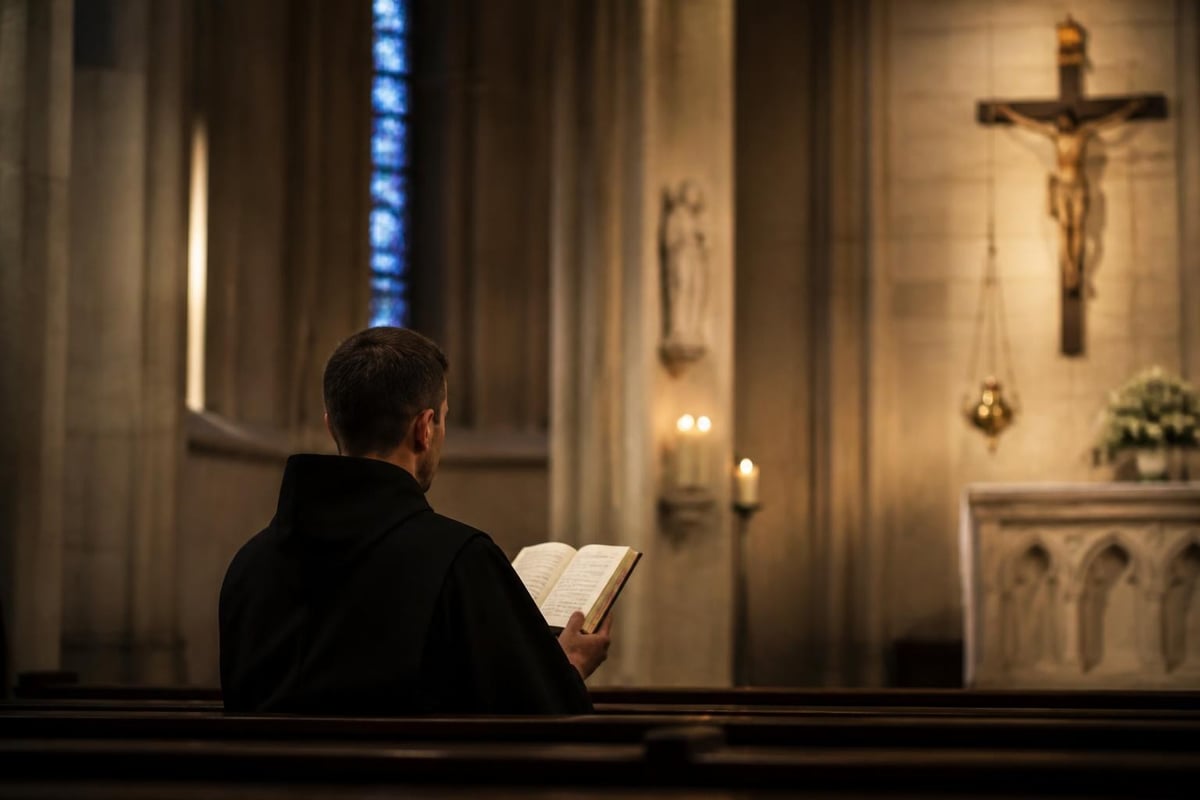
The Liturgy of the Hours as Communal Rhythm
St Benedict's prayer finds its fullest expression in the Divine Office, the Liturgy of the Hours that punctuates each day with communal worship. Benedict prescribed seven daytime hours and one night office, echoing Psalm 119:164: "Seven times a day I praise you." This structure includes:
- Vigils (Matins): Pre-dawn prayer, the longest office
- Lauds: Morning praise at daybreak
- Prime: First hour (6 AM)
- Terce: Third hour (9 AM)
- Sext: Sixth hour (noon)
- None: Ninth hour (3 PM)
- Vespers: Evening prayer at sunset
- Compline: Night prayer before sleep
Each office combines psalms, scripture readings, hymns, and prayers. Saint John's Abbey notes that this rhythm sanctifies time itself, transforming ordinary hours into prayer. For laypeople, the full eight offices may be impractical, but the principle remains: prayer structures the day rather than being squeezed into spare moments.
The communal dimension distinguishes Benedictine prayer. Monks pray together, their voices blending in chant. This corporate worship counteracts individualism, reminding participants that faith is communal. Even when praying the hours privately, one joins a global chorus of voices stretching across time zones and centuries.
Lectio Divina: The Benedictine Method of Scripture Prayer
Beyond the Liturgy of the Hours, st Benedict's prayer includes lectio divina (divine reading), a methodical approach to scripture that transforms reading into prayer. The Benedictine Institute describes this as moving from the head to the heart, from information to formation.
The Four Movements of Lectio Divina
Traditional lectio divina unfolds in four sequential stages:
- Lectio (Reading): Read scripture slowly, attentively, listening for a word or phrase that resonates
- Meditatio (Meditation): Reflect on that word, turning it over in your mind, exploring its meaning
- Oratio (Prayer): Respond to God directly, allowing the scripture to shape your conversation
- Contemplatio (Contemplation): Rest silently in God's presence, beyond words
| Stage | Focus | Duration | Outcome |
|---|---|---|---|
| Lectio | Attention | 5-10 min | Encounter with the text |
| Meditatio | Reflection | 10-15 min | Personal insight |
| Oratio | Response | 5-10 min | Dialogue with God |
| Contemplatio | Presence | 10-20 min | Union and rest |
This pattern appears simple but proves demanding. Modern readers rush through texts, consuming information. Lectio divina requires slowing down, reading a single passage multiple times, allowing scripture to read you as much as you read it. The lives of the Catholic saints demonstrate how this practice shaped holiness across generations.
Benedict himself didn't invent lectio divina, but he institutionalized it. Chapter 48 of the Rule mandates daily periods of sacred reading, creating protected time for this contemplative practice. The result was communities where prayer and study intertwined, where reading scripture was prayer rather than academic exercise.
Praying the Rule: Wisdom for Daily Life
The Rule of Saint Benedict itself becomes a prayer text, offering seventy-three short chapters of spiritual wisdom. Fordham's Internet Medieval Sourcebook provides accessible excerpts that reveal the Rule's practical spirituality. Key themes include:
- Humility: Chapter 7 outlines twelve steps of humility as a spiritual ladder
- Obedience: Immediate response to God's call through community authority
- Stability: Commitment to one community, one place, one way of life
- Conversatio Morum: Continuous conversion and transformation
- Moderation: Balance in all things-work, prayer, rest, food
These aren't abstract principles but lived practices. Humility means accepting correction gracefully. Obedience involves listening deeply before acting. Stability resists the modern urge to constantly seek greener pastures. Together, they shape character through daily choices.
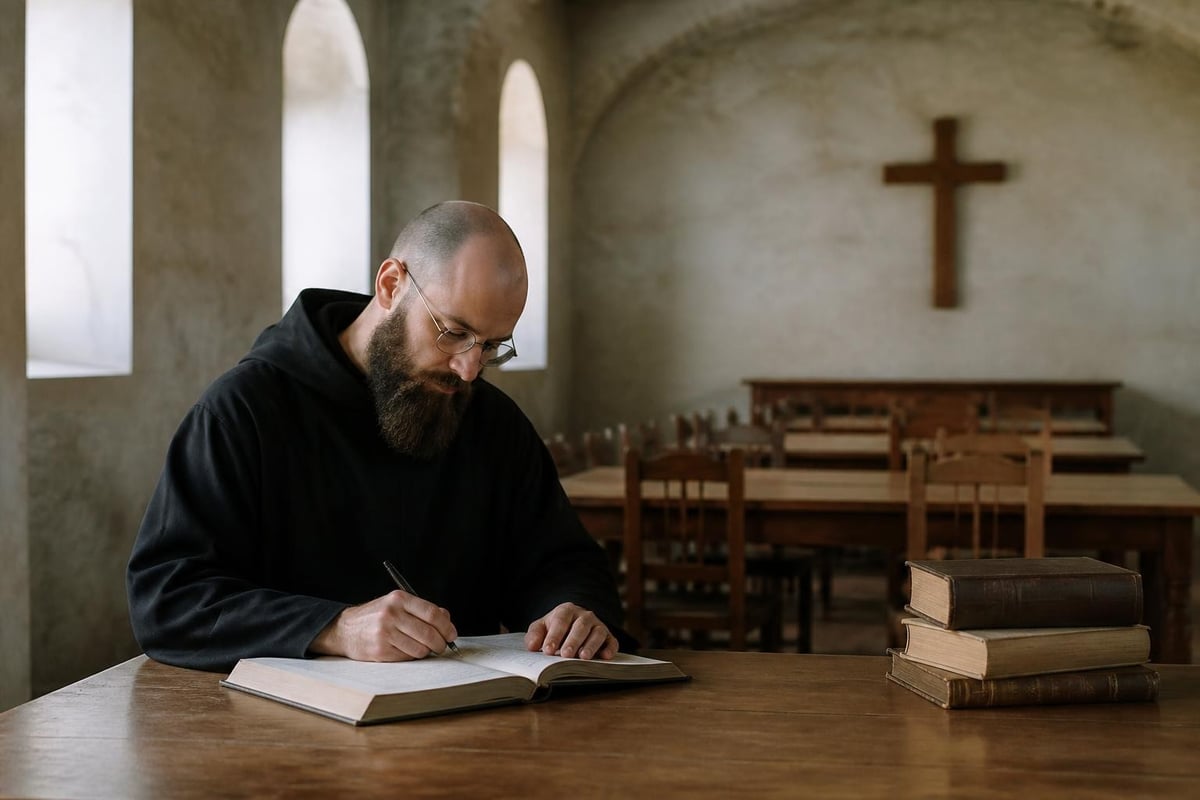
Many laypeople now pray the Rule by reading one chapter daily, reflecting on how Benedict's wisdom applies to contemporary circumstances. A parent practicing humility with difficult children. A worker balancing productivity and prayer. A retiree finding stability in changing circumstances. St Benedict's prayer thus extends beyond formal liturgy into ethical formation.
Ora et Labora: Prayer Shaping Work
Benedict's famous motto ora et labora (pray and work) dissolves the boundary between spiritual and ordinary life. Prayer isn't escape from work but its foundation. Work isn't secular drudgery but participation in creation. The British Library notes how manuscripts preserving this wisdom shaped European culture during the medieval period.
For Benedictines, everything becomes prayer. Cooking, gardening, bookkeeping, teaching-all done mindfully, offered to God, performed with care. This transforms mundane tasks into spiritual practice. The secretary typing reports practices the same prayer as the monk copying manuscripts: focused attention, dedication, service.
Contemporary Benedictine oblates (laypeople affiliated with monasteries) adopt this perspective in secular jobs. An accountant balances books as prayer. A nurse tends patients as Christ. A teacher prepares lessons as evangelization. St Benedict's prayer thus sanctifies all of life rather than compartmentalizing spirituality.
Contemporary Applications of Benedictine Prayer
Modern life seems antithetical to Benedictine rhythms. The Liturgy of the Hours requires pausing eight times daily-impossible with commutes, meetings, deadlines. Yet recent reports from the Order of Saint Benedict show growing interest in Benedictine spirituality among laypeople seeking alternatives to frantic contemporary pace.
Adapting the Hours for Lay Life
Rather than abandoning Benedictine prayer as impractical, adapt it proportionally:
- Morning and Evening Prayer: Commit to Lauds and Vespers as bookends for the day
- Midday Pause: Brief Sext or None during lunch breaks
- Night Prayer: Compline before bed as transition to rest
These abbreviated hours maintain the Benedictine principle-prayer structuring time-while acknowledging practical limits. Many use apps or prayer resources to guide this practice. The key is consistency rather than perfection, establishing rhythm rather than checking boxes.
Some incorporate physical reminders. Church bells traditionally called monks to prayer. Modern equivalents include phone alarms, desktop notifications, or simply training yourself to pray at transition points-arriving at work, finishing lunch, turning off the computer.
Lectio Divina in the Digital Age
Practicing lectio divina requires resisting digital distraction. Notifications interrupt meditation. Multiple tabs fragment attention. Yet technology also enables access to scripture and commentary unprecedented in history. The challenge is disciplined use.
Successful modern practitioners often:
- Designate device-free times for lectio
- Use physical Bibles rather than screens to minimize distraction
- Join online or in-person lectio divina groups for accountability
- Start small-ten minutes daily rather than ambitious hour-long sessions that quickly fade
The Eucharist, Mary, and the Saints provide rich material for lectio beyond scripture. Reading saint biographies contemplatively, one discovers not historical information but companions for the journey. Resources like the Miracles of the Eucharist books demonstrate how Eucharistic devotion deepens prayer life when approached with Benedictine attentiveness.
The Spiritual Fruits of Benedictine Prayer
St Benedict's prayer promises no quick fixes or emotional highs. Instead, it offers slow transformation through faithful practice. Those who persist discover several consistent fruits.
Interior peace emerges from rhythm. The constant return to prayer at set hours anchors identity in something deeper than accomplishment or external validation. This stability grounds practitioners during crisis.
Depth of scripture engagement develops through lectio divina. Familiar passages reveal new dimensions. The Bible becomes living word rather than static text. This intimacy with scripture enriches all prayer.
Community connection strengthens even for those praying alone. Joining the universal rhythm of the Liturgy of the Hours links individuals to monastic communities, other laypeople worldwide, and the communion of saints across history.
Benedictine Prayer and Mental Health
Recent psychological research validates what Benedictines discovered fifteen centuries ago: structured prayer routines support mental well-being. Regular prayer times create predictable anchors reducing anxiety. Lectio divina's contemplative focus counters rumination and worry. Communal prayer combats isolation.
St Benedict's prayer isn't therapy, but its practices align with contemporary understanding of mindfulness, cognitive restructuring, and social connection. The difference is direction-prayer orients toward God rather than self-improvement, yet produces similar psychological benefits as byproducts.
| Practice | Psychological Benefit | Spiritual Fruit |
|---|---|---|
| Liturgy of Hours | Reduced anxiety through routine | Sanctification of time |
| Lectio Divina | Mindfulness and focus | Intimacy with scripture |
| Communal Prayer | Social connection | Unity in Christ |
| Examination | Self-awareness | Growth in virtue |
The rhythm of prayer also provides healthy interruption of compulsive productivity. Modern culture valorizes constant output. Benedictine prayer mandates stopping to pray regardless of deadlines. This counteracts burnout and reorients priorities.
Challenges and Common Obstacles
Adopting st Benedict's prayer presents real difficulties. Acknowledging these honestly prevents discouragement.
Time scarcity tops most lists. Multiple daily prayer times seem impossible with packed schedules. The solution isn't more time but different priorities. Benedict taught that nothing should be preferred to prayer-a radical claim demanding radical choices.
Dryness and distraction plague even experienced practitioners. Minds wander during lectio. The Liturgy of the Hours feels mechanical. Benedict anticipated this, counseling perseverance. Fidelity during dry periods builds spiritual muscle that sustains faith long-term.
Lack of community challenges isolated practitioners. Benedictine prayer is communal at heart. Praying alone misses crucial dimension. Solutions include finding Benedictine oblate groups, online communities, or local parishes emphasizing Liturgy of the Hours.
Starting Small and Building Gradually
The gravest mistake is attempting everything immediately. Begin with:
- One office daily (typically morning or evening prayer)
- Ten minutes of lectio divina
- Reading one Rule chapter weekly
Establish these firmly before adding more. Benedict valued stability and perseverance over ambitious starts that quickly collapse. Better to pray one office faithfully for years than attempt all eight for two weeks before quitting.
Many find that Catholic prayer resources provide helpful structure when beginning. Physical prayer cards, novenas, and guides offer scaffolding while new habits form.
Benedictine Prayer Across Traditions
While rooted in Catholic monasticism, st Benedict's prayer influences broader Christian traditions. Anglican communities use similar daily offices. Lutheran prayer books draw heavily on Benedictine structures. Orthodox monasticism shares deep commonalities despite developing independently.
This ecumenical reach reflects Benedict's focus on essentials: scripture, psalms, communal worship, contemplative reading. These transcend denominational boundaries, speaking to universal human spiritual needs.
Even non-Christians recognize value in Benedictine rhythms. The popularity of "mindfulness" often echoes lectio divina without theological content. Corporate retreats sometimes adopt monastic schedules. This secular interest testifies to the profound human wisdom embedded in st Benedict's prayer, even when stripped of explicit Christian framework.
The Benedictine Vocation for Laypeople
Formal Benedictine life requires monastic vows, but oblate programs allow laypeople to affiliate with monasteries while remaining in the world. Oblates commit to praying portions of the Liturgy of the Hours, reading the Rule regularly, and connecting with their sponsoring monastery.
This provides:
- Spiritual direction from experienced monastics
- Community with fellow oblates
- Retreat opportunities at the monastery
- Formation in Benedictine spirituality
Many discover that Benedictine oblate life offers structured spiritual path often missing in parish life. Rather than generic religiosity, oblates pursue specific charism with clear practices and accountability.
Resources on Catholic spirituality help those exploring whether Benedictine prayer fits their calling. Not everyone is drawn to this path, and that's fine. Benedict himself recognized diverse vocations. What matters is finding authentic spiritual practice sustained over decades, not sampling everything.
St Benedict's prayer offers proven wisdom for integrating prayer into daily life through the Liturgy of the Hours, lectio divina, and the practical spirituality of the Rule. These ancient practices address timeless human needs for rhythm, meaning, and connection with God. Whether you're exploring Journeys of Faith collections for prayer resources, considering Benedictine oblate life, or simply seeking deeper prayer, Benedict's fifteen-century tradition provides reliable guidance. Journeys of Faith supports your spiritual journey through books, prayer cards, and media that connect you to the saints, the Eucharist, and transformative Catholic faith. Journeys of Faith is blessed to provide Catholic media, including podcasts and inspirational content, free of charge across multiple platforms for viewers and listeners worldwide. While this content remains free, significant costs accompany producing, hosting, and distributing these programs. Your support helps us continue sharing the beauty of the Catholic faith. Please make a donation or explore our resources to deepen your prayer life today.
