

St Christopher medals have accompanied countless travelers, soldiers, and faithful Catholics for centuries, serving as tangible reminders of divine protection and the intercessory power of the saints. These small devotional objects carry profound spiritual significance, connecting modern believers to an ancient tradition of seeking heavenly patronage during life's many journeys. Whether worn on a necklace, attached to a keychain, or tucked into a wallet, these medals represent far more than mere jewelry-they embody a living relationship with one of Christianity's most beloved patron saints.
The Historical Origins of St Christopher Devotion
The veneration of St Christopher traces back to the early centuries of Christianity, though historical details about his life remain debated among scholars. According to traditional hagiography documented in the Catholic Encyclopedia, Christopher was a third-century martyr whose name means "Christ-bearer." The most famous legend describes him as a giant who carried travelers across a dangerous river, unknowingly transporting the Christ Child in one miraculous encounter.
This narrative became the foundation for his designation as patron saint of travelers. Medieval pilgrims wore badges depicting Christopher carrying the child across the water, a practice extensively documented in scholarly research on medieval pilgrim badges. These early devotional items served the same spiritual purpose as modern medals, offering protection and invoking saintly intercession during perilous journeys.
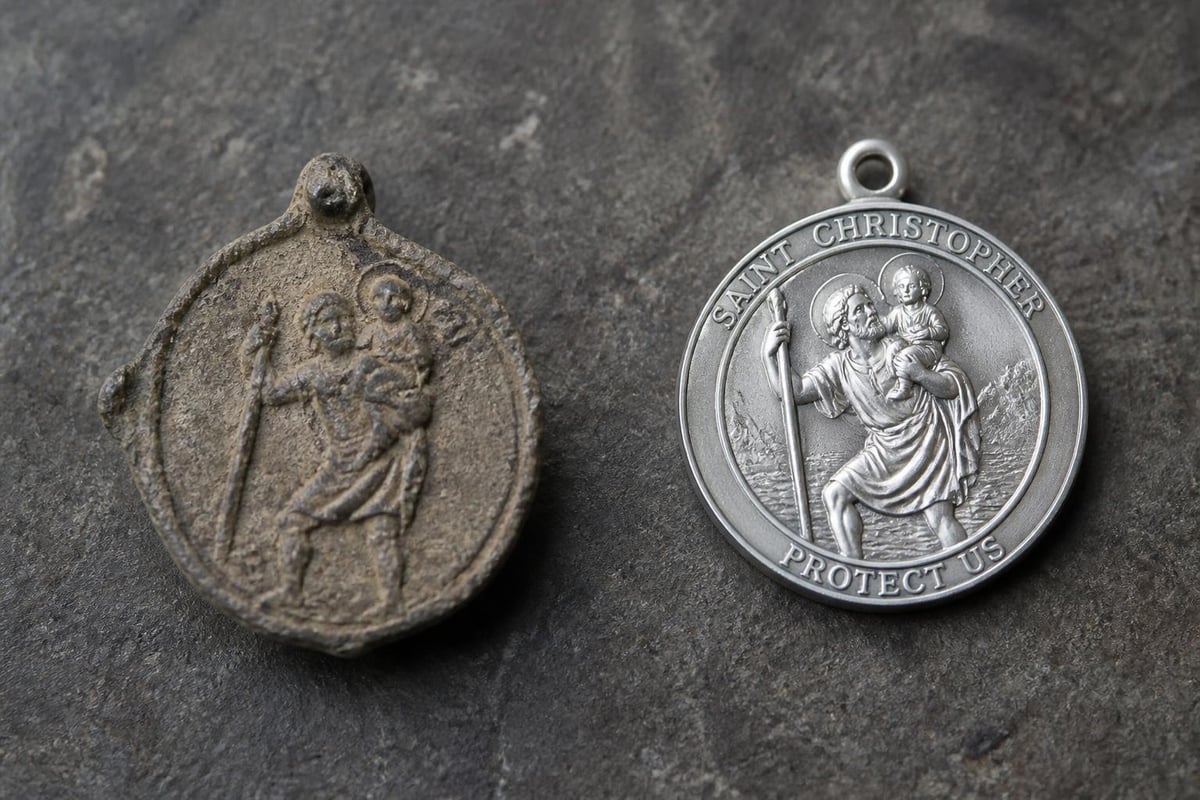
The transition from pilgrim badges to struck medals occurred during the Renaissance and Baroque periods, when metalworking techniques advanced significantly. Artisans began creating more refined religious objects, and st christopher medals became standardized devotional items produced in workshops across Catholic Europe.
The Symbolism Embedded in Medal Design
Traditional st christopher medals feature consistent iconographic elements that convey theological meaning. The obverse typically depicts Christopher wading through water, staff in hand, with the Christ Child perched on his shoulder. The child often holds an orb representing the world, symbolizing both Christ's sovereignty and the weight of sin Christopher bears.
Common design elements include:
- The flowing river representing life's trials and tribulations
- The staff symbolizing faith as support during difficult crossings
- Palm trees or wilderness indicating the journey from sin to salvation
- Stars or divine light marking Christ's presence
- Inscriptions requesting protection or invoking the saint's name
The reverse side frequently features the Blessed Virgin Mary, creating a double-sided sacramental that honors both Christopher's intercession and Mary's maternal protection. Some variations include other patron saints of travelers, such as St. Raphael the Archangel or St. Joseph, depending on regional traditions and personal devotion.
Brought to you by Journeys of Faith Founded by Bob and Penny Lord - We are an Augustinian Secular Institute - Cyber Apostles - Our Mission is Evangelization through Media.
Material Composition and Authenticity Considerations
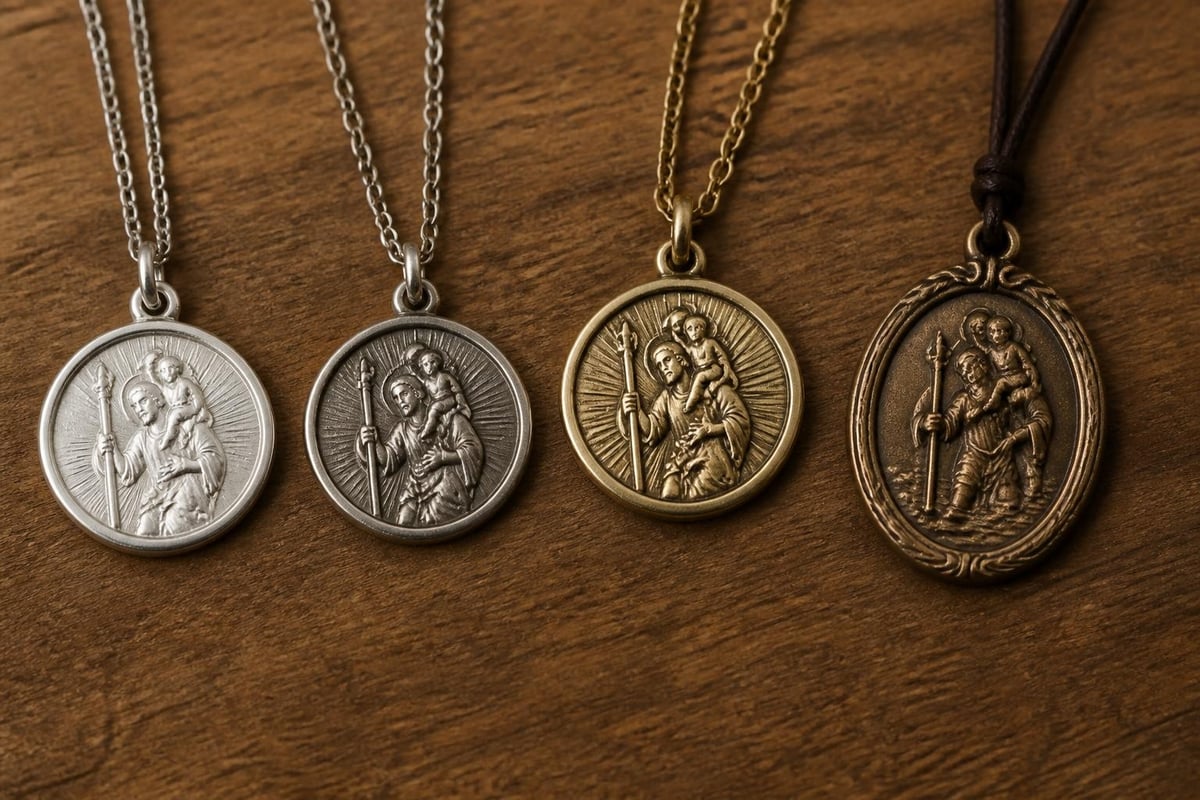
Contemporary st christopher medals are manufactured in various materials, each offering different aesthetic qualities and price points. Sterling silver remains the most popular choice, combining durability with appropriate reverence for a sacred object. Gold medals, whether in 10k, 14k, or 18k varieties, serve as heirloom pieces often given at baptisms, confirmations, or other sacramental milestones.
| Material | Characteristics | Typical Use Case |
|---|---|---|
| Sterling Silver | Durable, affordable, traditional appearance | Daily wear, first medals for children |
| 10k-14k Gold | Balanced quality and cost, resistant to tarnish | Sacramental gifts, milestone celebrations |
| 18k-24k Gold | Premium quality, investment piece | Family heirlooms, special commissions |
| Pewter/Brass | Budget-friendly, devotional focus | Mass distribution, pilgrimage souvenirs |
| Stainless Steel | Modern, hypoallergenic, extremely durable | Active lifestyles, military personnel |
When purchasing precious metal medals, authenticity verification becomes essential. The British Hallmarking Council provides comprehensive guidance on hallmarking standards that protect consumers from counterfeit or misrepresented metal content. In the United Kingdom and several European countries, hallmarking laws require specific marks indicating metal purity, maker's identity, and assay office verification.
Identifying Quality Craftsmanship
Discerning quality in st christopher medals involves examining several factors beyond material composition. Hand-engraved medals display superior artistry compared to mass-produced cast pieces, though both serve legitimate devotional purposes. The relief depth, detail clarity, and finish consistency indicate manufacturing standards.
Museum collections provide excellent references for understanding medal quality across different periods. The Smithsonian American Art Museum houses examples of historical St Christopher medals that demonstrate the finest craftsmanship of their eras, offering collectors and devotees benchmarks for evaluating contemporary pieces.
Religious medal production involves both industrial methods and artisanal techniques. Artisan jewelers often create limited editions or custom commissions featuring unique design interpretations, while larger manufacturers serve the broader market with standardized, affordable options suitable for widespread distribution.
Theological Significance and Proper Use
The Catholic Church recognizes medals as sacramentals-sacred signs instituted by the Church that prepare believers to receive grace and sanctify various life circumstances. St christopher medals specifically invoke protection during travel, whether physical journeys or the spiritual pilgrimage toward heaven. Unlike sacraments, which confer grace ex opere operato (by the very fact of the action being performed), sacramentals derive their power from the Church's intercession and the faith of the user.
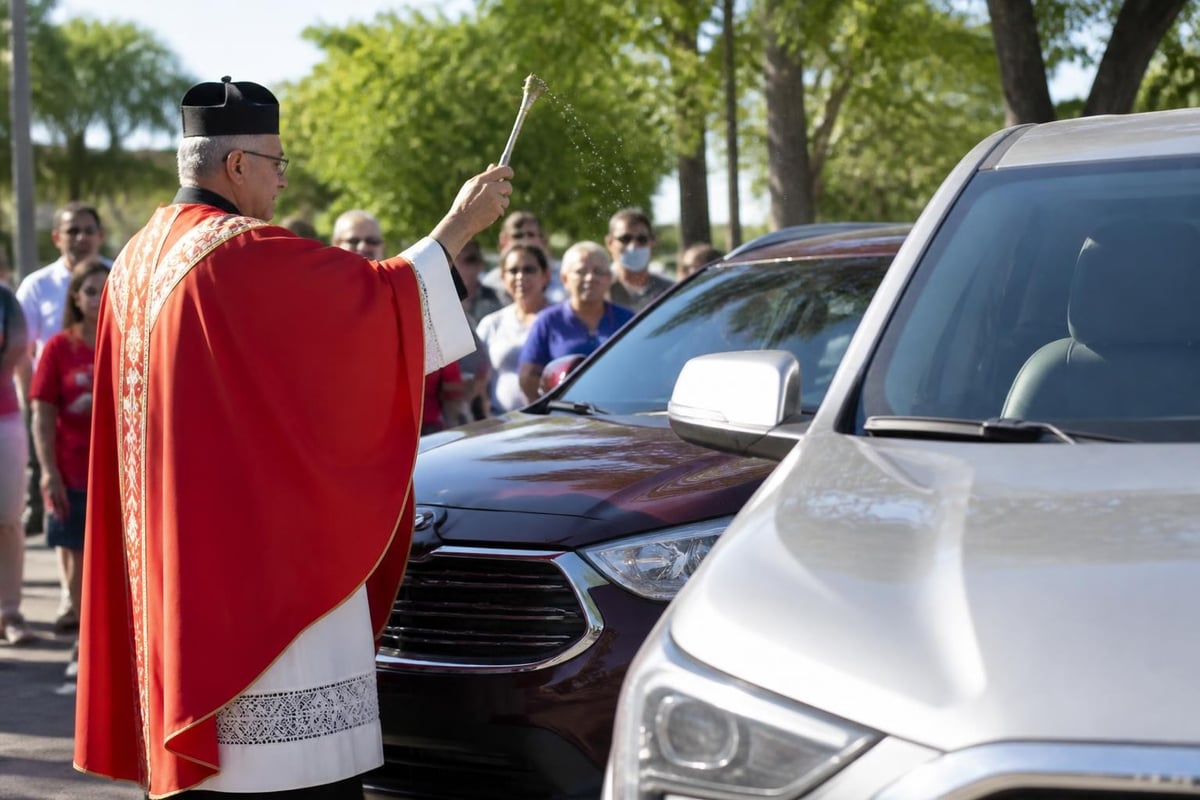
Proper use of religious medals involves having them blessed by a priest, which dedicates the object to sacred purpose and invokes God's blessing upon those who use them devoutly. The blessing ceremony typically includes prayers requesting that the medal become a source of protection and a reminder of Christian commitment.
Guidelines for devotional use:
- Request a priestly blessing for new medals when possible
- Wear or carry the medal as a prayer prompt and protection reminder
- Avoid treating the medal superstitiously, as though it possesses magical properties
- Maintain reverence by cleaning and caring for the medal appropriately
- When a medal becomes too worn, dispose of it respectfully through burning or burial
The theological foundation rests on the communion of saints-the spiritual connection between the Church Militant on earth, the Church Suffering in purgatory, and the Church Triumphant in heaven. When Catholics invoke St. Christopher through his medal, they request his prayers before God's throne, trusting in the intercessory power saints exercise in the heavenly realm.
Integration with Prayer Life
St christopher medals function most effectively when integrated into regular prayer practices rather than used as standalone talismans. Many Catholics pray the Crucifixes, Rosaries and Medals while holding or touching their Christopher medal, connecting multiple devotional practices in unified prayer. The physical contact serves as a kinesthetic prayer aid, engaging the body in spiritual practice.
Traditional prayers to St. Christopher emphasize his role as protector and guide. One common invocation asks: "Grant me, O Lord, a steady hand and watchful eye, that no one shall be hurt as I pass by. Shelter those, dear Lord, who bear my company from the evils of fire and all calamity." This prayer extends concern beyond personal safety to encompass responsibility for others' wellbeing during travel.
Cultural Variations and Regional Traditions
St Christopher devotion manifests differently across global Catholic communities, with regional traditions influencing medal designs and usage customs. Mediterranean countries often feature baroque-style medals with elaborate decorative elements, reflecting the artistic heritage of Counter-Reformation Catholicism. Northern European medals tend toward simpler, more restrained designs aligned with different aesthetic sensibilities.
In Latin American Catholicism, st christopher medals frequently appear alongside other popular devotions such as Our Lady of Guadalupe or the Santo Niño. Filipino Catholics often combine Christopher medals with images of the Infant Jesus of Prague, creating syncretized devotional practices that honor multiple intercessors simultaneously.
Military traditions represent another distinct category. Service members across many nations carry st christopher medals as protection during deployment, with specific military variants featuring branch insignia or unit symbols integrated into traditional iconography. These specialized medals acknowledge both spiritual and patriotic dimensions of military service.
Occupational Patronage Applications
Beyond general travelers, specific occupational groups claim St. Christopher as their patron. Truck drivers, pilots, sailors, and railway workers maintain particular devotion, often displaying larger dashboard medals in vehicles or wearing work-appropriate versions. Professional drivers' associations in several countries sponsor annual medal blessings and St. Christopher feast day celebrations.
The feast of St. Christopher, traditionally celebrated on July 25th in many regions, features special vehicle blessing ceremonies where automobiles, boats, and aircraft receive sacramental blessing alongside the distribution or blessing of medals. These public demonstrations of faith connect individual devotion to communal Catholic identity.
Contemporary Devotional Practices and Trends
Modern Catholics continue finding meaningful ways to incorporate st christopher medals into twenty-first-century life. Keychain medals protect daily commuters, while parents attach miniature versions to children's backpacks or car seats. Medical alert bracelets increasingly feature religious medals alongside health information, combining practical necessity with spiritual comfort.
Digital age adaptations include photographed medals used as phone lock screens or social media profile pictures, extending physical sacramental presence into virtual spaces. Though lacking the blessed materiality of actual medals, these digital representations reflect genuine devotional creativity among younger Catholics seeking to integrate faith into technology-dominated lives.
Gift-giving customs remain central to medal circulation within Catholic communities. Godparents traditionally present st christopher medals at baptisms, establishing lifelong protection for their godchildren. Confirmation sponsors, graduation well-wishers, and wedding guests continue this practice, creating networks of spiritual connection through gifted sacramentals.
Collecting as Devotional Practice
Some Catholics develop medal collections that serve both devotional and historical interests. Antique st christopher medals provide tangible connections to previous generations' faith, while varied designs from different regions illustrate the universal Church's local expressions. Collectors often research provenance, dating pieces through stylistic analysis and hallmarking systems.
Museums and private collections preserve rare examples, including medieval pilgrimage badges and Renaissance masterworks. These artifacts inform contemporary understanding of devotional evolution while inspiring modern artisans to create medals worthy of future preservation. The cyclical relationship between historical appreciation and contemporary creation enriches ongoing Catholic material culture.
Practical Guidance for Purchasing and Gifting
Selecting appropriate st christopher medals requires considering recipient circumstances, material preferences, and symbolic significance. For infants and young children, simple sterling silver medals on short chains prevent choking hazards while establishing early devotional habits. Teenagers often prefer modern designs that complement personal style without appearing overly traditional.
Size and style considerations:
- Miniature medals (under 0.5 inches): Discreet daily wear, children's jewelry
- Standard medals (0.5-1 inch): Traditional sizing, visible devotional statement
- Large medals (over 1 inch): Dashboard display, prominent witness
- Relief depth: High relief offers visual impact; low relief sits comfortably under clothing
- Edge finishing: Smooth edges for children; decorative borders for formal pieces
When gifting medals for sacramental occasions, coordinating with the celebrant ensures the blessing occurs within the ceremony itself, adding solemnity to the presentation. Including a card explaining St. Christopher's patronage and suggested prayers helps recipients, especially converts or young people, understand proper devotional use.
Those seeking devotional items often appreciate resources that deepen their understanding of Catholic traditions. Journeys of Faith offers educational materials alongside sacramentals, helping believers integrate medals meaningfully into comprehensive spiritual lives rather than treating them as isolated objects.
Caring for and Preserving Medals
Proper maintenance extends medal lifespan while preserving their appearance and function. Sterling silver naturally tarnishes when exposed to sulfur compounds in air, requiring periodic cleaning with appropriate polish or gentle soap solutions. Gold medals need less frequent cleaning but benefit from professional inspection to ensure setting security if stones are present.
Maintenance schedule recommendations:
| Frequency | Task | Materials Needed |
|---|---|---|
| Weekly | Wipe with soft cloth | Microfiber cloth |
| Monthly | Deep clean if worn daily | Mild soap, warm water, soft brush |
| Annually | Professional inspection | Jeweler visit |
| As needed | Re-blessing after major cleaning | Parish priest |
| When damaged | Professional repair | Qualified religious goods restorer |
Storage matters significantly for medals not in daily use. Tarnish-resistant cloth pouches protect silver from oxidation, while separate compartments prevent scratching between pieces. Climate-controlled environments preserve antique medals, as humidity fluctuations damage historical patinas and weaken metal integrity over time.
When medals sustain damage, repair decisions balance functional restoration with historical preservation. Antique pieces may warrant conservation rather than repair, maintaining original character even with wear signs. Contemporary medals usually benefit from professional jewelry repair to restore full functionality and appearance.
The Role of Medals in Family Faith Formation
St christopher medals serve as tangible tools for transmitting faith across generations. When grandparents gift medals to grandchildren, they establish prayer connections that transcend geographical separation and even death. The physical object becomes a memory anchor, prompting prayers of intercession whenever the recipient touches or sees the medal.
Parents use medals to introduce children to saintly intercession concepts before they fully grasp abstract theological principles. A medal's weight, texture, and image provide sensory engagement that makes spiritual realities more accessible to young minds. Bedtime routines that include holding the medal while praying establish positive associations between physical comfort and spiritual security.
Family blessing rituals, such as touching each member's medal while praying for travel safety before trips, create shared devotional experiences that strengthen domestic church identity. These practices form spiritual muscle memory, establishing patterns children maintain into adulthood and pass to their own families.
Educational Opportunities Through Medals
Each medal presents teaching opportunities about hagiography, Church history, metallurgy, and artistic traditions. Parents explaining the Christopher legend introduce narrative theology, while discussions about medal materials cover stewardship and appropriate resource use. Examining different design interpretations develops aesthetic appreciation and cultural awareness.
Visits to Catholic educational resources enhance medal-based learning, providing age-appropriate materials that contextualize devotional objects within broader faith formation. Combining physical sacramentals with media resources creates multi-sensory educational experiences that accommodate diverse learning styles.
Addressing Common Questions and Misconceptions
Many Catholics wonder whether st christopher medals retain effectiveness without formal blessing. While unblessed medals still serve as prayer reminders and symbols of faith, the Church's official blessing specifically dedicates the object to sacred purpose and invokes divine protection. Seeking blessing represents appropriate reverence rather than superstitious necessity.
Another frequent question concerns replacement timing. Medals don't "expire" spiritually, though practical considerations like excessive wear or style preferences may prompt replacement. Retiring old medals respectfully through burning or burial honors their sacred character while allowing new medals to serve devotional needs.
Some worry that losing a medal indicates lost protection or divine disfavor. This misconception reflects magical thinking rather than authentic Catholic theology. Medals are aids to faith, not guarantees of specific outcomes. Divine providence operates independently of physical objects, though sacramentals channel grace when used with genuine devotion.
Ecumenical Considerations
Protestant Christians sometimes question Catholic medal use, perceiving idolatry or superstition. Explaining the communion of saints and distinguishing between veneration and worship addresses these concerns. Emphasizing that medals prompt prayer rather than possessing inherent power helps clarify Catholic teaching for ecumenical dialogue partners.
Orthodox Christians share similar sacramental traditions, though their iconographic conventions differ from Western Catholic styles. St Christopher appears in Orthodox iconography with distinct artistic characteristics, offering opportunities for respectful appreciation of diverse Christian expressions of shared devotion.
St christopher medals continue serving as powerful devotional tools that connect physical journeys with spiritual pilgrimage, offering protection through saintly intercession while anchoring prayer practices in tangible form. Whether you're seeking to deepen your own devotion or introduce loved ones to this beautiful tradition, Journeys of Faith provides resources that support authentic Catholic spirituality. Explore the Journeys of Faith online store with thousands of Catholic items that enrich your faith journey. Journeys of Faith is blessed to provide Catholic media, including podcasts and inspirational content, free of charge across multiple media platforms for viewers and listeners around the world. While access to this content remains free, there are significant and continually increasing costs associated with producing, hosting, and distributing these programs. Your support helps us continue sharing the beauty of the Catholic faith with souls. Please make a donation to support this vital evangelization mission.
