

The story of St Junipero Serra stands as one of the most significant and complex narratives in American Catholic history. Born Miguel José Serra in 1713 on the Spanish island of Mallorca, this Franciscan friar would become the founding father of California's mission system, establishing nine missions along the California coast and baptizing thousands of indigenous people. His canonization by Pope Francis in 2015 marked a profound moment for the Catholic Church in the United States, though his legacy continues to spark important conversations about evangelization, cultural encounter, and the relationship between faith and history.
The Early Life and Franciscan Formation of St Junipero Serra
Miguel José Serra entered the Franciscan Order at age sixteen, taking the religious name Junipero after Brother Juniper, one of St Francis of Assisi's original companions known for his joy and simplicity. His intellectual gifts quickly became apparent as he earned his doctorate in theology and became a distinguished professor at Lullian University in Palma de Mallorca.
Despite his academic success and comfortable position, Serra felt called to missionary work. At age thirty-five, he volunteered for the missions in New Spain (present-day Mexico), leaving behind prestige and security for the uncertain life of evangelization. This decision would define the remainder of his life and shape California's religious landscape for generations to come.
Journey to the New World
Serra arrived in Veracruz, Mexico, in 1749 after a ninety-nine-day voyage across the Atlantic. He and his companion, Francisco Palóu, who would later become his biographer, walked over two hundred miles from the coast to Mexico City rather than riding on horseback. During this journey, Serra suffered a leg injury from an insect bite that would plague him for the rest of his life, yet he rarely complained and continued his demanding missionary work despite chronic pain.
For nearly two decades, Serra served in the Sierra Gorda missions among the Pame people, learning their language and culture while establishing five missions that combined spiritual instruction with practical education in agriculture and crafts. His approach emphasized respect for indigenous communities while introducing them to Christianity and European agricultural methods.
Brought to you by Journeys of Faith, founded by Bob and Penny Lord. We are an Augustinian Secular Institute and Cyber Apostles. Our mission is evangelization through media.
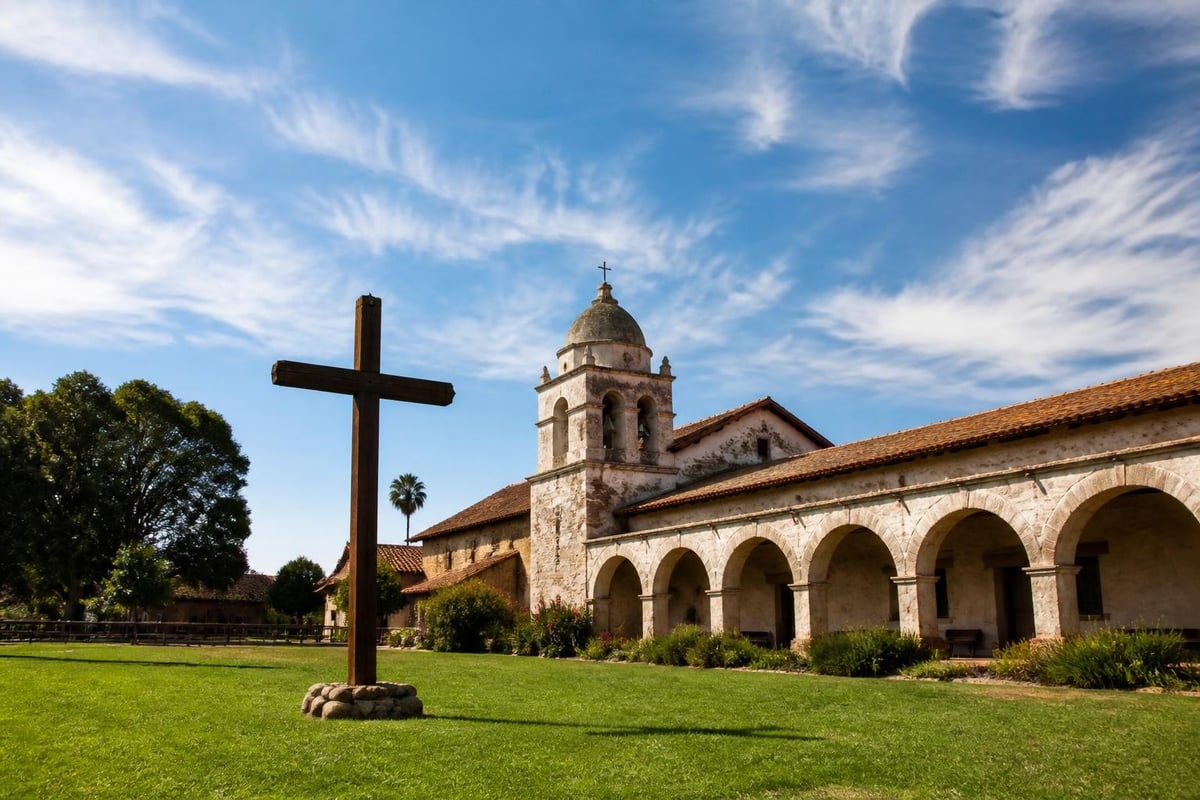
The California Mission System and Evangelization Efforts
In 1769, at age fifty-five when most men of his era were considering retirement, Serra embarked on his greatest undertaking. He joined the Sacred Expedition to Alta California, tasked with establishing missions to secure Spanish territorial claims and evangelize the native population. Despite his injured leg and deteriorating health, Serra walked most of the journey from Baja California to San Diego.
The Carmel Mission, officially known as Mission San Carlos Borromeo de Carmelo, became Serra's headquarters and the administrative center for the California missions. This mission exemplified his vision of creating communities where indigenous people could learn Christianity while maintaining structured agricultural and artisan communities.
Mission Founding and Structure
Between 1769 and his death in 1784, St Junipero Serra personally founded nine missions along the California coast:
- Mission San Diego de Alcalá (1769): The first mission in Alta California
- Mission San Carlos Borromeo de Carmelo (1770): Serra's headquarters
- Mission San Antonio de Padua (1771): Inland mission in Monterey County
- Mission San Gabriel Arcángel (1771): Near present-day Los Angeles
- Mission San Luis Obispo de Tolosa (1772): Central coast mission
- Mission San Francisco de Asís (1776): Founded during American Revolution
- Mission San Juan Capistrano (1776): Famous for its swallows
- Mission Santa Clara de Asís (1777): In Santa Clara Valley
- Mission San Buenaventura (1782): His final founding
Each mission followed a similar pattern, with a church at the center surrounded by workshops, living quarters, and agricultural lands. The missions taught Christianity alongside practical skills including farming, carpentry, masonry, leatherworking, and weaving.
| Mission Name | Year Founded | Distance from Previous | Primary Indigenous Groups |
|---|---|---|---|
| San Diego de Alcalá | 1769 | --- | Kumeyaay |
| San Carlos Borromeo | 1770 | 450 miles | Rumsen, Esselen |
| San Antonio de Padua | 1771 | 25 miles | Salinan |
| San Gabriel Arcángel | 1771 | 340 miles | Tongva |
| San Luis Obispo | 1772 | 90 miles | Chumash |
| San Francisco de Asís | 1776 | 330 miles | Ohlone |
| San Juan Capistrano | 1776 | 60 miles | Acjachemen |
| Santa Clara de Asís | 1777 | 40 miles | Ohlone |
| San Buenaventura | 1782 | 140 miles | Chumash |
The California Office of Historic Preservation recognizes the historical significance of these missions as architectural and cultural landmarks that shaped California's development.
Understanding the Complex Legacy of St Junipero Serra
The life and work of St Junipero Serra cannot be understood through a simple lens. While he dedicated his life to spreading the Catholic faith and genuinely believed he was saving souls, the mission system he established had profound and sometimes devastating impacts on indigenous California communities.
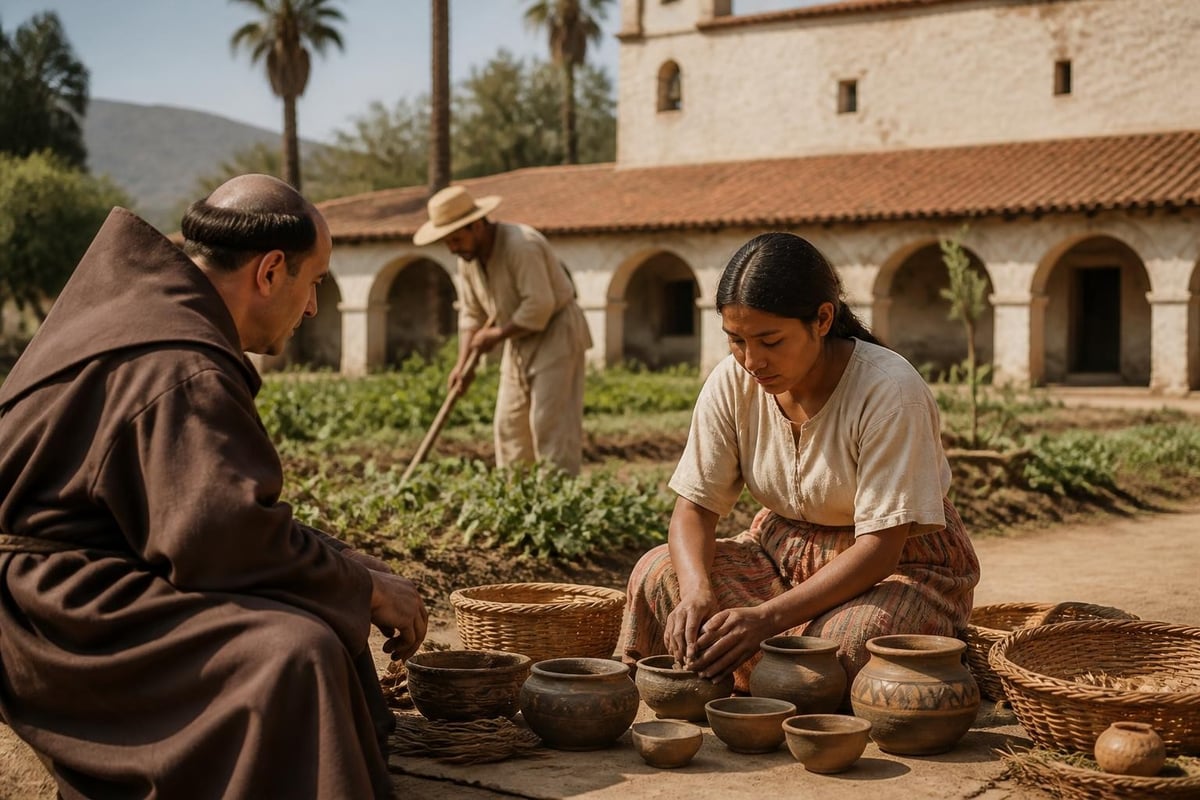
Evangelization and Cultural Transformation
Serra baptized approximately six thousand indigenous people during his fifteen years in California. He learned native languages, defended indigenous rights against Spanish military authorities, and walked on his injured leg to personally administer sacraments to distant communities. His writings reveal a man who saw himself as a spiritual father caring for his indigenous converts.
However, the mission system fundamentally disrupted indigenous ways of life. Native people who joined missions were expected to abandon traditional practices, live under mission authority, and adopt European agricultural and social patterns. Disease brought by Europeans decimated indigenous populations who had no immunity to Old World illnesses.
Advocacy Within Historical Context
St Junipero Serra frequently clashed with Spanish military governors over treatment of indigenous people. He traveled to Mexico City at age sixty to present a memorial defending indigenous rights and limiting military interference in mission affairs. He insisted on the humanity and dignity of native peoples at a time when such views were not universal among European colonizers.
The historical record shows Serra's genuine pastoral concern alongside practices modern observers find troubling. He advocated for physical punishment of indigenous people who violated mission rules, reflecting 18th-century European disciplinary norms rather than contemporary understanding of human rights. Understanding this complexity requires acknowledging both his missionary zeal and the historical limitations of his worldview.
The Canonization Journey and Papal Recognition
The path to sainthood for St Junipero Serra began with his death in 1784 at Mission San Carlos Borromeo, where he is buried. Venerated for generations in California and beyond, his cause for canonization faced both support and opposition as historical understanding of the mission era evolved.
Beatification and Sainthood
Pope John Paul II beatified Junipero Serra in 1988, recognizing him as Blessed Junipero Serra and confirming his heroic virtue. This step acknowledged his dedication to evangelization and personal holiness while understanding his work within its historical context.
Pope Francis canonized Serra in 2015 during his apostolic visit to the United States, making him the first saint canonized on American soil. The Pope's homily emphasized Serra's missionary spirit, his defense of indigenous peoples' dignity, and his dedication to spreading the Gospel across challenging frontiers.
Contemporary Dialogue and Understanding
The canonization sparked renewed discussion about the mission era's legacy. Pope Francis acknowledged this complexity, calling Serra "one of the founding fathers of the United States" who "sought to defend the dignity of the native community" while recognizing that "from these peoples themselves and from their nations, there have been many voices expressing hurt."
This dialogue reflects the Church's commitment to truth-telling about history while honoring genuine sanctity. The conversation continues to evolve as Catholic communities, indigenous peoples, historians, and faithful Catholics engage with Serra's legacy in ways that honor both historical truth and spiritual witness.
Spiritual Lessons from St Junipero Serra's Life
Beyond historical debates, St Junipero Serra's life offers profound spiritual lessons for contemporary Catholics seeking to live their faith with dedication and purpose.
Perseverance Through Suffering
Serra's chronic leg pain never stopped his missionary journeys. He walked thousands of miles, administered sacraments despite physical agony, and maintained his missionary schedule into his seventies. His example challenges modern Catholics to persevere in their vocations despite obstacles and discomfort. Many Catholics find inspiration in prayer resources like the Surrender Novena Packages, which echo Serra's trust in divine providence through all circumstances.

Key virtues demonstrated by St Junipero Serra:
- Radical obedience: Leaving academic comfort for missionary uncertainty
- Physical courage: Enduring chronic pain and dangerous journeys
- Spiritual dedication: Daily Mass and prayer despite exhausting work
- Intellectual humility: Learning indigenous languages despite his scholarly background
- Pastoral zeal: Walking miles to administer sacraments to remote converts
Missionary Spirit for Modern Times
Serra's willingness to leave everything familiar for the sake of the Gospel speaks powerfully to contemporary Catholics. While few are called to establish missions in unexplored territories, every Catholic is called to evangelization in their own context through witness, service, and authentic faith lived publicly.
His approach to evangelization combined proclamation with practical service, teaching spiritual truths alongside useful skills. This holistic model remains relevant for Catholic evangelization today, whether in parishes, workplaces, or digital spaces.
Visiting the Missions and Honoring St Junipero Serra Today
The California missions founded by St Junipero Serra remain active sites of worship, pilgrimage, and historical reflection. These beautifully preserved buildings offer opportunities to encounter both California history and the spiritual legacy of this controversial saint.
Mission San Carlos Borromeo de Carmelo
The Carmel Mission heritage site serves as the principal memorial to St Junipero Serra, housing his remains and maintaining extensive historical exhibits. Visitors can attend Mass in the same sanctuary where Serra prayed, walk the gardens he knew, and reflect on the complex history these walls represent.
The mission offers guided tours that address both the spiritual significance and historical complications of the mission era. This balanced approach helps visitors understand the full scope of California's Catholic heritage.
Other Mission Sites
Each of the nine missions Serra founded offers unique historical and spiritual experiences:
- San Diego de Alcalá: The first mission, rebuilt multiple times, now thriving urban parish
- San Juan Capistrano: Famous for annual swallow return, beautiful ruins
- San Francisco de Asís (Mission Dolores): Oldest intact building in San Francisco
- San Antonio de Padua: Most isolated mission, best preserved original atmosphere
- San Luis Obispo de Tolosa: Active downtown parish with museum
Visiting these sites provides tangible connection to California's Catholic roots and opportunities for prayer in historically significant spaces.
Prayer and Devotion to St Junipero Serra
Catholics who feel drawn to St Junipero Serra's example can develop devotion through prayer, study, and imitation of his virtues. His feast day is celebrated on July 1, offering an annual opportunity for special remembrance.
Prayers for Intercession
St Junipero Serra's intercession can be sought for various intentions including missionary vocations, perseverance through suffering, cultural understanding, evangelization efforts, and healing of historical wounds. Many prayer resources for Catholic saints are available through Journeys of Faith, including materials about missionary saints who shared Serra's dedication to spreading the faith.
Sample intentions for St Junipero Serra's intercession:
- Courage to share faith despite opposition or discomfort
- Wisdom for Church leaders navigating complex historical legacies
- Healing and reconciliation between Catholic and indigenous communities
- Strength to persevere through chronic illness or disability
- Zeal for evangelization in contemporary contexts
Living His Legacy Today
Honoring St Junipero Serra authentically means embracing both his missionary zeal and learning from the limitations of his era. Contemporary Catholics can draw inspiration from his dedication while committing to evangelization that respects cultural diversity, acknowledges historical wrongs, and proclaims the Gospel with both truth and love.
This balanced approach reflects the Church's call to learn from saints while recognizing they were products of their times. Serra's canonization doesn't require defending every aspect of the mission system, but rather recognizing authentic holiness expressed through historical limitations.
The Ongoing Relevance of St Junipero Serra
Nearly two hundred forty years after his death, St Junipero Serra remains a figure of significance for American Catholicism. His missions dot the California landscape as physical reminders of the faith's deep roots in American soil. His example of missionary dedication continues to inspire vocations to religious life and lay evangelization.
The conversations his legacy generates serve the important purpose of helping the Church honestly engage with its history, including both its glorious moments and its failures. This honest reckoning strengthens rather than weakens Catholic witness, demonstrating commitment to truth over triumphalism.
Resources for Further Study
Understanding St Junipero Serra fully requires engaging multiple perspectives and resources. The Bureau of Indian Affairs' historical documentation provides indigenous perspectives on the mission era, while government historical records offer comprehensive documentation of mission history.
Catholic resources, academic histories, indigenous oral traditions, and archaeological evidence all contribute to fuller understanding of this complex figure and the era he represents. Serious engagement with St Junipero Serra's legacy requires willingness to hold multiple truths simultaneously: recognizing genuine sanctity while acknowledging historical harm, honoring missionary zeal while respecting indigenous perspectives, and celebrating Catholic heritage while committing to justice and reconciliation.
| Resource Type | Focus | Perspective |
|---|---|---|
| Vatican documents | Spiritual significance, canonization rationale | Official Church teaching |
| Historical archives | Mission records, correspondence, administrative details | Documentary evidence |
| Indigenous oral history | Native experiences, cultural impact, contemporary views | First-person and community memory |
| Academic scholarship | Contextual analysis, comparative mission studies | Critical historical examination |
| Archaeological research | Material culture, mission life evidence | Physical artifacts and structures |
St Junipero Serra and the Universal Call to Evangelization
Every Catholic shares in the Church's missionary mandate, though few are called to establish missions in frontier territories. St Junipero Serra's example reminds believers that evangelization requires sacrifice, perseverance, and genuine love for those we seek to serve with the Gospel message.
His willingness to endure physical suffering for souls challenges comfortable Christianity. His dedication to learning indigenous languages models the evangelizer's responsibility to understand those they serve. His conflicts with civil authorities demonstrate that faithful witness sometimes requires confronting powerful interests.
Contemporary Catholics can apply these lessons in their own contexts, whether evangelizing through digital media, serving in parish ministries, raising faithful children, or witnessing in secular workplaces. The form changes, but the missionary heart remains constant across centuries.
Building Bridges Through Faith
St Junipero Serra's complex legacy offers opportunities for dialogue between Catholic and indigenous communities. Rather than avoiding difficult history, faithful Catholics can engage it honestly while working toward reconciliation and mutual understanding. This work honors both the genuine elements of Serra's sanctity and the real suffering experienced by indigenous peoples during the mission era.
Such bridge-building reflects the Gospel's call to both truth and love, refusing to choose between historical honesty and respect for saintly witness. The Church's ability to hold this tension demonstrates maturity and strengthens its witness to the world.
Modern applications of missionary spirit:
- Sharing faith authentically in pluralistic environments
- Serving marginalized communities with Gospel love
- Learning about cultures different from our own
- Advocating for justice while proclaiming truth
- Persevering in vocations despite difficulty
- Using modern media for evangelization
The example of missionary saints like St Toribio Romo demonstrates how saintly intercession and example transcend cultural boundaries.
St Junipero Serra's life challenges us to embrace missionary discipleship with courage, perseverance, and humble recognition that even our best efforts carry human limitations. His canonization invites honest engagement with both his remarkable sanctity and the complex history of the mission era he represents. Whether you're deepening your understanding of California's Catholic heritage, seeking inspiration for evangelization, or exploring the lives of missionary saints, Journeys of Faith offers extensive resources to support your spiritual journey. Explore our comprehensive collection of books, prayer cards, and multimedia resources about Catholic saints at our online store, where thousands of items support your faith formation and evangelization efforts. Journeys of Faith is blessed to provide Catholic media, including podcasts and inspirational content, free of charge across multiple media platforms for viewers and listeners around the world. While access to this content remains free, there are significant and continually increasing costs associated with producing, hosting, and distributing these programs. Your support helps us continue sharing the beauty of the Catholic faith with souls. Please make a donation to support our evangelization mission through media.
