

A statue of a saint serves as far more than decorative religious art. These sacred sculptures create tangible connections between believers and the heavenly intercession of holy men and women who walked before us. From grand cathedral masterpieces to intimate home altars, each statue of a saint carries profound meaning, inviting prayer, reflection, and spiritual growth. Understanding the history, purpose, and devotional practices surrounding these sacred objects enriches our Catholic faith journey.
The Sacred Purpose Behind Every Statue of a Saint
Catholic tradition has long embraced religious imagery as powerful tools for evangelization and devotion. A statue of a saint functions as a visual reminder of holiness achieved, a witness to God's transforming grace in human lives. These sculptures don't represent mere historical figures but rather living intercessors who continue their ministry from heaven.
The Church distinguishes clearly between veneration and worship. When Catholics honor a statue of a saint, they're not worshiping the physical object or even the saint depicted. Instead, they're showing respect to someone who lived heroically for Christ and now enjoys the beatific vision. This veneration naturally leads believers toward deeper worship of God himself.
Key purposes of saint statues include:
- Providing visual focal points for prayer and meditation
- Teaching the faith through artistic storytelling
- Creating sacred space in churches and homes
- Honoring specific patron saints for particular needs
- Preserving historical memory of holy lives
Statistics from various Catholic dioceses indicate that over 80% of Catholic households maintain at least one religious statue or image, demonstrating the enduring importance of these devotional items in daily faith practice.
Brought to you by Journeys of Faith Founded by Bob and Penny Lord - We are an Augustinian Secular Institute - Cyber Apostles - Our Mission is Evangelization through Media.
Historical Development of Religious Statuary
The creation of a statue of a saint traces back to early Christianity, though the practice evolved significantly over centuries. Early Christians used symbols rather than representational art, partly due to Jewish prohibitions against graven images and partly because of Roman persecution. The catacombs contain primitive symbolic representations, but fully realized statuary emerged later.
Medieval Craftsmanship and Innovation
Medieval Europe witnessed an explosion of religious sculpture. Craftsmen created elaborate santos, or religious statues, particularly in Spanish and Latin American Catholic traditions. These artists developed distinctive regional styles, using materials ranging from wood to stone to precious metals.
The Gothic period brought unprecedented realism to religious sculpture. A statue of a saint from this era often features intricate details in clothing, facial expressions, and symbolic attributes that identify the particular saint. Master sculptors viewed their work as sacred ministry, often praying and fasting throughout the creation process.
| Era | Primary Materials | Distinctive Features | Notable Examples |
|---|---|---|---|
| Early Medieval | Stone, bronze | Stylized, symbolic | Romanesque portal figures |
| Gothic | Stone, wood | Realistic, emotional | Cathedral sculptures |
| Baroque | Marble, gilded wood | Dramatic, theatrical | Bernini's masterworks |
| Modern | Various materials | Diverse styles | Contemporary church commissions |
Counter-Reformation and Artistic Expression
The Protestant Reformation challenged Catholic use of religious imagery, leading to iconoclasm in some regions. The Catholic Counter-Reformation responded by affirming the theological validity and spiritual benefits of sacred art. The Council of Trent (1545-1563) issued clear guidelines supporting the creation and veneration of religious statues while condemning any superstitious practices.
This period saw magnificent baroque sculptures emerge, with artists creating emotionally powerful works that engaged viewers' hearts. A statue of a saint from this era might depict mystical experiences, martyrdom, or moments of divine encounter with unprecedented drama and realism.
Materials and Artistic Techniques
The physical composition of a statue of a saint significantly impacts its appearance, durability, and accessibility to believers. Traditional materials each carry their own advantages and symbolic meanings.
Common materials used:
- Wood - Easily carved, lightweight, allows fine detail
- Stone (marble, limestone, granite) - Durable, prestigious, weather-resistant
- Bronze - Long-lasting, allows intricate casting, develops patina
- Plaster - Affordable, reproducible, suitable for mass production
- Resin composite - Modern option, versatile, cost-effective
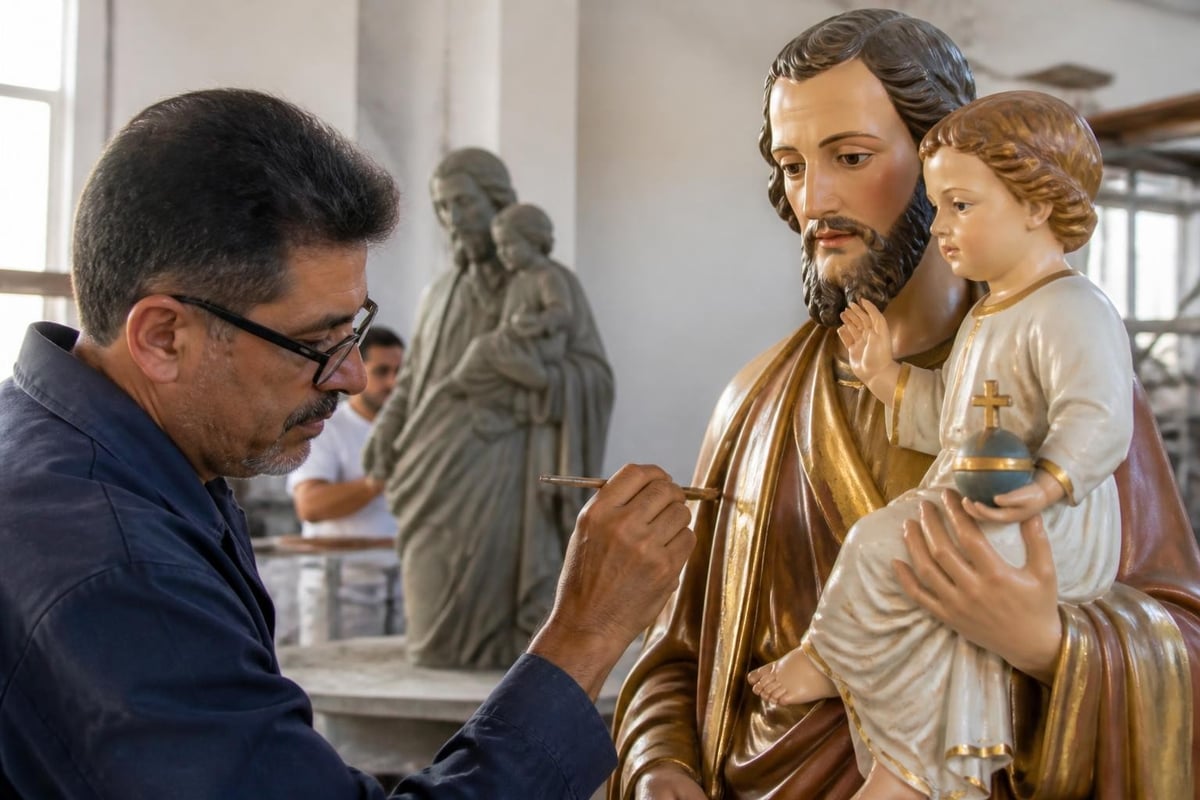
Nineteenth-century France produced numerous plaster statues of saints that churches worldwide could afford. This democratization of religious art brought sacred imagery to parishes that previously lacked resources for commissioned sculptures. Plaster allowed for detailed molds, creating consistent reproductions of approved designs.
Contemporary artists continue exploring new materials and techniques. Some create a statue of a saint using mixed media, incorporating traditional and modern elements. Others focus on restoration, preserving centuries-old masterpieces for future generations. Browse our Inspirational Catholic Statues collection to find beautifully crafted pieces for your home or parish.
Identifying Saints Through Iconography
Every statue of a saint includes specific iconographic elements that help believers identify which holy person is depicted. These attributes developed over centuries, creating a visual language that transcends cultural and linguistic barriers.
Common Identifying Features
Saint iconography functions as theological shorthand. A statue of a saint holding keys immediately signals Saint Peter, guardian of heaven's gates. Palm branches indicate martyrdom, while lilies represent purity and are often associated with Saint Joseph or Saint Anthony of Padua.
Standard iconographic attributes:
- Saint Peter - Keys, inverted cross, boat
- Saint Paul - Sword, book, conversion imagery
- Saint Joseph - Lily, carpenter's tools, Christ child — honor him with the Saint Joseph with Child 8" Statue
- Saint Francis - Stigmata, birds, wolf, simple habit — beautifully captured in the Saint Francis of Assisi with Wolf Hand-Painted Statue
- Saint Anthony of Padua - Christ child, lily, book, bread — available in our Saint Anthony of Padua 8" Statue
The Saint Jude 6" Resin Statue demonstrates these principles perfectly. Saint Jude, patron of hopeless cases, typically appears holding a medallion bearing Christ's image (the Image of Edessa) and carrying a staff or club representing his martyrdom. These consistent elements help believers worldwide recognize this beloved saint immediately.
Notable European examples include the Statue of Saint Christopher at Norton Priory in England, a rare fourteenth-century sculpture. Saint Christopher carries the Christ child across water, his signature iconographic representation. Such medieval works provide invaluable historical continuity in Catholic devotional practice.
Placement and Liturgical Considerations
Where and how Catholics position a statue of a saint matters both practically and spiritually. The Church provides guidance ensuring these sacred objects receive proper respect while serving their intended devotional purposes.
Church Settings
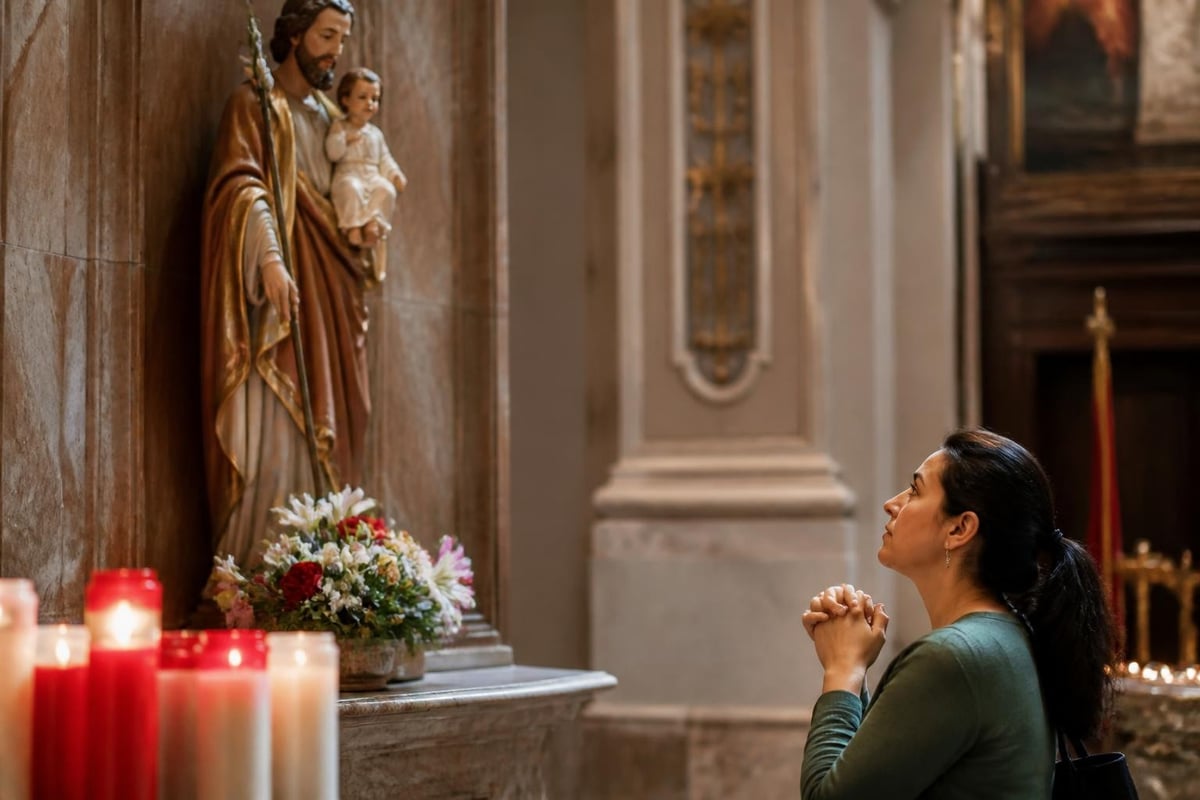
Within church buildings, a statue of a saint occupies designated spaces that facilitate both private prayer and communal worship. Side altars often feature particular saints, allowing parishioners to light candles and offer prayers before specific intercessors. These arrangements create prayer stations throughout the church, inviting encounter with different aspects of holiness.
Major feast days bring special attention to relevant statues. On the feast of Saint Joseph (March 19), churches often place flowers near his statue and encourage special prayers to the foster father of Jesus. This liturgical integration connects sacred art with the church calendar's rhythm.
| Location | Purpose | Common Saints Featured |
|---|---|---|
| Main altar area | Universal veneration | Mary, patron saint of church |
| Side altars | Focused devotion | Popular saints, local patrons |
| Entrance/narthex | Welcome, protection | Guardian angels, Saint Michael |
| Outdoor grottos | Marian devotion, meditation | Our Lady of Lourdes, Our Lady of Fatima |
Home Altars and Personal Devotion
Many Catholic families establish home altars centered around a statue of a saint or image of Mary. These sacred spaces provide daily reminders of heaven's proximity and offer gathering points for family prayer. A simple shelf with a saint statue, candles, and prayer cards creates powerful devotional opportunity.
Selecting which saint to feature often reflects family heritage, personal patron saints, or particular needs. Families facing health challenges might display the Saint Peregrine 8" Statue — the Cancer Saint — or those seeking comfort through mental health struggles might turn to the Saint Dymphna 6" Statue. Those seeking vocational guidance might honor Saint Joseph with the beloved Sleeping Saint Joseph 4" Statue.
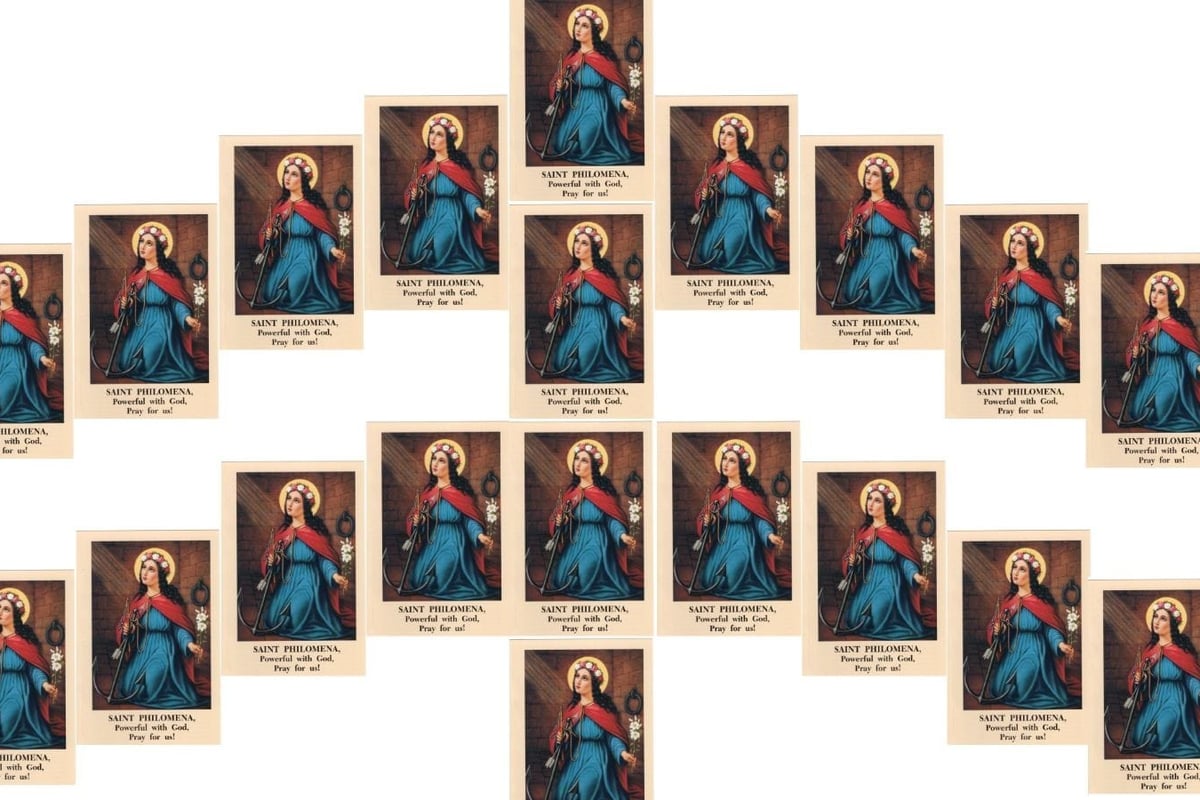
At Journeys of Faith, we recognize the importance of making saint devotions accessible to every Catholic household. The Saint Philomena Novena Packages provide compact, beautifully designed prayer resources that complement any home altar or statue display, enabling consistent devotional practice.
Regional Variations and Cultural Expression
A statue of a saint reflects not only universal Catholic teaching but also local cultural expressions of faith. Different regions developed distinctive styles that honor saints while incorporating indigenous artistic traditions.
Spanish and Latin American Santos
The santo tradition in Spanish-speaking Catholic cultures produces particularly vibrant religious sculpture. These works often feature bright colors, elaborate clothing, and emotional expressiveness. Craftsmen called santeros create pieces ranging from small household statues to processional figures carried during feast day celebrations.
New Mexican santos represent a unique American Catholic artistic tradition. These bultos (three-dimensional carved figures) and retablos (painted panels) emerged from Spanish colonial influence combined with Native American artistic sensibilities. Each statue of a saint becomes a testament to cultural synthesis in faith expression. Our hand-painted statues from Colombia, such as the Saint Lucy Hand-Painted 8" Statue from Colombia, carry on this vibrant Latin American tradition.
Eastern European Traditions
Catholic regions of Eastern Europe developed their own approaches to religious statuary. Polish churches often feature richly dressed statues with ornate crowns and vestments changed seasonally. The devotional practice of clothing statues creates ongoing interaction between believers and sacred images.
Prague's public spaces showcase several significant examples, including the Statue of Saint Wenceslas in Wenceslas Square, which serves as both religious symbol and national monument. Charles Bridge hosts multiple baroque statues, including the Statue of Saint Joseph, demonstrating how a statue of a saint can define civic space.
Devotional Practices and Spiritual Benefits
Engaging with a statue of a saint through traditional Catholic devotions yields profound spiritual fruits. These practices, developed over centuries, channel our attention toward heaven while grounding prayer in tangible focal points.
Traditional devotional practices include:
- Lighting candles as symbols of prayer offered
- Placing flowers to honor the saint
- Touching or kissing the statue reverently
- Praying novenas before the image
- Processing with statues during feast days
- Leaving written prayer intentions nearby
Research in Catholic spirituality suggests that physical engagement with sacred objects deepens prayer experiences. A statue of a saint provides a concrete anchor for meditation, helping practitioners maintain focus and enter more deeply into communion with God through the saint's intercession.
Novenas and Special Intentions
Nine-day prayer periods (novenas) often incorporate time spent before a statue of a saint. This sustained focus builds spiritual momentum, allowing petitioners to present their needs consistently while growing in relationship with their heavenly intercessor. Many Catholics report experiencing peace and clarity during novena prayer, regardless of whether specific requests are granted. Pair your statue devotion with the Saint Joseph Prayer Card with Novena for a complete prayer experience.
The practice connects contemporary believers with centuries of faithful Catholics who brought their joys, sorrows, and needs before the same saints. This communion across time reminds us that the Church truly encompasses both the Church Militant on earth and the Church Triumphant in heaven.
Caring for and Blessing Statues
Proper maintenance of a statue of a saint demonstrates respect for sacred objects while preserving these items for future generations. Whether caring for a centuries-old masterpiece or a recently acquired home statue, certain principles apply.
Cleaning and Preservation
Different materials require specific care approaches. Wooden statues need protection from excessive moisture and direct sunlight, which can cause cracking or fading. Stone and marble benefit from gentle cleaning with appropriate solutions that won't damage the surface or any painted details.
Basic care guidelines:
- Dust regularly with soft, dry cloths
- Avoid harsh chemicals or abrasive cleaners
- Protect from extreme temperature fluctuations
- Keep away from direct moisture sources
- Handle with clean hands, supporting the base
- Store carefully if relocating
Professional conservators should handle valuable antique pieces. However, most contemporary statues can be maintained with common-sense care and gentle cleaning methods.
Blessing and Consecration
The Catholic Church provides formal blessings for religious statues, setting them apart for sacred use. This blessing doesn't make the object itself holy but designates it as a sacramental — an item that disposes us toward receiving grace. A blessed statue of a saint carries additional spiritual significance, having been officially incorporated into the Church's devotional life.
Priests perform these blessings using prayers from the Book of Blessings. The ritual typically includes sprinkling with holy water and prayers invoking the saint's intercession. Families acquiring new statues should arrange for this blessing, marking the object's transition from ordinary artwork to sacred devotional aid.
Contemporary Relevance and Modern Challenges
In 2026, a statue of a saint continues serving vital spiritual purposes despite cultural shifts and technological changes. Modern Catholics face unique challenges in maintaining traditional devotional practices while engaging contemporary life's demands.
Digital Age and Physical Devotion
Some question whether physical religious objects remain relevant in our digital era. However, psychological research consistently shows that tangible, physical practices ground spiritual experiences more effectively than purely digital engagement. A statue of a saint provides irreplaceable physical presence that smartphone apps cannot replicate.
Young Catholics often rediscover traditional devotions after experiencing the limitations of purely digital spirituality. The ability to light a candle, kneel before a statue, and physically present oneself in prayer offers embodied religious experience that virtual alternatives lack.
Accessibility and Affordability
Modern production methods have made a statue of a saint more accessible than ever before. Families can acquire beautiful, durable religious statues at various price points, from budget-friendly resin pieces to investment-quality handcrafted sculptures. This accessibility democratizes devotional practices that were once limited to wealthy patrons.
Browse our full Inspirational Catholic Statues collection to find the perfect piece for your prayer space, from compact 4" statues ideal for desks and travel to larger statement pieces for home altars and chapels.
Selecting the Right Statue for Your Needs
Choosing a statue of a saint involves both practical and spiritual considerations. Whether for church, home, or as a gift, several factors merit attention.
Size and Space Considerations
Evaluate your available space honestly. A massive statue overwhelms a small prayer corner, while a tiny figure disappears on a large altar. Measure your intended location and consider both the statue's height and its base footprint.
Size categories and typical uses:
| Size Range | Best Uses | Considerations |
|---|---|---|
| Under 6 inches | Car dashboards, office desks, travel | Highly portable, intimate |
| 6-12 inches | Home altars, bedside tables | Versatile, manageable |
| 12-24 inches | Prominent home displays, small chapels | Significant presence, statement piece |
| 24+ inches | Churches, outdoor grottos, large homes | Requires dedicated space, installation |
Patron Saints and Personal Connection
Select a statue of a saint who holds particular significance for you or your family. Patron saints for specific vocations, life situations, or needs create natural prayer connections. Someone struggling with illness might choose the Saint Peregrine 8" Statue, while those seeking comfort for mental or emotional struggles might turn to the Saint Dymphna 6" Statue.
Family heritage often guides selection. Italian families might display Saint Padre Pio, while Irish households could feature Saint Patrick. These cultural connections honor ancestry while maintaining living faith traditions.
Research the saint's life and intercession before purchasing. Understanding who you're inviting into your prayer space enriches the devotional relationship. Many Catholics report feeling drawn to particular saints without initially knowing why, later discovering meaningful connections to their life circumstances.
Integration with Broader Catholic Devotional Life
A statue of a saint functions best when integrated into comprehensive Catholic spiritual practices. These sacred objects complement rather than replace other essential devotions like the Eucharist, Scripture reading, and the Rosary.
Balanced Devotional Approach
The saints themselves would insist that all devotion ultimately directs us toward Jesus Christ. A statue of a saint serves as a pointing finger toward heaven, never as an end in itself. Healthy Catholic spirituality maintains Christ at the center while welcoming the saints' friendship and intercession.
Prayer cards, novenas, and books about the saints create rich devotional ecosystems around statues. When Catholics combine visual focus on a statue of a saint with traditional prayers and biographical knowledge, their relationship with that heavenly intercessor deepens significantly.
Liturgical Year and Feast Days
Connecting statue veneration with the liturgical calendar enriches both practices. Placing flowers before Saint Joseph's statue on his feast day (March 19) or Saint Francis on October 4 creates rhythm and anticipation. These observances help families participate more fully in the Church's universal prayer.
Some families rotate displayed statues throughout the year, highlighting different saints during their feast seasons. This practice introduces household members to diverse expressions of holiness while preventing any single devotion from becoming rote or mechanical.
Resources for deepening your understanding of the saints and their role in Catholic life are available through various Catholic media outlets and stores, providing books, videos, and other educational materials that complement statue devotions.
Theological Foundation for Saint Veneration
The Catholic practice of venerating a statue of a saint rests on solid theological ground, rooted in Scripture, Tradition, and the Communion of Saints doctrine. Understanding these foundations strengthens confidence in traditional devotional practices.
Biblical Basis
Sacred Scripture provides multiple precedents for using physical objects in worship and devotion. God commanded Moses to fashion the bronze serpent (Numbers 21:8-9), which prefigured Christ. The Ark of the Covenant featured golden cherubim (Exodus 25:18-20), demonstrating that representational art can serve holy purposes when properly directed.
The Incarnation itself validates physical representations of spiritual realities. When God took human flesh in Jesus Christ, matter itself was elevated and sanctified. This theological principle undergirds all Catholic sacramental theology, including the use of statues, icons, and other sacred objects.
Communion of Saints
The Communion of Saints doctrine teaches that death doesn't sever the bonds between believers. Those in heaven remain united with the Church on earth through Christ. Prayer before a statue of a saint expresses this living relationship, asking our friends in heaven to intercede with God on our behalf.
This practice parallels asking living Christians to pray for us. Just as we don't worship our earthly prayer partners, we don't worship the saints. We honor them as friends who achieved the goal we're pursuing and now enjoy intimacy with God that enables powerful intercession.
Addressing Common Misconceptions
Despite centuries of Catholic teaching, misconceptions about statue veneration persist. Addressing these misunderstandings strengthens both our own faith and our ability to explain Catholic practices to others.
Common misconceptions and responses:
Misconception: Catholics worship statues
Reality: Catholics venerate saints represented by statues while worshiping God aloneMisconception: Statues violate biblical prohibitions against graven images
Reality: Biblical prohibitions target false gods, not representations of true servants of GodMisconception: Statue prayer replaces direct prayer to God
Reality: Saint intercession complements and enhances prayer to GodMisconception: Using statues is superstitious
Reality: Proper use of sacramentals is orthodox Catholic practice rooted in Tradition
Understanding these distinctions enables Catholics to practice their faith confidently while explaining traditions respectfully to those unfamiliar with Catholic theology.
Shop Catholic Saint Statues & Devotional Resources
Find the perfect statue, novena, or prayer card to enrich your home altar and deepen your devotion to the saints.
Browse All Saint Statues Saint Joseph with Child Statue Saint Peregrine Statue Novena Prayer Cards
A statue of a saint offers Catholics a powerful devotional tool connecting earthly pilgrims with heavenly intercessors through tangible, visual prayer focal points. These sacred sculptures carry forward centuries of artistic tradition, theological wisdom, and lived faith experience. Whether displayed in grand cathedrals or humble home altars, each statue invites believers into deeper relationship with God through the friendship of the saints. Journeys of Faith supports your devotional journey with carefully curated resources including prayer cards, novenas, books, and religious items that complement and enrich your practice. Explore the Journeys of Faith saint statues collection and support our evangelization mission through Catholic media, podcasts, and inspirational content available free worldwide — make a donation to help us continue sharing the beauty of our faith with souls everywhere.