

Worry has become a constant companion for many people in 2026, manifesting in sleepless nights, racing thoughts, and a persistent sense of unease about the future. The surrender novena for worry offers a time-tested spiritual remedy rooted in Catholic tradition-a nine-day prayer cycle that invites believers to release their anxieties into God's hands. This devotion, attributed to Father Dolindo Ruotolo, a twentieth-century Italian priest, has brought peace to countless souls struggling with fear and uncertainty.
The Origins of the Surrender Novena
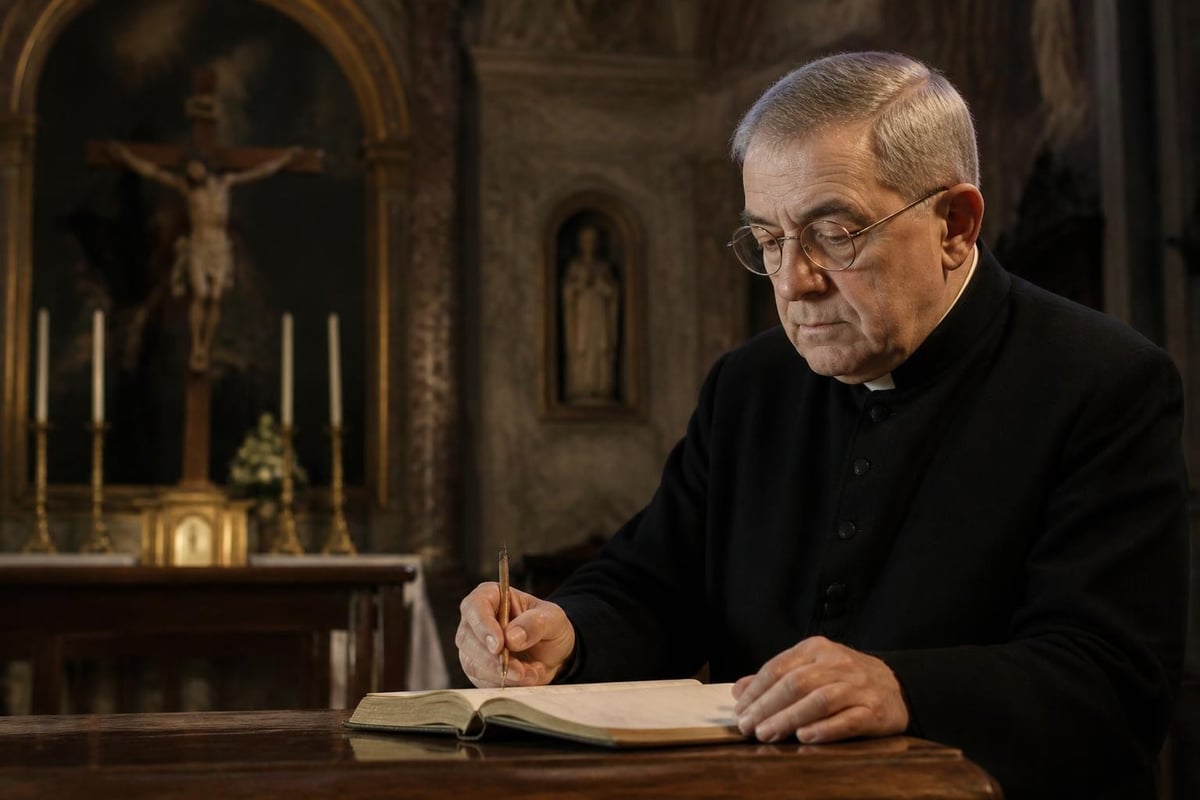
Father Dolindo Ruotolo lived through tumultuous times in Italy, enduring ecclesiastical trials and personal suffering that deepened his trust in Divine Providence. During a particularly difficult period of his life, when he faced unjust accusations and intense spiritual trials, he received what he understood to be a divine locution. The Lord allegedly spoke to him words that would become the foundation of the surrender novena for worry: "Why do you confuse yourself by worrying? Leave the care of your affairs to me and everything will be peaceful."
This mystical experience led Father Dolindo to compose a prayer that would help others surrender their burdens to Christ. The prayer reflects a complete abandonment to God's will, echoing the spirituality of earlier saints who embraced radical trust. The historical context surrounding Father Dolindo reveals how twentieth-century Italian spirituality emphasized childlike dependence on God amid widespread suffering.
Brought to you by Journeys of Faith. Founded by Bob and Penny Lord, we are an Augustinian Secular Institute-Cyber Apostles. Our Mission is Evangelization through Media.
Understanding the Structure and Practice
The surrender novena for worry follows the traditional Catholic novena format, meaning it is prayed for nine consecutive days. Each day, the faithful recite the same prayer, allowing the repetition to deepen their interior disposition of trust. The prayer begins with an acknowledgment of human weakness and confusion, then transitions into an act of faith in God's providential care.
The core text includes these powerful phrases:
- "O Jesus, I surrender myself to You, take care of everything!"
- "I trust in Your mercy, I trust in Your love for me"
- "Let me never be put to shame for placing my trust in You"
- "From this moment on, You take care of it"
This simple yet profound structure makes the prayer accessible to anyone, regardless of their theological education or prayer experience. The practical guidance from Focus ministry demonstrates how college students and young adults have found this devotion particularly helpful during exam seasons and major life transitions.
Theological Foundation of Surrender
The surrender novena for worry rests on solid Catholic teaching about Divine Providence and human cooperation with grace. Catholic theology maintains that God cares intimately for His creation, knowing every detail of our lives and orchestrating all things for the good of those who love Him. This doesn't mean we passively wait without taking action, but rather that we act within God's will while trusting Him with the outcomes.
Saint Thérèse of Lisieux exemplified this balance in her "Little Way," teaching that spiritual childhood means recognizing our total dependence on God while still doing our daily duties faithfully. The Carmelite tradition particularly emphasizes this abandonment to Divine Providence. The Carmelite Sisters' reflection on the surrender novena connects it to Saint John of the Cross's teaching on dark nights and contemplative trust.
Biblical Roots of Surrender
Scripture abundantly supports the principle of casting our cares upon the Lord. Jesus Himself commanded His followers not to worry about tomorrow, pointing to how the Father feeds the birds and clothes the lilies of the field. Saint Peter's first epistle explicitly tells us to cast all our anxieties on God because He cares for us. The Psalms overflow with expressions of trust and surrender, particularly Psalm 55: "Cast your burden on the Lord, and he will sustain you."
| Biblical Foundation | Key Verse | Application to Worry |
|---|---|---|
| Matthew 6:25-34 | "Do not worry about your life" | Direct command against anxiety |
| 1 Peter 5:7 | "Cast all your anxiety on him" | Active transfer of burdens |
| Philippians 4:6-7 | "Do not be anxious about anything" | Prayer instead of worry |
| Psalm 55:22 | "Cast your burden on the Lord" | God's promise to sustain |
The surrender novena for worry translates these biblical principles into a structured prayer practice that gradually reshapes our mental and spiritual habits.
Praying the Surrender Novena Effectively
Beginning the surrender novena for worry requires minimal preparation but maximum sincerity. Choose a specific intention-whether it's financial anxiety, health concerns, relationship troubles, or general fearfulness-and commit to nine consecutive days of prayer. Morning offers an ideal time, as you can surrender the day ahead before it unfolds, but any consistent time works.
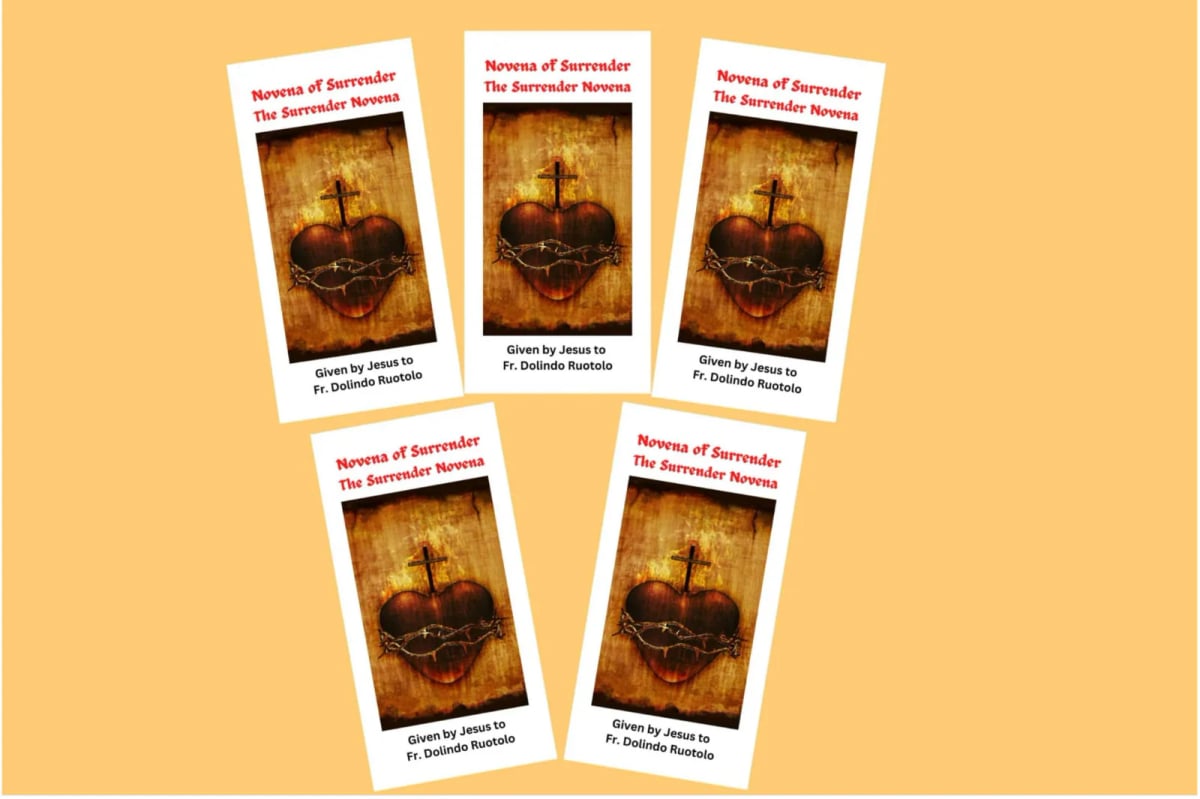
Many find it helpful to use a printed version of the prayer. The Surrender Novena Packages offer professionally printed trifold cards that fit easily in a pocket or purse, allowing you to pray throughout the day whenever worry surfaces. These cards include the complete text of Father Dolindo's prayer in a format designed for daily use.
Daily Practice Guidelines
- Begin with silence: Take a few moments to quiet your mind and acknowledge God's presence
- Name your worries: Briefly identify what's troubling you before surrendering it
- Pray the novena prayer slowly: Don't rush the words; let each phrase sink into your heart
- Release mental grip: Consciously let go of trying to solve the problem yourself
- Return throughout the day: Whenever worry resurfaces, repeat "Jesus, You take care of it"
The Hallow app's guidance suggests accompanying the prayer with periods of silence, allowing God to speak to your heart between your words. This contemplative dimension transforms the novena from mere recitation into genuine encounter.

Common Obstacles and Solutions
Praying the surrender novena for worry doesn't magically eliminate all anxious thoughts. The mind naturally returns to problems, trying to solve them through endless analysis. This is normal and doesn't indicate failure. The practice itself is learning to notice when you've picked up worry again and consciously choosing to return it to God.
Obstacle: "I keep taking the worry back"
- Solution: Use the brief phrase "Jesus, You take care of it" as an immediate redirect
Obstacle: "Nothing changes after nine days"
- Solution: Continue praying; surrender is often a longer journey than nine days
Obstacle: "I feel guilty for not doing something about my problem"
- Solution: Distinguish between prudent action (which God wants) and anxious rumination (which He doesn't)
Obstacle: "The prayer feels mechanical"
- Solution: Add personal words before or after the formal prayer, speaking to Jesus conversationally
The official diocesan presentation of the surrender novena emphasizes that this devotion works best alongside, not instead of, responsible action in our lives.
Spiritual Benefits Beyond Anxiety Relief
While many turn to the surrender novena for worry specifically to find relief from anxiety, the prayer offers deeper spiritual fruits. Repeated surrender cultivates humility, as we acknowledge our inability to control life's circumstances. It strengthens faith, as we practice believing God is both willing and able to care for us. It deepens our relationship with Jesus, transforming Him from a distant figure into a trusted companion who actively involves Himself in our daily concerns.
The practice also reshapes our understanding of God's will. Many people fear God's will, imagining it as something harsh or undesirable. The surrender novena for worry teaches us that God's will is ultimately for our good, even when it differs from our preferences. Saint Paul's words in Romans 8:28 become lived experience: "We know that in everything God works for good with those who love him."
Integration with Other Spiritual Practices
The surrender novena works beautifully alongside other Catholic devotions. Many combine it with daily Mass and Communion, bringing their surrendered concerns to the altar. Others pair it with Eucharistic Adoration, spending time in Jesus's presence while consciously releasing each worry. The Rosary complements the surrender novena particularly well, as the mysteries of Christ's life demonstrate perfect abandonment to the Father's will.
For those exploring deeper Catholic spiritual resources, works on abandonment to Divine Providence by authors like Jean-Pierre de Caussade provide rich theological context for the surrender novena's simple prayer.
Scientific Perspectives on Prayer and Anxiety
While faith provides its own reasons for praying the surrender novena for worry, contemporary research increasingly validates what believers have long known-prayer practices genuinely affect mental health. A comprehensive review in PubMed Central examines how religious and spiritual practices, including prayer, correlate with reduced anxiety and improved psychological resilience.
The mechanisms appear multifaceted. Prayer activates neural pathways associated with peace and reduces activity in brain regions linked to stress responses. The act of verbally or mentally surrendering worry may interrupt rumination cycles that perpetuate anxiety. Social support within faith communities provides additional psychological benefits. The meaning-making aspect of religious practice helps individuals contextualize suffering within a broader narrative of purpose.
| Research Finding | Implication for Surrender Novena |
|---|---|
| Repetitive prayer reduces cortisol | Nine days of practice may physiologically calm stress |
| Spiritual meaning buffers anxiety | Trusting God's plan provides cognitive reframing |
| Community support enhances resilience | Praying novena with others multiplies benefit |
| Surrender language reduces rumination | "Jesus, You take care of it" interrupts worry loops |
The American Psychological Association acknowledges that spiritual practices can be integrated into mental health treatment, though they recommend professional help for clinical anxiety disorders.
Complementing Clinical Treatment
The surrender novena for worry should complement, not replace, professional mental health care when needed. Many Catholics successfully combine regular therapy or medication with consistent prayer practice. A recent psychiatry journal article explores how integrative psychiatry incorporates spiritual resources alongside evidence-based treatments.
Prayer addresses the spiritual dimension of human experience, while therapy and medication work with psychological and biological factors. These aren't competing approaches but complementary ones addressing different aspects of the same person.
Historical Testimonies and Modern Experiences
Since Father Dolindo first shared the surrender novena for worry, countless individuals have testified to its power. Historical accounts describe people finding peace amid war, poverty, and persecution through this prayer. The Human Life International resource shares multiple contemporary stories of financial provision, healing, and restored relationships following the novena.
One particularly moving testimony comes from a mother whose son was diagnosed with a terminal illness. She prayed the surrender novena for worry not asking for healing necessarily, but for the grace to trust God's will whatever it might be. She reported that while her fear didn't disappear, a profound peace settled over her family. Her son eventually recovered, but she insists the greater miracle was the interior freedom from anxiety that allowed her to love him fully during the crisis.
Praying for Others' Concerns
The surrender novena for worry isn't limited to personal anxieties. Many pray it for loved ones who are suffering or making difficult decisions. Parents pray it for their children. Adult children pray it for aging parents. Friends pray it for each other during times of trial. This intercessory dimension reflects the Catholic understanding of the Communion of Saints-we bear one another's burdens in prayer.
When praying for others, the prayer shifts slightly: "Jesus, I surrender [person's name] to You. Take care of everything in their life." This maintains the essential act of releasing control while directing God's attention to someone else's needs.
Practical Applications for Specific Worries
The surrender novena for worry adapts to countless specific situations. Financial anxiety, perhaps the most common worry in 2026, finds particular relief through this practice. Instead of obsessively checking bank accounts or catastrophizing about potential expenses, the prayer redirects that mental energy into trust. Prudent budgeting continues, but the anxious rumination stops.
Health worries similarly benefit from surrender. Whether facing a diagnosis, awaiting test results, or caring for an ill family member, the novena provides a spiritual framework for navigating medical uncertainty. It doesn't promise physical healing but offers the peace that transcends understanding.
Relationship concerns-whether romantic, familial, or professional-often involve factors beyond our control. The surrender novena for worry helps us distinguish between what we can influence (our own behavior, communication, boundaries) and what only God can change (another person's heart, timing, outcomes).
Workplace and Career Anxieties
Professional life generates abundant worry: job security, difficult colleagues, career decisions, performance evaluations, and work-life balance. The surrender novena addresses these concerns by recalibrating our perspective. Work remains important, and we continue doing our best, but our identity and security rest in God rather than employment.
Many professionals pray the surrender novena during:
- Job searches and interview processes
- Major projects with uncertain outcomes
- Conflicts with supervisors or coworkers
- Decisions about career changes
- Concerns about layoffs or organizational restructuring
The prayer doesn't guarantee preferred outcomes but consistently provides the interior peace to handle whatever comes.

Teaching Children to Surrender Their Worries
Children today face unprecedented anxiety, from academic pressure to social media comparison to global uncertainty. Teaching young people the surrender novena for worry equips them with a lifelong spiritual tool. The prayer's simplicity makes it accessible even to small children, while its depth continues serving them into adulthood.
Parents can model the practice by praying it aloud during family prayer time and explaining how they're giving their grown-up worries to Jesus. When children express fears-about tests, friendships, sports tryouts, or bigger issues-parents can teach them to say "Jesus, You take care of it" as an immediate response.
The lives of young saints provide inspiring examples of childlike trust that complement the surrender novena's message. Stories of Saint Agnes, Saint Tarcisius, and the Fatima children demonstrate that young people throughout Church history have practiced heroic abandonment to God's will.
Family Novena Practice
Praying the surrender novena for worry as a family strengthens bonds while building faith. Each family member can share one concern, and together everyone surrenders these intentions to Jesus. Parents often find that verbalizing their own worries and surrendering them teaches children more than any lecture about trust.
Some families use the nine days to also practice concrete acts of trust-donating to those in greater need, helping neighbors, or choosing grateful attitudes during small inconveniences. These actions reinforce the prayer's message that God provides.
Addressing Theological Questions
Some Catholics wonder whether the surrender novena for worry contradicts the virtue of prudence. Shouldn't we think carefully about problems and take responsible action? The answer lies in distinguishing between prudent planning and anxious rumination. God calls us to use our reason and make wise decisions, but He doesn't want us tormented by fear or paralyzed by worry.
Saint Ignatius of Loyola taught that we should pray as if everything depends on God and work as if everything depends on us. This balanced approach perfectly complements the surrender novena. We do our part diligently, then surrender the results to Divine Providence.
Another question concerns whether we should pray for specific outcomes or simply for God's will. The surrender novena primarily focuses on the latter-trusting that God knows what's best and will provide it. However, this doesn't mean we can't express our desires to God. We can honestly tell Him what we hope for while ultimately surrendering to whatever He chooses.
Reconciling Surrender with Persistent Prayer
Jesus taught persistent prayer through parables like the persistent widow and the friend at midnight. How does this square with surrendering worry? The key is that persistent prayer springs from faith and hope, while anxious worry stems from fear and doubt. We can repeatedly bring our needs to God without anxiously demanding specific outcomes or timing.
The surrender novena for worry can actually be prayed repeatedly for the same intention-nine days, then starting again if the concern remains. Each cycle deepens trust and demonstrates both persistence in prayer and surrender to God's wisdom.
Resources for Deepening Your Practice
Beyond the basic prayer text, numerous resources support those praying the surrender novena for worry. The Padre Pio Ministry background materials connect Father Dolindo's spirituality to broader twentieth-century Italian Catholic renewal, including the ministry of Saint Padre Pio himself.
Many find keeping a journal helpful during the novena. Each day, briefly note your state of mind, any insights received, and moments when you successfully surrendered a worry rather than indulging it. Over the nine days, patterns emerge showing how God is working in your interior life.
Audio recordings of the surrender novena, available through various Catholic media platforms, allow you to pray along with others. This can be particularly helpful when your own faith feels weak-you're borrowing the faith of the Church as you listen and repeat the words.
For those interested in exploring the rich tradition of Catholic prayer resources, printed materials provide tangible reminders to surrender throughout the day. Many people place prayer cards in frequently used locations: bathroom mirrors, car dashboards, computer monitors, and kitchen windowsills.
Living in Continual Surrender
The ultimate goal of the surrender novena for worry extends beyond nine days. This practice trains us in what spiritual writers call "continual surrender" or "abandonment to Divine Providence"-a constant state of trust regardless of circumstances. Saint Paul expressed this when he wrote that he had learned to be content in all situations, whether in plenty or in want.
Continual surrender doesn't mean we never plan or never feel appropriate concern about responsibilities. It means our baseline posture toward life is trust rather than fear, peace rather than anxiety, confidence in God's goodness rather than dread of potential disasters. When worry surfaces, we recognize it quickly and immediately return to surrender.
This way of life profoundly witnesses to others. In a culture dominated by anxiety, Christians who display genuine peace attract attention and questions. The surrender novena for worry becomes not just a personal devotional practice but an evangelistic tool as others ask the source of our calm.
The surrender novena for worry offers a proven path from anxiety to peace through nine days of focused prayer and trust. Whether you're facing specific challenges or simply want to cultivate deeper abandonment to Divine Providence, this powerful devotion transforms both immediate circumstances and lifelong spiritual habits. Journeys of Faith provides authentic Catholic resources to support your prayer life, including surrender novena materials and countless other devotional aids. Explore the Journeys of Faith online store with thousands of Catholic items, from prayer cards to books that deepen your understanding of the saints and sacraments. Journeys of Faith is blessed to provide Catholic media, including podcasts and inspirational content, free of charge across multiple media platforms for viewers and listeners around the world-while access to this content remains free, there are significant and continually increasing costs associated with producing, hosting, and distributing these programs, so please consider making a donation to help us continue sharing the beauty of the Catholic faith with souls everywhere.
