

The gentle chime of church bells at dawn, midday, and dusk has called the faithful to prayer for centuries. This rhythmic summons invites Catholics worldwide to pause and reflect on one of Christianity's most profound mysteries through the angelus. This ancient devotion, rooted in medieval piety and sustained through modern times, offers believers a structured way to honor the Incarnation-the moment when God became man through the Virgin Mary's fiat. As we navigate the complexities of 2026, the angelus remains a timeless anchor, connecting contemporary Catholics to centuries of unbroken tradition.
Historical Origins and Development
The angelus emerged during the medieval period, though its exact origins remain subject to historical debate. The Catholic Encyclopedia traces its development through various stages, beginning with the practice of reciting Hail Marys at the sound of evening bells in the 13th century. This practice gradually evolved into the structured prayer we recognize today.
By the 14th century, morning recitations were added to complement the evening devotion. The noon angelus appeared later, completing the three-times-daily pattern that characterizes the prayer's modern form. Pope John XXII granted the first indulgence for the angelus in 1318, establishing its significance within Catholic devotional life.
Evolution Through the Centuries
The prayer's structure crystallized during the Renaissance period, incorporating biblical verses with traditional Marian prayers. Three verses from Scripture alternate with three Hail Marys, followed by a concluding prayer that asks for Christ's grace. This format has remained remarkably consistent since the 16th century.
Key historical milestones include:
- 1263: First documented evening bell practice in Germany
- 1318: Pope John XXII's initial indulgence
- 1456: Pope Callixtus III established noon bells after the Battle of Belgrade
- 1571: Morning angelus became universal practice
- 1742: Pope Benedict XIV standardized the prayer's current form
Brought to you by Journeys of Faith, founded by Bob and Penny Lord-we are an Augustinian Secular Institute, Cyber Apostles. Our mission is evangelization through media.
Structure and Text of the Angelus
The angelus follows a precise format that interweaves Scripture with traditional prayer. Each verse announces a specific aspect of the Incarnation mystery, followed by the Hail Mary. This antiphonal structure makes it ideal for communal recitation, though individuals pray it equally well.
The Three Verses
The prayer begins with the angel Gabriel's announcement: "The Angel of the Lord declared unto Mary." The response, "And she conceived of the Holy Spirit," precedes the first Hail Mary. This opening establishes the Annunciation as the prayer's foundation.
The second verse emphasizes Mary's response: "Behold the handmaid of the Lord." Her consent-"Be it done unto me according to thy word"-represents humanity's acceptance of God's redemptive plan. Another Hail Mary follows.
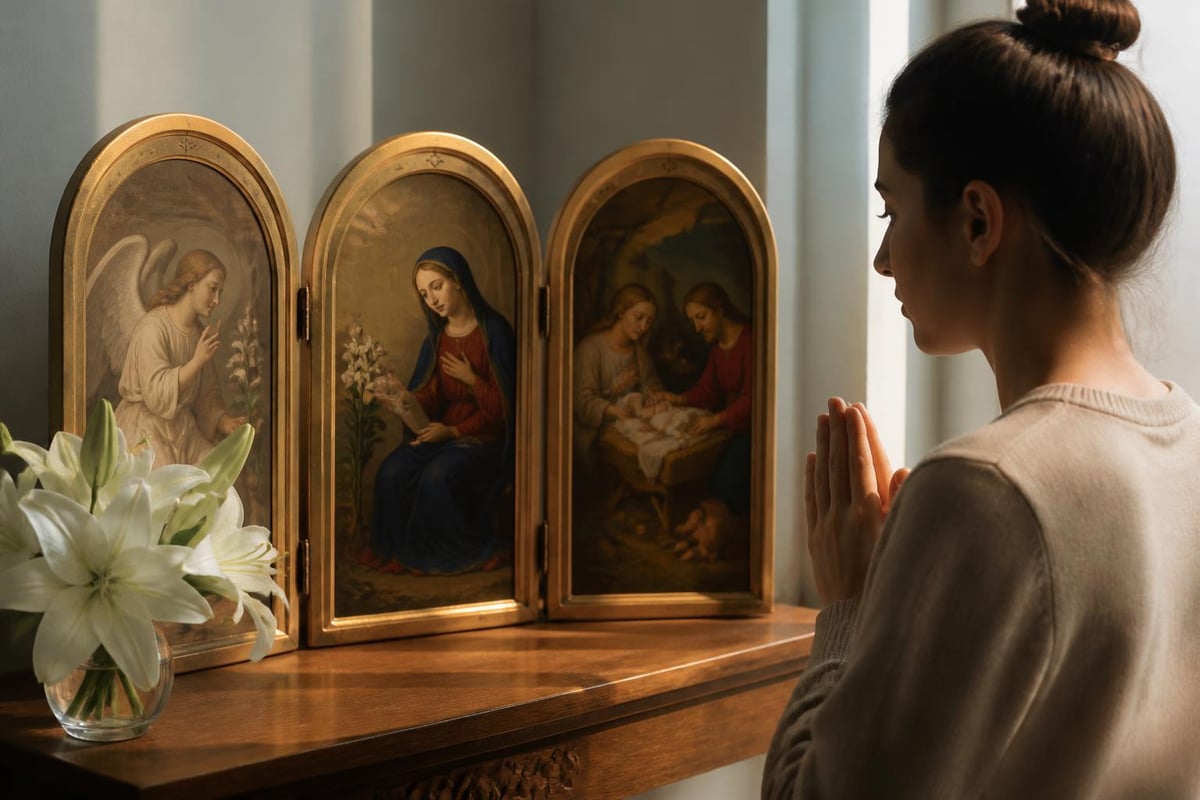
The third verse proclaims the mystery's fulfillment: "And the Word was made flesh." The response, "And dwelt among us," completes the theological progression from announcement through acceptance to realization. A final Hail Mary precedes the concluding prayer.
| Section | Verse | Response | Prayer |
|---|---|---|---|
| First | Angel's declaration | Mary's conception | Hail Mary |
| Second | Mary's acceptance | "Be it done" | Hail Mary |
| Third | Word made flesh | Dwelling among us | Hail Mary |
| Conclusion | Collect prayer | Divine grace request | Silent reflection |
Traditional Times and Practices
The angelus traditionally rings at 6:00 AM, noon, and 6:00 PM, though exact times vary by location and season. These three moments divide the day into segments, sanctifying ordinary time through prayerful interruption. The practice reflects Christianity's understanding that all time belongs to God.
Morning recitation launches the day with awareness of Christ's Incarnation. The noon angelus interrupts work and activity, redirecting attention to spiritual realities. Evening prayer concludes the day by returning to the mystery that grounds Christian faith. This threefold pattern creates a rhythm of remembrance throughout daily life.
Seasonal Variations
During the Easter season, Catholics replace the angelus with the Regina Caeli (Queen of Heaven). This substitution acknowledges the Resurrection's primacy during Eastertide, from Easter Sunday through Pentecost. The Regina Caeli maintains the same recitation times but shifts the focus from Incarnation to Resurrection.
The transition between prayers marks the liturgical calendar's movement through salvation history. Both prayers share the practice of three-times-daily recitation, preserving the structural rhythm while adapting the theological emphasis. This flexibility demonstrates the Church's ability to maintain tradition while honoring the liturgical year's distinct seasons.
Theological Significance
The angelus encapsulates core Christian doctrines within a brief, accessible format. According to the Diocese of Little Rock, the prayer narrates the entire salvation story from Annunciation through Resurrection. Each verse unpacks a dimension of the Incarnation mystery, making profound theology available to all believers.
The Incarnation Mystery
At its heart, the angelus celebrates God's radical humility in becoming human. The Word's assumption of flesh represents divine love's ultimate expression. By meditating on this mystery three times daily, Catholics internalize Christianity's central claim: God entered human history as one of us.
This theological focus distinguishes the angelus from other devotions. While many prayers petition God for specific needs, the angelus primarily contemplates what God has already accomplished. It's a prayer of wonder rather than supplication, though the concluding collect does request grace.
The prayer emphasizes four theological points:
- Divine initiative in salvation
- Mary's free cooperation with grace
- The hypostatic union (divine and human natures in Christ)
- Incarnation as the foundation for redemption
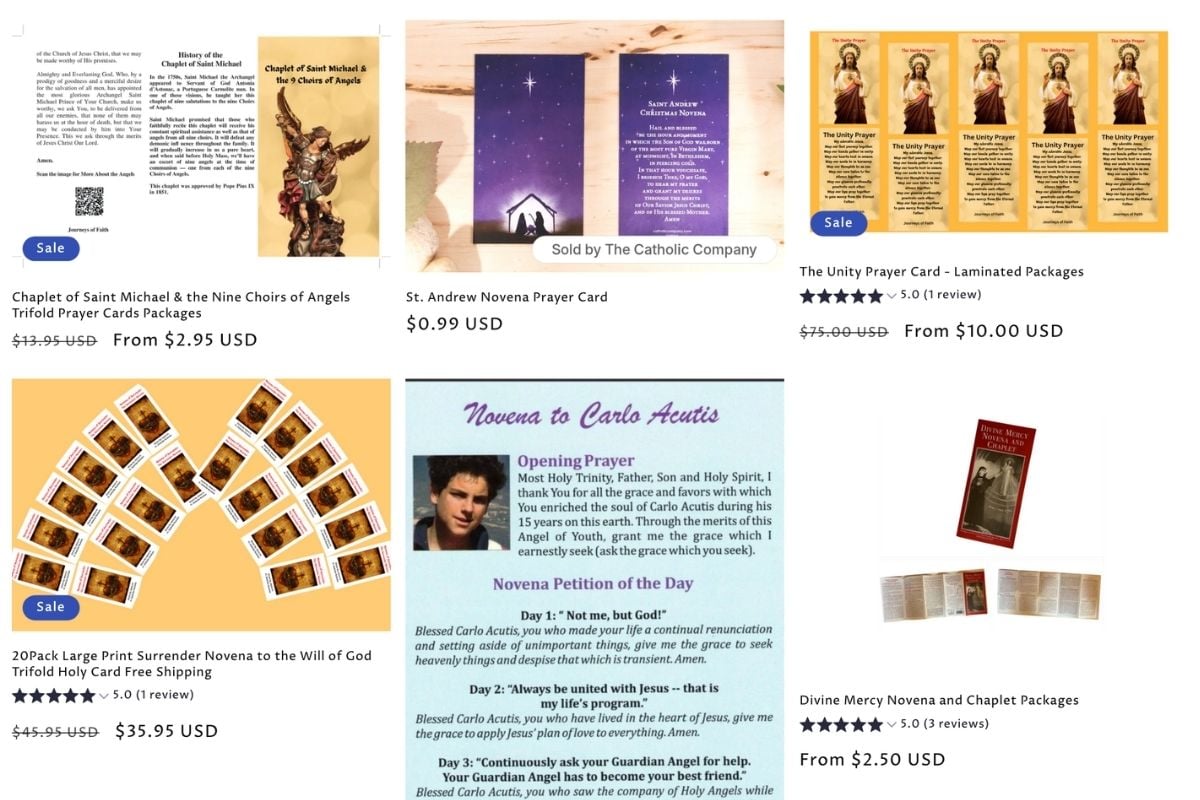
Prayer cards and devotional aids help Catholics maintain this practice even when church bells are absent. The collection at Journeys of Faith includes beautifully designed prayer cards featuring the complete angelus text, making it easy to pray anywhere. These tangible reminders support daily devotion by providing the prayer's words in a portable format.
Cultural Impact and Artistic Representations
Jean-François Millet's famous painting "L'Angélus" from 1857-1859 captures the prayer's cultural resonance. The artwork depicts two peasants pausing their labor to pray at the sound of distant church bells. This image has become synonymous with the angelus itself, illustrating how the devotion shaped rural Catholic life in 19th-century France.
The painting's enduring popularity reflects the angelus's broader cultural significance beyond strictly religious contexts. It represents a pre-industrial worldview where sacred time interrupted secular activity, where transcendent realities claimed precedence over economic productivity. The work speaks to contemporary audiences precisely because such interruptions have become rare in modern life.
Literary and Musical References
Numerous poets, novelists, and composers have referenced the angelus throughout Western cultural history. The bells' three-times-daily ringing provided a temporal structure that organized community life. Literary works from the medieval period through the 20th century use angelus bells to mark time, signal transitions, or evoke religious atmosphere.
Composers have incorporated angelus themes into sacred and secular music. The bells' distinctive pattern-three groups of three rings, followed by a longer peal-creates a recognizable auditory signature. This sound became so culturally embedded that even non-Catholics recognized its significance in traditionally Catholic regions.
Modern Practice and Relevance

In 2026, the angelus faces both challenges and opportunities. Fewer churches ring bells regularly, and modern work schedules don't always accommodate three-times-daily prayer breaks. Yet technology offers new ways to maintain this ancient practice. Smartphone apps can provide reminders at traditional angelus times, recreating the bell's function through digital means.
Practical Integration
Catholics can incorporate the angelus into contemporary routines without abandoning modern productivity. The prayer takes less than two minutes to recite, making it feasible even during busy workdays. Some practitioners pray it during commutes, lunch breaks, or transitions between activities.
Strategies for modern practice include:
- Setting phone reminders for 6 AM, noon, and 6 PM
- Keeping prayer cards in accessible locations
- Coordinating with family members for shared recitation
- Using the prayer as a midday meditation break
- Joining online communities that pray together virtually
The angelus also serves as an entry point for Catholics seeking to deepen their prayer life. FOCUS provides detailed guidance on incorporating the prayer into daily routines, offering practical tips for beginners. The structured format requires no special preparation or expertise, making it accessible to all Catholics regardless of spiritual maturity.
Social Justice Dimensions
Recent theological reflection has connected the angelus to labor justice and worker dignity. The prayer's traditional timing-interrupting work three times daily-implicitly challenges any economic system that reduces persons to mere productivity. By stopping work to pray, Catholics affirm that human dignity transcends economic value.
This social dimension becomes particularly relevant in 2026's gig economy, where work boundaries have dissolved. The angelus establishes non-negotiable pauses, asserting that certain practices deserve protection from market forces. Prayer time becomes a form of resistance against the complete commodification of human life.
Dignity of Rest
The prayer sanctifies not only work but also rest. Each angelus pause represents a micro-sabbath, a moment when temporal concerns yield to eternal realities. This rhythm prevents work from becoming totalizing, maintaining space for contemplation within active life.
Medieval workers who prayed the angelus understood their labor as participation in divine creativity. The prayer reminded them that work serves human flourishing rather than mere survival or accumulation. This theological framework offers resources for contemporary discussions about work-life balance and economic justice.
The Angelus and Marian Devotion
As a Marian prayer, the angelus honors Mary's unique role in salvation history. Each recitation acknowledges her consent as essential to the Incarnation's accomplishment. God chose to make human cooperation-specifically Mary's cooperation-integral to redemption. The prayer celebrates this partnership between divine initiative and human freedom.
Mary's Example
Mary's response-"Be it done unto me according to thy word"-models Christian discipleship. Her willingness to accept God's plan despite uncertainty and risk provides a template for all believers. The angelus invites Catholics to renew their own consent to God's will three times daily.
This emphasis on Mary's active participation counters misunderstandings that present her as merely passive. Catholic teaching recognizes that her fiat represented a free, informed choice made in the face of profound mystery. The angelus honors this courage while inviting believers to similar faithfulness.
Many Catholic families incorporate the angelus into their daily routine, creating a shared rhythm of prayer. Parents who teach children this devotion transmit not just words but a way of structuring time around spiritual realities. The prayer becomes a family tradition that connects generations through common practice.
Ecumenical and Interfaith Perspectives
While the angelus remains distinctly Catholic, some Anglican and Lutheran communities have adopted the practice. These traditions appreciate the prayer's scriptural foundation and christological focus. The devotion's emphasis on the Incarnation-a doctrine shared across most Christian denominations-facilitates this ecumenical adoption.
Orthodox Christians have similar practices, though structured differently. The Jesus Prayer and other Eastern devotions serve analogous functions, creating rhythmic interruptions for remembrance of divine realities. These parallel traditions suggest that the human need for structured, repeated prayer transcends denominational boundaries.
Interfaith Dialogue
The angelus can serve as a bridge in interfaith conversations about contemplative practice. The concept of daily prayer at set times resonates with Islamic salat and Jewish davening. While theological content differs, the structural commitment to regular prayer creates common ground for dialogue about sacred time.
This shared practice of sanctifying daily life through prayer interruptions reveals universal human needs. Regardless of theological differences, religious traditions recognize that ordinary time requires deliberate consecration. The angelus represents Catholicism's particular answer to this universal requirement.
Resources for Deepening Practice
Catholics seeking to establish or renew their angelus practice have numerous resources available. Catholic Digest offers practical guidance on integrating the prayer into modern life, addressing common obstacles and suggesting solutions. These resources acknowledge contemporary challenges while affirming the devotion's continued relevance.
Books on Catholic spirituality frequently include sections on the angelus, situating it within broader traditions of liturgical prayer. The saints provide particularly valuable insights, as many maintained faithful angelus practice throughout their lives. Their examples and writings demonstrate how this simple prayer can sustain profound spiritual growth.
| Resource Type | Examples | Benefits |
|---|---|---|
| Prayer Cards | Laminated texts, artistic designs | Portability, durability |
| Mobile Apps | Reminder systems, audio guides | Accessibility, customization |
| Books | Spiritual guides, saint biographies | Depth, context |
| Online Communities | Virtual prayer groups, forums | Support, accountability |
| Church Programs | Parish angelus bells, group recitations | Community, tradition |
Parish communities that restore angelus bell-ringing create audible witnesses to Catholic identity. These bells announce to entire neighborhoods that certain times belong to prayer, regardless of secular schedules. The public nature of this proclamation offers a gentle form of evangelization through beauty and tradition.
Teaching the Angelus to Children
Introducing children to the angelus establishes patterns that can sustain lifelong faith. The prayer's repetitive structure makes it memorizable even for young children. Families who pray together at noon or evening create shared memories and spiritual practices that children often maintain into adulthood.
Age-appropriate approaches include:
- Preschoolers: Simple explanations focusing on Mary and baby Jesus
- Elementary age: Teaching the full prayer text with basic theological meaning
- Middle schoolers: Discussing Mary's courage and faith
- Teenagers: Exploring the prayer's connection to vocation and discernment
Parents can use the angelus as an opportunity to teach about the liturgical calendar, explaining the Easter season substitution of Regina Caeli. This introduces children to the Church's annual rhythm while maintaining daily prayer consistency.
Visual aids help younger children understand the prayer's narrative structure. Images depicting the Annunciation, Mary's fiat, and the Nativity provide concrete references for abstract theological concepts. These tools make the angelus accessible to children's developmental capacities while preserving theological accuracy.
The Angelus in Parish Life
Forward-thinking parishes in 2026 are rediscovering the angelus as a tool for building community identity. Installing or restoring church bells requires investment, but the return in terms of public witness and community cohesion justifies the expense. The bells' regular ringing creates a sonic landmark that orients neighborhoods around sacred time.
Some parishes schedule noon Masses or brief prayer services at traditional angelus times. These gatherings attract office workers seeking midday spiritual refreshment. The practice acknowledges modern work realities while adapting traditional structures to contemporary needs. Even a brief ten-minute service can provide significant spiritual nourishment.

Digital Parish Resources
Parishes can extend angelus practice beyond physical boundaries through digital platforms. Livestreaming noon prayers or posting daily angelus reminders on social media engages parishioners throughout the week. These virtual connections supplement rather than replace in-person worship, creating multiple touchpoints for spiritual formation.
Online prayer groups dedicated to the angelus create accountability and community. Members from different time zones can coordinate their practice, creating a continuous chain of prayer around the clock. This global dimension reflects Catholicism's universal character while honoring local traditions.
Parish bulletins and websites can feature regular reflections on the angelus, helping parishioners deepen their understanding. Brief meditations on each verse's theological significance provide ongoing formation. This educational approach prevents the prayer from becoming merely routine, maintaining its capacity to inspire and transform.
The angelus bridges centuries of Catholic tradition with contemporary spiritual needs, offering a simple yet profound way to sanctify daily life through remembrance of the Incarnation. Its three-times-daily rhythm creates space for divine mystery within ordinary routines, while its scriptural foundation connects believers to Christianity's essential claims. For those seeking to deepen their prayer life and maintain connection with Catholic tradition, Journeys of Faith provides extensive resources including prayer cards, books, and devotional materials. Explore our comprehensive collection of Catholic resources at Journeys of Faith to support your spiritual journey through prayer and study.
Additional Resources:
- Explore Journeys of Faith online store with thousands of Catholic items at https://journeysoffaith.com/collections
- Our unique mega search engine at https://journeysoffaith.com/search is linked to hundreds of Catholic shops and stores
- Get the Journeys of Faith NEW app for iPhone or Android-search for Journeys of Faith or go to https://journeysoffaith.com/pages/download-our-app
- Chat with us anytime at https://chatting.page/mjxs9aerrtgm3lmpndlcepmbyosntrjn
- We need your help to reach more souls. Please make a donation at https://journeysoffaith.com/pages/donate