

The dialogue Catherine of Siena stands as one of the most profound spiritual works of the medieval period, offering timeless wisdom that continues to illuminate the path of faith in 2026. Written in 1378 during a tumultuous period of Church history, this mystical treatise captures conversations between God the Father and Catherine, exploring divine providence, spiritual discernment, and the transformative power of divine love. For Catholic media audiences seeking deeper engagement with the saints and their teachings, understanding this masterwork opens new dimensions of prayer, contemplation, and practical spirituality.
Understanding the Historical Context of The Dialogue Catherine of Siena
Catherine Benincasa lived during one of the most challenging periods in Church history. Born in Siena in 1347, she experienced the devastating Black Plague, witnessed the Avignon papacy, and eventually played a crucial role in persuading Pope Gregory XI to return to Rome. The dialogue Catherine of Siena emerged from this crucible of historical upheaval and personal mystical experience.
Catherine's Life Before Writing The Dialogue
Catherine entered the Dominican Third Order at age sixteen, dedicating herself to prayer and penance. Her early years included extended periods of solitude, mystical visions, and developing relationships with spiritual directors who recognized her extraordinary gifts. By the time she began dictating the dialogue Catherine of Siena, she had already established herself as a spiritual counselor, peacemaker, and advocate for Church reform.
Key Life Events Leading to The Dialogue:
- Mystical espousal to Christ (1366)
- Reception of the stigmata (1375)
- Active involvement in papal diplomacy (1376-1378)
- Dictation of The Dialogue during intense prayer (1378)
The Composition and Transmission
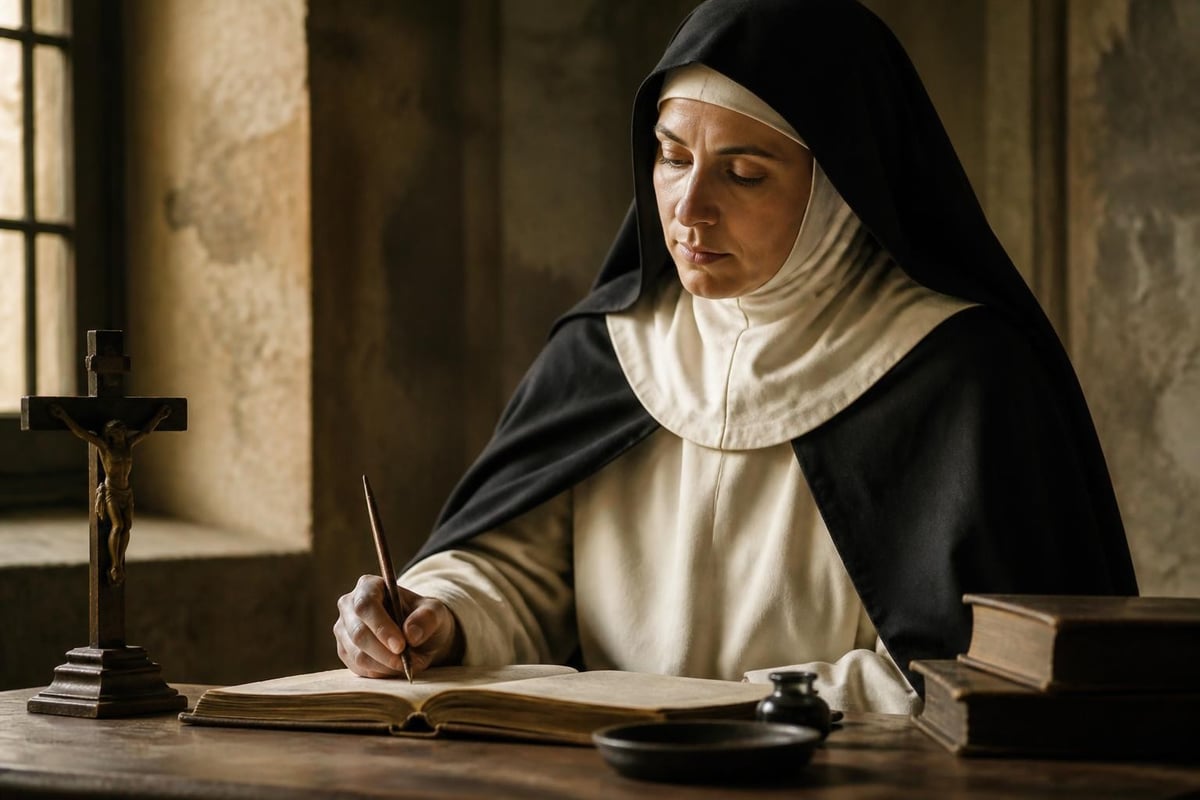
Catherine dictated the dialogue Catherine of Siena to her secretaries, primarily Raymond of Capua and Stefano Maconi, during periods of ecstasy and deep prayer. The original work, known in Italian as "Dialogo della divina provvidenza," represents her mature theological synthesis. Scholars studying the manuscript tradition have identified numerous witnesses that demonstrate how quickly this text spread throughout Italy and Europe.
The dialogue Catherine of Siena exists in multiple manuscript forms, with textual variants that reflect both scribal transmission and Catherine's own dictation process. Modern critical editions, particularly those published by the Centro Internazionale di Studi Cateriniani, provide readers with reliable texts based on comprehensive manuscript analysis.
Structural Framework of The Dialogue Catherine of Siena
The dialogue Catherine of Siena follows a clear theological architecture, though its mystical depth can initially obscure this structure. Understanding the framework helps readers navigate Catherine's profound insights into divine truth and human response.
The Four Petitions
Catherine presents the dialogue Catherine of Siena as her response to divine revelation, structured around four specific petitions she brings before God:
- For herself - seeking deeper knowledge and love of truth
- For the reform of the Church - asking for renewal of the mystical body of Christ
- For the whole world - interceding for all humanity and divine mercy
- For divine providence - requesting understanding of God's care for all creation
| Petition | Primary Theme | Practical Application |
|---|---|---|
| First | Self-knowledge and humility | Personal spiritual growth |
| Second | Church renewal | Engagement in ecclesial life |
| Third | Universal salvation | Evangelization and mercy |
| Fourth | Divine providence | Trust in God's plan |
The Bridge Metaphor
One of the most powerful images in the dialogue Catherine of Siena is Christ as the bridge between humanity and God. Catherine develops this metaphor extensively, describing three stairs that correspond to Christ's body on the cross: the feet (detachment from sin), the side (friendship with Christ), and the mouth (peace and union with God).
This bridge imagery provides practical guidance for spiritual progress. Catherine emphasizes that attempting to reach heaven without crossing this bridge leads to drowning in the river of worldly attachments and temporal concerns.
Brought to you by Journeys of Faith Founded by Bob and Penny Lord - We are an Augustinian Secular Institute - Cyber Apostles - Our Mission is Evangelization through Media.
Theological Themes in The Dialogue Catherine of Siena
The dialogue Catherine of Siena addresses multiple theological themes with remarkable sophistication. Catherine's mystical experience never separated from orthodox doctrine; instead, her visions deepened and illuminated traditional Catholic teaching.
Divine Providence and Human Freedom
Catherine presents God as speaking directly about the relationship between divine providence and human free will. The dialogue Catherine of Siena affirms that God's providential care extends to every detail of creation while simultaneously honoring human freedom. This tension, which has challenged theologians throughout history, receives practical resolution in Catherine's work through emphasis on trust and abandonment to divine will.
God's providence manifests in several ways throughout the text:
- Permissive will - allowing trials for spiritual growth
- Active intervention - providing grace and consolation
- Mysterious wisdom - working all things for good
- Universal care - attending to each soul individually
The Doctrine of Tears
The dialogue Catherine of Siena contains extensive teaching on five types of tears that mark spiritual progression. This doctrine provides readers with a framework for understanding their own emotional and spiritual responses to prayer and life circumstances.
The Five Tears:
- Tears of damnation (worldly sorrow without repentance)
- Tears of servile fear (beginners fearing punishment)
- Tears reaching sweet love (growing in virtue and charity)
- Tears of union (advanced souls united with divine will)
- Tears of sweet peace and fire (perfect souls burning with love)
For Catholic media audiences exploring lives of the saints, this teaching offers a map for understanding the emotional landscape of spiritual growth.
Discernment and Truth
Research on spiritual discernment in Catherine's work highlights how the dialogue Catherine of Siena provides concrete principles for recognizing God's voice amid competing spiritual influences. Catherine teaches that true discernment requires self-knowledge, humility, and constant reference to Christ as the measure of all truth.
God speaks in the dialogue Catherine of Siena about three lights necessary for discernment:
- Ordinary light of reason - natural intelligence illumined by faith
- Supernatural light of grace - divine assistance in perceiving truth
- Perfect light of glory - mystical illumination of advanced souls
Practical Applications for Contemporary Spiritual Life
The dialogue Catherine of Siena transcends its medieval context, offering guidance that resonates powerfully in 2026. Modern readers discover that Catherine's insights address perennial human struggles with sin, growth, and union with God.
Prayer and Contemplation
Catherine emphasizes that prayer is conversation with God, not monologue. The dialogue Catherine of Siena itself models this conversational approach, showing how souls can bring their deepest concerns, questions, and desires before the divine presence. This teaching encourages contemporary Catholics to move beyond rote recitation toward genuine dialogue in their prayer lives.
Practical Steps from The Dialogue:
- Begin with honest self-examination
- Bring specific petitions and concerns to prayer
- Listen for God's response through Scripture and spiritual reading
- Respond with practical obedience to perceived divine will
- Persist through periods of spiritual dryness
Spiritual Direction and Community
The dialogue Catherine of Siena contains extensive teaching on the role of spiritual directors and the importance of ecclesial community. Catherine herself served as a spiritual mother to numerous disciples, and her text provides principles for both directors and those seeking guidance.
| Role | Responsibility | Warning Signs |
|---|---|---|
| Director | Wisdom, humility, prayer | Pride, controlling behavior |
| Disciple | Obedience, honesty, trust | Manipulation, spiritual shopping |
| Community | Support, correction, example | Gossip, judgment, division |
Those exploring Catholic resources and media will find that the dialogue Catherine of Siena complements other spiritual classics by providing both mystical depth and practical guidance.
Suffering and Redemption
Catherine experienced significant physical suffering throughout her life, and the dialogue Catherine of Siena addresses the meaning and purpose of suffering with profound theological insight. God speaks about how suffering, when united with Christ's passion, becomes redemptive and transformative.
Catherine teaches that suffering serves multiple purposes:
- Purification - burning away attachment to sin
- Imitation - conforming believers to Christ crucified
- Reparation - offering satisfaction for personal and others' sins
- Witness - demonstrating faith's reality to the world
This teaching connects powerfully with contemporary experiences of illness, loss, and hardship, offering meaning without minimizing pain's reality.
The Dialogue's Influence on Catholic Spirituality
The dialogue Catherine of Siena has shaped Catholic spiritual theology for more than six centuries. Its influence extends through multiple dimensions of Church life, from personal devotion to theological scholarship.
Impact on Dominican Spirituality
As a Dominican tertiary, Catherine embodied and extended the Order of Preachers' charism. The dialogue Catherine of Siena integrates Dominican emphasis on truth, study, and preaching with Catherine's own mystical experiences. Manuscript evidence from university collections demonstrates how quickly Dominican houses adopted and copied the text.
Influence on Later Mystics
Catherine's work influenced subsequent generations of mystics and spiritual writers. Teresa of Avila knew Catherine's writings and shared her emphasis on determined resolve in pursuing spiritual perfection. John of the Cross's treatment of spiritual darkness resonates with Catherine's teaching on God's hidden working in souls.
The dialogue Catherine of Siena also shaped the development of lay spirituality, demonstrating that mystical experience and theological depth were not reserved for clergy or religious. This democratization of holiness continues to inspire Catholic media efforts to make spiritual classics accessible to all believers.
Modern Translations and Editions
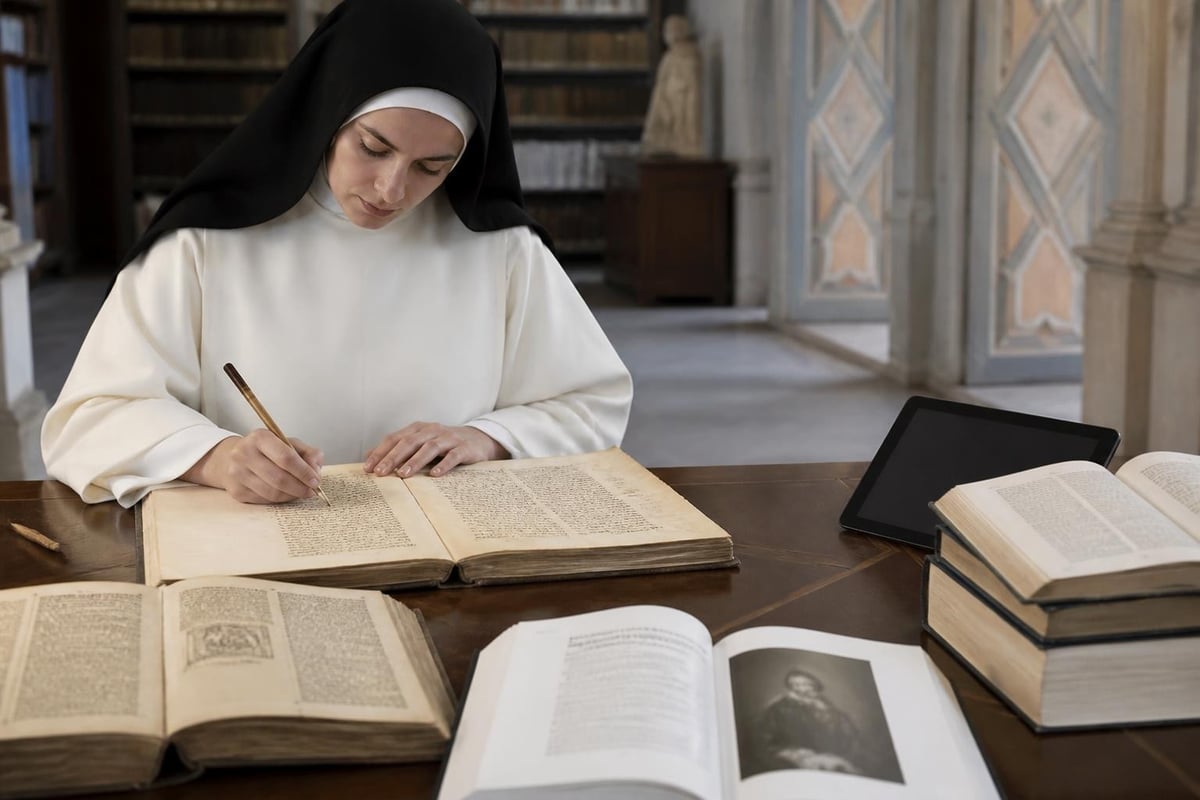
Contemporary readers benefit from multiple excellent translations of the dialogue Catherine of Siena. Understanding the translation landscape helps readers choose editions suited to their needs and reading level.
English Translations
The most widely recognized English translation comes from Suzanne Noffke, O.P., whose scholarly work made the dialogue Catherine of Siena accessible to English-speaking audiences with both accuracy and readability. Paulist Press published this translation with extensive annotations that illuminate Catherine's theological vocabulary and historical references.
Other translations serve different purposes:
- Algar Thorold translation - older, more poetic English
- Serge Hughes translation - modern English, less scholarly apparatus
- Excerpted editions - selections arranged thematically
Italian Critical Editions
Italian readers have access to several critical editions based on comprehensive manuscript research. Edizioni Cantagalli publishes editions based on Giuliana Cavallini's editorial work, which represents decades of textual scholarship. The first truly critical edition based on complete manuscript collation appeared recently, advancing scholarly understanding of the text's transmission.
Devotional Resources Inspired by The Dialogue
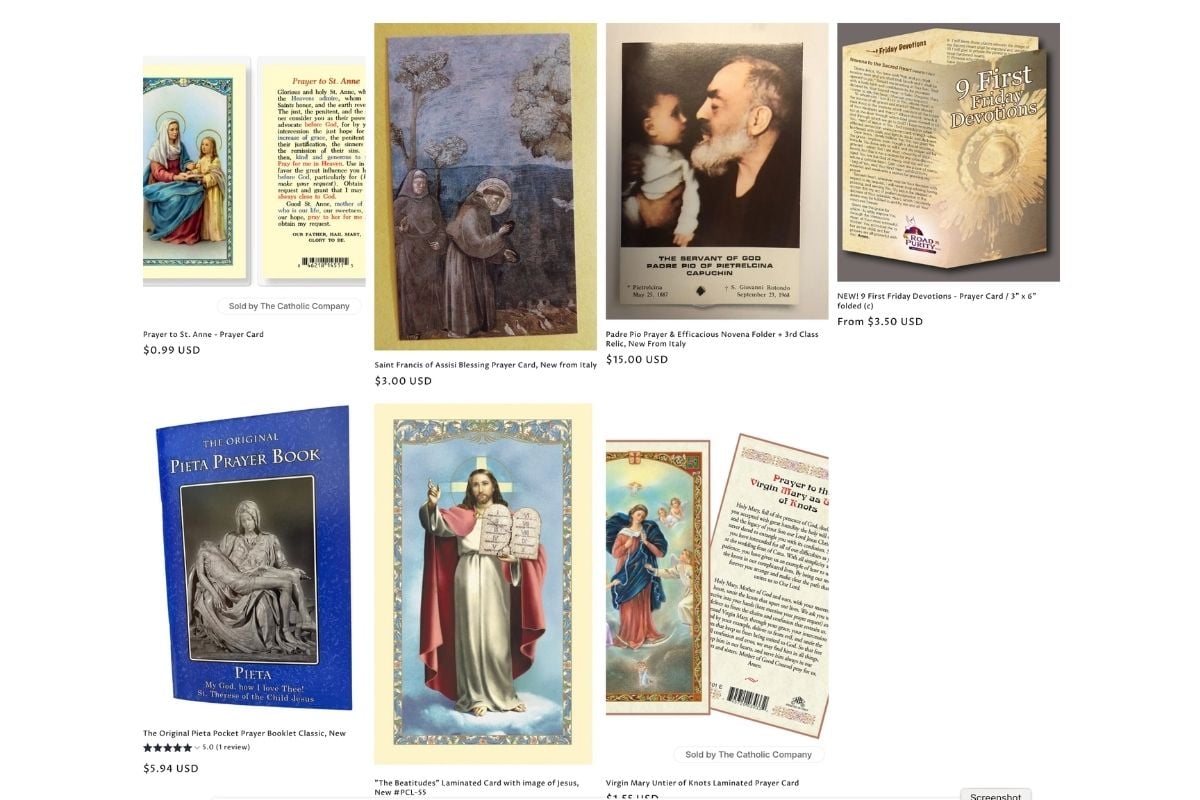
The dialogue Catherine of Siena has inspired numerous devotional resources that make Catherine's wisdom accessible for daily prayer and reflection. These materials help contemporary Catholics engage with Catherine's teaching in manageable portions.
Prayer cards, novenas, and short reflections drawn from the dialogue Catherine of Siena allow busy believers to incorporate Catherine's spiritual insights into their routines. These resources often focus on specific themes like divine providence, spiritual discernment, or Christ as the bridge to heaven. For those seeking to deepen their prayer life through the witness of the saints, materials like Prayer Cards and Novenas offer tangible supports for daily devotion and can complement reading the dialogue Catherine of Siena with focused, accessible prayer formats.
Study Groups and Reading Plans
Many parishes and Catholic organizations have developed study guides for reading the dialogue Catherine of Siena in community settings. These resources typically break the text into manageable sections, provide discussion questions, and connect Catherine's teaching to contemporary spiritual challenges.
Effective Study Approaches:
- Read one chapter weekly with journaling prompts
- Focus on single themes (tears, bridge, providence) across multiple sessions
- Combine reading with biographical study of Catherine's life
- Use the dialogue Catherine of Siena alongside Scripture meditation
- Apply Catherine's discernment principles to current decisions
Catherine's Scriptural Foundation
Academic analysis of Catherine's biblical reception demonstrates that the dialogue Catherine of Siena is saturated with Scripture, though Catherine rarely cites chapter and verse explicitly. Her illiteracy (she learned to read only in adulthood and never learned to write) means her biblical knowledge came primarily through liturgy, preaching, and contemplative absorption.
Old Testament Themes
Catherine draws extensively on prophetic literature, particularly Isaiah and Jeremiah, when addressing Church reform and calling believers to repentance. The dialogue Catherine of Siena echoes the Psalms' language of desire, longing, and praise. Wisdom literature informs Catherine's treatment of virtue, knowledge, and the fear of the Lord.
New Testament Integration
The Gospels provide the dialogue Catherine of Siena's christological foundation. Catherine meditates particularly on John's Gospel, with its emphasis on union, indwelling, and Christ's high priestly prayer. Paul's letters inform Catherine's ecclesiology and her teaching on the mystical body of Christ.
| Biblical Source | Theme in Dialogue | Application |
|---|---|---|
| Psalms | Language of desire and praise | Affective prayer |
| Isaiah | Prophetic call to renewal | Church reform |
| John's Gospel | Union with Christ | Mystical theology |
| Paul's Letters | Ecclesial body | Community life |
The Dialogue in Contemporary Theological Discussion
The dialogue Catherine of Siena continues to attract scholarly attention in 2026, with theologians mining its depths for insights into mystical theology, ecclesiology, and spiritual formation. Catherine's status as a Doctor of the Church (declared 1970) has enhanced academic interest in her theological contributions.
Feminist Theological Perspectives
Contemporary scholars examine how Catherine, as a laywoman without formal theological education, exercised teaching authority and influenced Church leaders. The dialogue Catherine of Siena demonstrates sophisticated theological reasoning that challenges assumptions about medieval women's intellectual capabilities. Catherine's self-description as "unlettered" becomes strategic humility rather than simple fact.
Ecumenical Interest
While the dialogue Catherine of Siena emerges from thoroughly Catholic contexts, its emphasis on personal relationship with God, Scripture-saturated spirituality, and moral transformation attracts ecumenical interest. Protestant scholars recognize in Catherine a kindred emphasis on God's initiative in salvation and the necessity of grace.
Applications to Spiritual Direction
Modern training programs for spiritual directors frequently include the dialogue Catherine of Siena as required reading. Catherine's principles for discernment, her understanding of spiritual development stages, and her balance of contemplation with active ministry provide enduring wisdom for those guiding others' spiritual journeys.
Preserving and Accessing The Dialogue's Manuscripts
Researchers and dedicated readers may wish to examine manuscript witnesses of the dialogue Catherine of Siena. The Vatican Library maintains several important codices containing Catherine's work, including manuscripts copied within decades of her death. Other Italian libraries, particularly in Venice and Florence, preserve witnesses that demonstrate the text's early circulation.
Digital humanities projects are gradually making high-resolution manuscript images accessible online, allowing scholars worldwide to study textual variants and scribal traditions. This democratization of access parallels Catherine's own democratizing impulse, making divine wisdom available beyond clerical and academic elites.
Digital Resources and Online Study
In 2026, numerous digital platforms offer the dialogue Catherine of Siena in various formats:
- E-book editions - searchable texts for tablets and e-readers
- Audio recordings - professionally narrated versions
- Podcast discussions - episode-by-episode commentary
- Online study groups - virtual communities reading together
- Mobile apps - daily reflections from the dialogue Catherine of Siena
These digital resources extend the reach of Catherine's wisdom, making the dialogue Catherine of Siena accessible to global audiences regardless of geographical or economic barriers.
Teaching The Dialogue in Educational Settings
Catholic schools, universities, and formation programs increasingly incorporate the dialogue Catherine of Siena into curricula. Educators find that Catherine's work successfully bridges medieval and contemporary contexts while challenging students to deeper spiritual engagement.
Age-Appropriate Approaches
While the full dialogue Catherine of Siena suits advanced high school students and adults, excerpted passages work effectively with younger audiences:
Elementary Level:
- The bridge story as metaphor for Christ
- Simple lessons on virtues and vices
- Catherine's courage in speaking truth
Middle School Level:
- Self-knowledge and humility
- Prayer as conversation with God
- Saints who changed the Church
High School Level:
- Divine providence and human freedom
- Spiritual discernment principles
- Catherine's theological sophistication
College/Adult Level:
- Complete text with historical-critical analysis
- Theological themes in depth
- Connections to contemporary spirituality
The dialogue Catherine of Siena remains an inexhaustible source of spiritual wisdom, theological insight, and practical guidance for the Christian life. Catherine's mystical experience, translated into accessible teaching through divine conversation, continues to transform readers who approach her work with openness and prayer. Whether you're discovering Catherine for the first time or returning to deepen your understanding, this masterwork offers treasures for every stage of spiritual growth. Journeys of Faith provides numerous resources to support your journey with the saints, including books, prayer materials, and media that make the wisdom of holy men and women accessible for contemporary believers seeking to grow in faith and love.
Resources to Explore:
-
Explore Journeys of Faith Online store with thousands of Catholic Items at https://journeysoffaith.com/collections
-
Journeys of Faith is blessed to provide Catholic media, including podcasts and inspirational content, free of charge across multiple media platforms for viewers and listeners around the world. While access to this content remains free, there are significant and continually increasing costs associated with producing, hosting, and distributing these programs. Your support helps us continue sharing the beauty of the Catholic faith with souls. Please Make a Donation https://journeysoffaith.com/pages/donate
Shop Saint Catherine of Siena Resources
Deepen your encounter with Catherine's mystical wisdom through these resources from Journeys of Faith.
- 📖 Dialogue of St. Catherine of Siena — Leather Bound Classic
- 📘 Saint Catherine of Siena Minibook
- 🎧 Saint Catherine of Siena Audiobook MP3
- 🎬 Saint Catherine of Siena MP4 Video
- 📄 Saint Catherine of Siena eBook PDF
- 🪪 Saint Catherine of Siena Laminated Bio Card #PCL-04
