

The question of who holds the title of the first saint in Christian history reveals profound truths about the early Church's development and the nature of holiness itself. While many believers assume apostles or Old Testament figures claimed this honor, the answer surprises most Catholics. Understanding the first saint requires examining both historical evidence and theological tradition, exploring how the early Christian community recognized and venerated those who gave their lives for Christ. This designation carries significance far beyond mere historical curiosity, shaping how the Church understands sanctity, martyrdom, and the communion of saints that unites heaven and earth.
The Protomartyr: Stephen's Unique Position
Stephen the Deacon holds the undisputed title as the first saint within Christian tradition. His martyrdom, recorded in Acts 6-7, marked a pivotal moment in the early Church's history. The term "Protomartyr" derives from Greek, meaning "first witness," and this designation belongs exclusively to Stephen.
Why Stephen Is Recognized as the First Saint
The Acts of the Apostles provides detailed accounts of Stephen's ministry, his powerful preaching, and his ultimate sacrifice. His stoning occurred approximately 34 AD, making him the first recorded Christian martyr following Christ's ascension. This chronological priority matters deeply in understanding ecclesiastical tradition.
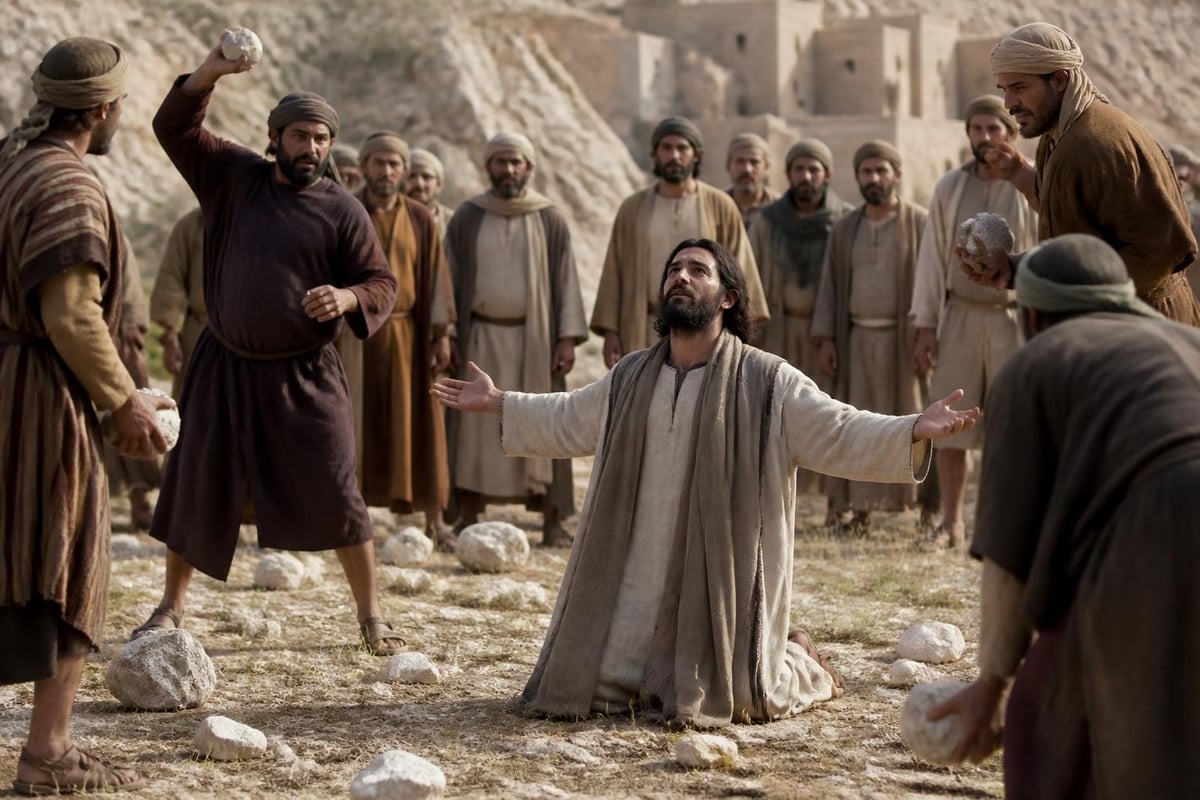
Unlike later canonization processes, Stephen's recognition as the first saint happened organically within the apostolic community. The early Christians immediately understood that his death mirrored Christ's passion, with Stephen even echoing Jesus' words from the cross: "Lord, do not hold this sin against them" (Acts 7:60). This parallel established martyrdom as the supreme form of Christian witness.
Key characteristics that distinguished Stephen:
- First ordained deacon in the Church
- Full of grace and power, performing great wonders
- Wisdom that opponents could not refute
- Vision of heaven opened during martyrdom
- Forgiveness extended to his executioners
The US Conference of Catholic Bishops explains how the modern Catholic understanding of sainthood traces directly back to these early martyrs, with Stephen setting the precedent for all who followed.
Brought to you by Journeys of Faith, founded by Bob and Penny Lord. We are an Augustinian Secular Institute and Cyber Apostles. Our mission is evangelization through media.
The Development of Saint Veneration in the Early Church
The practice of venerating saints didn't emerge from theological treatises but from the lived experience of persecution. Early Christians gathered at martyrs' tombs on the anniversaries of their deaths, which they called the martyr's "birthday" into eternal life. Stephen's tomb became one of the earliest pilgrimage sites.
From Martyrdom to Recognition
The concept of sainthood evolved organically during Christianity's first centuries. Initially, only martyrs received this honor. The faithful understood these witnesses had achieved immediate union with Christ through their blood sacrifice, bypassing purgatory entirely.
| Era | Saint Recognition Criteria | Authority |
|---|---|---|
| 1st-3rd Century | Martyrdom; local community acclaim | Bishop and faithful |
| 4th-10th Century | Martyrdom or exceptional holiness; episcopal approval | Regional bishops |
| 993 AD onward | Formal papal canonization begins (Ulrich of Augsburg) | Pope |
| 1588-Present | Congregation for the Causes of Saints established | Vatican process |
The Vatican's historical documentation reveals how the cult of martyrs developed naturally within primitive Christianity, with the first saint Stephen serving as the archetypal model.
Archaeological Evidence Supporting Early Veneration
Material evidence confirms the early Church's devotion to martyrs. Archaeological discoveries in Jerusalem, Rome, and other ancient Christian centers reveal elaborate tomb shrines dedicated to martyrs. Recent archaeological findings continue illuminating how first-century Christians honored those who died for their faith.
These shrines weren't mere memorials. Early believers considered them sacred spaces where heaven and earth intersected. They celebrated the Eucharist on martyrs' tombs, literally building altars over their remains, a practice that continues in Catholic tradition today with altar stones containing martyrs' relics.
Distinguishing the First Saint from Other "Firsts"
Confusion often arises when discussing the first saint because Christianity recognizes multiple "first" titles. Peter served as the first pope, Mary holds unique privileges as Mother of God, and John the Baptist preceded Christ's ministry. Yet Stephen's designation as the first saint specifically refers to martyrdom and post-Resurrection witness.
Clarifying Common Misconceptions
The Apostles' Status: While the Twelve Apostles are certainly saints, their recognition came through their direct commission by Christ rather than martyrdom. Stephen represents the first believer outside Jesus' immediate circle to achieve sainthood through death for the faith.
Old Testament Figures: Catholic tradition honors Old Testament patriarchs and prophets, but their veneration differs from Christian saints. They lived before Christ's redemptive work and represent righteous figures who anticipated the Messiah rather than witnessed to His Resurrection.
The Blessed Virgin Mary: Though Mary holds the highest position among all saints and was assumed body and soul into heaven, she didn't achieve this status through martyrdom. Her unique role as Theotokos (God-bearer) places her in a category beyond comparison.
Cambridge University research examines competing claims about various "firsts" in early Christianity, helping distinguish between the first bishop, first martyr, and other foundational roles. This scholarship confirms Stephen's unique position as the first Christian martyr and, consequently, the first saint recognized by the early Church.
Stephen's Legacy in Eastern and Western Christianity
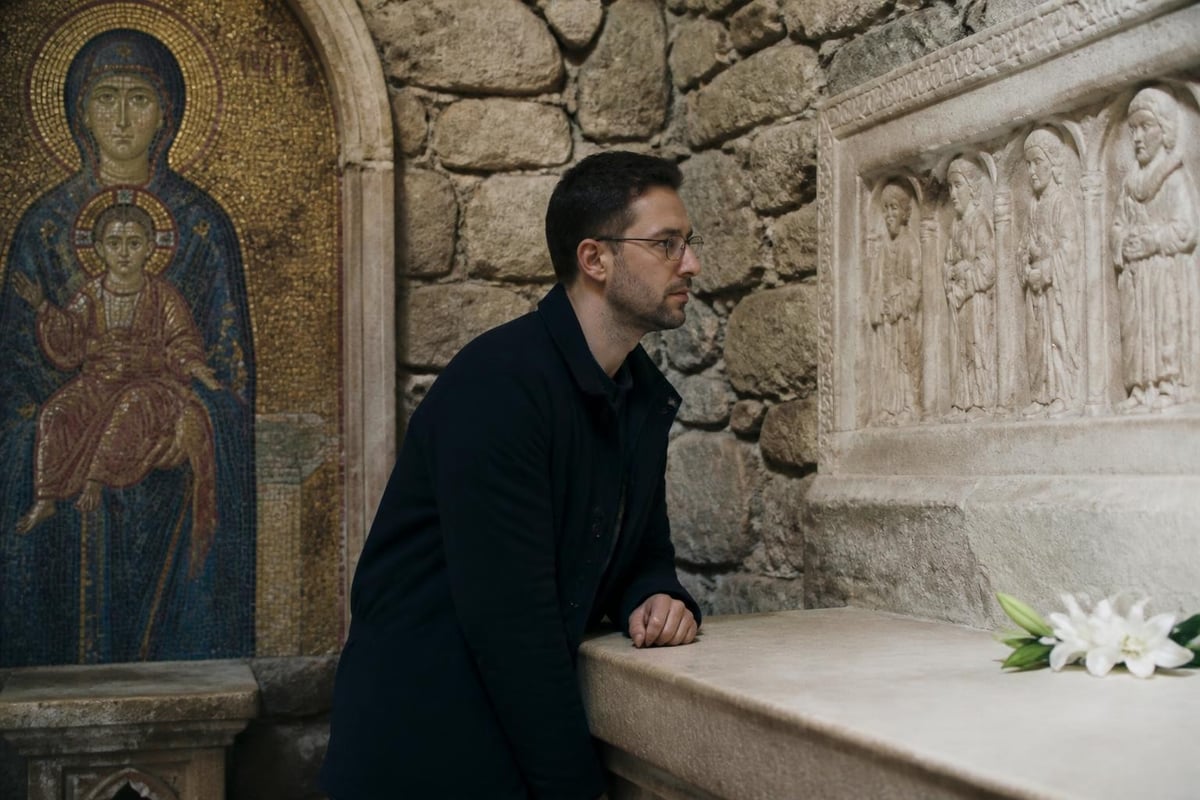
Both Catholic and Orthodox traditions unanimously recognize Stephen as the first saint, though they celebrate his feast on different dates. The Western Church commemorates St. Stephen on December 26, immediately following Christmas, while Eastern Orthodox churches honor him on December 27.
The Orthodox Perspective on the Protomartyr
Eastern Christianity emphasizes Stephen's title "Protomartyr" perhaps even more strongly than Western tradition. Orthodox liturgical resources explain the theological significance of this designation and how it shapes worship practices. The Divine Liturgy includes special hymns honoring Stephen's unique witness.
In Orthodox iconography, Stephen appears as a young deacon wearing his liturgical vestments, often holding the stones of his martyrdom. This consistent representation across centuries demonstrates the unified Christian recognition of his role as the first martyr.
Impact on Catholic Devotional Life
Stephen's influence extends throughout Catholic practice and theology. His feast day's proximity to Christmas deliberately connects Christ's birth with the birth of Christian martyrdom. The Church's liturgical calendar thus presents salvation history as seamless narrative: Christ comes into the world (December 25), and the first Christian dies witnessing to Him (December 26).
Those seeking to deepen their prayer life and connection to the saints can explore resources through Journeys of Faith's Catholic saints books, which offer comprehensive insights into the lives of holy men and women who followed Stephen's example of radical witness.
Stephen's influence on Catholic spirituality includes:
- Model of forgiveness even unto death
- Pattern for diaconal ministry and service
- Example of boldness in proclaiming truth
- Template for understanding martyrdom's redemptive value
- First post-Resurrection miracle worker (Acts 6:8)
The Formal Canonization Process and Its Origins
While Stephen received immediate recognition as the first saint through the witness of the apostolic community, the formal canonization process developed gradually over centuries. Understanding this evolution illuminates how the Church determines sanctity.
Early Recognition Methods
During the first millennium, local bishops declared individuals saints based on popular acclaim and evidence of miracles. The faithful would spontaneously venerate martyrs, and bishops formalized this devotion. This decentralized approach worked well when Christianity remained relatively concentrated geographically.
The Catholic Encyclopedia documents that Pope John XV performed the first known papal canonization in 993 AD when he declared Ulrich of Augsburg a saint. This marked a significant shift toward centralized authority in recognizing holiness.
Modern Canonization Requirements
Today's process involves rigorous investigation:
- Servant of God - Investigation begins at diocesan level
- Venerable - Pope recognizes heroic virtue
- Blessed - Beatification after one verified miracle
- Saint - Canonization after second miracle (martyrs require only one)
This structured approach ensures thorough examination of candidates' lives, writings, and miracles. Yet it contrasts sharply with how the early Church recognized the first saint and other martyrs, whose sanctity seemed self-evident through their ultimate sacrifice.
| Aspect | Early Church (Stephen's Era) | Modern Process |
|---|---|---|
| Duration | Immediate to few years | Decades to centuries |
| Authority | Local bishop/community | Vatican Congregation |
| Evidence Required | Martyrdom, witness accounts | Extensive documentation, miracles |
| Investigation | Informal gathering of testimony | Formal tribunal, devil's advocate |
Theological Significance of Martyrdom
Stephen's death as the first saint established martyrdom as the Church's "baptism of blood." Early theologians understood that those who died for Christ achieved instant purification and union with God, regardless of previous sins or spiritual state.
Red Martyrdom and Its Meaning
The concept of "red martyrdom" (death for the faith) held primacy in early Christianity. Later, the Church recognized "white martyrdom" (monastic renunciation) and "green martyrdom" (daily sacrifice and asceticism), but red martyrdom remained supreme.
Why martyrdom guarantees sainthood:
- Complete conformity to Christ's passion
- Ultimate act of love (laying down one's life)
- Perfect witness to faith's truth
- Purification through suffering
- Crown of glory promised in Revelation 2:10
Stephen's martyrdom demonstrated these principles perfectly. His final vision of Christ standing at God's right hand (Acts 7:56) signified divine approval and immediate heavenly reward. This became the template for understanding all subsequent martyrs' deaths.
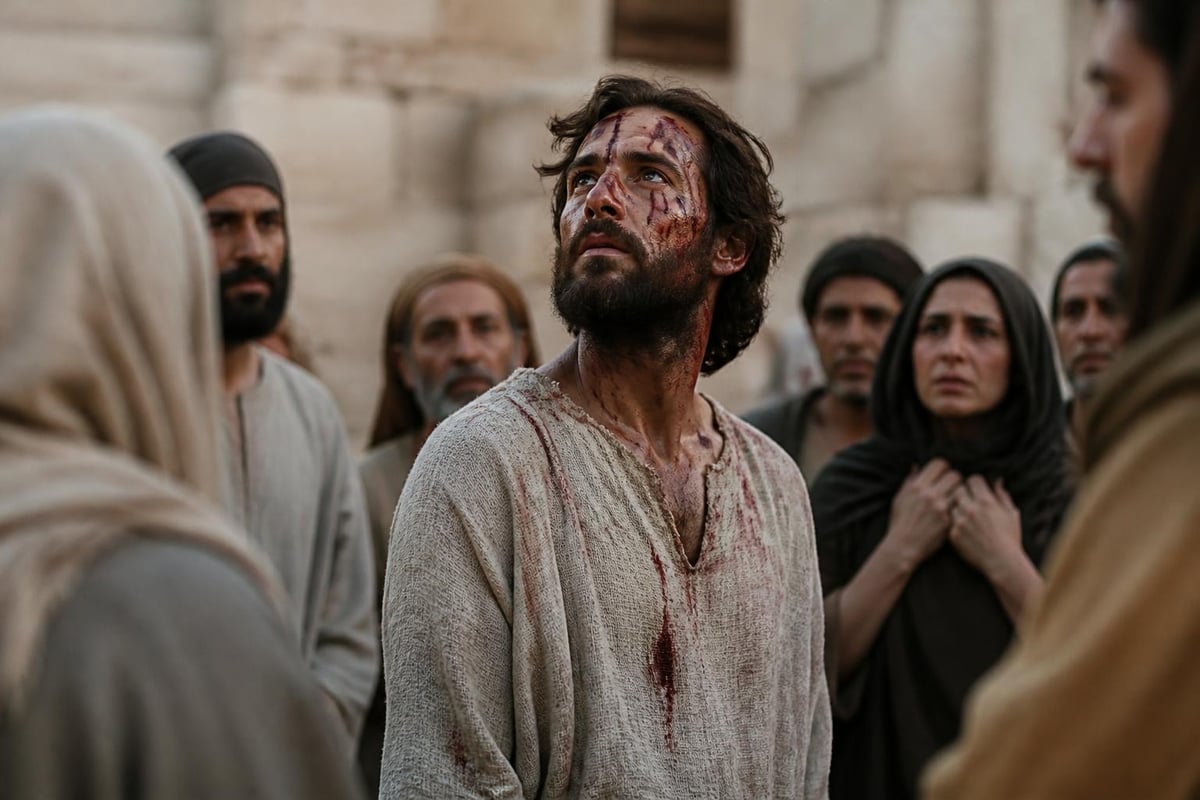
The theological foundation Stephen laid continues influencing Catholic understanding of sacrifice and holiness. Even today, martyrs require fewer miracles for canonization because their death itself represents the ultimate miracle of grace transforming human weakness into supernatural strength.
Stephen's Influence on Christian Art and Culture
The artistic representation of the first saint spans two millennia, reflecting his enduring importance in Christian consciousness. From catacomb paintings to Renaissance masterpieces, Stephen appears consistently throughout Christian art history.
Iconographic Elements
Artists typically depict Stephen with specific symbols:
- Stones - Instrument of his martyrdom
- Deacon's vestments - His liturgical role
- Palm branch - Victory over death
- Book - Gospel he preached
- Youth - Tradition holds he was young
These consistent elements allow believers to immediately identify Stephen in artwork, reinforcing his story across generations. Churches dedicated to St. Stephen exist worldwide, with his image adorning countless stained glass windows, mosaics, and paintings.
Literary and Devotional Impact
Stephen's story inspired countless sermons, theological treatises, and devotional works. St. Augustine delivered multiple homilies on Stephen, emphasizing how his forgiveness of persecutors exemplified Christian virtue. Medieval mystery plays featured Stephen prominently, educating illiterate populations about his witness.
For those seeking deeper engagement with the saints' lives and intercession, prayer cards and novenas provide accessible tools for daily devotion. These compact resources help believers maintain connection with holy witnesses like Stephen who have gone before us.
Contemporary Relevance of the First Saint
Stephen's example resonates powerfully in the 21st century as Christians worldwide face renewed persecution. According to multiple international religious freedom organizations, more Christians have died for their faith in the past 100 years than in all previous centuries combined.
Modern Martyrs Following Stephen's Path
The first saint established a pattern that continues today:
- Courage in witness - Speaking truth despite consequences
- Forgiveness of enemies - Maintaining love amid hatred
- Service to community - Using gifts for others' benefit
- Theological depth - Knowing and articulating faith clearly
- Vision of eternal reality - Seeing beyond earthly circumstances
Contemporary martyrs from Syria, Nigeria, Pakistan, and other persecution zones embody Stephen's spirit. Their deaths remind the Church that the age of martyrdom never ended; it merely shifted geographically.
Lessons for Daily Christian Living
Even believers not facing physical persecution can apply Stephen's example:
- Defend truth with wisdom and charity - Stephen combined knowledge with grace
- Serve others practically - His diaconal ministry met real needs
- Maintain prayer life amid busyness - His spiritual depth enabled his witness
- Forgive those who harm you - His final words echo Christ's mercy
- Keep eternal perspective - His heavenly vision sustained him through suffering
These principles translate across cultural and temporal boundaries, making the first saint relevant for every Christian generation. Stephen doesn't merely represent historical curiosity; he provides a living model for authentic discipleship.
The Feast of St. Stephen and Liturgical Celebration
The Church's liturgical calendar deliberately positions Stephen's feast day on December 26, creating profound theological connections. This placement isn't accidental but reveals the intimate relationship between Christmas and martyrdom.
Liturgical Significance of December 26
The juxtaposition of Christ's birth with Stephen's death illustrates a fundamental Christian truth: the Incarnation leads directly to the Cross, and the Cross produces martyrs. Jesus came to die; Stephen died because Jesus came. The liturgical proximity reinforces this connection annually.
Traditional December 26 practices include:
- Reading Acts 6-7 in the Divine Office
- Celebrating Mass with red vestments (martyr's color)
- Reflecting on forgiveness and witness
- Honoring contemporary persecuted Christians
- Gathering family for continued Christmas celebration
Many Catholic families incorporate Lives of the Saints readings into their December devotions, using Stephen's feast as opportunity to teach children about courage, faith, and the cost of discipleship.
The Octave of Christmas
Stephen's feast falls within the Octave of Christmas, the eight-day celebration following December 25. The other feasts during this octave include St. John the Evangelist (December 27) and the Holy Innocents (December 28). Together, these commemorations present different aspects of witness: martyrdom by will (Stephen), witness through long life (John), and martyrdom by grace (Innocents).
This clustering emphasizes that responding to Christ's birth requires total commitment, whether through long faithful service or ultimate sacrifice. The first saint models the most complete form of this response.
Stephen's Role in Salvation History
Placing Stephen within the broader narrative of salvation history reveals his pivotal position. He stands at the hinge point between Judaism and Christianity, between the apostolic generation and the expanding Gentile mission.
Bridge Between Old and New Covenants
Stephen's lengthy speech before the Sanhedrin (Acts 7:2-53) recounts Israel's history from Abraham through Solomon. This address demonstrates continuity between God's Old Testament work and the New Covenant in Christ. Yet his accusers' violent response to this message symbolized Judaism's official rejection of Christian claims.
Significantly, Saul of Tarsus witnessed Stephen's martyrdom and approved it (Acts 8:1). Church tradition holds that Stephen's dying prayers contributed to Saul's later conversion. Thus, the first saint's death indirectly produced Christianity's greatest missionary and theologian, St. Paul.
Catalyst for Church Expansion
Acts 8:1 records that Stephen's martyrdom triggered severe persecution, scattering believers throughout Judea and Samaria. This dispersion fulfilled Jesus' commission in Acts 1:8: "You will be my witnesses in Jerusalem, in all Judea and Samaria, and to the ends of the earth."
Paradoxically, the death of the first saint accelerated the Gospel's spread rather than hindering it. Persecution scattered witnesses like seeds, establishing Christian communities across the Roman Empire. Stephen's blood became seed that produced exponential growth.
The cascading effects included:
- Philip's evangelization of Samaria and the Ethiopian eunuch
- Establishment of the church in Antioch
- Paul's conversion and subsequent missions
- Gentile inclusion in the Church
- Geographic spread beyond Palestine
Understanding the first saint, Stephen the Protomartyr, enriches our appreciation for the communion of saints and the costly witness that built the Church. His example of courage, forgiveness, and faithfulness unto death continues inspiring believers worldwide.
Whether you're deepening your knowledge of the saints, seeking resources for parish education, or looking for devotional materials, Journeys of Faith provides comprehensive Catholic media to support your spiritual journey. From books exploring the lives of saints to prayer cards that keep their witness close to your heart, these resources help modern believers connect with the cloud of witnesses who have gone before us.
Resources:
-
Explore the Journeys of Faith online store with thousands of Catholic items
-
Journeys of Faith is blessed to provide Catholic media, including podcasts and inspirational content, free of charge across multiple media platforms for viewers and listeners around the world. While access to this content remains free, there are significant and continually increasing costs associated with producing, hosting, and distributing these programs. Your support helps us continue sharing the beauty of the Catholic faith with souls. Please make a donation to support our mission of evangelization through media.
