

The annunciation of the blessed virgin mary stands as one of the most pivotal moments in salvation history, marking the instant when heaven's eternal plan intersected with human willingness. This sacred encounter between the Archangel Gabriel and a young Jewish woman in Nazareth forever changed the course of humanity. Understanding this event's theological depth and spiritual significance offers Catholics profound insights into faith, obedience, and divine providence. Every year on March 25, exactly nine months before Christmas, the Church celebrates this extraordinary event that brought God into the world through Mary's courageous acceptance.
The biblical account found in Luke's Gospel provides the foundation for our understanding of this sacred moment. The angel Gabriel's greeting, "Hail, full of grace, the Lord is with you," reveals Mary's unique preparation for this role. Her initial confusion and subsequent questioning demonstrate authentic human response to divine intervention, while her ultimate acceptance, "Let it be done to me according to your word," exemplifies perfect cooperation with God's will. This dialogue between heaven and earth contains theological treasures that scholars and saints have pondered for centuries.
The timing and location of the annunciation of the blessed virgin mary carry symbolic weight within Jewish tradition and Christian theology. Nazareth, a small and unremarkable town in Galilee, became the stage for this cosmic drama. According to the Catholic Encyclopedia's historical analysis, this event likely occurred during the spring, connecting it to themes of new life and renewal. The Jewish context of betrothal meant Mary was legally bound to Joseph but not yet living with him, making her situation both delicate and providential.
Brought to you by Journeys of Faith, founded by Bob and Penny Lord. We are an Augustinian Secular Institute and Cyber Apostles. Our mission is evangelization through media.
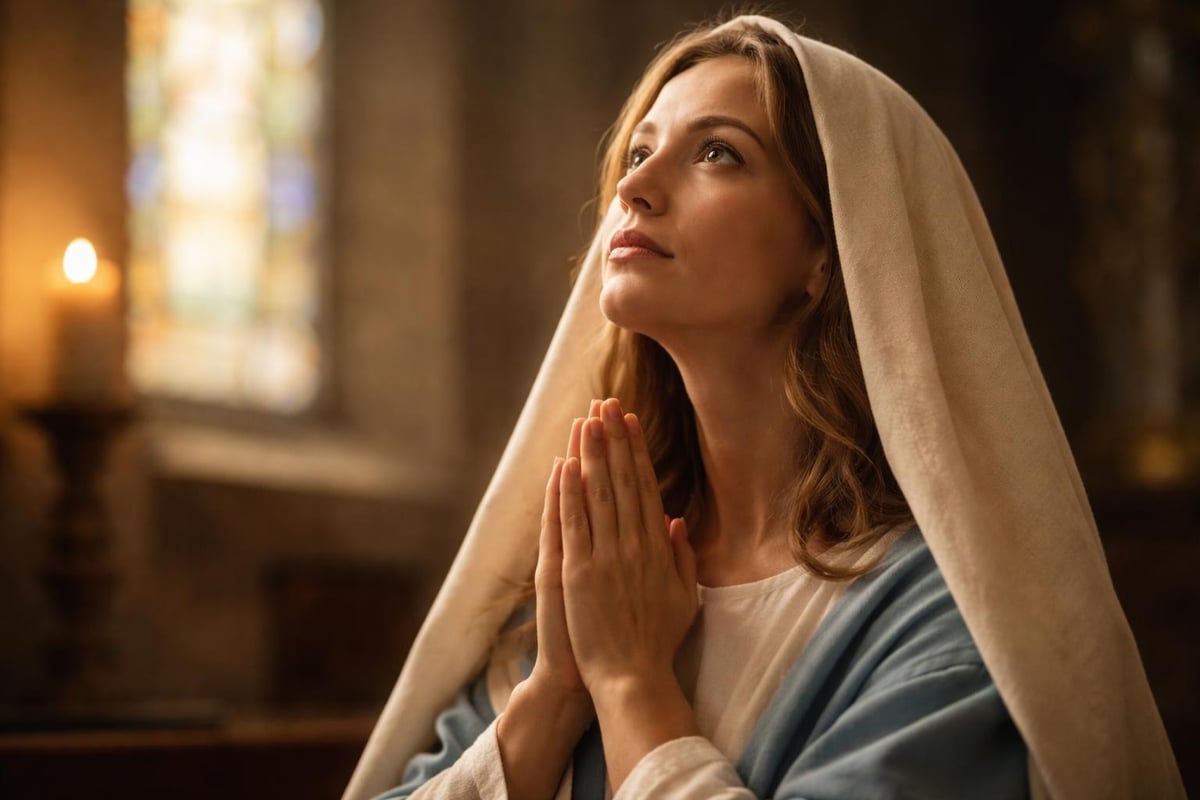
The Biblical Account and Scriptural Foundation
The Gospel of Luke provides the most detailed account of the annunciation of the blessed virgin mary, offering insights into both the historical event and its theological implications. Luke 1:26-38 presents a carefully structured narrative that emphasizes divine initiative and human response. Gabriel's announcement follows a pattern familiar in Scripture: greeting, reassurance, commission, objection, and sign. This structure appears throughout biblical encounters with the divine, from Moses to the prophets.
Gabriel's Message and Mary's Response
The angel's proclamation contains layers of meaning that unfold as we examine each phrase. Gabriel addresses Mary as "kecharitomene," translated as "full of grace" or "highly favored one," indicating her unique relationship with God. This greeting suggests that Mary's preparation for motherhood began before the annunciation itself. The angel's message reveals Jesus' identity through specific titles and promises: He will be great, called Son of the Most High, receive David's throne, and reign forever. These declarations connect the coming child to messianic prophecies throughout the Old Testament.
Mary's question, "How can this be, since I have no relations with a man?" demonstrates her virginal state and opens the door for Gabriel's explanation. The Holy Spirit's overshadowing power recalls God's presence in the cloud that covered the tabernacle in Exodus. This parallel establishes Mary as the new Ark of the Covenant, carrying God's presence within her. Her final consent, expressed in the phrase "Behold, I am the handmaid of the Lord," represents complete surrender to divine will.
Theological Significance of Mary's Fiat
The Latin word "fiat," meaning "let it be done," captures the essence of Mary's response to the annunciation of the blessed virgin mary. This single word reversed Eve's disobedience and opened the gateway for humanity's redemption. Church Fathers have consistently drawn parallels between Eve's "no" to God in the Garden and Mary's "yes" in Nazareth. Saint Irenaeus wrote that "the knot of Eve's disobedience was loosed by the obedience of Mary," establishing a theological framework that persists today.
Mary's consent was both free and informed, demonstrating authentic human cooperation with grace. She understood the social risks of unwed pregnancy in first-century Jewish society, yet trusted God's providential care. This trust exemplifies the theological virtue of faith working through love. The annunciation reveals that God's redemptive plan requires human participation, respecting human freedom while accomplishing divine purposes.
Liturgical Celebration and Feast Day
The Church celebrates the Solemnity of the Annunciation on March 25, a date carefully chosen to fall nine months before Christmas. This timing emphasizes the biological reality of Christ's incarnation, counting the months from conception to birth. When March 25 falls during Holy Week or Easter Week, the celebration is transferred to ensure proper liturgical observance. The date itself holds additional significance as it was traditionally believed to mark the spring equinox, symbolizing the light of Christ entering the world.
Historical Development of the Feast
Historical records indicate that the feast of the annunciation of the blessed virgin mary emerged in the Eastern Church by the sixth century, later spreading throughout the Western Church. The comprehensive overview at Wikipedia notes that various liturgical traditions developed unique customs and prayers for this celebration. In some cultures, the feast became known as Lady Day and marked the beginning of the new year until calendar reforms in the eighteenth century.
The liturgical texts for this solemnity draw heavily from Isaiah's prophecies and Luke's Gospel account. The Responsorial Psalm often uses Psalm 40, with its refrain "Here I am, Lord; I come to do your will," echoing Mary's acceptance. The Gospel reading always includes the full annunciation narrative, allowing the faithful to contemplate this mystery anew each year. Many parishes incorporate Marian hymns like the "Ave Maria" or "The Angel Gabriel from Heaven Came" into the celebration.
Artistic and Cultural Representations
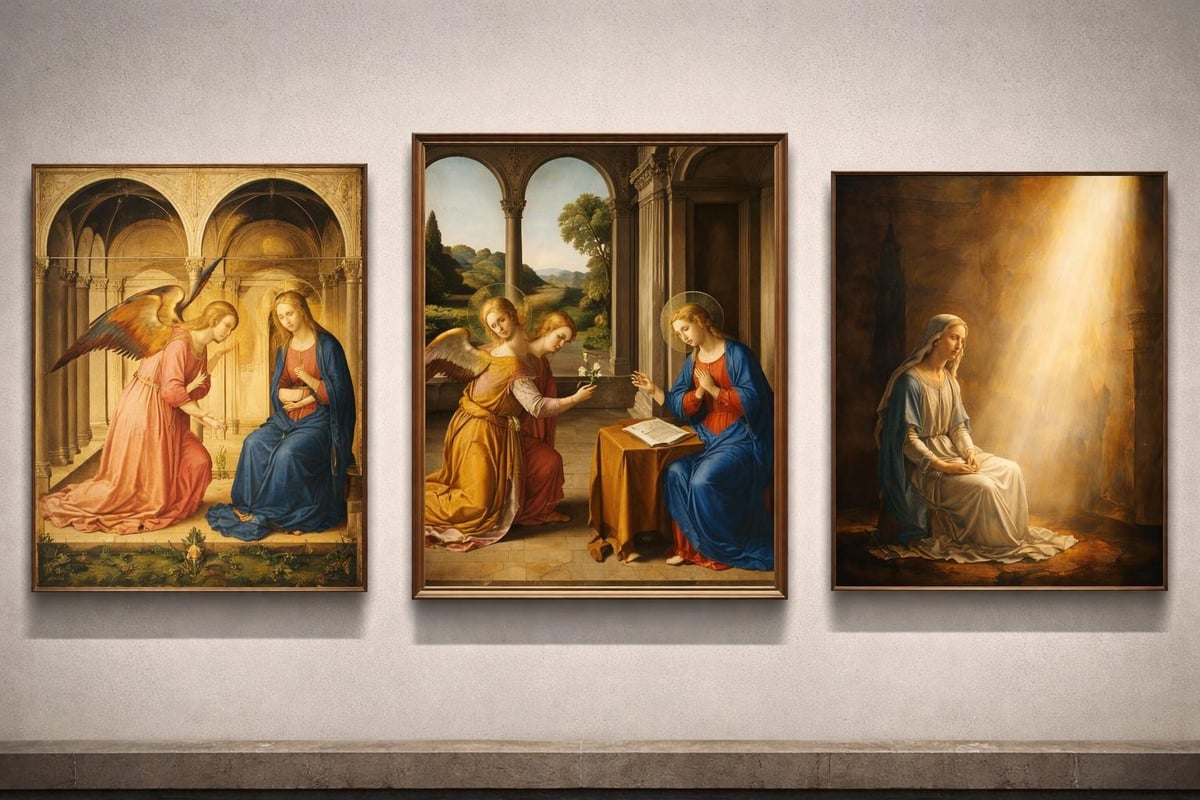
Throughout Christian history, the annunciation of the blessed virgin mary has inspired countless artistic masterpieces across multiple mediums. From Byzantine icons to Renaissance paintings, artists have attempted to capture this transcendent moment when eternity intersected time. Each cultural and historical period brought unique perspectives to representing Gabriel's visit, Mary's response, and the Holy Spirit's presence.
Famous Artistic Depictions
| Artist | Year | Notable Features |
|---|---|---|
| Fra Angelico | 1426 | Garden setting, geometric architecture |
| Leonardo da Vinci | 1472 | Detailed landscape, classical columns |
| Sandro Botticelli | 1489 | Gold leaf details, flowing drapery |
| El Greco | 1596 | Dramatic lighting, elongated figures |
| Henry Ossawa Tanner | 1898 | Realistic bedroom setting, soft light |
Renaissance artists particularly excelled at depicting the annunciation of the blessed virgin mary, often placing the scene in contemporary architectural settings that reflected their own time period. The symbolic elements remained consistent: the lily representing purity, the book suggesting Mary's contemplative nature, the dove symbolizing the Holy Spirit, and Gabriel's gesture of respectful announcement. Eastern Orthodox iconography follows strict theological conventions, emphasizing the spiritual reality over physical representation.
Literary and Devotional Expressions
Beyond visual arts, the annunciation of the blessed virgin mary has inspired poetry, music, and devotional literature throughout Christian history. The Angelus prayer, recited three times daily by many Catholics, commemorates this event through its repetition of Gabriel's greeting and Mary's response. Musical settings of the "Ave Maria" have been composed by masters from Bach to Schubert, each bringing unique interpretations to Gabriel's words.
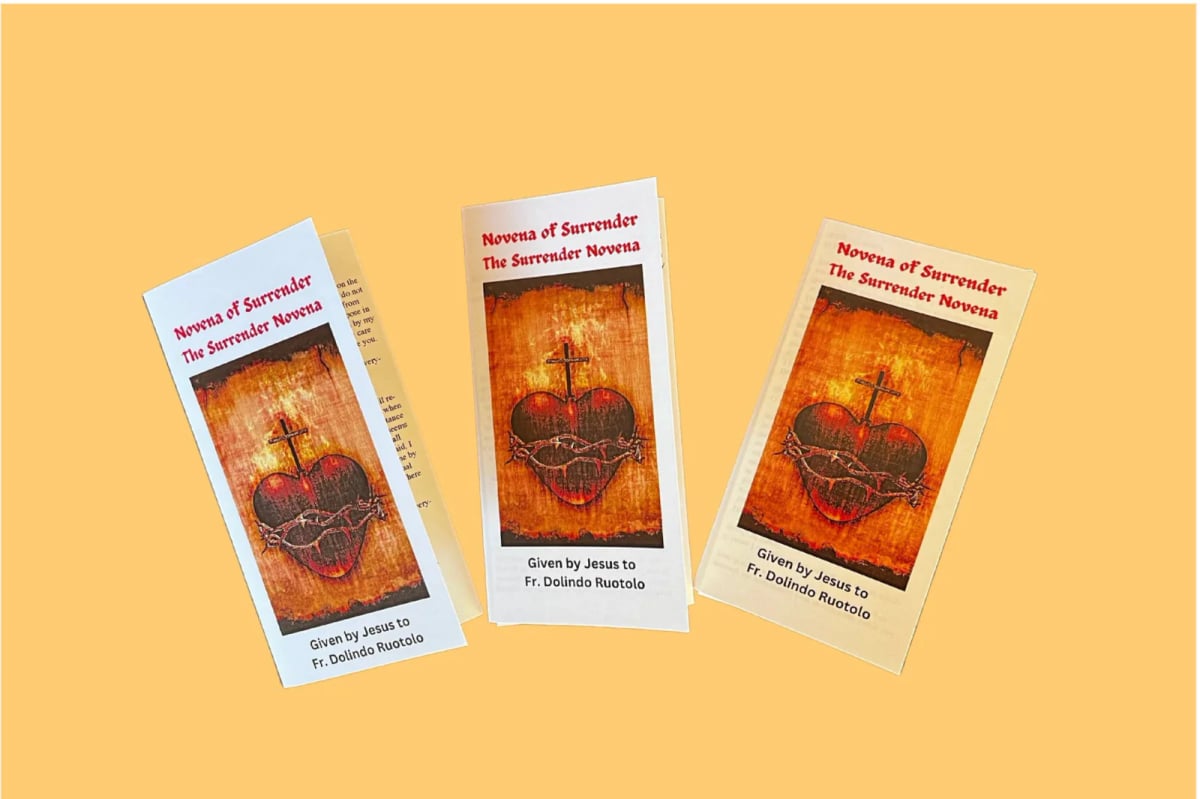
Many saints developed deep devotional practices centered on the annunciation. Saint Bernard of Clairvaux preached that the entire world waited in suspense for Mary's answer to Gabriel. Saint Louis de Montfort taught that meditating on Mary's humility during the annunciation helps souls grow in self-knowledge and dependence on God. The Surrender Novena, though focused on surrendering to God's will like Mary did, helps Catholics embrace divine providence in their daily lives. Those seeking to deepen their prayer life can find the Surrender Novena Packages helpful for personal and communal devotion.
Theological Implications and Marian Dogmas
The annunciation of the blessed virgin mary provides scriptural foundation for several key Marian doctrines within Catholic theology. Understanding these connections helps Catholics appreciate the depth of Mary's role in salvation history and her continuing intercession for the Church. Each dogma finds roots in Gabriel's greeting and Mary's response to God's invitation.
The Immaculate Conception Connection
Gabriel's greeting "full of grace" (kecharitomene) suggests Mary's unique holiness from the first moment of her existence. This greeting uses a perfect passive participle in Greek, indicating a completed action with lasting effects. Catholic theology interprets this as evidence supporting the doctrine of the Immaculate Conception, proclaimed by Pope Pius IX in 1854. Mary's freedom from original sin prepared her to be a worthy vessel for the incarnate Word of God.
The dogma of the Immaculate Conception doesn't depend solely on the annunciation narrative but finds strong support in Gabriel's unique greeting. No other person in Scripture receives such an address, suggesting Mary's singular grace-filled state. This preparation enabled her free and total consent to God's plan without the障碍 of inherited sin. Saint Maximilian Kolbe called Mary the "Immaculata," emphasizing her complete purity as essential to her divine motherhood.
Divine Maternity and Perpetual Virginity
The annunciation of the blessed virgin mary explicitly establishes her divine maternity through Gabriel's announcement that she will conceive and bear God's Son. The title "Mother of God" (Theotokos), defined at the Council of Ephesus in 431, flows directly from this event. Mary's motherhood isn't merely biological but carries theological weight as the woman who brought the Second Person of the Trinity into human existence in His human nature.
Gabriel's explanation that "the Holy Spirit will come upon you" addresses Mary's virginal conception while pointing to her perpetual virginity. Church tradition, supported by early Church Fathers, maintains that Mary remained virgin before, during, and after Christ's birth. This virginity symbolizes her complete consecration to God and the miraculous nature of Christ's conception. The perpetual virginity doesn't diminish Christ's humanity but emphasizes His unique origin as both fully God and fully man.
The Annunciation in Salvation History
Viewing the annunciation of the blessed virgin mary within the broader context of salvation history reveals its pivotal role in God's redemptive plan. This event marks the transition from the Old Covenant to the New, from promise to fulfillment, from prophecy to reality. Understanding these connections enriches Catholic appreciation for how God works through history to accomplish divine purposes.
Fulfillment of Old Testament Prophecy
The annunciation fulfills multiple Old Testament prophecies, particularly Isaiah's virgin birth prophecy: "Therefore the Lord himself will give you a sign: the virgin shall conceive and bear a son, and shall name him Immanuel" (Isaiah 7:14). Gabriel's message to Mary realizes this ancient promise, demonstrating God's faithfulness across generations. The name "Jesus," meaning "God saves," fulfills the meaning of Emmanuel, "God with us," emphasizing Christ's mission and identity.
Other prophetic connections include Micah's prediction of Bethlehem as the Messiah's birthplace and David's royal lineage. Gabriel's declaration that Jesus will receive "the throne of David his father" links the annunciation to the covenant God made with David, promising an eternal kingdom. These connections weren't coincidental but revealed God's meticulous planning throughout salvation history, as explored in resources about Catholic saints and their understanding of Scripture.
Mary as the New Eve
Patristic theology consistently presents Mary as the New Eve, whose obedience reversed the first woman's disobedience. This typological reading of the annunciation of the blessed virgin mary appears in writings from Saint Justin Martyr and Saint Irenaeus in the second century. Just as Eve's conversation with the serpent led to humanity's fall, Mary's dialogue with Gabriel initiated humanity's restoration. The parallel demonstrates divine providence working through similar patterns to heal what was broken.
This New Eve theology extends beyond simple reversal to transformation and elevation. Mary's cooperation with grace surpasses Eve's original innocence, demonstrating what redeemed humanity can achieve through divine assistance. Her role at the annunciation establishes her as spiritual mother to all believers, interceding for the Church as she brought forth its Head. Understanding Mary as New Eve helps Catholics appreciate her unique position in the communion of saints.
Personal Spiritual Applications
The annunciation of the blessed virgin mary offers profound lessons for contemporary Catholics seeking to deepen their faith and respond more fully to God's call. Mary's example provides a template for discernment, trust, and surrender that remains relevant across all times and circumstances. Applying these lessons requires intentional reflection and practical steps toward spiritual growth.
Cultivating Openness to God's Will
Mary's receptivity to God's plan began long before Gabriel's visit, developed through prayer, Scripture meditation, and faithful observance of Jewish law. Modern Catholics can cultivate similar openness through:
- Daily prayer and examination of conscience
- Regular reception of the sacraments, especially Eucharist and Reconciliation
- Scriptural lectio divina focused on listening for God's voice
- Spiritual direction to discern authentic divine inspiration
- Community involvement in parish life and service
This preparation doesn't guarantee easy answers but develops spiritual sensitivity to recognize God's promptings. Like Mary, believers must balance active seeking with patient waiting, trusting divine timing over human schedules. The practice of daily consecration to Mary, renewing one's dedication each morning, helps maintain this openness throughout ordinary activities and unexpected challenges.
Responding with Faith Despite Uncertainty
Mary's question "How can this be?" wasn't doubt but honest inquiry seeking understanding. Her response models healthy faith that asks questions while remaining open to divine mystery. The annunciation of the blessed virgin mary teaches that:
- Faith doesn't require complete understanding before obedience
- Questions can coexist with trust in God's providence
- Divine plans often exceed human comprehension
- Surrender precedes clarity in God's timing
- Grace provides strength for seemingly impossible tasks
Catholics facing difficult decisions or confusing circumstances can draw courage from Mary's example. Her "yes" to God came with significant personal cost and social risk, yet she trusted that God's plan would prevail. This trust didn't eliminate challenges but provided foundation during trials, as Joseph's initial confusion and the dangerous journey to Bethlehem would later prove.
Embracing Servant Leadership
Mary's self-identification as "handmaid of the Lord" reveals her understanding of true greatness in God's kingdom. Though chosen for the highest honor any creature could receive, she embraced servanthood over status. The annunciation of the blessed virgin mary demonstrates that divine favor comes with responsibility to serve others, not privilege to be served. This principle applies across all vocations:
| Vocation | Servant Leadership Application |
|---|---|
| Marriage | Spouses serve each other's sanctification |
| Parenthood | Parents sacrifice for children's formation |
| Priesthood | Pastors lay down lives for their flocks |
| Religious Life | Communities serve the Church's mission |
| Single Life | Individuals serve broader community needs |
Modern society often emphasizes personal fulfillment over sacrificial service, making Mary's example countercultural but essential. Her servant's heart didn't diminish her dignity but elevated it, showing that true freedom comes through surrender to God's loving plan. Catholics seeking to live the annunciation's lessons must examine whether their choices reflect servant leadership or self-centered ambition.
The Annunciation and Contemporary Faith
In 2026, the annunciation of the blessed virgin mary speaks powerfully to contemporary challenges facing Catholics and all people of faith. Modern skepticism about divine intervention, anxiety about the future, and cultural emphasis on self-determination make Mary's unconditional trust more countercultural than ever. Yet these very challenges highlight why her example remains urgently needed.
Addressing Modern Skepticism
Today's scientific worldview often struggles with miraculous elements of the annunciation narrative. Virgin birth, angelic visitations, and divine overshadowing challenge naturalistic assumptions about reality's boundaries. Yet dismissing these elements as myth undermines Christianity's historical claims and reduces faith to mere philosophy. The annunciation of the blessed virgin mary insists that God actively intervenes in human history, making claims that either happened or didn't, without middle ground for comfortable reinterpretation.
Catholic apologetics addresses these concerns by distinguishing between science's proper domain (studying natural processes) and theology's realm (understanding supernatural realities). The annunciation doesn't violate natural law but transcends it through divine power, demonstrating that God who established nature's order can work beyond it for redemptive purposes. This understanding helps believers engage scientific questions without compromising faith's supernatural core.
Building Trust in Divine Providence
Contemporary anxiety about world events, economic uncertainty, and social upheaval mirrors the chaos of Mary's own time under Roman occupation. Her trust during the annunciation of the blessed virgin mary offers a model for navigating uncertainty with faith rather than fear. This trust doesn't mean passive resignation but active cooperation with God's ongoing work in the world, as detailed in sermons exploring the theological implications of the Annunciation.
Practical applications include developing regular prayer routines that acknowledge God's sovereignty, practicing gratitude even during difficulties, and choosing actions based on Christian principles rather than popular opinion. Mary's example teaches that divine providence doesn't eliminate challenges but provides grace to navigate them faithfully. Her strength came not from favorable circumstances but from deep relationship with God, cultivated through years of faithful practice before the angel's visit.
Resources for Deepening Annunciation Devotion
Catholics seeking to deepen their appreciation for the annunciation of the blessed virgin mary have access to numerous resources that explore this mystery from multiple angles. Books, prayer cards, sacramentals, and online materials provide tools for study, meditation, and devotional practice. Engaging these resources helps believers move from intellectual understanding to lived experience of Marian spirituality.
Many parishes named after the Annunciation host special celebrations and devotions on March 25, often including special Masses, Marian processions, and educational presentations. The Annunciation parish directory shows how communities gather to honor this feast with appropriate solemnity. These communal celebrations connect individual believers to the broader Church's worship and strengthen parish bonds.
For personal devotion, prayer cards featuring the Annunciation scene provide portable reminders of Mary's "yes" and opportunities for brief prayer throughout the day. The Angelus prayer, traditionally prayed at morning, noon, and evening, commemorates the annunciation of the blessed virgin mary through its structure and content. Praying the Angelus connects Catholics to centuries of believers who paused their daily work to honor this saving moment.
Resources for deeper study include theological works examining Scripture, tradition, and magisterial teaching about the Annunciation. The Order of the Annunciation of the Blessed Virgin Mary demonstrates how religious communities have centered their charism around this mystery. Academic resources help believers understand historical development of Annunciation theology and its connections to broader Catholic doctrine.
Those interested in exploring more about Mary's role in salvation history can discover valuable insights through comprehensive Catholic media resources, including the extensive collection available at Journeys of Faith. The integration of Scripture, tradition, and devotional practice creates a holistic approach to Marian spirituality that enriches both understanding and lived faith.

Additional Learning Opportunities
-
Explore the Journeys of Faith online store with thousands of Catholic items at https://journeysoffaith.com/collections, including books and resources about Mary and the mysteries of salvation.
-
Search the comprehensive Mega Search Engine at https://journeysoffaith.com/search, linked to hundreds of Catholic shops and stores for finding specific Annunciation-related materials.
-
Download the Journeys of Faith NEW App for iPhone or Android by searching for Journeys of Faith or visiting https://journeysoffaith.com/pages/download-our-app to access Catholic content anywhere.
-
Connect directly with the Journeys of Faith community through their chat service at https://chatting.page/mjxs9aerrtgm3lmpndlcepmbyosntrjn for questions about resources and recommendations.
-
Support continued evangelization efforts by making a donation at https://journeysoffaith.com/pages/donate to help reach more souls with the Gospel message and Marian devotion.
The wealth of available resources ensures that Catholics at any stage of spiritual development can find appropriate materials for growing in appreciation of the annunciation of the blessed virgin mary. Whether through scholarly study, devotional practice, or artistic contemplation, engaging this mystery transforms how believers understand God's saving work and Mary's indispensable role within it.
The annunciation of the blessed virgin mary remains forever relevant, offering timeless wisdom about trust, obedience, and cooperation with divine grace. Mary's courageous "yes" changed history and continues inspiring believers to embrace God's will with similar faith. For those seeking to deepen their understanding of Mary, the saints, and the richness of Catholic tradition, Journeys of Faith offers extensive resources designed to support your spiritual journey through books, media, and devotional materials that bring these sacred mysteries to life.