

The tradition of catholic prayers forms the spiritual heartbeat of the Catholic Church, connecting millions of believers across centuries through words of devotion, petition, and praise. From the ancient prayers preserved in the Roman Breviary to contemporary intercessions, these sacred expressions provide a structured pathway for communicating with God, honoring Mary and the saints, and seeking divine grace. Whether recited during Mass, whispered in moments of personal need, or chanted in monastic communities, catholic prayers represent a living tradition that continues to nourish faith and transform lives in 2026.
The Foundation of Catholic Prayer Traditions
Catholic prayers encompass a vast treasury of spiritual expressions that have developed organically throughout the Church's two-thousand-year history. These prayers range from simple, spontaneous conversations with God to elaborate liturgical formulations that require years of theological study to fully appreciate.
The structure of Catholic prayer reflects the Church's understanding of humanity's relationship with the Divine Trinity. Prayer serves multiple purposes: adoration of God's majesty, contrition for sins, thanksgiving for blessings, and supplication for needs both spiritual and temporal.
At the heart of this tradition lies the understanding that prayer is not merely recitation but genuine communion. The United States Conference of Catholic Bishops provides comprehensive resources that illuminate how catholic prayers function within both personal devotion and communal worship.
Essential Daily Prayers
Every Catholic learns fundamental prayers that become the backbone of their spiritual life. These include:
- The Sign of the Cross: The physical and verbal expression of Trinitarian faith
- The Our Father: The prayer Jesus taught His disciples
- The Hail Mary: Honoring the Mother of God
- The Apostles' Creed: Professing core beliefs
- The Glory Be: Offering praise to the Trinity
This post is brought to by Journeys of Faith Founded and Bob and Penny Lord - We are Cyber Apostles and a Augustinian Secular Institute of which we are members; the Evangelization arm of the group of Cloistered Augustinian Nuns in Montefalco Italy Our Mission is Evangelization through Media using the tools that God has allowed to be created.
These foundational prayers appear throughout the liturgical calendar and form the building blocks of more complex devotions. Many Catholics carry prayer cards featuring these essentials, and resources like the Act of Contrition Holy Card make it easy to keep these prayers accessible.

The Rosary: Crown Jewel of Catholic Prayers
The Rosary represents perhaps the most beloved form of catholic prayers worldwide. This meditative practice combines vocal prayer with contemplation of the mysteries of Christ's life, death, and resurrection.
Structure and Mysteries
The traditional Rosary consists of twenty decades, divided into four sets of mysteries introduced by Pope John Paul II in 2002. Each mystery invites contemplation while reciting the prayers:
| Mystery Set | Focus | Recitation Day |
|---|---|---|
| Joyful Mysteries | Incarnation and early life of Jesus | Monday, Saturday |
| Luminous Mysteries | Public ministry of Jesus | Thursday |
| Sorrowful Mysteries | Passion and death | Tuesday, Friday |
| Glorious Mysteries | Resurrection and heavenly glory | Wednesday, Sunday |
The Scriptural Rosary Book enhances this devotion by incorporating relevant Bible passages with each mystery, deepening the meditative experience.
Pope Leo XIII's encyclical Augustissimae Virginis Mariae emphasized the Rosary's power in 1897, establishing it as a central Marian devotion. This papal endorsement reinforced what countless faithful already knew: the Rosary provides a powerful means of intercession and spiritual growth.
Practical Rosary Devotion
Many Catholics find that physical aids enhance their Rosary practice. A Crystal Rosary Bracelet allows for portable devotion, making it possible to pray while commuting, walking, or during brief moments throughout the day.
The tactile element of moving beads through fingers helps maintain focus during repetitive prayer. This kinesthetic approach prevents the mind from wandering and transforms the Rosary from mere recitation into genuine meditation.
Liturgical and Seasonal Catholic Prayers
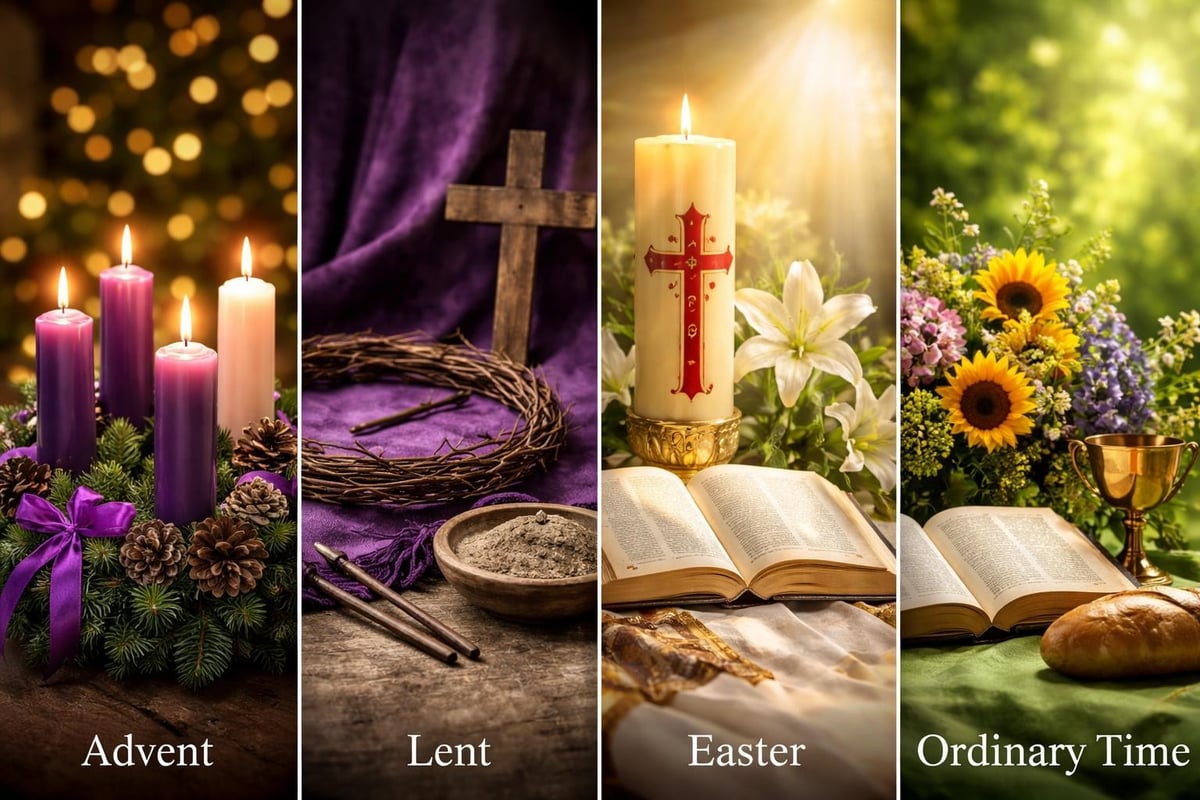
The Church's liturgical calendar structures catholic prayers throughout the year, creating rhythms that align believers' hearts with sacred seasons. Each period brings distinct prayers that reflect theological themes and spiritual emphases.
Advent and Christmas Prayers
Advent prayers emphasize preparation and anticipation. The O Antiphons, sung during the final week before Christmas, are ancient prayers addressing Christ with Old Testament titles: O Wisdom, O Lord, O Root of Jesse.
Christmas prayers shift to celebration and wonder, honoring the Incarnation. These prayers often incorporate imagery of light overcoming darkness, reflecting both cosmic and spiritual realities.
Lenten and Easter Prayers
Lenten catholic prayers focus on repentance, fasting, and preparation for Easter. The Stations of the Cross represent a particularly powerful devotional prayer practice during this season, inviting believers to walk with Christ through His passion.
The Holy Rosary Prayer Card provides guidance for praying the Sorrowful Mysteries with special intensity during Lent, connecting personal sacrifice to Christ's ultimate sacrifice.
Easter brings triumphant prayers celebrating resurrection. The Regina Caeli replaces the Angelus during the fifty-day Easter season, proclaiming "Queen of Heaven, rejoice!"
Litanies: Responsive Catholic Prayers
Litanies represent a distinctive form of catholic prayers characterized by their call-and-response structure. These extended prayers invoke numerous titles and attributes, creating a comprehensive portrait of the person or mystery being honored.
Traditional Litanies
The Church has approved numerous litanies over centuries:
- Litany of the Saints: Invoking all the canonized and beatified
- Litany of Loreto: Honoring Mary with poetic titles
- Litany of the Sacred Heart: Focusing on Christ's love
- Litany of St. Joseph: Celebrating the foster father of Jesus
The Litany of the Sacred Heart of Jesus Prayer Card makes this beautiful devotion accessible for personal or group prayer.
Contemporary Litanies
Modern litanies address current needs while maintaining traditional structure. The Litany in Response to Abortion offers prayers for healing and protection of life, while the Litany for Liberty invokes divine assistance for freedom and justice.
These prayers demonstrate how catholic prayers evolve to meet contemporary challenges while preserving ancient forms. The litany structure itself dates back centuries, with roots in Jewish temple worship and early Christian practices.
Specialized Litanies for Specific Needs
Beyond general litanies, the Church offers prayers for particular circumstances:
- Litany of Humility: Countering pride and seeking virtue
- Litany for Holy Souls in Purgatory: Interceding for the faithful departed
- Litany of the Most Blessed Sacrament: Honoring the Eucharistic presence
The Litany to St. Philomena demonstrates how litanies can focus on lesser-known saints who hold special places in Catholic devotion.
Prayers of Consecration and Dedication
Consecration prayers represent profound commitments, offering one's entire life, will, and being to God, Mary, or the saints. These catholic prayers mark transformative spiritual moments.
Marian Consecration
The Consecration to Mary Holy Card contains prayers that formalize one's dedication to the Blessed Mother. This practice, championed by St. Louis de Montfort and St. Maximilian Kolbe, recognizes Mary's role as mediatrix and mother.
Marian consecration typically involves thirty-three days of preparation, mirroring Christ's hidden years. The consecration prayer itself pledges the person to Mary, trusting her to guide them closer to Jesus.
Consecration to the Sacred Heart
The Consecration to the Sacred Heart of Jesus Holy Card provides the text for dedicating oneself to Christ's burning love. This devotion gained prominence through St. Margaret Mary Alacoque's visions in the seventeenth century.
Families, parishes, and even nations have made this consecration, recognizing Christ's kingship and sovereign love. The prayer acknowledges human sinfulness while trusting in divine mercy.
Consecration to St. Joseph
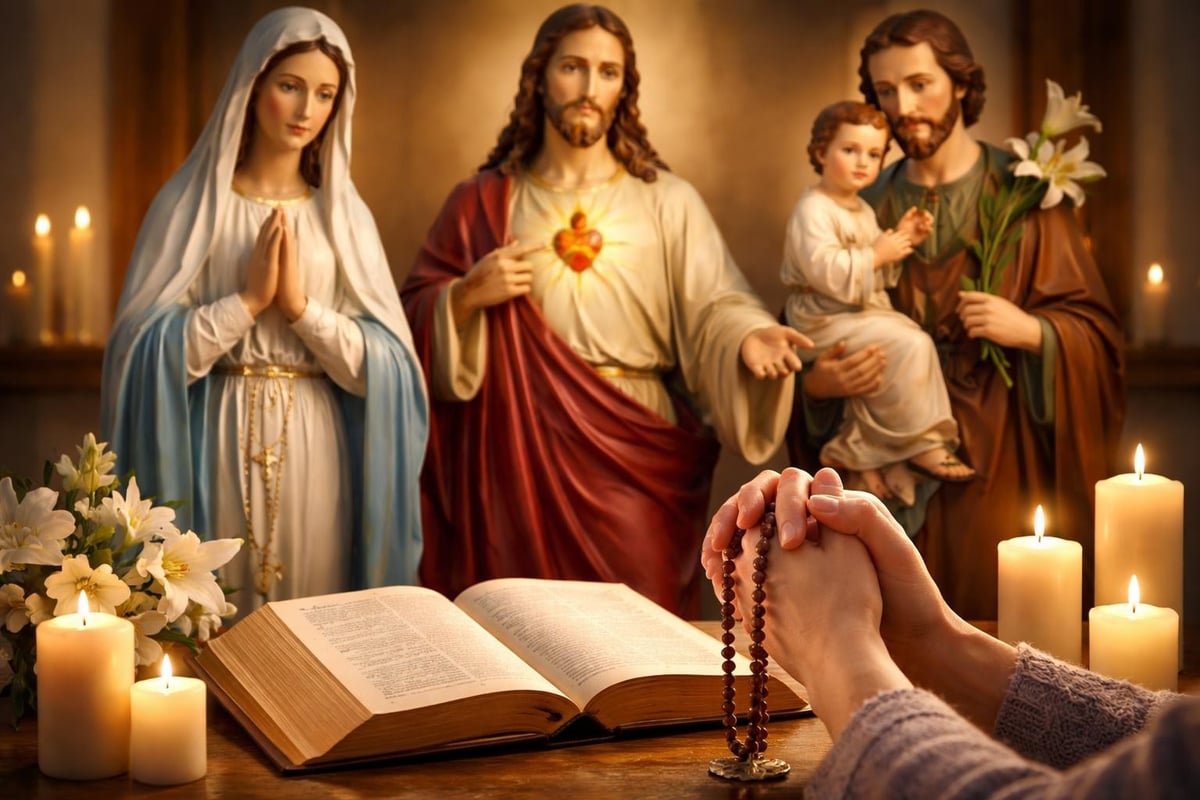
The Consecration to St. Joseph Holy Card reflects growing devotion to the foster father of Jesus. Pope Francis declared 2021 the Year of St. Joseph, spurring renewed interest in this powerful intercessor.
This consecration entrusts one's spiritual life, family, and work to Joseph's protection, recognizing his unique role as protector of the Holy Family and patron of the universal Church.
Prayers for Healing and Protection
Catholic prayers for healing address physical, emotional, and spiritual needs. These prayers acknowledge both natural and supernatural dimensions of wellbeing.
Traditional Healing Prayers
The Catholic Health Association offers prayers specifically designed for healthcare contexts, integrating faith with medical care. These prayers recognize that healing comes ultimately from God, even when mediated through human skill.
St. Michael's prayer for protection remains among the most popular catholic prayers for spiritual warfare. The Saint Michael Faceted Crystal Bracelet serves as a constant reminder to seek angelic protection.
Prayers Against Addiction
The Prayer to Saint Maximilian Kolbe for Freedom from Addiction addresses a pressing contemporary need. St. Maximilian, who gave his life for another in Auschwitz, intercedes for those trapped in various forms of bondage.
This prayer acknowledges addiction's spiritual dimension while seeking practical grace for recovery. It reflects the Church's comprehensive understanding of human nature and redemption.
Protection Through Sacramentals
Physical objects enhance prayer practice through sacramental theology. Items like the Saint Benedict Hematite Stretch Bracelet incorporate the St. Benedict medal, which contains prayers against evil and illness.
These sacramentals don't possess magical properties but serve as tangible reminders of spiritual realities and channels of grace when used with faith.
The Divine Office: Prayer of the Hours
The Liturgy of the Hours represents the Church's official daily prayer cycle, sanctifying time itself through structured catholic prayers. Priests, religious, and many laypeople pray these hours, joining their voices to an unceasing chorus of praise.
Structure and Content
The Divine Office divides the day into prayer periods:
- Office of Readings: In-depth Scripture and patristic texts
- Morning Prayer (Lauds): Praising God at dawn
- Daytime Prayer: Brief midday sanctification
- Evening Prayer (Vespers): Thanksgiving at day's end
- Night Prayer (Compline): Peaceful conclusion before sleep
Each hour includes psalms, Scripture readings, intercessions, and hymns. This pattern mirrors monastic traditions explored in resources about Carmelite Spirituality and other contemplative orders.
Historical Development
The Liber Orationum Psalmographus preserves 591 psalm-prayers from the ancient Mozarabic Rite, demonstrating how diverse liturgical traditions contributed to the Church's prayer heritage. These ancient texts reveal continuity between contemporary catholic prayers and first-millennium devotions.
St. Augustine, whose prayer to the Holy Spirit appears on the Holy Spirit Prayer of Saint Augustine Holy Card, helped establish monastic rules that structured daily prayer. His influence extends to modern observances of the Divine Office.
Prayers in Times of Crisis
The Church provides specific catholic prayers for extraordinary circumstances when communities face natural disasters, war, persecution, or other calamities.
Oratio Imperata
The Oratio Imperata represents a bishop's authority to mandate specific prayers during crises. These required prayers mobilize entire dioceses in unified intercession, demonstrating the communion of saints actively addressing temporal needs through spiritual means.
Historical examples include prayers for plague victims, drought relief, and peace during warfare. In 2026, bishops continue exercising this authority for contemporary challenges.
Personal Crisis Prayers
Beyond official mandates, the Church's treasury includes countless prayers for individual struggles. The Litany of the Passion connects personal suffering to Christ's redemptive pain, offering comfort through solidarity.
The Confiteor provides words for acknowledging sinfulness and seeking reconciliation, essential during moral or spiritual crises.
Eucharistic Prayers and Devotions
Catholic prayers surrounding the Eucharist recognize this sacrament as the "source and summit" of Christian life. These devotions range from Mass prayers to extra-liturgical adoration.
Mass Prayers
The Eucharistic Prayer forms the heart of every Mass, with several approved forms used throughout the liturgical year. These prayers consecrate bread and wine, making Christ truly present.
The Litany of the Most Precious Blood honors the salvific sacrifice made present at each Mass, connecting the unbloody sacrifice of the altar to Calvary's cross.
Adoration and Benediction
Eucharistic adoration extends worship beyond Mass through prolonged prayer before the Blessed Sacrament. Catholics pray silently or use structured prayers, often including litanies and hymns.
The practice of Benediction concludes adoration periods with specific prayers and blessing with the consecrated host. These moments of focused attention on Christ's real presence deepen Eucharistic faith.
Marian Prayers Beyond the Rosary
While the Rosary dominates Marian devotion, numerous other catholic prayers honor Mary through distinct forms and traditions.
The Angelus
Traditionally prayed three times daily, the Angelus commemorates the Incarnation through brief meditation on the Annunciation. Church bells historically summoned communities to pause for this prayer at 6 AM, noon, and 6 PM.
This practice sanctifies secular time, interrupting daily work with moments of recollection and praise. Even in 2026's fast-paced world, many Catholics maintain this rhythm.
Fatima Prayers
Our Lady's appearances at Fatima introduced specific prayers, particularly the petition added to each Rosary decade: "O my Jesus, forgive us our sins, save us from the fires of hell, lead all souls to Heaven, especially those most in need of Thy mercy."
The Our Lady of Fatima Hologram Image Card and Litany to Our Lady of Fatima support devotion to this Marian title and its associated prayers.
Miraculous Medal Prayers
The apparitions to St. Catherine Labouré gave the Church both the Miraculous Medal and prayers associated with it. The Our Lady of the Miraculous Medal Necklace allows Catholics to wear this sacramental while invoking Mary's intercession.
Prayer Resources and Continuing Tradition
The Church continues developing resources that make catholic prayers accessible to contemporary believers while preserving ancient traditions.
Historical Prayer Collections
The Pieta prayer booklet, dating to the eighteenth century and approved by Pope Pius IX in 1862, demonstrates how compilations preserve and transmit prayer traditions across generations. Such collections ensure that valuable prayers don't disappear with changing times.
Modern Accessibility
Digital technology has revolutionized access to catholic prayers. Websites, apps, and online databases make it possible to find prayers for any situation instantly. However, physical prayer cards and books remain valuable for those who find tactile engagement enhances devotion.
Resources like Journeys of Faith combine traditional materials with modern distribution, ensuring these sacred texts reach believers wherever they are.
Standardization and Translation
The concept of editio typica ensures that official Church documents, including liturgical prayers, maintain authoritative original texts. Translations must faithfully render these official versions, preserving theological precision across languages.
This standardization helps catholic prayers maintain consistency worldwide while allowing appropriate cultural adaptation. The balance between universality and inculturation continues shaping how prayers are expressed in diverse contexts.
Integrating Prayer into Daily Life
Transforming catholic prayers from occasional practice to consistent discipline requires practical strategies and supportive resources.
Creating Prayer Routines
Successful prayer life depends on establishing sustainable patterns:
- Morning offering: Begin each day dedicating it to God
- Meal prayers: Grace before and after eating
- Examination of conscience: Evening reflection on the day
- Nighttime prayers: Peaceful conclusion before sleep
These bookends create a framework where additional prayers naturally fit. The routine provides structure while remaining flexible enough to accommodate life's variations.
Family Prayer
Households that pray together strengthen bonds while transmitting faith to younger generations. Simple practices include:
- Family Rosary: Even one decade together builds unity
- Blessing children: Parents invoke God's protection
- Sunday Scripture reading: Preparing for or reflecting on Mass
- Seasonal devotions: Advent wreaths, Lenten almsgiving prayers
The Litany of Saint Joseph offers particularly appropriate prayers for family protection and domestic harmony.
Portable Prayer Tools
Modern life requires prayer solutions that work anywhere. Items like the Natural Stone Beaded Bracelet with Gold Cross or White Faux Pearl Charm Bracelet enable discreet prayer during commutes, waiting rooms, or breaks.
Simple crosses worn as necklaces, like the Gold Cross 18" Necklace or Silver Cross 18" Necklace, serve as constant reminders to "pray without ceasing."
The Transformative Power of Consistent Prayer
Catholic prayers possess inherent power not through magical formulation but through the grace they invoke and the transformation they work in faithful hearts. Consistent practice yields profound spiritual fruits.
Spiritual Growth Through Prayer
Regular engagement with catholic prayers develops virtues systematically. The Rosary's repetition cultivates patience and perseverance. Litanies expand theological vocabulary and understanding. Consecration prayers deepen commitment and trust.
Over months and years, these practices reshape character, aligning will with God's purposes. What begins as discipline becomes genuine desire; duty transforms into delight.
Community Through Shared Prayer
When Catholics worldwide pray identical words, they join a communion transcending time and space. Someone praying the Angelus in New York shares that moment with believers in Rome, Manila, and Sydney.
This unity extends temporally as well. Today's prayers echo those of Saints Cyril and Methodius and countless others across centuries. The same words that comforted Saint Bernard of Clairvaux in the twelfth century still console believers in 2026.
Resources for Deeper Exploration
- Explore Journeys of Faith Online store with thousands of Catholic Items at https://journeysoffaith.com/collections
- Our Unique Mega Search Engine https://journeysoffaith.com/search is linked to hundreds of Catholic Shops and Stores
- Get the Journeys of Faith NEW App for IPhone or Android Search for Journeys of Faith or go to https://journeysoffaith.com/pages/download-our-app
Catholic prayers provide the language for humanity's deepest conversations with God, offering words when our own fail and structure when emotions overwhelm. These sacred traditions, tested across centuries, continue nurturing faith in 2026 as powerfully as they did in ages past. Whether you're just beginning your prayer journey or seeking to deepen existing practices, Journeys of Faith offers resources, guidance, and sacramentals that support every step of your spiritual path, helping you discover the transformative power of consistent, heartfelt prayer.
