

The lives of catholic saints men offer a profound source of inspiration and guidance for believers seeking to deepen their faith in 2026. These holy men, spanning centuries of Church history, exemplify courage, dedication, and unwavering commitment to Christ. From the earliest martyrs who faced persecution with extraordinary bravery to modern saints who navigated contemporary challenges while maintaining their spiritual integrity, these men demonstrate that holiness remains achievable in every era. Their stories transcend time, offering practical wisdom and spiritual encouragement for anyone striving to live authentically Christian lives.
Brought to you by Journeys of Faith. Founded by Bob and Penny Lord, we are an Augustinian Secular Institute and Cyber Apostles. Our Mission is Evangelization through Media.
Understanding Male Sanctity in Church History
The Catholic Church recognizes thousands of male saints whose lives transformed the Christian world. These men came from diverse backgrounds-fishermen, scholars, kings, peasants, soldiers, and priests-united by their extraordinary response to God's call. The concept of patron saints emerged from recognizing how specific saints exemplified particular virtues or ministries that could intercede for those in similar circumstances.
Catholic saints men shaped doctrine, defended the faith against heresies, established religious orders, and pioneered new forms of ministry. Their contributions extended beyond spiritual matters into education, healthcare, social justice, and cultural development. Understanding their lives provides insight into how faith operates within historical contexts while revealing timeless principles applicable today.
Early Church Fathers and Martyrs
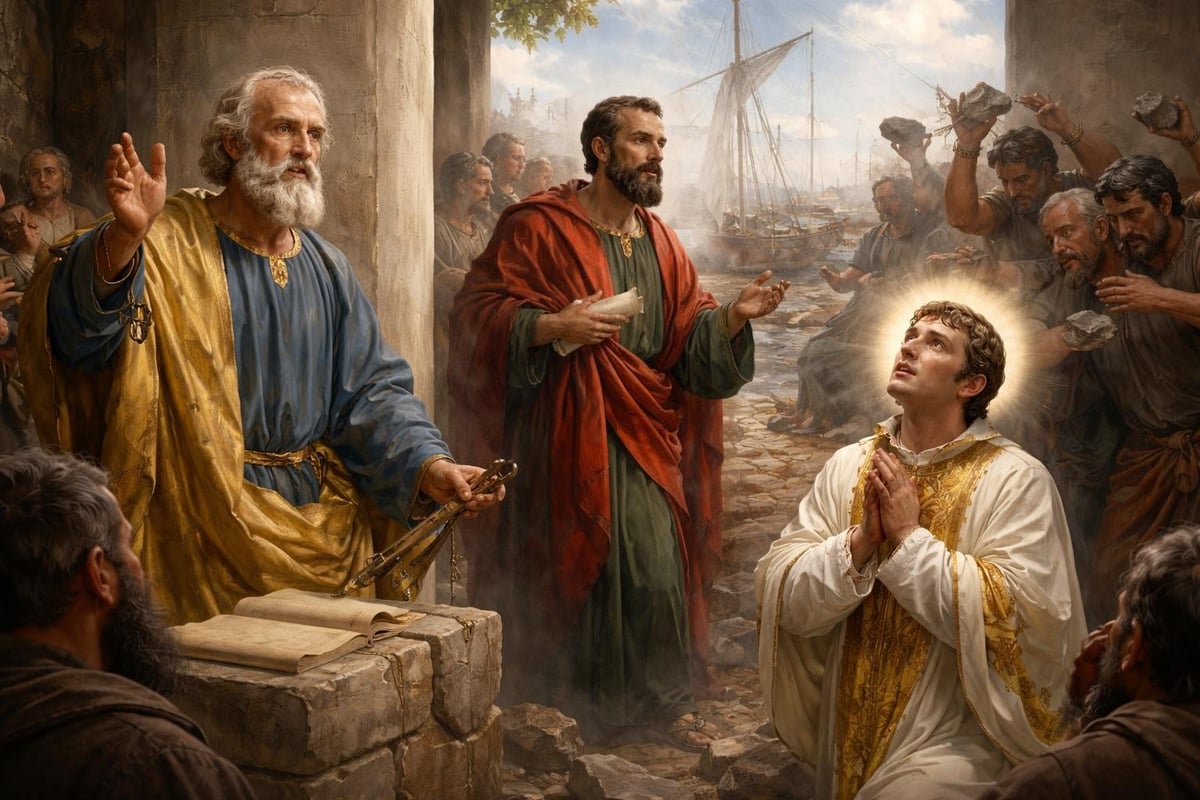
The first generations of catholic saints men included the apostles and early martyrs who paid the ultimate price for their faith. Saint Peter, the first pope, demonstrated leadership and humility after his initial denial of Christ. Saint Paul, transformed from persecutor to apostle, established churches throughout the Mediterranean world and authored much of the New Testament.
Early martyrs like Saint Stephen, Saint Lawrence, and Saint Sebastian faced brutal persecution with remarkable courage. Their willingness to die rather than renounce Christ inspired countless believers and proved the strength of authentic faith. These men established the foundation upon which the Church would build for centuries.
Medieval Saints Who Shaped Western Civilization
Medieval catholic saints men played crucial roles in preserving civilization during turbulent times. Saint Benedict of Nursia founded Western monasticism, creating communities that preserved classical knowledge, developed agriculture, and provided hospitality during the Dark Ages. His Rule remains influential in religious communities worldwide.
Saint Thomas Aquinas synthesized faith and reason, producing theological and philosophical works that continue shaping Catholic thought. His Summa Theologica addresses fundamental questions about God, humanity, and morality with intellectual rigor and spiritual depth. Saint Francis of Assisi revolutionized religious life through radical poverty and joyful simplicity, founding an order that emphasized preaching and service among the poor.
Crusader Saints and Military Defenders
Some catholic saints men served as warriors who defended Christendom while maintaining their spiritual integrity. Saint Louis IX of France balanced royal duties with deep personal piety, leading crusades while caring for the poor and sick. He demonstrated that political power could serve justice and mercy.
Saint Ferdinand III of Castile united kingdoms while promoting education and protecting religious minorities. These military saints proved that courage in battle could coexist with compassion and holiness when directed toward just causes and tempered by humility.
| Saint | Era | Primary Contribution | Feast Day |
|---|---|---|---|
| Saint Benedict | 480-547 | Founded Western monasticism | July 11 |
| Saint Thomas Aquinas | 1225-1274 | Systematic theology | January 28 |
| Saint Francis of Assisi | 1181-1226 | Poverty and simplicity | October 4 |
| Saint Louis IX | 1214-1270 | Just governance | August 25 |
Reformation Era and Counter-Reformation Saints
The sixteenth century produced catholic saints men who responded to religious upheaval with renewed vigor. Saint Ignatius of Loyola founded the Jesuits, emphasizing education, missionary work, and spiritual direction. His Spiritual Exercises guide countless retreatants in discerning God's will.
Saint John of the Cross partnered with Saint Teresa of Avila to reform the Carmelite order, producing mystical writings that explore the soul's journey toward union with God. Saint Charles Borromeo implemented reforms from the Council of Trent, establishing seminaries and improving clerical formation. Saint Philip Neri brought joy and accessibility to spiritual life through his congregation and informal gatherings.
These men demonstrated different approaches to renewal-through education, mysticism, administrative reform, and joyful evangelization. Their diverse methods show how the Holy Spirit works uniquely through individual personalities and circumstances.
Missionary Saints Evangelizing New Worlds
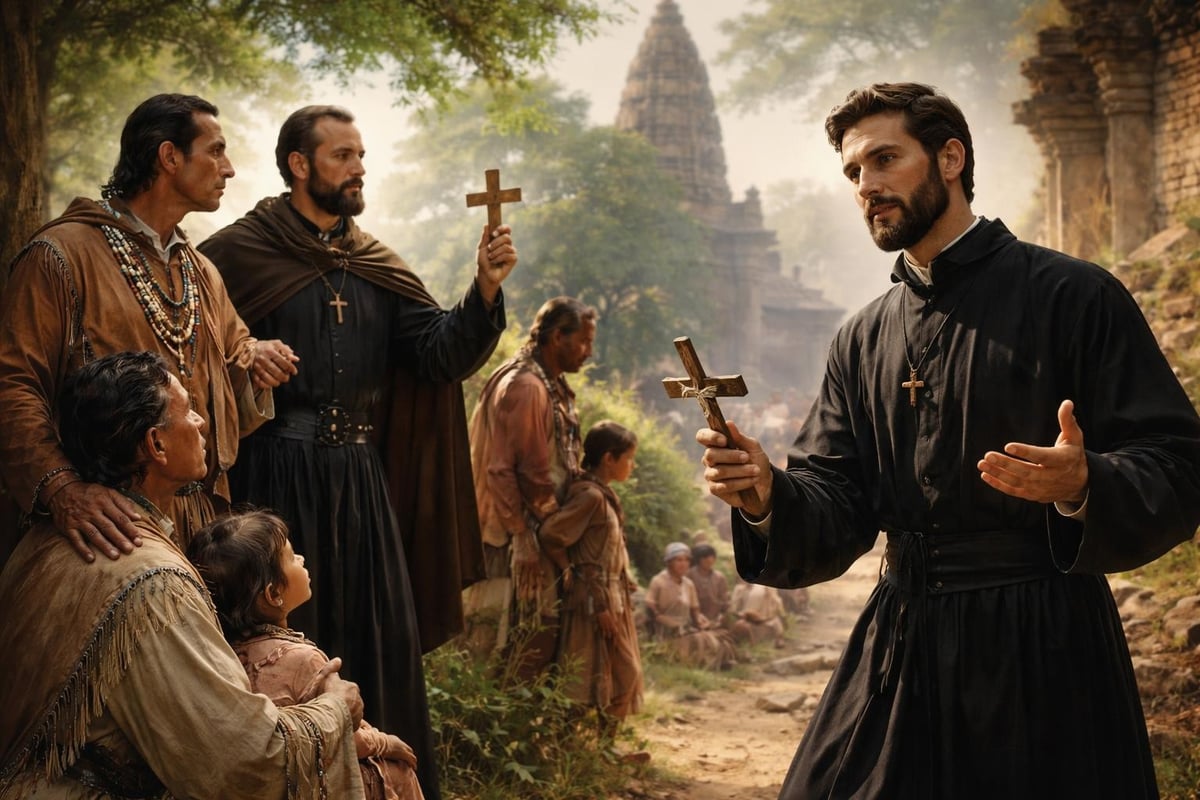
The age of exploration brought catholic saints men to distant lands. Saint Francis Xavier traveled throughout Asia, baptizing hundreds of thousands and establishing missions in India, Japan, and beyond. His letters reveal both missionary zeal and pastoral sensitivity to cultural contexts.
Saint Isaac Jogues and his Jesuit companions evangelized among Native American tribes in North America, facing hostility and martyrdom with forgiveness and courage. These missionary saints expanded the Church's reach while often learning indigenous languages and respecting local customs. For families seeking to teach children about these inspiring figures, catholic saints for children provides accessible resources.
Modern Saints Facing Contemporary Challenges
Twentieth and twenty-first-century catholic saints men encountered unique challenges including totalitarian regimes, secularization, and rapid social change. Saint Oscar Romero spoke courageously against oppression in El Salvador, ultimately martyred while celebrating Mass. His advocacy for the poor and opposition to violence exemplifies prophetic witness.
Saint Maximilian Kolbe volunteered to die in place of a fellow prisoner at Auschwitz, demonstrating heroic charity amid Nazi atrocity. Saint Josemaría Escrivá founded Opus Dei, emphasizing sanctification through ordinary work and daily life. These men proved that holiness adapts to every circumstance while maintaining core principles of faith, hope, and love.
American Saints and Blessed Men
The United States has produced several candidates for sainthood whose causes continue advancing. Blessed Solanus Casey served as a porter in Detroit, known for his healing ministry and compassionate listening. His simple faithfulness in humble duties attracted thousands seeking spiritual guidance.
Venerable Fulton Sheen used modern media brilliantly, reaching millions through radio and television with clear presentations of Catholic teaching. His Life Is Worth Living program demonstrated how traditional doctrine could engage contemporary audiences. Venerable Patrick Peyton promoted family prayer through his famous motto "The family that prays together stays together," recognizing the importance of domestic spirituality.
Bob and Penny Lord recognized the importance of studying these holy men's lives. Through their extensive research and writing, they discovered that one secret to holiness among the Roman Catholic Saints was studying the lives of other Saints before them. Their Catholic Saints Books collection explores these connections, providing accessible accounts that inspire readers to pursue their own paths toward sanctity.
Characteristics Common Among Catholic Saints Men
Despite diverse backgrounds and historical contexts, catholic saints men share identifiable characteristics that mark their sanctity. Deep prayer life forms the foundation-whether contemplative monks, active missionaries, or busy professionals, all prioritized intimate relationship with God through daily prayer and sacramental participation.
Humility and self-knowledge characterize authentic holiness. Saints recognized their limitations and dependence on divine grace. They accepted criticism, acknowledged failures, and constantly sought conversion. This humility freed them from pride's paralysis and enabled genuine service.
Courage in adversity appears consistently. Whether facing physical martyrdom, intellectual opposition, or personal suffering, these men remained steadfast in conviction while maintaining charity toward opponents. Their courage flowed from trust in God rather than mere human bravery.
Practical Virtues Demonstrated
Catholic saints men excelled in practical virtues that anyone can cultivate:
- Patience in dealing with difficult people and circumstances
- Perseverance in long-term projects and commitments
- Generosity with time, resources, and talents
- Justice in relationships and social structures
- Temperance in appetites and desires
- Prudence in decision-making and judgment
These virtues developed through consistent practice rather than sudden transformation. Saints embraced daily disciplines, frequent confession, spiritual direction, and community support. Their holiness emerged from sustained effort cooperating with grace rather than dramatic experiences alone.
Patronages and Intercessory Roles
The Church assigns specific patronages to catholic saints men based on their lives, professions, or circumstances of death. These legends surrounding saints often connect particular needs with specific intercessors. Saint Joseph, foster father of Jesus, serves as patron of workers, fathers, and the universal Church.
Saint Anthony of Padua helps find lost items, stemming from stories about recovered manuscripts. Saint Jude assists in desperate situations, perhaps because his name resembled Judas, making him overlooked until desperate measures became necessary. These patronages provide focal points for prayer while honoring each saint's unique contributions.
| Patron Saint | Areas of Patronage | Why Chosen |
|---|---|---|
| Saint Joseph | Workers, fathers, dying | Role in Holy Family |
| Saint Anthony | Lost items, poor | Recovered manuscripts, served poor |
| Saint Jude | Desperate cases | Overlooked apostle |
| Saint Christopher | Travelers | Carried Christ across river |
| Saint Peregrine | Cancer patients | Healed of leg cancer |
Learning From Catholic Saints Men Today
Contemporary Catholics can apply lessons from catholic saints men to modern challenges. Their examples address perennial human struggles-pride, discouragement, fear, materialism, and relationship difficulties. By studying specific saints facing similar circumstances, believers find practical guidance and spiritual encouragement.
For fathers, examining saints who exemplified fatherhood provides models balancing family responsibilities with faith commitments. Saint Thomas More navigated political power while prioritizing family life and conscience. His integrity unto death demonstrates principled living's ultimate importance.
For professionals, saints like Saint Josemaría Escrivá teach sanctifying ordinary work through excellent performance, honest dealings, and seeing tasks as service to God and neighbor. The marketplace becomes mission field when approached with intentional holiness.
For those suffering, saints who endured illness, persecution, or personal loss offer companionship and hope. Their struggles validate our pain while their perseverance inspires continued trust. Saint Padre Pio bore stigmata and illness while maintaining joyful ministry, showing that suffering can coexist with purpose.
Practical Steps for Emulation
Applying catholic saints men's examples requires concrete practices:
- Choose a patron saint whose life or patronage connects with your circumstances
- Read credible biographies to understand historical context and authentic details
- Identify one specific virtue that saint exemplified and practice it deliberately
- Pray for that saint's intercession regularly, developing a relationship
- Imitate specific practices they used, adapted to modern contexts
- Share their stories with others, especially children and seekers
These steps transform saints from distant historical figures into practical mentors guiding contemporary discipleship. Their intercession combines with their example, providing both spiritual assistance and practical direction.

Causes for Canonization in Progress
The Church continues recognizing catholic saints men from recent generations. Dorothy Day's cause for sainthood progresses, though technically she's female, her co-worker Peter Maurin also served the Catholic Worker movement with dedication. Several American bishops, priests, and laymen have causes under investigation.
Servant of God Thea Bowman, though female, worked alongside many dedicated male clergy and laity in promoting African American spirituality and justice. Her cause reminds us that holiness continues emerging in every generation and culture.
These ongoing causes demonstrate that sanctity remains possible in contemporary society. Modern saints navigate technology, secularism, and complexity while maintaining authentic faith. Their proximity to our own experience makes them particularly accessible models for current believers.
Requirements for Canonization
The canonization process involves rigorous investigation:
- Servant of God: Initial title when cause opens
- Venerable: After confirming heroic virtue
- Blessed: Following one verified miracle through intercession
- Saint: After second miracle (martyrs require only one)
This careful process ensures authentic holiness receives recognition while avoiding premature or unwarranted veneration. The process typically takes decades, allowing thorough examination of writings, testimonies, and claimed miracles.
Resources for Deeper Study
Numerous resources help those wanting to learn more about catholic saints men. Journeys of Faith offers extensive materials including books, videos, and audio resources exploring saints' lives in accessible formats. Their comprehensive approach combines historical accuracy with spiritual application.
Academic resources include saint encyclopedias, scholarly biographies, and critical editions of saints' writings. Popular resources range from children's books to documentary films, making these stories available across age groups and learning styles. Parish libraries, Catholic bookstores, and online platforms provide access to these materials.
Daily resources include saint-of-the-day calendars, liturgical readings featuring saint feast days, and devotional apps. These tools integrate saints' examples into regular spiritual practice rather than relegating them to occasional study.
Building a Personal Saints Library
Consider developing a personal collection focused on catholic saints men:
- General surveys covering multiple saints across eras
- Detailed biographies of saints particularly relevant to your vocation
- Primary sources including saints' own writings when available
- Children's materials for family formation
- Prayer cards and novenas for devotional practice
This library becomes a resource for personal growth, family catechesis, and sharing faith with others. The investment pays dividends through years of spiritual enrichment and practical guidance.
The Communion of Saints in Practice
Understanding catholic saints men connects to the broader doctrine of the Communion of Saints-the spiritual solidarity among all believers, living and dead. Saints in heaven intercede for the Church on earth, while we pray for souls in purgatory. This mutual support transcends death, creating a family spanning eternity.
Invoking male saints' intercession acknowledges their continued interest in earthly affairs and their powerful advocacy before God. Their prayers complement our own, adding the weight of their holiness to our petitions. This practice enriches prayer life while maintaining proper worship directed toward God alone.
The communion of saints also encourages community among living believers. Saints' examples inspire collaboration rather than competition, service rather than status-seeking, and unity rather than division. Their diverse gifts demonstrate how variety strengthens the Church rather than fragmenting it.
The lives of catholic saints men provide timeless wisdom and inspiration for navigating faith in 2026. Their examples demonstrate that holiness remains achievable regardless of era, culture, or personal circumstances through cooperation with divine grace. Journeys of Faith supports your journey toward sanctity through extensive resources exploring these remarkable men's lives and applying their lessons to contemporary challenges. Explore thousands of Catholic items in the Journeys of Faith Online store at https://journeysoffaith.com/collections, use the Unique Mega Search Engine at https://journeysoffaith.com/search linked to hundreds of Catholic shops, get the Journeys of Faith NEW App for iPhone or Android at https://journeysoffaith.com/pages/download-our-app, chat with us anytime at https://chatting.page/mjxs9aerrtgm3lmpndlcepmbyosntrjn, and help reach more souls through your donation at https://journeysoffaith.com/pages/donate.