

The eucharistic miracles book stands as one of the most powerful tools for evangelization in the Catholic faith today. These carefully documented accounts of supernatural events surrounding the Holy Eucharist provide tangible evidence of Christ's true presence in the consecrated host. As skepticism grows in modern culture, the detailed historical records found in a eucharistic miracles book offer compelling testimony that transcends time and geography, speaking directly to both believers seeking deeper faith and skeptics questioning the mysteries of Catholicism.
Understanding Eucharistic Miracles Through Published Works
A eucharistic miracles book serves multiple purposes within Catholic education and formation. These publications meticulously document instances where the consecrated host has visibly transformed into human flesh, bled, or remained incorrupt for centuries. The scientific investigations accompanying many of these miracles provide medical and forensic evidence that challenges naturalistic explanations.
Historical Documentation and Modern Research
The most comprehensive eucharistic miracles book collections span over 2,000 years of Church history. The website inspired by Saint Carlo Acutis documents 142 Eucharistic miracles from around the world, providing a digital complement to traditional print publications. These resources compile eyewitness testimonies, ecclesiastical investigations, and scientific analyses into accessible formats for contemporary readers.
Key elements found in quality publications include:
- Detailed historical context for each miracle
- Verification processes conducted by Church authorities
- Scientific testing results from independent laboratories
- Photographic documentation and artistic renderings
- Theological commentary explaining doctrinal significance
Brought to you by Journeys of Faith, founded by Bob and Penny Lord. We are an Augustinian Secular Institute and Cyber Apostles. Our Mission is Evangelization through Media.
The Role of Scientific Evidence
Modern eucharistic miracles book publications increasingly incorporate scientific findings that authenticate supernatural claims. In several documented cases, including Lanciano, Italy (8th century) and Buenos Aires, Argentina (1996), laboratory analysis revealed human cardiac tissue in AB blood type. These findings appear consistently across miracles separated by centuries and continents, a pattern that medical professionals find statistically impossible to dismiss.
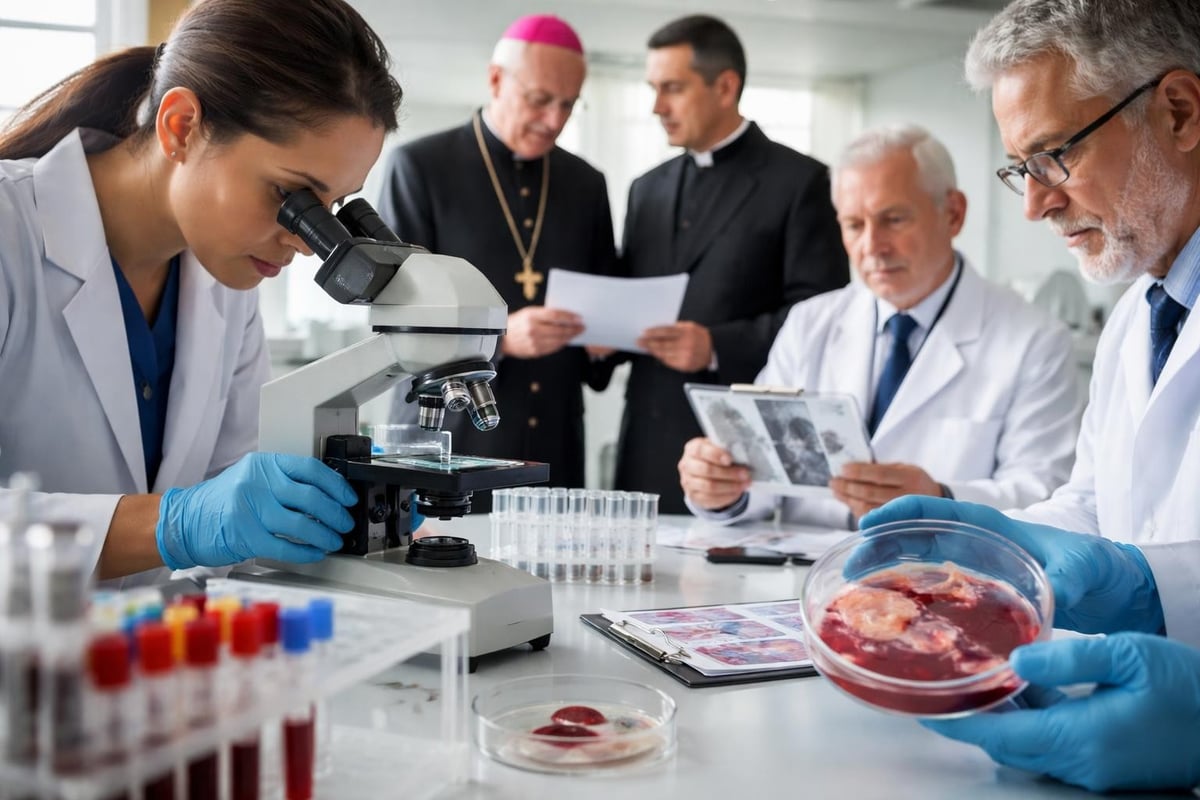
Researchers like Dr. Franco Serafini and Dr. Edoardo Linoli have contributed peer-reviewed studies to the body of evidence. Their work, frequently cited in eucharistic miracles book publications, demonstrates how faith and science can converge. Catholic Miracles provides additional documentation of these scientific investigations, making them accessible to a broader audience.
Essential Eucharistic Miracles Books for Your Library
The market offers several distinguished publications, each approaching the subject from unique perspectives. Selecting the right eucharistic miracles book depends on your specific needs: personal study, catechetical instruction, apologetics, or spiritual meditation.
Comprehensive Collections and Their Features
| Book Title | Author | Scope | Best For |
|---|---|---|---|
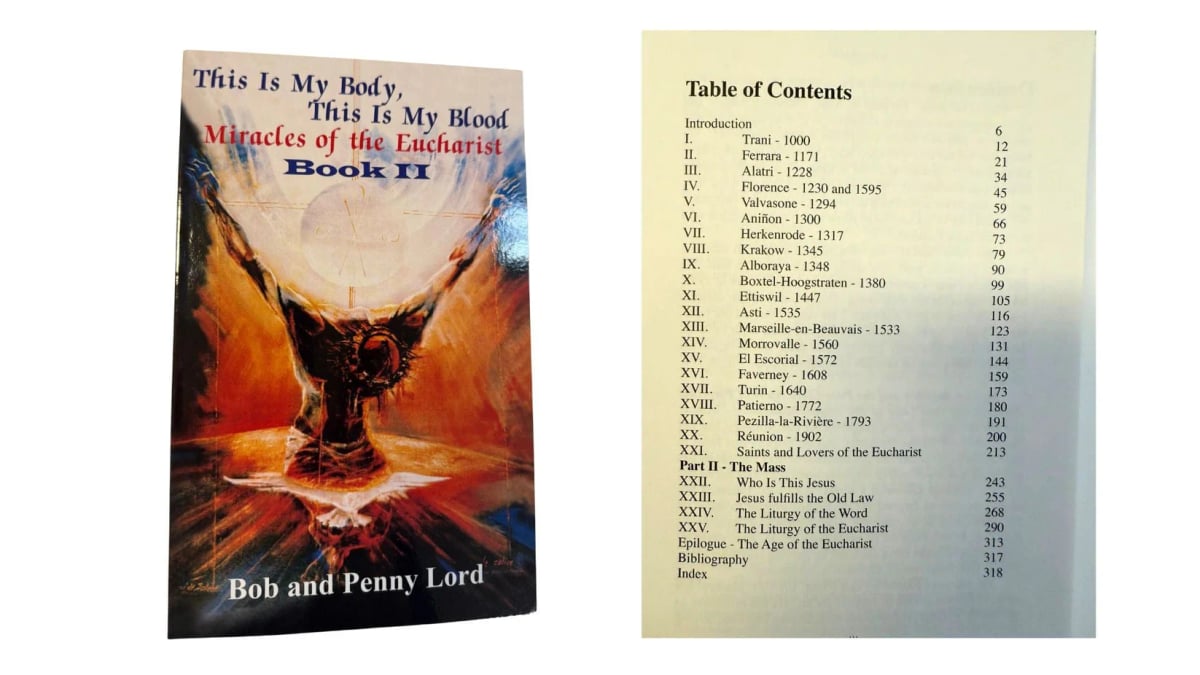
| This is My Body, This is My Blood | Bob and Penny Lord | Global survey with extensive detail | General readers and catechists |
| Eucharistic Miracles | Joan Carroll Cruz | 36 major miracles from 800 AD forward | Serious researchers |
| The Eucharistic Miracles of the World | Carlo Acutis (catalog) | 142 miracles worldwide | Visual learners |
| The Real Presence Association | Various authors | Specific miracle deep-dives | Apologetics |
The Miracles of the Eucharist books by Bob and Penny Lord have sold over 300,000 copies and represent one of the most accessible entry points for Catholics seeking to understand these supernatural events. Readers consistently report that these books transformed their understanding of the Real Presence, with one priest commenting, "I can never consecrate the bread and wine without seeing Our Lord Jesus."
Specialized Publications for Different Audiences
Youth-oriented eucharistic miracles book editions have emerged in recent years, particularly following the beatification process of Carlo Acutis, the teenage computer programmer who cataloged Eucharistic miracles digitally. These publications use contemporary language and visual design to engage younger readers who might find traditional theological texts challenging.
For academic audiences, books incorporating medical terminology and forensic analysis provide rigorous examination of evidence. Google Books offers previews of several scholarly works, including Joan Carroll Cruz's comprehensive treatment of 36 major miracles.
How Eucharistic Miracles Books Strengthen Faith Formation
Integrating a eucharistic miracles book into personal or group study creates multiple pathways for spiritual growth. These publications function as bridges between intellectual inquiry and devotional practice, addressing both the mind and heart.
Practical Applications for Individuals
Personal reading plans might include:
- Daily meditation on one miracle per week
- Journaling responses to specific accounts
- Researching the geographical and historical context
- Praying before the Blessed Sacrament with renewed awareness
- Sharing discoveries with family members or prayer groups
The narrative structure of most eucharistic miracles book publications makes them ideal for lectio divina adaptation. Readers can approach each account as sacred text, moving through reading, meditation, prayer, and contemplation stages. This contemplative reading style transforms historical documentation into personal encounter.
Group Study and Catechetical Programs
Parish faith formation programs benefit enormously from structured eucharistic miracles book studies. The Catholic Archdiocese of Sydney highlights how these accounts support catechesis, particularly during Eucharistic adoration initiatives and First Communion preparation.
Discussion groups might organize their study around geographical regions, historical periods, or thematic elements. For instance, examining miracles that occurred during times of doubt or persecution reveals patterns of divine intervention precisely when faith communities face greatest challenges.
Impact on Eucharistic Devotion and Adoration
Statistical data from parishes implementing eucharistic miracles book study programs shows measurable increases in Mass attendance and adoration participation. When believers understand the documented reality of Christ's presence, their approach to the Eucharist shifts from routine to reverence.
Testimonies collected from readers consistently mention transformed perspectives on receiving Communion. The detailed medical descriptions found in publications-cardiac muscle tissue, white blood cells still present, lack of preservatives-create visceral understanding that transcends abstract theological concepts.
The Most Famous Miracles Featured in Books
Certain Eucharistic miracles appear in virtually every eucharistic miracles book due to their exceptional documentation, scientific verification, or historical significance. Understanding these landmark cases provides foundation for appreciating lesser-known accounts.
Lanciano: The Oldest Preserved Miracle
The Lanciano miracle (8th century) remains the gold standard for Eucharistic miracle documentation. When a doubting priest celebrated Mass, the host transformed into visible flesh and the wine into blood. This miracle stands unique because:
- The flesh and blood remain preserved without any treatment for over 1,200 years
- Scientific analysis in 1970-1971 confirmed human cardiac tissue
- The blood type matches what appears on the Shroud of Turin (AB positive)
- The five blood globules, though different sizes, weigh exactly the same
Every comprehensive eucharistic miracles book dedicates substantial space to Lanciano because it combines longevity, scientific scrutiny, and ongoing visibility. Pilgrims can still venerate the original miracle in the Church of San Francesco.
Buenos Aires and Modern Verification
The Buenos Aires miracle (1996) demonstrates how Eucharistic miracles continue into contemporary times. A discarded host began bleeding, and Archbishop Jorge Bergoglio (later Pope Francis) ordered scientific investigation. Dr. Frederick Zugibe, a renowned cardiologist and forensic pathologist, analyzed tissue samples without knowing their origin.
| Aspect | Finding | Significance |
|---|---|---|
| Tissue Type | Human cardiac muscle | Matches Lanciano exactly |
| Blood Type | AB positive | Same as Lanciano and Shroud |
| Tissue State | Inflamed, suffering | Indicates recent trauma |
| White Cells | Present and living | Impossible without circulatory system |
| Origin Knowledge | Researcher unaware | Eliminates investigator bias |
Videos featuring Dr. Stacy Trasancos and Dr. Oscar Paniagua discuss these findings in accessible terms, making the scientific evidence understandable for general audiences.
Geographic Distribution and Cultural Context
A global eucharistic miracles book reveals fascinating patterns across continents and centuries. Europe dominates the historical record, with Italy, Spain, France, and Poland hosting numerous documented miracles. However, recent decades have seen authenticated miracles in South America, Asia, and even Australia, suggesting universal applicability of these divine interventions.
The cultural circumstances surrounding each miracle often reflect specific challenges facing the Church in that region and time. Miracles during the Protestant Reformation period frequently occurred in areas where Catholic Eucharistic theology faced direct challenge. Modern miracles often happen in secularized contexts where belief in the supernatural has declined.
Incorporating Miracle Studies into Apologetics
The eucharistic miracles book serves as an invaluable apologetics resource, providing concrete evidence for discussions with skeptics or seekers. Unlike abstract theological arguments, these documented accounts offer verifiable data points that invite investigation rather than requiring blind faith.
Building Evidence-Based Faith Conversations
Effective apologetics using eucharistic miracles book material follows a structured approach. Begin with historical documentation, progress to scientific verification, address common objections, and conclude with theological significance. This methodology respects intellectual inquiry while pointing toward transcendent truth.
Addressing common skeptical questions:
- "Couldn't this be contamination?" → Multiple independent labs, consistent results across centuries
- "Why don't miracles happen today?" → They do, including recent cases with full documentation
- "Isn't this just psychological?" → Physical tissue samples exist and can be examined
- "Why would God need to prove Himself?" → Miracles serve pastoral purposes, not divine insecurity
Resources from Hozana provide additional context for understanding how Eucharistic miracles function within Catholic theology and spirituality, offering frameworks for these apologetic conversations.
Connecting Miracles to Sacramental Theology
The eucharistic miracles book illuminates Church teaching on transubstantiation-the doctrine that bread and wine truly become Christ's Body and Blood while retaining physical appearances. These miracles represent moments when God temporarily lifts the veil, making visible what occurs at every valid Mass.
This connection helps believers understand that the miracle isn't the transformation itself (which happens at every consecration) but rather the visible manifestation. The substance changes in every Eucharist; occasionally, the accidents (physical properties) change as well to strengthen faith.
Supporting Materials and Complementary Resources
While a eucharistic miracles book provides core information, supplementary materials enhance understanding and application. Documentary films, pilgrimage guides, prayer resources, and educational curricula all extend the book's impact.
Visual and Multimedia Companions
Documentary films bring eucharistic miracles book content to life through interviews, on-location filming, and dramatic recreations. Productions available from Catholic media companies, including Journeys of Faith, combine historical footage, expert commentary, and spiritual reflection.
Educational posters and display materials work well for classroom settings, parish halls, and retreat centers. The visual catalog created by Carlo Acutis has been reproduced in traveling exhibit format, allowing communities to host temporary displays that introduce parishioners to multiple miracles simultaneously.
Prayer Resources and Devotional Practices
Readers naturally want to respond prayerfully after studying Eucharistic miracles. Complementary devotional materials include Eucharistic adoration guides, consecration prayers, and meditations specifically focused on the Real Presence. These resources transform intellectual understanding into lived spirituality.
The integration of miracle accounts with traditional Catholic prayers creates powerful combinations. For instance, praying the rosary while meditating on different Eucharistic miracles adds historical and scientific dimensions to familiar devotions.
Building a Comprehensive Catholic Library
A well-rounded Catholic home library includes multiple eucharistic miracles book titles alongside works on saints, Church history, and theological formation. This diversity allows cross-referencing and deeper exploration of interconnected topics.
Recommended companion volumes:
- Lives of Eucharistic saints like Padre Pio and Carlo Acutis
- Books on Catholic doctrine regarding the sacraments
- Church Fathers' writings on the Eucharist
- Papal encyclicals on the Blessed Sacrament
- First-hand pilgrim accounts from miracle sites
Resources for Continued Exploration
1. Explore the Journeys of Faith online store with thousands of Catholic items, including extensive book collections on Eucharistic devotion and miracles.
2. Our unique Mega Search Engine is linked to hundreds of Catholic shops and stores, making it easy to find specific eucharistic miracles book titles and related resources.
3. Get the Journeys of Faith NEW App for iPhone or Android. Search for Journeys of Faith or go to our app download page to access content on the go.
4. Chat with us anytime for personalized recommendations on eucharistic miracles book selections and study resources.
5. We need your help to reach more souls. Please make a donation to support continued evangelization through Catholic media and education.
The eucharistic miracles book represents far more than historical curiosity-it provides tangible connection between heaven and earth, offering both believers and seekers compelling evidence of Christ's continued presence among us. Whether you're beginning your journey of faith, deepening existing devotion, or equipping yourself for evangelization, these documented accounts of divine intervention strengthen understanding and ignite love for the Blessed Sacrament. Journeys of Faith offers comprehensive resources to support your exploration of Eucharistic miracles through books, media, and devotional materials that bring these powerful testimonies into your daily spiritual life.