

The small Italian town of Lanciano holds one of Christianity's most remarkable documented eucharistic miracles - lanciano stands as an enduring testament to the Real Presence of Christ in the Holy Eucharist. In approximately 750 AD, a Basilian monk celebrating Mass experienced a profound miracle when the consecrated host transformed into visible human flesh and the wine into human blood. This extraordinary event has been preserved for over thirteen centuries, subjected to rigorous scientific investigation, and continues to draw pilgrims from across the globe seeking to witness physical evidence of transubstantiation.
The significance of the eucharistic miracles - lanciano extends far beyond historical curiosity. This miracle addresses the fundamental question that has challenged believers throughout Christian history: Is Christ truly present in the consecrated elements, or is the Eucharist merely symbolic? The tangible remains preserved in the Church of San Francesco provide what many consider irrefutable evidence of the doctrine of the Real Presence, confirmed through modern scientific analysis that reveals the miraculous nature of these relics.
Understanding the eucharistic miracles - lanciano requires examining both the historical context and the scientific scrutiny that has validated this phenomenon. The miracle occurred during a period when theological debates about the Eucharist were particularly intense, and a priest's doubts about transubstantiation led to divine intervention that would echo through centuries.
Brought to you by Journeys of Faith, founded by Bob and Penny Lord. We are an Augustinian Secular Institute - Cyber Apostles - Our Mission is Evangelization through Media.
Historical Context of the Miracle
The eucharistic miracle of Lanciano took place in the eighth century at the monastery church of St. Legontian, which stood where the Church of San Francesco now exists. The priest celebrating Mass was a Basilian monk who, despite his vows and ministry, struggled with doubts about whether the bread and wine truly became the Body and Blood of Christ during consecration.
According to historical accounts, as the priest spoke the words of consecration over the host and chalice, he witnessed an astonishing transformation. The bread literally changed into living flesh, and the wine became visible human blood. The monk, initially paralyzed with fear and wonder, eventually turned to face the congregation and revealed what had occurred.
The Priest's Crisis of Faith
The doubting priest represents a universal human struggle with mysteries beyond comprehension. His skepticism about transubstantiation reflected philosophical questions that theologians debated extensively during the medieval period. The Eastern monk's background in Basilian monasticism, which emphasized mystical theology, makes his crisis of faith particularly poignant.
The immediate witnesses to this miracle included the monastic community and local faithful who were present at the Mass. Their testimony was recorded and preserved, establishing the provenance of the relics that would undergo scientific examination twelve centuries later.
Scientific Investigation and Findings
The eucharistic miracles - lanciano entered the modern era of scientific verification when Dr. Edoardo Linoli conducted extensive analysis of the relics in 1970-1971. This physician and professor of anatomy, pathological histology, chemistry, and clinical microscopy performed comprehensive tests to determine the nature of the preserved materials.
Laboratory Analysis Results
Dr. Linoli's findings, published and verified by the Superior Council of the World Health Organization, revealed extraordinary details:
| Analysis Type | Finding | Significance |
|---|---|---|
| Tissue Type | Cardiac muscle tissue | Specifically from the myocardium (heart wall) |
| Blood Type | AB positive | Same blood type found in other Eucharistic miracles |
| Protein Analysis | Complete protein composition | No preservatives or embalming agents detected |
| Mineral Content | Normal levels in fresh tissue | Chlorides, phosphorus, magnesium, potassium, sodium |
| Preservation State | No decomposition | Scientifically inexplicable after 1,200+ years |
The scientific examination confirmed that the flesh is genuine human cardiac tissue with the anatomical structure of a human heart. The blood coagulated into five distinct globules of different sizes and weights, yet each globule weighs exactly the same as all five together - another phenomenon defying natural explanation.
Absence of Preservation Methods
What makes the eucharistic miracles - lanciano scientifically compelling is the complete absence of any preservatives or conservation techniques. Dr. Linoli stated that the tissue and blood should have deteriorated completely within years if not properly preserved, yet they remain intact in normal atmospheric conditions.
The proteins in the blood are distributed identically to those in fresh blood taken from a living human. The mineralization levels match those found in living tissue, not ancient specimens. These findings have been corroborated by subsequent investigations, including analysis by Professor Ruggero Bertelli of the University of Siena.
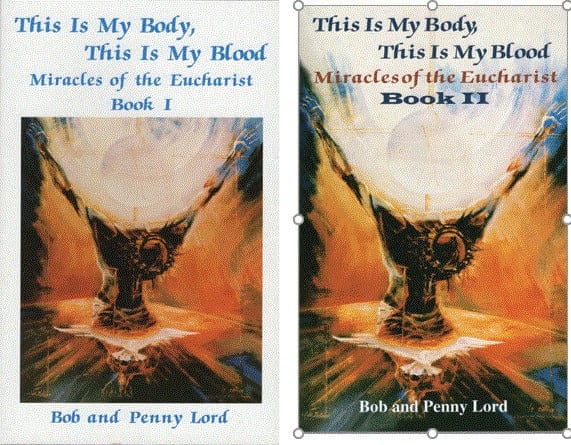
For those seeking to deepen their understanding of Eucharistic miracles and the Real Presence, the comprehensive Miracles of the Eucharist books by Bob and Penny Lord document this miracle alongside many others, providing theological context and historical detail. These volumes have helped over 300,000 readers strengthen their faith in the Real Presence through documented miracles.
The Five Blood Globules
One of the most fascinating aspects of the eucharistic miracles - lanciano is the configuration of the five dried blood globules. These unequal masses present both a physical mystery and symbolic significance that has captivated theologians and scientists alike.
Physical Properties
The five globules vary considerably in size and appearance, yet when weighed individually or in any combination, they consistently produce the same weight. Whether measuring one globule, two together, three together, or all five, the scale registers an identical weight - a phenomenon that defies conventional physics.
- Globule distribution: Five separate, unequal pieces
- Weight consistency: Any combination equals the same total
- Symbolic meaning: Represents the five wounds of Christ
- Scientific anomaly: No natural explanation for equal weight regardless of quantity measured
This miraculous property has been verified multiple times throughout history. The consistency of this phenomenon over centuries adds another layer of scientific validation to the eucharistic miracles - lanciano.
Theological Significance
The five globules are understood to represent the five wounds Christ suffered during His Passion: the nail wounds in His hands and feet, and the lance wound in His side. This connection between the Eucharistic miracle and Christ's sacrifice on Calvary reinforces Catholic teaching that every Mass makes present the one sacrifice of Jesus on the Cross.
Preservation Through the Centuries
The journey of the eucharistic miracles - lanciano through thirteen centuries demonstrates divine protection alongside human stewardship. The relics have survived invasions, wars, natural disasters, and the ravages of time without any conventional preservation methods.
Historical Challenges
Throughout medieval and Renaissance periods, the miracle survived numerous threats:
- Political upheaval during various Italian conflicts
- Natural environmental changes in the church structure
- Skeptical investigations by Church authorities
- Transfer of custody from Basilian monks to Conventual Franciscans (1252)
- Architectural modifications to the church building
Despite these challenges, the flesh and blood remained intact. The Conventual Franciscans who assumed custody in 1252 have maintained vigilant protection of these sacred relics. The detailed history of their preservation reveals multiple instances where the relics' survival defied expectations.
Modern Display and Veneration
Today, the eucharistic miracles - lanciano are displayed in a magnificent monstrance at the Church of San Francesco in Lanciano, Italy. The relics are housed above the altar in a silver and crystal reliquary that allows pilgrims to view the miraculous flesh and blood clearly.
Pilgrimage Experience
Visitors to the shrine can observe the relics and participate in Eucharistic devotions that include:
- Daily Mass celebrated at the altar of the miracle
- Exposition of the Blessed Sacrament in the presence of the miracle
- Guided tours explaining the historical and scientific aspects
- Prayer opportunities for deeper Eucharistic faith
- Documentary presentations on the scientific investigations
The shrine maintains detailed records and provides educational materials in multiple languages. Pilgrims report profound spiritual experiences when viewing the physical evidence of Christ's Real Presence in the Eucharist, often describing transformative moments in their faith journey.
Impact on Eucharistic Theology
The eucharistic miracles - lanciano has significantly influenced Catholic understanding and teaching about the Real Presence. Church theologians and apologists have utilized this miracle as concrete evidence when explaining transubstantiation to skeptics and seekers.
Doctrinal Reinforcement
The miracle confirms several essential Catholic doctrines:
| Doctrine | How the Miracle Confirms It |
|---|---|
| Real Presence | Physical transformation demonstrates Christ's actual presence |
| Transubstantiation | Visible change in substance while accidents (appearance) normally remain |
| Eucharistic Sacrifice | Heart tissue connects to Christ's sacrifice on Calvary |
| Divine Providence | Preservation through centuries shows God's ongoing care |
| Faith and Doubt | Miracle addresses honest questioning with tangible evidence |
Catholic educators and catechists reference the eucharistic miracles - lanciano when teaching about the sacraments. The concrete, verifiable nature of this miracle provides a foundation for discussing mysteries that transcend human understanding while remaining rooted in historical reality.
Comparison with Other Eucharistic Miracles
While Lanciano is the most scientifically documented, it exists within a larger category of Eucharistic miracles. The consistent blood type AB found in multiple Eucharistic miracles across different centuries and locations provides additional corroboration. These independent miracles, occurring in diverse geographical and temporal contexts, share remarkable similarities that strengthen their collective witness.
At Journeys of Faith, we explore numerous Eucharistic miracles and their significance for deepening Catholic faith and devotion.
Witness to Faith in Modern Times
The eucharistic miracles - lanciano continues to impact contemporary believers, serving as a powerful evangelization tool in an increasingly secular world. The combination of ancient faith tradition and modern scientific validation creates a unique apologetic resource.
Scientific Community Response
Researchers who have examined the Lanciano relics often express astonishment at the findings. Dr. Linoli, though conducting his analysis with scientific rigor and objectivity, could not explain the preservation through natural means. His published conclusions acknowledge that the phenomenon exceeds scientific explanation.
The medical community's verification that the tissue is cardiac muscle - specifically from the myocardial wall - carries profound symbolic weight. The heart, universally recognized as the seat of love and life, connects directly to devotion to the Sacred Heart of Jesus. This anatomical detail wasn't randomly selected; it points to the very heart of Christ given for humanity's redemption.
Converting Power
Throughout history, the eucharistic miracles - lanciano has played a role in conversion experiences. Skeptics who visit the shrine and examine the evidence often report shifts in their understanding. The tangible nature of the miracle addresses the modern mind's desire for empirical evidence while simultaneously pointing beyond material reality to transcendent truth.
Personal testimonies document how viewing the miracle strengthens faith in the Real Presence:
- Doubting Catholics find renewed conviction in Eucharistic doctrine
- Non-Catholics gain insight into Catholic Eucharistic theology
- Lapsed faithful experience spiritual renewal and return to the sacraments
- Devout believers deepen their Eucharistic devotion and reverence
The Monk's Legacy
The unnamed Basilian monk whose doubt precipitated the eucharistic miracles - lanciano left an enduring legacy that transcends his moment of weakness. His honest struggle with faith demonstrates that even consecrated religious can experience profound doubt, and that God meets such honesty with grace rather than condemnation.
Understanding Sacred Doubt
The monk's crisis reflects a theological principle: genuine doubt can lead to deeper faith when honestly addressed. His questioning wasn't rooted in rebellion or mockery but in a sincere struggle to comprehend mystery. The divine response - making the invisible visible - validated his priesthood while answering his need for confirmation.
This aspect of the eucharistic miracles - lanciano offers comfort to contemporary believers who sometimes struggle with doubts about fundamental doctrines. The miracle demonstrates that God understands human limitations and responds to sincere seeking with tangible evidence when necessary for His purposes.
Priestly Implications
For clergy, the Lanciano miracle serves as both warning and encouragement. It warns against celebrating the sacred mysteries with indifference or unbelief, yet it also encourages priests who struggle with their own moments of doubt. The transformation occurred during the liturgy itself, emphasizing that Christ's presence doesn't depend on the priest's subjective feelings but on the objective power of the sacrament.
Connections to Marian Devotion
While the eucharistic miracles - lanciano centers on the Real Presence of Christ, it also connects to devotion to the Blessed Virgin Mary. The flesh that appeared on the altar came from the same flesh Mary provided to her Son through the Incarnation. This link between Eucharistic devotion and Marian spirituality runs throughout Catholic tradition.
The relationship between Mary and the Eucharist deepens appreciation for both mysteries. Mary's fiat enabled the Incarnation; the priest's words of consecration enable the Eucharistic presence. Both involve divine power working through human cooperation to make Christ present in the world.
Visiting Lanciano Today
Pilgrims planning to visit the site of the eucharistic miracles - lanciano will find a well-maintained shrine that balances reverent worship with educational accessibility. The Church of San Francesco welcomes visitors year-round and provides resources for meaningful engagement with this profound miracle.
Practical Information
The shrine offers comprehensive pilgrimage services including:
- Scheduled Mass times at the altar of the miracle
- Guided tours in multiple languages
- Museum exhibitions detailing the scientific investigations
- Prayer resources for private devotion
- Bookstore with literature on the miracle and Eucharistic theology
Visitors can also explore Lanciano's other religious and historical sites, making the pilgrimage a comprehensive spiritual and cultural experience. The town's ancient streets and churches provide context for understanding medieval Catholic life when the miracle occurred.
Educational Resources and Evangelization
The eucharistic miracles - lanciano serves as an exceptional evangelization tool for Catholic educators, apologists, and evangelists. Its combination of historical documentation, scientific verification, and theological significance makes it accessible to diverse audiences.
Teaching Applications
Religious educators utilize the Lanciano miracle in various contexts:
- Sacramental preparation: Illustrating the Real Presence for First Communicants
- RCIA programs: Explaining Catholic Eucharistic theology to inquirers
- Youth ministry: Engaging young people with concrete evidence of faith
- Adult formation: Deepening mature believers' Eucharistic devotion
- Apologetics: Responding to Protestant challenges regarding the Real Presence
Documentary presentations, virtual tours, and scholarly articles provide multiple entry points for learning about the eucharistic miracles - lanciano. These resources help bridge the gap between ancient miracle and contemporary experience.
Living the Eucharistic Faith
Understanding the eucharistic miracles - lanciano should ultimately transform how believers approach the Eucharist in their daily spiritual lives. The miracle isn't merely a historical curiosity or apologetic proof text - it's an invitation to deeper participation in the Eucharistic mystery.
Practical Implications
Knowledge of this miracle should influence several aspects of Catholic practice:
Liturgical Reverence: Greater awareness of Christ's Real Presence leads to more conscious participation in Mass. When believers recognize that the same transformation occurring at Lanciano happens at every valid consecration, their worship intensifies.
Eucharistic Adoration: The miracle validates the practice of adoring Christ present in the Blessed Sacrament. If the consecrated host truly contains Christ's flesh and blood, then Eucharistic devotion makes perfect sense.
Spiritual Communion: Even when physical reception isn't possible, the reality confirmed at Lanciano encourages spiritual communion - the desire to receive Christ and unite with His Real Presence.
Confession: Recognizing the magnitude of receiving Christ's actual Body and Blood motivates more frequent and thorough sacramental confession to receive worthily.
The eucharistic miracles - lanciano stands as one of Catholicism's most compelling evidences of Christ's Real Presence in the Eucharist, combining historical witness with modern scientific verification to strengthen faith across generations. Whether you're deepening your own Eucharistic devotion or seeking resources to share this miracle with others, Journeys of Faith offers extensive materials on the Eucharist, including books, prayer resources, and educational content that bring these profound mysteries to life.
Resources:
- Explore Journeys of Faith Online store with thousands of Catholic Items at https://journeysoffaith.com/collections
- Our Unique Mega Search Engine https://journeysoffaith.com/search is linked to hundreds of Catholic Shops and Stores
- Get the Journeys of Faith NEW App for IPhone or Android - Search for Journeys of Faith or go to https://journeysoffaith.com/pages/download-our-app
- Chat with us anytime https://chatting.page/mjxs9aerrtgm3lmpndlcepmbyosntrjn
- We need your help to reach more souls. Please Make a Donation https://journeysoffaith.com/pages/donate
