

Step into the timeless story of the holy family, whose legacy continues to shape faith and culture across generations. Their journey is more than a historical narrative, offering deep inspiration and guidance for people seeking meaning today.
In this guide, we explore the origins, scriptural accounts, and the profound symbolism of the holy family. You will discover their influence on Catholic teachings, art, and family life, and see how their virtues remain relevant as we approach 2026. Ready to be inspired? Continue reading to find insights that can enrich your own faith and daily living.
The Origins and Biblical Narrative of the Holy Family
The story of the holy family is deeply rooted in both history and faith. Understanding their origins brings new meaning to their enduring significance. The biblical narrative provides a window into daily life, cultural customs, and the remarkable journey that shaped Christianity’s most cherished family.
The Historical Context of the Holy Family
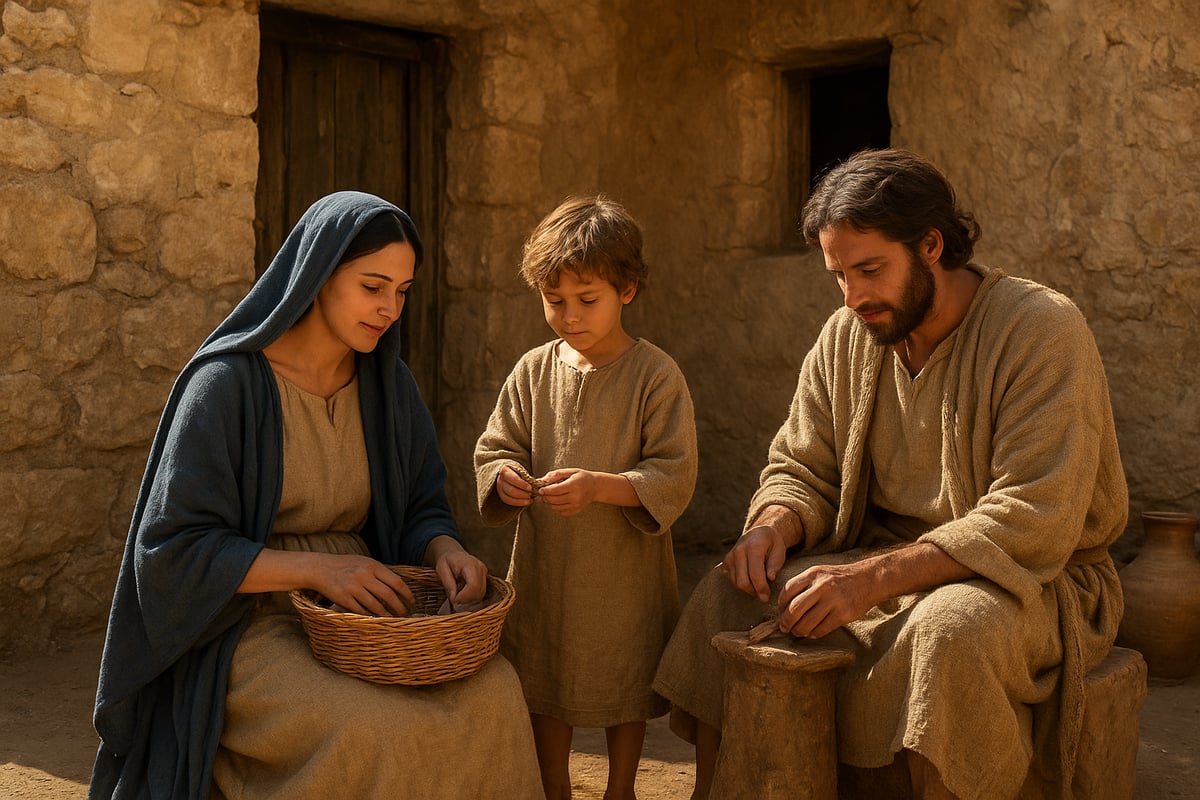
First-century Nazareth was a small, close-knit village in Galilee. Life revolved around Jewish customs, faith, and family. The holy family belonged to this world, shaped by traditions of work, prayer, and community.
Joseph, a carpenter, provided for his family with skilled hands, while Mary managed the household and nurtured Jesus. Their roles reflected the values and expectations of Jewish society. Betrothal and marriage were sacred commitments, marked by ritual and deep social meaning.
The journey to Bethlehem, ordered by a Roman census, placed the holy family at the center of history. Mary and Joseph’s obedience to the law fulfilled ancient prophecies. The flight into Egypt, driven by Herod’s threat, highlighted the dangers families faced under foreign rule. This journey is echoed in Catholic tradition by the Holy House of Loreto Replica, which commemorates the holy family’s home and its spiritual legacy.
Jesus’ early life in Nazareth was shaped by Scripture, tradition, and daily labor. The Gospels of Matthew (chapters 1–2) and Luke (chapters 1–2) provide detailed accounts of these formative years. Scholars continue to discuss the historical details, debating dates, and cultural practices, yet the holy family’s faithfulness remains central.
Key Scriptural Sources:
| Event | Matthew | Luke |
|---|---|---|
| Annunciation | Not detailed | Luke 1:26–38 |
| Nativity | Matthew 1:18–25 | Luke 2:1–20 |
| Flight to Egypt | Matthew 2:13–23 | Not detailed |
| Jesus in Nazareth | Matthew 2:23 | Luke 2:39–40 |
Key Events in the Life of the Holy Family
The narrative of the holy family unfolds through pivotal events that reveal their trust in God and one another.
The Annunciation changed Mary’s life forever, as she accepted her calling with humility. Joseph, guided by dreams, embraced his role as protector. The Nativity brought Jesus into the world in humble surroundings, witnessed by shepherds and later honored by Magi from distant lands.
At the Presentation in the Temple, Simeon’s prophecy blessed and challenged the holy family, foreshadowing future trials. Their flight to Egypt was an act of courage, safeguarding their child from danger. Returning to Nazareth, they resumed ordinary life, blending prayer, work, and tradition.
When Jesus was twelve, he was found in the Temple, astonishing teachers with his wisdom. This event marked his growing awareness of his mission, yet he returned home and remained obedient.
Daily life for the holy family was marked by faithfulness, resilience, and unity. Their responses to adversity offer timeless lessons. Through every trial, they modeled the strength that comes from shared faith and love.
Theological Significance and Symbolism of the Holy Family
The theological depth of the holy family extends far beyond their roles in the biblical narrative. For believers and scholars alike, their life together offers a living reflection of faith, obedience, and divine purpose. Understanding the holy family’s significance helps illuminate the core values underpinning Christian family life today.
The Holy Family as a Model of Virtue
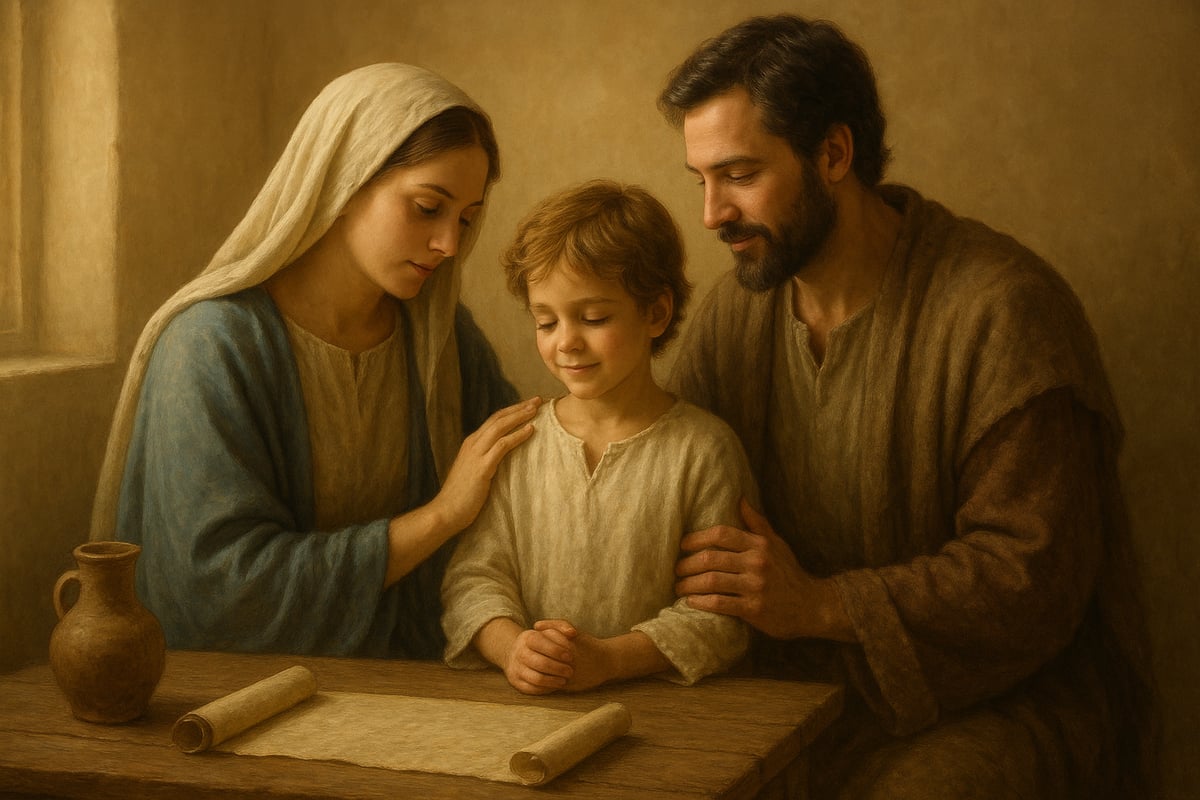
The holy family embodies a constellation of virtues that serve as guiding lights for Christian families. Faith is seen in Mary’s acceptance of her divine calling, while Joseph’s unwavering trust in God’s plan exemplifies obedience. Their humility shines in their willingness to fulfill God’s will quietly, and their love forms the foundation of all their actions.
- Faith: Mary’s “fiat,” or her consent to God’s message, marks a pivotal moment of faith in salvation history.
- Obedience: Joseph listens to angelic guidance, responding with decisive, silent strength.
- Humility: Both Mary and Joseph accept their roles without seeking recognition or reward.
- Love: Their family life is rooted in selfless care for each other and for Jesus.
- Trust: Despite uncertainty, they rely on God’s promises.
Catholic teaching refers to the holy family as the first “domestic church.” This idea highlights the family’s role as the primary place where faith is lived and passed on. The unity seen in the holy family is not only a model for Christian households but also a symbol of the broader unity the Church seeks in the world.
The Church Fathers, such as St. Augustine and St. John Chrysostom, often reflected on the holy family’s example. They emphasized how Jesus’ hidden years in Nazareth, spent in obedience and daily work, sanctified ordinary life. The Catechism of the Catholic Church also references the holy family as the blueprint for family holiness, teaching that every Christian home is called to mirror their virtues.
In salvation history, the holy family’s journey, from Nazareth to Bethlehem and Egypt, reveals God’s care for families experiencing hardship. Their resilience and unity provide comfort and direction for families facing their own trials today.
The Holy Family in Catholic Doctrine
The holy family occupies a central place in Catholic doctrine regarding the sanctity of family life. Church teaching upholds the family as a sacred institution, and the holy family’s example sets the standard for marital love, parental responsibility, and the nurturing of children.
- Patronage: The holy family is invoked as the patron of families, workers, and the universal Church.
- Liturgy and Prayer: Their lives are honored in the liturgical calendar, with special prayers and devotions dedicated to their memory.
- Papal Encyclicals: Popes throughout history have highlighted the holy family’s virtues in letters and teachings, urging families to look to them for inspiration.
- Catechism References: The Catechism presents the holy family as the model for the Christian home, emphasizing respect, love, and mutual support.
The concept of the “hidden life” of Jesus—years spent in Nazareth, away from public ministry—teaches the sanctity of ordinary work and daily routines. This period illustrates how holiness can be found in the simplest acts of family life.
Catholic social teaching draws on the holy family’s witness to promote the dignity of marriage, the value of children, and the importance of home as a place of faith. Theological studies, such as those on Marian devotion and Catholic marriage, explore how veneration of Mary and the holy family shapes Catholic views on marriage and sexuality.
The holy family’s story also connects with biblical typology, echoing the experiences of other faithful families in scripture. Their unity, perseverance, and trust in God remain a source of hope for families worldwide, serving as a powerful reminder that every home can become a sanctuary of faith and love.
Veneration, Feast Days, and Devotions to the Holy Family
The veneration of the holy family has developed over centuries, reflecting the deep respect and love Catholics hold for Jesus, Mary, and Joseph. Through special feast days and rich devotional practices, the faithful honor the holy family’s virtues and seek their guidance for daily living.
The Feast of the Holy Family
The Feast of the Holy Family is a central celebration in the Church’s liturgical calendar. Established in 1893, this feast highlights the unity, faith, and love embodied by Jesus, Mary, and Joseph. It is typically celebrated on the Sunday after Christmas, inviting families worldwide to reflect on the example of the holy family.
The origins of the feast are rooted in the Church’s desire to offer a model for Christian family life. Over time, the celebration has grown to include unique customs across cultures. In some countries, families attend Mass together, while in others, special blessings are given to households.
Below is a table summarizing key aspects of the feast:
| Aspect | Details |
|---|---|
| Origin | Established in 1893 by Pope Leo XIII |
| Liturgical Date | Sunday after Christmas |
| Customs | Family Mass, blessings, shared meals, prayers |
| Global Practices | Processions, hymns, nativity reenactments, acts of charity |
Prayers and hymns form a vital part of the celebration. Readings focus on unity, obedience, and mutual care. Many families recite the Litany of the Holy Family or offer special prayers for their own households.
The feast is observed in diverse ways around the world. In the Philippines, families gather for special novenas. In Italy, nativity scenes are central to home celebrations. In the United States, parishes may host communal meals or family blessing ceremonies.
To learn more about the liturgical celebration and customs in detail, you may visit this Feast of the Holy Family celebration resource.
Through these traditions, the holy family remains a beacon of unity and hope, inspiring families to strengthen their faith.
Devotions and Patronages
Devotions to the holy family are widespread, reflecting the desire of the faithful to draw closer to their example. Popular practices include novenas, consecrations, and litanies dedicated to seeking the intercession of Jesus, Mary, and Joseph.
The holy family is recognized as the patron of families, homes, and workers. This patronage is especially important in times of crisis, offering comfort and inspiration to those facing adversity. Many religious orders and communities are dedicated to their honor, promoting family prayer and service.
Notable pilgrimage sites and churches worldwide are named after the holy family, attracting visitors seeking spiritual renewal. Testimonies of answered prayers and miracles are often shared by those who have turned to the holy family in times of need.
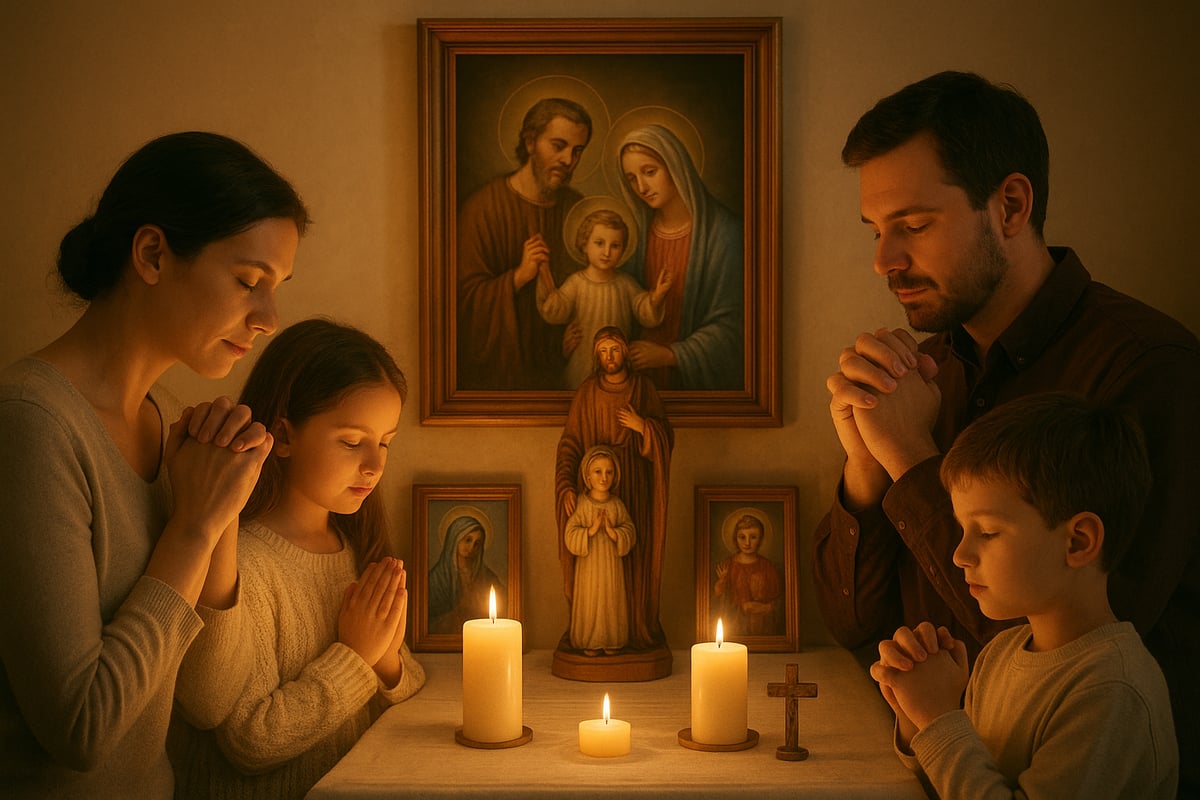
Families integrate devotions into daily routines, such as praying together before meals or displaying images of the holy family in their homes. Catholic schools and catechetical programs frequently highlight their virtues, encouraging children to model their lives after Jesus, Mary, and Joseph.
Through these devotions and patronages, the holy family remains at the heart of Catholic life, guiding individuals and families toward greater faith, unity, and trust in God.
The Holy Family in Art, Literature, and Popular Culture
The holy family has inspired countless artists, writers, and creators for centuries. Its presence in art, literature, and popular culture reflects deep spiritual meaning and continues to shape how people connect with faith. Through images and stories, the holy family bridges generations, cultures, and artistic traditions.
Iconography and Artistic Representations
From the earliest days of Christianity, the holy family has been a central subject in religious art. Early Christian frescoes and mosaics often depicted Mary, Joseph, and Jesus together, emphasizing unity and divine purpose. As centuries passed, artists across Europe and the Middle East developed unique styles to honor the holy family.
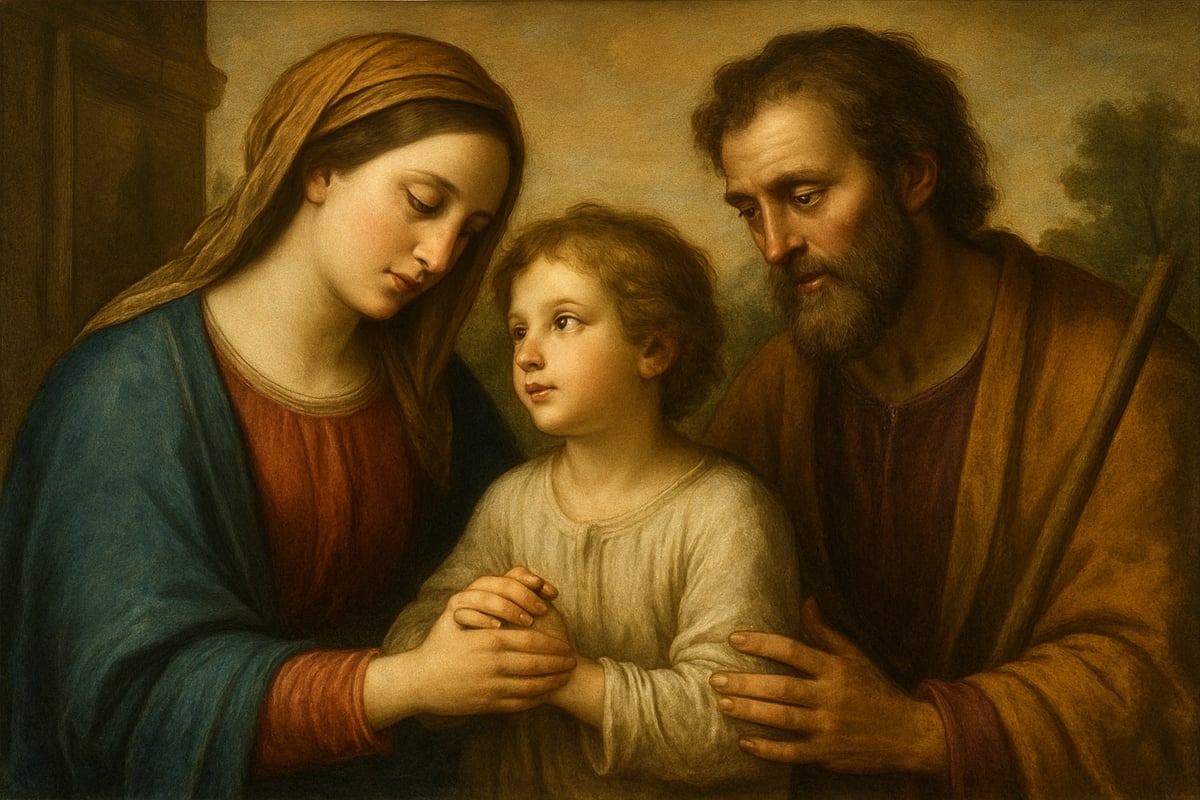
During the Renaissance, painters like Michelangelo and Raphael created masterpieces that captured the humanity and holiness of the holy family. These works used vibrant colors, gentle gestures, and expressive faces to convey deep love and faith. Eastern and Western traditions offered distinct iconography, with Eastern icons focusing on spiritual symbolism and Western art exploring naturalism and emotion.
Artistic representations of the holy family often include symbolic elements. For example, lilies represent purity, halos symbolize sanctity, and the carpenter’s tools highlight Joseph’s role. Stained glass windows, sculptures, and mosaics in churches worldwide feature the holy family as models of virtue and devotion.
Architectural marvels, such as Barcelona’s Sagrada Familia, show how the holy family inspires not only paintings but also the design of sacred spaces. Modern and contemporary artists continue to reinterpret these themes, using new media and perspectives to keep the holy family relevant for today’s audiences. For more on the evolution and impact of these representations, visit The Holy Family in art.
Regional variations in style and technique highlight the adaptability of the holy family’s image, making it accessible to diverse cultures and communities. The enduring appeal of these artworks reminds us of the holy family’s universal message.
The Holy Family in Literature and Media
Stories of the holy family have been retold in literature and poetry for generations. Biblical narratives form the foundation, inspiring countless adaptations that bring the lives of Mary, Joseph, and Jesus to new audiences. Writers often explore themes of faith, sacrifice, and family bonds through the lens of the holy family.
Children’s books and educational resources introduce young readers to the holy family’s story. These works teach values such as kindness, trust, and obedience, using simple language and vivid illustrations. In classrooms and homes, these stories nurture spiritual growth and cultural understanding.
The holy family also appears in films, television specials, and music, especially during Christmas. Nativity scenes and Christmas cards featuring the holy family are cherished traditions in many households. These images and stories help families celebrate the meaning of the season and foster a sense of connection.
Catholic publishers and devotional media continue to produce materials centered on the holy family. Notable authors draw from scripture, history, and personal reflection to deepen readers’ appreciation for the holy family’s role in salvation history. Storytelling, whether through print or digital formats, remains a powerful way to spread devotion.
Cultural adaptations of the holy family’s story reflect the diversity of Christian communities worldwide. Each retelling, whether in local art, theater, or music, invites people to see themselves in the holy family’s journey and to draw inspiration for daily life.
The Holy Family as a Model for Catholic Family Life Today
The holy family remains a timeless example for Catholic families navigating the joys and challenges of modern life. Their story offers practical wisdom, enduring values, and inspiration for building a faith-filled home in today’s world.
Lessons for Modern Families
The holy family’s daily life was rooted in faith, love, and perseverance. Modern families can draw inspiration from their virtues, especially in an age marked by busyness and distraction. Faithfulness to God, mutual respect, and unwavering trust are at the heart of the holy family’s legacy.
Practical steps can help families embody these values:
- Set aside time for family prayer, even if brief, to anchor the day in faith.
- Foster open communication, making space for every family member’s voice.
- Practice forgiveness and patience, inspired by the holy family’s unity in adversity.
- Share responsibilities in the home, echoing Joseph’s diligence and Mary’s nurturing care.
Building a “domestic church” means living out the faith at home. Parents, children, and even extended relatives can find guidance in the holy family’s example. Small traditions, such as blessing one another before leaving the house or displaying sacred art, reinforce a sense of God’s presence.
Resources for spiritual growth are widely available. Parish programs, retreats, and catechetical materials support families on this journey. For practical ideas and parish support, explore Parish Initiatives for Families, which offers community-based strategies for living the holy family’s values today.
Addressing Contemporary Issues Through the Holy Family’s Example
The holy family’s relevance extends to today’s most pressing family challenges. In a world shaped by rapid change, migration, and uncertainty, their steadfastness provides a beacon of hope. Families experiencing crisis, loss, or transition can look to the holy family for encouragement and comfort.
Respect for life, the dignity of work, and the sanctity of marriage are central to Catholic teaching and are embodied in the holy family’s story. Church initiatives, including family counseling, support groups, and educational programs, help families uphold these values. Parishes and schools play a vital role, offering faith formation and community support.
Intergenerational relationships also benefit from the holy family’s example. Grandparents, parents, and children united in faith create a strong foundation for future generations. Encouraging vocations, nurturing faith, and supporting one another in daily life reflect the core mission of the holy family.
Statistics show that families engaged in parish life experience greater resilience and spiritual growth. By following the holy family’s model, Catholic families can meet contemporary challenges with unity, trust, and hope, building a legacy that endures for generations.
Global Impact and Contemporary Relevance of the Holy Family
The story of the holy family continues to shape faith and inspire communities around the world. Their example of unity, resilience, and love transcends time, offering hope and guidance in an ever-changing global landscape.
The Holy Family in a Multicultural and Interfaith Context
The holy family holds deep significance across Christian denominations, serving as a unifying symbol for Catholics, Orthodox Christians, and many Protestant communities. Each tradition brings unique perspectives, yet all honor the virtues and spiritual legacy of the holy family.
Beyond Christianity, the holy family is respected in Islam as well. Mary (Maryam) is revered as the mother of Jesus (Isa), and both are recognized for their faithfulness and virtue. This shared reverence opens doors for interfaith dialogue, encouraging mutual understanding and respect among different religious groups.
The holy family stands as a powerful symbol of unity and peace, especially in times of conflict or division. International events and pilgrimages dedicated to the holy family foster global connections and spiritual renewal. For example, Holy Family Mission Events bring together people from diverse backgrounds to celebrate, learn, and grow in faith.
Ecumenical and interreligious initiatives inspired by the holy family often focus on humanitarian efforts. These projects address issues like poverty, migration, and family support, emphasizing the holy family's role as advocates for all families in need.
Across continents, the holy family influences social values and inspires movements that promote the dignity of family life. From Africa to the Americas, communities find hope in the holy family's journey, drawing strength from their example during times of hardship.
- Key areas of global impact:
- Ecumenical gatherings and shared prayers
- Interfaith educational programs
- Humanitarian aid projects rooted in family values
- Pilgrimages and international celebrations
- Community outreach inspired by the holy family's story
Through these diverse efforts, the holy family remains a beacon of hope and a catalyst for positive change worldwide.
The Holy Family’s Enduring Message for 2026 and Beyond
As the world faces unprecedented challenges, the holy family’s message becomes ever more relevant. Their story offers a beacon of hope, teaching that love, faith, and perseverance can overcome adversity. In uncertain times, families look to the holy family for guidance, drawing inspiration from their unwavering trust in God.
Modern society benefits from digital devotions and online communities centered on the holy family. Virtual prayer groups, social media campaigns, and digital resources make it easier than ever to connect with others and deepen devotion, even across great distances.
The holy family’s example provides comfort and direction during global crises, such as pandemics, migration, and conflict. Church initiatives, both from the Vatican and local parishes, encourage families to emulate the holy family's virtues in daily life. These efforts foster resilience, compassion, and solidarity in communities worldwide.
Stories of transformation through devotion to the holy family are increasingly common. Families share testimonies of renewed faith, strengthened relationships, and personal growth, inspired by the holy family's journey.
Looking ahead to 2026 and beyond, the future of holy family veneration is bright. The rise of digital outreach ensures that their message continues to reach new generations. Church leaders encourage everyone to embrace the holy family's example, promoting personal and communal renewal.
- Ways to embrace the holy family’s message:
- Participate in online prayer or study groups
- Support humanitarian projects inspired by the holy family
- Share stories of faith and resilience within your community
- Engage with Church initiatives for family support and education
By applying the lessons of the holy family, individuals and communities can find hope, strengthen their bonds, and face the future with confidence.
As we reflect on the Holy Family’s enduring legacy—from their humble beginnings in Nazareth to their powerful influence on faith and family life today—you might feel inspired to deepen your own spiritual journey. Whether you’re seeking resources to strengthen your family, explore Catholic traditions, or find unique devotional items, I invite you to browse our store for unique items. You’ll discover thoughtfully curated books, religious art, and meaningful gifts that can enrich your faith and bring the values of the Holy Family into your daily life. Let’s continue this journey together.