

The litany of the saints represents one of the most ancient and powerful forms of intercessory prayer in the Catholic Church. This profound prayer invokes the communion of saints, calling upon the Blessed Virgin Mary, the angels, apostles, martyrs, and countless holy men and women to intercede for us before the throne of God. When we pray the litany of the saints, we acknowledge that we are not alone in our spiritual journey. We stand alongside the entire Church triumphant, militant, and suffering, united in one body under Christ our Lord.
The rhythmic, responsive nature of this prayer creates a powerful spiritual experience that has sustained Catholics through pivotal moments in their faith lives for centuries. From ordinations to baptisms, from the Easter Vigil to the dedication of churches, the litany of the saints marks the most significant occasions in Catholic liturgy.
Historical Origins and Development
The litany of the saints traces its roots to the early Christian communities who gathered to honor the martyrs. During times of persecution, believers would gather at the tombs of those who had given their lives for Christ, asking for their intercession. These early Christians understood that death did not sever the bonds of Christian love and that the martyrs enjoyed a special closeness to God.
By the fourth century, as Christianity gained legal recognition throughout the Roman Empire, formalized litanies began to emerge. The practice of invoking saints by name during processions and solemn liturgies became widespread. Historical records show that Pope Gregory the Great used a form of the litany during a penitential procession in Rome during 590 AD, praying for deliverance from a devastating plague.
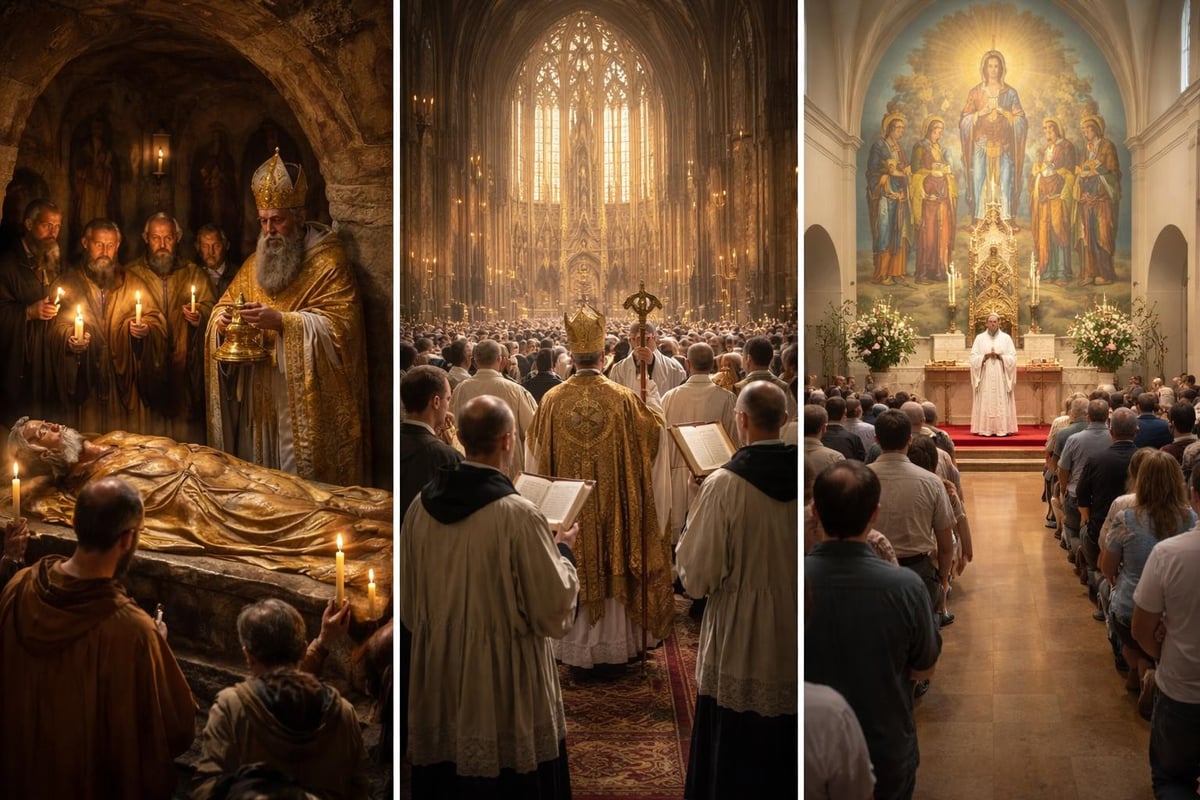
The medieval period witnessed significant development in the structure and content of the litany of the saints. Monastic communities particularly embraced this form of prayer, incorporating it into their daily office. Different regions developed their own variations, adding local saints and adapting the prayer to their specific needs and devotions.
This post is brought to you by Journeys of Faith, founded by Bob and Penny Lord. We are Cyber Apostles and an Augustinian Secular Institute of which we are members; the Evangelization arm of the group of Cloistered Augustinian Nuns in Montefalco, Italy. Our mission is evangelization through media using the tools that God has allowed to be created.
Structure and Components
The traditional format follows a call-and-response pattern that engages the entire worshiping community:
| Section | Content | Response |
|---|---|---|
| Opening Invocations | Lord, have mercy; Christ, have mercy | Repeated invocation |
| Holy Trinity | God the Father, God the Son, God the Holy Spirit | Have mercy on us |
| Saints Invocations | Mary, angels, apostles, martyrs, confessors, virgins | Pray for us |
| Petitions | From all evil, from all sin, from your wrath | Deliver us, Lord |
| Through Christ's Mysteries | By your Incarnation, by your death and resurrection | Save us, Lord |
| Concluding Prayers | Lamb of God, Christ hear us | Final petitions |
The litany of the saints progresses through a hierarchical order reflecting the Church's understanding of heavenly glory. It begins with the Blessed Virgin Mary, acknowledged as the greatest of all saints, then proceeds through the angels, apostles, and successive ranks of holy men and women.
Liturgical Usage and Sacred Occasions
The Church reserves the litany of the saints for the most solemn moments in Catholic life. During the Easter Vigil, as catechumens prepare to enter the waters of baptism, the assembly sings this ancient prayer, calling upon all the saints to welcome these new members into the communion of the Church.
Ordinations to the priesthood and diaconate incorporate the litany at a particularly moving moment. As candidates lie prostrate on the sanctuary floor in a posture of complete surrender to God's will, the community chants the names of the saints. This prostration symbolizes death to self and total dependence on God's grace and the intercession of the saints.
Key liturgical occasions include:
- Sacrament of Baptism (especially at the Easter Vigil)
- Ordination of priests, deacons, and bishops
- Consecration of virgins and religious profession
- Dedication of churches and altars
- Rogation Days and penitential processions
- Special occasions of prayer for the Church
The dedication of a church or altar represents another profound occasion for this prayer. As the bishop consecrates the sacred space where the Eucharist will be celebrated, the litany of the saints reminds all present that the church building represents a meeting place between heaven and earth.
Musical Traditions and Adaptations
The litany of the saints possesses a unique musical quality that enhances its spiritual power. Various musical settings exist, from simple chant melodies that any congregation can sing to elaborate polyphonic arrangements suitable for cathedral choirs. The flexibility of musical arrangements allows parishes to adapt the litany to their particular circumstances while maintaining its essential character.
Traditional Gregorian chant settings preserve the prayer's ancient origins, connecting modern Catholics to centuries of worship. Contemporary composers have also created beautiful settings that speak to current sensibilities while respecting the litany's sacred purpose. Some parishes incorporate instruments beyond the organ, including brass, strings, and percussion, to create rich musical textures.
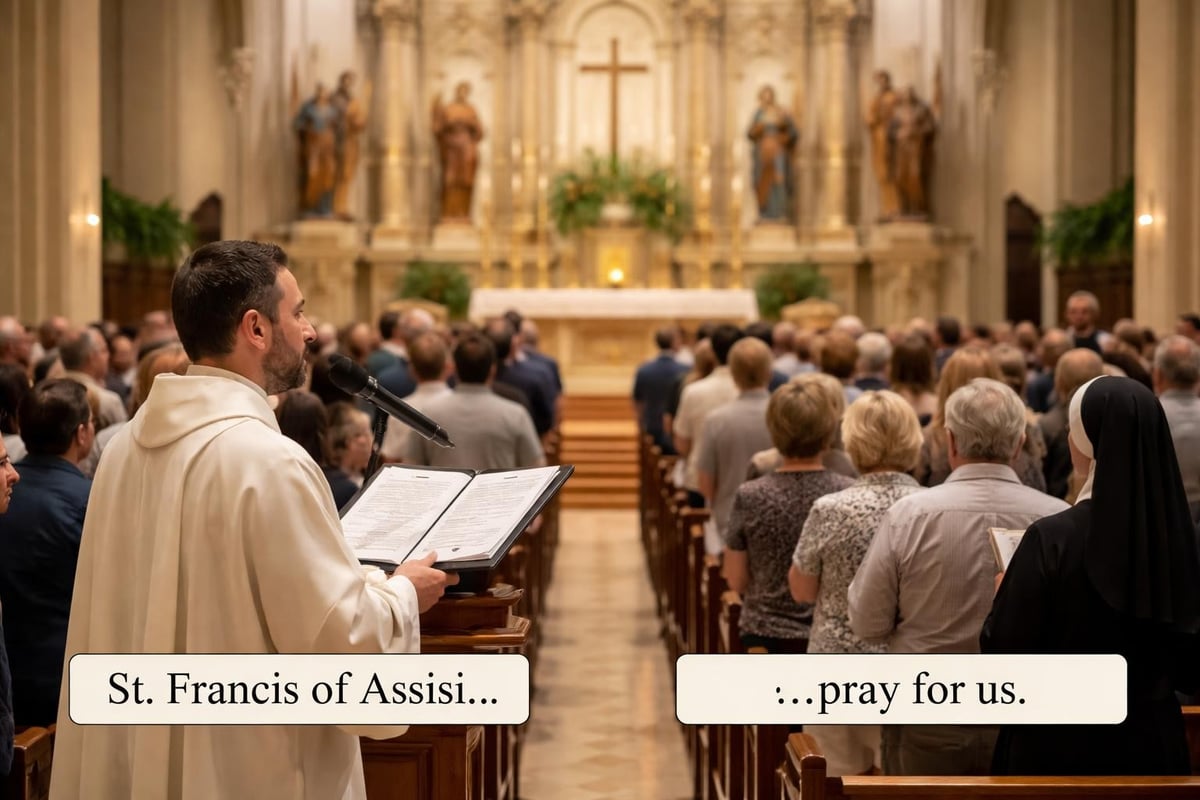
Bilingual communities benefit from versions that alternate between languages or present the entire litany in Spanish, Vietnamese, Korean, or other languages. These multilingual adaptations demonstrate the universal nature of the communion of saints and the Catholic Church's embrace of cultural diversity.
Theological Significance and Spiritual Benefits
The litany of the saints embodies essential Catholic teaching about the communion of saints. This doctrine affirms that all members of Christ's body-whether on earth, in purgatory, or in heaven-remain connected through bonds of prayer and love. When we invoke the saints, we exercise our belief that death does not sever Christian fellowship but transforms it.
Theological foundations include:
- The communion of saints as one body in Christ
- The intercessory power of those perfected in holiness
- The example of virtue provided by the saints' lives
- The unity of the Church across time and eternity
- The efficacy of prayer when joined with the prayers of the saints
Praying the litany of the saints cultivates humility by acknowledging our need for help. We recognize that our prayers alone may be weak, but when united with the intercession of Mary, the apostles, martyrs, and all the holy men and women who have gone before us, they gain tremendous spiritual power. This corporate dimension of prayer reflects the Church's communal nature.
The litany also serves as a catechetical tool, introducing Catholics to saints they might not otherwise encounter. Each name represents a story of faith, courage, and love. Learning about the lives of the saints enriches our spiritual understanding and provides models for Christian living.
Personal Devotion and Private Prayer
While the litany of the saints serves primarily as a liturgical prayer, individuals can pray it privately during times of special need or spiritual crisis. Some Catholics incorporate shortened versions into their daily prayer routines, selecting specific saints whose virtues they wish to emulate or whose intercession they particularly seek.
During times of discernment about important life decisions, the litany of the saints provides spiritual support and guidance. The prayer reminds us that we can call upon the wisdom and experience of those who have successfully navigated their earthly journeys and now enjoy the beatific vision.
| Situation | Relevant Saints to Invoke | Reason |
|---|---|---|
| Academic studies | Thomas Aquinas, Catherine of Alexandria | Patrons of students and scholars |
| Health concerns | Raphael the Archangel, Peregrine | Healing and comfort in illness |
| Family matters | Joseph, Monica, Anne | Family protection and guidance |
| Vocational discernment | Ignatius of Loyola, Therese of Lisieux | Discovering God's will |
Many Catholics find that slowly praying the litany of the saints while meditating on each saint's life and virtues deepens their relationship with these heavenly friends. This contemplative approach transforms the litany from mere recitation into genuine encounter.
Contemporary Relevance and Practice
In 2026, the litany of the saints remains as relevant as ever to Catholic spiritual life. Modern parishes continue to incorporate this prayer into major liturgical celebrations, recognizing its power to unite congregations in common purpose. The prayer's rhythmic, repetitive nature creates a meditative atmosphere conducive to spiritual openness.
Contemporary Catholic communities often expand the traditional list of saints to include recently canonized holy men and women. Pope John Paul II, Mother Teresa of Calcutta, and other modern saints now appear in many versions, demonstrating that holiness continues to flourish in every age.
Modern additions to consider:
- Newly canonized saints from the 20th and 21st centuries
- Saints from various cultural backgrounds and continents
- Martyrs of recent persecutions
- Saints particularly relevant to contemporary challenges
- Blesseds awaiting canonization (in appropriate contexts)
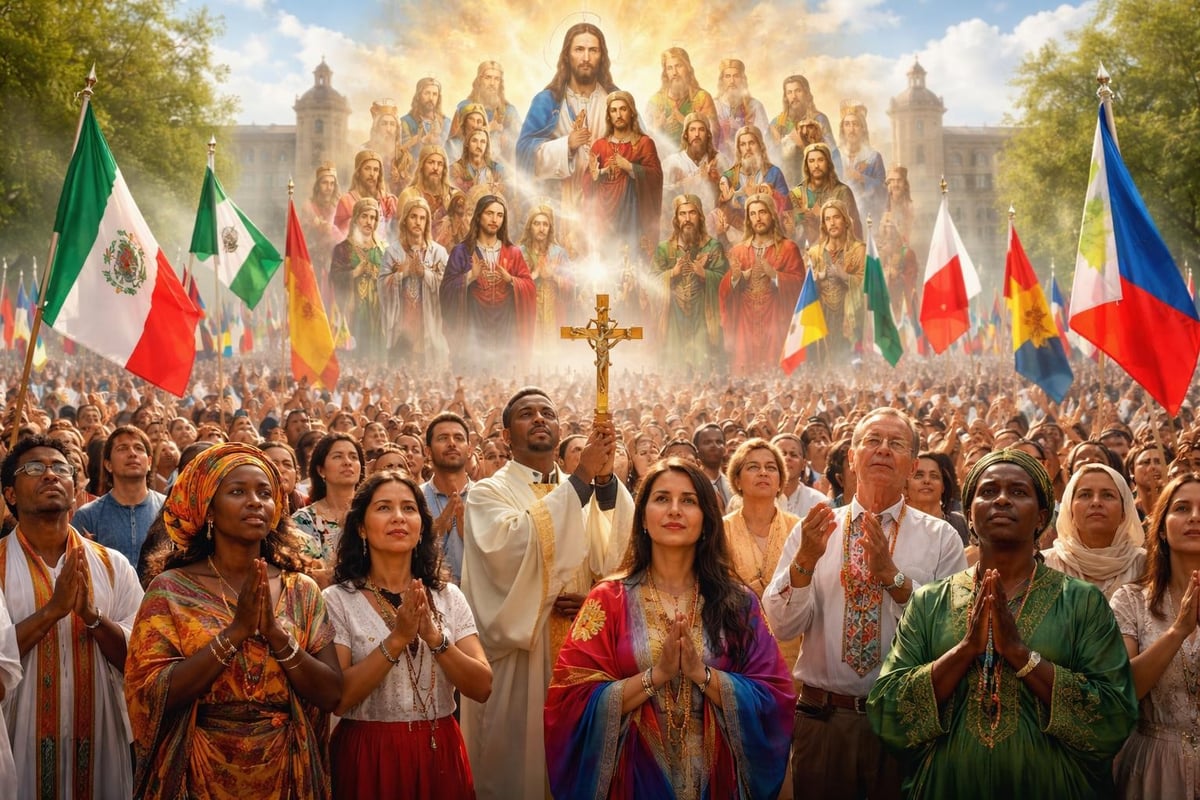
Youth groups and young adult communities have discovered the litany of the saints as a powerful expression of Catholic identity. Some parishes host special evenings where participants learn about the saints invoked in the litany, then pray it together while processing through the church with candles. These creative adaptations help younger generations connect with ancient traditions.
Resources for Learning and Praying
Catholics seeking to deepen their appreciation for the litany of the saints can access numerous resources. Sheet music and recordings help parishes and individuals learn various musical settings. Prayer cards provide convenient formats for personal devotion, and many Catholics keep these in their missals or prayer books.
At Journeys of Faith, we offer various resources to support your devotion to the saints, including books, prayer cards, and media that explore the lives of these holy men and women. Understanding the saints' stories enriches the experience of invoking their names in the litany.
The Church encourages families to pray the litany of the saints together on significant occasions. During times of family crisis, celebration, or transition, gathering to call upon the heavenly court provides spiritual strength and demonstrates faith in action to children. Parents might select specific saints based on family needs or the liturgical season.
Educational and Formational Value
Religious education programs benefit from teaching the litany of the saints to students of all ages. Children learn that holiness is attainable and that countless ordinary people have become extraordinary saints through cooperation with God's grace. The litany presents history, theology, and spirituality in an accessible, memorable format.
Different approaches to Carmelite spirituality and other spiritual traditions within Catholicism often emphasize particular saints in the litany. Understanding these emphases helps Catholics appreciate the rich diversity within the Church while maintaining unity in essential beliefs.
Educational benefits include:
- Introduction to Church history through saints' lives
- Understanding of different vocations and paths to holiness
- Appreciation for cultural diversity in the universal Church
- Memorization of key figures in Christian tradition
- Development of intercessory prayer habits
Catechists can create engaging lessons around the litany of the saints by assigning students to research specific saints, then sharing their findings with the class. This active learning approach makes the prayer come alive as students discover the human stories behind the names they invoke.
Formation programs for catechumens and candidates preparing for full communion with the Catholic Church always include instruction on the litany of the saints. Many RCIA directors spend significant time teaching about the communion of saints and the role of intercessory prayer, using the litany as a practical example of these theological concepts.
Connecting Prayer to Daily Life
The litany of the saints bridges the gap between formal liturgy and everyday spirituality. Catholics who regularly pray this litany often report feeling more connected to the universal Church and less isolated in their spiritual struggles. The prayer reminds us that we are part of something much larger than ourselves.
Invoking specific saints throughout the day-a practice encouraged by the litany-helps Catholics maintain awareness of God's presence in ordinary activities. A teacher might ask the intercession of John Baptist de la Salle before class, while a physician invokes Luke the Evangelist before seeing patients. These brief prayers connect daily work to the communion of saints.
Some spiritual directors recommend that their directees select one saint from the litany each month to study and invoke regularly. This practice gradually builds familiarity with the vast company of heaven while providing specific models for virtue development. By year's end, the directee has developed relationships with twelve heavenly friends.
The litany of the saints connects us to the very heart of Catholic tradition, uniting our voices with centuries of faithful prayer while acknowledging our place in the communion of saints. This ancient prayer remains vital for Catholics seeking to deepen their spiritual lives and draw closer to the heavenly court. Whether you experience the litany during the Easter Vigil, an ordination, or in private devotion, Journeys of Faith provides the resources you need to enrich your understanding and practice of this sacred tradition through books, prayer cards, and educational materials that bring the saints' stories to life.
Explore these valuable resources:
- Explore Journeys of Faith Online store with thousands of Catholic Items at https://journeysoffaith.com/collections
- Our Unique Mega Search Engine https://journeysoffaith.com/search is linked to hundreds of Catholic Shops and Stores
- Get the Journeys of Faith NEW App for iPhone or Android. Search for Journeys of Faith or go to https://journeysoffaith.com/pages/download-our-app