

For centuries, millions have been captivated by mysterious accounts of the Virgin Mary appearing around the globe. These stories spark both devotion and debate, inviting believers and skeptics alike to explore their meaning.
This guide offers a clear roadmap through the world of marian apparitions as recognized up to 2026. You will discover their historical roots, learn to identify common signs, and understand how the Church investigates these claims.
Dive in for a comprehensive look at major cases, theological insights, and the lasting impact of these extraordinary events.
The Historical Context of Marian Apparitions
For centuries, the phenomenon of marian apparitions has shaped the spiritual landscape of Christianity. These reported encounters with the Virgin Mary span continents and centuries, each rooted in its unique historical and cultural backdrop. To understand their profound impact, it is essential to trace their development from the earliest accounts to their modern global reach.
Origins and Early Accounts
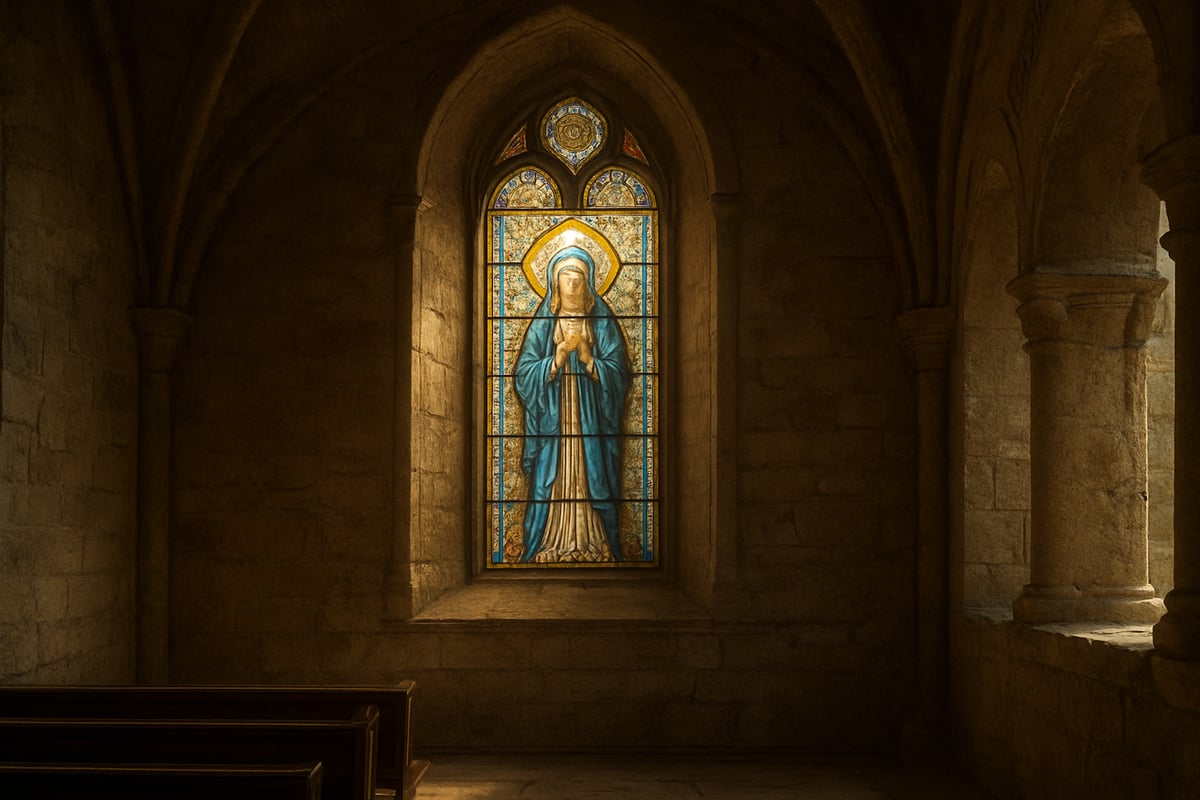
The history of marian apparitions begins in the earliest days of Christianity. The first known report traces back to Zaragoza, Spain, around 40 CE, where tradition holds that the Apostle James the Greater received a vision of Mary on the banks of the Ebro River. This event, known as Our Lady of the Pillar, laid the foundation for centuries of Marian devotion.
As Christianity spread, devotion to Mary deepened, especially through the early Church Fathers and local traditions. Medieval Europe experienced a surge in marian apparitions, many of which were integrated into regional customs and influenced the building of shrines. These stories often blended elements of local folklore and Christian theology.
By the 20th century, hundreds of marian apparitions were reported, but only a small fraction received formal investigation. Early Church responses were cautious, setting precedents for discernment and shaping the criteria now used in evaluating such claims. For a comprehensive background, the Marian Apparitions Overview offers a detailed look at these foundational events.
Development Through the Ages
The Middle Ages and Renaissance marked significant growth in reports of marian apparitions. As societies grappled with social upheaval, plagues, and religious conflict, these apparitions offered hope and guidance. Cultural and political factors influenced how these events were received and interpreted, often reinforcing local identity and unity.
The emergence of printing technology in the late medieval period allowed stories of marian apparitions to spread beyond local communities. Pilgrimages to apparition sites became a major aspect of religious life, with new shrines drawing thousands seeking healing or spiritual renewal.
Marian apparitions sometimes challenged Church authority, prompting both skepticism and support. The Church developed more systematic approaches for investigation, balancing popular devotion with doctrinal integrity. The enduring influence of marian apparitions during this era is evident in the establishment of major pilgrimage destinations and their ongoing significance today.
Modern Era and Globalization
From the 19th century onward, marian apparitions entered a new phase of global visibility. Iconic events such as Lourdes in France (1858), Fatima in Portugal (1917), and Kibeho in Rwanda (1981-1989) drew worldwide attention. These modern apparitions often featured messages addressing contemporary social and political issues.
As of 2025, only 16 marian apparitions have received Vatican approval, despite countless reports from every continent. The rise of mass media, and later the internet, dramatically increased the speed and reach of apparition stories. Reports now emerge from Africa, Asia, and the Americas, reflecting a truly global phenomenon.
Modern marian apparitions continue to inspire devotion, pilgrimage, and theological reflection. The Church’s careful discernment process highlights the importance of authenticity and spiritual fruit, ensuring that the message of these apparitions remains relevant for new generations.
Recognizing Marian Apparitions: Signs, Criteria, and Church Process
Understanding how the Church recognizes marian apparitions requires careful attention to signs, established criteria, and a rigorous investigative process. This section explores the features that set these events apart, the standards used for evaluation, and the outcomes that shape their place in Catholic tradition.
Common Signs and Features of Apparitions
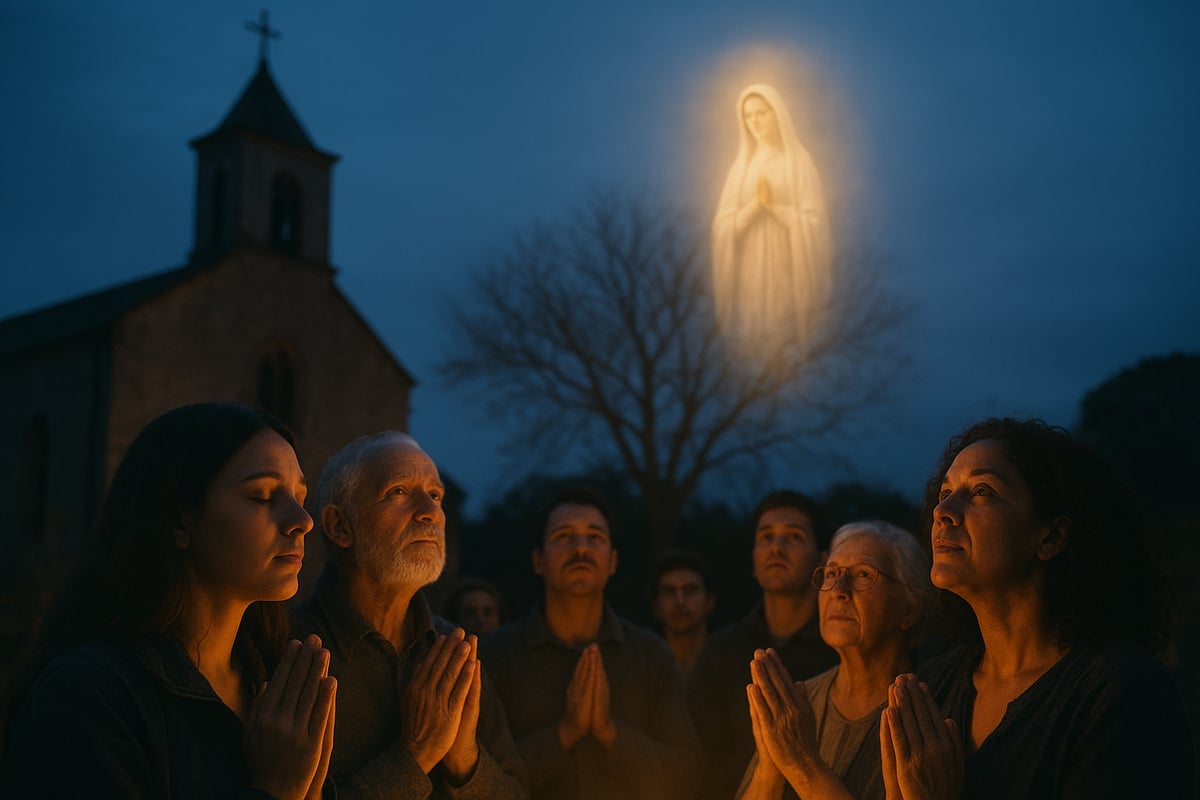
Marian apparitions are marked by distinctive signs that have recurred across centuries. Typically, visionaries report seeing the Virgin Mary, sometimes accompanied by other figures such as Jesus or saints. These encounters may be silent or involve spoken messages, often urging prayer, repentance, or compassion.
Physical signs frequently accompany marian apparitions. These can include miraculous healings, unexplained phenomena, or dramatic events witnessed by crowds. The apparition at Fatima in 1917, for example, featured the famous "miracle of the sun," observed by thousands. At Lourdes, the spring waters are associated with over 70 officially recognized cures.
Visionaries span a range of ages and backgrounds, from children like Bernadette Soubirous at Lourdes, to adults from humble or even marginalized communities. Notably, some canonized saints have been visionaries, and many more are featured in the Catholic Saints Books Collection, highlighting their spiritual significance.
Marian apparitions sometimes occur as mass events. At Knock in Ireland, at least 15 people saw a silent vision with Mary, Joseph, and St. John. Zeitoun in Egypt drew thousands, including non-Christians, to witness luminous appearances over several years.
These diverse features illustrate the range of experiences associated with marian apparitions, yet all share a sense of profound spiritual impact.
Church Criteria for Evaluation
The Catholic Church applies careful criteria to assess claims of marian apparitions. First, authorities consider the credibility of witnesses, looking for consistency, sincerity, and the absence of psychological disturbance. The unpredictability of the event is important, as are the humility and good character of the visionaries.
Positive criteria include:
- Spiritual fruits, such as increased prayer or conversions
- Doctrinal soundness of the messages
- Lasting positive impact on the community
Negative criteria involve:
- Doctrinal errors or contradictions with Church teaching
- Evidence of profit-seeking, fame, or division
- Signs of fraud, deception, or psychological issues
The investigative process typically unfolds in three stages:
- Initial inquiry by the local bishop
- Theological commission reviews testimonies and evidence
- Final judgment, which may be revisited as new information emerges
Of the hundreds of marian apparitions reported each century, only a small fraction are investigated. Even fewer are deemed credible. The process is designed to protect the faithful and ensure that marian apparitions align with Catholic doctrine and bring about genuine spiritual renewal.
Outcomes of Church Investigations
After investigation, the Church may reach several possible conclusions about marian apparitions. The most favorable verdict is "worthy of belief," meaning the faithful may accept the apparition, but belief is not required. Alternatively, an apparition may be declared "not worthy of belief," or the Church may withhold judgment if evidence remains inconclusive.
It is important to distinguish local bishop approval from Vatican recognition. While a local bishop can permit devotion at a site, only the Vatican can formally endorse an apparition for universal veneration. The term "nihil obstat" means nothing stands in the way of devotion, as seen recently with Medjugorje, but does not equate to full approval.
The Church never declares marian apparitions as "authentic" in an absolute sense. Instead, it affirms that an event is consistent with faith and morals, and that spiritual fruits are evident. Apparitions like Lourdes and Fatima are recognized as "worthy of belief," while others, such as those at Bayside, New York, have been explicitly rejected.
Below is a summary table of possible outcomes:
| Verdict | Meaning | Example |
|---|---|---|
| Worthy of Belief | Approved for devotion, not required | Lourdes, Fatima |
| Not Worthy of Belief | Rejected after investigation | Bayside, NY |
| No Decision | Ongoing investigation or inconclusive | Medjugorje |
This careful discernment process helps ensure that marian apparitions continue to inspire faith, while guarding against confusion or error.
Major Marian Apparitions: Stories, Messages, and Impact
Throughout history, marian apparitions have shaped faith, inspired millions, and transformed entire cultures. Each major apparition carries its own story, message, and legacy, yet together they form a tapestry of spiritual encounters that continue to resonate. Let us explore the most influential marian apparitions, their unique features, and their enduring impact on the world.
Our Lady of Guadalupe (Mexico, 1531)
In 1531, Juan Diego, an indigenous Mexican convert, encountered the Virgin Mary on Tepeyac Hill. She requested a church be built on the site. As proof, she left her image imprinted on Juan Diego’s tilma, a cloak made of cactus fiber. This miraculous image, still preserved today, became a powerful symbol of unity and compassion.
Our Lady of Guadalupe’s message emphasized dignity, hope, and care for the marginalized. Following the apparition, millions converted to Christianity, making it one of the most transformative marian apparitions in history.
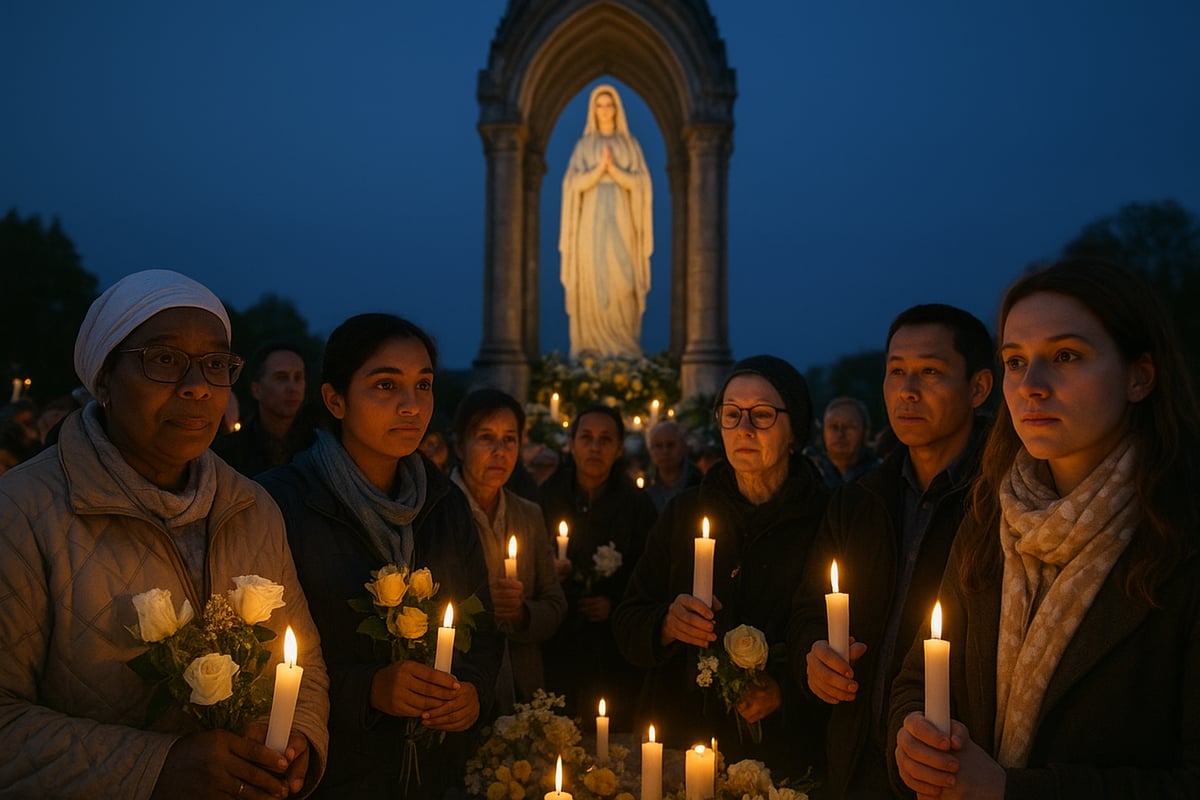
Pilgrimage to the Basilica of Guadalupe remains one of the world’s largest, drawing over 10 million visitors annually. The apparition’s impact on Mexican identity and global Catholic devotion endures, confirming the central role marian apparitions play in shaping faith across continents.
Lourdes (France, 1858)
In 1858, St. Bernadette Soubirous, a humble teenager, experienced 18 visions of the Virgin Mary at a grotto in Lourdes. Mary identified herself as the Immaculate Conception and requested a chapel be built. The spring that emerged at the site became renowned for its healing properties.
Lourdes is synonymous with miraculous cures. Over 70 healings have been officially recognized as inexplicable by science, attracting millions seeking hope and renewal. The messages centered on penance, prayer, and compassion for the suffering.
The influence of marian apparitions at Lourdes extends to Catholic theology, reinforcing devotion to the Immaculate Conception and the importance of compassion. Pilgrimages to Lourdes highlight the spiritual and communal power of marian apparitions in the modern era.
Fatima (Portugal, 1917)
Fatima’s story began in 1917 when three shepherd children witnessed six apparitions of the Virgin Mary. The messages delivered at Fatima included calls for prayer, conversion, and peace, as well as three “secrets” involving visions of hell, predictions about world events, and the conversion of Russia.
One of the most striking features of the Fatima marian apparitions was the Miracle of the Sun, witnessed by tens of thousands. The sun appeared to spin and dance, a phenomenon still discussed today. Fatima’s influence reached far beyond Portugal, shaping Catholic prayers, especially the Rosary, and even playing a role in international politics.
The marian apparitions at Fatima continue to inspire devotion, reflection, and dialogue about prophecy and the role of private revelation in Catholic life.
Knock (Ireland, 1879)
The marian apparitions at Knock are unique for their silent, communal nature. On a rainy evening in 1879, at least 15 villagers saw the Virgin Mary, St. Joseph, St. John the Evangelist, and a lamb on an altar appear at the gable wall of the parish church. No words were spoken, but the vision lasted for two hours.
Knock’s apparition stood out for its collective witness and the presence of multiple holy figures. This event strengthened Irish Catholic identity and became a focal point for pilgrimage, especially during times of hardship.
Marian apparitions like Knock emphasize the diversity of visionary experiences, from spoken messages to silent, symbolic encounters, broadening the understanding of how these events can unfold.
Zeitoun (Egypt, 1968-1971)
Between 1968 and 1971, thousands in Cairo’s Zeitoun district, including Christians and Muslims, witnessed luminous visions of the Virgin Mary atop a Coptic Orthodox church. These marian apparitions were remarkable for their public, mass nature and the absence of spoken messages.
Zeitoun’s impact was profound, fostering ecumenical dialogue and unity among diverse religious communities. The Coptic Orthodox Church recognized the apparitions, and the events have been widely studied for their psychological and cultural dimensions. For an in-depth analysis of mass visions like Zeitoun, see Marian Apparitions in Cultural Contexts.
Zeitoun illustrates how marian apparitions can transcend doctrinal boundaries, becoming points of convergence for faith, culture, and collective experience.
Kibeho (Rwanda, 1981-1989)
In the small Rwandan village of Kibeho, three schoolgirls reported visions of the Virgin Mary, who called herself “Mother of the Word.” The marian apparitions included urgent messages of repentance, prayer, and reconciliation.
Most striking was the prophecy of violence and suffering, later seen as foretelling the Rwandan genocide. The Church recognized the supernatural character of the early apparitions, making Kibeho the first Vatican-approved marian apparitions in Africa.
Kibeho’s legacy is one of healing and hope. Pilgrims come seeking peace and reconciliation, reflecting the enduring power of marian apparitions to address the wounds of history and foster spiritual renewal.
Other Notable Apparitions and Ongoing Cases
Other significant marian apparitions include La Salette (France, 1846) and Banneux (Belgium, 1933), both recognized by the Church for their calls to prayer and penance. Medjugorje (Bosnia and Herzegovina, 1981-present) remains under investigation, with the Vatican granting “nihil obstat” for pilgrimages but not full recognition.
Marian apparitions continue to be reported worldwide, with each case undergoing careful scrutiny. The Church assesses spiritual fruits, doctrinal consistency, and the credibility of visionaries. Only a small fraction receive official recognition.
As new reports emerge, marian apparitions remind believers of the ongoing dialogue between the divine and humanity. Their stories continue to inspire, challenge, and unite the global Church.
Theological and Spiritual Meanings of Marian Apparitions
Understanding the theological and spiritual meanings of marian apparitions offers insight into why these events continue to inspire millions. The Church views marian apparitions as private revelations, meant to call believers to deeper faith, prayer, and conversion rather than to add new doctrine.

The Role of Mary as Intercessor
Catholic teaching emphasizes Mary’s unique position as an intercessor between humanity and Christ. Marian apparitions often reinforce this belief, presenting Mary as a compassionate advocate who listens to prayers and presents them to God.
Marian apparitions consistently portray Mary as a motherly figure, concerned for the spiritual welfare of all people. Visionaries frequently describe her calls for repentance, prayer, and trust in divine mercy. The Church distinguishes between public revelation, which ended with the apostles, and ongoing private revelations like marian apparitions, which never impose new obligations but encourage spiritual renewal.
Core Themes and Messages
Throughout history, marian apparitions have delivered messages that share recurring themes. These include:
- Repentance and conversion of heart
- Devotion to prayer, especially the Rosary
- Calls for peace and reconciliation
- Care for the poor and vulnerable
Often, the messages of marian apparitions respond to the social and historical context of the time. For example, the call for peace at Fatima occurred during World War I, and the warnings at Kibeho addressed the looming genocide in Rwanda. The spiritual fruits of these apparitions are evident in increased devotion, personal transformation, and community healing.
| Apparition Site | Main Theme | Reported Spiritual Fruit |
|---|---|---|
| Lourdes | Healing, faith | Miraculous cures |
| Fatima | Peace, conversion | Spread of the Rosary |
| Kibeho | Repentance | Reconciliation efforts |
Apparitions and Catholic Devotion
Marian apparitions have a profound impact on Catholic devotion worldwide. Shrines built at apparition sites attract millions of pilgrims annually, fostering communal prayer and spiritual renewal. Practices such as Marian consecration, feast days, and the widespread use of the Rosary are often revitalized by reports of marian apparitions.
These events inspire not only personal piety but also vocations, charitable works, and artistic expression. For those seeking a deeper understanding of these practices, An Exploration of Marian Spiritual Practices offers an in-depth look at how marian apparitions encourage spiritual growth and devotion in contemporary life.
Controversies and Skepticism
While marian apparitions draw many to faith, they also generate debate. The Church approaches each claim with caution to avoid superstition, division, or psychological misunderstanding. Some apparitions have been dismissed for lacking credible evidence or for contradicting Church teaching.
Common challenges include:
- Psychological explanations for visionary experiences
- Fabricated or exaggerated claims
- Overzealous devotion leading to division
Despite skepticism, the Church recognizes the spiritual fruits that authentic marian apparitions can produce, such as increased prayer, unity, and conversion. Ultimately, Catholics are encouraged to approach these phenomena with discernment, openness, and faith.
Marian Apparitions in the Modern World: Influence and Legacy
For centuries, marian apparitions have left a profound mark on societies worldwide. Their influence reaches far beyond religious circles, shaping cultures, inspiring movements, and connecting millions of people across borders and generations.
Cultural and Social Impact
Marian apparitions have played a significant role in shaping national and cultural identities. In Mexico, Our Lady of Guadalupe became a unifying symbol during times of social upheaval, fostering a sense of hope and resilience. Similarly, the apparition at Knock contributed to Irish Catholic identity, especially during periods of hardship.
These events often inspire art, literature, and music. From colorful murals in Latin America to classical hymns and contemporary novels, the stories and symbols of marian apparitions resonate deeply in creative expression. Social movements and peace initiatives have also drawn inspiration from these apparitions, promoting reconciliation and unity.
Pilgrimage and Global Devotion
The phenomenon of marian apparitions has transformed many sites into major pilgrimage destinations. Each year, millions of faithful travel to places like Lourdes and Guadalupe, seeking healing, spiritual renewal, or simply to honor Mary. Lourdes welcomes over 3 million pilgrims annually, while Guadalupe sees more than 10 million visitors, making them among the most visited religious sites worldwide.
Pilgrimages offer both economic and spiritual benefits to local communities. They foster hospitality, cultural exchange, and a sense of global Catholic solidarity. For those unable to travel, resources such as Pilgrimage Information for Marian Sites enable virtual participation, allowing devotion to flourish in the digital age.
Apparitions and the Digital Age
The rise of mass media and the internet has changed how marian apparitions are reported and experienced. Today, news of a potential apparition can spread globally within hours, reaching believers and skeptics alike. Social media platforms amplify stories, images, and testimonies, making the phenomenon more accessible but also more susceptible to misinformation.
Benefits include broader awareness and deeper global connections among devotees. However, the Church faces new challenges, such as distinguishing authentic spiritual experiences from sensationalized or fabricated claims. Recent viral stories have prompted timely and careful responses from Church authorities, ensuring discernment remains central.
Ongoing Relevance and New Reports
Marian apparitions continue to captivate people in the 21st century. New reports emerge from Africa, Asia, and the Americas, reflecting the enduring appeal of these encounters. The Church approaches each claim with openness and caution, balancing the desire for spiritual guidance with the need for rigorous investigation.
For many, marian apparitions offer hope, comfort, and a renewed sense of purpose. Their messages often address contemporary issues, such as calls for peace, repentance, and care for the vulnerable. This ongoing relevance ensures that devotion to Mary remains vibrant and meaningful for modern believers.
Apparitions Beyond Catholicism
While marian apparitions are most commonly associated with Catholicism, their influence extends into other Christian traditions. The Coptic Orthodox Church, for example, recognized the Zeitoun apparitions, which drew people of various faiths. These events foster ecumenical dialogue and interfaith understanding, highlighting the universal appeal of Mary as a figure of compassion and unity.
In an increasingly interconnected world, marian apparitions continue to inspire devotion, dialogue, and spiritual growth across religious boundaries.
Resources for Further Exploration
For readers eager to learn more about marian apparitions, an array of insightful resources awaits. Explore these trusted options to deepen your understanding:
- Books: The Meaning of Marian Apparitions by Donal Anthony Foley, A Woman Clothed with the Sun by John J. Delaney.
- Documentaries: Apparitions: The True Story of Fatima, Guadalupe: The Miracle and the Message.
- Official Church Documents: Vatican's Norms Regarding the Manner of Proceeding in the Discernment of Presumed Apparitions.
- Pilgrimage Sites: For visitor information, see official sites for Lourdes, Fatima, and Guadalupe.
- Recent Research: For a contemporary look at the impact of Marian devotion, visit Impact of Marian Devotion on Ecclesial Vocations.
- Online Updates: The Vatican website and leading Catholic news outlets provide the latest on marian apparitions.
Approach all resources with faith, discernment, and openness to spiritual growth.
As we’ve explored the remarkable history, signs, and lasting meanings of Marian apparitions, you can see how deeply these events have shaped Catholic faith and devotion around the world. If you feel inspired to learn more or bring a meaningful reminder of Mary’s presence into your own life, I encourage you to take the next step. Discover thoughtfully curated books, devotional items, and unique treasures that celebrate the Virgin Mary—all designed to support your faith journey and deepen your connection to her message. You can find these special resources at the Discover Virgin Mary Shop.