

Across centuries and continents, mary in the catholic church has inspired devotion, art, and theological reflection. Her presence shapes the faith and practice of millions worldwide.
This guide offers a current exploration of Mary’s unique place, evolving significance, and deep veneration within the Catholic tradition as of 2026.
You will find clear explanations of theological foundations, historical development, major Marian doctrines, devotional practices, cultural influence, and contemporary perspectives on Mary.
Discover new insights, deepen your understanding, and embark on a journey to appreciate Mary’s enduring role in Catholic faith. Let us begin this comprehensive guide together.
Theological Foundations of Marian Veneration
The theological foundations of mary in the catholic church are rich and multifaceted. Rooted in both Scripture and Tradition, these foundations guide Catholic belief and devotion to Mary, shaping her place in doctrine, worship, and the daily lives of the faithful.
Scriptural Basis for Mary’s Role
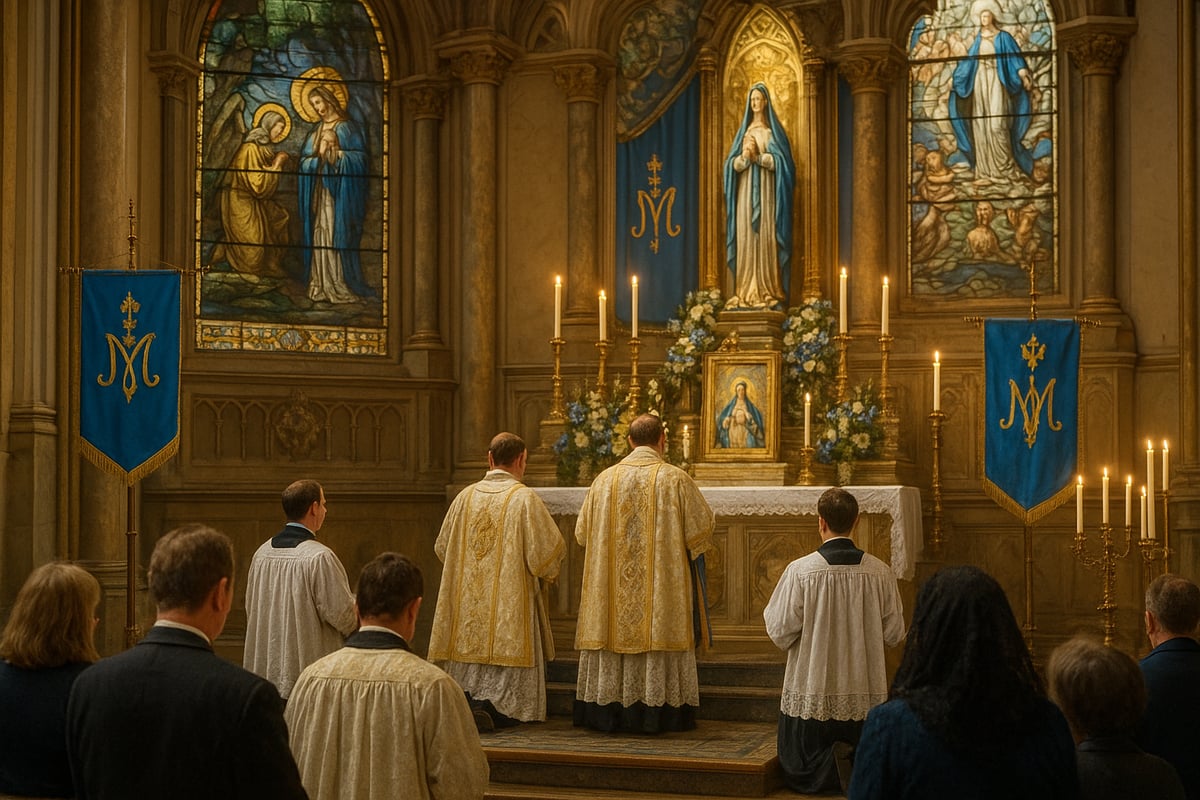
The role of mary in the catholic church begins with the Gospels. Key passages include the Annunciation (Luke 1:26-38), where Mary accepts God’s plan, and the Visitation (Luke 1:39-56), highlighting her faith and humility. At the Wedding at Cana (John 2:1-12), Mary intercedes for others, leading to Jesus’ first miracle.
Mary is called “Mother of God” and “blessed among women,” titles that emphasize her unique relationship with Christ. The Catechism of the Catholic Church (CCC 484-487) underscores her vital role in the Incarnation. Early Church Fathers often refer to Mary as the new Eve, contrasting her obedience with Eve’s disobedience. While explicit Marian doctrines are less evident in the Epistles, the scriptural witness remains foundational for understanding mary in the catholic church.
Mary in Church Tradition and Doctrine
The development of mary in the catholic church is evident in early Church councils, especially Ephesus (431), where Mary was proclaimed Theotokos, or “God-bearer.” The distinction between veneration (hyperdulia) for Mary and worship (latria) reserved for God alone is crucial in Catholic teaching.
Key papal encyclicals, such as Redemptoris Mater, have deepened Marian understanding. The CCC (485-486) highlights the Holy Spirit’s role in shaping doctrine about Mary. Theological arguments affirm Mary’s mediatory and intercessory roles, reflecting her ongoing importance in Catholic spirituality. Notably, Pope Leo XIV's call for deeper Marian study urges the faithful to continually explore and grow in their understanding of mary in the catholic church.
Mary’s Role in Salvation History
Within salvation history, mary in the catholic church is seen as predestined to cooperate freely with God’s plan (CCC 488-489). Her “yes” contrasts with Eve’s “no,” prompting the saying, “Death through Eve, life through Mary.” Vatican II further recognized Mary as Mother of the Church, highlighting her maternal care for all believers.
Mary’s relationship with Jesus and the Trinity is unique. She is honored in liturgical prayers and hymns, such as the Ave Maria and ancient Marian antiphons. These expressions reinforce her pivotal role in God’s redemptive work and the continuing life of mary in the catholic church.
Key Marian Dogmas Defined
Four major dogmas define mary in the catholic church:
- Immaculate Conception: Mary was conceived free from original sin (CCC 490-493, 1854).
- Divine Motherhood: Mary is truly the Mother of God (Theotokos).
- Perpetual Virginity: Mary remained a virgin before, during, and after Christ’s birth (CCC 499-501).
- Assumption: Mary was taken body and soul into heaven (1950).
Acceptance of these dogmas is widespread among Catholics globally. These teachings form the doctrinal backbone of mary in the catholic church, guiding both belief and devotion.
Mary as Intercessor and Model Disciple
Catholic teaching highlights mary in the catholic church as a powerful intercessor. Prayers like the Hail Mary and Memorare reflect trust in her advocacy. Mary’s virtues—obedience, humility, and unwavering faith—serve as a model for all disciples.
Saints such as Irenaeus and Louis de Montfort praised Mary’s example and intercession. The Church addresses critiques by clarifying the distinction between veneration and worship, ensuring that devotion to mary in the catholic church deepens faith in Christ rather than detracting from it.
Historical Development of Marian Devotion
Understanding the historical development of mary in the catholic church reveals a tapestry woven from scripture, tradition, and the lived faith of believers. Across centuries, Marian devotion has evolved, reflecting theological, cultural, and historical shifts. Each era has deepened and diversified how Catholics express their reverence for Mary.
Early Christian Veneration of Mary
In the earliest centuries, mary in the catholic church gained honor through subtle yet profound gestures. Archaeologists have uncovered third-century prayers such as the Sub Tuum Praesidium, one of the oldest Marian texts, testifying to early reverence.
Early Christian communities celebrated feasts like the Annunciation and Dormition. Both Eastern and Western traditions nurtured Marian devotion, though they developed unique artistic expressions. Catacomb frescoes and small icons depicted Mary, often as the protective Mother of Christ.
These early practices show that honoring mary in the catholic church was integral to Christian identity from the start.
Growth of Marian Culture in the Middle Ages
The Middle Ages saw an extraordinary expansion of devotion to mary in the catholic church. New Marian titles, such as Our Lady of Sorrows and Queen of Heaven, proliferated. Feasts like the Immaculate Conception and the Assumption became widespread.
Apparitions and miracles attributed to Mary inspired the faithful and shaped popular piety. Monastic and lay movements, including the development of the Rosary and the rise of Marian sodalities, drew countless Catholics closer to Mary.
Pilgrimage sites and shrines flourished, with notable increases in Marian feast observances. Art and music of the period often centered on Mary, reflecting her growing importance in medieval spirituality.
Marian Devotion in the Modern Era
After the Reformation, mary in the catholic church remained a unifying figure for Catholics, even as Marian devotion adapted to new theological and cultural realities. The Counter-Reformation reaffirmed Marian teachings and encouraged public expressions of faith.
Significant Marian apparitions—such as Guadalupe, Lourdes, and Fatima—sparked renewed interest worldwide. Popes proclaimed new dogmas and encouraged Marian societies, including the Legion of Mary and Marian sodalities, which continue to thrive.
Modern art, music, and literature celebrate Mary’s enduring relevance. Data shows that Marian devotions, particularly the Rosary, remain widely practiced among Catholics globally.
Vatican II and Contemporary Perspectives
The Second Vatican Council brought fresh perspectives on mary in the catholic church. Lumen Gentium (Chapter VIII) highlighted Mary as the model disciple and Mother of the Church. This led to renewed emphasis on her role within the liturgy and daily life.
Post-conciliar reforms streamlined Marian devotions and integrated them more deeply into the Church’s spiritual life. Contemporary expressions of Marian devotion now reflect a vibrant diversity, from African Marian dances to Asian pilgrimages.
Recent papal documents and speeches reaffirm Mary’s central role, ensuring that devotion to mary in the catholic church continues to inspire Catholics worldwide.
The Impact of Marian Apparitions and Shrines
Apparitions have profoundly shaped the story of mary in the catholic church. The Church carefully investigates reported apparitions, approving only those that meet rigorous criteria. Major shrines—such as Lourdes, Fatima, and Guadalupe—draw millions of pilgrims each year.
These sites foster spiritual renewal and cultural exchange. For example, the Our Lady of Fatima image card beautifully captures the enduring appeal of Fatima, reminding us of the global reach of Marian devotion.
Local customs and adaptations enrich the experience, making Marian shrines centers of faith, healing, and unity for Catholics around the world.
Major Marian Doctrines and Titles
Understanding the major doctrines and titles of Mary in the Catholic Church is essential for appreciating her singular place in Catholic faith and devotion. These teachings not only define her identity but also shape the spiritual life of millions worldwide.
The Immaculate Conception
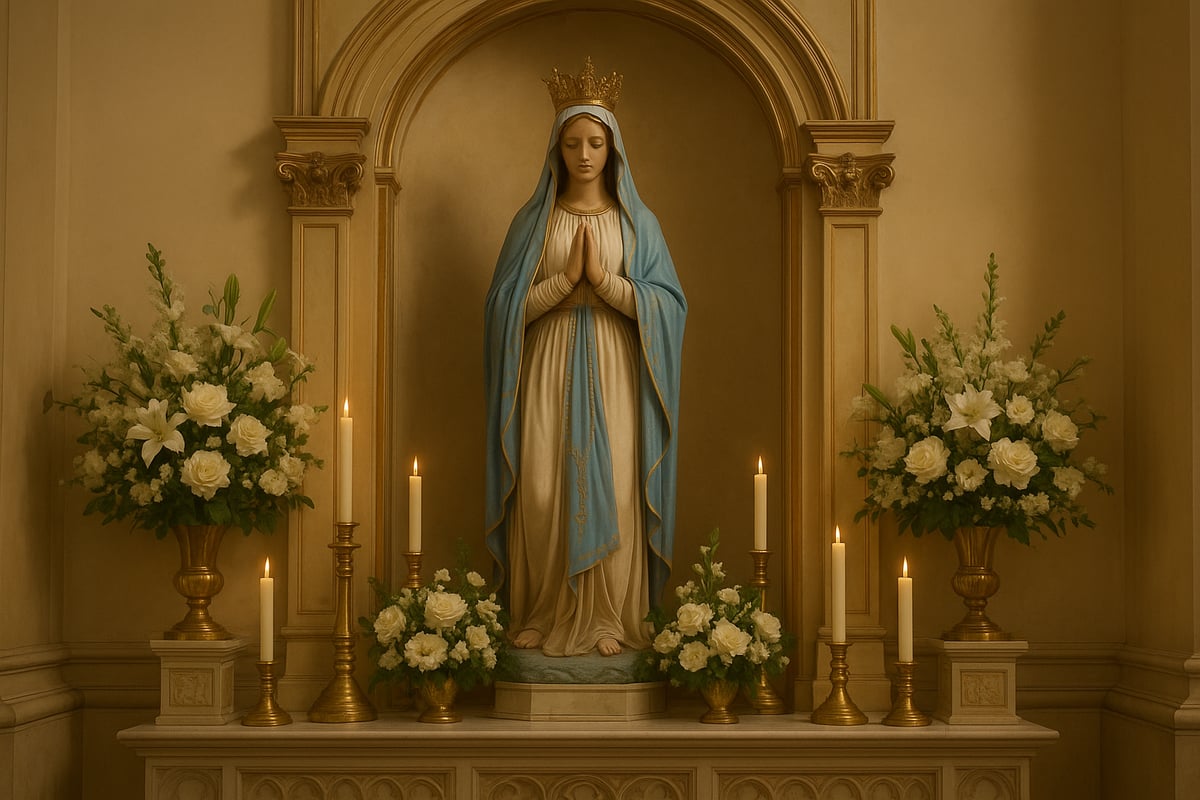
The doctrine of the Immaculate Conception declares that Mary in the Catholic Church was conceived without original sin, by a singular grace from God. This teaching, formally proclaimed by Pope Pius IX in 1854, is grounded in the Catechism of the Catholic Church (CCC 491-493).
Biblically, it is supported by the angel Gabriel’s greeting, “full of grace,” in Luke 1:28. Theologically, it emphasizes Mary’s unique preparation for her role as the Mother of God. Both Eastern and Western Christian traditions honor her sinlessness, though with different emphases.
The Feast of the Immaculate Conception is celebrated globally on December 8. In many countries, it is a holy day of obligation, reflecting its centrality to Catholic life. Recent surveys show strong acceptance of this doctrine among Catholics, especially in regions with deep Marian devotion.
Divine Motherhood and Theotokos
The title “Mother of God” (Theotokos) affirms one of the most vital aspects of Mary in the Catholic Church. Defined at the Council of Ephesus in 431, this doctrine teaches that Mary is truly the Mother of Jesus Christ, who is both fully God and fully man.
Scripture reveals this in Elizabeth’s exclamation: “And why is this granted to me, that the mother of my Lord should come to me?” (Luke 1:43). Early Church Fathers defended this teaching to safeguard the true divinity of Christ.
Liturgically, the Church celebrates Mary’s Divine Motherhood on January 1, the Solemnity of Mary, Mother of God. Many Marian hymns and prayers, such as “Ave Maria,” meditate on this mystery. The title Theotokos remains a bridge between Catholic and Orthodox traditions.
Perpetual Virginity and “Ever-Virgin”
Mary’s perpetual virginity—that she remained a virgin before, during, and after Christ’s birth—is a long-held doctrine of Mary in the Catholic Church. The Catechism (CCC 496-501) affirms this teaching, which is also rooted in the early Church’s tradition.
Some biblical passages mention Jesus’ “brothers,” but Catholic interpretation, supported by Church Fathers, sees these as close relatives or kin. The Greek title “Aeiparthenos,” meaning “Ever-Virgin,” is still used in liturgical prayers and hymns.
This doctrine highlights Mary’s total consecration to God and her singular role in salvation history. It has inspired countless works of art and music that reflect her purity and unwavering faith. The belief remains a touchstone of Catholic identity and Mariology.
The Assumption of Mary
The Assumption is the dogma that Mary in the Catholic Church was taken body and soul into heavenly glory at the end of her earthly life. Defined by Pope Pius XII in 1950, this teaching finds support in ancient Christian tradition and biblical typology, such as the Ark of the Covenant.
The Assumption is celebrated on August 15 with vibrant liturgies and cultural customs worldwide. Marian art often depicts this event with Mary surrounded by angels, symbolizing her glorification.
Surveys indicate that belief in the Assumption is widespread among Catholics of all ages. The doctrine underscores the hope of resurrection and the dignity of the human body, which Mary now enjoys in fullness with God.
Mary’s Many Titles and Patronages
Mary in the Catholic Church is honored with countless titles, each highlighting a unique aspect of her mission. Some of the most beloved include Queen of Heaven, Our Lady of Sorrows, Star of the Sea, and Mother of Perpetual Help.
These titles reflect her patronage over nations, communities, and causes. For example, Our Lady of Guadalupe is Patroness of the Americas, while other titles are cherished in different cultures. The Litany of the Blessed Virgin Mary beautifully gathers many of these names in prayer, fostering devotion around the globe.
Marian titles continue to inspire and unite Catholics, reminding the faithful of Mary’s maternal care and intercession.
Marian Devotions, Prayers, and Liturgical Practices
The richness of mary in the catholic church is illuminated through its devotions, prayers, and liturgical practices. These traditions have united believers for centuries, offering spiritual nourishment and fostering a deep sense of connection with the Blessed Virgin. Let us explore how these elements shape Catholic faith across the world.
Marian Prayers and Their Significance
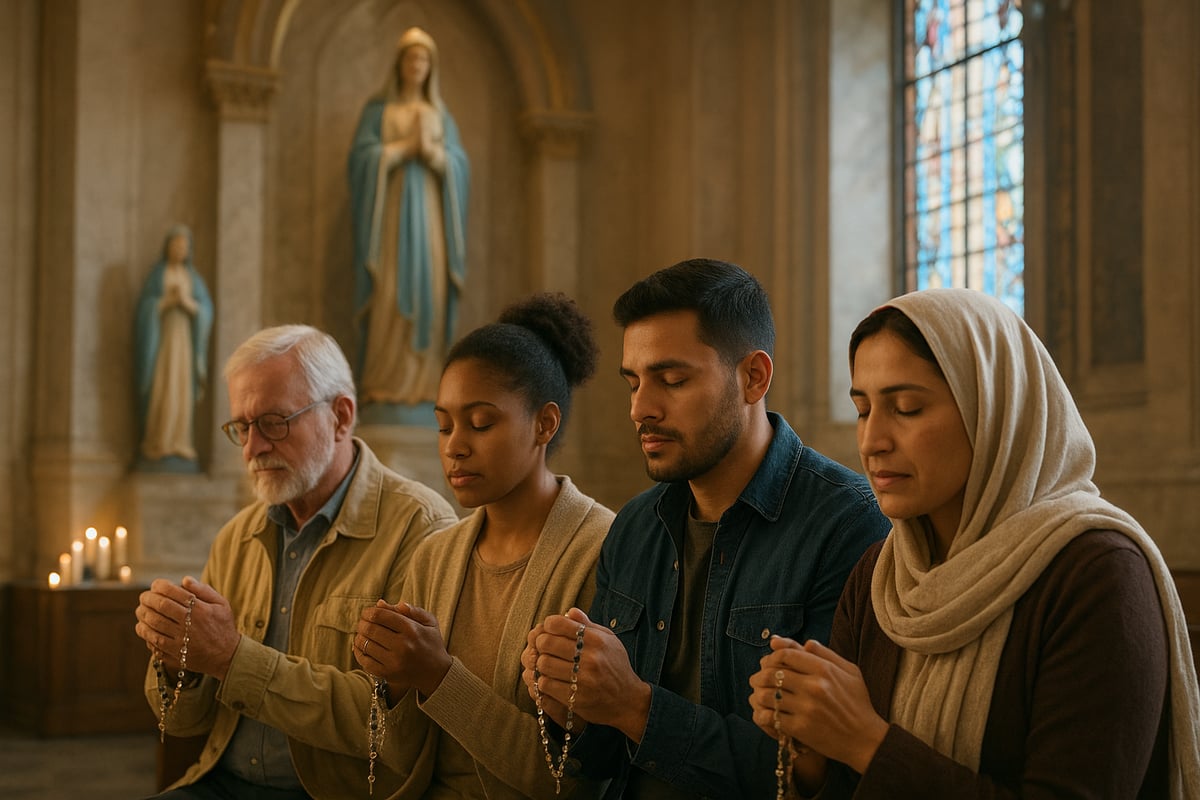
Prayers dedicated to mary in the catholic church form the backbone of personal and communal devotion. The Hail Mary, rooted in Luke 1:28 and 1:42, is perhaps the most recited prayer, invoking Mary's intercession and maternal care.
Other cherished prayers include the Memorare, which expresses trust in Mary's help, and the Angelus, recited three times daily to recall the Incarnation. The Rosary, structured around meditating on Christ's mysteries, remains a central spiritual practice, with millions of Catholics worldwide praying it daily.
Marian antiphons, such as the Salve Regina, are sung in liturgical settings, especially during specific liturgical seasons. In homes and parishes, these prayers foster a rhythm of faith, drawing the faithful closer to the heart of mary in the catholic church.
Marian Feasts and Liturgical Celebrations
The liturgical calendar of mary in the catholic church is marked by numerous feast days, each highlighting a unique aspect of Mary's role in salvation history. Major feasts include the Immaculate Conception (December 8), the Assumption (August 15), and the Annunciation (March 25).
These celebrations are deeply rooted in Scripture and tradition, serving both theological and devotional purposes. Across cultures, feast observances vary, with processions, special Masses, and community gatherings reflecting local customs.
Participation in Marian feasts is robust, with data showing high attendance at Marian processions and celebrations globally. Through these liturgical events, the faithful express gratitude for Mary's guidance and reaffirm her importance in mary in the catholic church.
Marian Art, Music, and Cultural Expressions
Artistic expressions of mary in the catholic church are visible in every corner of the Catholic world. Marian icons, paintings, and sculptures adorn churches, homes, and shrines, each reflecting theological truths and cultural creativity.
Sacred music dedicated to Mary, from Gregorian chants to contemporary hymns, enriches liturgical life. Composers have crafted masterpieces like the Ave Maria, while poets and writers continue to draw inspiration from her virtues.
Notable Marian shrines, such as Lourdes and Fatima, feature distinctive art and architecture celebrating Mary's presence. Marian imagery in Catholic homes, from small statues to wall art, serves as a daily reminder of faith. These creative works keep the influence of mary in the catholic church alive and accessible.
Popular Devotions and Consecrations to Mary
Popular devotions to mary in the catholic church extend beyond formal prayers and feasts. Practices like wearing the Brown Scapular or Miraculous Medal symbolize trust in Mary's protection and intercession.
Marian consecration, inspired by St. Louis de Montfort, invites Catholics to dedicate themselves entirely to Mary as a path to Christ. For those seeking to deepen their commitment, resources like the Consecration to Mary prayer card provide accessible guidance for this profound spiritual devotion.
Participation in Marian sodalities and movements, encouraged by papal teachings, continues to grow. Many share stories of personal transformation, crediting their renewed faith to the enduring presence of mary in the catholic church.
Marian Movements and Societies
Marian movements and societies play a vital role in promoting mary in the catholic church worldwide. The Legion of Mary, Blue Army, and Militia Immaculatae are among the most influential, each with unique missions centered on prayer, evangelization, and service.
These organizations reach millions, offering formation, outreach, and opportunities for communal prayer. Membership statistics reflect their global impact, with active chapters in nearly every continent.
Marian conferences and retreats provide spaces for spiritual growth and community building. Through their efforts, these societies ensure that the legacy of mary in the catholic church remains vibrant for generations to come.
Mary in Catholic Life and Contemporary Culture
Mary in the Catholic Church continues to shape the daily lives, values, and spiritual practices of believers worldwide. Her influence extends from personal devotion to public expressions of faith, bridging generations and cultures. Whether through imitation of her virtues, seeking her protection, or gathering at Marian shrines, Catholics find inspiration and strength. The following sections explore how Mary’s presence remains vibrant and relevant in today’s world.
Mary as a Model for Christian Living
For many, mary in the catholic church represents the highest ideals of faith, humility, and obedience. Her “yes” to God’s plan is seen as a model for all Christians, inspiring countless individuals to embrace service and trust in divine providence.
Saints and laypeople alike have looked to Mary as a guide, finding in her a pattern for living out the Gospel in family life, discipleship, and charity. The impact of Marian devotion can be seen in vocational discernment as well, as highlighted by the CARA study on Marian devotion's impact on vocations, which shows how devotion to Mary influences many to pursue priesthood and religious life.
Resources like the Fatima Family Handbook offer practical ways for families to grow in Marian values. Mary’s example continues to shape Catholic identity and inspire new generations.
Marian Patronage and Protection
Throughout history, mary in the catholic church has served as a protector and intercessor for individuals, families, and entire nations. Catholics often turn to her in times of crisis, praying for her intercession under titles such as Our Lady of Guadalupe, Patroness of the Americas, and Our Lady of Lourdes.
Communities across the globe have dedicated churches, cities, and even countries to Mary’s patronage. Prayers for her protection are especially prevalent during natural disasters, wars, and personal hardships.
Historical accounts tell of communities attributing their deliverance or peace to Mary’s intervention. Today, millions continue to seek her guidance and shelter, finding comfort and hope in her maternal care.
Marian Shrines, Pilgrimages, and Global Impact
Pilgrimages to Marian shrines are a vibrant part of mary in the catholic church, drawing millions to sacred sites each year. Shrines such as Lourdes, Fatima, and Guadalupe are centers of prayer, healing, and unity for Catholics worldwide.
A recent record-breaking Marian pilgrimage in Zaragoza highlights the growing global enthusiasm for Marian devotion, with visitors from every continent. These gatherings foster spiritual renewal and cultural exchange, strengthening bonds within the universal Church.
Pilgrimages often lead to profound personal transformation, with many sharing stories of healing and conversion at these holy places. The economic and spiritual impact of Marian shrines is felt far beyond their local communities.
Mary in Ecumenical and Interfaith Contexts
Mary in the catholic church also plays a unique role in dialogues with other Christian traditions and world religions. Orthodox Christians share deep reverence for Mary, while some Protestant communities honor her as the mother of Jesus, though with differing theological emphasis.
In interfaith contexts, Mary is recognized in Islam as Maryam, revered as the mother of the Prophet Isa (Jesus). Shared Marian feasts and devotions sometimes offer opportunities for unity and mutual respect.
Efforts to highlight common beliefs about Mary help foster understanding and dialogue among diverse faith communities, making her a bridge in ecumenical and interreligious relationships.
Contemporary Challenges and Debates
While devotion to mary in the catholic church remains strong, contemporary debates continue regarding the nature and extent of Marian veneration. Some critics raise concerns about the distinction between veneration and worship, prompting ongoing theological clarification.
Recent discussions, such as the critique of Vatican's note on Marian titles, reflect the dynamic nature of Marian theology today. Surveys indicate that while most Catholics uphold Marian beliefs, perspectives can vary across cultures and generations.
The Church provides pastoral guidance to ensure Marian devotion remains rooted in sound doctrine, encouraging thoughtful engagement and personal growth.
Explore Journeys of Faith Online store with thousands of Catholic Items at https://journeysoffaith.com/collections - Get the Journeys of Faith NEW App. https://apps.apple.com/us/app/journeys-of-faith/id6757635073
The Future of Marian Understanding in the Catholic Church
The future of mary in the catholic church is marked by dynamic growth and continued reflection. As the Church moves forward, scholars, faithful, and communities worldwide are shaping new expressions of Marian devotion. This section explores current trends, digital innovations, and evolving theological insights, offering a roadmap for how mary in the catholic church may develop in the coming years.
Ongoing Theological Developments
Recent years have brought renewed interest in the theological study of mary in the catholic church. Theologians are revisiting biblical texts, evaluating patristic writings, and exploring new perspectives on Marian dogmas.
Vatican discussions and synodal assemblies have highlighted the importance of integrating Marian doctrine within broader ecclesial debates. Lay voices and scholars from diverse cultures contribute unique insights, expanding the conversation.
Language and imagery related to Mary are also evolving, reflecting contemporary concerns such as social justice and global unity. Some theologians discuss the possibility of new Marian teachings, though the Church remains cautious and rooted in tradition.
Mary and the Digital Age
Digital technology is transforming how Catholics engage with mary in the catholic church. Online Marian communities flourish on social media platforms, providing spaces for prayer, education, and support.
Apps dedicated to Marian prayers, virtual pilgrimages, and digital rosary guides are increasingly popular. These resources make Marian devotion more accessible, especially for those unable to visit physical shrines.
Statistics show a surge in digital engagement, with millions accessing Marian content globally. The digital age is helping to spread devotion and catechesis about mary in the catholic church to new audiences.
Mary’s Role in Catholic Evangelization and Catechesis
Marian catechesis remains central in faith formation, with mary in the catholic church serving as a key figure in RCIA, youth ministry, and religious education. Stories of Mary’s faith and obedience are powerful tools for evangelization.
Catholic educational materials often feature Marian themes, helping children and adults understand her role in salvation history. Successful initiatives, such as Marian retreats and parish missions, draw seekers and converts closer to the faith.
Mary’s universal appeal continues to inspire both lifelong Catholics and those new to the Church.
Global Trends in Marian Devotion
Across continents, mary in the catholic church inspires vibrant devotion. In Africa and Asia, Marian movements are growing rapidly, blending local traditions with universal Catholic practices.
Latin America celebrates Mary with elaborate feasts and processions, while European communities maintain centuries-old customs. New Marian societies are emerging, addressing social challenges and supporting the marginalized.
Cross-cultural adaptations, such as unique Marian prayers and celebrations, reflect the global reach and adaptability of Marian devotion.
Recommended Resources for Further Study
To deepen your knowledge of mary in the catholic church, consult the Catechism, papal encyclicals, and authoritative books. The Fatima Family Handbook offers valuable insights into Marian apparitions and family prayer.
Explore Marian shrines, attend conferences, and join online courses to enrich your spiritual journey.
Explore Journeys of Faith Online store with thousands of Catholic Items at https://journeysoffaith.com/collections - Get the Journeys of Faith NEW App. https://apps.apple.com/us/app/journeys-of-faith/id6757635073
As we’ve explored Mary’s profound influence on Catholic faith, history, and devotion, you might feel inspired to deepen your own connection with her. Whether you’re seeking meaningful ways to honor Mary in your daily life, searching for beautiful devotional items, or looking for thoughtful gifts to share her message, there are many resources available to support your spiritual journey. If you’d like to discover unique Marian books, artwork, medals, and more, I encourage you to Discover Virgin Mary Shop for carefully curated items that reflect her enduring presence and love.
