

Have you ever wondered about the mystery and beauty behind Mary, Mother of the Eucharist, and her role at the heart of Catholic faith? The title mary mother of the eucharist reveals a profound spiritual connection that shapes Catholic belief and devotion.
In this guide, we will explore her unique relationship to the Eucharist, uncover scriptural and doctrinal foundations, and highlight her influence in Catholic tradition. You will also discover practical steps for deepening your own devotion and learn about modern movements honoring her today.
Let this journey inspire you to see Mary’s role with new eyes, deepen your faith, and embrace a richer spiritual life.
Understanding Mary as Mother of the Eucharist
The mystery of mary mother of the eucharist stands at the heart of Catholic faith, inviting believers to explore her unique connection to Christ's real presence. To grasp this profound title, it's essential to examine both the Church's theological foundations and the scriptural roots that illuminate Mary's singular role in salvation history.

Theological Foundations
The Church calls Mary the Theotokos, or Mother of God, a title with deep implications for the Eucharist. By consenting to God's plan at the Annunciation, Mary gave her own flesh so that the Word could become incarnate. This "fiat"—her yes—was the gateway through which Christ entered the world.
St. Thomas Aquinas teaches that the flesh Christ offers in the Eucharist is the very flesh received from mary mother of the eucharist. In his writings, Aquinas emphasizes that every time the Eucharist is celebrated, Mary's gift continues to nourish the faithful. The Church Fathers echo this view, describing the Eucharist as a "continuation of the Incarnation": just as Mary bore Jesus physically, she continues to nurture believers spiritually through the sacrament.
Meditation 25 highlights Mary's unique participation in the Eucharistic mystery. While Adam and Eve introduced sin, Mary, as the new Eve, offered the "Blessed Fruit"—Christ—to the world. Through her spiritual motherhood, mary mother of the eucharist extends her care to all the faithful, drawing them closer to her Son.
The table below summarizes key theological insights:
| Theologian/Source | Insight on Mary and the Eucharist |
|---|---|
| St. Thomas Aquinas | Christ's Eucharistic flesh comes from Mary |
| Church Fathers | Eucharist is continuation of Incarnation |
| Meditation 25 | Mary participates uniquely in Eucharistic mystery |
Scriptural Links and Marian Typology
Scripture offers rich insights into the role of mary mother of the eucharist. In Luke 1:38, Mary's response, "Let it be done to me according to your word," echoes every Christian's call to receive Christ in the Eucharist with openness and trust. This act of surrender is mirrored in the faithful's own "Amen" during Communion.
John 6:51 reveals Jesus' promise: "The bread that I will give is my flesh for the life of the world." Since Christ's flesh comes from Mary, her role is inseparable from the Eucharistic gift. Old Testament symbols, such as the Ark of the Covenant and manna, prefigure both Mary and the Eucharist. The Ark carried God's presence, just as mary mother of the eucharist bore Jesus, the Bread of Life.
At the Wedding at Cana (John 2), Mary's intercession leads to Christ's first public sign, foreshadowing his ultimate self-gift in the Eucharist. While the Gospels do not mention Mary at the Last Supper, tradition and theological reflection suggest her spiritual presence and participation.
Marian feasts, such as Corpus Christi, often highlight her unique relationship to the Eucharist. Many processions and liturgies reference mary mother of the eucharist, underscoring her ongoing maternal role.
For a deeper exploration of these scriptural and doctrinal connections, consider the insights found at Mary and the Eucharist, which further illuminate the Church's understanding of this profound mystery.
Mary’s Role in the Institution and Celebration of the Eucharist
The role of mary mother of the eucharist in the institution and celebration of the Eucharist is both profound and multifaceted. Her presence and spiritual attitude have inspired centuries of Catholic devotion, shaping how the faithful encounter Christ in the Blessed Sacrament.
Historical and Liturgical Perspectives
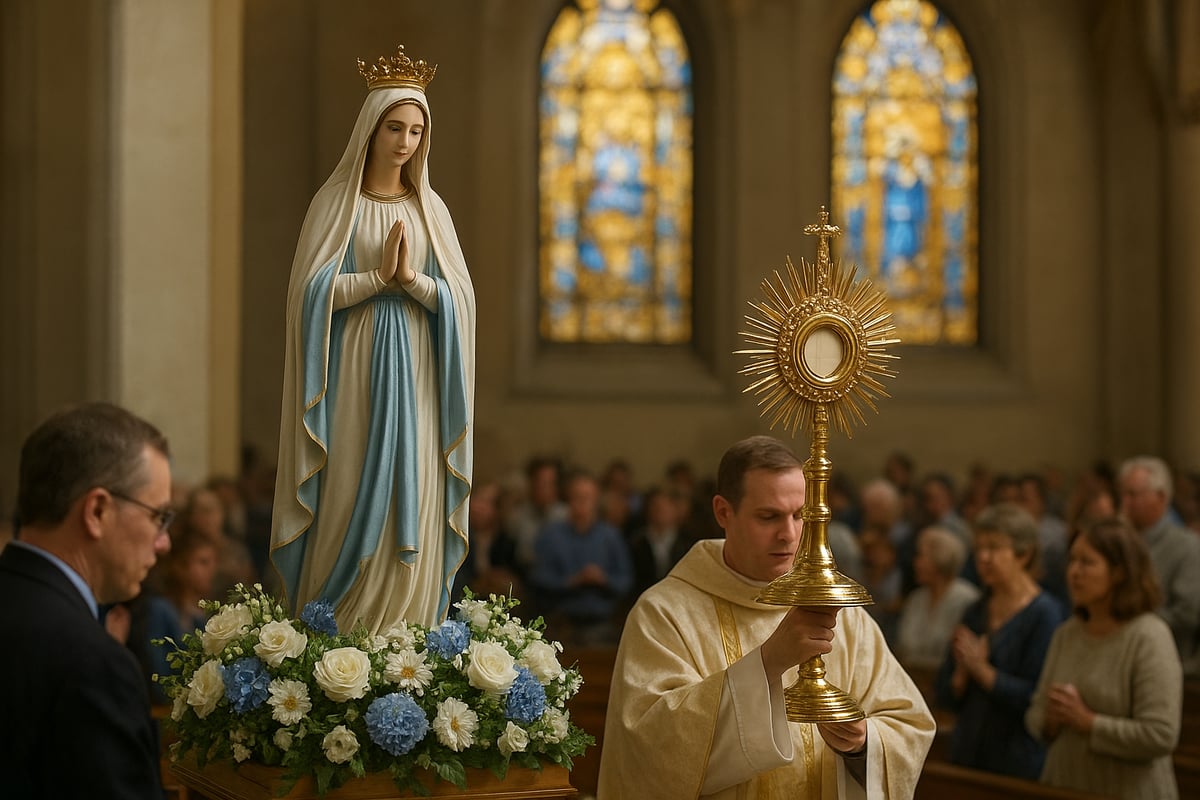
From the earliest days of the Church, mary mother of the eucharist has been closely associated with the mysteries of faith celebrated at the altar. Tradition holds that Mary was present in the Upper Room at Pentecost, a moment deeply tied to the birth of the Church and the continuation of Christ's mission. While Scripture does not explicitly state her presence at the Last Supper, theologians and saints have long reflected on her spiritual participation in the institution of the Eucharist.
Mary’s “fiat,” her wholehearted yes to God, opened the way for the Incarnation. Through her consent, the Word became flesh, and this same flesh is made present in the Eucharist. This unique connection is highlighted in many Church writings and prayers. For example, the Roman Canon and Marian antiphons frequently honor Mary's role during the Mass, reminding the faithful of her ongoing intercession.
The concept of the Eucharist as “Mary’s Sacrament,” drawn from Meditation 25, emphasizes that without Mary, the gift of the Eucharist would not be possible. Sacred art throughout the centuries often depicts Mary adoring Christ in the Eucharist, reinforcing her intimate connection with this central mystery. Artistic masterpieces, stained glass, and icons show her in postures of prayer and reverence during Eucharistic processions and adoration.
Liturgical music and hymns such as “Ave Verum Corpus” also reflect Mary’s influence, as they unite Marian devotion with Eucharistic praise. Parishes around the world increasingly incorporate Marian-Eucharistic themes in their celebrations. Marian processions and Eucharistic adoration events frequently highlight Mary’s motherhood and spiritual presence.
As devotion grows, more communities are turning to resources that explore Mary’s role in the Eucharist and her mission within the Church. For further insights into this profound connection, see Mary, the Eucharist, and Our Mission.
Mary’s Spiritual Attitude: Model for Eucharistic Living
Mary mother of the eucharist is not only a historical figure but also a living model for all who approach the Eucharist. Her humility, obedience, and deep adoration are qualities that every believer is called to imitate. At the Annunciation, her interior disposition was one of total openness to God. This same attitude is essential when receiving Communion, as it prepares the heart to welcome Christ fully.
The Magnificat, Mary’s great prayer of praise, is often seen as a Eucharistic hymn. In it, she expresses gratitude and joy, mirroring the thanksgiving at the heart of every Mass. Many saints, including St. Maximilian Kolbe and St. John Paul II, have spoken of Mary’s profound Eucharistic faith. They encourage the faithful to approach the altar with her spirit of reverence and love.
Mary’s role extends to making reparation for ingratitude toward the Eucharist. Meditation 25 notes how her sorrowful heart joins with Christ in atoning for offenses against this sacrament. Modern Marian movements, inspired by her example, promote Eucharistic reparation and call for deeper devotion.
Families and individuals are encouraged to cultivate a Marian-Eucharistic spirituality in daily life. This includes acts of spiritual communion, prayers of thanksgiving, and teaching children about the special relationship between Mary and the Eucharist. By following mary mother of the eucharist, the faithful can deepen their love for Christ and participate more fully in the mystery of the Eucharist.
Devotion to Mary, Mother of the Eucharist: Practices and Traditions
Devotion to mary mother of the eucharist flourishes through rich prayers, sacred journeys, and lived spirituality. Catholics worldwide find their faith deepened by blending Marian and Eucharistic practices in both communal and personal settings.
Marian-Eucharistic Prayers and Devotions
Prayer forms the heart of devotion to mary mother of the eucharist. The Rosary, especially when meditating on the Luminous Mysteries, invites the faithful to contemplate Christ’s presence, a gift given through Mary. Many also pray before or after Mass, seeking her intercession for a deeper love of the Eucharist.
Popular Marian-Eucharistic devotions include:
- The Rosary: Focusing on the mysteries of Christ’s life, especially the institution of the Eucharist.
- Marian consecration: Entrusting oneself to Mary as a pathway to union with the Eucharist.
- First Saturday devotion: Receiving Communion and making reparation with Mary.
- Marian antiphons and hymns: Sung during Eucharistic adoration.
- Novenas and litanies: Asking Mary’s help for fruitful reception of the Eucharist.
For those desiring a guide, Way of the Cross and Rosary Mysteries offers an excellent resource connecting these Marian prayers with Eucharistic reflection.
Public Rosary events, often combined with Eucharistic adoration, are growing across parishes. These practices nurture a communal sense of belonging and a personal bond with mary mother of the eucharist.
Pilgrimages, Shrines, and Marian-Eucharistic Events
Pilgrimages play a vital role in honoring mary mother of the eucharist. Major Marian shrines such as Lourdes, Fatima, and Guadalupe all feature strong Eucharistic themes. Pilgrims gather at these sacred sites to pray, attend Mass, and participate in Eucharistic processions, experiencing Mary’s maternal presence in a tangible way.
Other important events include:
- National Eucharistic Congresses: Large-scale gatherings centered on the Eucharist with Marian devotions.
- Local parish processions: Combining Marian feasts with Eucharistic Benediction.
- Conferences and retreats: Exploring the role of mary mother of the eucharist in today’s Church.
Attendance at Marian-Eucharistic events has increased globally, reflecting a renewed hunger for spiritual depth. Many parishes now host combined Marian and Eucharistic processions, drawing families and youth into active participation.
These sacred journeys, whether local or international, foster a deeper connection with mary mother of the eucharist and strengthen Catholic identity.
Living Marian-Eucharistic Spirituality in Daily Life
Integrating devotion to mary mother of the eucharist into daily routines transforms ordinary life into a sacred offering. Many begin the day with a morning consecration, uniting their actions and prayers to Mary and the Eucharist.
Practical ways to live this spirituality include:
- Keeping moments of silence, echoing Mary’s interior receptivity.
- Making acts of spiritual communion, especially when unable to attend Mass.
- Teaching children about mary mother of the eucharist through stories and simple prayers.
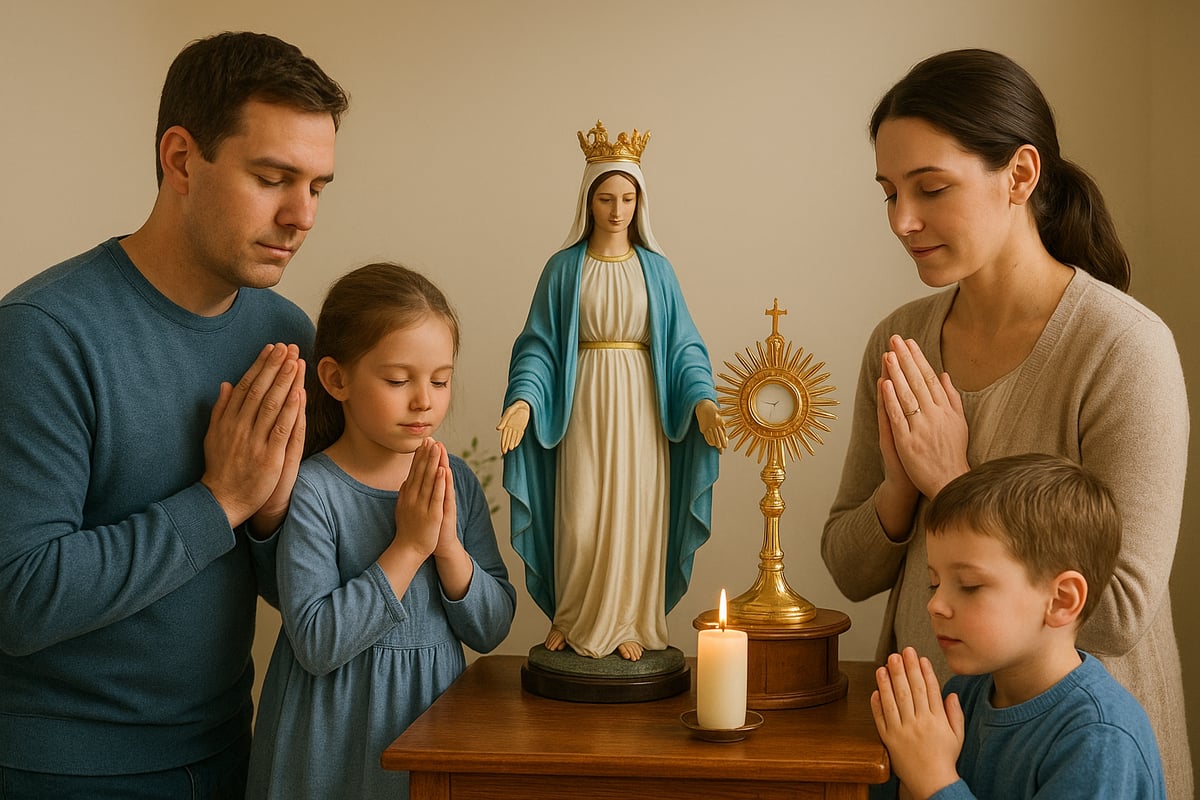
- Creating a family altar with both Marian and Eucharistic symbols as a focal point for prayer.
A family’s shared devotion, centered on the Eucharist and Mary, becomes a powerful witness and a source of grace. This way of life encourages gratitude, humility, and a deeper relationship with Christ through mary mother of the eucharist.
Mary and the Eucharist in Catholic Teaching and Magisterium
The Catholic Church has consistently highlighted the profound mystery of Mary mother of the eucharist in its teachings and magisterial documents. This section explores how official Church texts, papal reflections, and the wisdom of saints shed light on Mary’s unique relationship with the Eucharist.
Papal Teachings and Church Documents
Mary mother of the eucharist is a theme woven into Church teaching from the earliest centuries to the present day. Key papal encyclicals such as Ecclesia de Eucharistia by St. John Paul II directly address Mary’s relationship to the Eucharist. In this document, the pope refers to Mary as the “Woman of the Eucharist,” inviting the faithful to contemplate the mystery of Christ’s presence through her eyes.
The Second Vatican Council’s Lumen Gentium describes how Mary’s “fiat” at the Annunciation anticipates the Church’s own “amen” at every Mass. This highlights Mary mother of the eucharist as the first disciple to receive Christ, both spiritually and physically. Redemptoris Mater further explores her role in salvation history, reflecting on her faith and union with Christ, especially in the mysteries celebrated at the altar.
The Catechism of the Catholic Church references Mary’s deep connection with the Eucharist, emphasizing her spiritual motherhood extended to all believers. Papal homilies often encourage the faithful to approach the Eucharist with the same trust and devotion as Mary. St. John Paul II, in particular, spoke of “Eucharistic amazement” and urged Catholics to unite their adoration with Mary mother of the eucharist.
These documents and teachings form a solid foundation for understanding how Mary’s role is inseparable from the heart of the Church’s Eucharistic faith.
Saints and Mystics on Mary and the Eucharist
Throughout history, saints and mystics have offered profound insights into Mary mother of the eucharist. St. Louis de Montfort taught that approaching Jesus in the Eucharist with Mary’s heart is the surest path to holiness. St. Alphonsus Liguori and St. Peter Julian Eymard both wrote extensively on the connection between Marian devotion and Eucharistic love.
Modern saints such as St. Teresa of Calcutta and St. Padre Pio also modeled deep Marian-Eucharistic spirituality. Their lives testify to the transformative power of uniting oneself to Christ through the example of Mary mother of the eucharist.
Eucharistic miracles throughout the ages often feature Marian apparitions or intercession. For example, at Fatima, the message of Mary called the faithful to adore the Eucharist and make reparation for offenses. In Lanciano and other sites, miraculous events have strengthened belief in Christ’s real presence, sometimes accompanied by Marian devotion. For more on these remarkable occurrences, you can explore Miracles of the Eucharist.
Saints like St. Clare of Assisi demonstrated the power of invoking Mary before the Blessed Sacrament, especially during times of trial. Their testimonies encourage Catholics to approach the Eucharist with humility, gratitude, and love, following Mary’s example.
By reflecting on the teachings of the Church and the lived faith of the saints, believers are invited to deepen their relationship with Mary mother of the eucharist and to grow in Eucharistic devotion.
Contemporary Movements and Mary, Mother of the Eucharist in 2026
The landscape of Catholic devotion is experiencing a profound renewal as the faithful rediscover the centrality of mary mother of the eucharist. In 2026, this devotion is shaping parish life, inspiring new movements, and guiding the Church into the future. Across continents, the Church is witnessing a resurgence of Eucharistic and Marian fervor that echoes through communities, families, and digital spaces.
New Evangelization and Marian-Eucharistic Renewal
A fresh wave of evangelization is sweeping through the Church, with mary mother of the eucharist at its heart. Global Eucharistic Revival initiatives, such as those led by the USCCB, are fostering deeper reverence and participation in the Eucharist. Marian apostolates like the Legion of Mary and Home of the Mother are integrating Eucharistic themes into their missions, encouraging the faithful to unite their devotion to Mary with love for the Blessed Sacrament.
Parishes are increasingly weaving Marian-Eucharistic themes into catechesis, liturgies, and community events. For example, the 2026 Women’s Conference is expected to draw thousands with its focus on mary mother of the eucharist, offering talks, workshops, and prayer experiences centered on this profound mystery.
The Church is also drawing inspiration from Marian Apparitions and Messages, many of which emphasize the importance of the Eucharist and Mary’s unique spiritual role. These apparitions inspire renewed commitment to Eucharistic adoration and Marian consecration.
In summary, new evangelization efforts are inviting Catholics to encounter Christ in the Eucharist through the maternal guidance of Mary, revitalizing faith communities worldwide.
Youth, Families, and the Future of Marian-Eucharistic Devotion
Young Catholics and families are embracing mary mother of the eucharist in creative and dynamic ways. Youth groups organize pilgrimages, retreats, and service projects that blend Eucharistic adoration with Marian prayers. These experiences foster a sense of belonging and purpose, drawing the next generation into deeper relationship with Christ and His Mother.
Catholic schools and religious education programs are teaching the significance of mary mother of the eucharist, using engaging lessons and interactive activities. Family consecration and home-based devotions, such as praying the Rosary before the Blessed Sacrament, are becoming more common. Parents are encouraged to create sacred spaces at home that honor both Mary and the Eucharist, nurturing faith in daily life.
Recent data, such as that found in Catholic Practices and Devotions in the U.S., indicate a growing interest in Marian and Eucharistic devotions among young Catholics. Anecdotal reports from conferences and events show increased attendance and enthusiasm, signaling a hopeful future for these spiritual practices.
The active participation of youth and families ensures that the devotion to mary mother of the eucharist remains vibrant and relevant for generations to come.
Challenges and Opportunities in a Modern World
Today’s world presents unique challenges to the devotion of mary mother of the eucharist. Secularism and skepticism about the Eucharist require a renewed witness, one that draws on Mary’s example of faith and openness to God’s mystery. The Church is responding by harnessing digital tools to reach a global audience.
Online resources, podcasts, and virtual retreats are making Marian-Eucharistic spirituality accessible to Catholics everywhere. Livestreamed Rosaries, virtual adoration, and multicultural celebrations are connecting believers across distances and cultures. Organizations are utilizing platforms like Virtual Catholic Pilgrimages to invite the faithful into shared experiences, even from home.
Communities are also seeking inclusive ways to express their love for mary mother of the eucharist, incorporating diverse traditions and languages. This adaptability demonstrates the enduring relevance of Mary’s maternal guidance and the Eucharistic mystery for the Church’s mission.
By embracing both tradition and innovation, the faithful are equipped to deepen their devotion to mary mother of the eucharist and share it with the world, meeting the needs of today while preparing for tomorrow.
Steps to Deepen Faith and Devotion to Mary, Mother of the Eucharist
Deepening your relationship with Mary Mother of the Eucharist is a transformative journey. By following practical steps rooted in Catholic tradition, you can grow in faith and devotion, drawing closer to Christ through His Mother.
Step 1: Study and Reflect on Marian-Eucharistic Teachings
Begin by immersing yourself in the teachings of the Church about Mary Mother of the Eucharist. Explore encyclicals, saints’ writings, and trusted Catholic resources. Meditate on scriptural passages that reveal Mary’s unique role in salvation and her connection to the Eucharist.
Join parish study groups or participate in online webinars focused on Marian-Eucharistic spirituality. Discuss insights from documents like Ecclesia de Eucharistia and Redemptoris Mater. Reflecting on these teachings helps you appreciate why Mary Mother of the Eucharist is central to Catholic faith.
- Read key Church documents and saints’ works.
- Meditate on scriptural passages linking Mary and the Eucharist.
- Join study groups for deeper understanding.
Step 2: Integrate Marian-Eucharistic Devotions into Daily Life
Make Mary Mother of the Eucharist a daily presence in your spiritual practice. Start or renew a daily Marian consecration with a focus on the Eucharist. Pray the Rosary before or after Mass, meditating on mysteries that highlight Mary’s connection to Christ’s sacrifice.
Participate in First Saturday devotions and celebrate Marian feasts with your family. Set aside time each day for Marian-Eucharistic prayers, such as the Angelus or Marian antiphons. These practices foster a habit of turning to Mary Mother of the Eucharist for guidance and strength.
- Begin Marian consecration prayers.
- Pray the Rosary with a Eucharistic focus.
- Observe Marian feasts and First Saturday devotions.
Step 3: Participate in Community and Liturgical Celebrations
Engage with your parish and Catholic community by joining Eucharistic adoration paired with Marian prayers or hymns. Attend Marian processions, Eucharistic Congresses, or local retreats that honor Mary Mother of the Eucharist. These communal experiences deepen your devotion and connect you with others who share your faith.
Volunteer for parish ministries that promote Marian-Eucharistic spirituality. Organize or participate in a parish Marian-Eucharistic procession as a public witness to your devotion. Community involvement strengthens your bond with Mary Mother of the Eucharist and inspires others.
- Join Eucharistic adoration with Marian hymns.
- Attend Marian processions and retreats.
- Volunteer for parish Marian-Eucharistic ministries.
Step 4: Foster Eucharistic Reparation and Thanksgiving with Mary
Adopt Mary Mother of the Eucharist’s attitude of reparation and gratitude. Make acts of reparation for offenses against the Eucharist, uniting your prayers with Mary’s sorrowful heart. Offer your Communions for specific intentions, invoking her intercession for yourself and others.
Practice gratitude after receiving Communion, inspired by Mary’s Magnificat. Keeping a gratitude journal for Eucharistic blessings can help you remain mindful of God’s grace. In this way, you imitate Mary Mother of the Eucharist in her humility and thanksgiving.
- Offer acts of reparation with Mary.
- Make Communions for special intentions.
- Keep a gratitude journal inspired by Mary’s Magnificat.
Step 5: Share and Evangelize Marian-Eucharistic Faith
Spread devotion to Mary Mother of the Eucharist within your family, parish, and wider community. Share Marian-Eucharistic resources, organize prayer groups, or host a Marian-Eucharistic movie night. Use social media to promote events and teachings about Mary Mother of the Eucharist.
Encourage young people to embrace this devotion as part of their spiritual journey. Research even shows that Marian devotion can strongly shape vocational discernment and commitment, as highlighted in the CARA Study on Marian Devotion and Vocations. By sharing the message of Mary Mother of the Eucharist, you help build a vibrant Church.
- Share Marian-Eucharistic resources.
- Promote events online and offline.
- Encourage youth and families to participate.
Step 6: Persevere in Faith Amid Challenges
Remain steadfast in your devotion to Mary Mother of the Eucharist, especially during times of doubt or spiritual dryness. Seek her intercession for strength and trust in her ongoing presence in your Eucharistic life. Stay faithful to Mass and the sacraments, following Mary’s example of perseverance.
Personal testimonies often reveal spiritual renewal through Marian-Eucharistic devotion. Let Mary Mother of the Eucharist guide you when challenges arise, knowing her motherly care will always lead you closer to Christ.
- Turn to Mary in moments of struggle.
- Maintain regular participation in the sacraments.
- Trust in Mary’s intercession and support.
By embracing these steps, you invite Mary Mother of the Eucharist into every aspect of your spiritual life. This journey leads to deeper faith, greater hope, and lasting devotion.
As we reflect on Mary’s profound role as Mother of the Eucharist and explore ways to deepen our faith and devotion, it’s truly inspiring to see how her example can transform our spiritual journey. If you feel drawn to honor Mary more intentionally in your daily life or want to find meaningful ways to express your devotion, I encourage you to Discover Virgin Mary Shop. Here, you’ll find thoughtfully selected items that can support your prayer life, help you share Marian-Eucharistic spirituality with loved ones, and keep Mary’s loving presence close as you continue your journey of faith.