

From ancient times to the present, mystics in the catholic church have captivated the imagination of believers and seekers alike. Their profound spiritual experiences, visions, and writings offer a window into the depths of divine encounter.
This article delves into nine extraordinary mystics in the catholic church who have shaped Catholic spirituality in lasting ways. Through their lives, teachings, and mystical gifts, they continue to inspire faith and devotion worldwide.
Meet visionaries like St. Teresa of Ávila, St. John of the Cross, and St. Faustina Kowalska, whose encounters with God transformed not only their own journeys but also the path of countless others.
Discover how these mystics in the catholic church have contributed to prayer, doctrine, and devotion, inviting us to seek a deeper relationship with the divine.
This post is brought to you by Journeys of Faith Founded and Bob and Penny Lord. We are Cyber Apostles and a Augustinian Secular Institute of which we are members; the Evangelization arm of the group of Cloistered Augustinian Nuns in Montefalco Italy. Our Mission is Evangelization through Media using the tools that God has allowed to be created.
Understanding Mysticism in the Catholic Church
Defining Catholic Mysticism
Catholic mysticism centers on the direct, personal experience of God. This tradition, woven into the fabric of Catholic spirituality, emphasizes a deep union with the divine through contemplative prayer. While all saints strive for holiness, mystics in the catholic church are distinguished by extraordinary spiritual encounters, such as visions or locutions.
Mystics, saints, and visionaries each play unique roles. Mystics are often saints, but not all saints receive mystical gifts. Visionaries may have spiritual experiences but are not always considered mystics. The heart of Catholic mysticism is the longing for union with God through prayer and surrender. For a deeper understanding of the Carmelite tradition, closely linked to many renowned mystics in the catholic church, explore the Carmelite Spirituality Insights.
Historical Context and Development
The roots of mystics in the catholic church reach back to early Christianity. Desert Fathers and Mothers sought solitude to draw closer to God, laying the foundation for later mystical traditions. Monasticism, with its rhythm of prayer and contemplation, nurtured the spiritual soil from which many mystics emerged.
Throughout history, periods like the Middle Ages and Counter-Reformation saw a surge in mystical activity. Religious orders, such as the Carmelites and Franciscans, became fertile ground for mystics in the catholic church to flourish. Their writings and experiences continue to shape Catholic spirituality.
Core Characteristics of Catholic Mystics
Mystics in the catholic church often share certain traits. Many report visions, locutions, or ecstasies, and some bear the stigmata. These experiences, while extraordinary, are always approached with humility and obedience to Church authority.
Discernment is crucial, as not every spiritual phenomenon is deemed authentic. The Church investigates claims thoroughly before approving mystical experiences. Despite their gifts, true mystics in the catholic church are marked by deep humility and a willingness to serve God above all else.
Impact on Catholic Doctrine and Devotion
Mystics in the catholic church have left a profound mark on Catholic doctrine and devotional life. Their insights have inspired beloved devotions, such as the Sacred Heart and Divine Mercy. Mystical writings have influenced theology, liturgy, and the spiritual practices of countless believers.
For example, the visions of St. Faustina led to the global spread of Divine Mercy devotion. Marian apparitions, often experienced by mystics in the catholic church, continue to attract pilgrims and deepen faith worldwide.
This post is brought to by Journeys of Faith Founded and Bob and Penny Lord We are Cyber Apostles and a Augustinian Secular Institute of which we are members; the Evangelization arm of the group of Cloistered Augustinian Nuns in Montefalco Italy Our Mission is Evangelization through Media using the tools that God has allowed to be created.
Modern Perceptions and Relevance
Today, mystics in the catholic church remain a source of fascination and inspiration. While some modern Catholics approach mysticism with caution, many seek guidance from contemporary mystics or study the classics for spiritual growth. Notable modern figures show that the mystical path is alive and relevant.
For spiritual seekers, the lives and teachings of mystics in the catholic church offer timeless wisdom. Their journeys remind us that intimacy with God is possible, even amid the complexities of modern life.
9 Remarkable Mystics in the Catholic Church You Should Know
Catholic spirituality is rich with extraordinary figures whose lives and experiences transcend the ordinary. Throughout history, mystics in the catholic church have inspired generations with their visions, writings, and unwavering pursuit of union with God. Their stories encourage us to seek deeper faith and encounter the divine in our own lives.
Let us journey through the lives of nine remarkable mystics in the catholic church, exploring their unique contributions and the legacy they left for believers worldwide.
1. St. Teresa of Ávila
St. Teresa of Ávila stands as one of the most influential mystics in the catholic church. Born in 1515 in Spain, she joined the Carmelite Order and became renowned for her reform efforts and deep contemplative prayer. Her mystical experiences included vivid visions, ecstasies, and even levitation during prayer.
Teresa’s writings, such as "The Interior Castle" and "The Way of Perfection," guide readers through the stages of spiritual development. Her teachings emphasize the importance of inner transformation and intimate union with God, making her a spiritual master for those seeking depth in their faith.
Teresa’s reforms revitalized the Carmelite Order, promoting simplicity, silence, and solitude. Canonized in 1622 and later declared a Doctor of the Church, she continues to inspire mystics in the catholic church and spiritual seekers worldwide.
2. St. John of the Cross
Another towering figure among mystics in the catholic church is St. John of the Cross. Born in 1542, he was a Spanish Carmelite friar and a close collaborator of St. Teresa of Ávila. John’s mystical theology focused on the "Dark Night of the Soul," describing the soul’s purification and journey toward union with God through suffering.
His poetry, including "The Spiritual Canticle" and "The Living Flame of Love," is celebrated for its beauty and depth. John’s own mystical experiences and profound insights into prayer have shaped Christian mysticism for centuries.
His guidance on spiritual direction and discernment remains vital for those exploring the path of mystics in the catholic church. Canonized in 1726 and named a Doctor of the Church, his legacy endures in both literature and spiritual formation.
3. St. Padre Pio of Pietrelcina
St. Padre Pio is one of the most beloved modern mystics in the catholic church. Born in Italy in 1887, he became a Capuchin friar known for his extraordinary spiritual gifts. These included the visible stigmata, bilocation, and reading the hearts of penitents.
Padre Pio’s devotion to the Eucharist and the sacrament of confession drew thousands to his humble monastery. Countless miraculous healings and spiritual conversions have been attributed to his intercession.
This post is brought to you by Journeys of Faith Founded and Bob and Penny Lord. We are Cyber Apostles and a Augustinian Secular Institute of which we are members; the Evangelization arm of the group of Cloistered Augustinian Nuns in Montefalco Italy. Our Mission is Evangelization through Media using the tools that God has allowed to be created.
Padre Pio was canonized in 2002, and his influence continues to grow among mystics in the catholic church and the faithful seeking spiritual renewal.
4. St. Catherine of Siena
St. Catherine of Siena, a 14th-century Dominican tertiary, is revered as one of the greatest mystics in the catholic church. Despite her humble origins, she experienced powerful visions, received the stigmata, and described a mystical "spiritual marriage" with Christ.
Catherine’s remarkable correspondence with popes and political leaders helped shape the course of the Church during turbulent times. Her major work, "The Dialogue," explores the depths of contemplative prayer and divine love.
She was canonized in 1461 and declared a Doctor of the Church in 1970. Catherine’s bold advocacy for reform and her mystical experiences inspire both leaders and contemplatives among mystics in the catholic church.
5. St. Faustina Kowalska
St. Faustina Kowalska, a Polish nun, is a central figure among modern mystics in the catholic church. In the 1930s, she received a series of mystical visions and messages from Jesus, which led to the Divine Mercy devotion. Her diary, "Divine Mercy in My Soul," chronicles these encounters and the message of God’s boundless mercy.
Faustina’s mystical experiences included visions of Christ, prophetic insights, and the commission to paint the Divine Mercy image. The devotion she inspired has become a global movement, with Divine Mercy Sunday now celebrated throughout the Catholic world.
The Chaplet of Divine Mercy is a cherished prayer that originated from her revelations, offering comfort and hope to countless souls. St. Faustina was canonized in 2000, and her legacy endures among mystics in the catholic church and all who seek God’s mercy.
6. St. Francis of Assisi
St. Francis of Assisi is instantly recognizable among mystics in the catholic church. His early life of wealth gave way to a radical embrace of poverty after a profound spiritual conversion. Francis experienced mystical visions, including Christ speaking from the crucifix, and received the stigmata, marking him as a living image of Christ’s suffering.
He composed the "Canticle of the Sun," expressing his deep love for creation and God. Francis founded the Franciscan Order, which emphasized simplicity, humility, and peace.
His approach to nature and all living beings as brothers and sisters continues to inspire mystics in the catholic church and environmental advocates alike. Canonized just two years after his death, Francis remains a universal patron of peace and ecology.
7. St. Hildegard of Bingen
St. Hildegard of Bingen, a 12th-century Benedictine abbess, stands out among both women and men mystics in the catholic church. Gifted with vivid visions from early childhood, Hildegard documented her mystical experiences in works like "Scivias," blending theology, prophecy, and stunning illuminations.
Her influence extended beyond spirituality. Hildegard was a composer, healer, and writer on natural science, making significant contributions in a time when women’s voices were seldom heard.
Recognized as a Doctor of the Church in 2012, Hildegard’s legacy inspires those who value creativity and holistic spirituality among mystics in the catholic church. Her prophetic voice echoes in music, art, and the ongoing dialogue about women’s roles in faith.
8. St. Bernadette Soubirous
St. Bernadette Soubirous, a humble 19th-century French peasant girl, is celebrated among mystics in the catholic church for her visions of the Virgin Mary at Lourdes. In 1858, she witnessed a series of apparitions at a grotto, during which Mary revealed herself as the Immaculate Conception.
Bernadette’s unwavering simplicity and humility, despite skepticism and suffering, touched the hearts of many. The spring that emerged at Lourdes became a site of miraculous healings, attracting millions of pilgrims each year.
Her story highlights how God often chooses the lowly to reveal profound truths. Bernadette was canonized in 1933, and her example continues to inspire both mystics in the catholic church and all who seek healing and hope.
9. St. Ignatius of Loyola
St. Ignatius of Loyola, founder of the Society of Jesus (Jesuits), holds a special place among mystics in the catholic church. His spiritual journey began after a life-changing injury, leading to intense mystical experiences during his recovery.
Ignatius developed the "Spiritual Exercises," a structured method of prayer and discernment that has guided countless souls in their search for God’s will. His teachings on finding God in all things remain central to Jesuit spirituality.
Ignatius’s influence extends to education, missionary work, and spiritual direction, shaping the lives of mystics in the catholic church and beyond. Canonized in 1622, his legacy endures in schools, retreat centers, and spiritual movements worldwide.
- Explore Journeys of Faith Online store with thousands of Catholic Items at https://journeysoffaith.com/collections
- Our Unique Mega Search Engine https://journeysoffaith.com/search is linked to hundreds of Catholic Shops and Stores.
- Get the Journeys of Faith NEW App for IPhone or Android Search for Journeys of Faith or go to https://journeysoffaith.com/pages/download-our-app
The Legacy and Influence of Catholic Mystics
The legacy of mystics in the catholic church is profound and far-reaching. Their lives and experiences have left a lasting mark on Catholic spirituality, reform, and daily devotion. By studying their impact, we can better understand why these figures still captivate and inspire people today.
Shaping Catholic Spirituality and Devotion
Mystics in the catholic church have shaped countless spiritual practices and devotional traditions. Their visions, writings, and teachings inspired prayers, novenas, and meditations that remain popular worldwide.
Many beloved devotions—such as the Sacred Heart, Divine Mercy, and the Rosary—owe their prominence to the influence of mystics. These practices encourage personal encounters with God and foster deeper faith.
Mystics often provided guidance for prayer and contemplation, offering spiritual roadmaps for seekers from every walk of life.
Mystics and Church Reform
Throughout history, mystics in the catholic church have played a vital role in reforming and revitalizing religious life. Their calls for renewal often challenged complacency and corruption, sparking important changes in monastic communities and the broader Church.
Figures like Teresa of Ávila and Catherine of Siena advocated for spiritual and institutional reform, emphasizing authentic holiness. The period from the 17th to 18th centuries saw significant theological developments thanks to mystics. For a deeper historical perspective, explore Mysticism and Reform in Catholic Theology between 1600 and 1800.
Their courage and insight continue to inspire reform-minded Catholics today.
Mysticism in Modern Catholic Life
In the present day, mystics in the catholic church remain a source of inspiration for many believers. Their lives encourage contemporary Catholics to seek personal holiness and intimacy with God.
Modern spiritual movements often draw from the teachings and practices of past mystics. Retreats, spiritual direction, and contemplative prayer groups all reflect this ongoing influence.
Mystics remind us that the path to God is open to everyone, regardless of time or place, and that spiritual transformation is always possible.
Enduring Relevance for Today’s Believers
The timeless wisdom of mystics in the catholic church continues to speak to modern challenges. Their perseverance through suffering, commitment to prayer, and deep trust in God offer valuable lessons for believers facing uncertainty or doubt.
Whether through their writings or their lived example, mystics encourage us to pursue a deeper relationship with God and to practice compassion in daily life.
This post is brought to by Journeys of Faith Founded and Bob and Penny Lord We are Cyber Apostles and a Augustinian Secular Institute of which we are members the Evangelization arm of the group of Cloistered Augustinian Nuns in Montefalco Italy Our Mission is Evangelization through Media using the tools that God has allowed to be created.
- Explore Journeys of Faith Online store with thousands of Catholic Items at https://journeysoffaith.com/collections
- Our Unique Mega Search Engine https://journeysoffaith.com/search is linked to hundreds of Catholic Shops and Stores.
- Get the Journeys of Faith NEW App for IPhone or Android Search for Journeys of Faith or go to https://journeysoffaith.com/pages/download-our-app
Resources for Exploring Catholic Mysticism
Exploring the profound lives and teachings of mystics in the catholic church can deepen your faith and understanding. Whether you are a seasoned scholar or a spiritual seeker, a wealth of resources exists to guide you on this journey. From timeless writings to sacred sites and engaging media, the legacy of mystics in the catholic church is accessible for everyone.
Take time to immerse yourself in their experiences and discover how their insights can enrich your spiritual life. These resources will help you connect past wisdom with your present path.
Books and Writings by Catholic Mystics
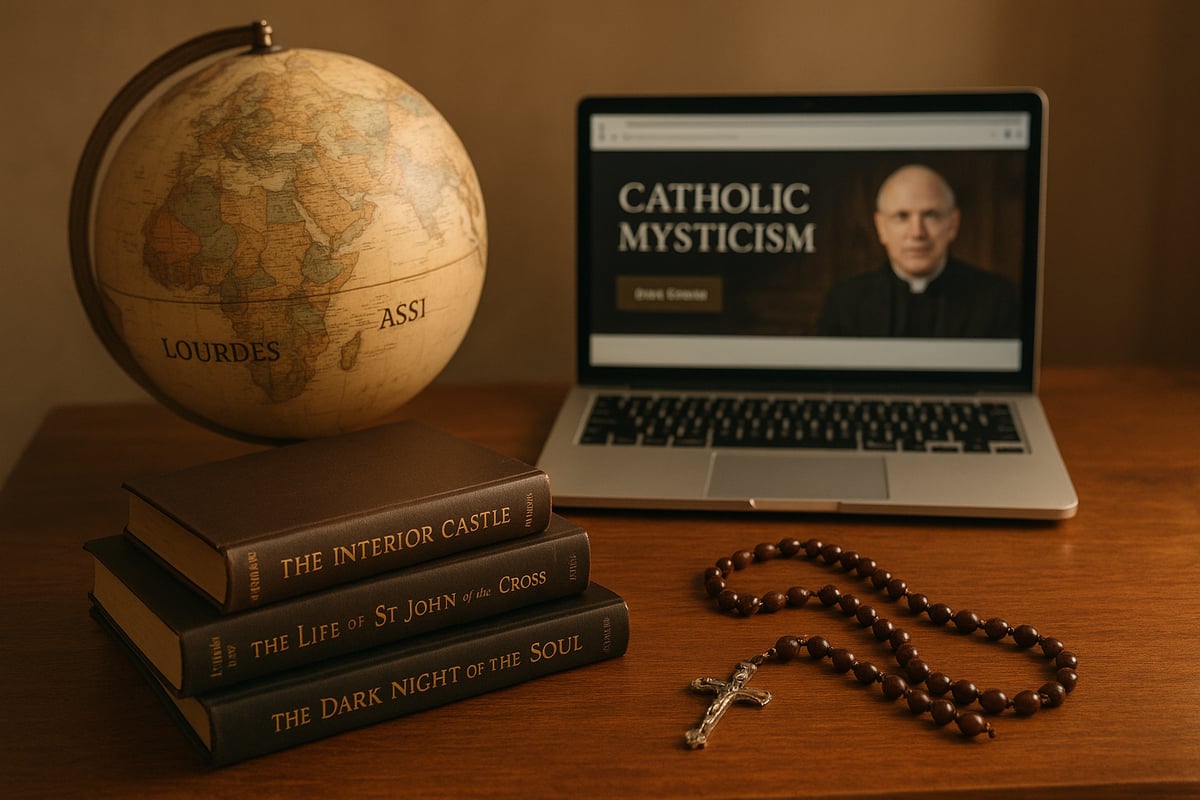
Reading the original works of mystics in the catholic church offers a window into their spiritual journeys. Essential texts include St. Teresa of Ávila’s "The Interior Castle," St. John of the Cross’s "Dark Night of the Soul," and the "Diary of St. Faustina." These writings reveal the depth of their union with God and their unique perspectives on prayer and contemplation.
For those interested in engaging younger readers or seeking a creative introduction, the Saint Faustina and Divine Mercy Coloring Book provides an accessible way to experience St. Faustina’s mystical encounters. Consider building a library of these classics to revisit and reflect upon throughout your spiritual journey.
Pilgrimage Sites and Shrines
Visiting the sacred places associated with mystics in the catholic church can be transformative. Sites like Lourdes in France, Ávila in Spain, and Assisi in Italy invite pilgrims to walk in the footsteps of the saints. These destinations are not only rich in history but also offer opportunities for prayer, healing, and deeper connection.
Many shrines feature relics, guided tours, and community liturgies. A pilgrimage can bring the stories of mystics in the catholic church to life, turning devotion into a lived experience that continues to inspire visitors today.
This post is brought to you by Journeys of Faith Founded and Bob and Penny Lord. We are Cyber Apostles and a Augustinian Secular Institute of which we are members; the Evangelization arm of the group of Cloistered Augustinian Nuns in Montefalco Italy Our Mission is Evangelization through Media using the tools that God has allowed to be created.
Media and Educational Resources
Modern technology makes learning about mystics in the catholic church more accessible than ever. Documentaries, podcasts, and online courses allow you to explore mystical theology, historical context, and personal stories. For a deeper look at contemporary mysticism, the article Sister Thorn and Catholic Mysticism in Modern America provides insight into the ongoing impact of mystical experiences today.
Reputable Catholic platforms offer structured learning, expert interviews, and interactive communities. These tools can support your exploration and help you integrate mystical wisdom into daily practice.
Explore Journeys of Faith Online store with thousands of Catholic Items at https://journeysoffaith.com/collections
Our Unique Mega Search Engine https://journeysoffaith.com/search is linked to hundreds of Catholic Shops and Stores.
Get the Journeys of Faith NEW App for IPhone or Android Search for Journeys of Faith or go to https://journeysoffaith.com/pages/download-our-app
As we’ve journeyed through the lives of these extraordinary Catholic mystics, it’s clear how each saint’s faith and spiritual insight continues to shape and inspire believers like you and me. If you feel drawn to learn more about their incredible stories and deepen your own spiritual journey, there’s a wealth of resources waiting for you. I invite you to Explore Catholic Saints for books, devotional items, and more that celebrate these holy men and women. Let their legacies encourage your faith, and discover new ways to grow closer to God.