

Step into the remarkable story of the presentation of jesus, an event that continues to inspire and shape Christian faith as we approach 2026. This moment, rooted in ancient tradition, has left a lasting mark on worship, art, and communities across the world.
Unpacking the presentation of jesus helps us understand its deep influence on Christian identity and spiritual practice. For believers and history enthusiasts, its meaning offers timeless lessons and connection.
This guide will explore the biblical origins, historical context, liturgical customs, and enduring symbolism of the presentation of jesus. You will also discover its cultural impact and why it remains relevant for modern faith.
We invite you to journey with us as we illuminate every facet of this profound event.
This post is brought to you by Journeys of Faith Founded and Bob and Penny Lord. We are Cyber Apostles and a Augustinian Secular Institute of which we are members; the Evangelization arm of the group of Cloistered Augustinian Nuns in Montefalco Italy. Our Mission is Evangelization through Media using the tools that God has allowed to be created.
The Biblical Account of the Presentation of Jesus
The presentation of jesus is a profound event described in the Gospel of Luke, offering a window into the faith, obedience, and prophetic hope present at the very beginning of Christ’s earthly life. This moment, rich in tradition and meaning, continues to inspire believers, theologians, and artists across generations.
Scriptural Foundations in Luke 2:22-40
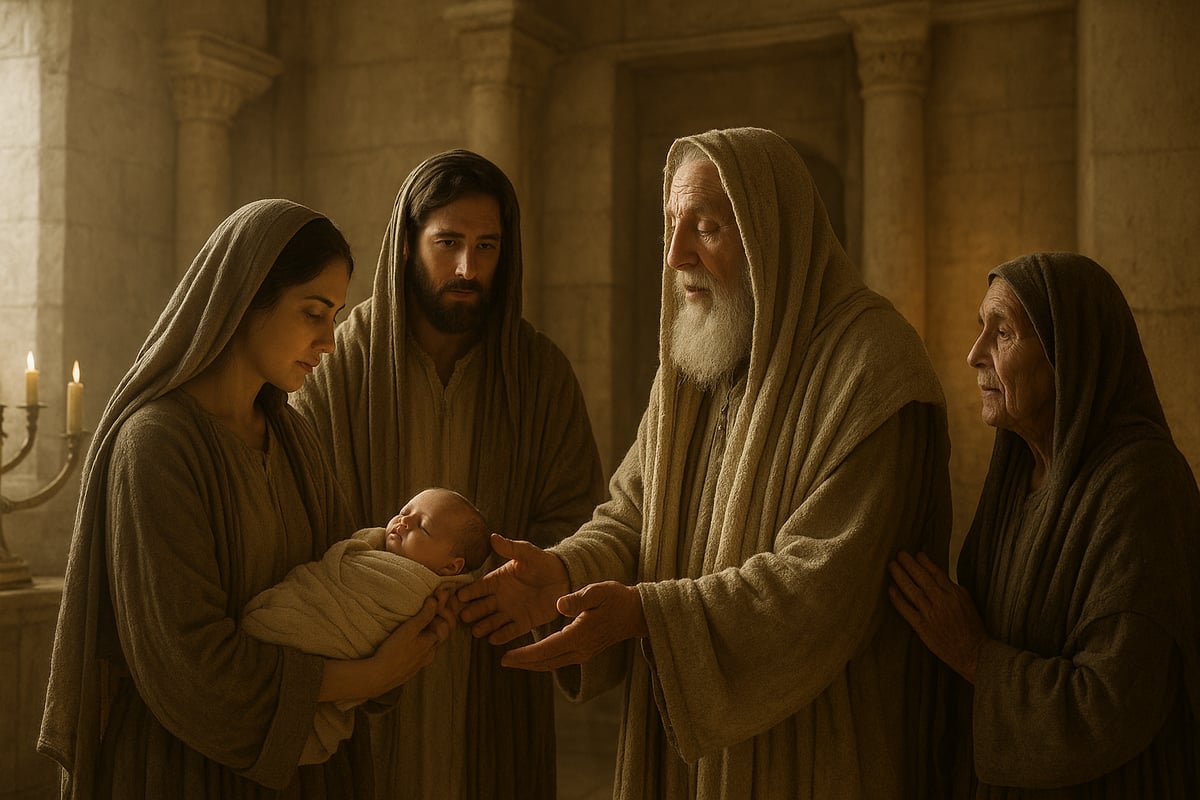
Luke’s Gospel provides the most detailed account of the presentation of jesus. According to Luke 2:22-40, Mary and Joseph brought Jesus to Jerusalem to present Him to the Lord, in accordance with Jewish law. This act fulfilled two important requirements: the purification of the mother after childbirth (from Leviticus 12:1-8), and the dedication of every firstborn male to God (from Exodus 13:1-16).
The purification rite required Mary to offer a sacrifice—either a lamb and a dove, or, for those of modest means, two doves or pigeons. This detail not only underscores the family’s humility but also their faithfulness to the Law. Joseph’s role as guardian and faithful observer of the law is central, as highlighted in resources like Saint Joseph's Role in Faith, which explores his significance in salvation history.
Key figures present include Mary, who embodies obedience and devotion; Joseph, the protector and provider; Simeon, a righteous man guided by the Holy Spirit; and Anna, a prophetess known for her fasting and prayer. Simeon’s prophecy, known as the Nunc Dimittis, proclaimed Jesus as “a light for revelation to the Gentiles and glory for Israel.” This canticle remains a cornerstone of Christian liturgy, recited in evening prayers to this day.
The Holy Spirit’s presence is unmistakable throughout the narrative. Simeon is led to the temple by the Spirit, and both he and Anna recognize Jesus as the promised Messiah. Their prophetic witness affirms the divine identity of the child and the fulfillment of Israel’s long-awaited hopes.
This post is brought to you by Journeys of Faith Founded and Bob and Penny Lord. We are Cyber Apostles and a Augustinian Secular Institute of which we are members; the Evangelization arm of the group of Cloistered Augustinian Nuns in Montefalco Italy. Our Mission is Evangelization through Media using the tools that God has allowed to be created.
Comparison with other infancy narratives in Matthew and their theological implications
While the presentation of jesus is unique to Luke, it complements the infancy narratives in Matthew. Matthew focuses on the visit of the Magi, the flight into Egypt, and Herod’s persecution. Both Gospels highlight Jesus’ divine identity and fulfillment of prophecy, but each offers a distinct perspective on how Jesus’ early life meets messianic expectations.
Luke’s account emphasizes the continuity between Jesus and the traditions of Israel. The presentation of jesus demonstrates His family’s obedience to the Law and God’s promises. Simeon and Anna’s recognition of Jesus at the temple shows the fulfillment of hopes woven through the Old Testament, connecting Jesus with the prophetic tradition and God’s unfolding plan.
In contrast, Matthew’s narrative centers on the global dimension of Jesus’ mission, with the Magi representing the nations coming to worship the newborn King. Both accounts, however, affirm that Jesus is the fulfillment of both the Law and the Prophets, uniting Jewish expectation and universal redemption.
In summary, the presentation of jesus serves as a bridge between the Old and New Covenants. It affirms Jesus’ role as the awaited Messiah, demonstrates faithfulness to God’s law, and introduces the themes of light, redemption, and prophetic fulfillment that will shape His ministry.
Historical and Liturgical Development of the Feast
The presentation of jesus has evolved into one of Christianity’s most meaningful and enduring feasts. Its history is a tapestry woven from early Christian devotion, scriptural roots, and the gradual shaping of liturgical tradition across centuries.
From its earliest days, the event was recognized not only as a biblical milestone but also as a turning point in the Church’s annual calendar. Christians have long seen the presentation of jesus as a sign of God’s faithfulness, a moment when prophecy and promise meet in the temple.
This post is brought to you by Journeys of Faith Founded and Bob and Penny Lord. We are Cyber Apostles and a Augustinian Secular Institute of which we are members; the Evangelization arm of the group of Cloistered Augustinian Nuns in Montefalco Italy. Our Mission is Evangelization through Media using the tools that God has allowed to be created.
Origins and Evolution of the Celebration
The origins of the presentation of jesus as a feast date back to the fourth century, especially in Jerusalem. Pilgrims and local Christians began marking the fortieth day after Christmas, reflecting the timeline described in Luke’s Gospel. This early observance combined the themes of Jesus’ dedication and Mary’s ritual purification, both rooted in Jewish law.
As the Church grew, so did the celebration. By the sixth century, the feast spread across the Eastern Roman Empire, known commonly as the Feast of the Meeting (Hypapante) in Greek-speaking communities. In the West, the presentation of jesus became associated with the Purification of Mary, reflecting a slightly different theological emphasis. Over time, both traditions converged in their recognition of the event’s spiritual depth.
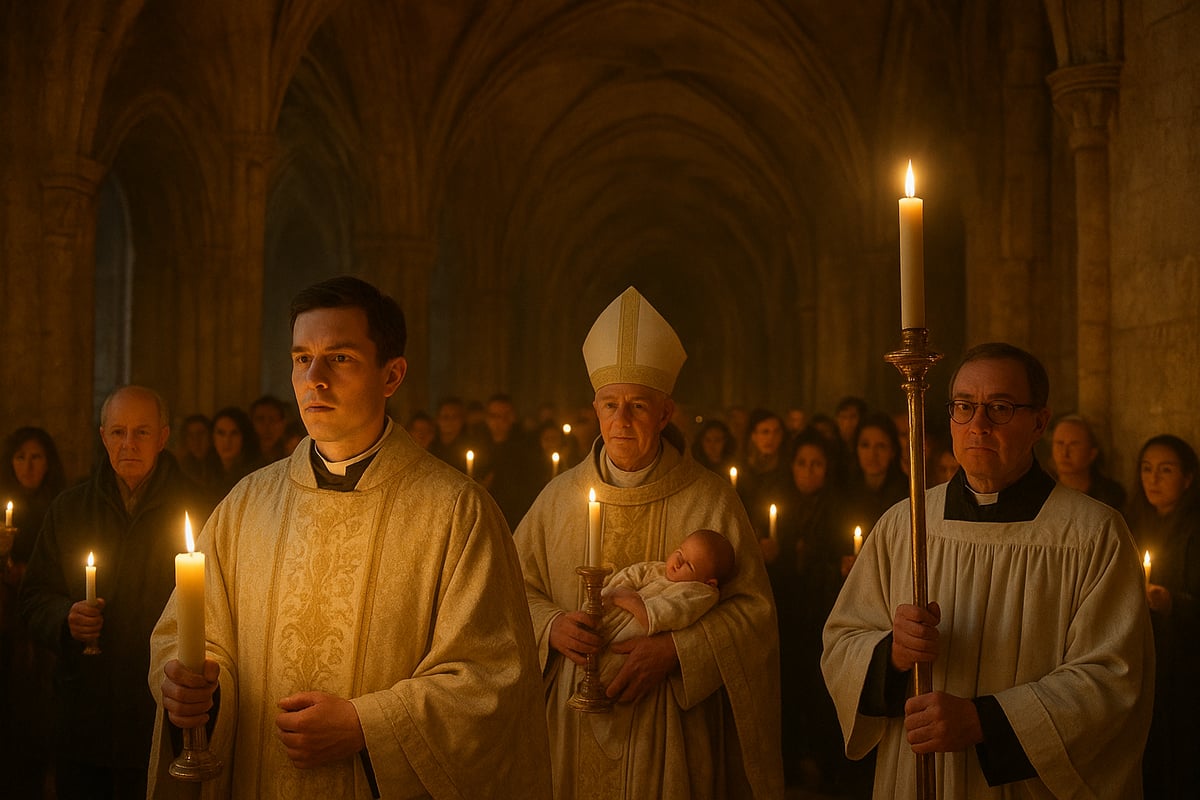
A defining feature of the Western feast is its connection to Candlemas. This tradition, first documented in Rome, includes the blessing and procession of candles, symbolizing Christ as the light to the nations. The presentation of jesus thus became a feast of light, echoing Simeon’s prophecy. Communities would gather to have their candles blessed, a practice still vibrant in Catholic and Anglican churches worldwide.
The naming and dating of the celebration have shifted across time and place. While February 2 is now standard, some Eastern churches maintain older traditions, linking the feast to local calendars and customs. The table below summarizes key differences:
| Tradition | Name of Feast | Date |
|---|---|---|
| Eastern Orthodox | Meeting of the Lord | Feb 2 (or local variant) |
| Roman Catholic | Presentation of the Lord | Feb 2 |
| Anglican | Candlemas | Feb 2 |
The end of the Christmas season is also marked differently. In some places, the presentation of jesus concludes the festive period, while in others, Epiphany holds this role.
Notably, throughout history, grand celebrations and local customs flourished. In medieval Europe, entire towns participated in Candlemas processions, reflecting the feast’s power to unite communities. Today, many parishes still honor these traditions, connecting the past and present through shared ritual. For those interested in deepening their understanding or participating in contemporary practices, Liturgical Celebrations and Traditions offers insights and resources on prayers and ceremonies linked to this feast.
Variations in Eastern and Western Traditions
Distinctive expressions of the presentation of jesus can be found in Orthodox, Catholic, and Anglican worship. While each tradition shares biblical foundations, their liturgies highlight unique theological and cultural emphases.
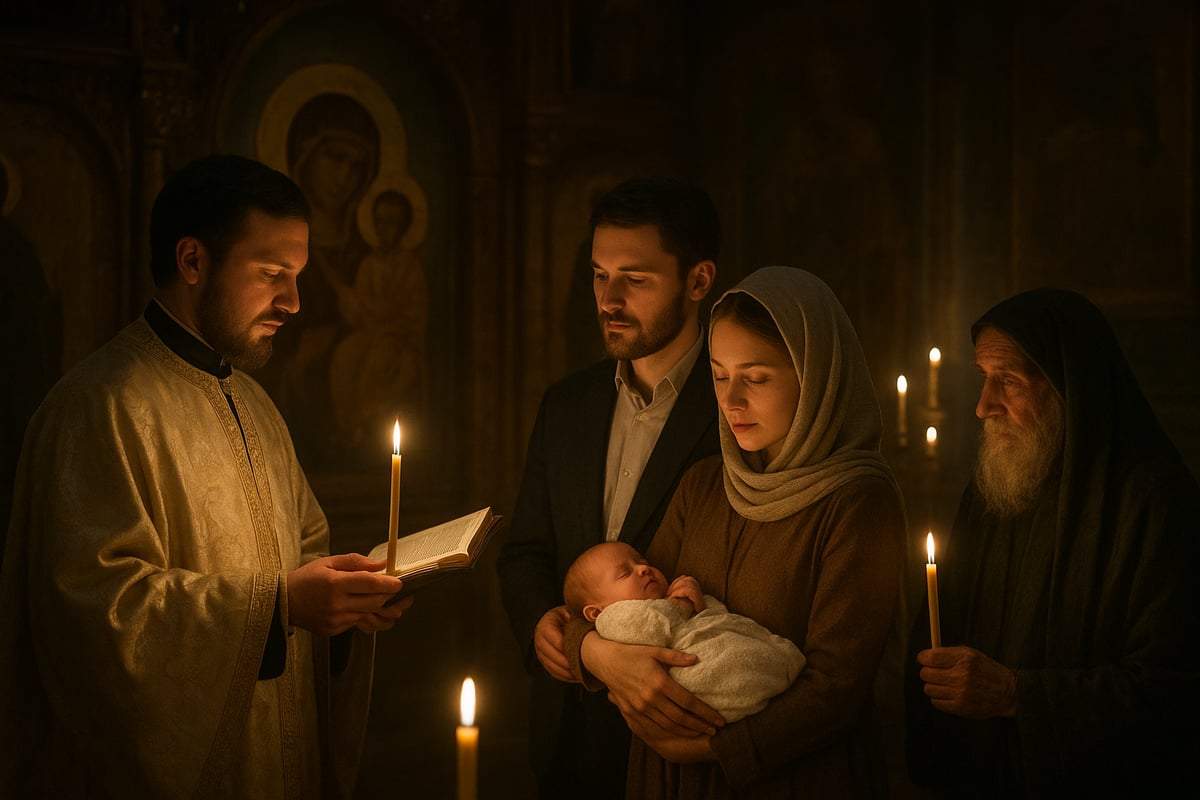
In the East, the feast is known as the Meeting of the Lord, focusing on the encounter between Christ and humanity symbolized by Simeon and Anna. Orthodox liturgy features elaborate hymns, processions, and the veneration of icons depicting the presentation of jesus. The theme of light is especially prominent, with candles distributed to the faithful as a sign of Christ’s presence.
Western churches, particularly Catholic and Anglican, center the celebration on purification, light, and the fulfillment of prophecy. The blessing of candles, a hallmark of Candlemas, is followed by readings from Luke’s Gospel and the singing of the Nunc Dimittis. In some regions, children are presented at the altar, echoing the original event.
Cultural adaptations have enriched the feast. In parts of Europe, Candlemas processions fill the streets with candlelight and song, while in the Orthodox world, special icons are displayed and honored. These regional customs express both unity and diversity in the global Church.
The presentation of jesus continues to inspire believers to seek the light of Christ in their own lives. By embracing both ancient ritual and local expression, faith communities honor a tradition that bridges centuries, cultures, and denominations.
Theological Meaning and Symbolism of the Presentation
The theological meaning of the presentation of Jesus is rich and layered, offering insights that shape Christian belief and worship. This event stands at the crossroads of prophecy, tradition, and divine revelation. By examining its scriptural roots and symbolic elements, we gain a deeper understanding of how the presentation of Jesus continues to inspire faith today.
Fulfillment of Old Testament Prophecy
The presentation of Jesus fulfills several Old Testament prophecies and customs, revealing God’s faithfulness to His promises. According to Jewish law, every firstborn male was to be dedicated to God and a purification offering made (Exodus 13, Leviticus 12). Mary and Joseph’s journey to the Temple aligns perfectly with these requirements, showing their obedience and deep faith.
Simeon’s recognition of Jesus as the awaited Messiah marks a pivotal moment in salvation history. His words echo prophecies found throughout Isaiah and Psalms, identifying Jesus as “a light for revelation to the Gentiles and for glory to your people Israel.” This declaration links the presentation of Jesus to centuries of messianic expectation and hope.
Anna’s prophetic witness also highlights the continuity between Israel’s hopes and their fulfillment in Christ. Her testimony, spoken to all who awaited redemption, reinforces the significance of the presentation of Jesus as a moment when God’s promise takes visible form. This connection between ancient law, prophetic anticipation, and its realization in Jesus is central to Christian theology.
The obedience shown by Mary and Joseph serves as a model for believers, emphasizing that the presentation of Jesus is not only a fulfillment of prophecy but also a call to faithful living. Their actions invite us to reflect on our own responses to God’s commands.
Symbolism of Light, Redemption, and Sacrifice
The presentation of Jesus is surrounded by powerful symbols, chief among them the theme of light. The blessing and procession of candles during Candlemas reflect Simeon’s words, calling Jesus “a light for revelation.” Candles represent Christ’s role in dispelling darkness, guiding the faithful, and illuminating the path to redemption.
Purification is another vital symbol, rooted in the ritual Mary undergoes and the presentation of Jesus as the firstborn. This theme of purification points to spiritual renewal, inviting Christians to seek holiness in their own lives. The prophecy that a “sword will pierce” Mary’s soul foreshadows the suffering both she and Jesus will endure, highlighting the cost of redemption.
Artists across centuries have depicted the presentation of Jesus with these symbols—candles, light, and the embrace of the elderly Simeon. Such imagery deepens our appreciation for the event’s meaning. Devotions such as the Sacred Heart Devotion in Christian Tradition expand on these themes, inviting the faithful to contemplate the love, sacrifice, and mercy at the heart of the presentation of Jesus.
The enduring customs of Candlemas, with their focus on light and blessing, offer a tangible reminder of Christ’s mission. By participating in these traditions, believers connect with the mystery of redemption enacted in the presentation of Jesus.
This post is brought to by Journeys of Faith Founded and Bob and Penny Lord We are Cyber Apostles and a Augustinian Secular Institute of which we are members; the Evangelization arm of the group of Cloistered Augustinian Nuns in Montefalco Italy Our Mission is Evangelization through Media using the tools that God has allowed to be created.
The Role of the Holy Spirit and Prophetic Witness
A central aspect of the presentation of Jesus is the role of the Holy Spirit. The Gospel account describes Simeon as being guided by the Spirit to recognize Jesus as the Messiah. This divine prompting shows that the presentation of Jesus is not only a fulfillment of law and prophecy but also a revelation made possible by God’s active presence.
Anna’s prophetic proclamation further illustrates how the Holy Spirit works through individuals to bear witness to Christ. Her devotion and constant prayer in the Temple serve as an example of openness to God’s call. The presentation of Jesus thus becomes a lesson in attentiveness to the Spirit’s guidance, encouraging believers to remain sensitive to God’s movements in their lives.
The prophetic witness of Simeon and Anna also underscores the importance of testimony within faith communities. Their recognition and proclamation of Jesus as Savior inspire Christians to share their own experiences of faith. The presentation of Jesus, therefore, is not just a historical event but a continuing invitation to witness, hope, and trust in God’s promises.
In summary, the theological meaning of the presentation of Jesus encompasses fulfillment of prophecy, powerful symbolism, and the dynamic work of the Holy Spirit. These elements continue to shape Christian devotion and understanding.
Explore Journeys of Faith Online store with thousands of Catholic Items at https://journeysoffaith.com/collections Get the Journeys of Faith NEW App. https://apps.apple.com/us/app/journeys-of-faith/id6757635073
Cultural Impact and Artistic Depictions
The presentation of jesus has left a profound mark on Christian culture, inspiring a wealth of artistic, musical, and literary treasures across centuries. This sacred event has served as a wellspring of creativity, shaping how believers visualize, celebrate, and interpret their faith. From medieval paintings to choral masterpieces and enduring customs, the presentation of jesus continues to resonate deeply within faith communities worldwide.
Influence on Christian Art, Music, and Literature
Throughout history, the presentation of jesus has been a central theme in Christian art. Artists such as Pietro Lorenzetti and Philippe de Champaigne created iconic works portraying the moment Mary and Joseph present Jesus in the Temple. These paintings often highlight Simeon and Anna, capturing their prophetic recognition of the Christ child.
Musically, the event has inspired composers to write motets, hymns, and chants. The Nunc Dimittis, Simeon's song of praise, is a cornerstone of evening prayer services in many Christian traditions. Its text has been set to music by composers from Thomas Tallis to Arvo Pärt, and is frequently sung during Candlemas celebrations.
Literature, too, reflects the spiritual depth of the presentation of jesus. Christian poets and theologians have meditated on the themes of light, revelation, and fulfillment found in Luke's account. The Nunc Dimittis is often included in liturgies, symbolizing the faithful's readiness to encounter Christ.
| Artistic Medium | Notable Example | Theme/Focus |
|---|---|---|
| Painting | Lorenzetti's "Presentation in the Temple" | Prophecy and Light |
| Music | Tallis' "Nunc Dimittis" | Fulfillment, Praise |
| Literature | Devotional poetry on Candlemas | Light, Redemption |
For those seeking a deeper spiritual connection, resources like Holy Spirit Prayers and Guidance can enrich understanding of the Holy Spirit's role in these narratives and their artistic expressions.
This post is brought to you by Journeys of Faith Founded and Bob and Penny Lord. We are Cyber Apostles and a Augustinian Secular Institute of which we are members; the Evangelization arm of the group of Cloistered Augustinian Nuns in Montefalco Italy. Our Mission is Evangelization through Media using the tools that God has allowed to be created.
Traditions, Customs, and Superstitions
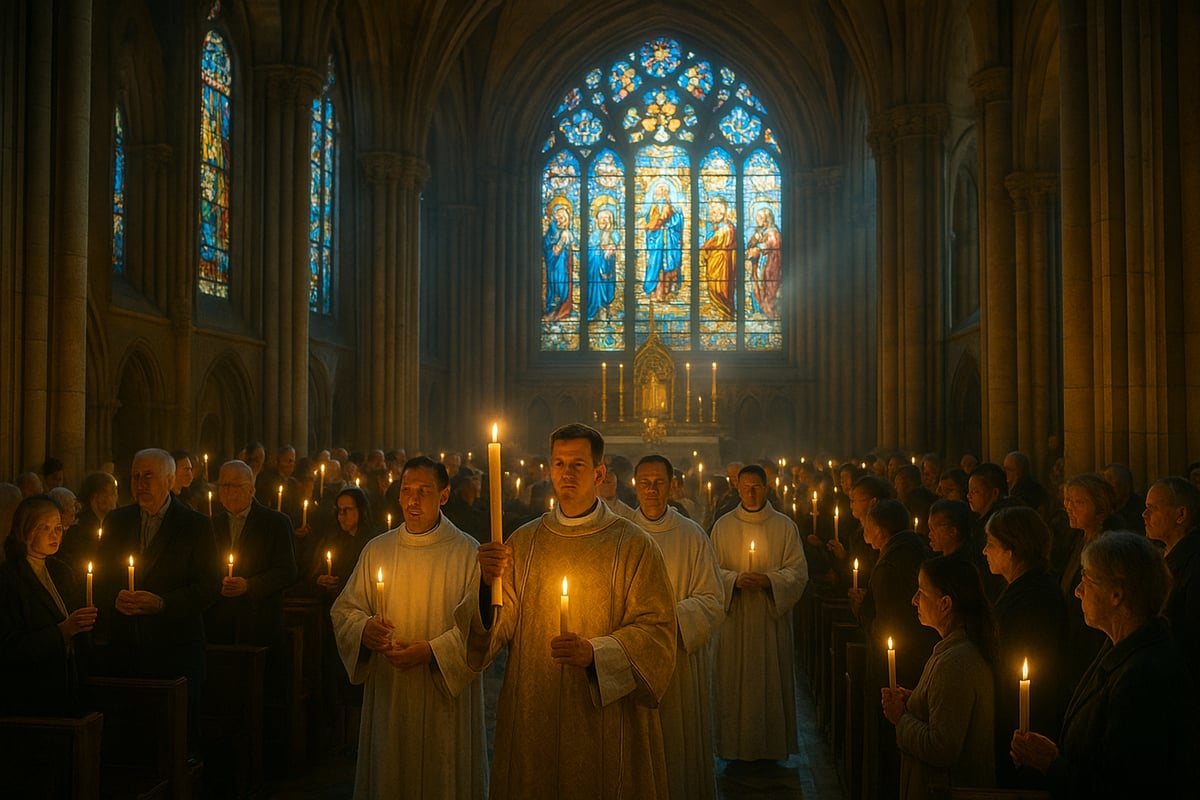
The presentation of jesus is not only remembered in art and song, but also through cherished customs and traditions. One of the most widespread is the blessing of candles during Candlemas, symbolizing Christ as the light of the world. Faithful gather for processions, holding lit candles that illuminate churches and homes.
Across Europe, unique rituals have developed. In some regions, Candlemas marks the official end of the Christmas season, with nativity scenes taken down after the celebration. Folklore and superstitions abound, such as weather predictions: "If Candlemas Day be fair and bright, winter will have another flight." This saying reflects the hope and anticipation associated with the feast.
Regional variations bring richness to the observance. In France, families enjoy crêpes on Candlemas, while in Mexico, tamales are shared. These traditions, rooted in the presentation of jesus, foster community and spiritual reflection.
By weaving together art, music, and ritual, the presentation of jesus continues to inspire believers to seek light, hope, and renewal in every generation.
Explore Journeys of Faith Online store with thousands of Catholic Items at https://journeysoffaith.com/collections - Get the Journeys of Faith NEW App. https://apps.apple.com/us/app/journeys-of-faith/id6757635073
The Presentation of Jesus: Significance for Modern Faith
The presentation of jesus continues to inspire believers and faith communities in powerful ways. Its message of dedication and hope remains as relevant in 2026 as it was centuries ago. By reflecting on this event, we discover not only historical tradition but also spiritual guidance for today.
Spiritual Lessons and Contemporary Relevance
At its core, the presentation of jesus offers a timeless model of obedience, faith, and dedication. Mary and Joseph’s willingness to follow the law, even in humble circumstances, sets an example for families today. Their actions remind us of the importance of presenting our lives and our children to God, entrusting the future to divine care.
For parents, this event underscores the value of consecrating children not only through ritual but also by fostering spiritual growth at home. The presentation of jesus encourages families to prioritize faith and nurture hope in daily life.
The symbolism of light that defines this feast resonates deeply in a world seeking direction. Lighting candles during Candlemas serves as a visible sign of Christ’s presence, illuminating paths through uncertainty. In 2026, as many seek meaning and reassurance, the presentation of jesus invites everyone to embrace light and hope in the face of challenges.
The Church, too, finds renewed purpose in this celebration. By holding fast to tradition while engaging new generations, faith communities can bridge the gap between heritage and contemporary needs. Recent studies, such as Barna's 2025 Study on Belief in Jesus, show a rise in personal commitment to Jesus among younger adults. This trend highlights the ongoing relevance of the presentation of jesus for today’s believers.
This post is brought to by Journeys of Faith Founded and Bob and Penny Lord We are Cyber Apostles and a Augustinian Secular Institute of which we are members; the Evangelization arm of the group of Cloistered Augustinian Nuns in Montefalco Italy Our Mission is Evangelization through Media using the tools that God has allowed to be created.
Whether through family rituals, community worship, or personal reflection, the presentation of jesus remains a call to faithfulness and hope.
The Presentation and Ecumenical Dialogue
The presentation of jesus also serves as a point of unity and diversity within Christianity. Different denominations honor the feast in unique ways, yet all recognize its profound message. This shared foundation opens doors for ecumenical dialogue, encouraging churches to work together in worship and service.
Joint celebrations of the presentation of jesus have become more common, fostering mutual understanding among Catholic, Orthodox, and Protestant communities. These gatherings highlight the possibilities for shared prayer, processions, and even outreach to those outside the Christian tradition.
Ecumenical initiatives inspired by the presentation of jesus often focus on the shared symbolism of light and dedication. By coming together, faith communities witness to the broader world the power of unity in diversity. As the Pew Research Center's 2025 Religious Landscape Study notes, such collaboration is vital in a time when religious identity is shifting, yet spiritual hunger endures.
For modern believers, the presentation of jesus is not only a memory of the past but a living invitation to renewal, unity, and mission.
Explore Journeys of Faith Online store with thousands of Catholic Items at https://journeysoffaith.com/collections Get the Journeys of Faith NEW App. https://apps.apple.com/us/app/journeys-of-faith/id6757635073
Frequently Asked Questions About the Presentation of Jesus
Curious about the presentation of jesus and how it shapes faith and tradition? Here, we answer the most common questions believers and seekers have about this profound event and its lasting impact.
Why is the presentation of jesus celebrated on February 2nd?
The presentation of jesus is observed on February 2nd because, according to the Gospel of Luke, Mary and Joseph brought Jesus to the Temple forty days after his birth. This timing fulfills the requirements of Jewish law for purification and dedication of the firstborn, connecting the feast both to biblical tradition and the rhythm of the Christian liturgical calendar.
What is the difference between the Presentation and the Purification?
While closely related, the presentation of jesus refers to bringing Jesus to the Temple, while the Purification underscores Mary’s ritual cleansing after childbirth. Both elements are celebrated together on February 2nd, but the focus on Jesus' dedication highlights his role as the awaited Messiah, fulfilling ancient prophecies.
How does Candlemas relate to the presentation of jesus?
Candlemas is another name for the feast of the presentation of jesus. The tradition of blessing candles on this day symbolizes Christ as the light to the nations, echoing Simeon's prophecy in the Temple. This ritual marks the end of the Christmas season in many Christian communities and reinforces the theme of light overcoming darkness.
What is the significance of Simeon’s and Anna’s roles?
Simeon and Anna are pivotal witnesses in the presentation of jesus narrative. Guided by the Holy Spirit, Simeon recognizes Jesus as the Savior and delivers the prophetic Nunc Dimittis, while Anna, a prophetess, proclaims his significance to all present. Their faithfulness and insight inspire believers to remain open to God's promises.
This post is brought to by Journeys of Faith Founded and Bob and Penny Lord We are Cyber Apostles and a Augustinian Secular Institute of which we are members; the Evangelization arm of the group of Cloistered Augustinian Nuns in Montefalco Italy Our Mission is Evangelization through Media using the tools that God has allowed to be created.
How is the presentation of jesus observed in various cultures?
Around the world, the presentation of jesus is marked by unique customs. In Europe, Candlemas processions and the blessing of candles are popular, while Eastern Orthodox Christians focus on hymns and icons. In some cultures, weather lore and local traditions add layers of meaning to the feast.
What are the key symbols associated with the feast?
Candles represent Christ as the light of the world, a central motif in the presentation of jesus. Other symbols include doves, signifying purity and sacrifice, and the Temple itself, a place of encounter between God and humanity. These symbols are reflected in art, music, and liturgy throughout Christian history.
How can families and individuals participate in the celebration today?
Families can honor the presentation of jesus by attending special liturgies, lighting candles at home, or reflecting on the themes of dedication and light. For modern believers, the feast offers a chance to renew commitment to faith and community. Recent studies, such as the National Catholic Register's Study on Personal Relationship with Jesus, highlight how personal devotion and liturgical traditions like the presentation of jesus can deepen spiritual life and foster a sense of belonging.
Explore Journeys of Faith Online store with thousands of Catholic Items at https://journeysoffaith.com/collections Get the Journeys of Faith NEW App. https://apps.apple.com/us/app/journeys-of-faith/id6757635073
As we’ve explored the rich meaning and lasting significance of the Presentation of Jesus—from its scriptural roots to its impact on our faith today—I invite you to continue deepening your spiritual journey. If you’re inspired to discover more about the lives of saints who have shaped Catholic tradition and reflect the same dedication, hope, and light found in the Presentation, you’ll find a wealth of resources waiting for you. Take the next step and Explore Catholic Saints to enrich your understanding and connect with timeless examples of faith.