

Saint Oscar Romero stands as one of the most compelling witnesses to the Gospel in modern Catholic history. His transformation from a quiet, bookish priest to a fearless defender of human rights demonstrates how encounters with suffering can radically reshape a spiritual leader's mission. As Archbishop of San Salvador during El Salvador's violent civil conflict, saint oscar romero chose to stand with the poor and oppressed, ultimately paying the ultimate price for his prophetic witness. His canonization in 2018 affirmed what countless faithful already knew: that his life embodied the Gospel's call to love, justice, and truth.
Early Life and Formation
Born on August 15, 1917, in Ciudad Barrios, El Salvador, Óscar Arnulfo Romero y Galdámez grew up in humble circumstances that would later shape his understanding of poverty. His father worked as a telegraph operator, and young Óscar left school at age thirteen to apprentice as a carpenter. Yet his calling to priesthood emerged clearly during these formative years, leading him to enter seminary at age fourteen.
Romero's intellectual gifts became evident during his theological studies. He completed his formation in Rome at the Gregorian University, earning a degree in theology before being ordained to the priesthood in 1942. His early ministry focused primarily on sacramental duties and scholarly pursuits rather than social advocacy.
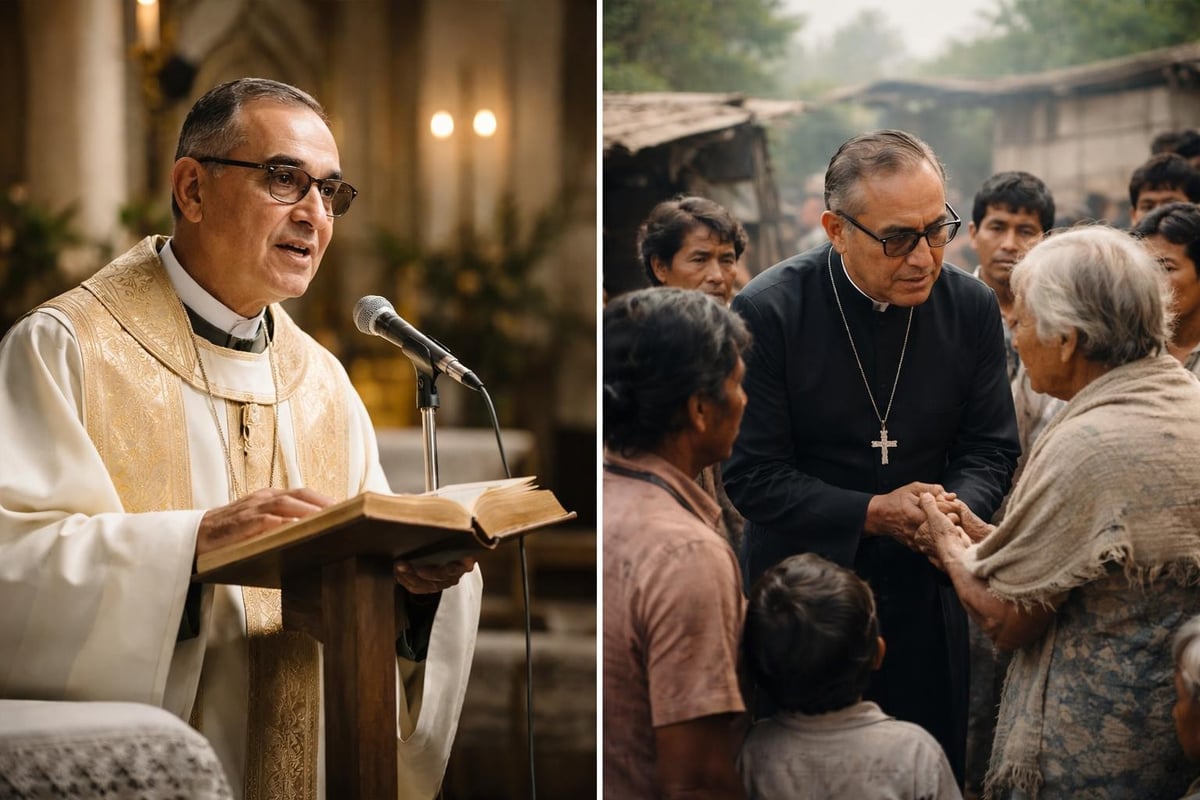
For more than two decades, Father Romero served in various capacities throughout El Salvador, building a reputation as a conservative, doctrinally orthodox priest. This comprehensive biography from Britannica details how he focused on personal piety and traditional devotional practices during these years. His appointment as Auxiliary Bishop of San Salvador in 1970 seemed to confirm his trajectory as a reliable, establishment-oriented church leader.
Brought to you by Journeys of Faith. Founded by Bob and Penny Lord, we are an Augustinian Secular Institute and Cyber Apostles. Our Mission is Evangelization through Media.
The Turning Point
Everything changed when Romero became Archbishop of San Salvador on February 22, 1977. Conservative elements within the Salvadoran elite welcomed his appointment, expecting him to remain silent about government abuses and social injustice. They could not have been more mistaken about what was to come.
The assassination of Father Rutilio Grande, a Jesuit priest and close friend, occurred just three weeks after Romero's installation as archbishop. Grande had been working with poor campesinos (peasant farmers) and speaking out against land inequality and exploitation. His murder by a death squad profoundly shook saint oscar romero, catalyzing a dramatic transformation in his episcopal ministry.
Prophetic Ministry and Advocacy
The death of Father Grande awakened Romero to the brutal reality facing ordinary Salvadorans. He began celebrating only one Mass throughout the archdiocese on the following Sunday, a powerful symbolic gesture of unity with the suffering poor. This marked the beginning of his evolution into what Harvard professor reflects on as a prophetic voice for human dignity.
Radio Homilies That Changed a Nation
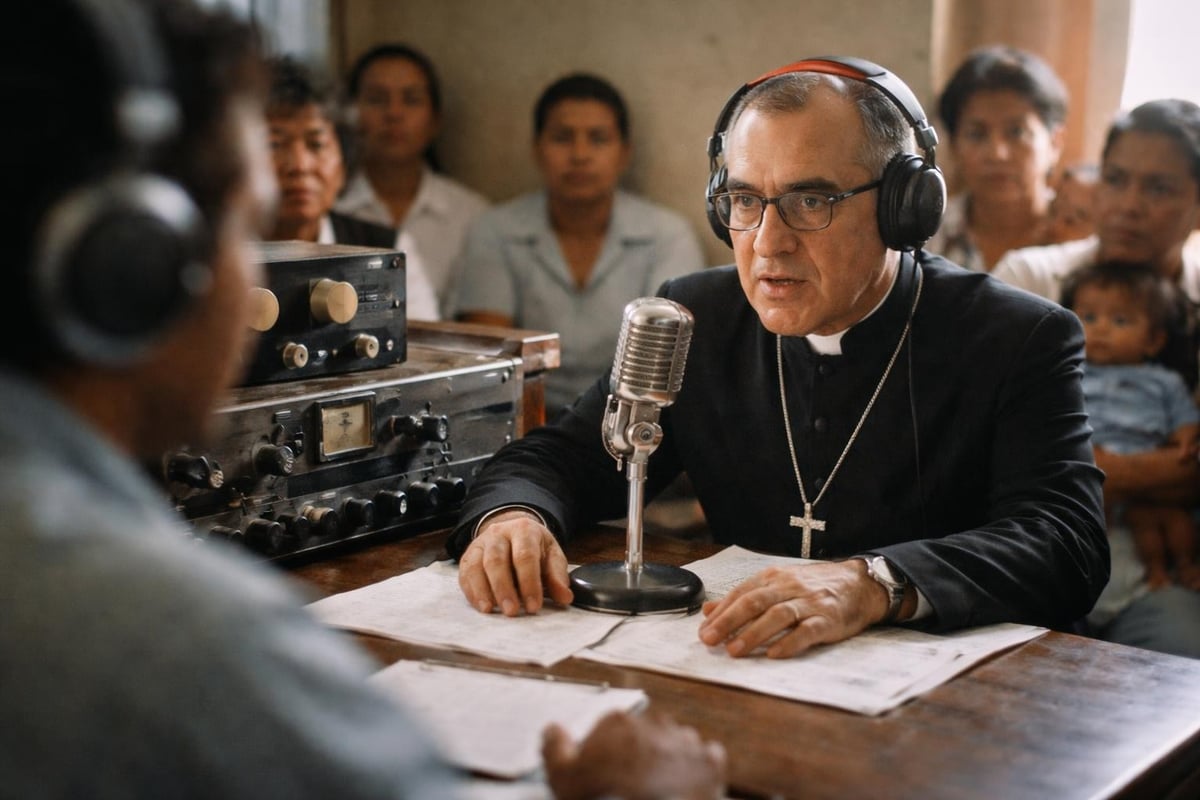
Saint oscar romero's weekly Sunday homilies, broadcast throughout El Salvador via radio, became extraordinary moments of truth-telling. He would meticulously detail:
- Names of individuals who had been killed, tortured, or disappeared
- Specific incidents of violence perpetrated by government forces and death squads
- Denunciations of economic systems that oppressed the poor
- Appeals to military personnel to refuse orders that violated human rights
- Gospel reflections connecting Scripture to contemporary injustice
These homilies attracted massive audiences, with estimates suggesting up to 70% of Salvadorans tuned in weekly. Farmers working in fields, families gathered in humble homes, and even soldiers at checkpoints listened as their archbishop spoke uncomfortable truths with pastoral love.
The content of these broadcasts went beyond mere political commentary. Romero consistently rooted his social teaching in Catholic doctrine, particularly the preferential option for the poor. Vatican News highlights how his theological vision integrated personal holiness with social transformation, rejecting any dichotomy between spiritual and material concerns.
Confronting Structural Violence
The situation in El Salvador during the late 1970s involved complex layers of violence and oppression. A small oligarchy controlled most of the nation's wealth and land, while the majority of citizens lived in crushing poverty. Government security forces and paramilitary death squads targeted anyone advocating for reform, including catechists, union organizers, teachers, and priests.
Saint oscar romero refused to remain neutral in this context. He clearly articulated that authentic evangelization required defending human dignity and challenging systems of injustice. His positions created tensions with both the Salvadoran government and some within the Vatican who preferred a less confrontational approach.
| Aspect of Ministry | Romero's Approach | Impact |
|---|---|---|
| Sunday Homilies | Documentation of violence, Gospel application | National consciousness-raising |
| Pastoral Letters | Theological reflection on justice | Formation of clergy and laity |
| International Appeals | Letters to U.S. President Carter | Pressure on foreign military aid |
| Sacramental Ministry | Accompaniment of the poor | Witness to Gospel solidarity |
The Final Weeks and Martyrdom
As violence escalated in early 1980, threats against saint oscar romero intensified. He received numerous death threats, and security forces made clear their hostility toward his ministry. Despite the danger, he continued preaching and advocating with remarkable courage.
On March 23, 1980, Romero delivered what would become his most famous homily. He made a direct appeal to Salvadoran soldiers and security forces: "I beseech you, I beg you, I order you in the name of God: Stop the repression!" This extraordinary moment demonstrated his willingness to speak prophetically regardless of consequences.
The following day, March 24, 1980, while celebrating Mass at the chapel of the Divine Providence cancer hospital, saint oscar romero was assassinated. A single bullet struck him as he elevated the chalice during the Eucharistic prayer. The symbolism was profound: he literally gave his life while offering the sacrifice of Christ.
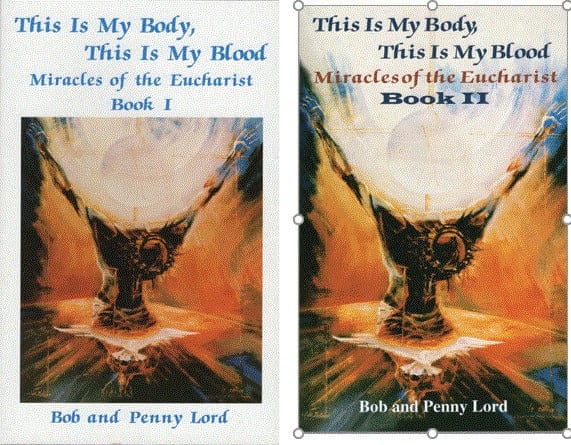
For those seeking to deepen their understanding of the Eucharist's centrality in Catholic faith and witness, Miracles of the Eucharist books by Bob and Penny Lord offer powerful testimonies of Christ's real presence in the Blessed Sacrament. These resources help readers appreciate how the Eucharist calls us to self-giving love, as Romero demonstrated.
Immediate Aftermath
Romero's funeral Mass on March 30, 1980, drew an estimated 250,000 mourners to San Salvador's Metropolitan Cathedral plaza. Tragically, violence erupted when explosions and gunfire rang out during the ceremony, killing dozens more people. Even in death, the conflict that claimed his life continued to claim victims.
The identity of those who ordered Romero's assassination remained officially unclear for years, though evidence pointed to right-wing military elements. In 2020, a Salvadoran court finally convicted military members for his murder, providing some measure of justice four decades later.
Legacy and Canonization
The decades following Romero's martyrdom saw his reputation grow tremendously among grassroots Catholics worldwide. Liberation theology movements, base Christian communities, and social justice advocates claimed him as an inspiration. However, his canonization process faced obstacles within the Vatican for years.
Path to Sainthood
Several factors complicated Romero's cause for canonization:
- Ideological concerns about whether his ministry was too political
- Questions about his relationship to liberation theology
- Resistance from conservative church elements
- Complexity of determining whether his death constituted true martyrdom
Pope Francis decisively moved the process forward, recognizing Romero as a martyr killed "in odium fidei" (in hatred of the faith). Boston College's overview explains how this determination acknowledged that Romero died precisely because of his Gospel-based defense of human dignity.
Saint oscar romero was beatified on May 23, 2015, and canonized on October 14, 2018. Reflections on attending the canonization capture the profound significance of this moment for those who had long advocated for his recognition.
Theological Contributions
Beyond his martyrdom, saint oscar romero left substantial theological contributions that continue enriching Catholic social teaching. A new book on Romero's theological vision explores how his thought integrated traditional Catholic doctrine with prophetic engagement with contemporary injustice.
Key Theological Themes
The Church of the Poor: Romero articulated a vision of the Church that prioritized accompaniment of marginalized communities. He insisted that the Church must listen to the poor, learn from their faith, and defend their dignity. This wasn't mere political preference but theological conviction rooted in the Incarnation.
Resurrection and Liberation: Saint oscar romero frequently preached about resurrection as both spiritual reality and historical hope. He connected Christ's resurrection to the struggle for justice, teaching that authentic Christian hope works toward transformation in this life while trusting in eternal life.
Eucharist and Solidarity: The Eucharist occupied a central place in Romero's spirituality and ministry. He understood the Mass as forming people into Christ's body, which must be broken and given for the life of the world. His death while celebrating Mass embodied this eucharistic theology.
Nonviolence: Despite working in a context of extreme violence, Romero consistently advocated for nonviolent resistance and reconciliation. He rejected both government repression and guerrilla violence, calling for peaceful solutions rooted in justice and dialogue.
Romero's Relevance Today
The challenges that saint oscar romero confronted remain sadly relevant in 2026. Violence, inequality, corruption, and the persecution of those who defend human rights continue in many parts of the world. His example offers guidance for contemporary Catholics navigating similar tensions.
Lessons for Modern Discipleship
| Challenge | Romero's Example | Application Today |
|---|---|---|
| Political Division | Transcended partisan categories | Focus on Gospel principles, not political tribalism |
| Apathy Toward Injustice | Conversion through encounter with suffering | Direct engagement with marginalized communities |
| Fear of Consequences | Courage rooted in faith | Trust in God's providence while taking prophetic stands |
| Institutional Pressure | Fidelity to conscience and Gospel | Respectful dissent when necessary for truth |
Many Catholic institutions continue honoring Romero's legacy through education and advocacy. Saint Louis University's celebration of his canonization demonstrates how universities integrate his teachings into formation programs. Local Catholic communities also celebrate his witness, particularly in communities facing similar struggles.
Prayer and Spiritual Practice
Devotion to saint oscar romero has spread globally, with many Catholics seeking his intercession for courage, justice, and peace. His feast day is celebrated on March 24, the anniversary of his martyrdom. Prayers typically invoke his witness to Gospel truth and his solidarity with the suffering.
Those seeking to deepen their prayer life can explore the extensive collection of prayer cards and novenas available at Journeys of Faith. These resources help Catholics maintain daily devotion and grow in intimacy with Christ and the saints.
The Romero Center and Ongoing Ministry
The Romero Center Ministries continues promoting saint oscar romero's vision through education, advocacy, and spiritual formation. The organization preserves his writings, promotes scholarship on his life and thought, and supports contemporary justice initiatives inspired by his example.
Various academic institutions maintain robust programs of Romero scholarship. These efforts ensure that future generations of Catholics can learn from his theological insights and prophetic courage. His homilies, pastoral letters, and personal writings remain valuable resources for understanding how faith intersects with social reality.
Resources for Further Study
Catholics interested in learning more about saint oscar romero have numerous excellent resources available:
- Complete collections of his homilies and pastoral letters
- Biographies examining different aspects of his life and ministry
- Theological studies analyzing his contribution to Catholic social teaching
- Documentary films capturing the historical context of his ministry
- Academic journals publishing ongoing research about his legacy
The Catholic Saints Books collection at Journeys of Faith offers accessible introductions to numerous saints, helping readers discover models of holiness for every vocation and calling. Studying the saints provides inspiration and practical wisdom for living out Catholic faith authentically.
Living Romero's Example
Saint oscar romero's life challenges comfortable Christianity. His conversion from cautious cleric to prophetic martyr demonstrates that genuine encounter with Christ leads to transformation. He shows that authentic faith cannot remain abstract or detached from human suffering.
For contemporary Catholics, living Romero's example means:
- Listening to those on the margins of society and Church
- Speaking truth even when it creates tension or discomfort
- Defending human dignity in all its dimensions
- Trusting in God's providence rather than worldly security
- Celebrating the Eucharist as a commitment to becoming bread broken for others
His witness particularly challenges Catholics in affluent societies to examine how economic systems and political choices affect vulnerable populations. Saint oscar romero insisted that Christian faith requires concrete commitment to justice, not merely private piety divorced from social responsibility.
The courage he displayed wasn't superhuman fearlessness but rather faith-filled trust in God's ultimate victory over death and evil. His own words reveal a man who experienced fear yet chose fidelity: "If they kill me, I will rise again in the Salvadoran people." This paschal confidence sustained him through threats and ultimately through martyrdom itself.
Saint oscar romero's life demonstrates that authentic Catholic discipleship requires both deep prayer and courageous action for justice. His example challenges us to move beyond comfortable faith toward radical Gospel witness. At Journeys of Faith, we're committed to sharing the stories of saints like Romero who inspire us to live our faith more fully. Explore our extensive collection of books, prayer resources, and media that help Catholics grow in knowledge and love of the Eucharist, Mother Mary, and the communion of saints.
Additional Resources:
- Explore Journeys of Faith Online store with thousands of Catholic Items at https://journeysoffaith.com/collections
- Our Unique Mega Search Engine https://journeysoffaith.com/search is linked to hundreds of Catholic Shops and Stores
- Get the Journeys of Faith NEW App for iPhone or Android - Search for Journeys of Faith or go to https://journeysoffaith.com/pages/download-our-app
- Chat with us anytime https://chatting.page/mjxs9aerrtgm3lmpndlcepmbyosntrjn
- We need your help to reach more souls. Please Make a Donation https://journeysoffaith.com/pages/donate