

The story of saint patrick stands as one of Christianity's most compelling narratives of conversion, courage, and unwavering faith. Born in Roman Britain during the late fourth century, this remarkable figure transformed from a slave into the patron saint of Ireland, leaving an indelible mark on Christian history. His life journey exemplifies the power of faith to overcome adversity and the transformative impact one dedicated soul can have on an entire nation. Understanding saint patrick's true story reveals far more than the cultural celebrations that bear his name-it unveils a profound spiritual legacy that continues to inspire Catholics worldwide in 2026.
The historical reality of saint patrick's life differs significantly from many popularized legends. According to historians at Britannica, he was born around 385 AD in Britain, during the final years of Roman occupation. His given name was Maewyn Succat, though he later adopted the Latin name Patricius. His father, Calpurnius, served as a deacon and minor local official, while his grandfather Potitus was a priest. This religious background would later prove instrumental in shaping his spiritual calling, even though young Patrick initially showed little interest in faith.
At age sixteen, saint patrick's comfortable life ended abruptly when Irish raiders captured him during a raid on his family's estate. The raiders transported him across the Irish Sea to Ireland, where he spent six years in brutal captivity as a shepherd. During this period of isolation and hardship, he experienced a profound spiritual awakening. In his own writings, particularly his "Confessio," saint patrick describes how he prayed constantly during his enslavement, often reciting a hundred prayers during the day and nearly as many at night. This intense period of prayer and reflection transformed his faith from nominal Christianity to deep personal conviction.
The circumstances of saint patrick's escape demonstrate the divine guidance he believed directed his life. After six years of captivity, he received a vision telling him a ship awaited him two hundred miles away. Following this supernatural direction, he fled his master and found the vessel exactly where the vision indicated. The journey home proved arduous, but it marked the beginning of his transformation into the missionary who would evangelize Ireland.
Brought to you by Journeys of Faith, Founded by Bob and Penny Lord. We are an Augustinian Secular Institute-Cyber Apostles. Our Mission is Evangelization through Media.
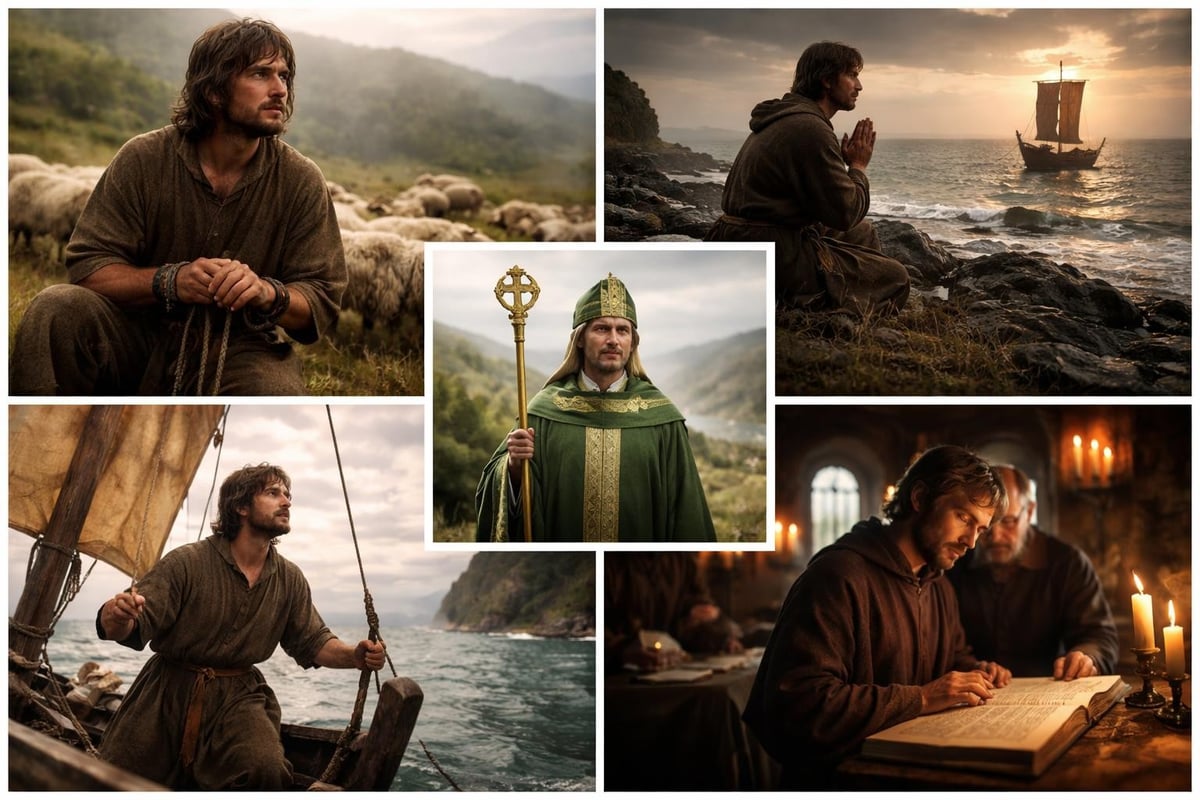
The Call to Return to Ireland
Upon returning to Britain, saint patrick reunited with his family, who hoped he would remain safely home. However, he experienced another vision that would define his destiny. In this dream, he heard the voices of the Irish people calling him back, pleading "We beg you, holy boy, to come and walk among us again." This supernatural call proved impossible to ignore. Despite his family's protests and his own initial reluctance to return to the land of his captivity, saint patrick recognized this as a divine commission.
To prepare for his missionary work, saint patrick pursued religious education, likely in Gaul (modern-day France). The exact duration and location of his studies remain subjects of scholarly debate, but he eventually received ordination as a priest and later as a bishop. His appointment to evangelize Ireland came around 432 AD, when he was approximately forty-seven years old. This education equipped him with theological knowledge, though saint patrick himself later expressed concerns about his limited formal training compared to other church leaders.
Understanding Fifth-Century Ireland
The Ireland that saint patrick encountered differed vastly from the Christian nation it would become. The island was divided into numerous tribal kingdoms, ruled by chieftains and kings who practiced Celtic paganism. The Druids, serving as priests and advisors, held significant religious and political power. This polytheistic society worshiped nature deities and practiced rituals that often conflicted with Christian teachings. Converting such a deeply entrenched pagan culture required not just theological arguments but cultural sensitivity and strategic thinking.
Saint patrick's approach to evangelization demonstrated remarkable wisdom. Rather than attempting to eradicate Irish culture entirely, he incorporated local customs into Christian practice where possible. This inculturation strategy proved highly effective. For example, he used the native shamrock to explain the Holy Trinity-three leaves on one stem representing the Father, Son, and Holy Spirit. This teaching method made complex theological concepts accessible to people unfamiliar with Christian doctrine.
His missionary strategy focused on converting tribal leaders first, understanding that the common people would likely follow their chieftains' religious choices. This top-down approach proved successful in numerous instances. When a king or chieftain converted, entire communities often followed, allowing Christianity to spread rapidly across the island. Saint patrick also established monasteries and churches throughout Ireland, creating permanent institutions that would continue his evangelization work after his death.
Miracles and Legends Surrounding Saint Patrick
The life of saint patrick generated numerous miraculous accounts, though separating historical fact from pious legend proves challenging. The most famous story claims he drove all snakes from Ireland, though zoologists confirm that Ireland never had native snake populations due to its island geography and climate. This legend likely symbolizes his success in driving out pagan practices, as serpents often represented evil or paganism in Christian symbolism.
Other accounts describe saint patrick using a staff to drive away snakes, performing healings, and even raising people from the dead. While modern Catholics approach such stories with varying degrees of literal belief, they reflect the profound impact his ministry had on Irish culture. The spiritual transformation he brought to Ireland seemed so remarkable that supernatural explanations naturally arose. For those interested in learning about Catholic saints and their miraculous works, saint patrick's life offers powerful lessons about faith and perseverance.
| Traditional Symbol | Actual Historical Reality |
|---|---|
| Shamrock teaching | Documented in writings |
| Driving out snakes | Symbolic of removing paganism |
| Staff miracles | Legendary additions |
| Conversion numbers | Likely thousands, not millions |
His Own Written Testimony
Unlike many early saints whose stories depend entirely on later hagiographies, saint patrick left two authenticated writings: the "Confessio" (Confession) and the "Epistola" (Letter to Coroticus). These documents provide invaluable insight into his character, theology, and mission. In the Confessio, he defends his missionary work against critics who questioned his qualifications and education. His humble acknowledgment of his limitations, combined with his unwavering confidence in God's calling, reveals a man of genuine faith rather than personal ambition.
The Letter to Coroticus demonstrates saint patrick's courage in confronting injustice. Written to a British warlord who had captured and enslaved some of Patrick's newly baptized Irish converts, the letter excommunicates Coroticus and demands the release of the captives. This document shows that saint patrick's concern for his flock extended beyond their spiritual welfare to their physical safety and dignity. His willingness to confront powerful figures reflected the prophetic boldness characteristic of true saints.
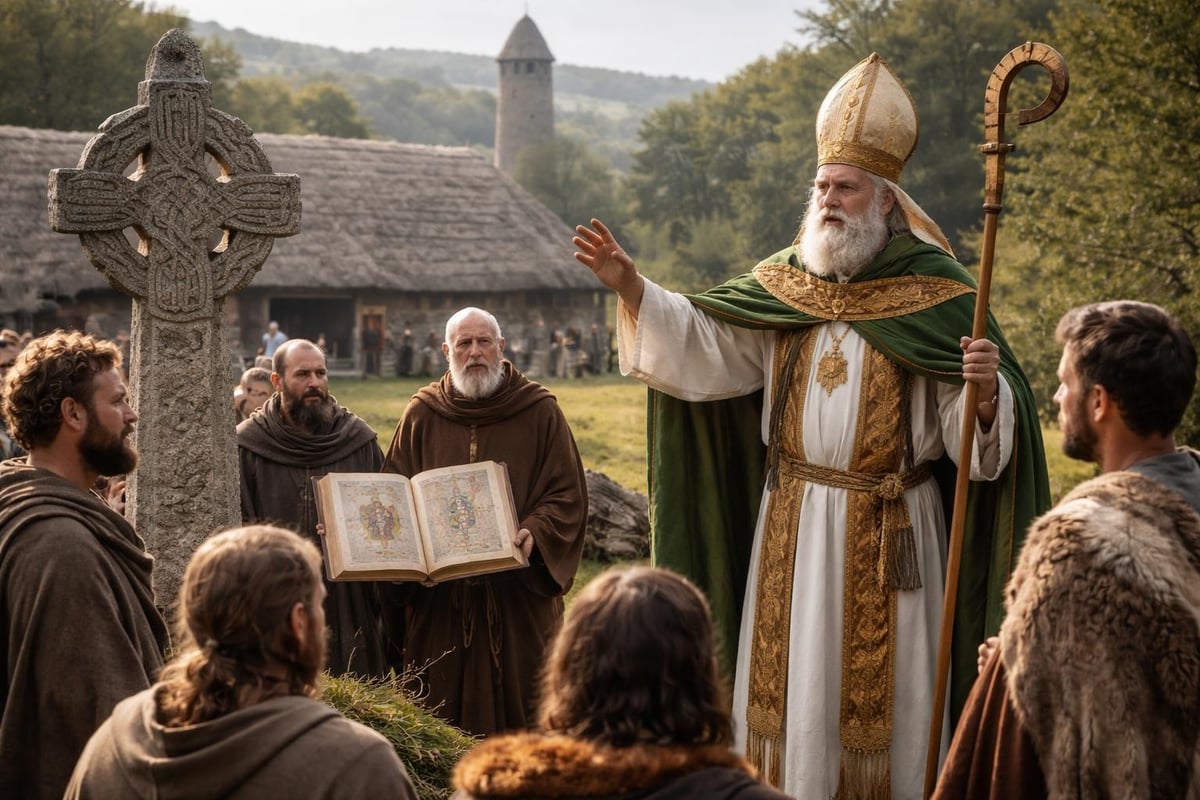
The Lasting Impact on Irish Christianity
Saint patrick's mission fundamentally transformed Ireland from a pagan society into a Christian stronghold. By his death, traditionally dated March 17, 461 AD, he had established dioceses, ordained priests, and founded monasteries throughout the island. These institutions became centers of learning and spirituality that would eventually send missionaries throughout Europe during the Dark Ages. Irish monks preserved classical knowledge and spread Christianity across the continent, earning Ireland the title "Island of Saints and Scholars."
The monastic tradition that flourished in Ireland following saint patrick's mission produced remarkable spiritual fruits. Monasteries like Clonmacnoise, Glendalough, and Kells became renowned centers of theological study, manuscript illumination, and missionary training. The Book of Kells, one of Christianity's most beautiful illuminated manuscripts, emerged from this tradition centuries after saint patrick's death, demonstrating the enduring cultural and spiritual legacy he initiated.
His influence extended beyond religious conversion to social transformation. Saint patrick opposed practices like slavery and the killing of infants, challenging cultural norms that violated Christian dignity principles. His advocacy for the marginalized reflected the Gospel's concern for the vulnerable and established patterns of Christian social teaching that continue in Catholic tradition today.
The Development of Saint Patrick's Day
The feast day of saint patrick, celebrated on March 17, has evolved significantly over centuries. Originally a religious observance marking his death, it began as a solemn holy day in the Catholic Church. The history of Saint Patrick's Day shows how it gradually incorporated Irish cultural celebrations. In Ireland, the day traditionally included attending Mass and special church services, followed by modest family gatherings.
The celebration transformed dramatically when Irish immigrants brought the tradition to America. The first recorded Saint Patrick's Day parade occurred in New York City in 1762, organized by Irish soldiers serving in the British military. According to historical records, this parade has continued annually and is now one of the world's largest celebrations of Irish heritage. Similarly, Chicago's tradition of dyeing the river green has become an iconic symbol of American Saint Patrick's Day celebrations.
For Catholics, maintaining the spiritual focus of saint patrick's feast day amid secular celebrations presents both challenges and opportunities. The day offers a chance to remember his missionary zeal, his deep prayer life, and his courage in proclaiming the Gospel. Many parishes now offer special Masses, lectures on his life, or prayer services that recenter the celebration on its religious origins.
Spiritual Lessons from Saint Patrick's Life
The example of saint patrick offers profound lessons for contemporary Catholics navigating faith in challenging cultural contexts. His transformation from slavery to sainthood demonstrates that God can use even traumatic experiences for spiritual growth and eventual mission. Rather than becoming bitter about his captivity, saint patrick allowed those years to deepen his prayer life and prepare him for his calling.
His missionary approach provides a model for evangelization that respects culture while proclaiming truth. Saint patrick didn't simply condemn Irish paganism; he sought to understand the culture and find points of connection with Christian teaching. This inculturation method continues to guide Catholic missionary work worldwide. At the same time, he never compromised core Gospel truths, demonstrating the balance between cultural sensitivity and doctrinal fidelity.
Key virtues exemplified by saint patrick include:
- Forgiveness: Returning to minister among those who had enslaved him
- Courage: Confronting powerful Druids and pagan kings with Christian truth
- Humility: Acknowledging his educational limitations while trusting God's calling
- Perseverance: Continuing his mission despite opposition and criticism
- Prayer: Maintaining constant communication with God in all circumstances
The prayer attributed to saint patrick, known as "Saint Patrick's Breastplate" or "The Lorica," captures his Christ-centered spirituality. This powerful prayer invokes divine protection and expresses complete dependence on God. While scholars debate whether saint patrick actually composed this prayer, it reflects the theological depth and spiritual intensity characteristic of his ministry. Catholics seeking to strengthen their prayer lives can find inspiration in studying the lives of saints who demonstrated such devotion.
Many Catholics today turn to saint patrick's intercession for protection, especially when facing spiritual warfare or missionary challenges. His experience confronting pagan religious systems makes him a powerful patron for those evangelizing in secular or hostile environments. The courage he displayed in fifth-century Ireland remains relevant for Christians facing cultural opposition to Gospel values in 2026.
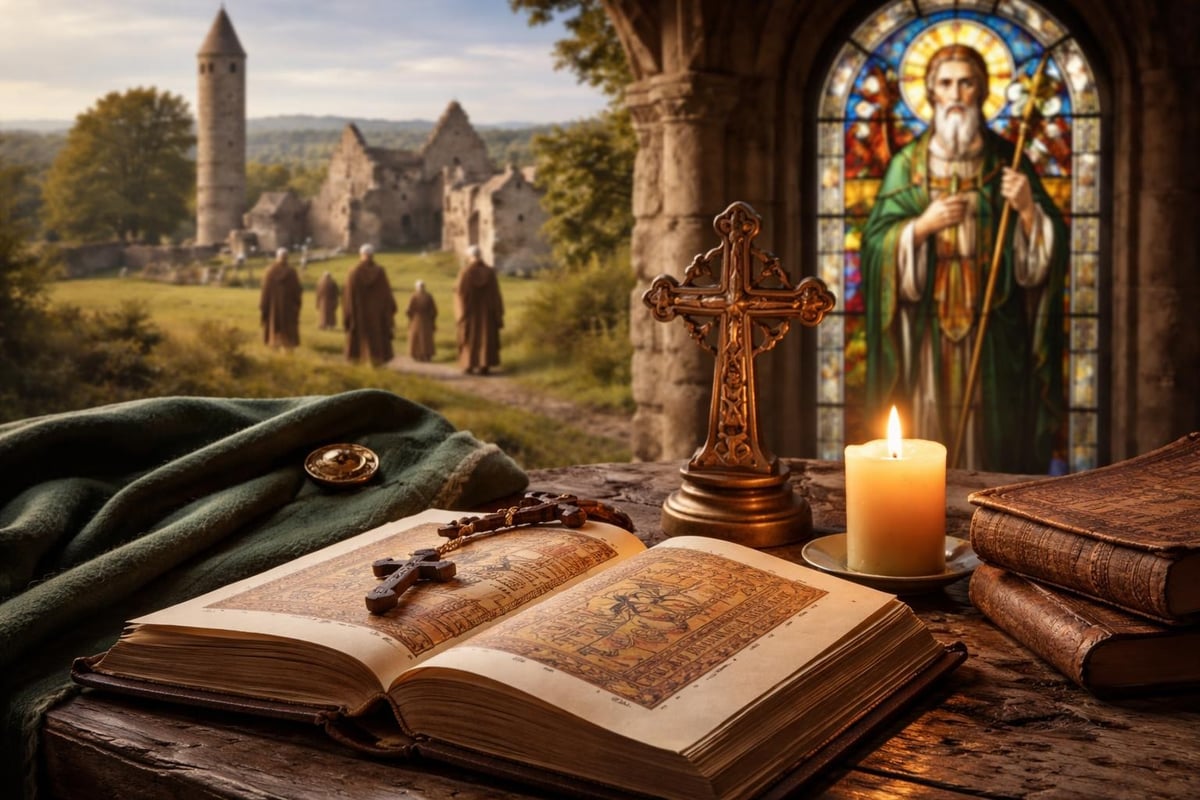
Historical Sites and Pilgrimage
Several locations in Ireland claim connections to saint patrick, though establishing historical certainty proves difficult given the passage of sixteen centuries. Croagh Patrick, a mountain in County Mayo, is traditionally considered the site where he fasted for forty days and received his vision calling him back to Ireland. Pilgrims still climb this mountain annually on the last Sunday of July, many barefoot, in an act of penance and devotion. This practice demonstrates how saint patrick's legacy continues to inspire physical expressions of faith.
Saint Patrick's Cathedral in Dublin stands near the site where tradition holds he baptized converts in the fifth century. Built between 1220 and 1260, the cathedral honors his memory and serves as a center of worship and pilgrimage. The cathedral houses various artifacts and memorials related to Irish Christian history, connecting contemporary believers with their spiritual heritage.
Downpatrick in County Down claims to be saint patrick's burial site, though this tradition emerged centuries after his death and lacks definitive historical proof. The town also features a modern statue and visitor center dedicated to his life and mission. For Catholics interested in pilgrimage or historical exploration, these sites offer opportunities to connect more deeply with saint patrick's story and reflect on their own faith journeys.
Archaeological and Historical Research
Modern scholarship continues to investigate saint patrick's life and mission through archaeological, linguistic, and historical analysis. Researchers study his writings for linguistic clues about his education and background. Archaeological excavations of early Christian sites in Ireland provide context for understanding how Christianity established itself during his era and afterward. This ongoing research helps distinguish historical facts from later legendary additions.
Some scholars debate the "two Patrick" theory, suggesting that traditions attributed to one saint patrick might actually reference two different historical figures. Others question the traditional dates of his life and mission. While these academic discussions interest historians, they don't diminish saint patrick's significance for Catholic faith. Whether every detail of his traditional biography proves historically accurate or not, his documented writings and the undeniable Christian transformation of Ireland testify to a remarkable evangelization mission.
Devotion and Prayer Practices
Catholic devotion to saint patrick expresses itself through various prayer practices and spiritual traditions. Many believers pray his Breastplate prayer for protection against spiritual and physical dangers. Others invoke his intercession when facing challenges in sharing their faith or when seeking courage to live Christian values in hostile environments. His feast day provides an annual opportunity to examine one's own missionary zeal and commitment to evangelization.
The example of saint patrick particularly resonates with those who have experienced difficult life circumstances. His transformation of suffering into spiritual strength offers hope to people facing trials. Catholics struggling with forgiveness find inspiration in his ability to minister lovingly among those who had enslaved him. His story demonstrates that God's calling often emerges from unexpected places and that past suffering can prepare believers for future mission.
Practical ways to honor saint patrick include:
- Reading his authentic writings to understand his theology and spirituality
- Praying for courage in evangelization and sharing faith with others
- Supporting missionary work in areas where Christianity faces opposition
- Studying Irish Catholic history and the fruits of his evangelization
- Participating in parish celebrations that maintain spiritual focus
Resources for Deeper Study
Those seeking to deepen their understanding of saint patrick and his mission can access numerous resources. Historical accounts provide comprehensive biographical details that separate fact from legend. Academic studies examine his theological contributions and missionary methods. The ongoing relevance of his example makes him an excellent subject for catechetical programs, confirmation classes, or personal spiritual reading.
Here are valuable resources for continued learning:
- Explore Journeys of Faith Online store with thousands of Catholic Items at https://journeysoffaith.com/collections
- Our Unique Mega Search Engine at https://journeysoffaith.com/search is linked to hundreds of Catholic Shops and Stores
- Get the Journeys of Faith NEW App for iPhone or Android-Search for Journeys of Faith or go to https://journeysoffaith.com/pages/download-our-app
- Chat with us anytime at https://chatting.page/mjxs9aerrtgm3lmpndlcepmbyosntrjn
- We need your help to reach more souls. Please Make a Donation at https://journeysoffaith.com/pages/donate
Understanding saint patrick's life enriches Catholic faith by demonstrating how God uses ordinary people, even those with limited formal education, to accomplish extraordinary missions. His willingness to return to Ireland despite his traumatic captivity there exemplifies radical Christian forgiveness and obedience to divine calling. The monastic and educational traditions he established influenced Christian civilization for centuries, preserving learning during Europe's darkest periods and sending missionaries throughout the continent.
For contemporary Catholics, saint patrick's example remains profoundly relevant. His cultural sensitivity combined with doctrinal clarity offers a model for engaging secular society without compromising truth. His emphasis on prayer as the foundation of effective ministry challenges believers to deepen their personal relationship with Christ. His courage in confronting powerful opposition inspires those facing cultural hostility to Christian values. Most fundamentally, his story testifies that one person, fully surrendered to God's will, can transform entire nations spiritually.
The life of saint patrick demonstrates how divine grace transforms captivity into mission, suffering into strength, and one faithful servant into a catalyst for national conversion. His legacy continues inspiring Catholics to embrace courageous evangelization, deep prayer, and cultural engagement rooted in Gospel truth. Journeys of Faith offers extensive resources about saint patrick and other Catholic saints whose lives illuminate the path to holiness, helping believers discover role models for their own spiritual journeys and providing tools for sharing faith with others through various media formats.