

Each year, millions around the world pause to reflect on the nativity, a story that resonates across generations. But what does the nativity truly mean in 2026, as traditions evolve and society changes?
This guide offers an in-depth exploration of its origins, enduring symbols, and the cultural impact that continues to shape celebrations today. We will trace the nativity’s historical roots, examine its global expressions, and consider modern interpretations that keep its message alive.
By understanding the nativity’s relevance in our era, readers are invited to rediscover its power to inspire faith, unity, and deeper reflection during the 2026 season.
The Historical Roots of the Nativity
The nativity story stands at the heart of Christian tradition, weaving together history, faith, and culture. To understand the nativity, we begin by exploring its biblical foundations and the world into which it was first told.
The nativity’s earliest narratives appear in the Gospels of Matthew and Luke. Each Gospel offers a unique perspective on Jesus’ birth, providing details about the setting, key figures, and the events surrounding the arrival of the Christ child. Matthew’s account emphasizes the journey of the Magi and the role of King Herod, while Luke focuses on the humble circumstances in Bethlehem and the shepherds’ visit.
Life in Bethlehem during the first century was shaped by Judea’s position under Roman rule. The census ordered by Emperor Augustus brought Mary and Joseph to Bethlehem, fulfilling ancient prophecies and connecting the nativity to broader historical currents. These details help ground the nativity in a real time and place, making it more than just a symbolic tale.
Let’s look at the key figures who populate the nativity story:
- Mary: The mother of Jesus, celebrated for her faith and obedience.
- Joseph: The earthly father, a figure of protection and humility.
- The infant Jesus: Central to the nativity, representing hope and divine promise.
- Shepherds: Ordinary people, symbolizing inclusivity and the spread of good news.
- Angels: Messengers who proclaim peace and joy.
- The Magi: Wise men from the East, bringing gifts and recognizing Jesus’ significance.
Comparing the Gospel accounts reveals both similarities and subtle differences. For example, only Matthew mentions the Magi, while only Luke describes the manger and the angelic announcement to shepherds.
| Key Element | Matthew | Luke |
|---|---|---|
| Angelic message | To Joseph | To Mary and shepherds |
| Journey | Flight to Egypt | Journey to Bethlehem |
| Visitors | Magi from the East | Shepherds |
| Birthplace detail | House | Manger and stable |
Scholars and historians have long examined the nativity’s historical foundations. Archaeological discoveries, such as ancient inscriptions and early Christian art, provide glimpses into how the nativity was viewed by the first believers. While some aspects remain the subject of debate, there is a growing body of work supporting the historical roots of the nativity, as explored in this historical analysis of the Nativity story.
Early Christian communities played a vital role in shaping the nativity tradition. Through oral storytelling, liturgies, and art, they preserved and expanded the story’s reach. The nativity quickly spread across the ancient world, adapting to diverse cultures and languages while retaining its core message.
Artifacts, such as ancient nativity scenes carved into catacomb walls, and references in texts from early church leaders, reveal how the nativity became central to Christian identity. Today, over two billion Christians commemorate the nativity each year, making it one of the most widely celebrated events in human history.
The enduring power of the nativity lies in its ability to connect generations, inspire faith, and offer hope in every era. By understanding its historical roots, we can better appreciate the depth and significance the nativity continues to hold today.
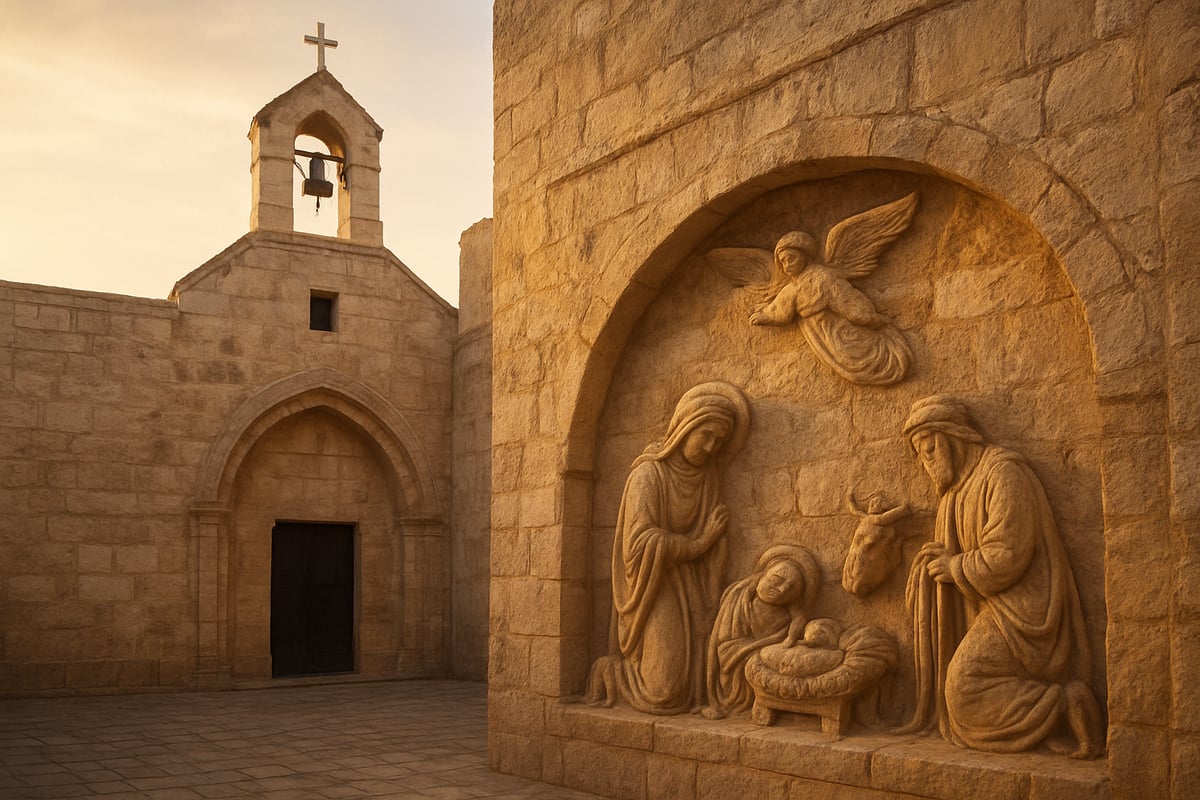
Symbolism and Spiritual Meaning of the Nativity
The nativity is rich in symbols that have resonated across centuries, inviting contemplation and spiritual discovery. Each element, from the humble manger to the guiding star, tells a story that transcends time and culture. Exploring these symbols reveals why the nativity continues to inspire believers and seekers alike.
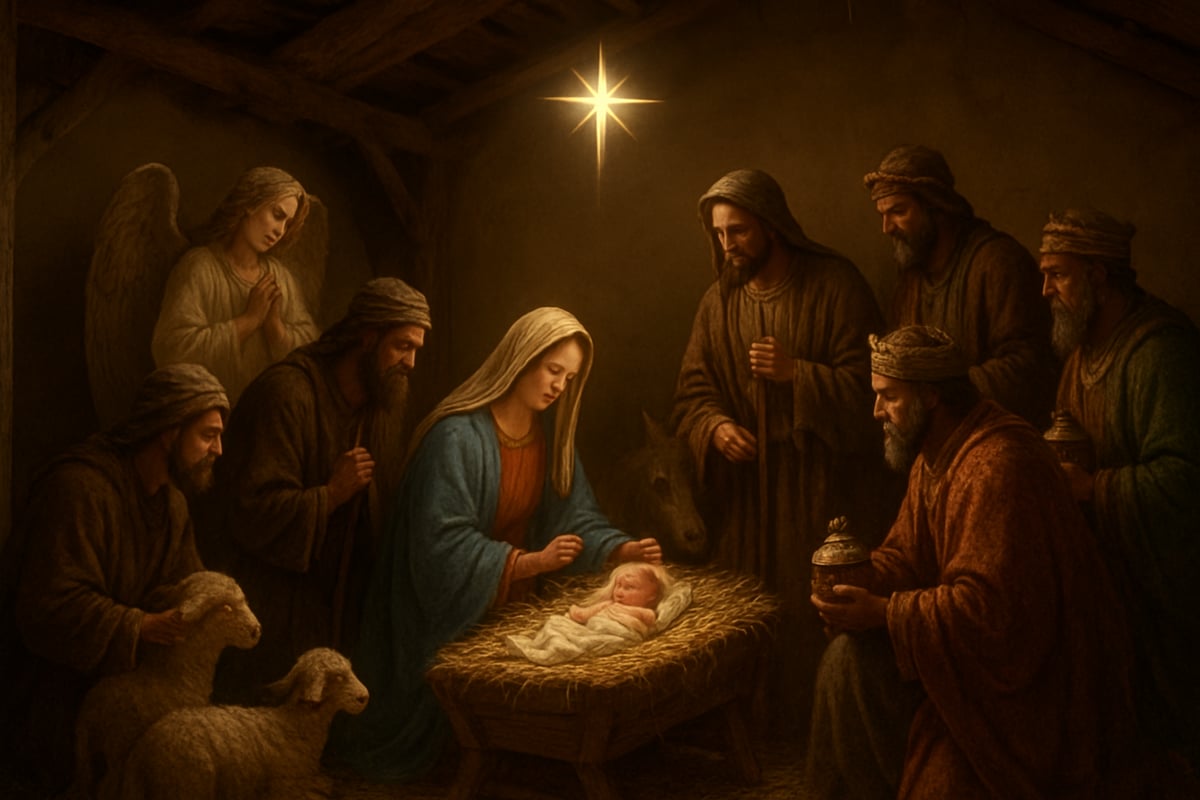
The Core Symbols of the Nativity
At the heart of the nativity are symbols that shape our understanding of its message. The manger represents humility, showing that greatness often arises from the simplest circumstances. The star overhead is a beacon of hope and divine guidance, leading the Magi and shepherds to witness a profound event.
Angels in the nativity scene announce peace and goodwill, serving as messengers between heaven and earth. The shepherds, humble and ordinary, remind us that the nativity embraces all people, regardless of status. The Magi, with their gifts of gold, frankincense, and myrrh, symbolize recognition of Jesus’ kingship and the fulfillment of ancient prophecies. Animals and the stable setting evoke peace, reminding us of creation’s harmony at the moment of the nativity.
Artists throughout history have used these symbols to convey deeper truths. Famous paintings, such as those by Giotto and Caravaggio, highlight the interplay of light and darkness, the innocence of the child, and the reverence of all who gather. The nativity’s core symbols make the story accessible and meaningful across generations.
Theological and Spiritual Interpretations
For Christians worldwide, the nativity stands as a cornerstone of faith. It marks the moment when the divine entered human history, embodying the doctrines of incarnation and redemption. Spiritual lessons from the nativity include humility, selfless love, and hope in uncertain times.
Mary and Joseph are celebrated for their unwavering faith and obedience, serving as enduring models for believers. Their presence in the nativity underscores the importance of trust and courage in responding to God’s call. The nativity’s significance is woven into liturgy and worship across denominations, from Catholic midnight Masses to Orthodox vigils and Protestant carol services.
Theological commentaries, both ancient and modern, offer insights into the spiritual impact of the nativity. Many saints and scholars have reflected on its meaning, deepening our understanding of its enduring power. For those interested in exploring the lives and writings of these key figures, the Catholic Saints Books Collection provides valuable resources that illuminate their connection to the nativity story. Through their perspectives, the nativity continues to shape faith and inspire devotion.
The Nativity in Personal Faith Journeys
For many families and individuals, the nativity is more than a historical event; it becomes a lived experience. The act of setting up a nativity scene, or crèche, invites reflection and prayer, making the story tangible in daily life. Through storytelling and devotion, the nativity offers opportunities to teach children about faith, hope, and compassion.
Personal testimonies often highlight how the nativity inspires transformation, encouraging acts of kindness and renewed spiritual commitment. In many communities, traditions like nativity pageants and communal prayers foster a sense of belonging and shared purpose. Data from recent surveys shows that the nativity remains central to personal spirituality, with a significant majority citing it as a key part of their holiday observances.
The nativity’s influence extends into homes, schools, and parishes, nurturing faith across generations. Its enduring presence in personal journeys ensures that the message of peace and love remains vibrant and relevant for all.
Global Traditions and Cultural Expressions of the Nativity
Around the globe, the nativity holds a special place in both religious and cultural celebrations. Its story has inspired countless traditions that unite communities, reflect regional identities, and express the enduring message of hope. Exploring the nativity across diverse societies reveals a tapestry of customs, creativity, and social impact.
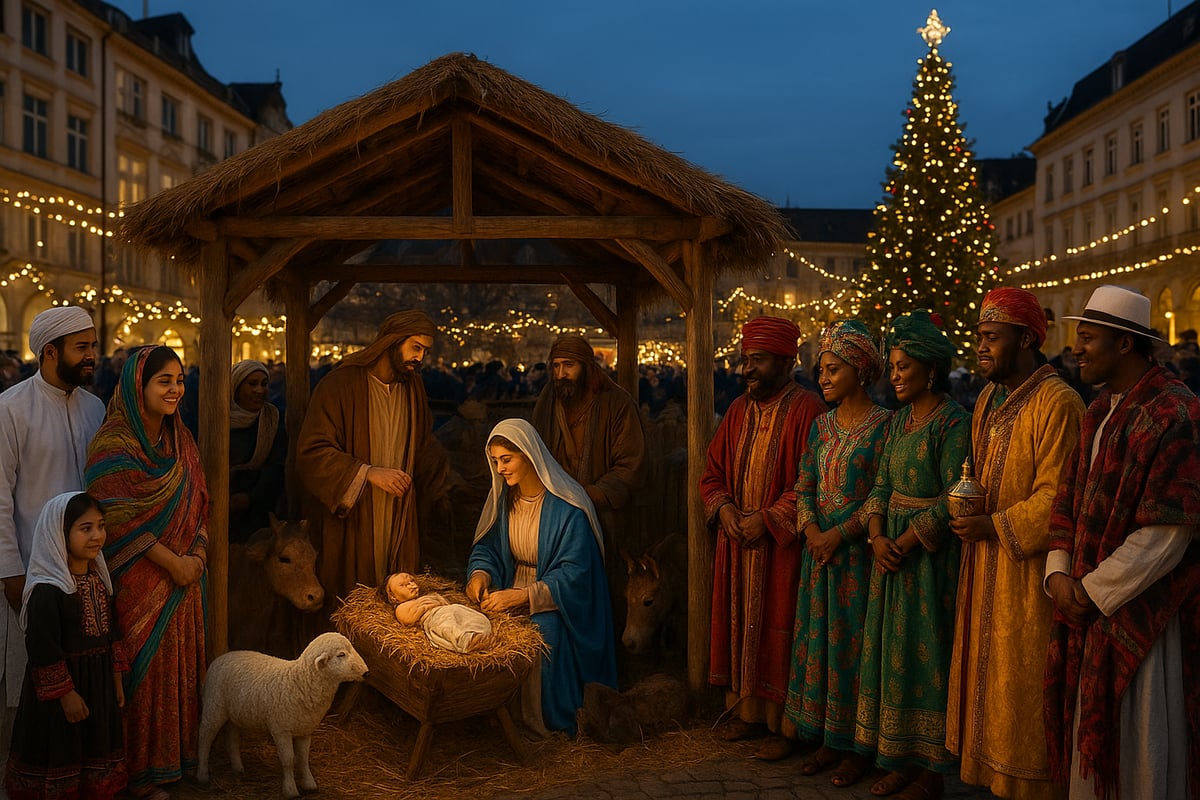
Nativity Celebrations Around the World
The nativity is celebrated in remarkably diverse ways across continents, each culture adding its unique touch. In Mexico, Las Posadas is a nine-day reenactment commemorating Mary and Joseph’s search for shelter, often involving vibrant processions, music, and shared meals. Italy is renowned for its elaborate presepe, or nativity scenes, which can be found in homes, churches, and public spaces, often including figures representing local trades and folklore.
In Germany, families and communities gather for Krippenspiel, a nativity play featuring children in costume retelling the biblical story. In the Philippines, the “Panunuluyan” parade brings the nativity to life with music and lanterns. Even in countries with smaller Christian populations, the nativity is marked by joyful gatherings and creative displays.
According to recent studies, over two billion people worldwide participate in Christmas and nativity traditions annually. These celebrations serve as a bridge between faith and culture, fostering unity. For a broader view of how the nativity is depicted and celebrated globally, see Global Nativity celebrations and traditions.
Artistic and Media Representations
Art has played a central role in expressing the nativity’s meaning throughout history. Early Christian mosaics depicted the nativity in basilicas, while Renaissance painters like Caravaggio and Botticelli infused their works with rich symbolism—each element, from the manger to the star, carried layers of spiritual and cultural meaning.
Today, the nativity continues to inspire creators. Films such as “The Nativity Story” and numerous theatrical productions bring the narrative to new audiences. In literature, poets and authors reinterpret the nativity in contemporary settings, making its themes relevant for modern readers. Digital technology has further expanded possibilities, with interactive nativity experiences and virtual galleries now accessible online.
Collectors often compare traditional handcrafted nativity sets with modern minimalist designs. Both serve as focal points for reflection, but they also reveal how the nativity evolves to match changing tastes and technologies. Popular culture, from holiday cards to advertisements, incorporates nativity imagery, ensuring its continued presence in public consciousness.
Contemporary Adaptations and Social Impact
In recent years, the nativity has become a catalyst for community outreach and social engagement. Many churches and civic groups organize food drives, shelter support, and charity events inspired by the nativity’s message of compassion. Some urban nativity scenes are intentionally designed to raise awareness about homelessness or migration, reflecting current social realities.
The nativity also serves as a foundation for interfaith dialogue, highlighting universal values such as peace, hospitality, and hope. Inclusive and multicultural nativity displays are increasingly common, welcoming people of all backgrounds to participate and reflect.
During the Christmas season, charitable giving and volunteerism see notable increases, often linked to the nativity’s influence. Surveys show that for many, participating in nativity-centered activities fosters a deeper sense of belonging and purpose. Modern adaptations ensure the nativity remains a living tradition, relevant to society’s evolving needs.
The Nativity in Modern Faith and Society (2026 Perspective)
The nativity continues to hold a special place in the hearts of millions, even as society changes rapidly. In 2026, the nativity bridges tradition and innovation, inviting people to reflect on its meaning in a world shaped by technology, cultural shifts, and new forms of community.
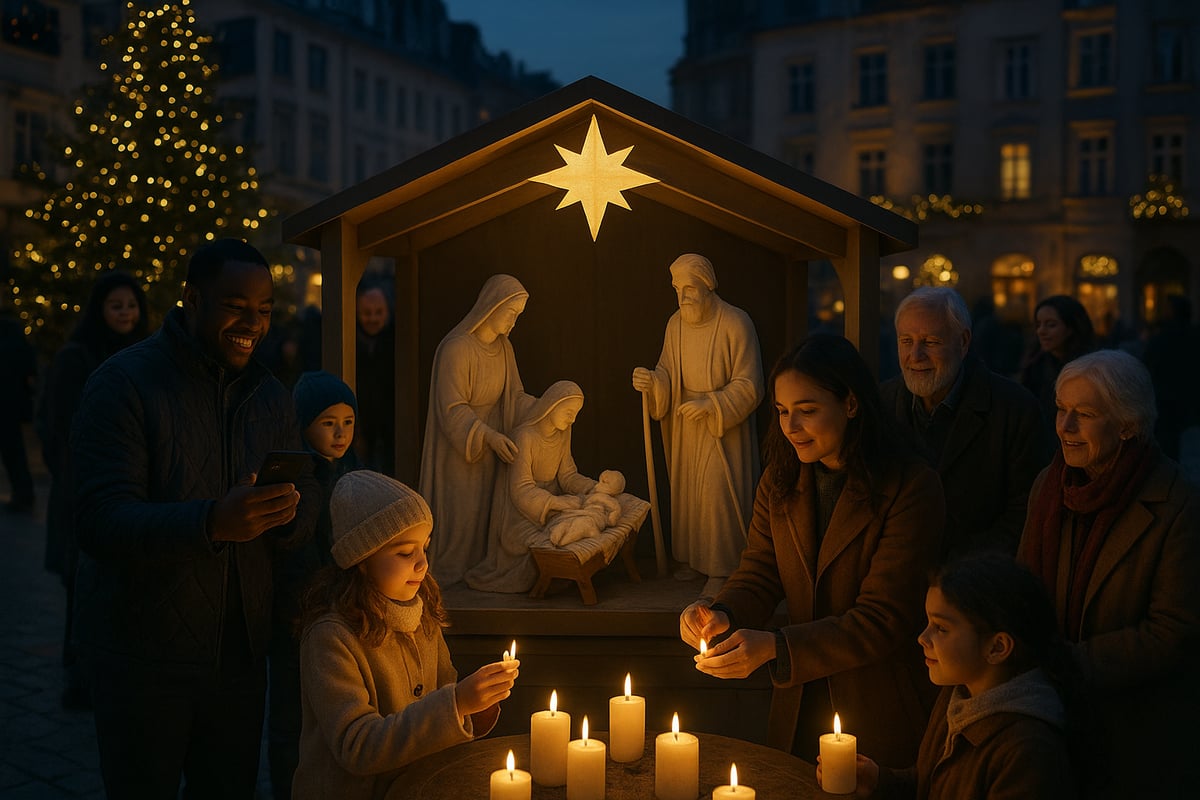
The Nativity in a Changing World
In recent years, the nativity has adapted to reflect global transformations. Virtual nativity pageants, online worship, and digital storytelling have become common, especially as communities responded to pandemics and evolving lifestyles. Many families now explore the nativity through interactive apps, video calls, and virtual gatherings, making the tradition accessible regardless of location.
Church attendance patterns continue to shift, with more people participating in hybrid or entirely online services. For young people, the nativity remains meaningful when connected to real-life experiences and social media engagement. Sharing nativity scenes, prayers, and reflections online encourages a sense of belonging and renews interest among new generations.
Cultural diversity also shapes how the nativity is celebrated. Families integrate local customs and languages, sometimes blending traditional figures with contemporary symbols. Educational resources, such as those found at Home School Religious Resources, help parents and teachers explain the nativity in ways that resonate with today's children.
Surveys reveal that digital participation in Christmas and nativity events rivals in-person gatherings, reflecting both the challenges and opportunities of our connected age. The nativity, in this context, becomes a living tradition that unites people across borders and time zones.
Debates and Challenges Surrounding the Nativity
As the nativity is displayed in public spaces, debates over religious expression and multicultural sensitivity often arise. Some communities face legal challenges regarding nativity scenes on government property, prompting discussions about the separation of church and state. Recent court rulings illustrate the complexity of balancing tradition with inclusivity in diverse societies.
Commercialization also affects the nativity's meaning. Holiday marketing and consumerism sometimes overshadow its spiritual message, leading faith leaders to advocate for a renewed focus on the story's true values. Public opinion remains divided, with polls indicating both strong support for visible nativity displays and concerns about respecting all beliefs.
Interfaith dialogues highlight the nativity's universal themes of hope and peace, encouraging respectful celebrations in pluralistic environments. By addressing these challenges, communities strive to preserve the nativity's significance while embracing diversity.
The Enduring Message of the Nativity in 2026
Despite changes and debates, the nativity continues to inspire hope, compassion, and unity. Faith leaders emphasize that the nativity calls people to reflect on generosity, humility, and the importance of community. In 2026, many churches and organizations create inclusive celebrations, drawing from longstanding traditions such as the Holy House of Loreto Replica to foster connection.
The nativity remains a catalyst for acts of service and social renewal. Data shows that faith-based community engagement increases during Christmas, with people volunteering and supporting those in need. Statements from church leaders this year reaffirm that the nativity is not only a story of the past, but a living invitation to build a more compassionate world.
Looking ahead, the nativity is expected to evolve alongside society, always offering a message that transcends time and culture.
Creating Meaningful Nativity Experiences in 2026
Celebrating the nativity in 2026 invites us to rediscover faith, creativity, and community. Creating meaningful experiences around the nativity can transform the season into a time of reflection and connection. Whether you’re building a nativity scene, gathering for storytelling, or embracing the spiritual lessons at its core, these practices help keep the nativity at the heart of your celebrations.
Building and Displaying Nativity Scenes
Setting up a nativity scene is a cherished way to bring the nativity story into your home or community. Begin by selecting a space that allows for visibility and contemplation. Choose figures that reflect traditional or contemporary styles, using materials like wood, ceramic, or even recycled items. Many families incorporate local customs, creating scenes that honor their heritage and make the nativity more personal.
When creating a display, consider the global variety of traditions. For example, the Italian presepe has become famous for its intricate detail and regional flair, as described in Nativity scenes in Italy. Community projects often build large-scale nativity scenes, inviting participation from all ages and backgrounds.
Including children and youth in building the nativity encourages learning and creativity. Assign roles for arranging figures or crafting animals and stars. Outdoor nativity scenes require weatherproof materials and secure placement. Public installations can serve as focal points for neighborhood gatherings and seasonal events.
The popularity of DIY nativity kits has risen in recent years. According to surveys, more families are opting for handmade displays, blending tradition with modern craft trends. This hands-on approach reinforces the meaning of the nativity for everyone involved.
Integrating the Nativity into Family and Community Life
The nativity offers countless opportunities for meaningful family and community activities. Organize family devotions or storytelling sessions centered on the nativity, allowing each member to share their thoughts or favorite moments. Many communities host nativity plays or pageants, involving children and adults in retelling the story through drama, music, and art.
Multicultural traditions, such as Las Posadas: A Mexican Christmas tradition, reenact Mary and Joseph’s search for shelter, offering a unique way to experience the nativity together. Hosting intergenerational workshops, craft sessions, or caroling events can further enrich your celebration.
Educators and catechists use the nativity to teach values like compassion, humility, and hope. Schools and parishes often report high participation rates in nativity-related events, reflecting the enduring appeal of these traditions. Successful programs focus on inclusivity, welcoming families from varied backgrounds to join in the festivities.
A summary of popular community activities:
| Activity | Participation Rate (%) |
|---|---|
| Nativity Plays | 68 |
| Family Storytelling | 54 |
| DIY Nativity Workshops | 49 |
| Community Displays | 62 |
These events create lasting memories and strengthen the bonds that the nativity inspires.
Embracing the Spiritual Lessons of the Nativity
The nativity’s message of humility, generosity, and hope is especially relevant in today’s world. Reflecting on these themes can shape your holiday practices and encourage spiritual growth. Acts of service, such as volunteering or supporting charitable causes, are powerful ways to embody the values of the nativity.
Incorporate moments of prayer, meditation, or scripture reading into your daily routine. Many families find that sharing gratitude and mindfulness practices deepens their appreciation for the nativity’s significance. Social platforms offer opportunities to share nativity experiences, inspiring others and fostering a sense of unity.
Personal testimonies highlight the transformative power of the nativity. Individuals often report increased compassion and a renewed sense of purpose after engaging in faith-based traditions. Recent studies show that families who prioritize the nativity during Christmas experience higher levels of well-being and connection.
By embracing these practices, you ensure that the nativity remains a vibrant source of inspiration and renewal for generations to come.
As we reflect on the rich history, profound symbolism, and enduring relevance of the Nativity in 2026, it’s clear that these traditions continue to inspire faith and bring us together. If you feel inspired to deepen your own journey—whether through learning, sharing, or celebrating—you’ll find meaningful resources and unique ways to honor the Nativity and your Catholic faith in our curated collection. I invite you to take a moment and Browse Our Store for Unique Items that can enrich your family traditions and help you keep the spirit of the Nativity alive throughout the year.