

The story of Aloysius Gonzaga resonates across centuries as a testament to radical faith and youthful holiness. Born into Italian nobility during the Renaissance, this young Jesuit chose a path of absolute devotion to Christ, rejecting earthly privilege for a life of service and prayer. His brief but profound existence continues to inspire Catholics worldwide, particularly young people seeking models of purity and dedication in an increasingly secular world. Understanding Aloysius Gonzaga's journey offers valuable insights into the transformative power of grace and the call to holiness that transcends age, status, and circumstance.
The Noble Beginnings of Aloysius Gonzaga
Aloysius Gonzaga entered the world on March 9, 1568, in Castiglione delle Stiviere, a town between Brescia and Mantua in northern Italy. His father, Ferrante Gonzaga, served as Marquis of Castiglione and harbored ambitious plans for his eldest son.
The Gonzaga family ranked among the most powerful noble houses in Italy, with connections to ruling families throughout Europe. Young Aloysius grew up surrounded by wealth, military training, and courtly sophistication. His father envisioned a military career that would elevate the family's prestige even further.
Key aspects of his early environment:
- Exposure to Renaissance court culture and politics
- Military training beginning in early childhood
- Service as a page in the courts of Florence and Mantua
- Witnessing the moral corruption prevalent in noble circles
Despite this worldly upbringing, Aloysius demonstrated an unusual inclination toward prayer and spiritual matters from a remarkably young age. Historical accounts suggest he experienced his first spiritual awakening around age seven, when he began practicing mental prayer and developed a deep devotion to the Blessed Virgin Mary.

The Decision That Changed Everything
At age nine, while serving at the court of Francesco de' Medici in Florence, Aloysius made his first Holy Communion. This sacramental encounter intensified his desire for a religious vocation. By age fourteen, he had privately vowed perpetual virginity and set his heart on joining the Society of Jesus.
His decision ignited fierce opposition from his father, who viewed it as a betrayal of family duty and ambition. The conflict between Ferrante and Aloysius lasted nearly two years, during which the young man demonstrated extraordinary resolve and diplomatic skill.
| Aspect | Noble Expectation | Aloysius's Choice |
|---|---|---|
| Career Path | Military command, political influence | Jesuit priesthood, spiritual service |
| Marriage | Strategic alliance with powerful family | Vow of celibacy |
| Inheritance | Marquis title, vast estates | Complete renunciation |
| Social Standing | Increased family prestige | Humble religious life |
Brought to you by Journeys of Faith, founded by Bob and Penny Lord. We are an Augustinian Secular Institute and Cyber Apostles. Our mission is evangelization through media.
Jesuit Formation and Spiritual Growth
After formally renouncing his inheritance rights in 1585, Aloysius entered the Jesuit novitiate in Rome. His superiors recognized his exceptional spiritual maturity but also worked to moderate his severe ascetical practices.
The young Jesuit brought an intensity to religious life that sometimes concerned his directors. He practiced extreme mortifications and maintained rigorous prayer schedules that occasionally threatened his health. His spiritual guides, particularly St. Robert Bellarmine who served as his confessor, helped him balance fervor with prudence.
Characteristics of his Jesuit life:
- Exceptional obedience to superiors
- Profound humility despite his noble background
- Advanced contemplative prayer life
- Dedication to studying philosophy and theology
- Particular devotion to the Eucharist and Mary
The University of Notre Dame's faith resources provide excellent scholarly context on his Jesuit formation years. These years shaped the spiritual depth that would define his brief but impactful life.
The Plague and Ultimate Sacrifice
In 1591, a devastating plague swept through Rome, claiming thousands of lives. Despite his delicate health, Aloysius volunteered to serve the sick alongside other Jesuits. His superiors initially hesitated but eventually permitted him to care for plague victims in a hospital established by the Society.
This decision would prove fatal. While caring for a plague-stricken man, Aloysius contracted the disease himself. He lingered for several months, experiencing both physical suffering and profound spiritual consolation.
During his final illness, Aloysius demonstrated remarkable peace and even joy. He predicted the exact date of his death, June 21, 1591, the octave of Corpus Christi. He was only twenty-three years old.
Legacy and Patronage of Aloysius Gonzaga
The Vatican's official recognition of Aloysius through various liturgical texts underscores his enduring significance in the Church's treasury of sanctity. Pope Benedict XIII beatified him in 1605, and Pope Benedict XIV canonized him in 1726.
The Church designated Aloysius Gonzaga as patron saint of young students, Jesuit scholastics, and Christian youth in general. His feast day, June 21, appears on the USCCB's liturgical calendar as an optional memorial, allowing parishes and schools to celebrate his witness.
His patronages include:
- Young students and academics
- Jesuit novices and scholastics
- Christian youth organizations
- AIDS patients and caregivers
- Plague victims
Why Aloysius Gonzaga Matters Today
In contemporary Catholic life, Aloysius offers a counter-cultural witness to purity, sacrifice, and radical discipleship. His example challenges young people to resist materialistic values and embrace authentic holiness.
Many Catholic schools, particularly Jesuit institutions, invoke his patronage and celebrate his feast with special liturgies and educational programs. His life story provides a powerful catechetical tool for teaching about vocation, chastity, and servant leadership.
For those seeking deeper devotion to this remarkable saint, prayer cards can serve as daily reminders of his witness. Resources like prayer cards and novenas help Catholics maintain connection with the saints throughout their daily routines, carrying these tangible expressions of faith wherever they go.


Spiritual Teachings and Virtues
Though Aloysius wrote no extensive spiritual treatises, his letters and the testimonies of those who knew him reveal profound spiritual wisdom. His approach to holiness emphasized several core principles that remain relevant for modern disciples.
Purity of Heart
Aloysius's commitment to chastity went beyond mere physical abstinence. He cultivated a pure intention in all actions, seeking God's glory rather than human approval. This interior purity attracted others to Christ through the transparency of his witness.
His famous saying captures this focus: "It is better to be a child of God than king of the whole world." This perspective enabled him to renounce immense privilege without regret or second-guessing.
Sacrificial Love
The decision to serve plague victims demonstrated Aloysius's understanding of Christian charity. He didn't merely avoid sin; he actively sought opportunities to give himself completely for others, even at the cost of his life.
This sacrificial dimension connects directly to Eucharistic spirituality. Just as Christ gives Himself in the Eucharist, Aloysius gave himself in service. Catholic media resources that explore the Eucharist often highlight this connection between sacramental encounter and lived charity.
| Virtue | How Aloysius Practiced It | Modern Application |
|---|---|---|
| Humility | Rejected noble titles, embraced menial tasks | Serving others regardless of status |
| Obedience | Submitted to spiritual directors | Accepting Church teaching and guidance |
| Courage | Served plague victims despite danger | Standing for faith in hostile environments |
| Prayer | Maintained contemplative life amid activity | Daily prayer despite busy schedules |
Devotion to Aloysius Gonzaga in Practice
Catholics seeking to honor Aloysius and invoke his intercession have several traditional practices available. These devotions connect contemporary believers with centuries of veneration while addressing current spiritual needs.
Novenas and Prayers
Nine-day novenas to Aloysius typically focus on petitions related to youth, purity, and vocational discernment. These structured prayer periods prepare for his feast day or seek his intercession for specific intentions.
Traditional prayers emphasize his youthful holiness and ask for his help in maintaining purity of mind, body, and spirit. Many include references to his Jesuit identity and service to plague victims.
Elements often included in prayers to Aloysius:
- Recognition of his youthful sanctity
- Petitions for purity and chastity
- Requests for vocational guidance
- Intercession for students and academics
- Protection during illness
Educational and Formation Programs
Jesuit schools and youth ministries frequently incorporate Aloysius's story into formation programs. His example provides a relatable model for young people navigating the challenges of faith in modern culture.
Programs might include biographical presentations, service projects inspired by his plague ministry, or reflection exercises on vocation and sacrifice. The Catholic Encyclopedia's detailed entry offers historical context that enriches these educational efforts.
Historical Documentation and Scholarly Resources
The life of Aloysius Gonzaga benefits from substantial historical documentation, including contemporary accounts and early biographies. These sources provide reliable information about his spirituality and impact.
The British Library archives contain materials related to the Gonzaga family and early accounts of Aloysius's life. These manuscript collections offer researchers access to primary sources that illuminate his historical context.
Scholarly works continue to examine Aloysius's significance within Jesuit history and the broader Counter-Reformation period. Boston College's Jesuit studies collection includes critical editions of early biographies that shaped his public cult.
Artistic Representations
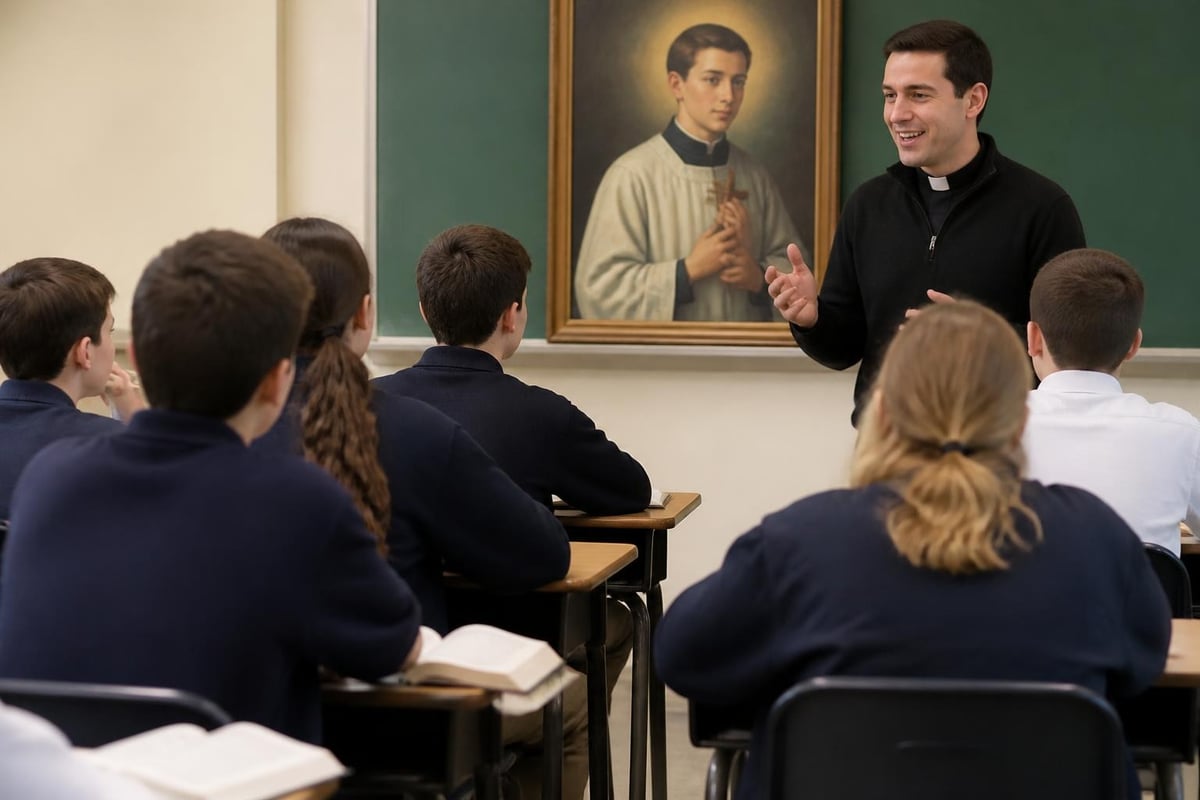
Throughout Catholic art history, Aloysius appears in paintings, sculptures, and devotional images. Artists typically depict him as a young man in Jesuit cassock, often with symbols of purity such as a lily, or with a crucifix and skull representing his meditation on death.
These artistic traditions help Catholics recognize him in church art and deepen devotion through visual meditation. Understanding the symbolism enriches appreciation for how the Church has honored his memory across centuries.
The Message for Contemporary Catholics
In 2026, the witness of Aloysius Gonzaga speaks powerfully to several urgent pastoral concerns. His life addresses questions about authentic masculinity, the possibility of youthful holiness, and the relationship between faith and secular culture.
Countering Cultural Narratives
Modern culture often presents chastity as impossible or unhealthy, particularly for young people. Aloysius demonstrates that purity is achievable and leads to profound freedom and joy. His example provides alternative narratives to the sexualized messaging saturating contemporary media.
Similarly, his rejection of wealth and status challenges materialistic values that dominate secular society. He shows that fulfillment comes not from accumulation but from self-gift and union with Christ.
Contemporary lessons from Aloysius:
- Holiness is possible at any age
- Sacrifice brings deeper joy than self-indulgence
- Purity enhances rather than diminishes life
- Service to the vulnerable reveals Christ
- Family opposition to vocation can be overcome with grace
Inspiring Vocational Courage
Many young Catholics experience family resistance when discerning religious life, similar to Aloysius's struggle with his father. His patient persistence while maintaining family relationships offers a model for navigating these difficult situations.
His story reminds discerners that God's call takes precedence even over legitimate family expectations. This doesn't mean disrespecting parents, but rather trusting that fidelity to vocation ultimately serves the family's spiritual good.
Stories of saints like Aloysius, along with figures such as Saint Anthony of Padua and Saint Clare of Assisi, create a constellation of witnesses demonstrating various paths to sanctity. Each offers unique insights while pointing to the same call to radical discipleship.
Aloysius Gonzaga and the Jesuit Charism
Understanding Aloysius requires appreciating the Jesuit spirituality he embraced. St. Ignatius of Loyola's vision of finding God in all things and serving Christ through active ministry shaped how Aloysius lived his brief religious life.
The Jesuit emphasis on education aligned perfectly with Aloysius's intellectual gifts and became expressed through his patronage of students. The Society's missionary zeal manifested in his plague service, embodying the motto of serving "for the greater glory of God."
Ignatian Spirituality in Practice
Aloysius's prayer life reflected Ignatian methods, particularly the examination of conscience and imaginative meditation on Gospel scenes. These practices deepened his union with Christ and informed his active charity.
His obedience to superiors exemplified the Jesuit structure of accountability and discernment through spiritual direction. Even his intense asceticism, when moderated by his confessors, demonstrated the Jesuit principle of balancing fervor with prudent judgment.
Jesuit characteristics in Aloysius's life:
- Intellectual formation alongside spiritual development
- Finding God through service to the marginalized
- Obedience within a structured religious community
- Missionary availability despite personal preferences
- Integration of contemplation and action
Celebrating the Feast of Aloysius Gonzaga
June 21 offers Catholics the opportunity to honor this youthful saint through liturgical celebration and personal devotion. Parishes, schools, and families can mark the occasion in various meaningful ways.
Liturgically, when celebrated, the Mass texts for St. Aloysius emphasize his purity, dedication to Christ, and generous service. The readings often focus on themes of youthful discipleship and single-hearted devotion to God's kingdom.
Beyond formal liturgy, families might incorporate special prayers, read his biography together, or perform acts of service in his honor. Students could research his life and share their findings, while youth groups might organize service projects caring for the sick or vulnerable.
Practical Ways to Honor Aloysius
Educational institutions named for him often observe the feast with particular solemnity, including special Masses, academic convocations, or service days. These celebrations reinforce the connection between learning and holiness that Aloysius embodied.
Individual Catholics might choose June 21 to begin a novena for youth, students, or those discerning vocations. Others may visit churches dedicated to Aloysius or venerate relics where available.
The enduring legacy of Aloysius Gonzaga challenges every generation of Catholics to embrace holiness with youthful vigor and complete generosity. His brief life demonstrates that sanctity requires not length of years but depth of love and fidelity to God's call. Whether you're exploring the lives of the saints, seeking resources for faith formation, or looking for devotional materials to deepen your spiritual journey, Journeys of Faith offers a wealth of Catholic media, books, prayer cards, and resources dedicated to evangelization and spiritual growth.
Resources:
-
Explore the Journeys of Faith online store with thousands of Catholic items at https://journeysoffaith.com/collections
-
Journeys of Faith is blessed to provide Catholic media, including podcasts and inspirational content, free of charge across multiple media platforms for viewers and listeners around the world. While access to this content remains free, there are significant and continually increasing costs associated with producing, hosting, and distributing these programs. Your support helps us continue sharing the beauty of the Catholic faith with souls. Please make a donation at https://journeysoffaith.com/pages/donate
