

Catholic saints prayer represents one of the most beautiful and misunderstood aspects of the Catholic faith. When Catholics pray to the saints, they aren't worshipping them or replacing God. Instead, they're asking these holy men and women who walked the earth before us to intercede on our behalf, much like asking a friend to pray for you during difficult times. This ancient practice connects believers across time and space in what the Church calls the Communion of Saints.
The tradition of seeking saintly intercession reaches back to the earliest days of Christianity. The faithful would gather at the tombs of martyrs, asking these heroes of the faith to carry their petitions to God. This wasn't superstition-it was recognition that death doesn't sever the bond between Christians. Those who have finished their earthly journey and reached heaven remain part of the Body of Christ, able to pray for those still on pilgrimage.
Understanding the Theology Behind Catholic Saints Prayer
The foundation of Catholic saints prayer rests on several key theological principles. The Catechism of the Catholic Church explains that the three states of the Church-the Church triumphant (in heaven), the Church suffering (in purgatory), and the Church militant (on earth)-remain united in Christ. This union means communication flows freely between all members of Christ's body.
When we examine what intercession truly means, we discover it's simply one Christian praying for another. The saints in heaven, freed from earthly distractions and perfected in charity, can intercede more powerfully than we can for ourselves. They see God face-to-face and present our needs with perfect love.
The Biblical Basis for Asking Saints to Pray
Scripture provides multiple examples supporting this practice:
- Revelation 5:8 describes the twenty-four elders holding "golden bowls full of incense, which are the prayers of the saints"
- James 5:16 states "The prayer of a righteous person is very powerful"
- 2 Maccabees 15:14 shows the prophet Jeremiah interceding for God's people after his death
- Hebrews 12:1 speaks of being "surrounded by so great a cloud of witnesses"
The US Conference of Catholic Bishops emphasizes that asking saints to pray for us doesn't diminish Christ's role as sole mediator. Rather, it reflects the communal nature of prayer and the reality that Christ's mediation works through His mystical body.
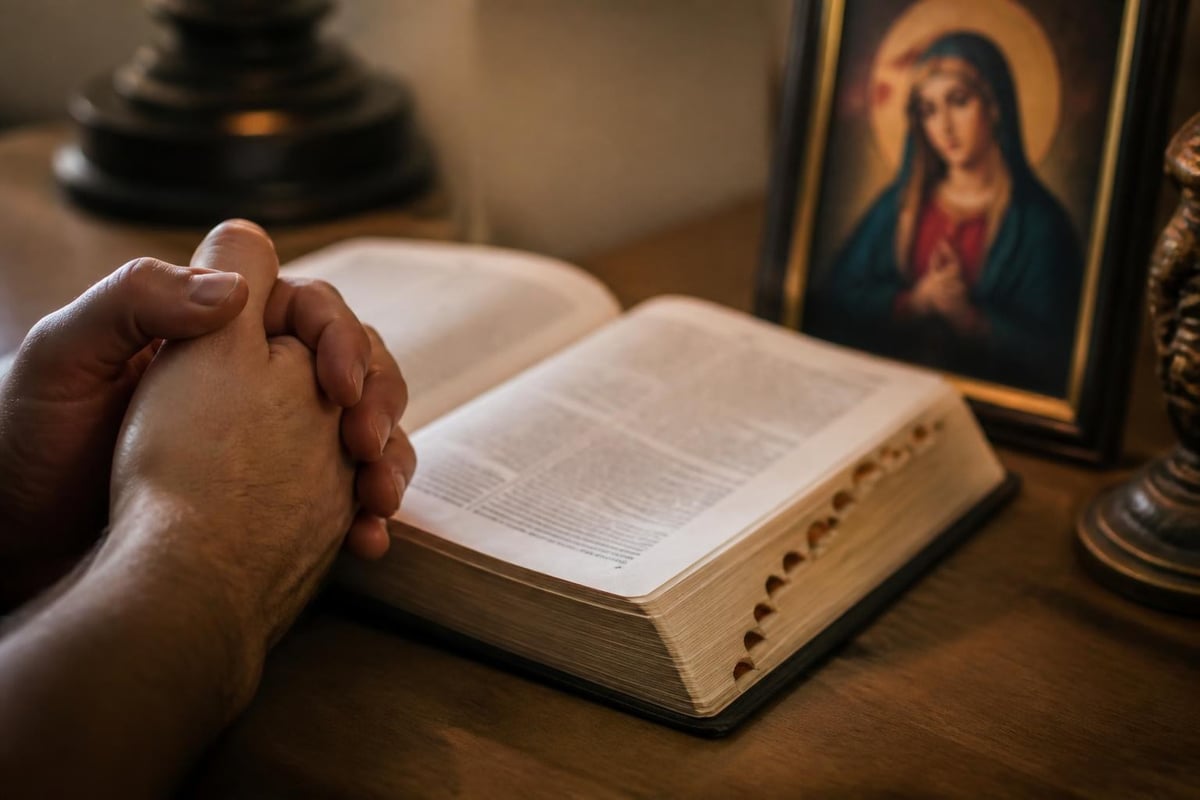
How to Practice Catholic Saints Prayer Effectively
Beginning a practice of praying with the saints doesn't require complicated rituals or special training. The approach can be as simple as speaking from your heart, acknowledging the saint's virtues, and asking for their prayers.
Start by choosing a saint whose life story resonates with your current needs. Saint Anthony of Padua for lost items, Saint Jude for impossible causes, Saint Joseph for workers and families-each saint's earthly experiences make them particularly understanding of specific struggles. This personal connection deepens prayer and makes the practice more meaningful.
Brought to you by Journeys of Faith, founded by Bob and Penny Lord. We are an Augustinian Secular Institute-Cyber Apostles-and our mission is evangelization through media.
Essential Elements of Effective Saintly Intercession
- Begin with reverence - Address the saint respectfully, acknowledging their holiness
- State your petition clearly - Be specific about what you're asking them to pray for
- Express confidence in their intercession - Trust that they hear and care about your needs
- Thank them in advance - Gratitude opens the heart to receive grace
- Include a personal connection - Mention why you chose that particular saint
- Close with traditional prayers - An Our Father or Glory Be honors the source of all grace
The beauty of Catholic saints prayer lies in its flexibility. You can pray formal novenas spanning nine days, recite traditional prayers passed down through generations, or simply speak conversationally to your heavenly friends. Pope Francis has taught that praying in communion with the saints enriches our prayer life and strengthens our faith journey.
Popular Catholic Saints and Their Special Patronages
| Saint | Patronage | Feast Day | Why Invoke Them |
|---|---|---|---|
| St. Joseph | Workers, fathers, families | March 19 | Protection and provision for household needs |
| St. Jude | Impossible causes, desperate situations | October 28 | When all other help seems lost |
| St. Anthony of Padua | Lost items, lost causes | June 13 | Finding what is physically or spiritually lost |
| St. Therese of Lisieux | Missions, florists, illness | October 1 | Simple, childlike approach to God |
| St. Michael the Archangel | Police, soldiers, spiritual warfare | September 29 | Protection against evil |
| St. Rita of Cascia | Impossible cases, abused wives | May 22 | Endurance through suffering |
Understanding patronages helps direct your prayers appropriately. These associations developed organically over centuries as the faithful experienced particular saints' intercession in specific areas. A Cambridge University study reveals how medieval Christians developed deep relationships with patron saints who guided them through life's challenges.
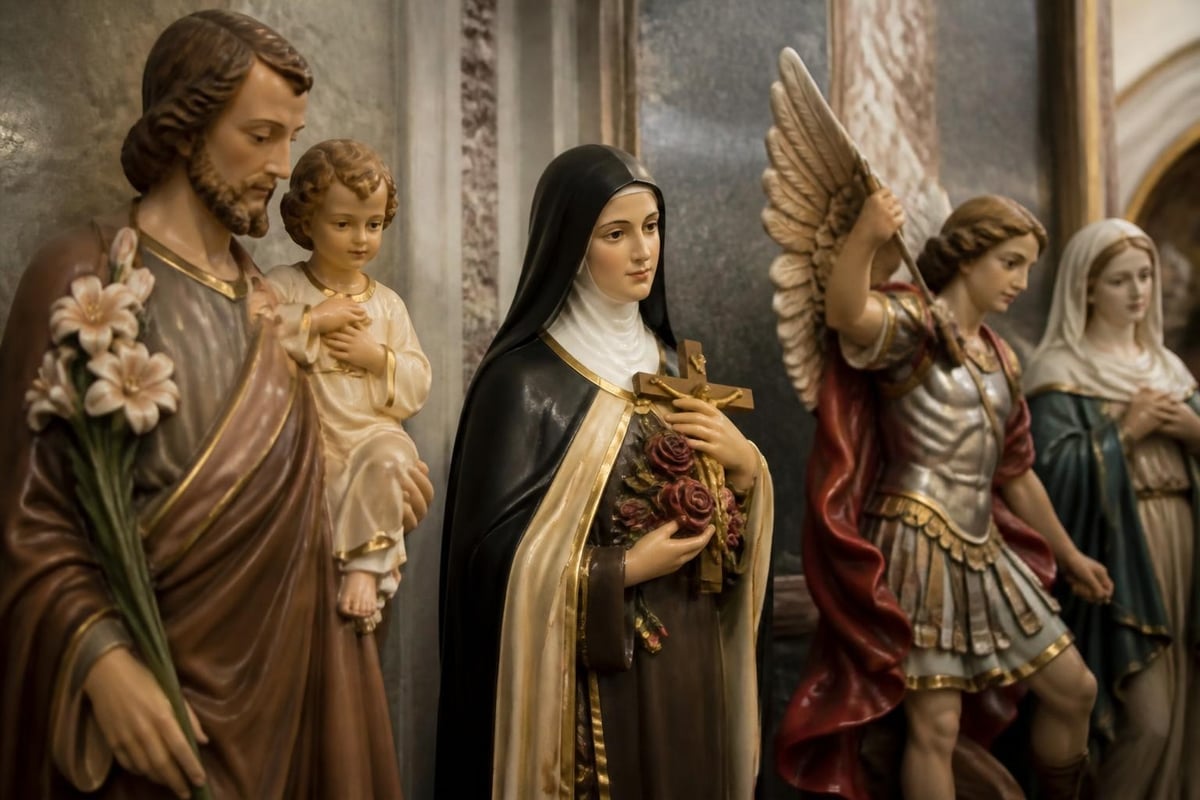
Building a Personal Relationship with the Saints
The most powerful Catholic saints prayer flows from relationship, not ritual. Read the lives of the saints whose help you seek. Understanding their struggles, victories, and paths to holiness creates spiritual kinship. They faced temptations, doubts, and hardships just as we do, yet they persevered.
Consider keeping prayer cards or small statues of your favorite saints as visual reminders of their presence and prayers. Many Catholics develop special devotions to particular saints, celebrating their feast days and incorporating their wisdom into daily life. For those seeking tangible reminders of this spiritual communion, Prayer Cards and Novenas provide beautiful, portable tools for maintaining these connections throughout your day. These cards serve as pocket-sized companions, offering prayers and images that strengthen your relationship with the saints who intercede for you.

Traditional Prayers to the Saints
Catholic tradition preserves countless beautiful prayers addressed to the saints. These time-tested formulas carry the prayers of millions who came before us, creating a spiritual symphony across the ages.
The Memorare to Mary
This ancient prayer, dating to at least the 15th century, addresses the Blessed Mother:
Remember, O most gracious Virgin Mary, that never was it known that anyone who fled to thy protection, implored thy help, or sought thy intercession was left unaided. Inspired with this confidence, I fly to thee, O Virgin of virgins, my Mother; to thee do I come; before thee I stand, sinful and sorrowful. O Mother of the Word Incarnate, despise not my petitions, but in thy mercy hear and answer me. Amen.
This prayer exemplifies the trust Catholics place in saintly intercession. Mary, as the Mother of God and our spiritual mother, holds a unique place among the saints. The theological understanding of Marian prayer as explained through Lumen Gentium shows how devotion to Mary leads us closer to Christ.
Prayer to Saint Michael the Archangel
Saint Michael the Archangel, defend us in battle. Be our protection against the wickedness and snares of the devil. May God rebuke him, we humbly pray; and do thou, O Prince of the Heavenly Host, by the power of God, thrust into hell Satan and all evil spirits who wander through the world seeking the ruin of souls. Amen.
This prayer, composed by Pope Leo XIII in 1886, requests protection from spiritual enemies. Saint Michael, as leader of God's angelic armies, guards against demonic influences and strengthens believers in spiritual warfare.
The Litany of the Saints in Catholic Worship
The Litany of the Saints represents perhaps the most comprehensive form of Catholic saints prayer. This ancient prayer invokes dozens of saints by name, asking each to "pray for us" in rhythmic succession. The Church uses this litany during the most solemn occasions: the Easter Vigil, ordinations, religious professions, and the dedication of churches.
The structure creates a powerful experience of the Communion of Saints:
- Invocations of the Holy Trinity open the litany
- Petitions to Mary under various titles follow
- Angels and archangels are invoked
- Patriarchs, prophets, apostles, and evangelists are called upon
- Martyrs, bishops, doctors, priests, and religious are remembered
- All holy men and women of God conclude the invocations
This communal prayer practice demonstrates that Catholic saints prayer isn't individualistic. We pray as members of Christ's body, surrounded by the faithful of all ages. The St Andrews Encyclopaedia of Theology explains how this corporate understanding of prayer distinguishes Catholic worship from purely private spirituality.
Novenas: Nine Days of Focused Intercession
Novenas represent a particularly Catholic approach to sustained prayer with the saints. These nine-day prayer cycles mirror the nine days the apostles spent in prayer between Christ's Ascension and Pentecost, waiting for the Holy Spirit's arrival.
How to Pray a Novena
- Select your saint and intention - Choose based on the saint's patronage and your specific need
- Find the novena prayers - Traditional texts exist for most popular saints
- Commit to nine consecutive days - Consistency matters more than perfect timing
- Pray at the same time daily - Creates a spiritual rhythm
- Remain open to God's answer - The response may differ from your expectation
Popular novenas include those to Saint Jude, Our Lady of Perpetual Help, the Sacred Heart of Jesus, Saint Joseph, and Divine Mercy. Each follows a structure combining scripture readings, meditations on the saint's life, specific petitions, and concluding prayers.
Novenas teach persistence in prayer. They require dedication beyond a single moment of crisis, fostering deeper relationships with the saints and patience in awaiting God's timing. This extended period of focused prayer often transforms the one praying as much as it addresses the original petition.
Common Misconceptions About Catholic Saints Prayer
Several misunderstandings persist about this practice, even among Catholics. Addressing these clarifies the authentic teaching and purpose of saintly intercession.
| Misconception | Reality |
|---|---|
| Catholics worship the saints | Catholics honor saints but worship God alone |
| Praying to saints replaces praying to God | Saints carry our prayers to God; we still pray to the Father, Son, and Holy Spirit directly |
| Saints can grant wishes like genies | Saints intercede; only God grants petitions according to His will |
| You need formal prayers to contact saints | Conversational, spontaneous prayer is equally valid |
| Only clergy can ask saints for help | All baptized Christians can invoke saintly intercession |
The theological distinction between latria (worship due to God alone), dulia (veneration of saints), and hyperdulia (special honor for Mary) maintains proper perspective. We ask saints to pray for us; we don't ask them to save us. That role belongs to Christ alone.
These clarifications matter for authentic Catholic practice. When believers understand the true nature of Catholic saints prayer, they avoid both superstition and neglect of this rich spiritual resource. The saints become what they're meant to be: friends, guides, and powerful intercessors who journey with us toward heaven.
Integrating Saints into Daily Catholic Life
Moving beyond crisis-driven invocations, Catholics benefit from making saintly companionship a daily reality. This integration transforms Catholic saints prayer from occasional practice to ongoing relationship.
Consider these practical approaches:
- Adopt a patron saint for yourself, your family, your profession
- Learn about the saint of each day and briefly pray for their intercession
- Read saints' writings to absorb their wisdom and spiritual insight
- Celebrate feast days with special prayers, meals, or family activities
- Name children after saints and teach them about their namesakes' lives
- Display sacred art depicting saints as visual reminders of their presence
Many Catholics develop particular devotions that shape their spiritual identity. Someone devoted to Saint Padre Pio might pray his novena regularly, attend Mass on his feast day (September 23), and study his teachings on prayer and suffering. Another might cultivate a special relationship with Saint Teresa of Avila, reading her autobiography and practicing her methods of contemplative prayer.
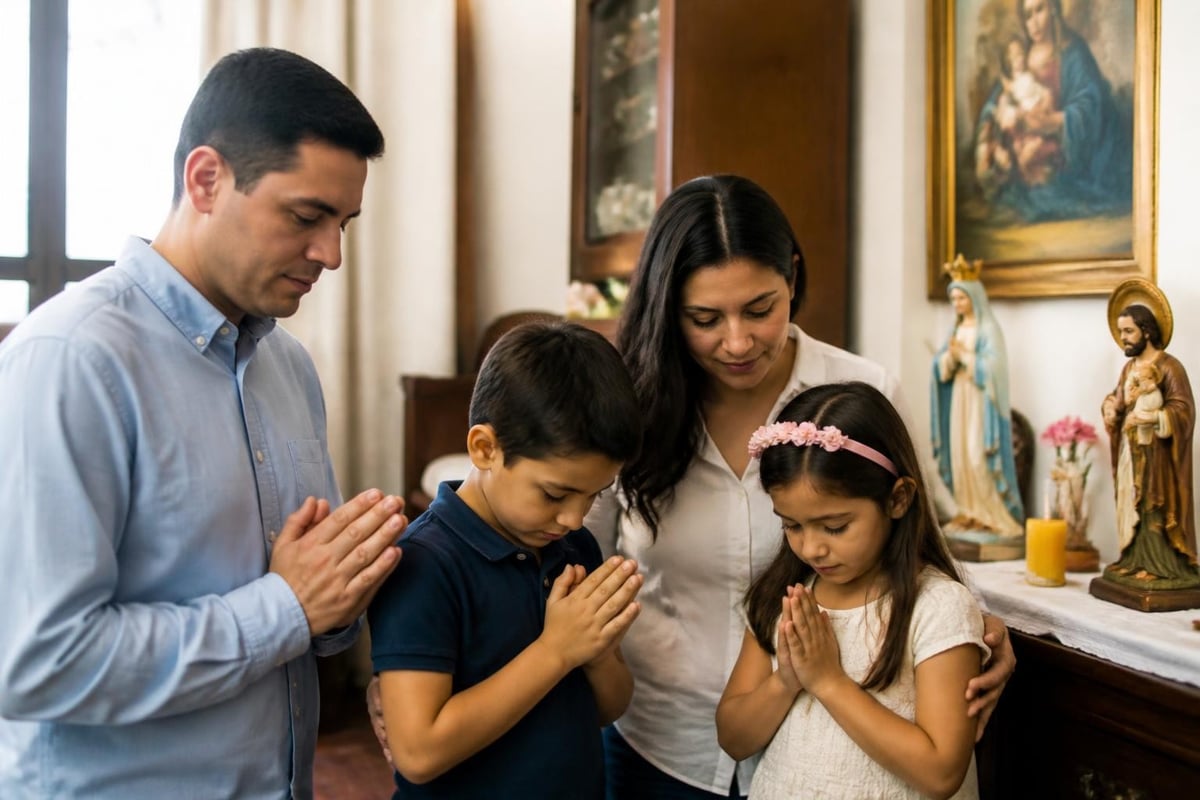
Creating a Home Altar or Prayer Corner
A dedicated prayer space helps maintain focus on saintly relationships. This needn't be elaborate. A simple shelf or small table can hold:
- Statues or icons of favorite saints
- Prayer cards and novena booklets
- A crucifix as the central focus
- Candles for creating prayerful atmosphere
- A Bible or prayer book
- Fresh flowers or other natural elements
This physical space signals to your household that communion with the saints matters. Children especially benefit from seeing tangible representations of their heavenly friends, making abstract concepts concrete and memorable.
The Saints as Models for Christian Living
Beyond intercession, Catholic saints prayer connects us with powerful examples of lived faith. Each saint demonstrates how ordinary people became extraordinary through cooperation with grace. Their lives answer the question: "How do I live as a faithful Catholic in my specific circumstances?"
Study different categories of saints to find relevant models:
- Martyrs show courage in persecution and ultimate sacrifice
- Confessors demonstrate faithful witness without martyrdom
- Doctors of the Church provide theological and spiritual wisdom
- Virgin saints model consecrated celibacy and single-minded devotion
- Married saints prove holiness flourishes in family life
- Religious founders exemplify charisms and service to the Church
- Mystics reveal depths of prayer and union with God
Saint Thomas More, for instance, guides lawyers and politicians facing ethical dilemmas. Saint Gianna Beretta Molla inspires mothers choosing life even at personal cost. Saint John Paul II models mercy and forgiveness toward one's attempted assassin. Each saint's particular story illuminates a pathway through modern challenges.
The diversity among the saints proves that holiness isn't one-size-fits-all. You don't need to be a cloistered contemplative or martyred missionary to become a saint. God calls you to sanctity precisely where you are, in your vocation, with your unique personality and circumstances.
Special Devotions and Regional Saints
Catholic saints prayer varies beautifully across cultures and regions. While universal saints like Mary, Joseph, and the apostles unite Catholics worldwide, local saints carry special significance for particular communities.
Regional Examples of Saintly Devotion
- Our Lady of Guadalupe in Mexico and throughout the Americas represents Mary's care for indigenous peoples
- Saint Patrick in Ireland embodies conversion and cultural transformation
- Saint Kateri Tekakwitha inspires Native American Catholics
- Saint Juan Diego demonstrates humility and obedience to heavenly visions
- Saint Frances Xavier Cabrini guides immigrants and reminds us that sanctity crosses borders
These localized devotions enrich the universal Church. They show how the Gospel takes root in diverse soils, producing saints who speak the language and understand the struggles of their people. Someone facing immigration challenges might find special comfort in saints who were themselves foreigners and pilgrims.
At Journeys of Faith, the mission includes promoting these diverse expressions of Catholic faith, helping believers discover the saints whose stories resonate with their own journeys.
Teaching Children About Catholic Saints Prayer
Introducing young Catholics to the saints creates lifelong spiritual friendships. Children naturally relate to stories of brave knights (Saint George), kind helpers (Saint Nicholas), and animal lovers (Saint Francis). These narratives capture imagination while conveying truth.
Age-Appropriate Approaches
For young children (ages 3-7):
- Use picture books about saints' lives
- Focus on one or two saints initially
- Emphasize the saints as friends in heaven
- Create simple prayers together
- Celebrate feast days with special treats
For elementary age (8-12):
- Read longer biographies with adventure and challenge
- Connect saints' patronages to children's interests
- Encourage choosing a confirmation saint
- Pray novenas together as a family
- Visit shrines or churches named for saints
For teens (13-18):
- Explore saints who faced similar struggles
- Discuss saints' radical choices and counter-cultural witness
- Study saints' writings and spiritual teachings
- Encourage personal devotions and favorite saints
- Connect saintly virtues to modern ethical challenges
Teaching Catholic saints prayer to children isn't indoctrination; it's introduction to a family. These holy men and women become older siblings in faith, guiding younger members of the household of God.
Catholic saints prayer opens a treasury of spiritual companionship that strengthens faith, provides powerful intercession, and offers time-tested wisdom for navigating life's challenges. Whether you're seeking help in crisis, growing in virtue, or simply desiring deeper connection with the Communion of Saints, this ancient practice remains vibrantly relevant in 2026. Journeys of Faith supports your spiritual journey with resources that bring you closer to the Eucharist, Mother Mary, and the Saints through books, prayer materials, and media that inspire authentic Catholic living. Explore the Journeys of Faith online store with thousands of Catholic items to deepen your devotion and share your faith. The ministry is blessed to provide Catholic media, including podcasts and inspirational content, free of charge across multiple platforms for viewers and listeners worldwide. While access remains free, there are significant costs associated with producing, hosting, and distributing these programs. Your support helps continue sharing the beauty of the Catholic faith with souls. Please make a donation to support this evangelization mission.
