

The digital transformation of faith-based commerce has created unprecedented access to sacred items, devotional materials, and educational resources for Catholics worldwide. Catholic shops online have evolved from simple catalog sites into comprehensive platforms that serve parishes, families, homeschoolers, and individual believers seeking to deepen their spiritual lives. These digital storefronts bridge geographical divides, making it possible for someone in rural Montana to access the same quality rosaries, prayer cards, and religious books as a parishioner steps away from a brick-and-mortar Catholic bookstore in Boston.
Understanding the Catholic E-Commerce Landscape
The market for spiritual and devotional products has experienced significant growth in recent years. According to U.S. market research, the devotional products sector continues to expand as consumers increasingly turn to online channels for religious items. This shift represents both opportunity and responsibility for vendors who understand the sacred nature of what they sell.
Catholic shops online operate within a unique niche that combines commercial enterprise with spiritual mission. Unlike secular retail, these businesses must balance profit margins with authentic evangelization, ensuring that every product serves the faith journey of their customers. The best online Catholic retailers recognize they're not merely moving inventory but supporting prayer lives, catechesis, and personal devotion.
Market Drivers and Consumer Behavior
Several factors drive Catholics to shop online for religious items. Convenience tops the list, followed by product variety, competitive pricing, and access to specialized items not available locally. Many rural and suburban Catholics lack access to dedicated Catholic bookstores, making online shopping their primary option for quality devotional materials.
Brought to by Journeys of Faith Founded and Bob and Penny Lord - We are an Augustinian Secular Institute - Cyber Apostles - Our Mission is Evangelization through Media.
Digital-native Catholics, particularly millennials and Gen Z believers, expect seamless online experiences with detailed product descriptions, customer reviews, and secure checkout processes. They research products thoroughly, comparing options across multiple catholic shops online before making purchasing decisions. This informed approach means vendors must provide comprehensive information about materials, origins, blessings, and appropriate use of sacramentals.

Essential Product Categories in Catholic E-Commerce
Successful catholic shops online organize inventory into intuitive categories that mirror how Catholics think about their spiritual lives. Prayer resources, sacramentals, educational materials, and gift items form the foundation of most online Catholic inventories.
Prayer Cards and Devotional Materials
Prayer cards remain among the most popular items in Catholic e-commerce. These pocket-sized tools of devotion serve multiple purposes: personal prayer, evangelization, gifts for sacramental occasions, and bulk distribution by parishes. Modern prayer card offerings include traditional saints, Divine Mercy imagery, Marian devotions, and specialized novenas.
The accessibility of prayer cards makes them ideal entry products for catholic shops online. They require minimal shipping costs, appeal to broad demographics, and encourage repeat purchases as customers discover new devotions. Vendors who offer bulk packaging options serve parish needs while individual packs meet personal devotional requirements.
| Prayer Card Type | Primary Use | Typical Buyer |
|---|---|---|
| Saint Cards | Personal devotion, patron saint gifts | Individual faithful, godparents |
| Novena Cards | Nine-day prayer commitments | Prayer groups, individuals |
| Sacramental Cards | First Communion, Confirmation gifts | Parents, sponsors, parishes |
| Chaplet Cards | Structured prayer formats | Rosary groups, retreat centers |
Books and Educational Resources
Catholic publishing represents a substantial segment of online religious retail. From classic spiritual writings to contemporary apologetics, from children's saints stories to theological deep dives, books serve the Church's teaching mission. Resources on the lives of saints particularly resonate with readers seeking inspiration and intercession.
Educational materials for homeschooling families have become increasingly important. Homeschooling resources featuring patron saints help parents integrate faith formation with academic instruction. Catholic shops online that curate age-appropriate, doctrinally sound educational materials serve a growing market of families committed to Catholic education at home.
Sacramentals and Blessed Objects
The Church's teaching on sacramentals defines these sacred signs instituted by the Church to prepare people for grace and sanctify different circumstances of life. Online vendors must handle these items with particular care, clearly indicating which items can be blessed and providing guidance about obtaining blessings from priests.
Crucifixes, rosaries, medals, and holy water fonts constitute the core sacramental inventory. Quality matters significantly, as these items often mark important spiritual milestones or serve daily devotional practices for years. Catholic shops online should provide detailed specifications about materials, craftsmanship, country of origin, and whether items are handmade or mass-produced.

Building a Successful Catholic Online Retail Business
Entrepreneurs considering launching catholic shops online face unique considerations beyond standard e-commerce challenges. The U.S. Conference of Catholic Bishops guidance on sacramentals provides essential framework for understanding which items require special handling and how to educate customers appropriately.
Legal and Compliance Foundations
Starting any online business requires attention to legal structures, tax obligations, and regulatory compliance. The Small Business Administration offers comprehensive guidance for entrepreneurs navigating business registration, licensing, and initial setup. Catholic retailers must also consider specific issues like copyright for religious images, trademark concerns with popular devotions, and export restrictions for religious items to certain countries.
Business insurance becomes particularly important when selling items customers will use in religious practice. Product liability coverage protects against claims related to material allergies, choking hazards in children's products, or other safety concerns. Professional consultation with attorneys familiar with both e-commerce and religious goods proves invaluable during the setup phase.
Sourcing Authentic Catholic Products
The integrity of catholic shops online depends entirely on product authenticity and quality. Vendors must establish relationships with reputable Catholic publishers, artisans, and distributors who understand Church teaching and produce items aligned with orthodox faith. Counterfeit religious items, poorly made sacramentals, or doctrinally questionable materials damage both business reputation and customer spiritual wellbeing.
Source verification steps include:
- Requesting imprimatur documentation for books and catechetical materials
- Confirming manufacturing standards for items destined for liturgical use
- Verifying artist credentials and theological consultants for religious art
- Establishing clear return policies for defective sacramentals
- Maintaining relationships with Church-approved publishers and manufacturers
Direct relationships with Catholic artisans and publishers often yield better pricing, exclusive products, and deeper understanding of the spiritual significance of inventory. Many successful catholic shops online feature their sourcing stories, introducing customers to the nuns who craft rosaries, the artists who paint icons, or the publishers who preserve classic spiritual writings.
Platform Selection and Technical Infrastructure
Choosing the right e-commerce platform determines long-term scalability and operational efficiency. Popular options like Shopify, WooCommerce, and BigCommerce each offer distinct advantages. Catholic retailers should prioritize platforms with robust product categorization, inventory management, and customer relationship tools.
Technical considerations specific to religious retail include:
- Detailed product filtering by saint, devotion, sacrament, or liturgical season
- Educational content integration allowing blog posts and videos alongside products
- Bulk ordering capabilities for parishes and schools
- Donation integration for mission-driven businesses
- Multi-language support for serving diverse Catholic communities
Security cannot be compromised. SSL certificates, PCI compliance for payment processing, and data protection measures build customer trust. Catholic shoppers entrust vendors with personal information and payment details; honoring that trust through rigorous security practices reflects Christian business ethics.
Marketing Strategies for Catholic E-Commerce
Marketing catholic shops online requires sensitivity to the sacred mission while employing effective digital strategies. The faith-based retail market research indicates that Catholic consumers respond particularly well to content marketing, email engagement, and community-building approaches rather than aggressive sales tactics.
Content Marketing and Education
High-quality content serves dual purposes: driving organic search traffic and fulfilling evangelization missions. Blog posts about Eucharistic miracles, Marian apparitions, or visions of mystics attract readers seeking spiritual enrichment while naturally introducing relevant products.
Video content performs exceptionally well. Demonstrations of how to pray the Rosary, explanations of different devotional practices, or interviews with Catholic authors create engagement and build authority. Catholic shops online that invest in regular, substantive content typically see better customer retention and higher average order values.
Email Marketing and Community Building
Email remains the highest-ROI marketing channel for religious retailers. Regular newsletters featuring feast day reminders, new product announcements, and spiritual reflections keep brands top-of-mind without feeling intrusive. Segmentation by customer interests, sacramental preparation needs, or liturgical season allows personalized communication that respects individual spiritual journeys.
Building community extends beyond transactions. Catholic shops online can facilitate connection through:
- Prayer intention submissions where customers share requests
- Testimonial features about how products impacted faith lives
- Seasonal devotional guides curated from inventory
- Parish partnership programs offering bulk discounts
- Social media groups discussing Catholic living and resources

Operational Excellence in Catholic E-Commerce
Behind every successful online transaction lies operational infrastructure that makes shopping seamless and fulfilling. Catholic shops online must excel at inventory management, order fulfillment, and customer service while maintaining the personal touch that reflects Christian hospitality.
Inventory Management and Seasonal Planning
The liturgical calendar drives significant inventory fluctuations. Lent brings increased demand for Stations of the Cross booklets, fasting guides, and purple vestment supplies. Advent requires nativity sets, Advent calendars, and Christmas-themed children's books. Marian months (May and October) see rosary sales spike. Smart catholic shops online plan inventory 3-6 months ahead of these seasonal peaks.
Liturgical Season Inventory Planning:
| Season | Peak Products | Order Lead Time |
|---|---|---|
| Advent | Nativity sets, Advent wreaths, calendars | September |
| Christmas | Gifts, children's books, ornaments | October |
| Lent | Stations of the Cross, fasting guides, purple items | January |
| Easter | Resurrection art, paschal candles, white linens | February |
| Marian Months | Rosaries, Mary statues, consecration books | March/August |
Perpetual inventory for evergreen products like basic rosaries, popular prayer cards, and classic spiritual books prevents stockouts. However, specialty items, limited editions, and artisan-made products may require pre-order models that set customer expectations appropriately.
Shipping and Handling Sacred Items
Shipping fragile sacramentals requires extra care. Broken rosaries, chipped statues, or damaged medals arrive not just as defective products but as injuries to items customers intended for sacred use. Proper packaging materials, clear fragile labeling, and carrier selection that prioritizes careful handling demonstrate respect for both product and customer.
International shipping opens markets but introduces complexity. Customs regulations vary regarding religious items, and some countries restrict importation of certain Christian materials. Catholic shops online serving global markets must research destination country requirements and clearly communicate any shipping limitations or extended delivery times.
Customer Service as Ministry
Exceptional customer service in Catholic retail transcends problem-solving; it becomes an extension of the business's evangelization mission. Representatives who understand Church teaching can answer questions about appropriate use of sacramentals, suggest products for specific devotions, or help customers select gifts for sacramental occasions.
Many catholic shops online find that customers appreciate personalized recommendations based on spiritual needs rather than just purchase history. A customer buying a First Communion gift might appreciate suggestions for age-appropriate saints books or guardian angel medals. Someone purchasing grief support materials might value gentle follow-up checking on their wellbeing while respecting privacy.
Leveraging Technology and Digital Tools
Modern catholic shops online benefit from technological advances that streamline operations while enhancing customer experience. From automated marketing to inventory forecasting, digital tools allow even small businesses to compete effectively.
Analytics and Business Intelligence
Understanding customer behavior through analytics informs better business decisions. Which blog posts drive most traffic? What products have highest conversion rates? When do customers typically abandon carts, and what recovery strategies work best? Google Analytics, platform-native analytics, and specialized e-commerce tools answer these questions.
According to religious goods market analysis, online sales channels continue growing faster than traditional retail for devotional products. Catholic shops online that track trends, monitor competitor offerings, and adapt quickly to market shifts position themselves for sustainable growth.
Automation and Efficiency
Marketing automation platforms handle email sequences, abandoned cart recovery, and customer segmentation without constant manual intervention. Inventory management systems trigger reorder alerts when stock levels drop. Customer relationship management (CRM) tools track communication history, purchase patterns, and service interactions.
The time saved through automation allows business owners to focus on high-value activities: curating new products, creating content, building supplier relationships, and strategic planning. For mission-driven Catholic businesses, this efficiency creates more capacity for the evangelization work central to their purpose.
Special Considerations for Devotional Items
Certain product categories within catholic shops online require particular attention to Church guidelines, customer education, and quality standards. Prayer cards, while seemingly simple, exemplify these considerations.
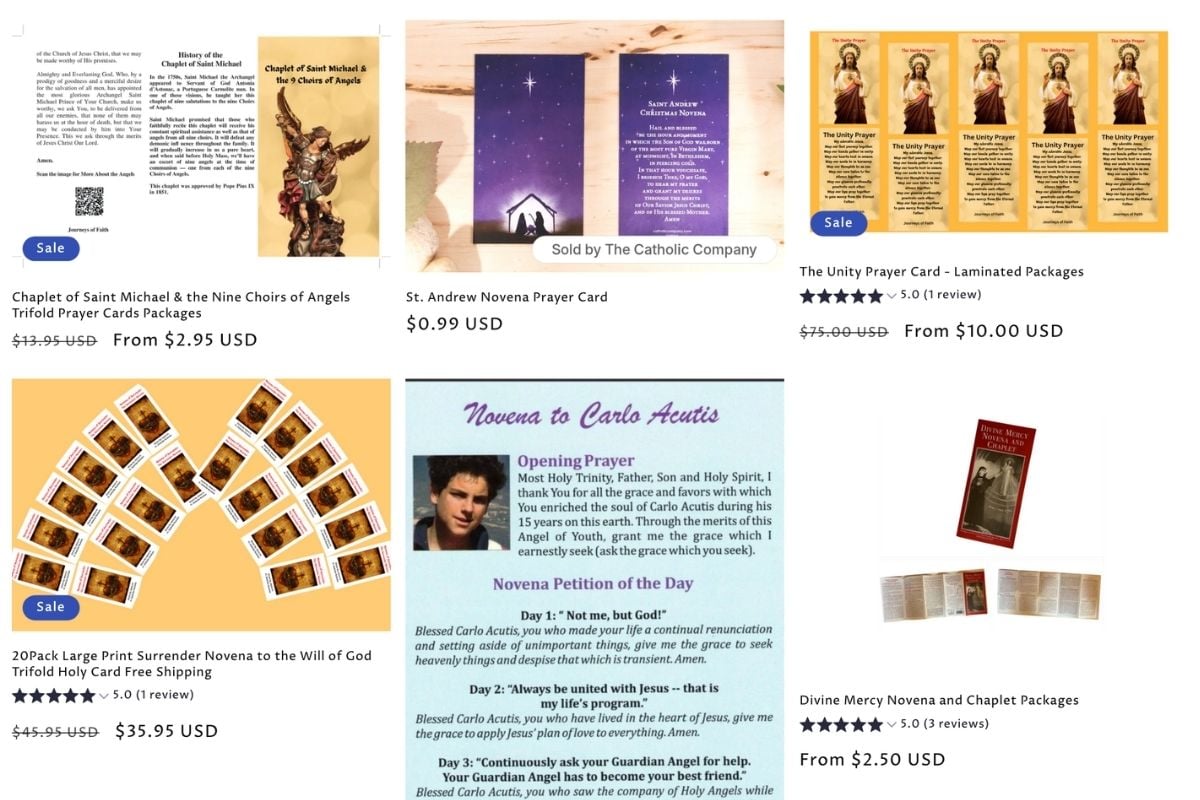
Quality prayer cards feature accurate theological content, appropriate artwork, and durable construction. Prayer cards and novenas serve as portable companions for daily prayer, easily tucked into wallets, prayer books, or car visors. The best cards use high-quality cardstock, professional printing, and protective finishes that withstand frequent handling.
Vendors should provide clear information about prayer card content, dimensions, bulk availability, and any special features like tri-fold formats or package options. Many parishes purchase prayer cards in bulk for distribution at special events, making package pricing and quantity discounts important considerations.
Educational Content for Proper Use
Catholic shops online serve an educational role, particularly for newer Catholics or those returning to active practice after time away. Clear product descriptions should explain not just what items are but how to use them properly within Catholic tradition. A rosary listing might include links to prayer guides. A scapular product page could explain enrollment requirements. Sacramental oil descriptions should clarify that these are for home use, not liturgical purposes requiring consecration.
This educational approach builds customer confidence while preventing misuse of sacred items. It also positions the vendor as a knowledgeable resource rather than just a transaction platform, fostering loyalty and repeat business.
Future Trends in Catholic Online Retail
The landscape of catholic shops online continues evolving as technology advances and consumer expectations shift. Several trends merit attention for businesses planning long-term strategies.
Mobile-First Shopping Experience
Mobile devices now account for the majority of online browsing and a growing share of purchases. Catholic shops online must prioritize mobile-responsive design, fast loading times, and streamlined mobile checkout. Voice search optimization also grows more important as Catholics ask virtual assistants for prayer resources, saint information, or product recommendations.
Personalization and AI
Artificial intelligence enables sophisticated product recommendations based on browsing behavior, purchase history, and similar customer patterns. While maintaining appropriate boundaries, catholic shops online can use these tools to suggest relevant devotional materials, remind customers of feast days aligned with past purchases, or curate seasonal collections matching individual interests.
Sustainability and Ethical Sourcing
Catholic social teaching emphasizes care for creation and just treatment of workers. Growing numbers of Catholic consumers seek products made through fair labor practices, using sustainable materials, and supporting artisan communities. Catholic shops online that transparently communicate their ethical sourcing practices and environmental commitments appeal to this values-driven market segment.
Virtual and Augmented Reality
Emerging technologies may soon allow customers to "try on" medals, visualize statues in home spaces, or take virtual tours of pilgrimage sites connected to specific products. While still nascent, these technologies could differentiate forward-thinking catholic shops online and create more engaging shopping experiences.
Building Community Beyond Commerce
The most successful catholic shops online recognize they're building communities, not just customer bases. These digital platforms become gathering spaces where Catholics connect around shared faith, discover new devotions, and support one another's spiritual journeys.
Parish partnerships create mutually beneficial relationships. Catholic shops online can offer special pricing for bulk orders, provide catechetical resources for sacramental preparation, or sponsor parish events. In return, parishes introduce their communities to trusted Catholic vendors aligned with Church teaching.
Retreat centers, schools, and Catholic organizations represent additional partnership opportunities. Custom product curation for specific programs, fundraising collaborations, or co-created educational content strengthen ties between vendors and institutional Church entities.
Social media presence extends community building into daily digital life. Regular posts featuring saint feast days, prayer intentions, customer testimonials, and new product introductions keep brands visible while serving followers' spiritual needs. Live video events, online rosary gatherings, or author Q&A sessions deepen engagement beyond transactional relationships.
Catholic shops online have transformed how faithful communities access devotional materials, educational resources, and sacramentals that support vibrant spiritual lives. Whether you're seeking prayer cards for personal devotion, books to deepen theological understanding, or gifts marking sacramental milestones, online Catholic retailers offer unprecedented convenience and selection.
Journeys of Faith, founded by Bob and Penny Lord, exemplifies mission-driven Catholic retail, offering books, DVDs, prayer cards, and religious items that promote the Eucharist, Mother Mary, and the Saints. Their commitment to evangelization through media ensures that every product serves both personal devotion and the broader work of sharing the Catholic faith. Explore the Journeys of Faith online store with thousands of Catholic items, from prayer resources to educational materials that strengthen faith and inspire deeper relationship with Christ and His Church.
Journeys of Faith is blessed to provide Catholic media, including podcasts and inspirational content, free of charge across multiple media platforms for viewers and listeners around the world. While access to this content remains free, there are significant and continually increasing costs associated with producing, hosting, and distributing these programs. Your support helps us continue sharing the beauty of the Catholic faith with souls. Please make a donation to support this vital evangelization work.
