

Catholic statues have graced churches, homes, and sacred spaces for centuries, serving as profound expressions of faith and devotion. These sacred representations of Christ, the Blessed Mother, and the saints are far more than decorative pieces. They function as tangible connections to the spiritual realm, helping believers focus their prayers and deepen their understanding of God's work through holy men and women. In 2026, as the Catholic Church continues to emphasize the importance of sacred art in worship, understanding the role and significance of these statues remains essential for both longtime faithful and those exploring Catholic traditions.
The Historical Foundation of Catholic Statues
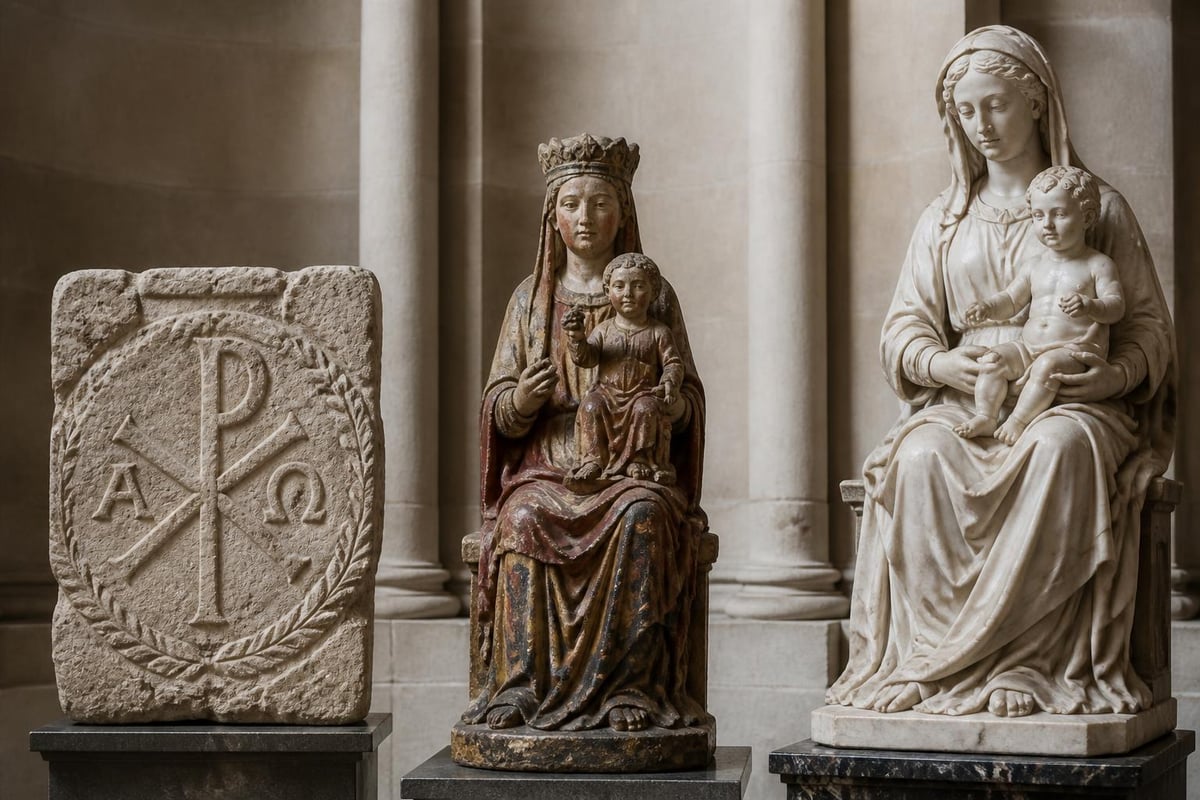
The tradition of creating religious imagery extends back to the earliest days of Christianity. In the catacombs of Rome, Christians painted images of Christ as the Good Shepherd, biblical scenes, and symbols of faith on tomb walls. As the Church emerged from persecution, this artistic expression expanded into three-dimensional forms.
The Second Council of Nicaea in 787 AD formally defended the use of sacred images, establishing theological principles that continue to guide the Church today. The council fathers distinguished clearly between worship, which belongs to God alone, and veneration, which honors the person represented by the image. This distinction addresses one of the most common misunderstandings about Catholic use of statues.
Early Development and Medieval Expansion
During the medieval period, catholic statues became increasingly elaborate and widespread. Skilled artisans crafted representations of saints that communicated their lives and virtues to largely illiterate populations. These statues served as visual catechism, teaching the faithful about holiness and inspiring them to pursue virtue.
Key characteristics of medieval religious statuary included:
- Rich symbolism identifying each saint's particular story
- Use of local materials reflecting regional artistic traditions
- Placement at strategic locations within church architecture
- Integration with feast day celebrations and liturgical cycles
The Renaissance brought new artistic techniques and materials to sacred art. Sculptors like Michelangelo elevated religious statuary to unprecedented heights of beauty and spiritual expression. His Pietà remains one of the most recognizable catholic statues worldwide, capturing both human sorrow and divine love in marble.
Theological Significance and Proper Understanding
Brought to you by Journeys of Faith Founded by Bob and Penny Lord - We are an Augustinian Secular Institute - Cyber Apostles - Our Mission is Evangelization through Media.
The Church maintains precise theological distinctions regarding sacred images that every Catholic should understand. Catholic statues are not idols, and Catholics do not worship them. Instead, these representations serve as visual aids that direct the mind and heart toward the holy persons they depict.
The Catechism of the Catholic Church addresses this clearly, stating that the honor shown to sacred images is "respectful veneration," not adoration, which is reserved for God alone. When a Catholic kneels before a statue of Mary or lights a candle near a representation of St. Joseph, they are not praying to stone or plaster. They are asking for the intercession of these saints who dwell with God in heaven.
This practice mirrors how we keep photographs of loved ones. We don't worship the photographs, but they help us remember and feel connected to the people they represent. Similarly, Catholic statues serve as visual reminders that point believers toward the reality of the communion of saints.
Common Misconceptions Addressed
| Misconception | Reality |
|---|---|
| Catholics worship statues | Catholics venerate the saints represented; worship belongs to God alone |
| Statues violate biblical commandments | The prohibition was against worshiping false gods, not making religious art |
| Only God should be honored | The Church honors saints while recognizing God as the source of all holiness |
| Statues are unnecessary | Visual aids support prayer and teaching, especially for visual learners |
Types and Purposes of Catholic Statues
Catholic statues encompass a wide range of representations, each serving specific devotional and liturgical purposes. Understanding these different types helps believers incorporate them meaningfully into their prayer lives.
Representations of Christ hold primary importance in any collection. These include:
- The Sacred Heart, emphasizing Christ's love for humanity
- The Divine Mercy image, based on St. Faustina's visions
- Crucifixes, central to Catholic worship and theology
- Christ the King, highlighting His sovereign authority
- Infant of Prague, popular for home devotion
Marian statues remain among the most beloved catholic statues worldwide. Our Lady of Guadalupe, Our Lady of Lourdes, Our Lady of Fatima, and countless other titles commemorate approved apparitions and aspects of Mary's role in salvation history. Each representation carries specific spiritual messages and graces associated with those events.
Saints and Their Attributes
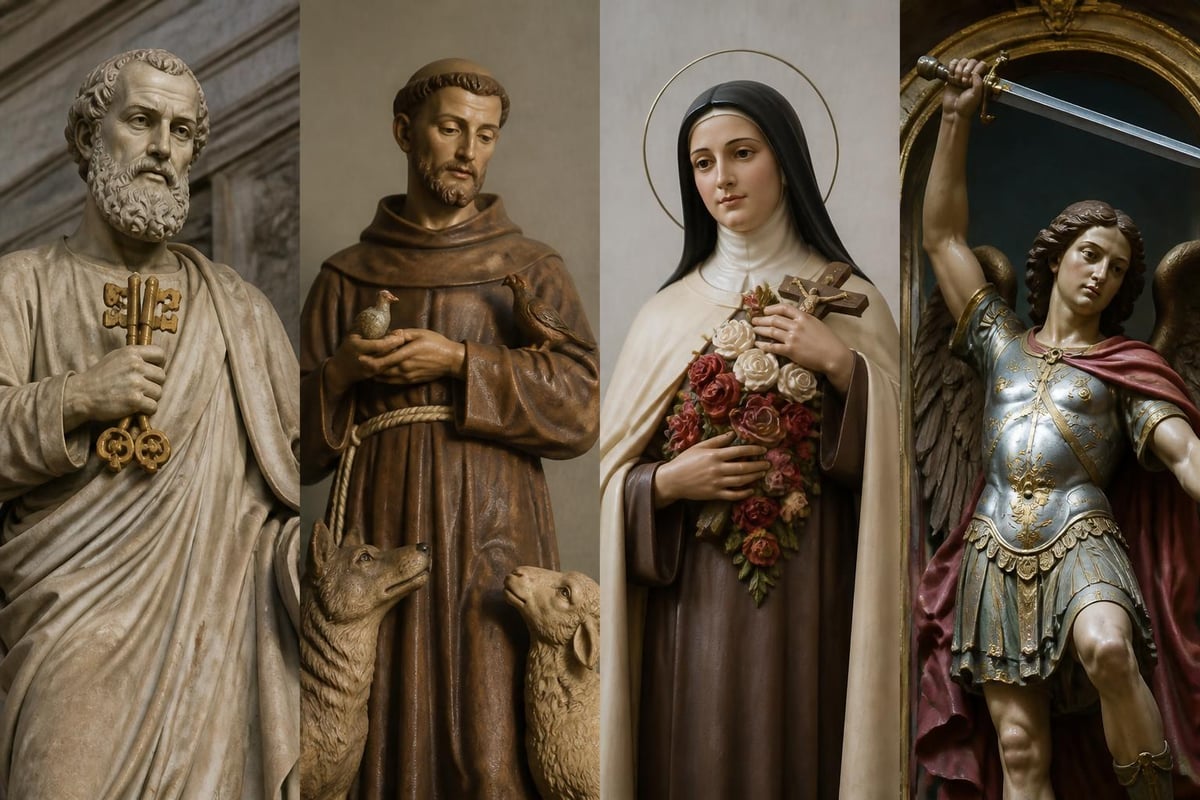
Catholic statues of saints typically include identifying attributes that tell their stories at a glance. St. Peter holds keys, St. Francis often appears with animals, St. Therese of Lisieux carries roses, and St. Michael wields a sword against the dragon. These visual elements make the statues educational tools that communicate the lives and virtues of these holy role models.
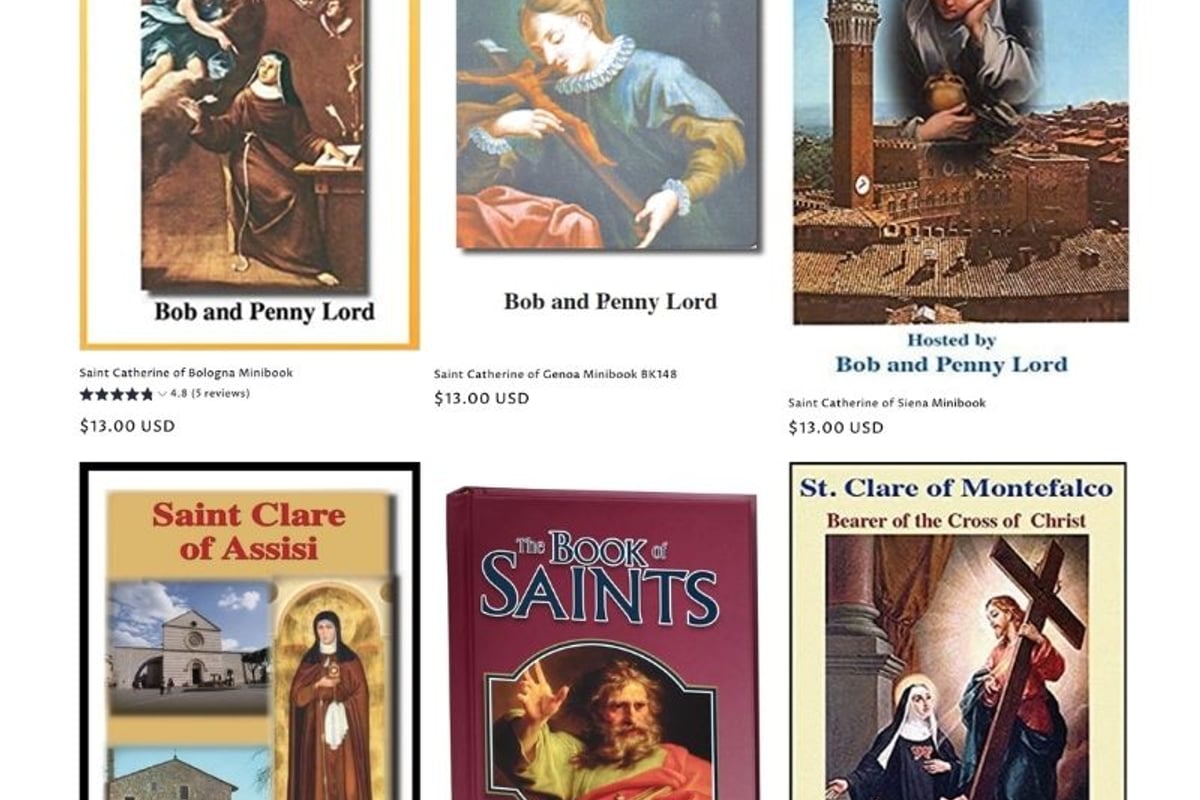
For those seeking to deepen their understanding of the saints, studying their lives through various media enriches devotion. Catholic Saints minibooks are usually 20 to 50 pages in easy to read printed form, making excellent companions for learning about the holy men and women represented in statuary. These resources help believers understand not just who the saints were, but how their examples can inspire modern faithful to pursue holiness. You can explore Minibooks for Family Prayer Time to enhance your devotional practice.
Contemporary concerns about religious artifacts have emerged as well. The Catholic Church has condemned the online sale of relics, emphasizing the sacredness of these items and the prohibition against their commercialization. While statues differ from relics, both deserve respectful treatment as sacred objects.
Placement and Care in Sacred Spaces
The proper placement of catholic statues enhances both their aesthetic impact and spiritual effectiveness. In churches, specific guidelines govern where different statues should be positioned according to liturgical importance and architectural considerations.
Church placement typically follows these principles:
- Sanctuary area: Reserved for images directly related to the Eucharist
- Side altars: Designated for popular saint devotions
- Entranceways: Often feature patron saints or guardian angels
- Outdoor grottos: Particularly suited for Marian representations
- Stations of the Cross: Positioned around the church perimeter
Home Display Considerations
Catholic families incorporate statues into their domestic churches with varying approaches. A home altar or prayer corner provides a dedicated space for spiritual focus. Many families display catholic statues in prominent locations as witnesses to their faith and reminders to pray throughout the day.
When selecting statues for home use, consider these factors:
- Size and scale: Proportionate to the display space
- Material quality: Durable construction for long-term use
- Personal connection: Saints who resonate with family circumstances
- Educational value: Pieces that spark conversation and teaching moments
- Aesthetic harmony: Coordination with home décor while maintaining reverence
Proper care preserves these sacred objects for generations. Dust statues regularly with soft cloths, avoid harsh chemical cleaners, and repair damage promptly to maintain their dignity. Collecting and caring for vintage religious statues requires additional attention to preservation methods that honor their historical significance.
Contemporary Issues and Challenges
Modern challenges to religious expression have affected how catholic statues function in public discourse. Recent legal disputes highlight tensions between religious freedom and secular governance. In Quincy, Massachusetts, residents have filed lawsuits to stop installation of patron saint statues at public buildings, raising constitutional questions about government funding of religious symbols.
These legal challenges reflect broader cultural debates about the role of faith in public spaces. While respecting legitimate separation of church and state, Catholics maintain that religious heritage and expression deserve protection in pluralistic societies.
Vandalism and Protection
Sadly, catholic statues sometimes become targets for vandalism and theft. A Long Beach Catholic school was vandalized with statues damaged, illustrating the ongoing need to protect sacred objects. Such incidents hurt faith communities deeply, as these representations carry spiritual and emotional significance beyond their material value.
Protective measures include:
- Security systems for valuable or historic pieces
- Strategic placement away from easy access
- Community awareness and vigilance
- Insurance coverage for irreplaceable items
- Documentation through photographs and appraisals
Incorporating Statues into Prayer Life
Catholic statues reach their highest purpose when they facilitate deeper prayer and devotion. Rather than being passive decorations, these sacred images should actively support spiritual growth and relationship with God.
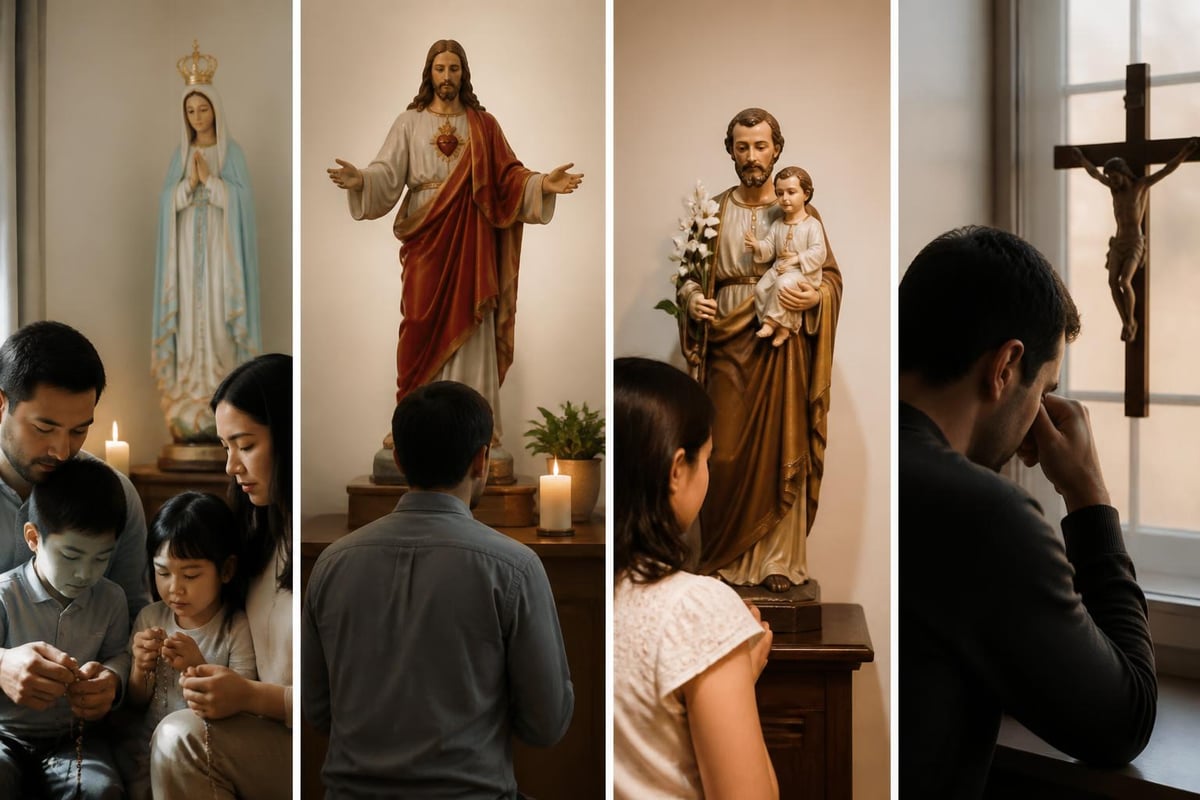
Creating prayer routines around specific statues helps establish regular devotional practices. Families might gather before a statue of the Holy Family for evening prayers, or individuals might pause at a Sacred Heart image for morning consecration. The physical presence of the statue serves as a call to prayer and a focal point for meditation.
| Prayer Practice | Suitable Statue | Spiritual Benefit |
|---|---|---|
| Family Rosary | Our Lady of various titles | Unity in Marian devotion |
| Morning Offering | Sacred Heart of Jesus | Consecration of daily activities |
| Intercession for Needs | Patron saints | Specific help for particular situations |
| Examination of Conscience | Crucifix | Reflection on Christ's sacrifice |
| Bedtime Prayers | Guardian Angel | Protection through the night |
Teaching Children Through Sacred Art
Catholic statues provide invaluable teaching opportunities for children. Young minds respond powerfully to visual and tactile learning. Allowing children to handle appropriate statues (under supervision) helps them develop reverence and understanding.
Parents can tell saint stories while showing the corresponding statues, making abstract concepts concrete. Discussing why St. Joseph holds tools or why St. Clare carries a monstrance opens conversations about vocation, holiness, and service. These lessons learned in childhood often remain throughout life, shaping Catholic identity and practice.
The Journeys of Faith mission of evangelization through media extends to helping families understand and appreciate these sacred traditions. Resources that explore the lives of saints complement the visual witness of statues in homes and churches.
Artistic Styles and Cultural Expressions
Catholic statues reflect tremendous diversity in artistic styles and cultural expressions. From the ornate baroque sculptures of European cathedrals to the simple, colorful representations found in Latin American churches, each tradition brings unique gifts to the universal Church.
Regional variations include:
- Italian Renaissance marble masterpieces emphasizing classical beauty
- Spanish polychrome wood carvings with intense emotional realism
- Mexican folk art incorporating vibrant colors and indigenous elements
- Asian representations showing Christ and saints with local features
- African statues celebrating cultural artistic traditions
This diversity demonstrates the catholicity-the universality-of the Church. Every culture can express faith through its particular artistic genius, creating catholic statues that resonate with local populations while maintaining theological accuracy.
Contemporary Sacred Art
Modern artists continue creating catholic statues that speak to 2026 sensibilities while respecting traditional symbolism. Some contemporary pieces employ minimalist aesthetics, abstract forms, or innovative materials. Others maintain classical approaches with updated techniques.
Quality sacred art, whether traditional or contemporary, should always serve the primary purpose of directing hearts toward God. Beauty attracts and elevates the spirit, making even challenging spiritual truths more accessible through visual splendor.
Blessing and Consecration
Catholic statues receive special blessings that set them apart for sacred use. This sacramental practice, typically performed by a priest or deacon, asks God's blessing upon the object and those who use it for devotion. The blessing doesn't make the statue itself holy, but dedicates it to holy purposes.
The ritual includes prayers asking that those who honor the saints represented may be inspired to imitate their virtues. This consecration transforms an ordinary object into a sacramental-something that prepares believers to receive grace and disposes them toward holiness.
Families acquiring new statues should arrange for their blessing, either bringing them to church or inviting a priest to bless them during a home visit. This practice initiates the statue's role in family prayer life with proper spiritual preparation.
Proper Disposal of Damaged Statues
When catholic statues become damaged beyond repair, they cannot simply be discarded like ordinary trash. Several reverent disposal options exist:
- Burial: Placing broken statues in the ground, preferably on church property
- Burning: Completely incinerating the item and burying ashes
- Church return: Some parishes collect damaged religious items for proper disposal
- Repurposing: Using intact portions in mosaic projects or garden arrangements
- Professional restoration: Exploring repair options before disposal
The underlying principle is treating these objects with the respect their sacred purpose deserves, even when they can no longer serve that purpose effectively.
Building a Personal Collection
Many Catholics develop meaningful collections of statues over time, each piece carrying personal significance and memory. Building such a collection thoughtfully enhances devotional life rather than creating mere accumulation.
Consider these approaches:
- Start with representations most meaningful to your spiritual journey
- Add patron saints of family members on their feast days
- Include saints whose intercession you've experienced
- Seek quality over quantity, investing in well-made pieces
- Document the story behind each acquisition
- Share collection stories with children and visitors
Visiting catholic gift stores provides opportunities to discover new representations and learn about different devotions. These specialized retailers often employ knowledgeable staff who can explain the significance of various statues and recommend appropriate choices for specific needs.
Collections naturally evolve with life circumstances. A young couple might begin with a wedding gift statue of the Holy Family. Parents add patron saints as children are born. Illness might bring St. Peregrine into the home. Each addition marks spiritual growth and life experiences, creating a visual testimony of faith's journey.
Catholic statues serve as powerful bridges between the visible and invisible realms, helping believers connect with the communion of saints and grow closer to God. Through proper understanding, reverent use, and thoughtful incorporation into prayer life, these sacred images fulfill their purpose of inspiring holiness and deepening devotion. Journeys of Faith, founded by Bob and Penny Lord, supports Catholics in their spiritual journey through evangelization media, offering resources that complement and enhance understanding of sacred traditions. Explore thousands of Catholic items at the Journeys of Faith online store to find statues, books, and devotional materials that will enrich your faith life.
Resources:
- Explore Journeys of Faith Online store with thousands of Catholic Items at https://journeysoffaith.com/collections
- Our Unique Mega Search Engine https://journeysoffaith.com/search is linked to hundreds of Catholic Shops and Stores
- Get the Journeys of Faith NEW App for iPhone or Android - Search for Journeys of Faith or go to https://journeysoffaith.com/pages/download-our-app
- Chat with us anytime https://chatting.page/mjxs9aerrtgm3lmpndlcepmbyosntrjn
- We need your help to reach more souls. Please Make a Donation https://journeysoffaith.com/pages/donate
